Mumbai, 2015
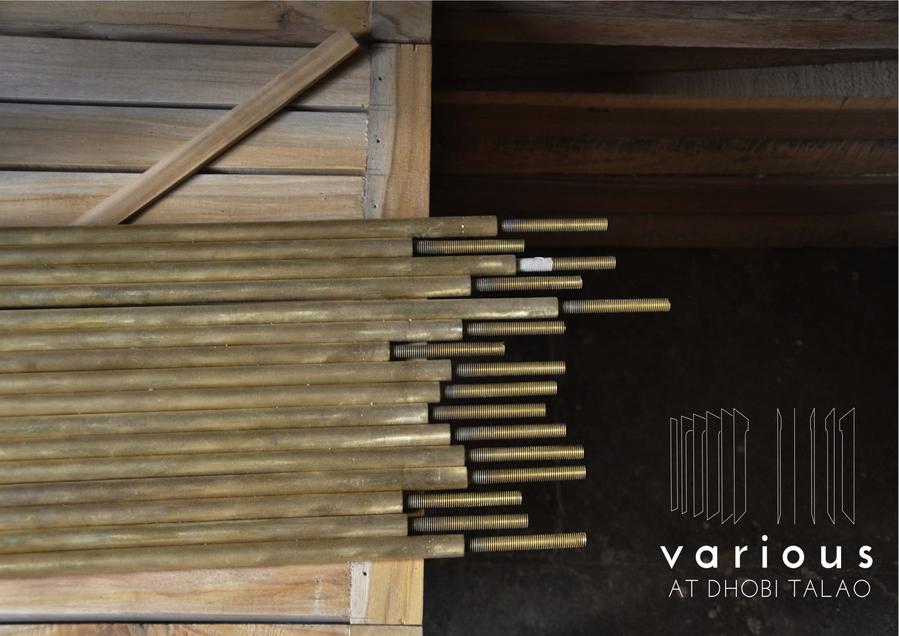
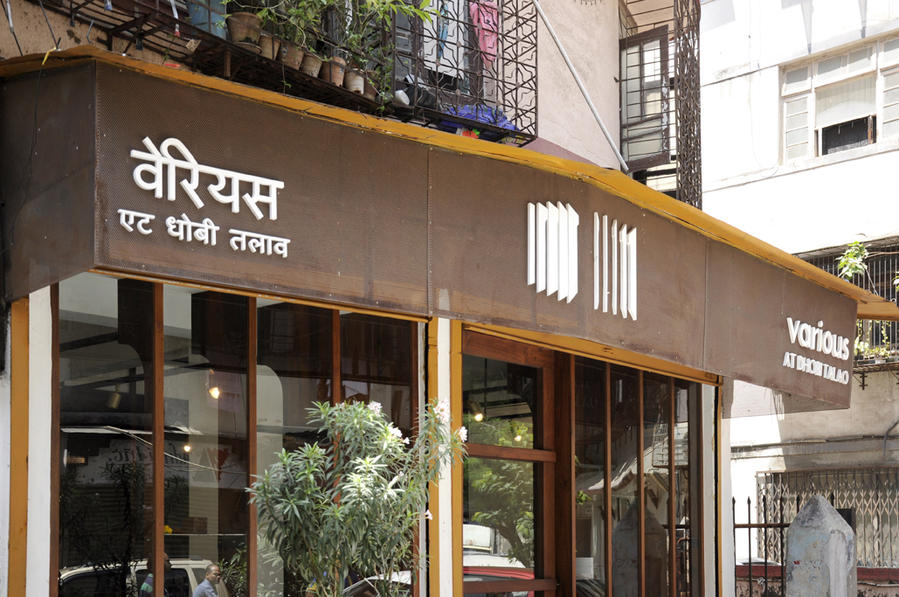
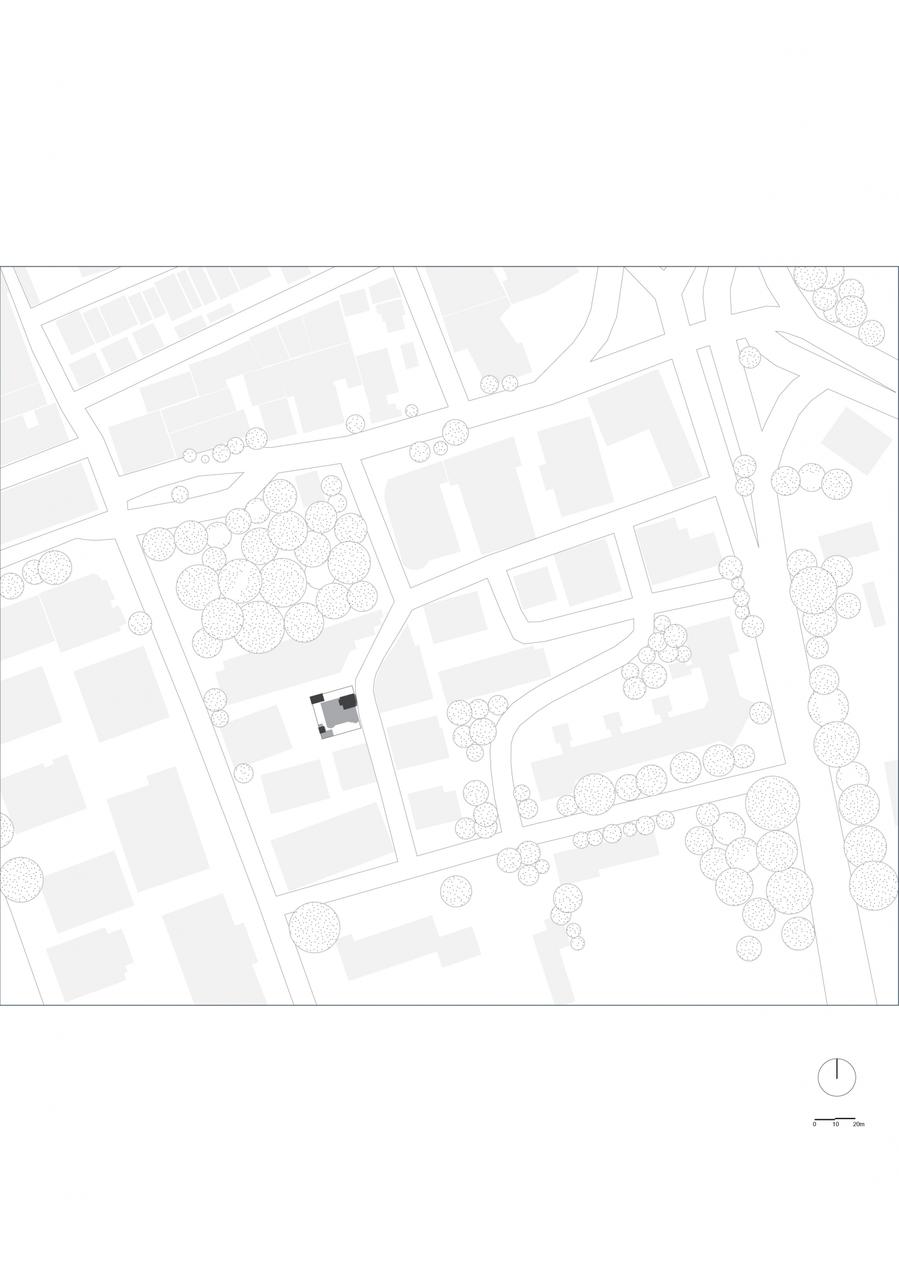
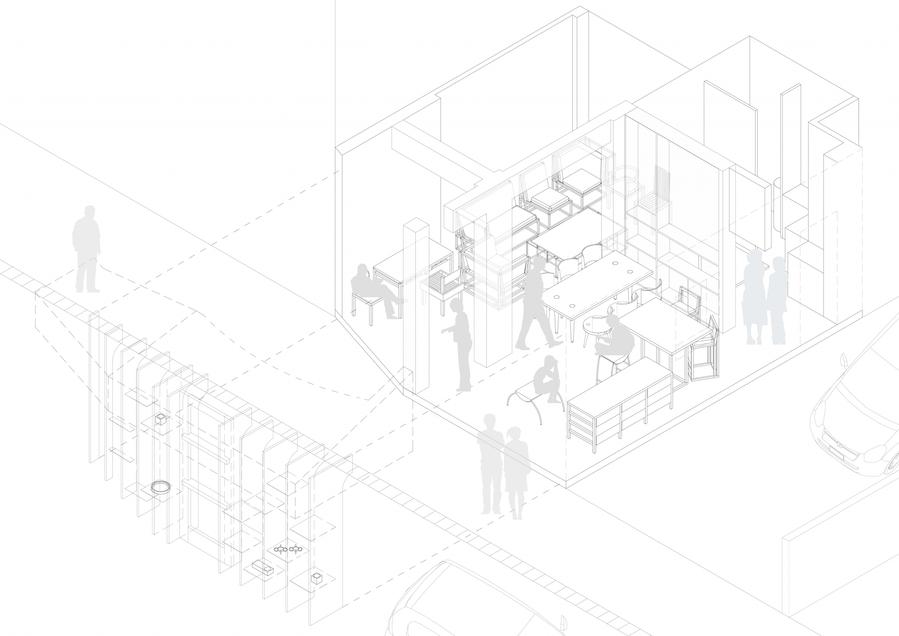
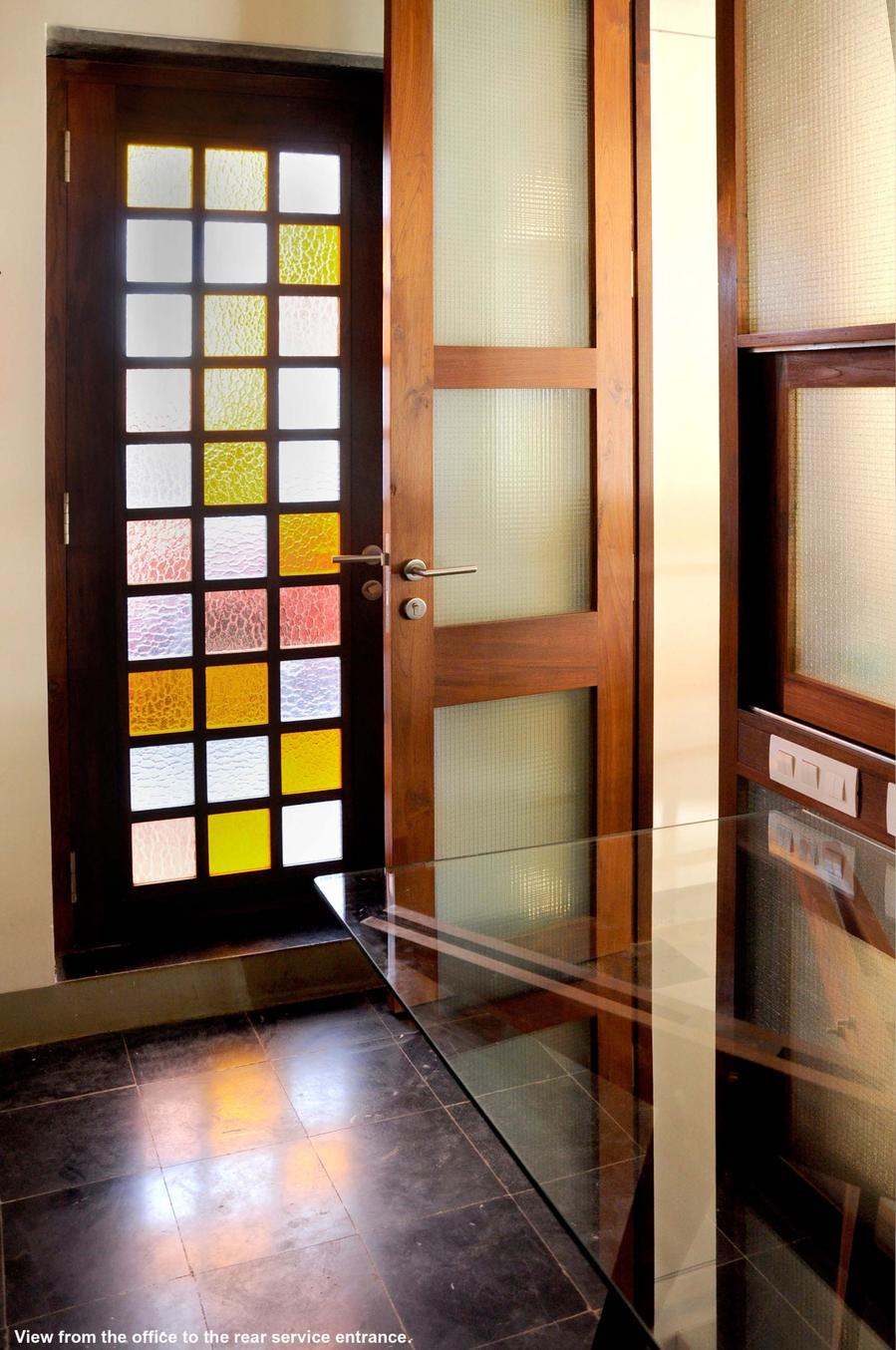
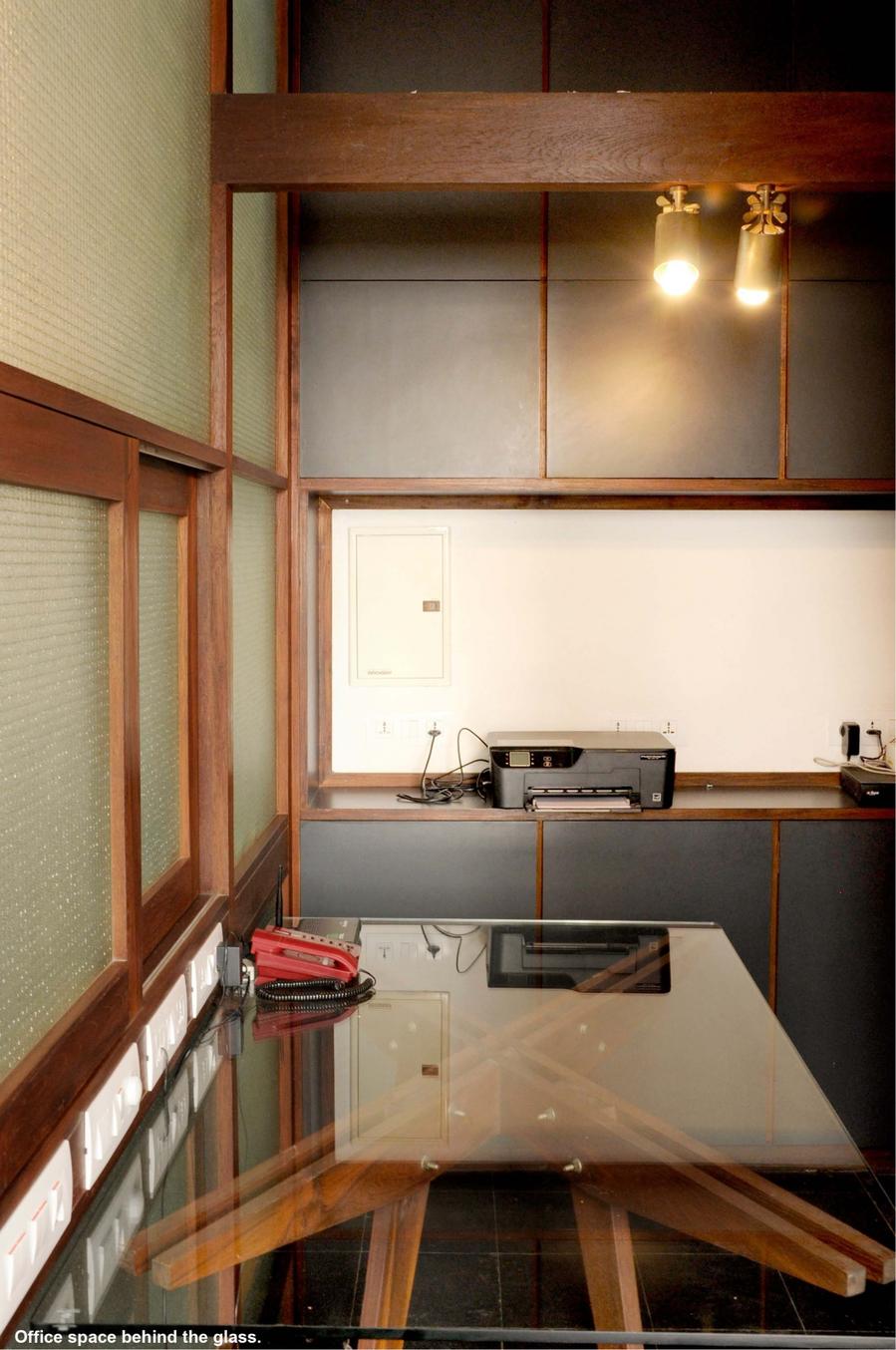
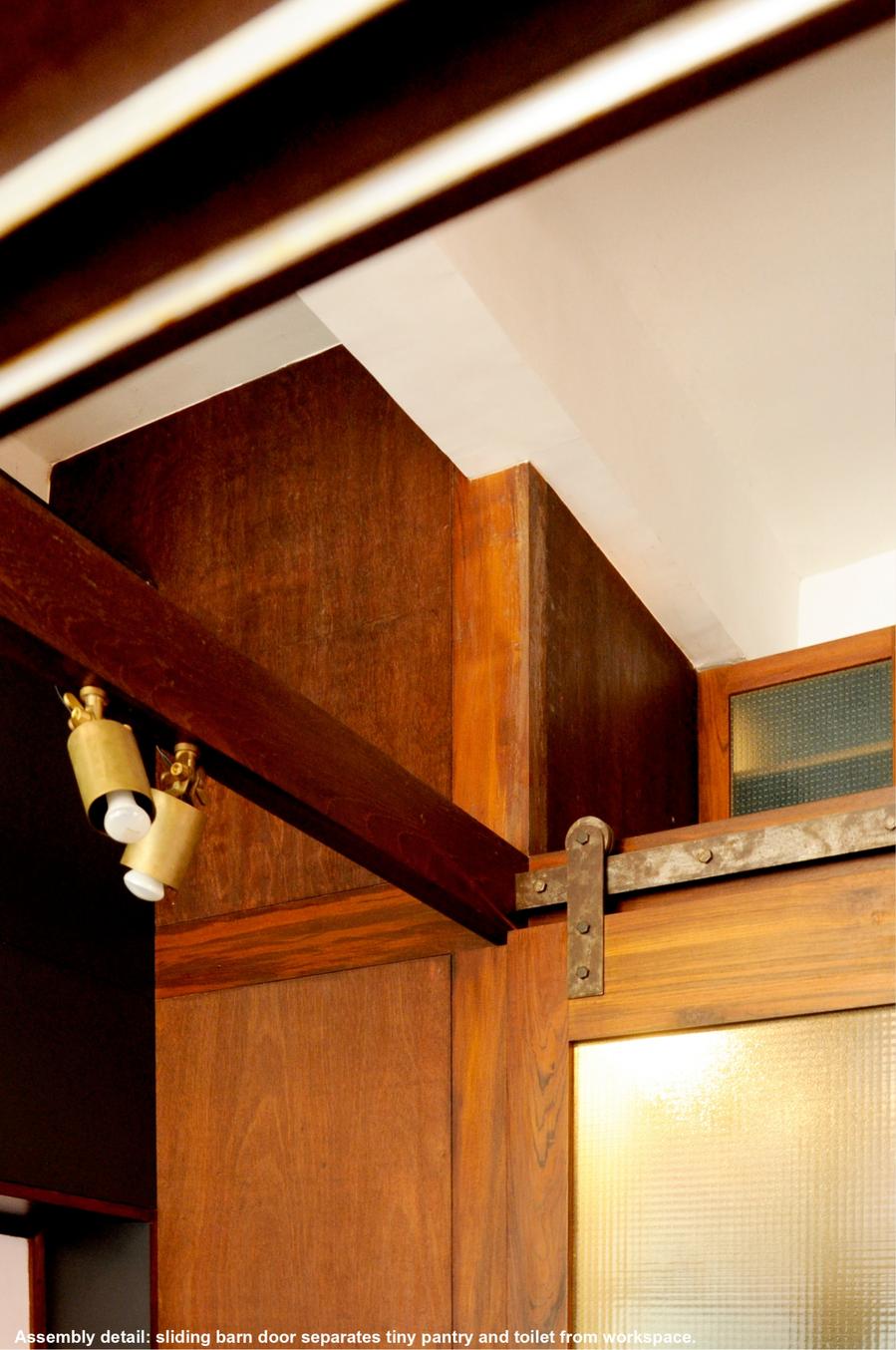
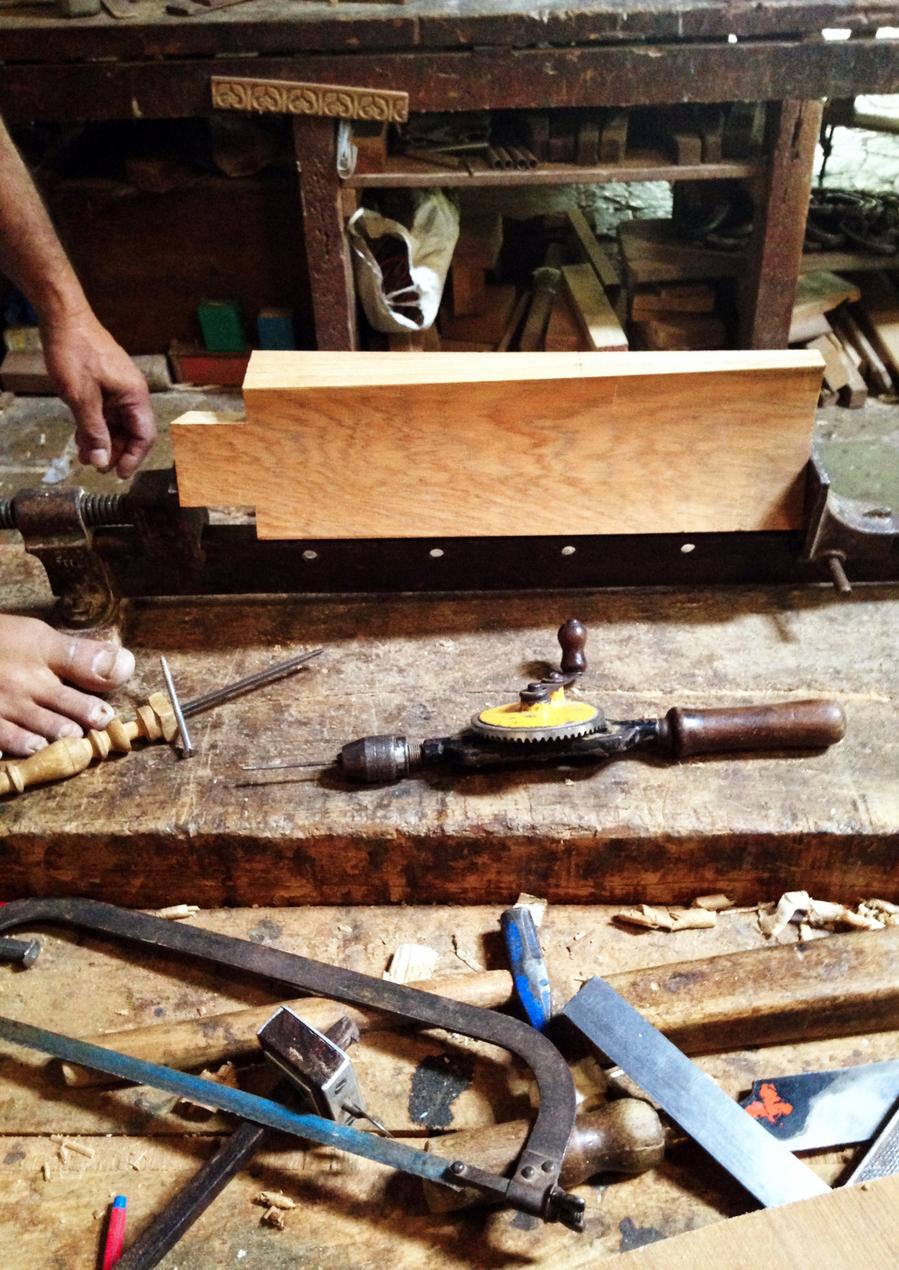
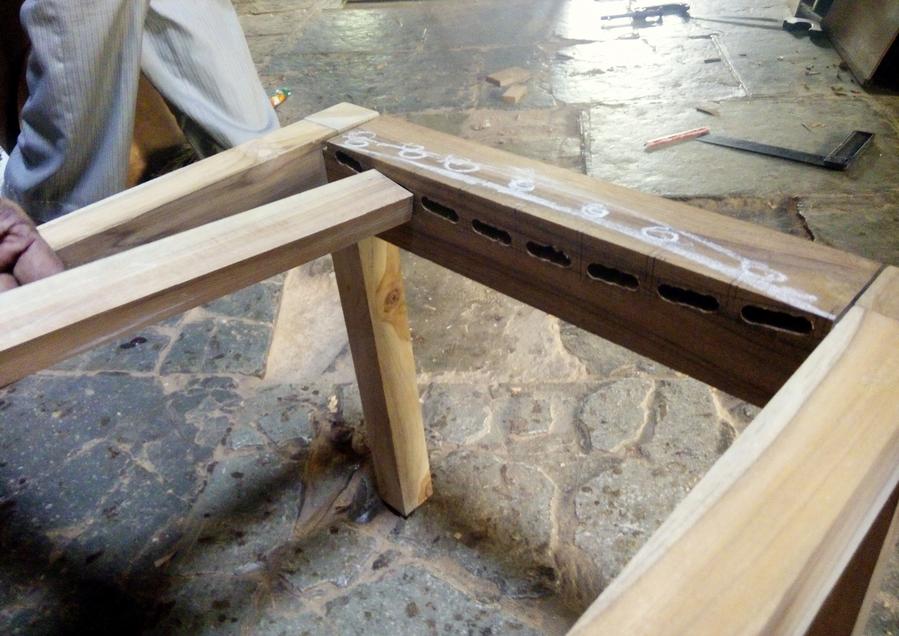
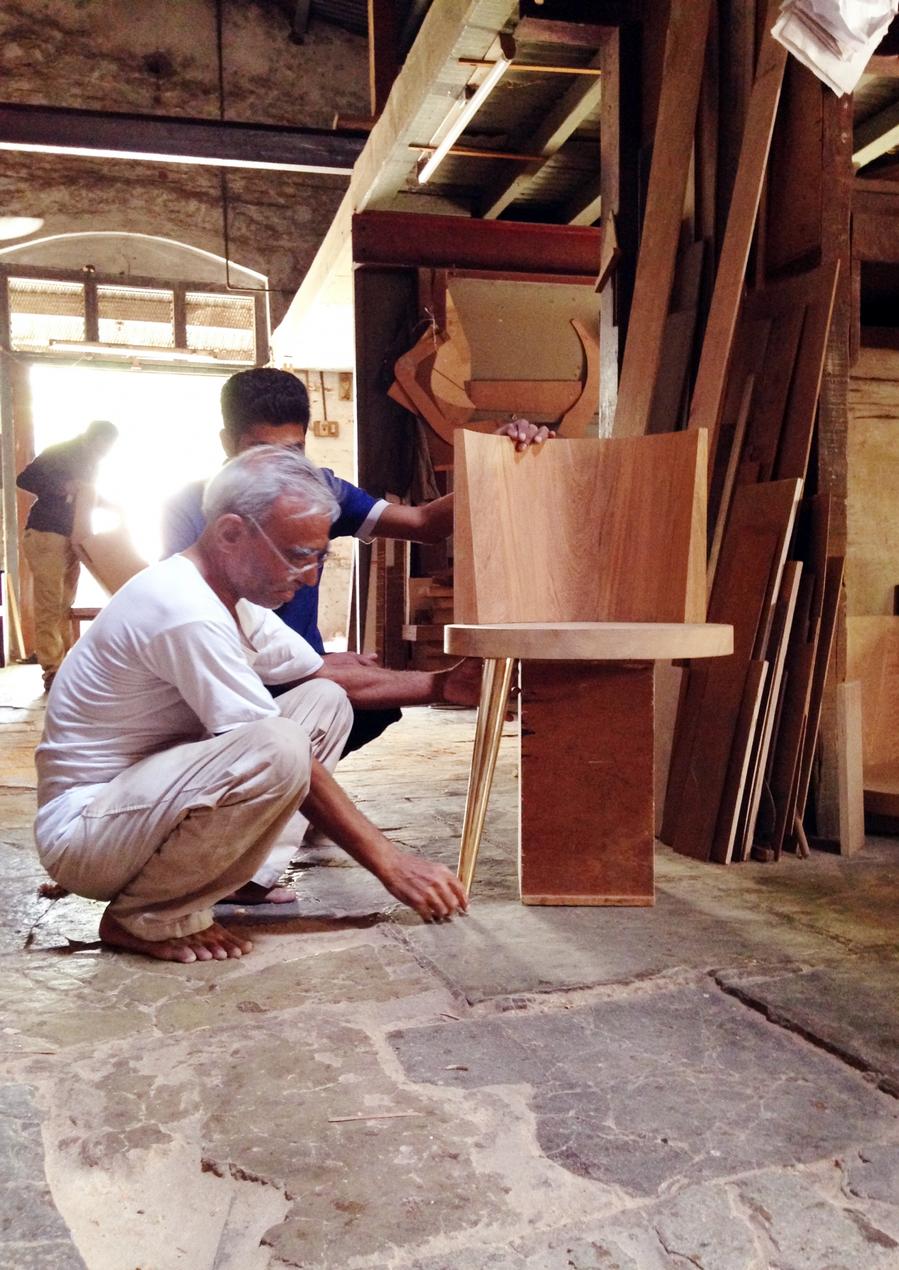
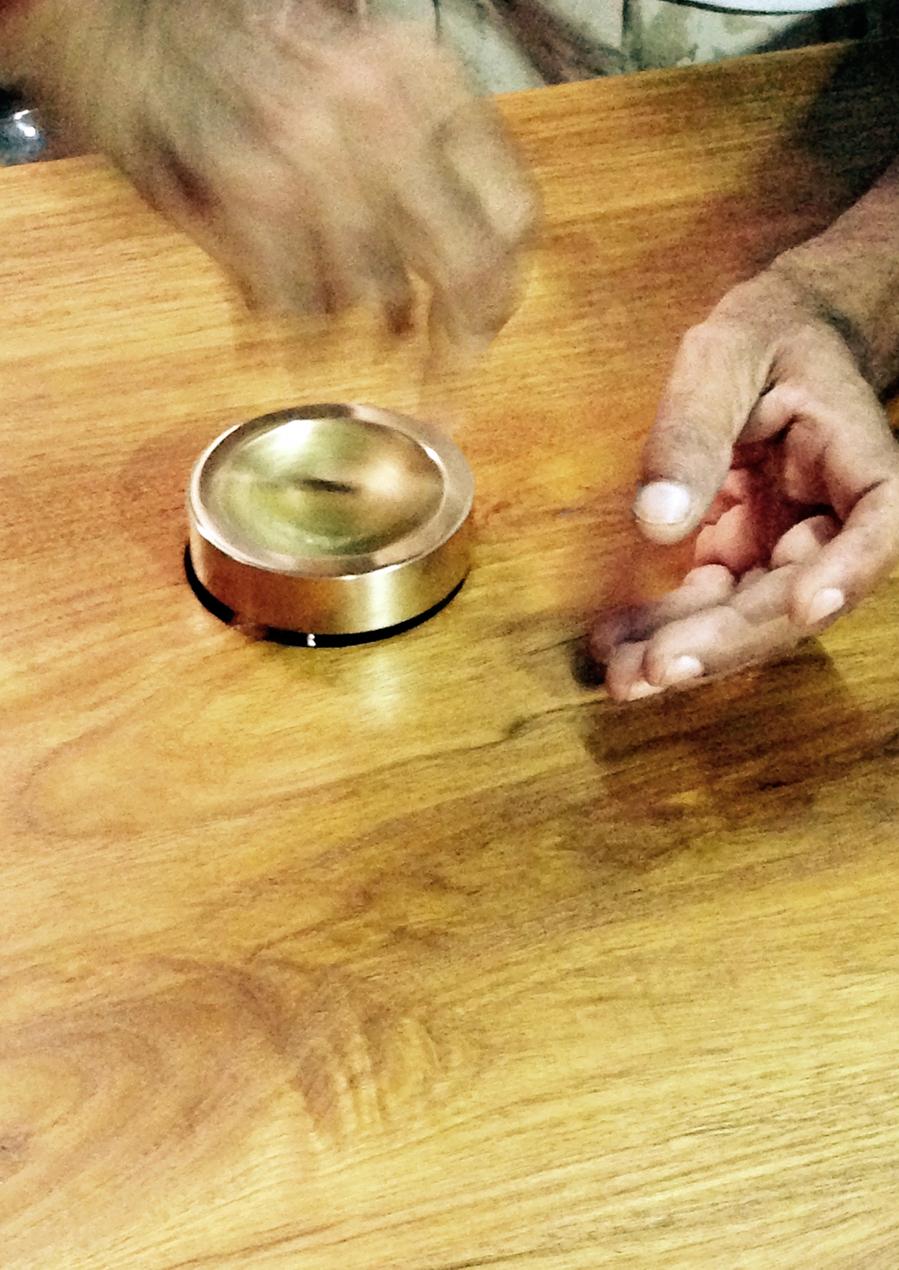
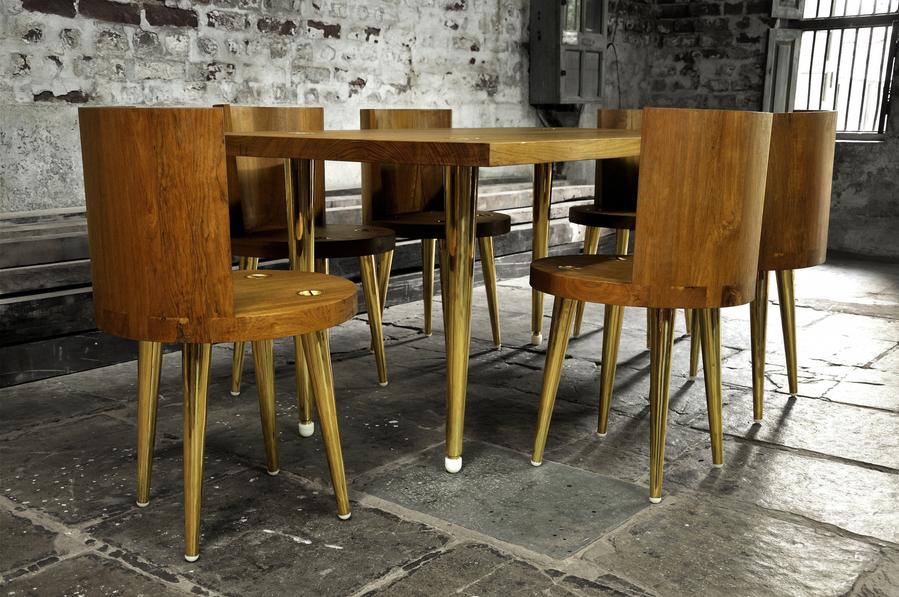
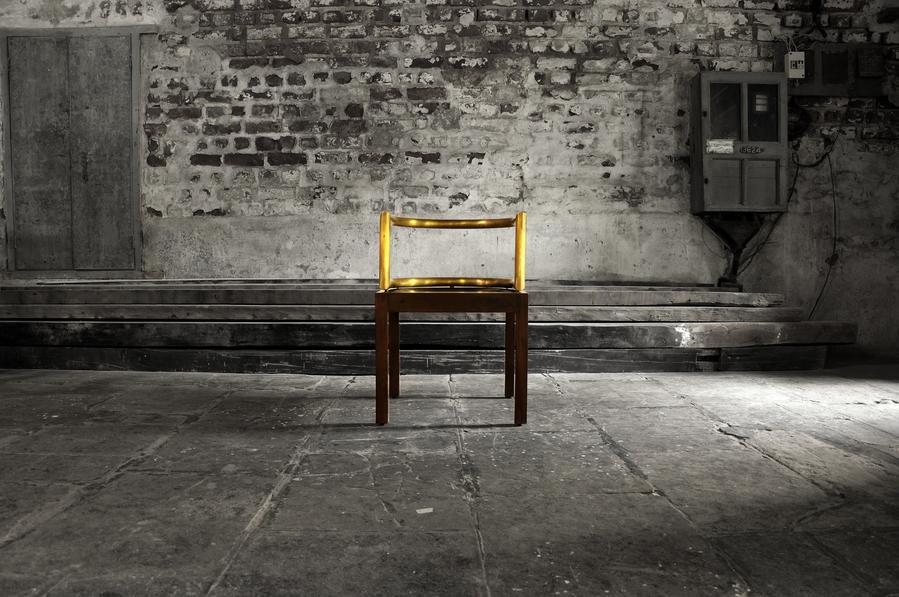
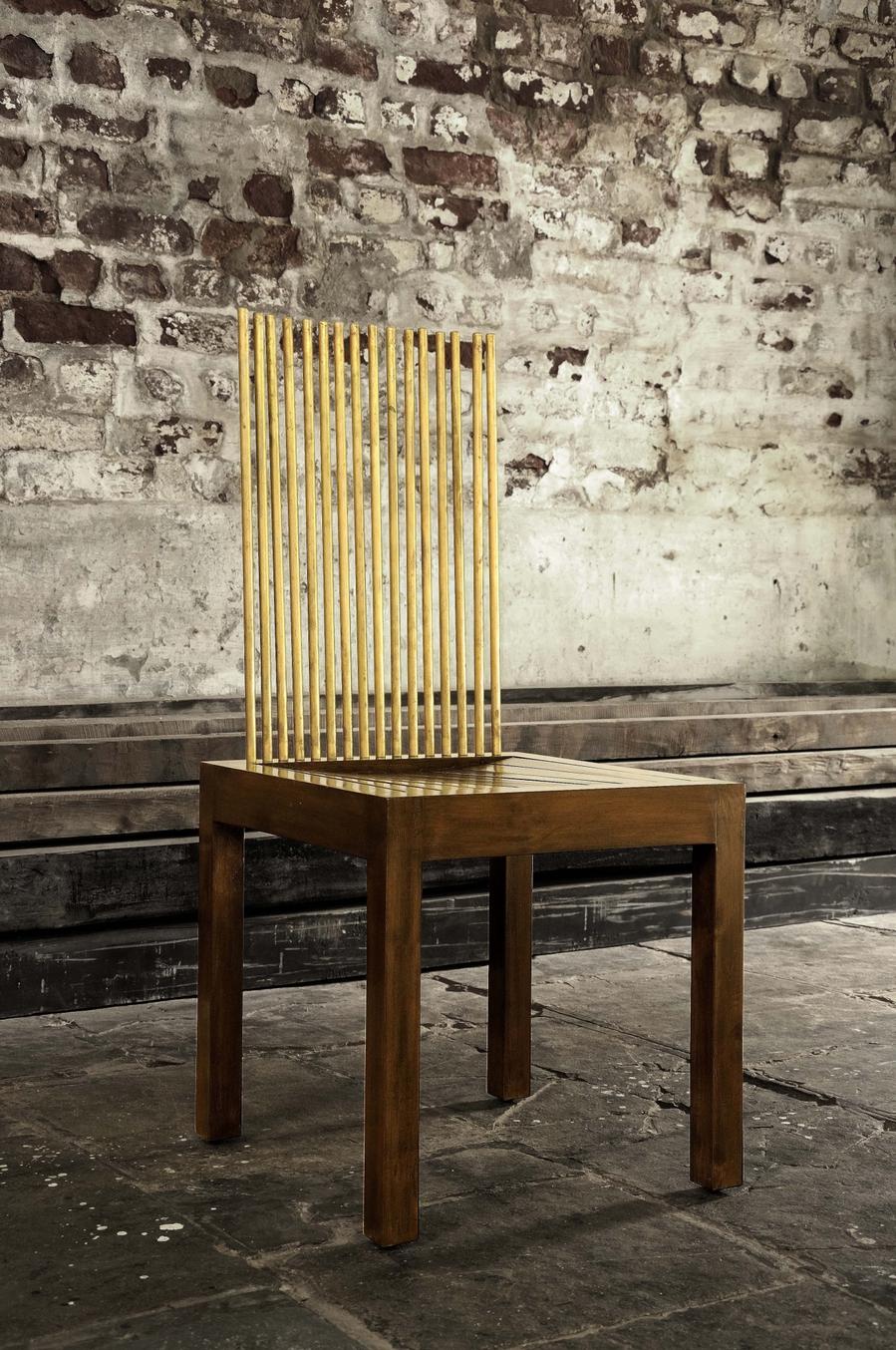
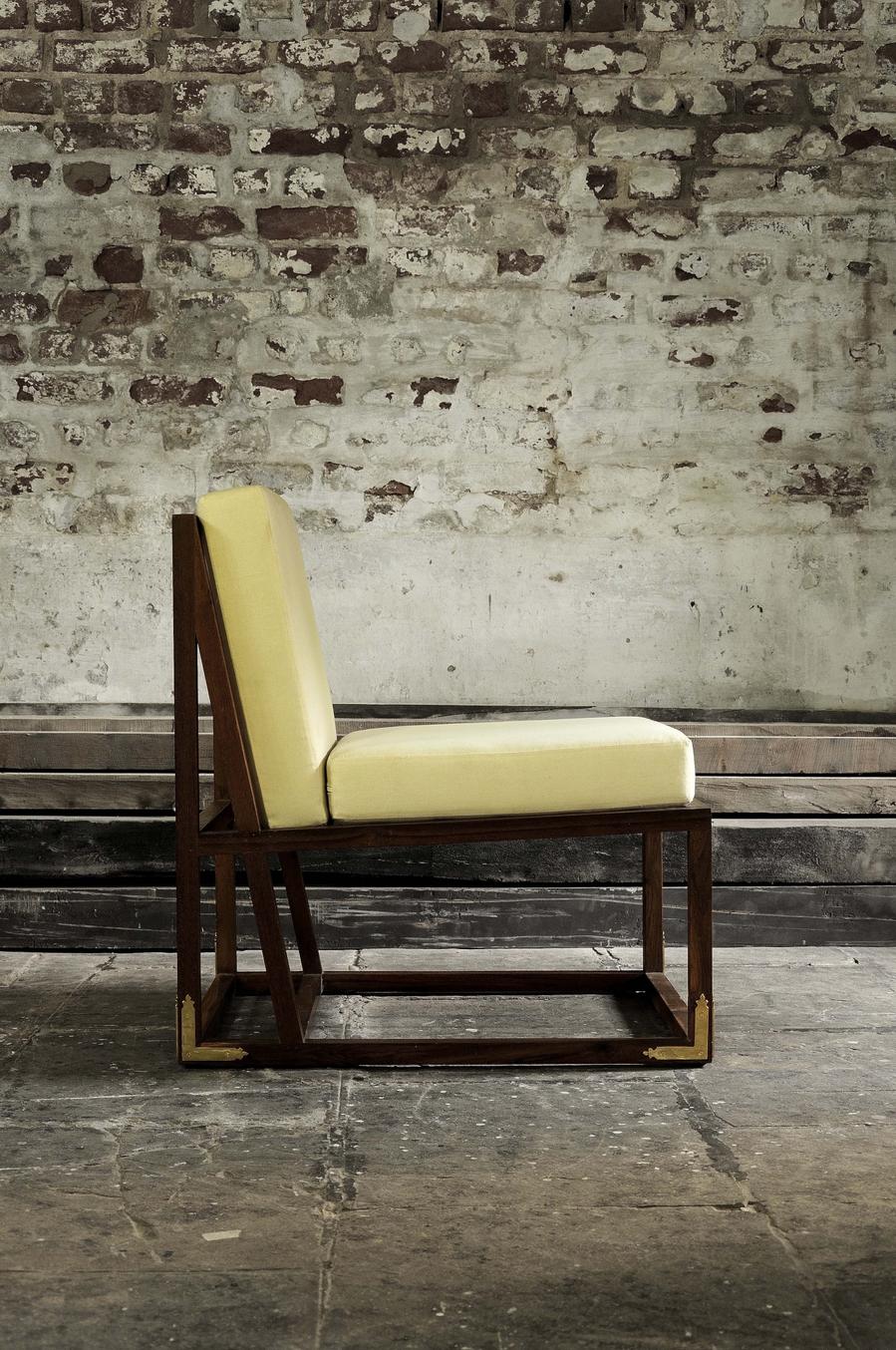
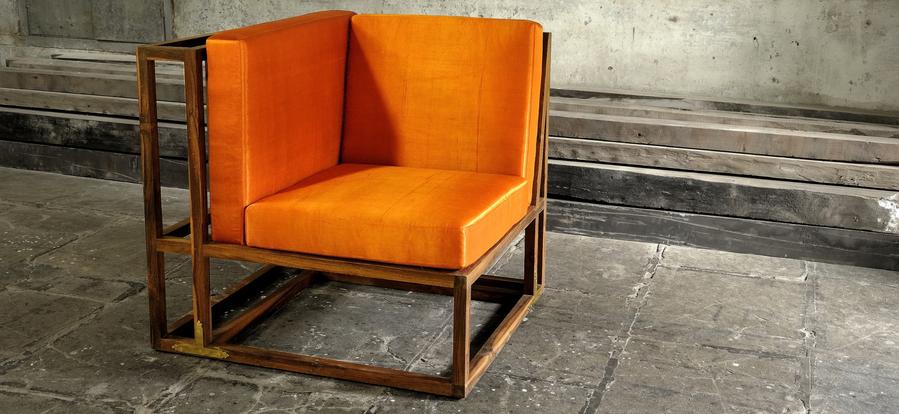
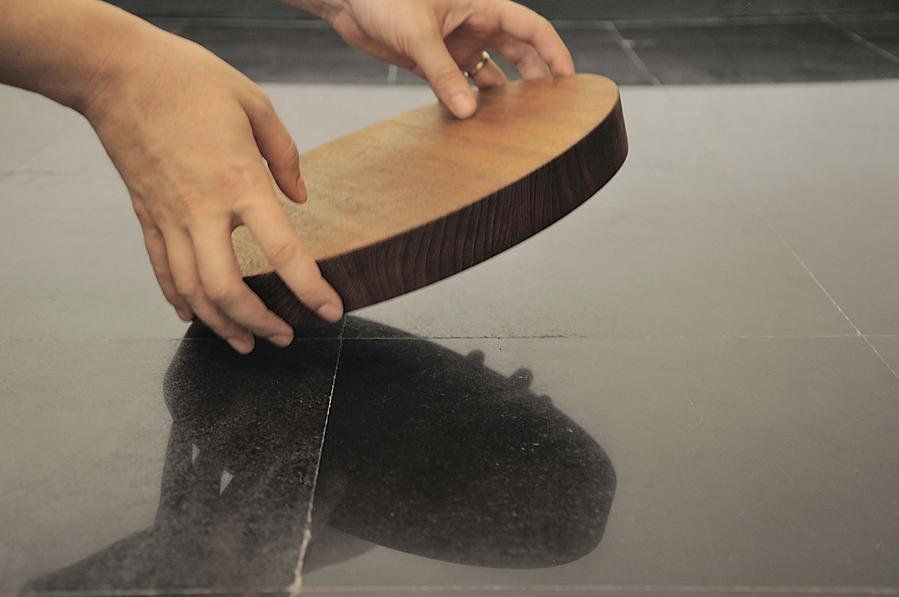
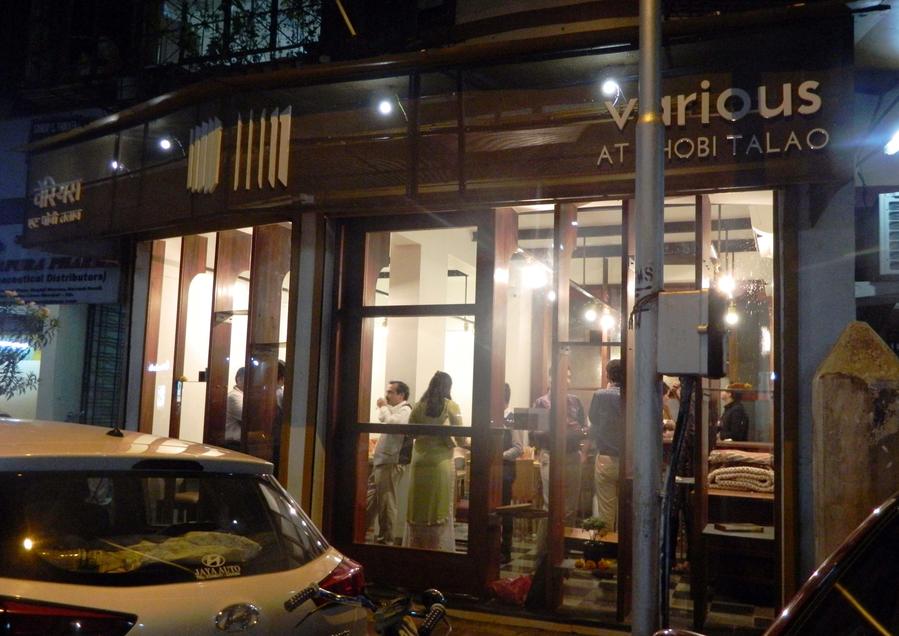
we designed the interior and a line of furniture for a new mumbai storefront, various at dhobi talao, which assembles a collection of carefully detailed works of furniture, objects, and sensitively fashioned foods & uses projects at the intersection of art and architectural practice to generate a dialogue about design process and modes of making.
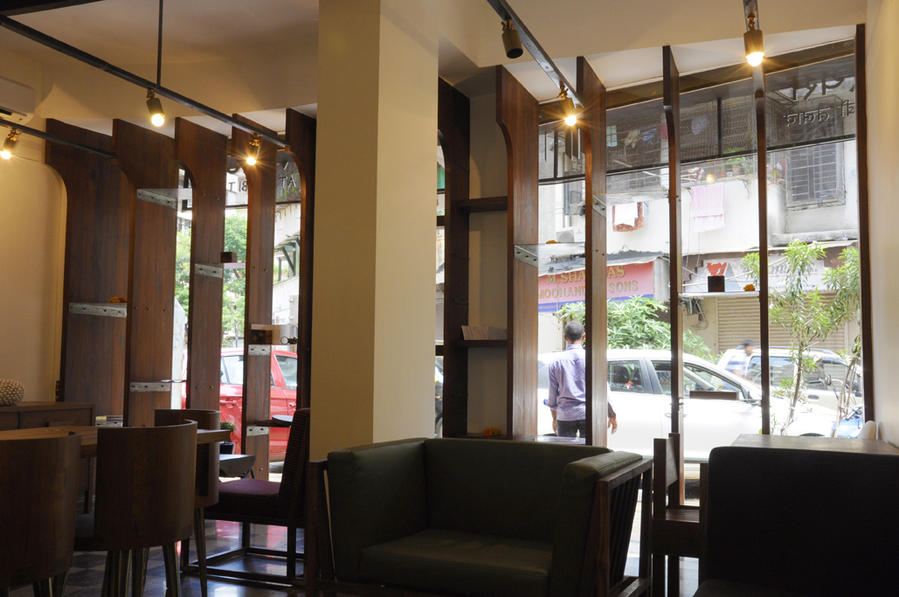
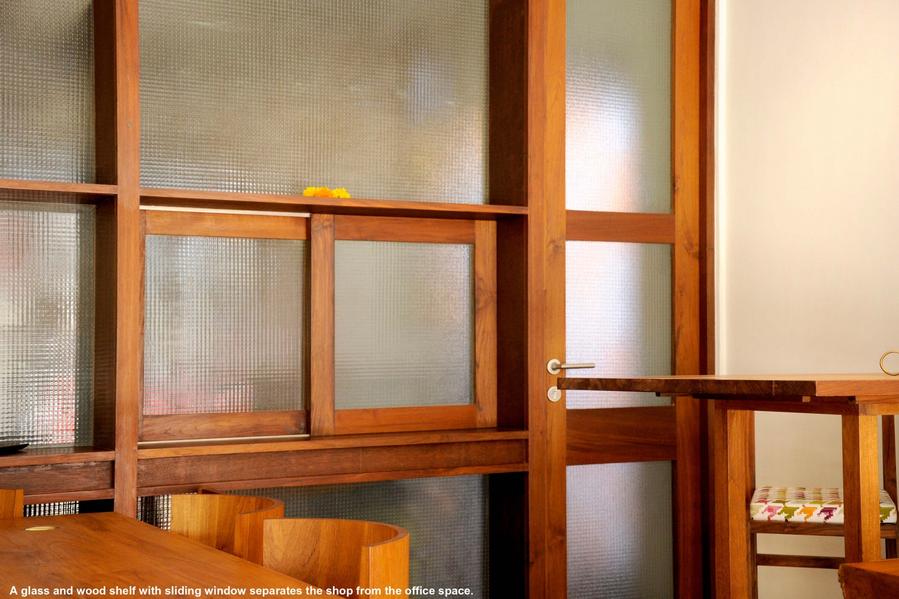
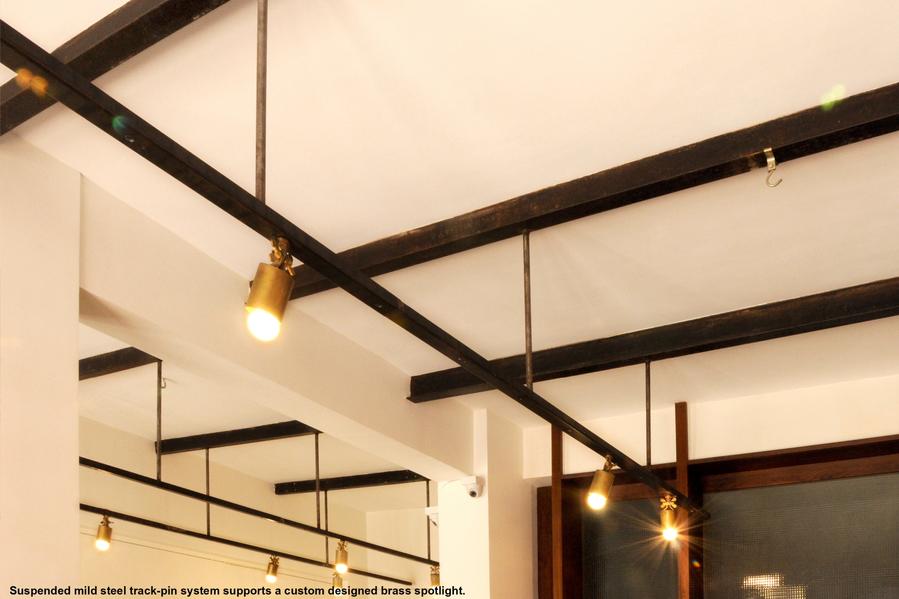
With the craft of furniture and food in mind for the store, the adaptive reuse of an old 1940s built bar touches the space lightly, polishing the existing kadappah-kota marquee floor and reglazing an art deco window grill, hanging a mild steel track-pin system for custom shaped brass spotlight fittings from retrofitted steel slab supports, and using a series of teakwood fins to mediate the transition from the exterior façade to the interior space, inserting shelves into the thickness of the void. The inserts are simple, crafted to support the existing space, and to redefine it for possibility while upholding its history.

Ahmedabad, Gujarat | 2025
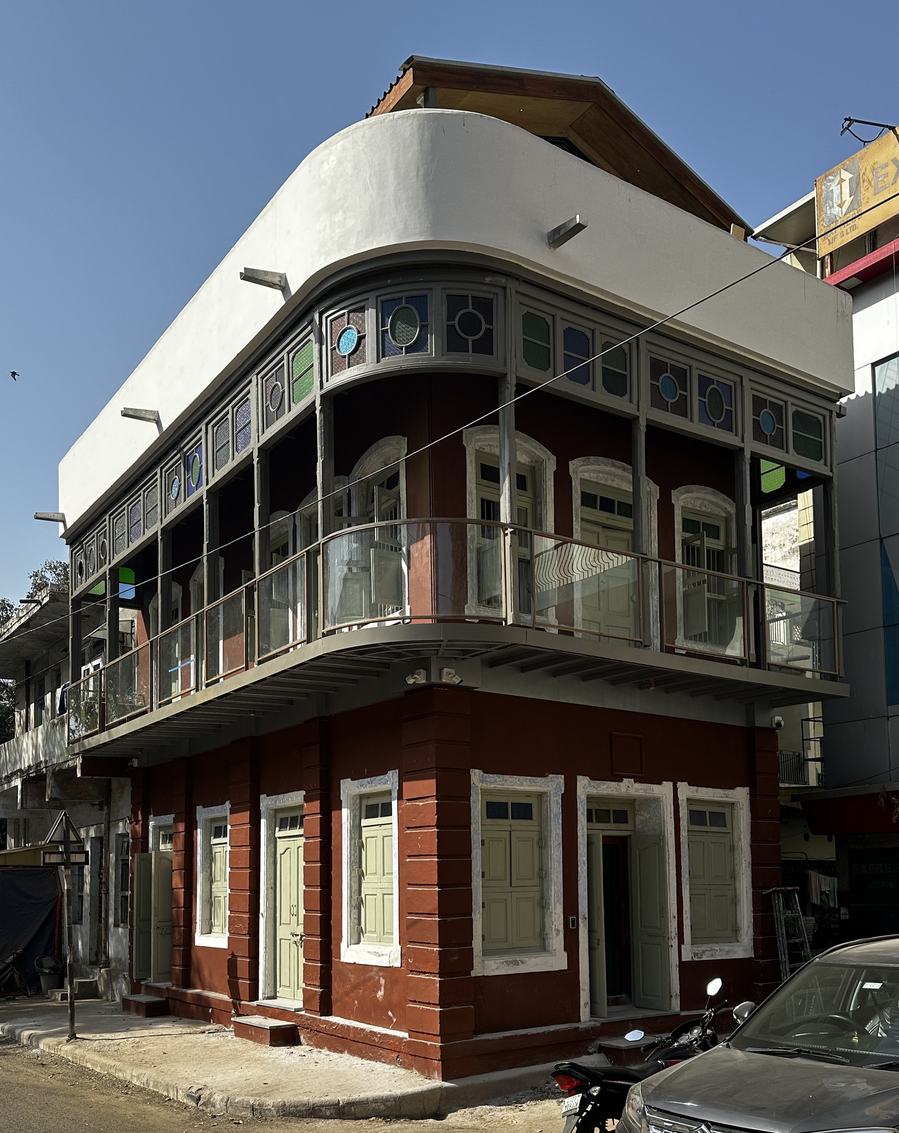
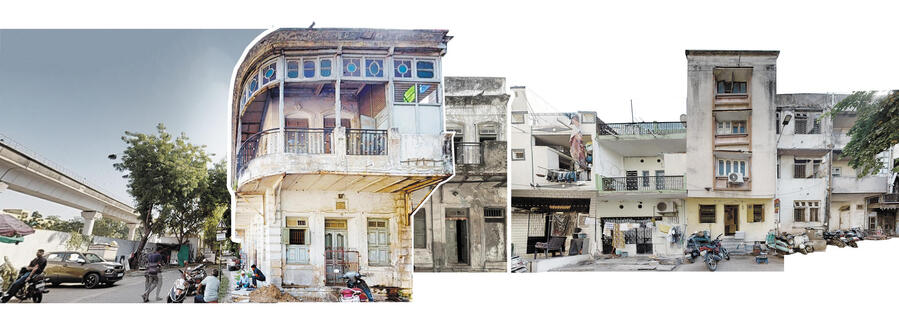
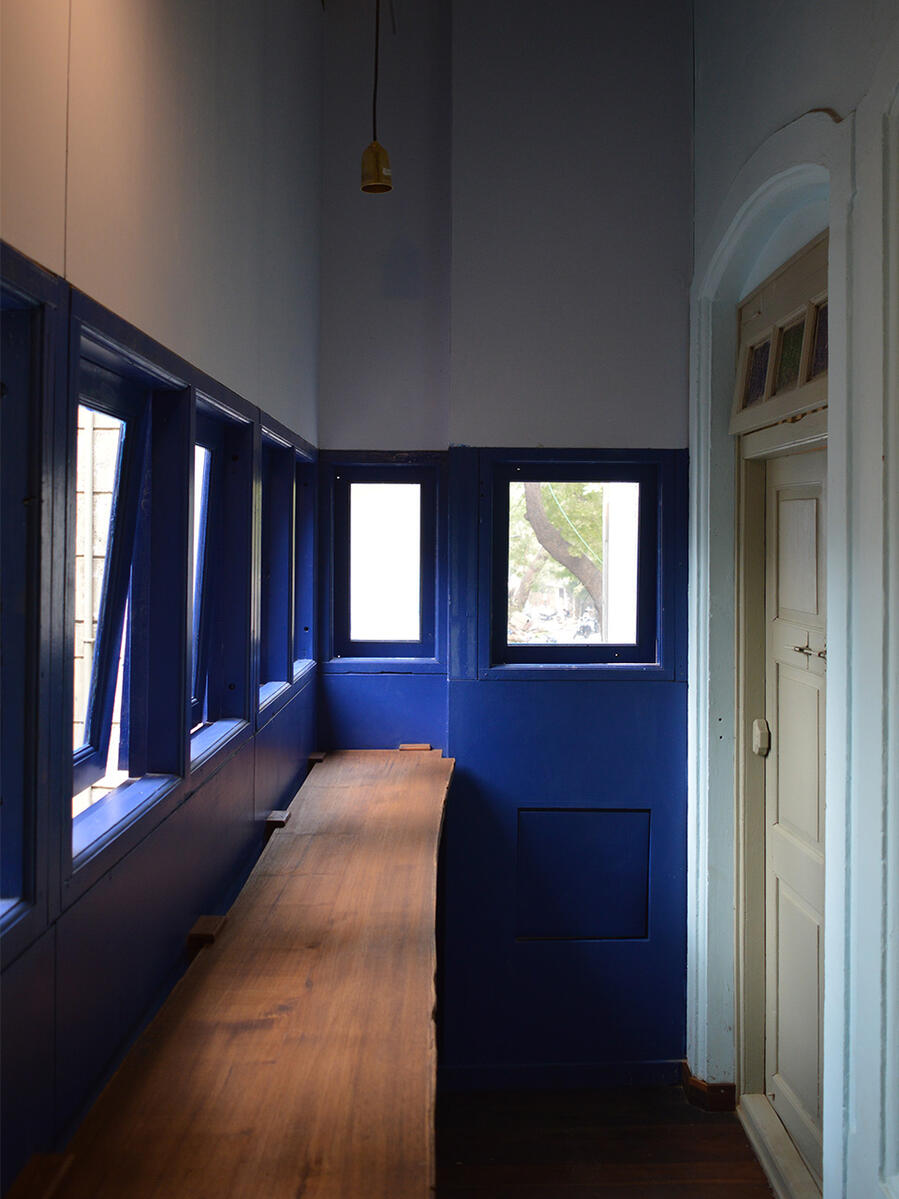
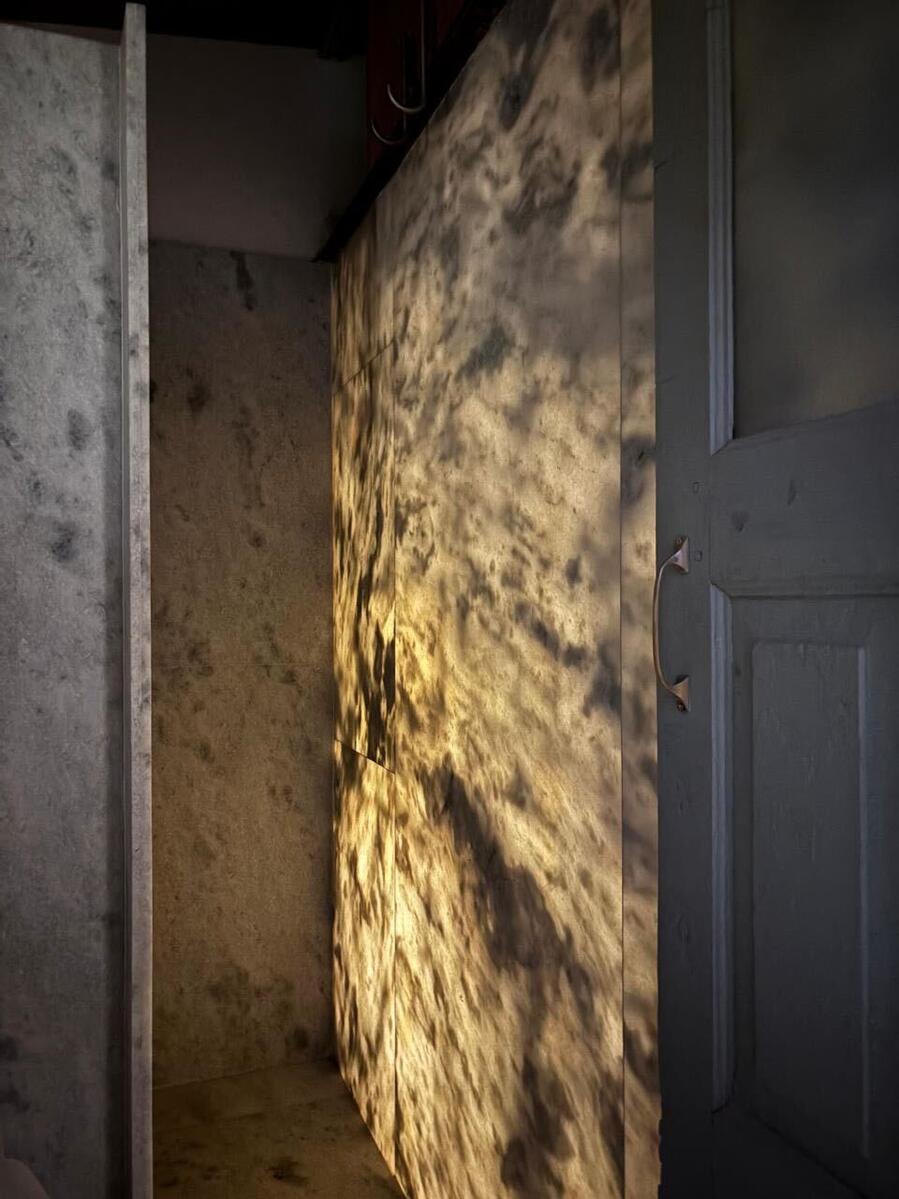
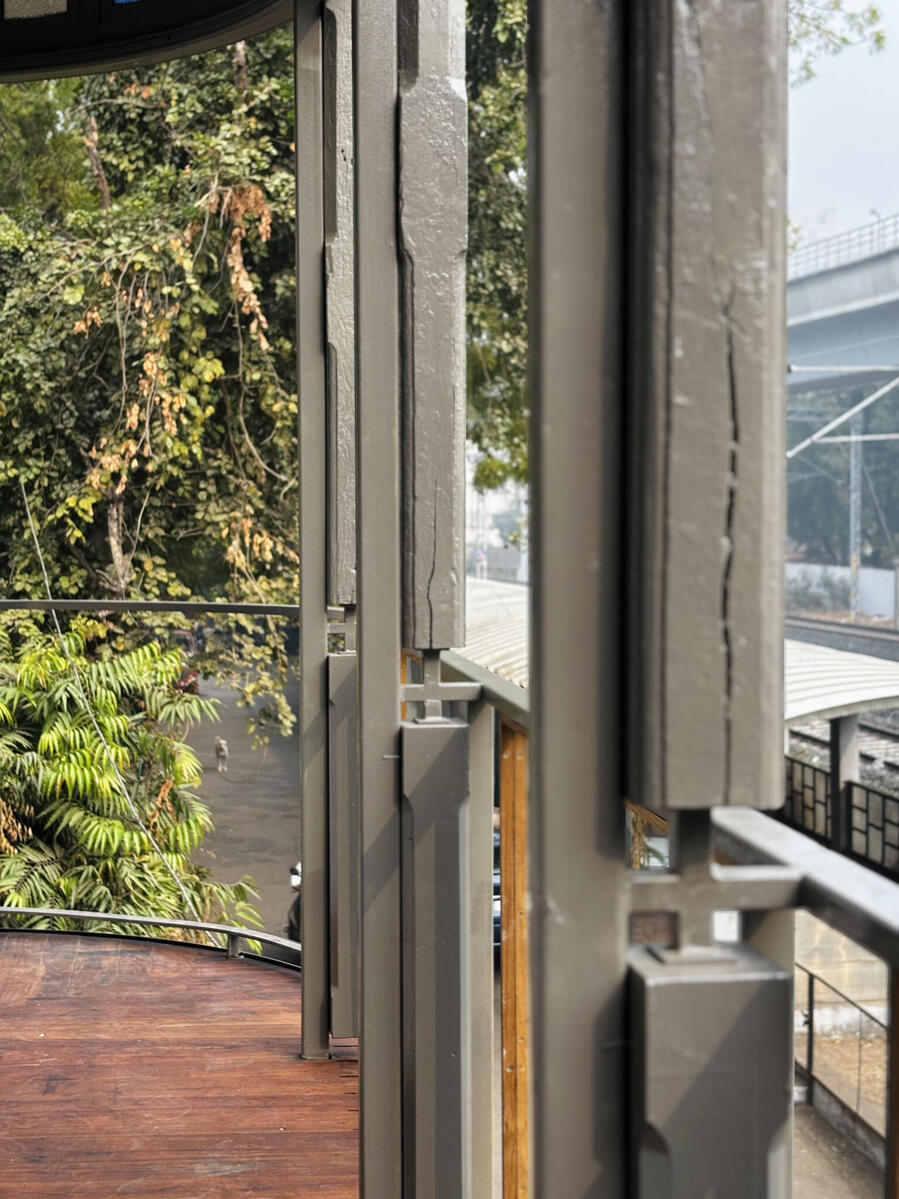
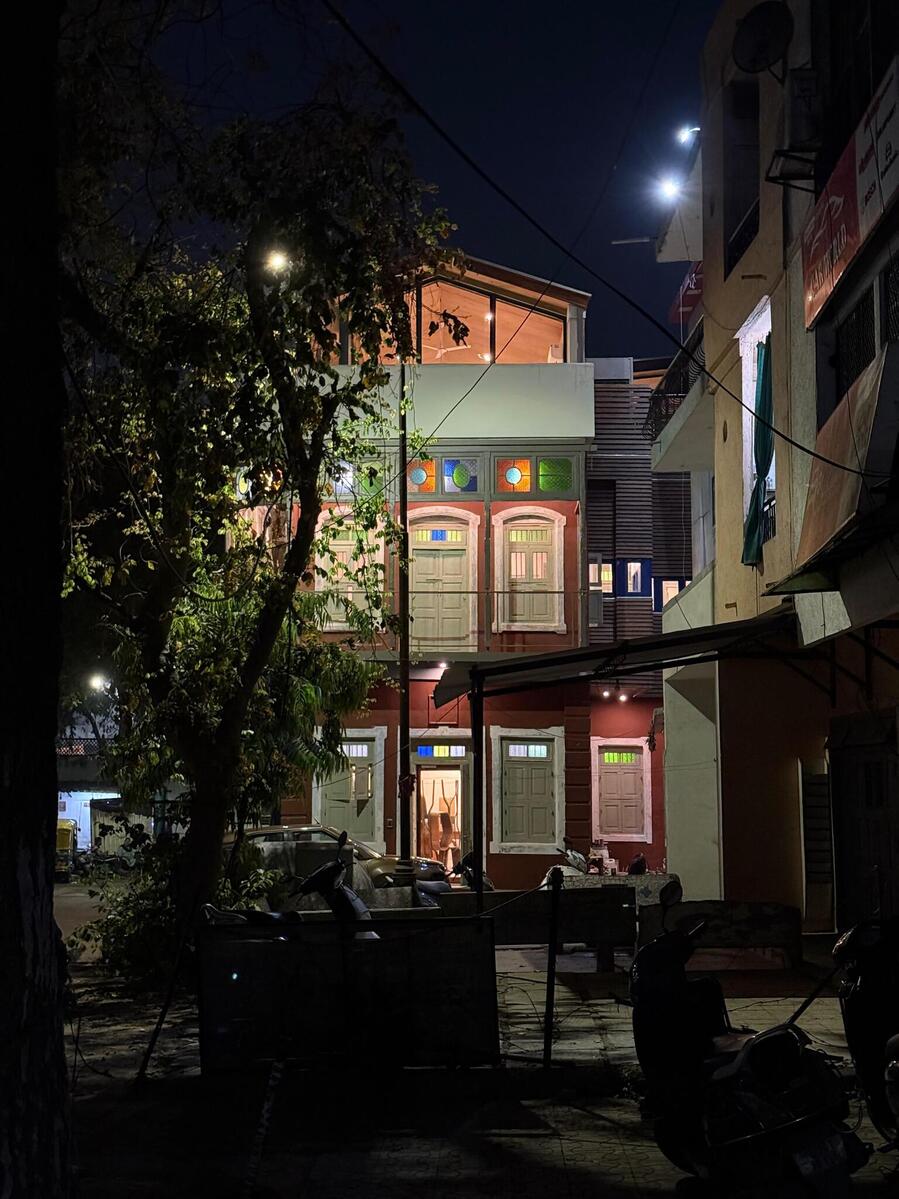
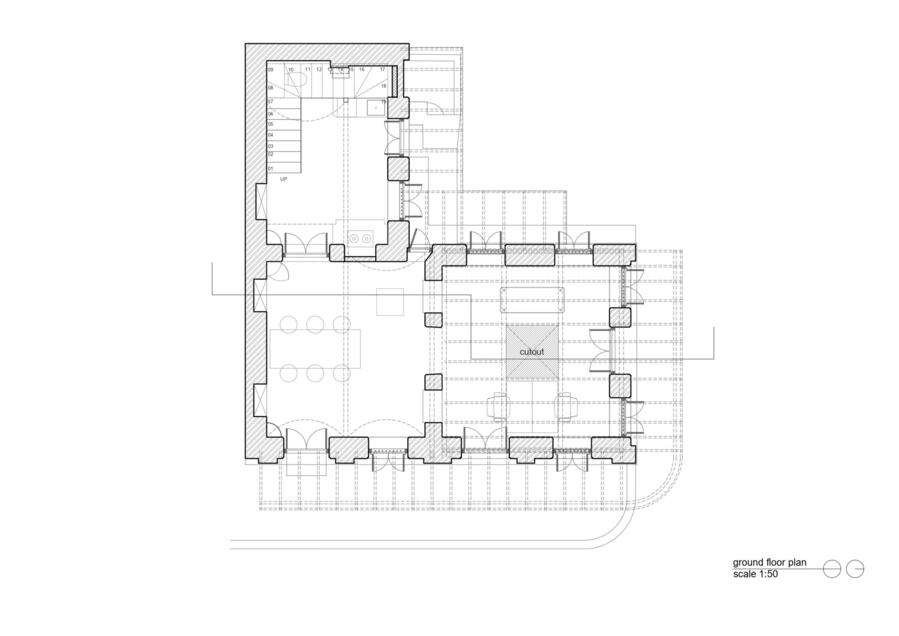
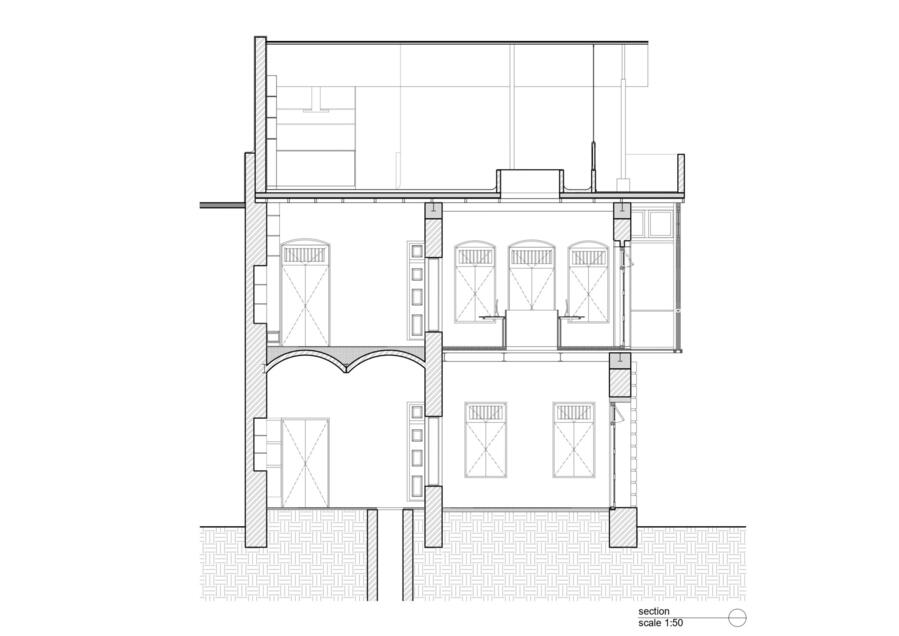
The new BandukSmith Studio is housed in a 94-year old structure in the urban village Mithakhali Gam at the center of the city of Ahmedabad.
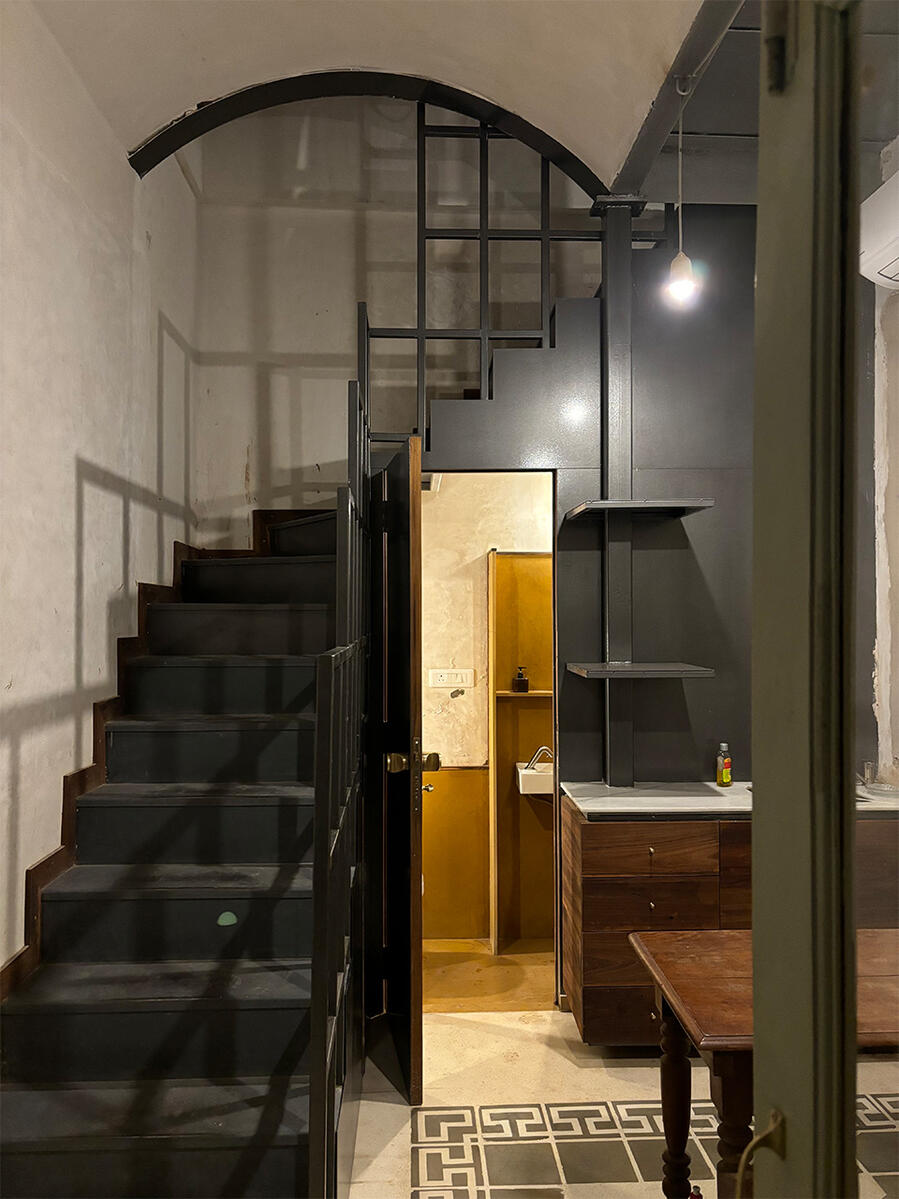
The renovation repairs the original art deco building, and inserts new, clean elements to redefine a new studio space within the old shell.
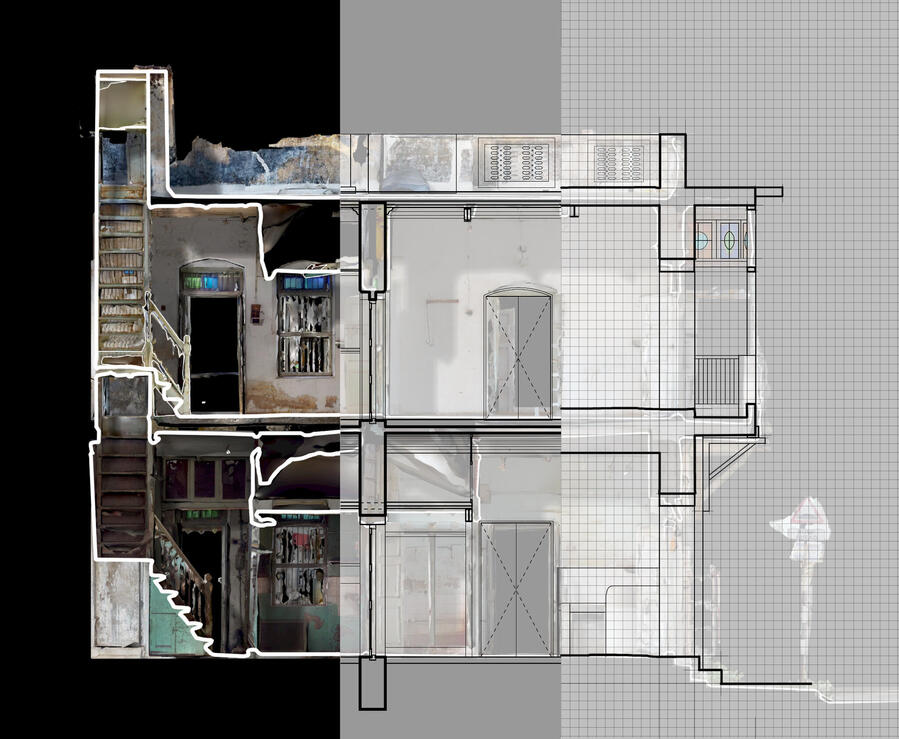
A photogrammetric scan recorded every existing detail of the space, with its visual data processed into a point cloud model that served as the first step to strategic, sensitive repair. The design favours experimentation over clarity, and aims to create a contemporary workspace that builds on and extends the historic frame, reusing every last bit of the original building, while exploiting opportunities for innovation.
Photography credits: Melissa Smith, Nishit Patel, Radhika Choksi, Swaraj Dhuri, Unnati Gandhi
Design Team: Melissa Smith, Sachin Bandukwala, Jhanvi Oza, Nishit Patel, Maitri Lad, Ruzeb Mohammed
Structural Consultancy: Ami Engineers
Contractor: ID Projects Pvt Ltd
Carpentry: Gopal Suthar
Fabrication: Mahadev Craft
Deesa, Gujarat | 2023
The orchard sits near the foot of the Aravalli Range in western India, surrounded by potato farms. With a raised deck, a few choice cuts and a linear plan that bends around corners, the house delicately navigates a grid of mango trees while its vistas peak down the rows for glimpses of the first stone of the mountains.
To create a living space that sits lightly between mango trees in an orchard on a working farm, and to balance the realities of growing and the beauty of the site, the elevated structure floats eight feet above the ground, and the house is placed in gaps left where trees had not survived, with a canted roof that protects its residents from the harsh sun, and a rich interior that views the lush green canopies from all its sides.
A structural steel deck laid with wooden planks extends around the house, perforated by wide circular cutouts for mango trees that grow up through the space, protecting the residents. A pool playfully juts off into the trees, while one cutout conceals a spiraling stair that reaches down to the ground. Below the floating deck, strips of light reach the cool, shaded ground below, and a series of sunken rooms, plastered in a traditional marble dust ”gutai” plaster, selectively draw in light, which is amplified across bright white marble floors and the sheen of the plaster, without drawing in its harsh heat. The heavy, lower portion of the house keeps residents cool in the hot afternoons, while the upper pavilion cools quickly once the sun lowers in the evening, allowing the space to open and extend into the protective vegetation that surrounds it.
The balance of the project puts to use every bit of material wastage, converting stone slivers into pathways and plinths, and drawing on leftover wood to develop interior panelling details, and to facilitate improvements in the barns and sheds for crop harvesting.


Photography credits: The Space Tracing Company
Design Team: Melissa Smith, Sachin Bandukwala, Megha Jhawar, Mudit Tikmani, Vishant Solanki
Structural Consultancy: StrucArt Design Consultancy
MEP Consultancy: -
Contractor: Mohan Prajapati
Carpentry: Mukesh Mevada
Ahmedabad, Gujarat | 2021
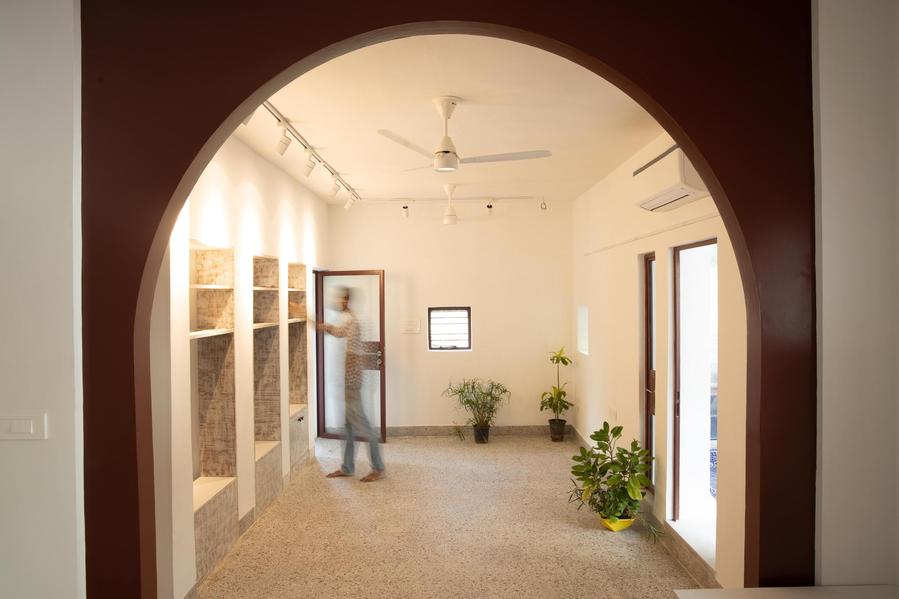
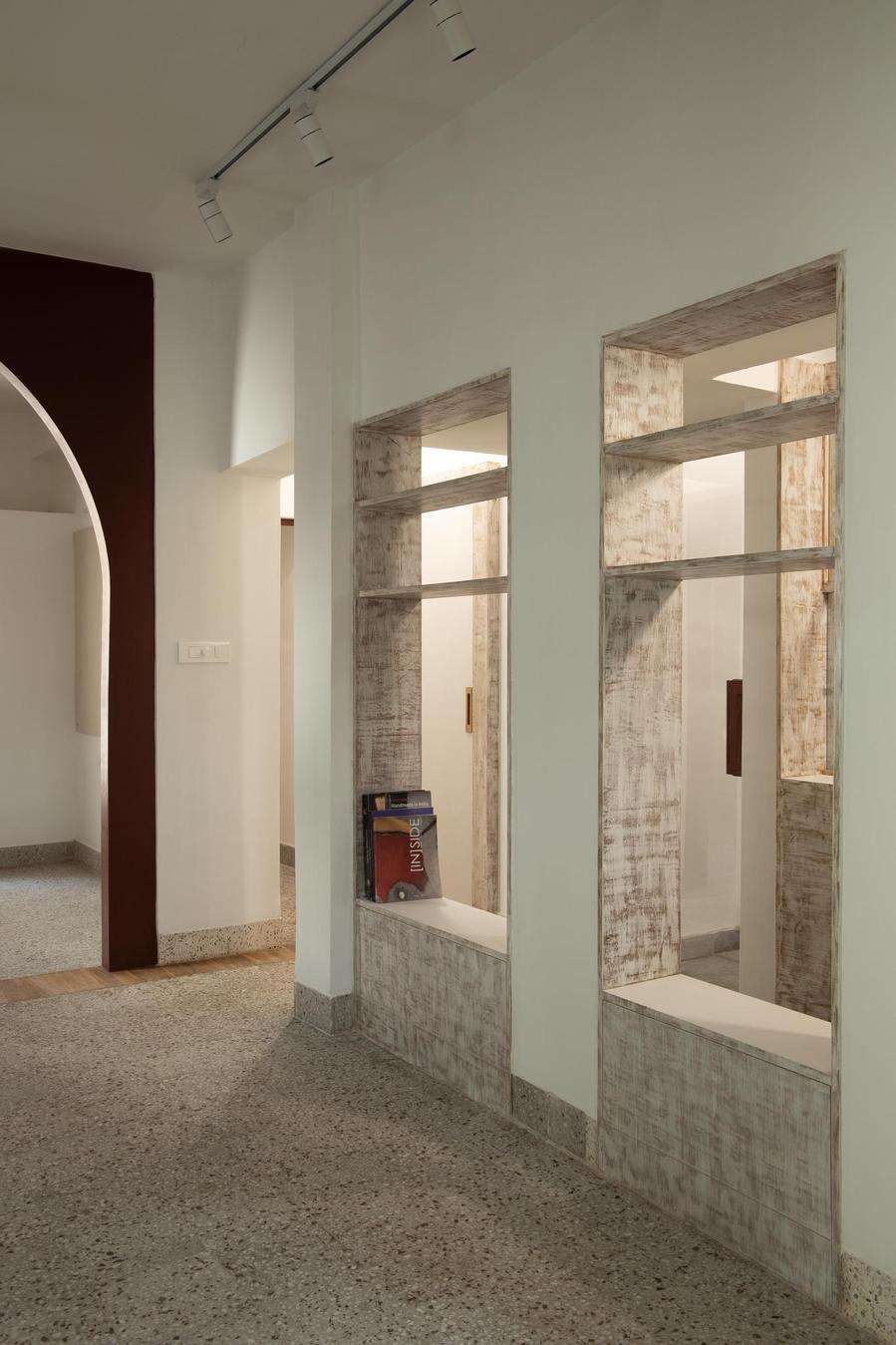
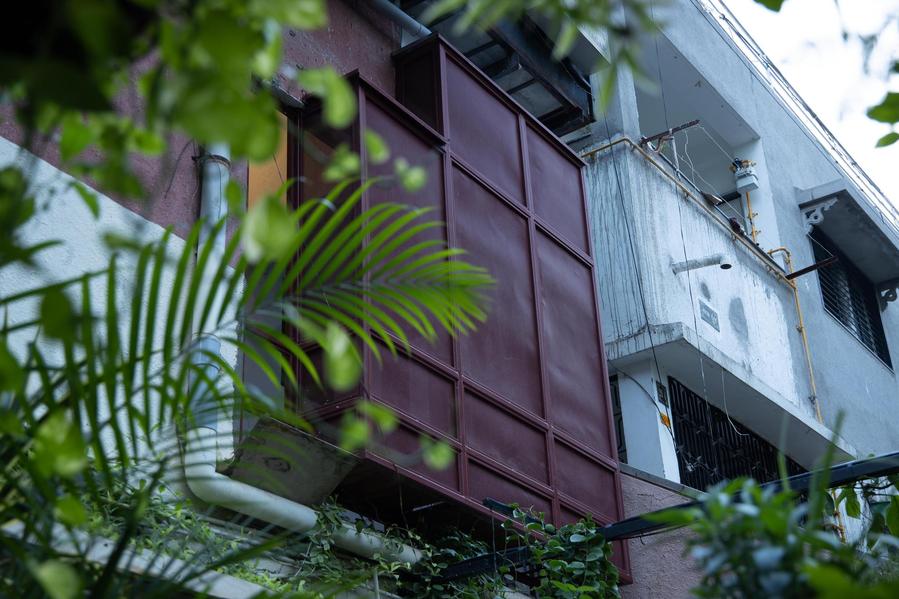
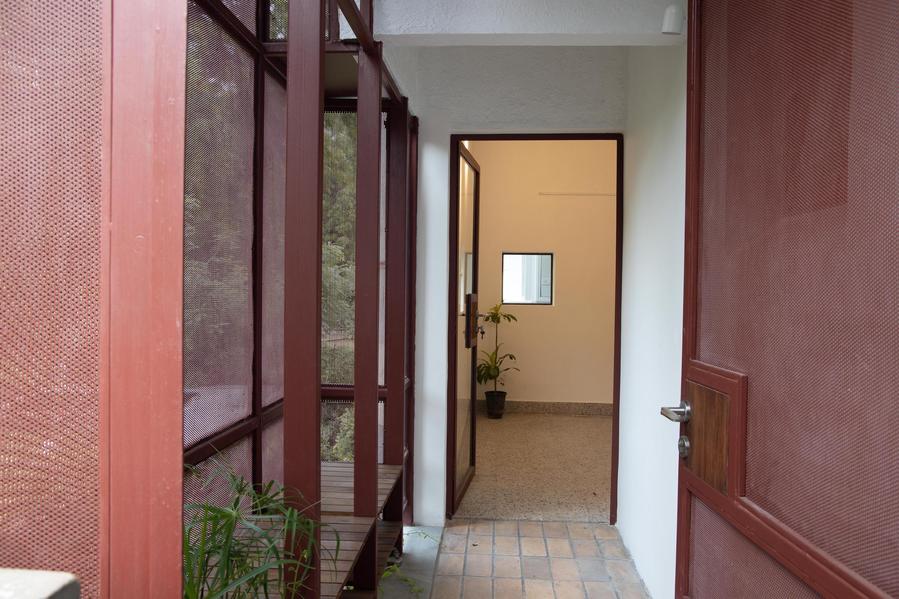
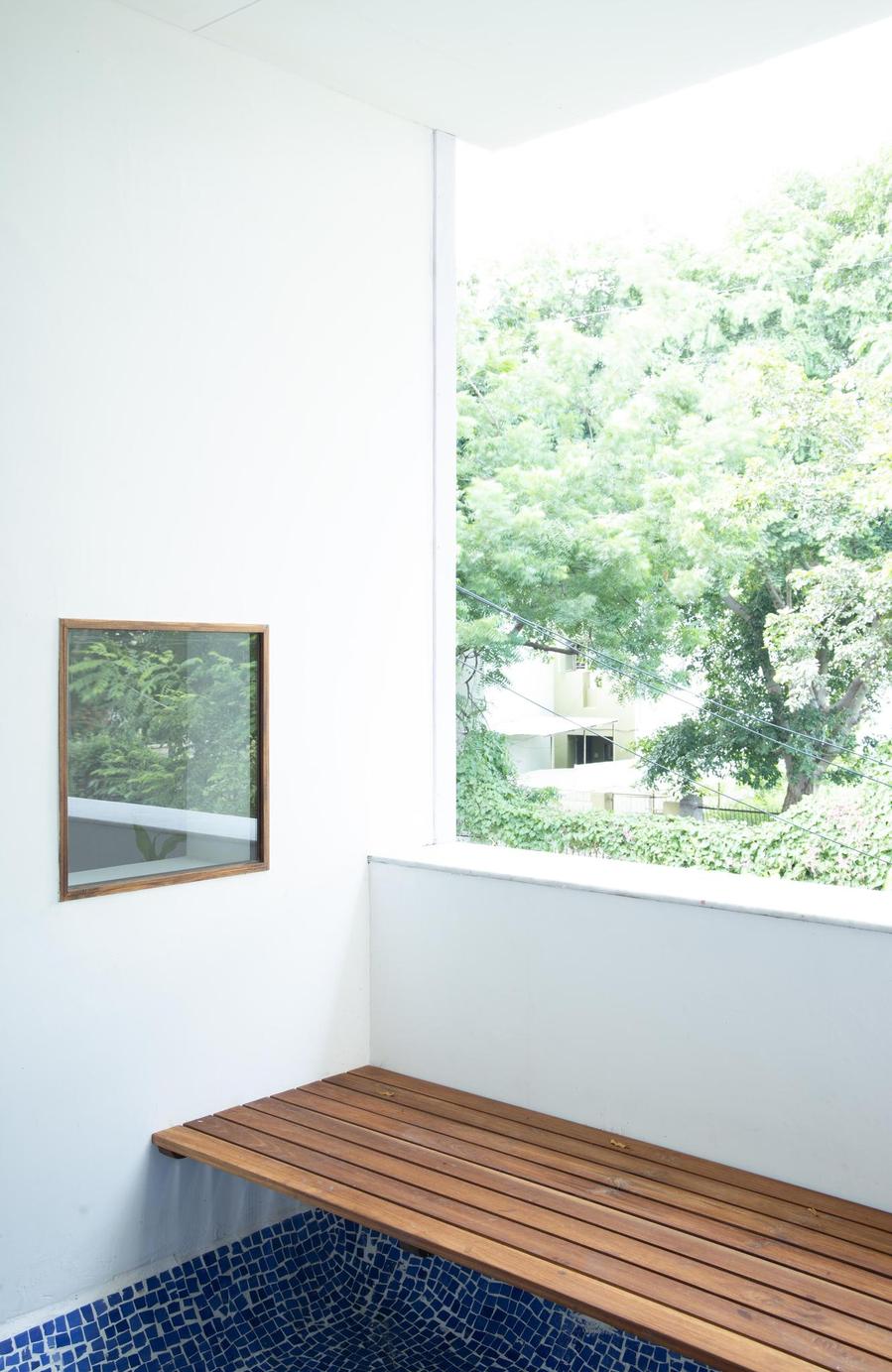
We designed an urban designer’s condo in Doshi’s iconic Bimanagar Housing, Ahmedabad. The spaces within the studio are interpreted as an act of walking through the city, and the various experiences that it entails. People, Wall, Threshold, Object, Alcove, Pause- form the elements of an urban space. The act of gathering, multi purpose, undefined spaces which can adapt to various functions, people and time. Nooks are formed as a result of these spaces and they provide a sense of intimacy.
The intervention appears as a palimpsest of the older house rather than a completely altered environment, thereby keeping its layers open for interpretation and inspection.
Gandhinagar, Gujarat | 2018
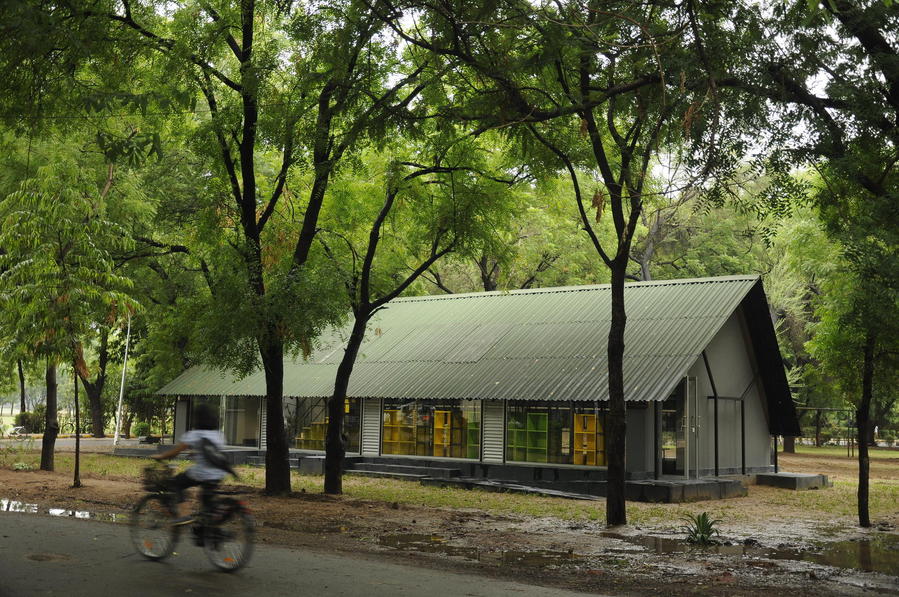
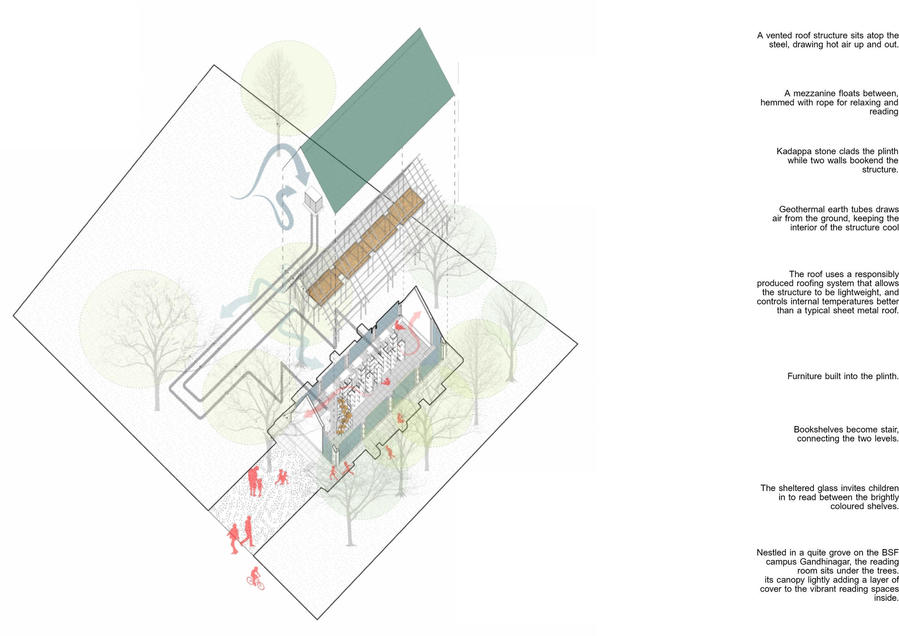
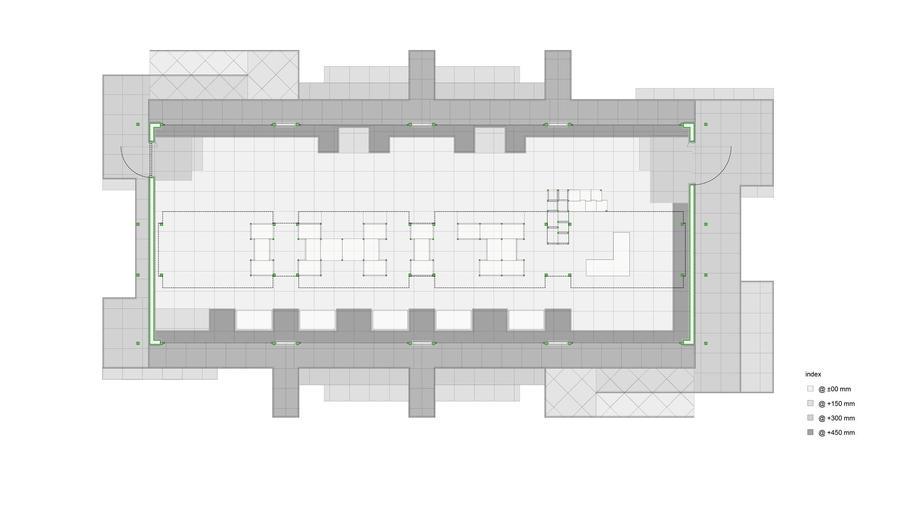
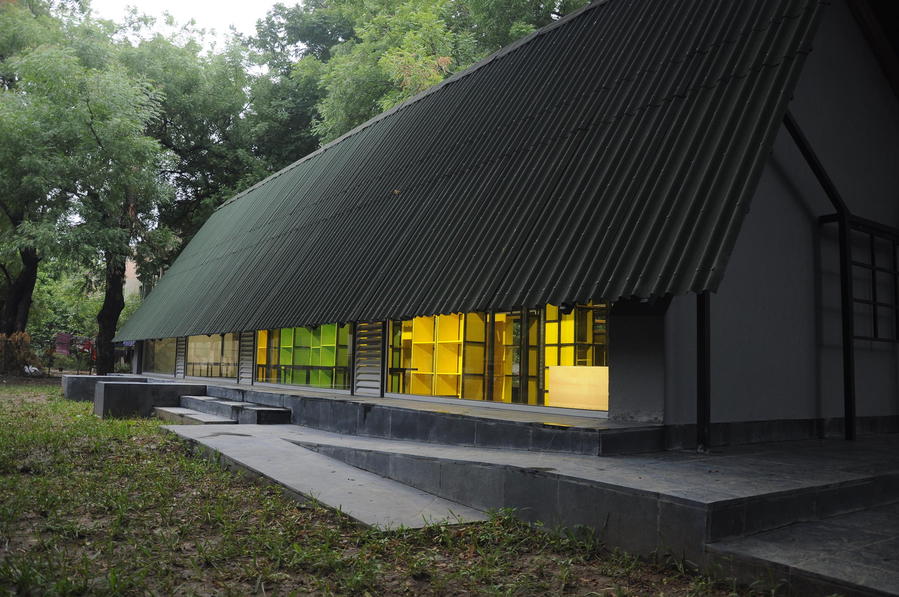
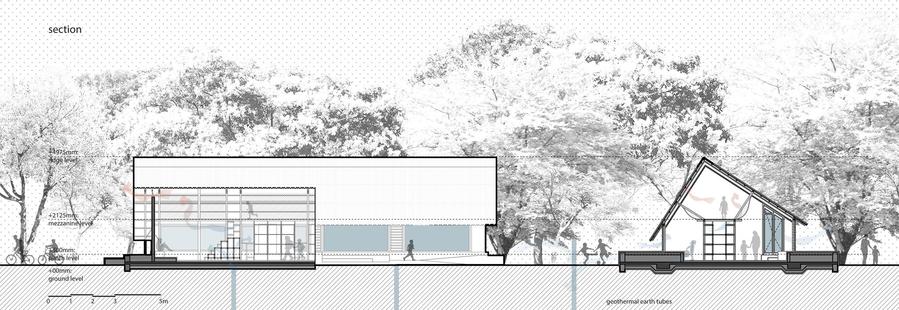
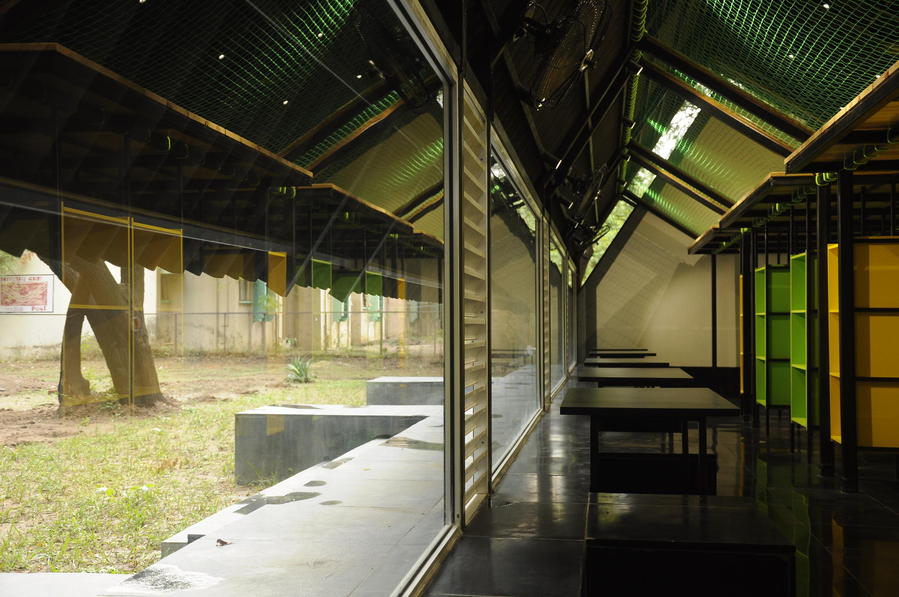
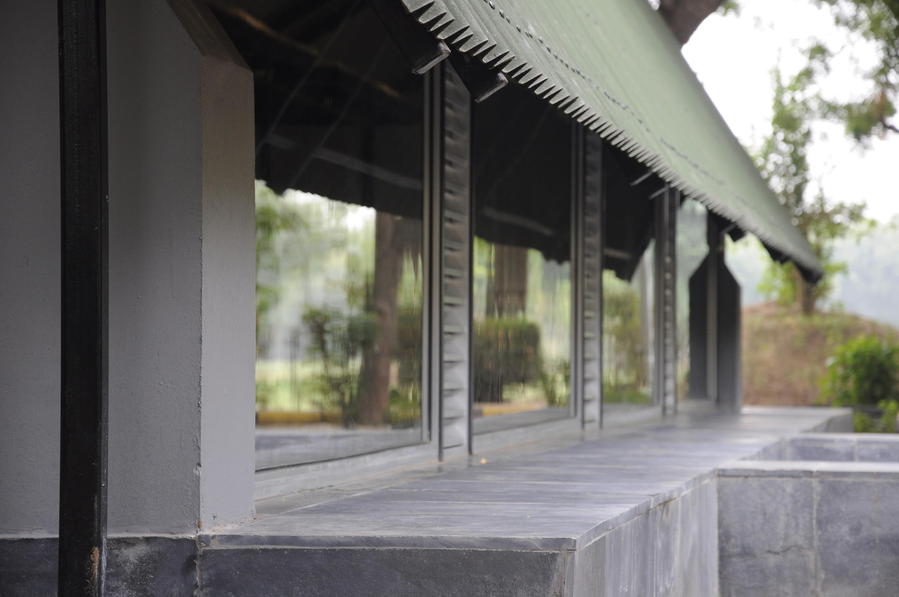
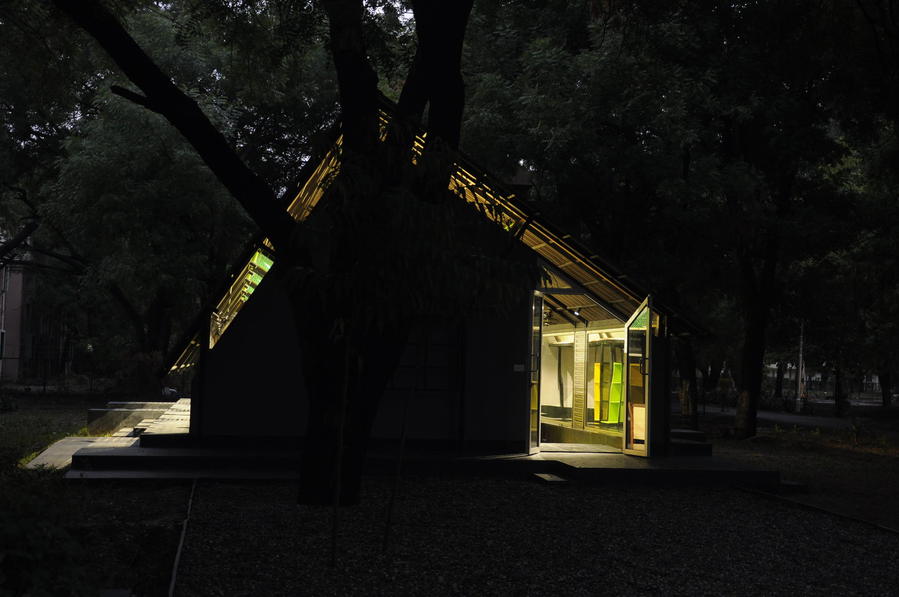
In the BSF campus of Gandhinagar, the Swadhyay Reading Room, designed for the children of BSF wards, sits nestled amidst a beautiful green canopy. Mimicking the ancient ashram tradition of studying under the trees, the simple, relatable form, both in terms of its spatial arrangement as well as its structural form, adds a layer of cover to the vibrant setting.
The 160 square meter project was constructed in a short span of ten weeks, made possible by the efforts of a dedicated construction team, and a design that is optimised for speed.
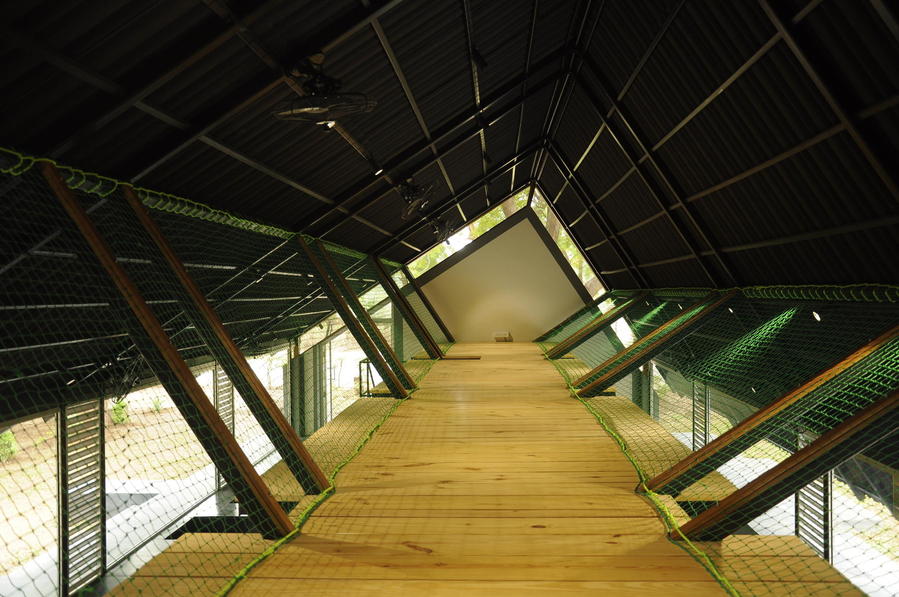
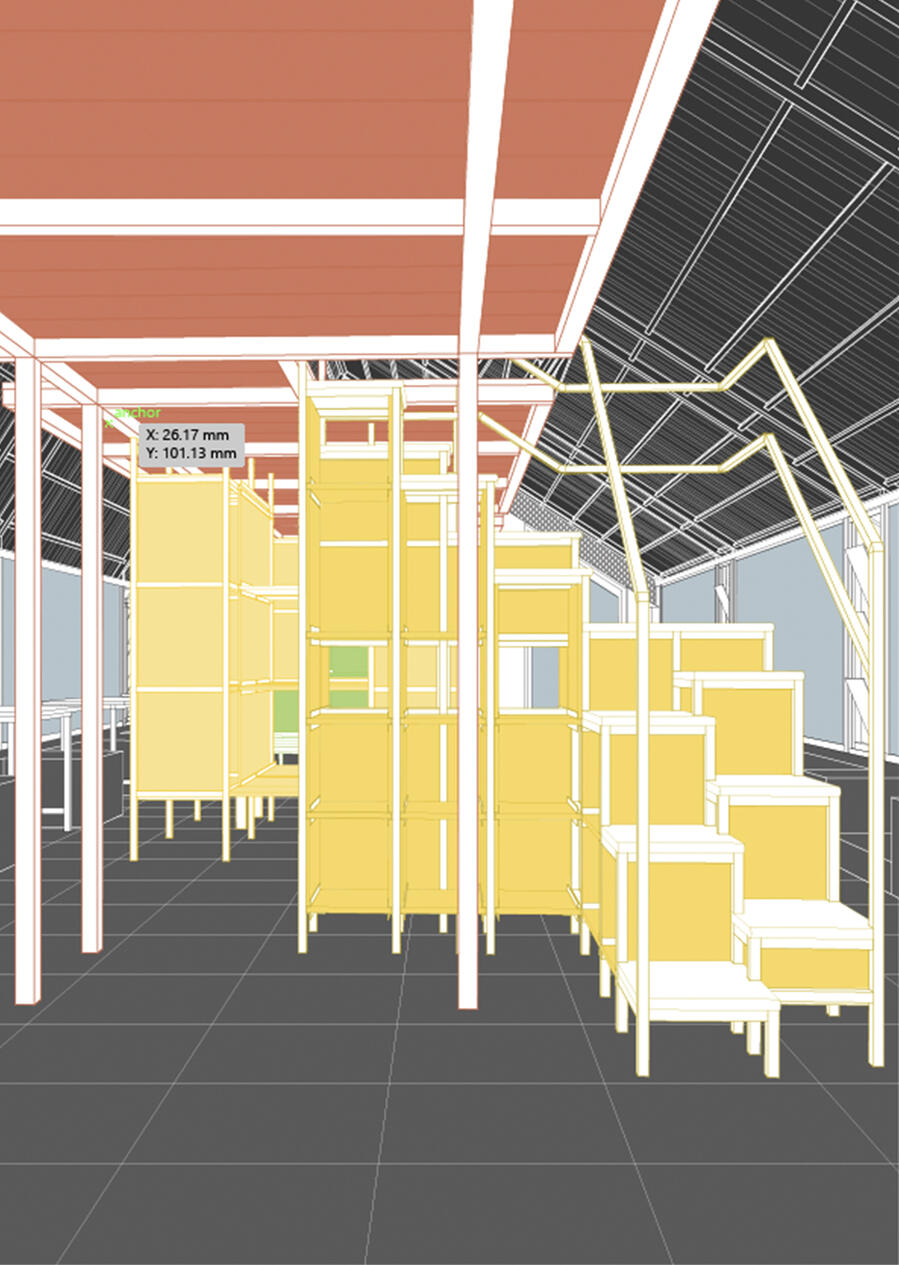
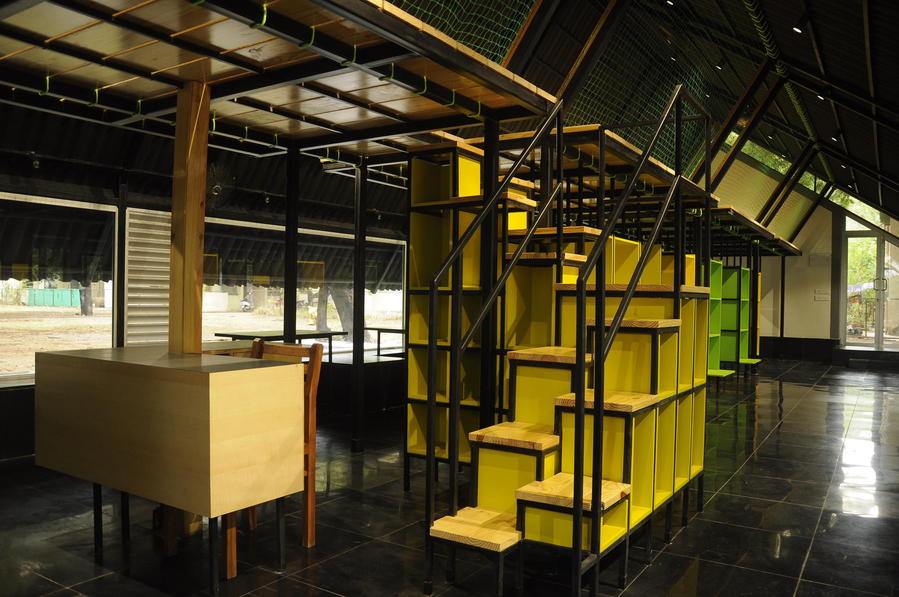
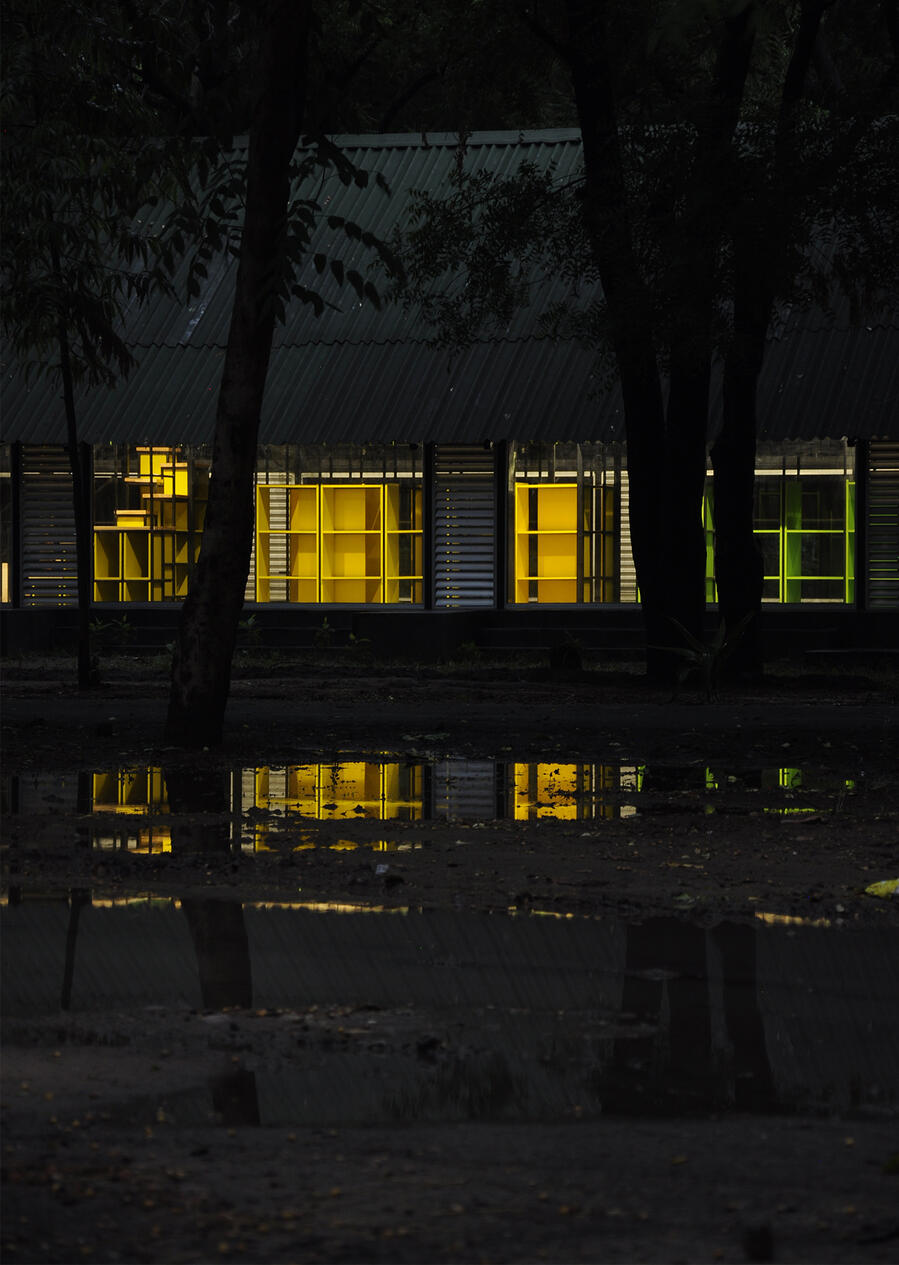
The building comprises of two parts: a heavy, articulated ground and a light, traditional yet modern eccentric shade perched upon it. The undulating brick plinth clad with kadappa stone holds users close to ground, merging with built-in tables and benches. A ventilated roof sits atop a steel framework, with extended eaves to protect the plinth, and a series of geothermal earth tubes draw air in through the ground, maintaining the structure's coolness. In addition to that, a mezzanine floats above brightly coloured bookshelves, accessed through a camouflaged stair. Planks of pine wood, hemmed in with rope nets for relaxed reading, adds to the playful vibe. As the dusk approaches, the vivid space inside reveals itself through the sheltered glass, inviting the children in, to read.
** Received The Merit List Citation for 2018-2019 **
Photography credits: Sachin Bandukwala
Design Team: Melissa Smith, Sachin Bandukwala, Nabajyoti Dutta Choudhury, Rupal Rathore
Structural Consultancy: StrucArt Design Consultants
MEP Consultancy: -
Contractor: ID Projects Pvt Ltd
Carpentry: Omprakash Suthar
Vapi, Gujarat | 2021
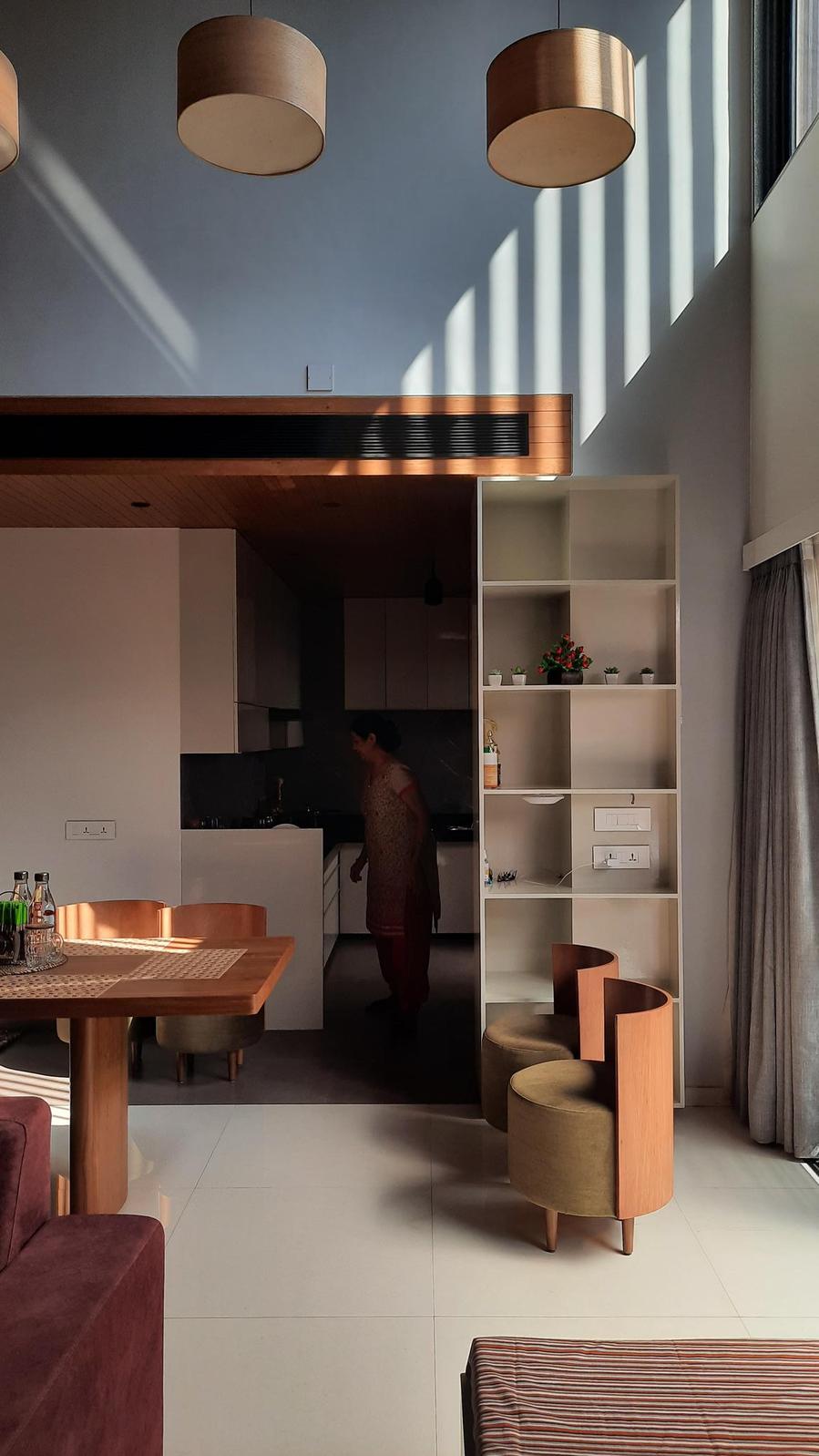
In order to create a sense of stability and permanence in a primary home, the core idea was to bring the mass of the space to the ground and the walls by treating the furniture, lighting, cladding, and other elements appropriately while keeping the ceilings lighter.
The idea gradually developed into bringing the interior volume of the home together via natural wood as the fundamental element.
The reclaimed Valsad teak became the space-defining element, starting from creating dynamic volumes in the living area to the vertical, floating, beam-like light fixtures which are housed in the double-height space, the wooden elements are introduced to establish a visual connection throughout.
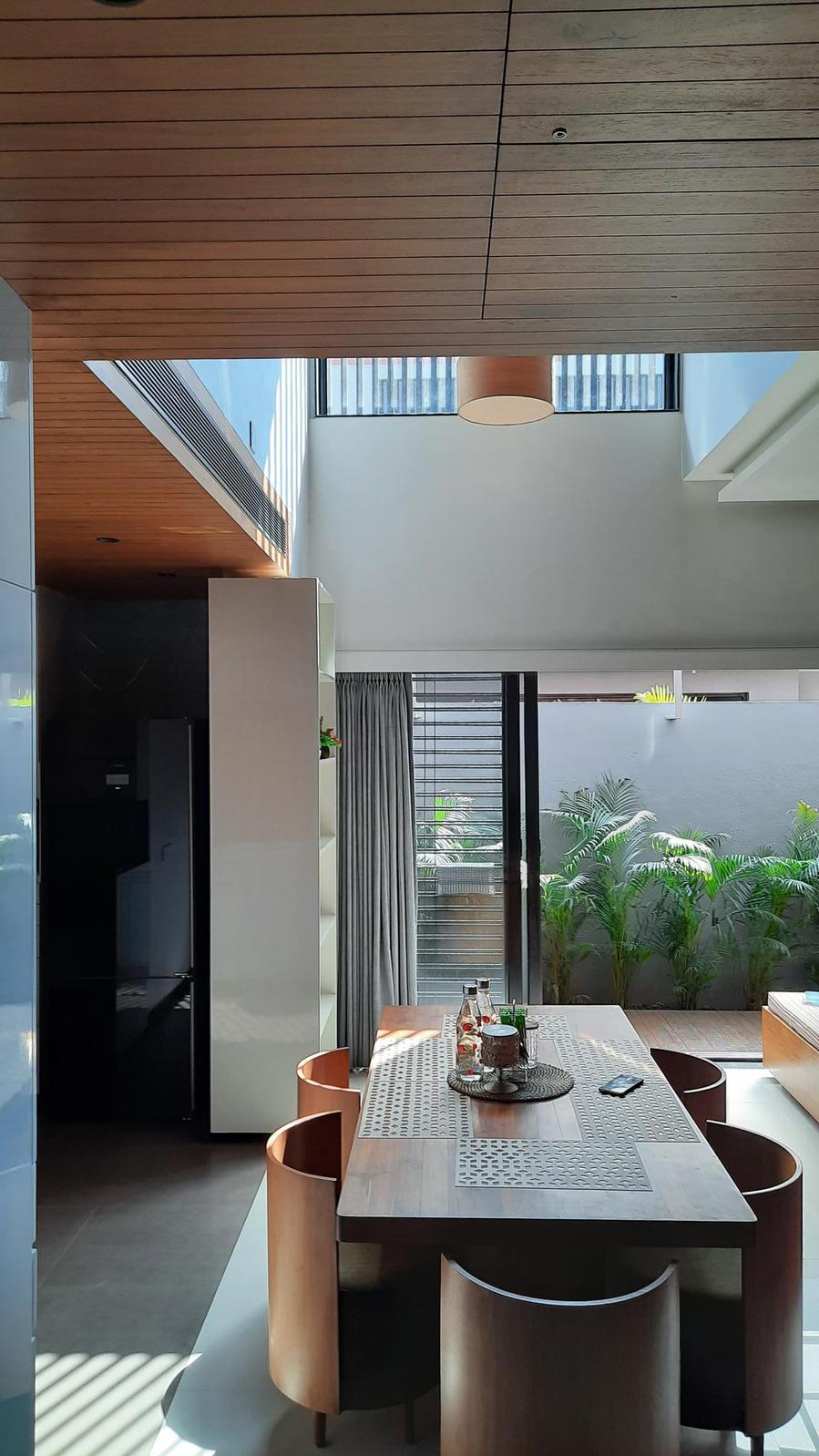
Vapi, Gujarat | 2021
A 3BHK row house unit among 500+ similar units needs hyper customization to stand out from the neighbours, at least inside. A brass and wood handrail, teakwood bench ... pieces of a rich interior.
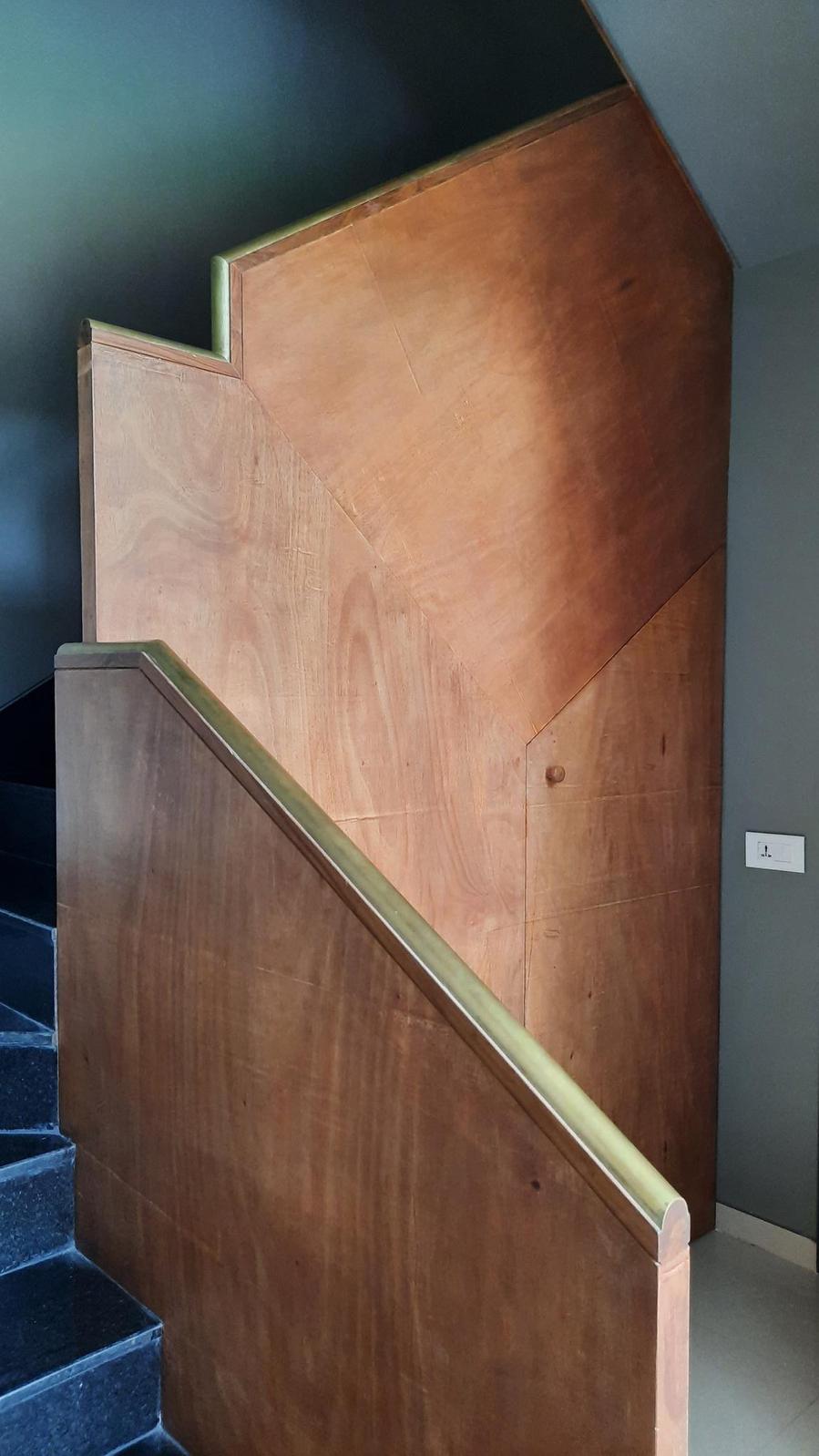
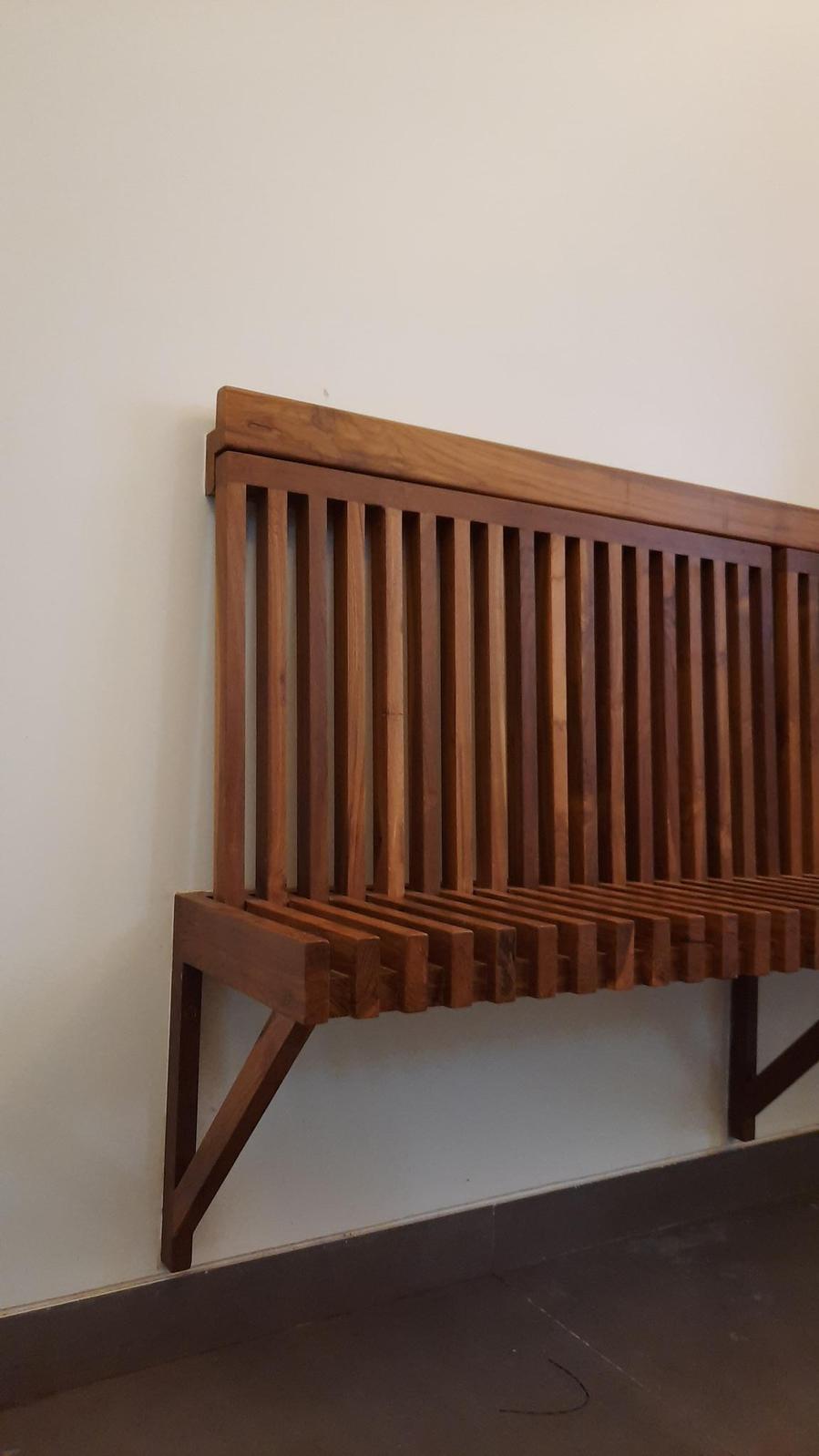
Ahmedabad, Gujarat 2013 - 2020
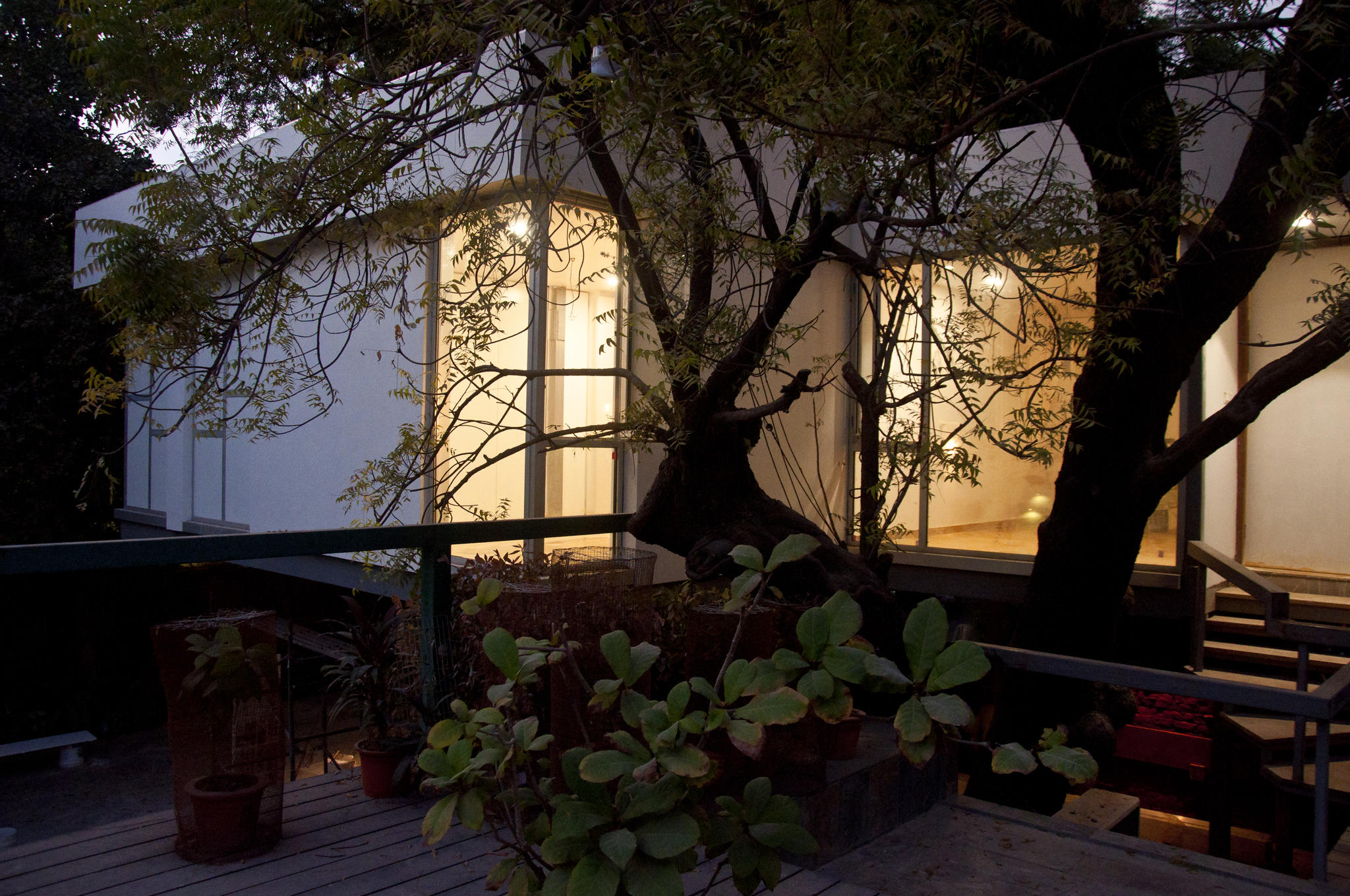
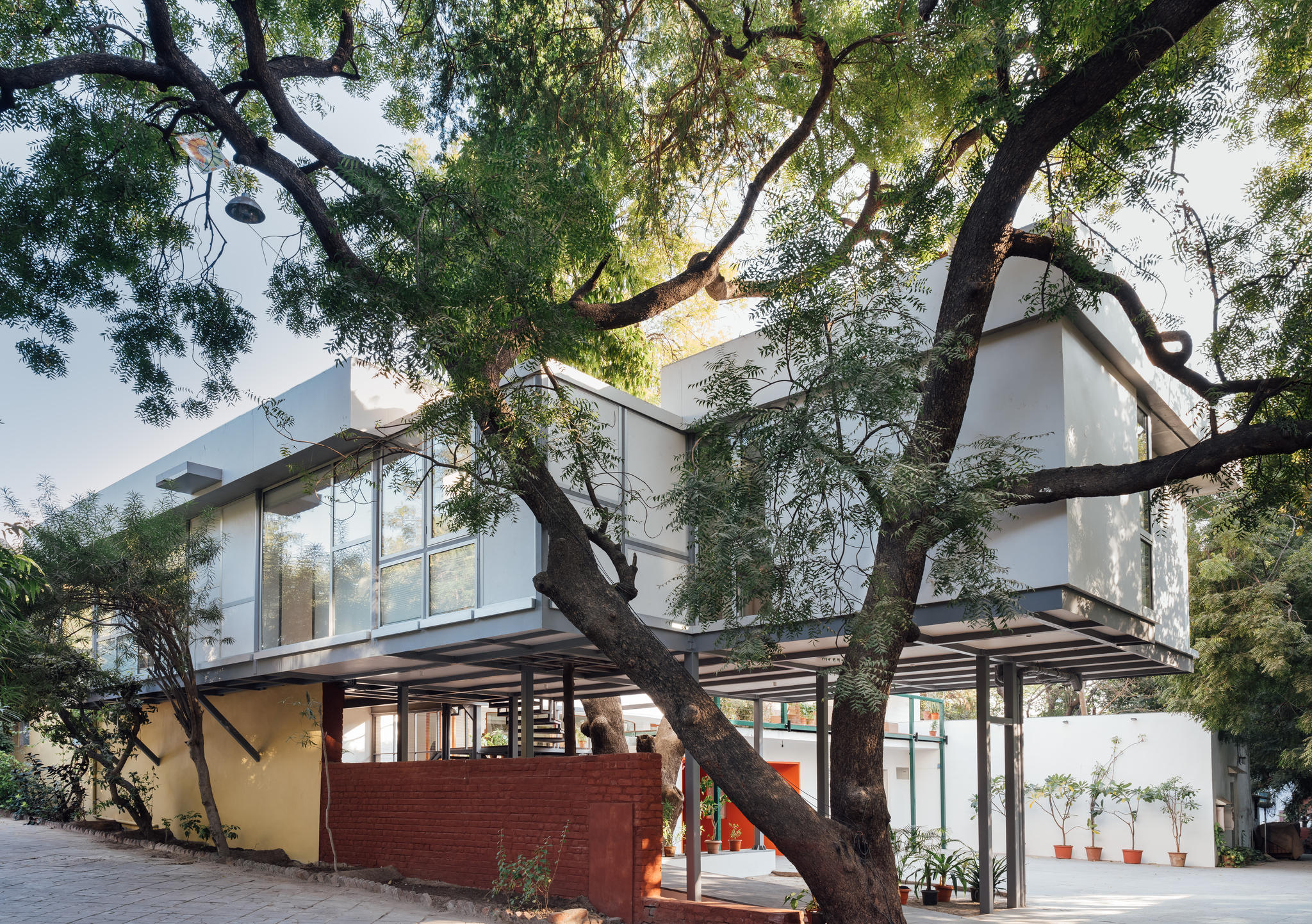
As a project, the Chidambaram House gracefully demonstrates the opportunities that a deep engagement with time offers. It is an evolving place, layering phases of history onto its structure, shifting as its family matures and grows. When the site was first acquired, a small Art Deco structure stood in the land. Behind it, the original house designed by Gira Sarabhai, opened toward the Sabarmati River. Over time, Sarabhai’s house has expanded, extending back toward and finally wrapping all the way around the old Art Deco structure. Architects of varied approaches have brought new life and ideas to the place. What we have contributed to the layered campus is a project in three phases that uses the existing Art Deco Structure as an armature, and reaches out into the trees to develop a light, airy home within a home for the family and their dog.
PHASE 1: FLOATING A NEW TERRACE (2013-2014)
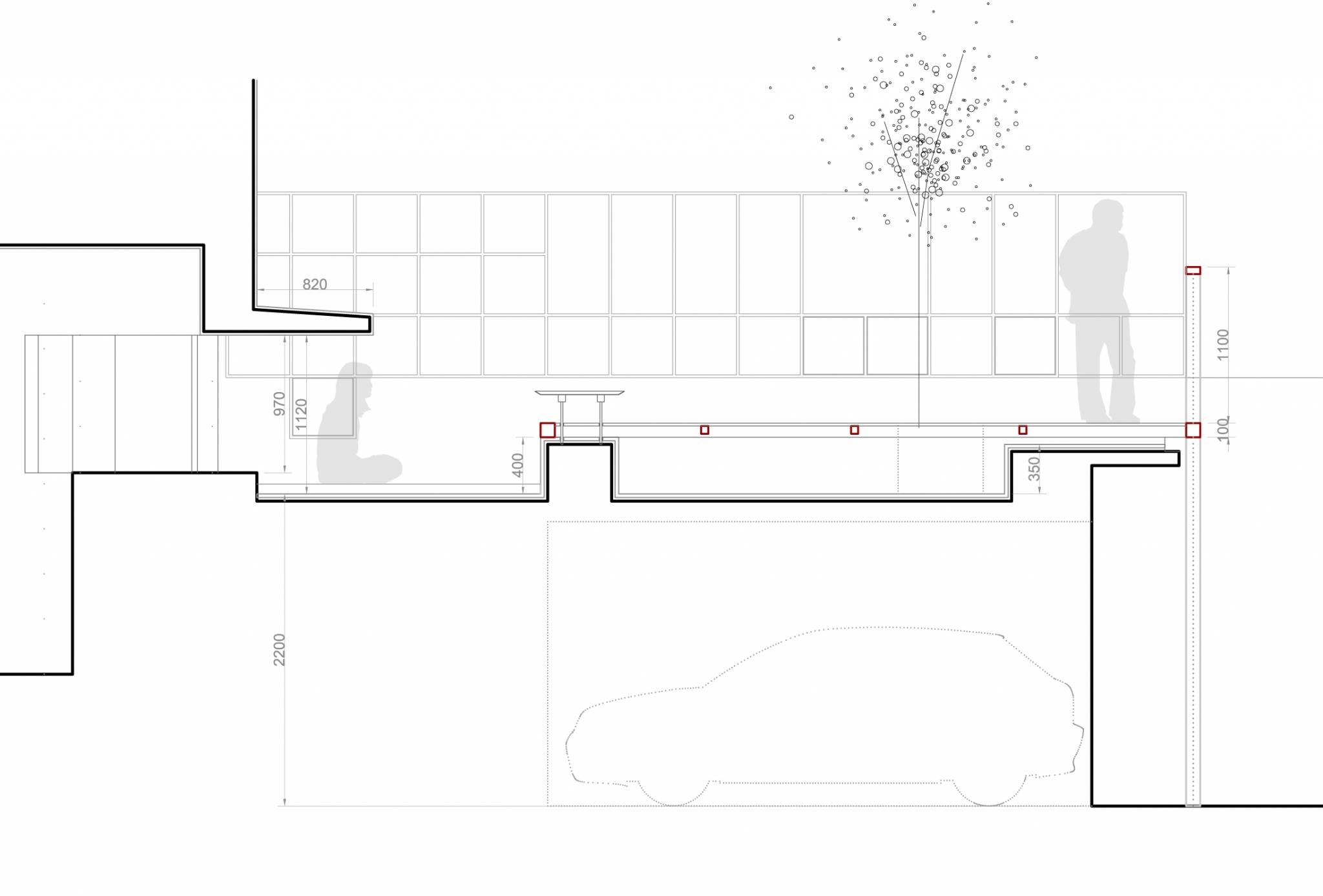
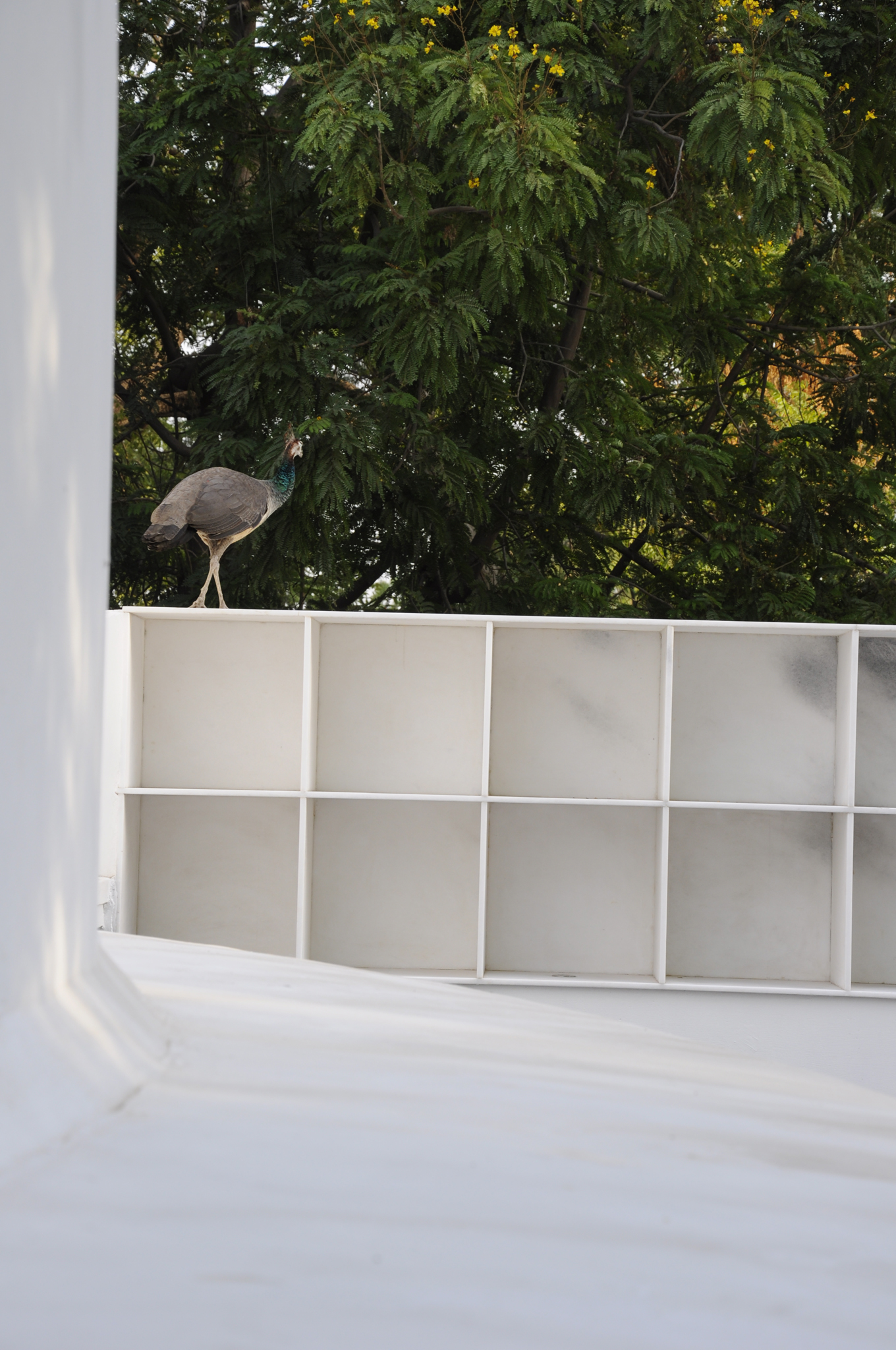
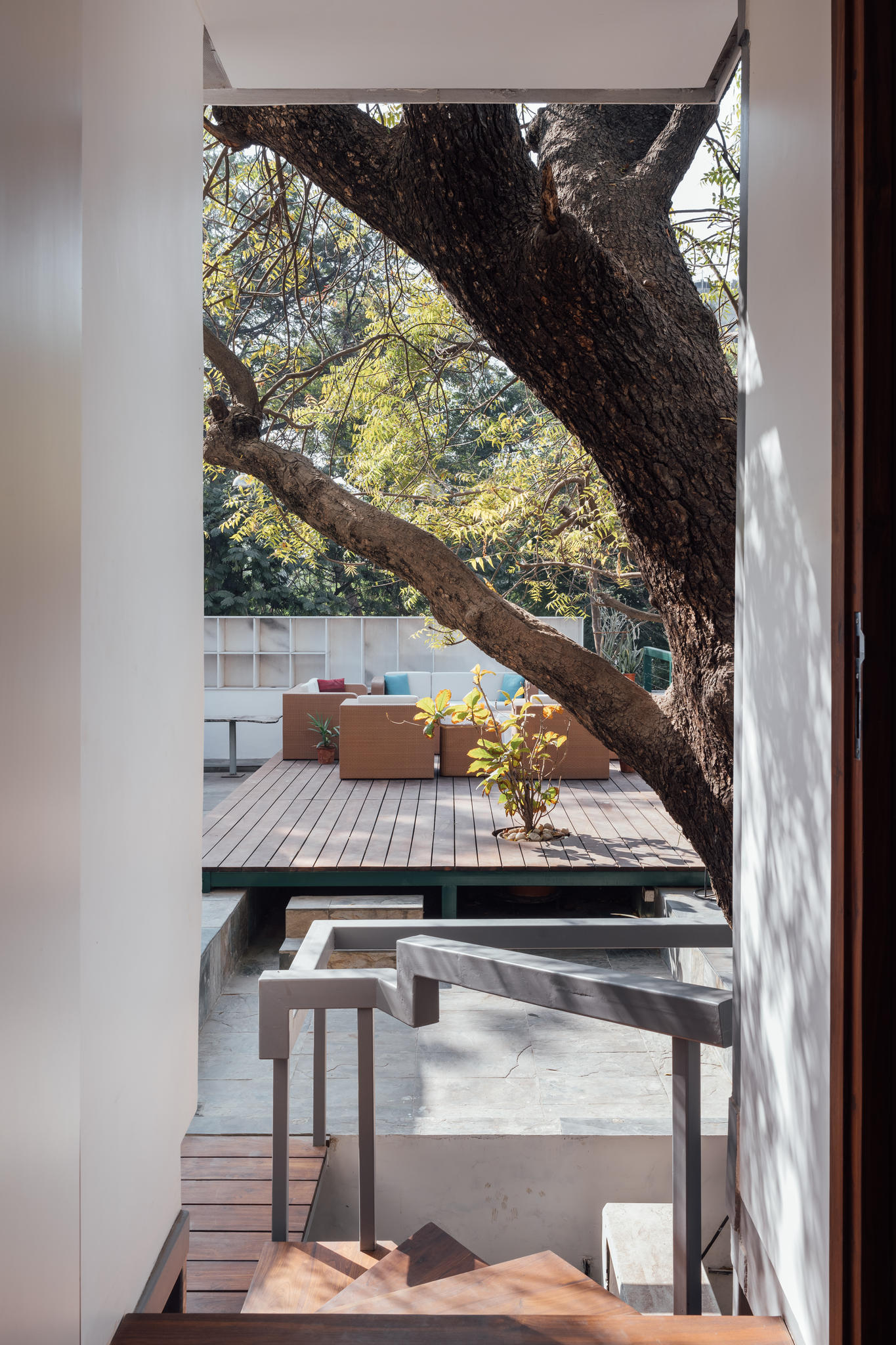
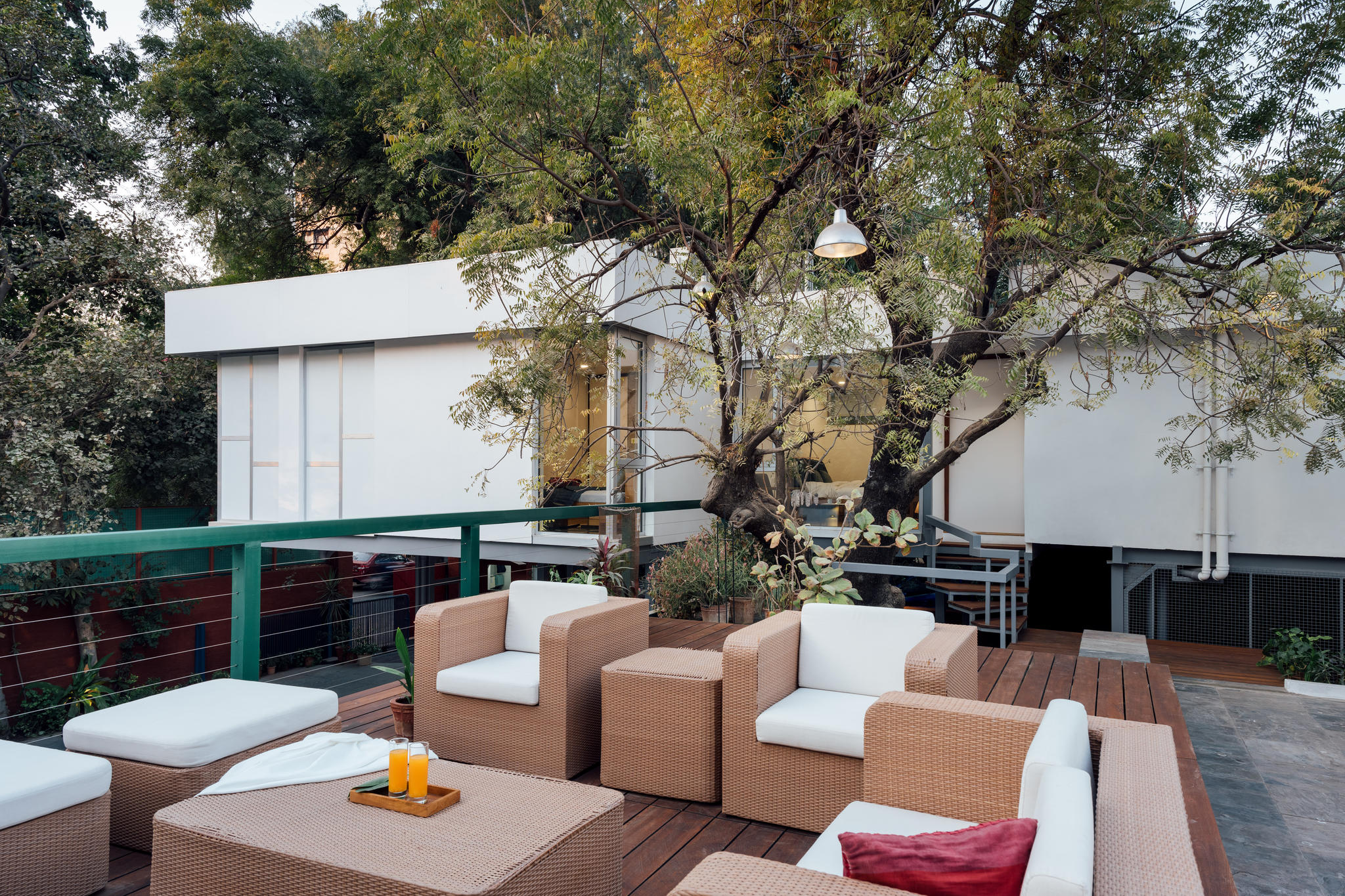
A new open terrace, hovering between openings of the old Art Deco facade, reclaims the space above an old garage for a three-sided elevated court. The steel frame rests on a raised beam, and projects over the existing facade, anchored in the ground below, to create a shaded arcade at the ground level, and a railing above. Simple teakwood planks, polished with linseed oil and water, complete a surface that floats in the branches of an old neem tree, flanked by a row of marble shelves.
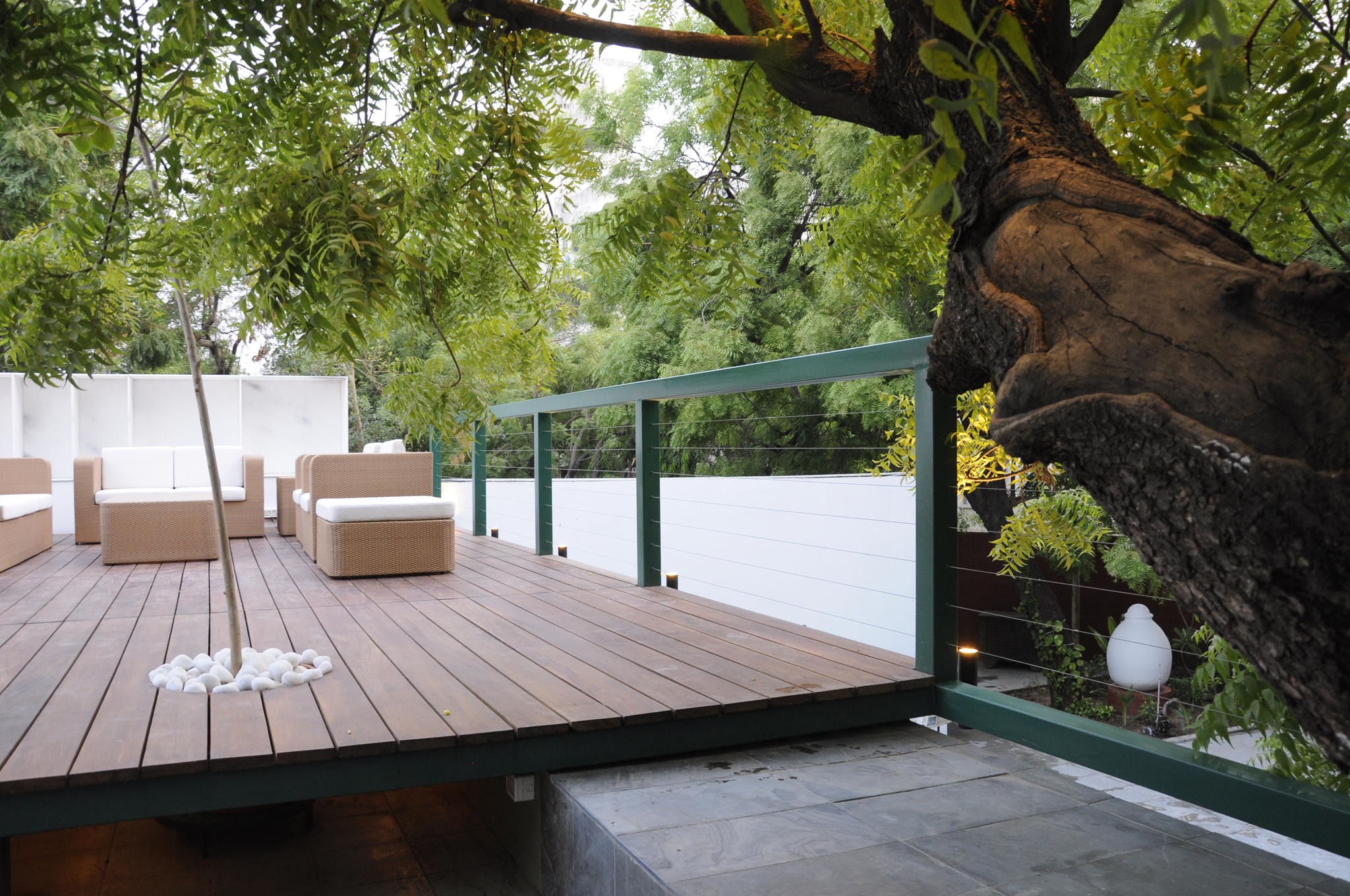
 PHASE 2: RECLAIMING AN ART DECO VERANDAH (2015-2016)
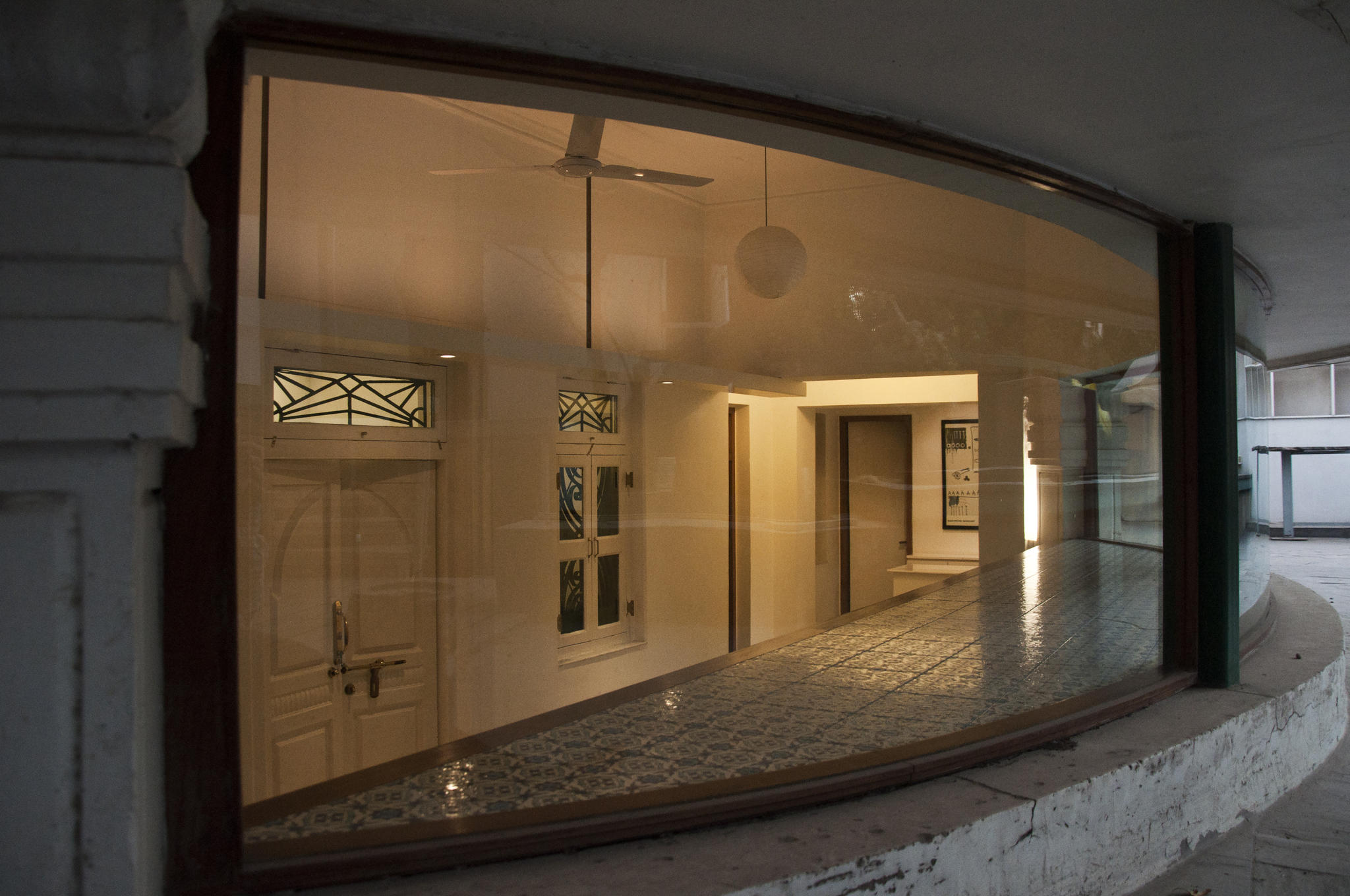
The glass-faced verandah warmly operates as a visual connection between the house and the open terrace. Delicate teakwood frames touch ornate columns lightly, subtly articulating a threshold while amplifying the beauty of the view. Inside, a sleek white light tray suspended from brass pipes ties together the stylized art deco elements to create a contemporary space (while deftly concealing added pipes).
PHASE 3: BUILDING ROOMS IN THE TREES (2018-2020)
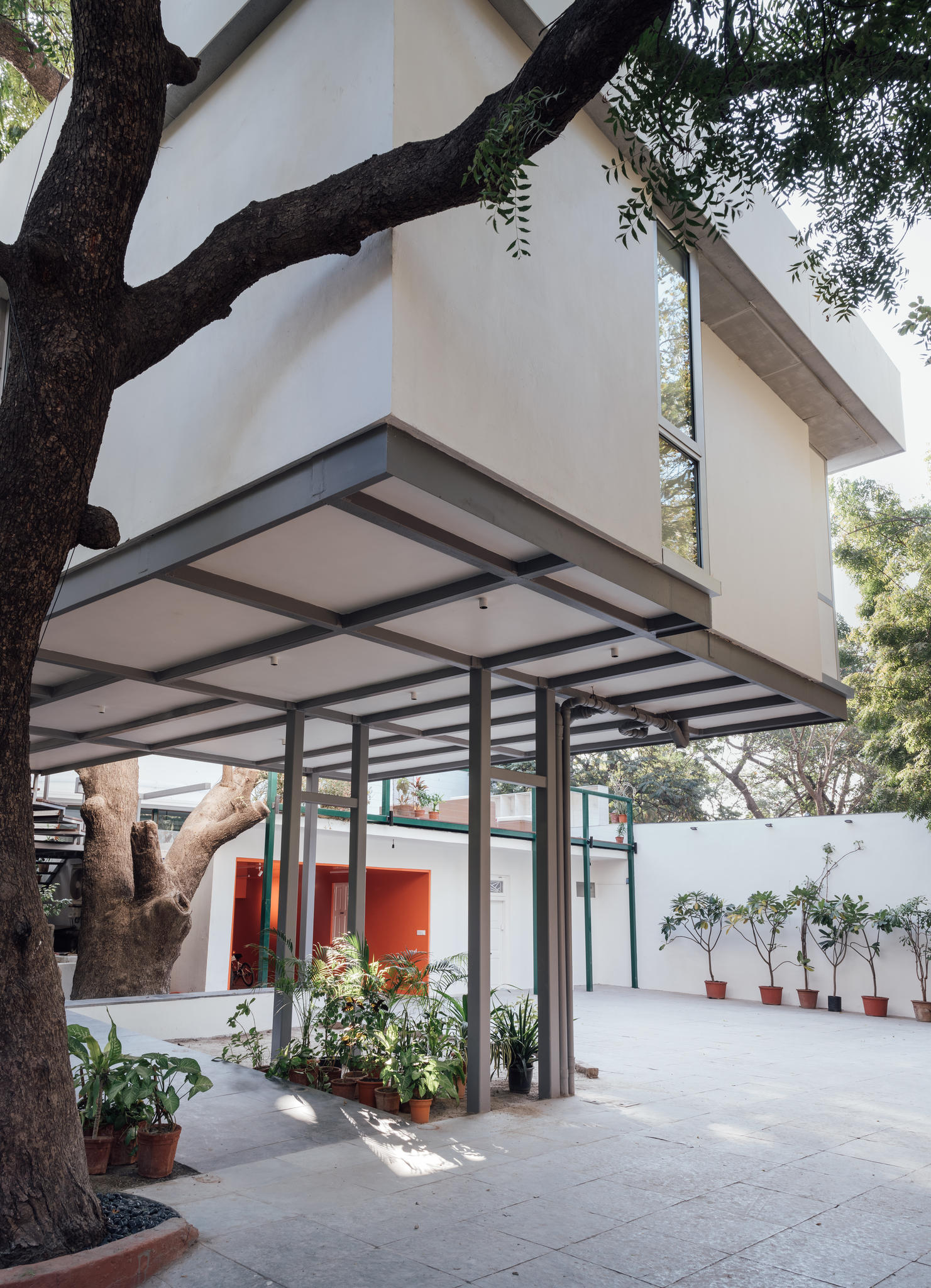
Floating out beyond the building, above wall and walkway, a new set of light-filled rooms hangs from a steel truss, winding around aged trees. A thin floor plate turns the corner to a lit ceiling below, highlighting the delicate columns from which it is suspended, no larger than the straight trunk of the young Aso Palav growing through the children’s courtyard. Volumes open at the corner, peering into the leaves through alternating sheets of glass and marble. Washed with dappled light, warm Jaisalmer stone flooring anchors cozy rooms inside.




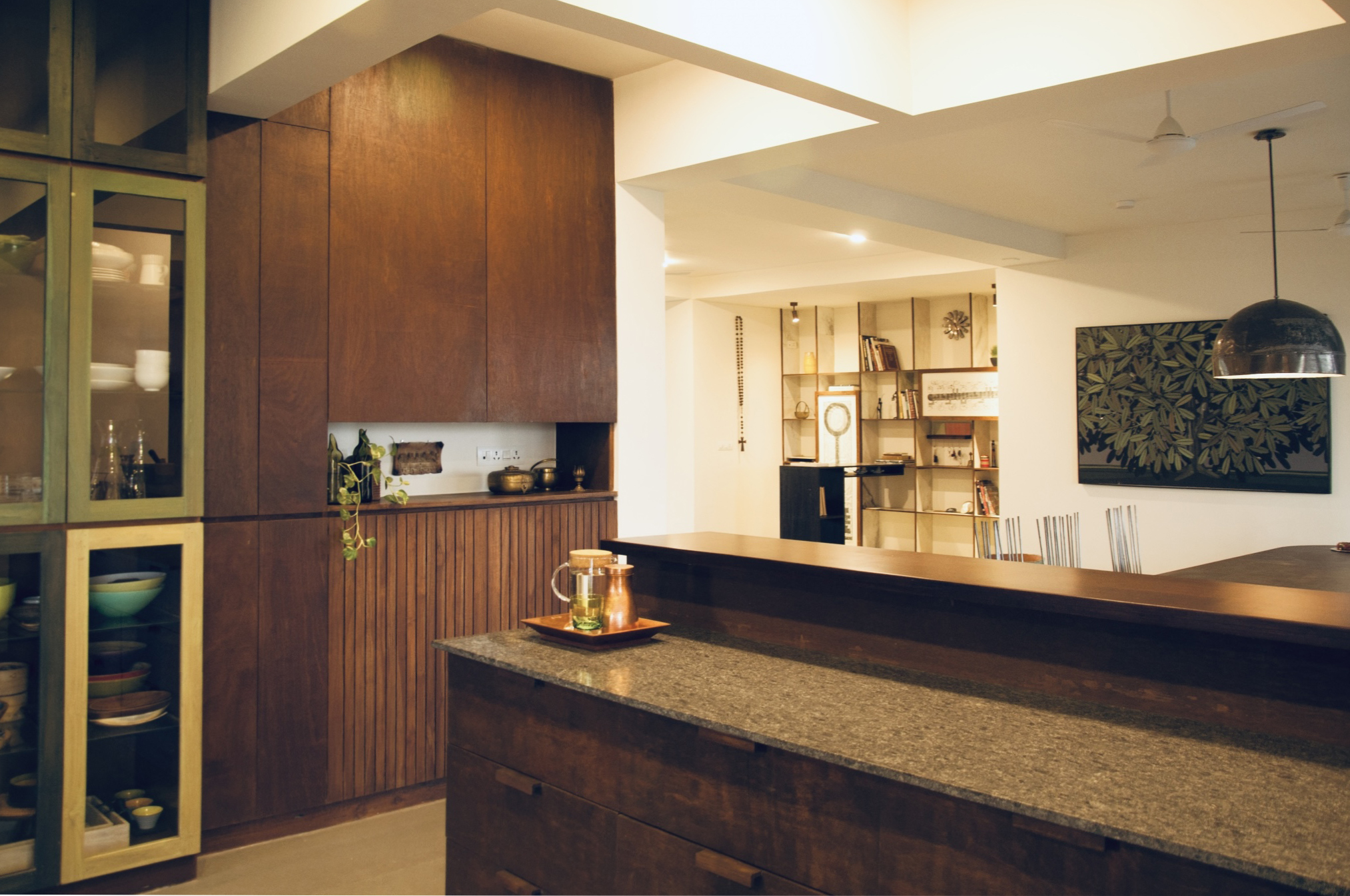
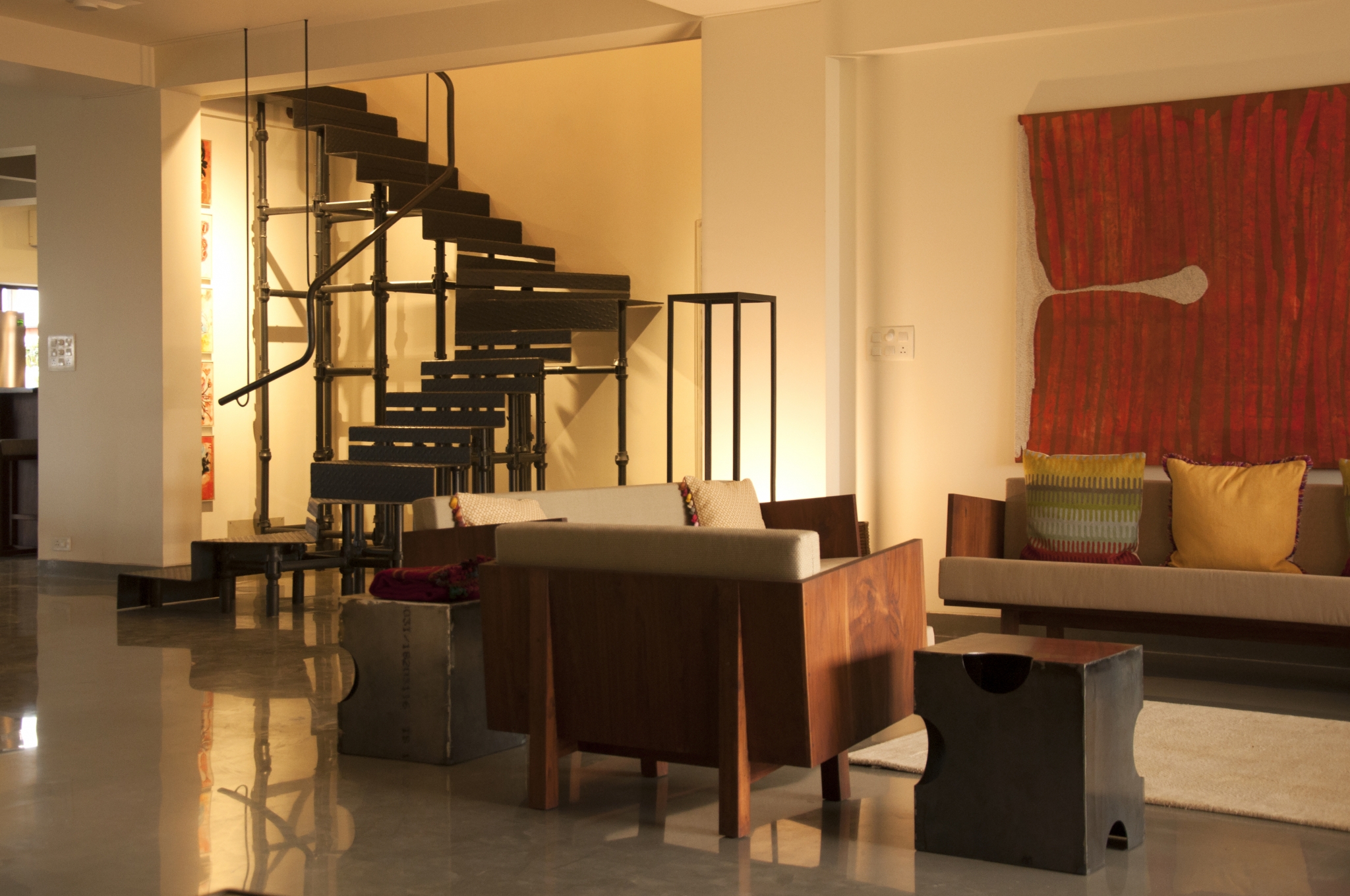
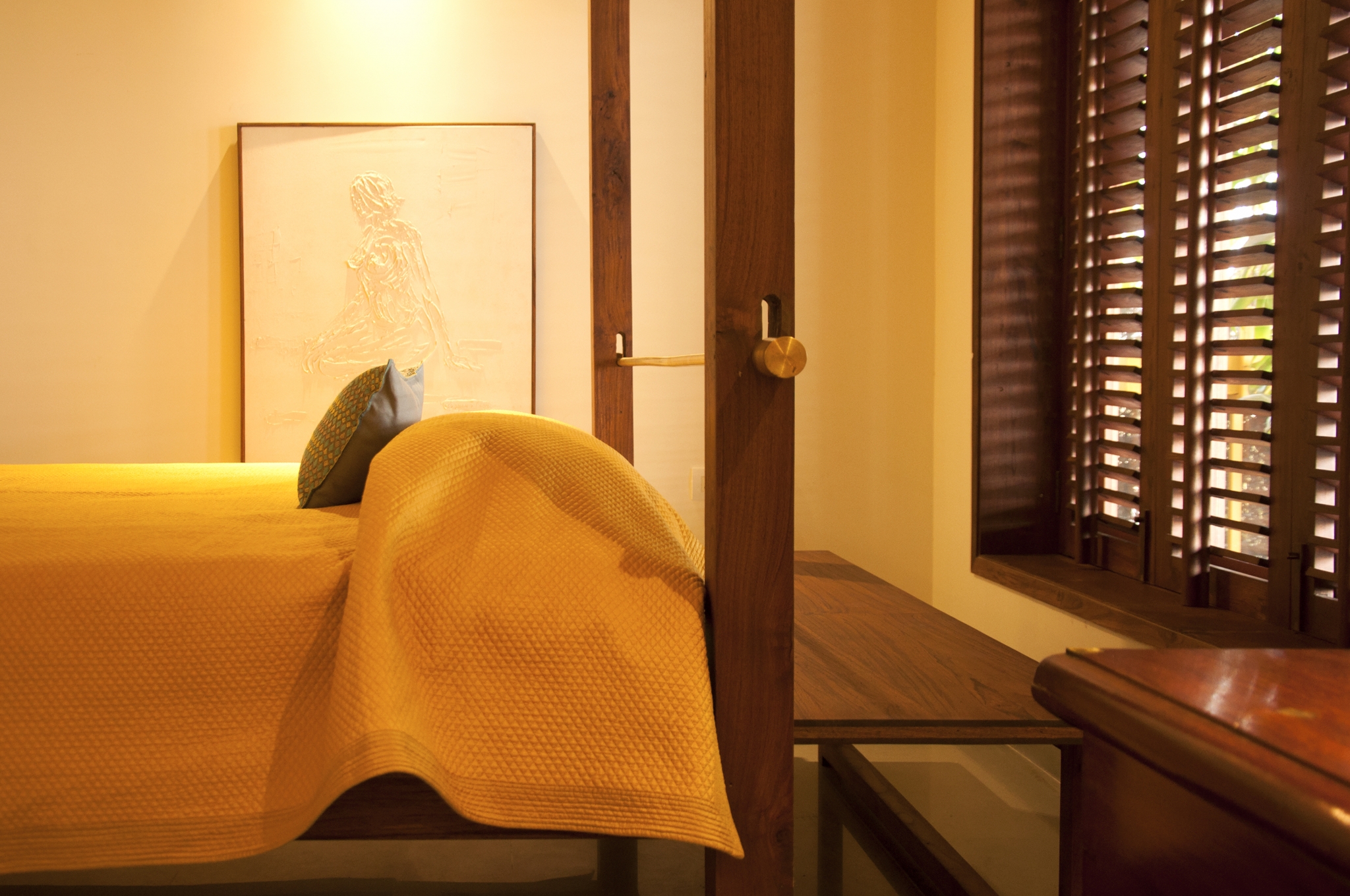
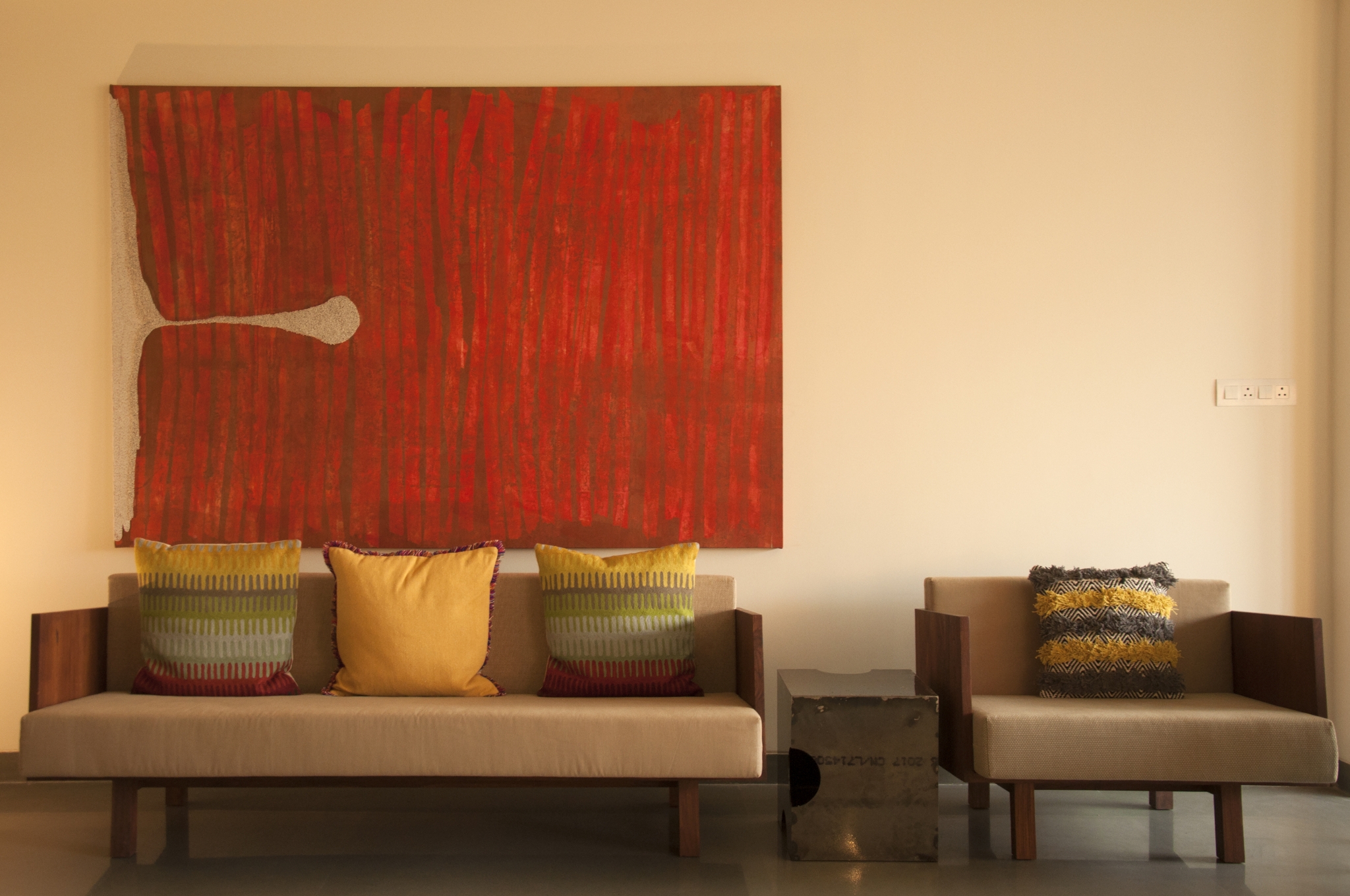
The home is a play of quiet corners and lively moments, the material and lighting are its backdrop. Traditional lacquer crafts, wood and steel meld together, inhabiting this two-storey penthouse. The narrative is interspersed as pops of colour in otherwise calm spaces.
A mechanical drum dome hangs in the dining room, the material playing off natural light. The deer legged dining table is paired with metal backrest chairs. Steel plates rest on scaffolding staircases. Brass, metal and lacquer leave their traces throughout the penthouse.

Ahmedabad, Gujarat 2017
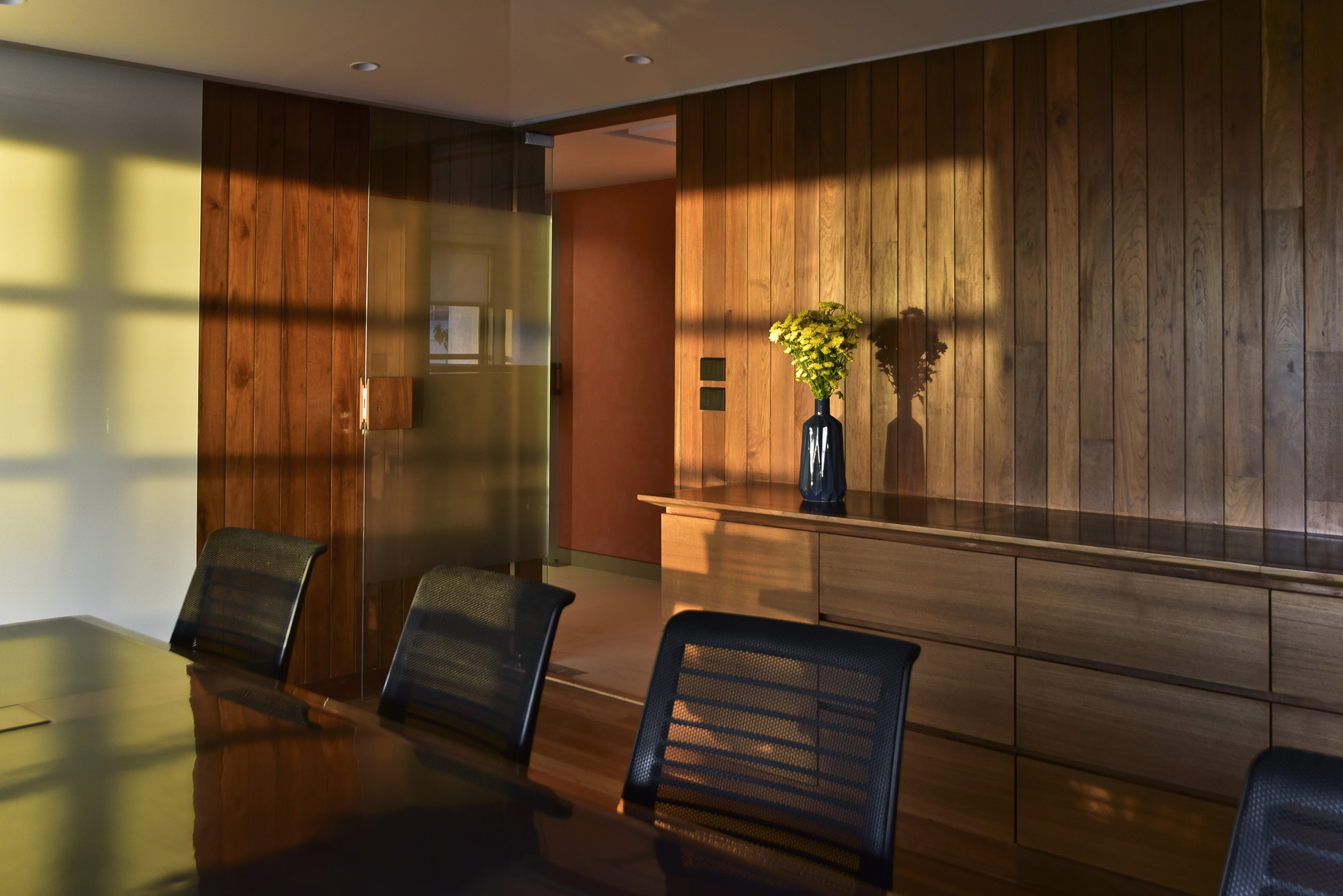
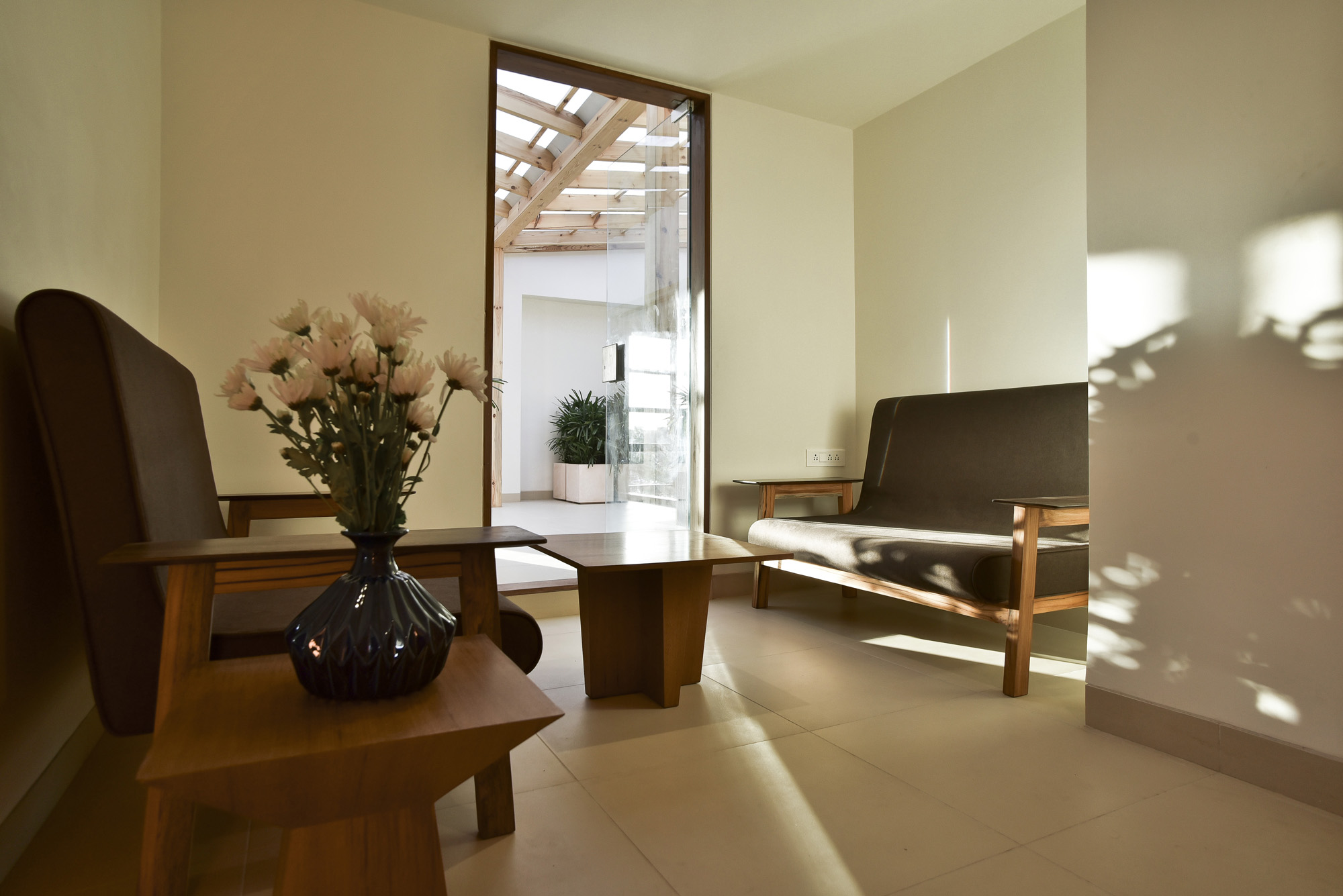
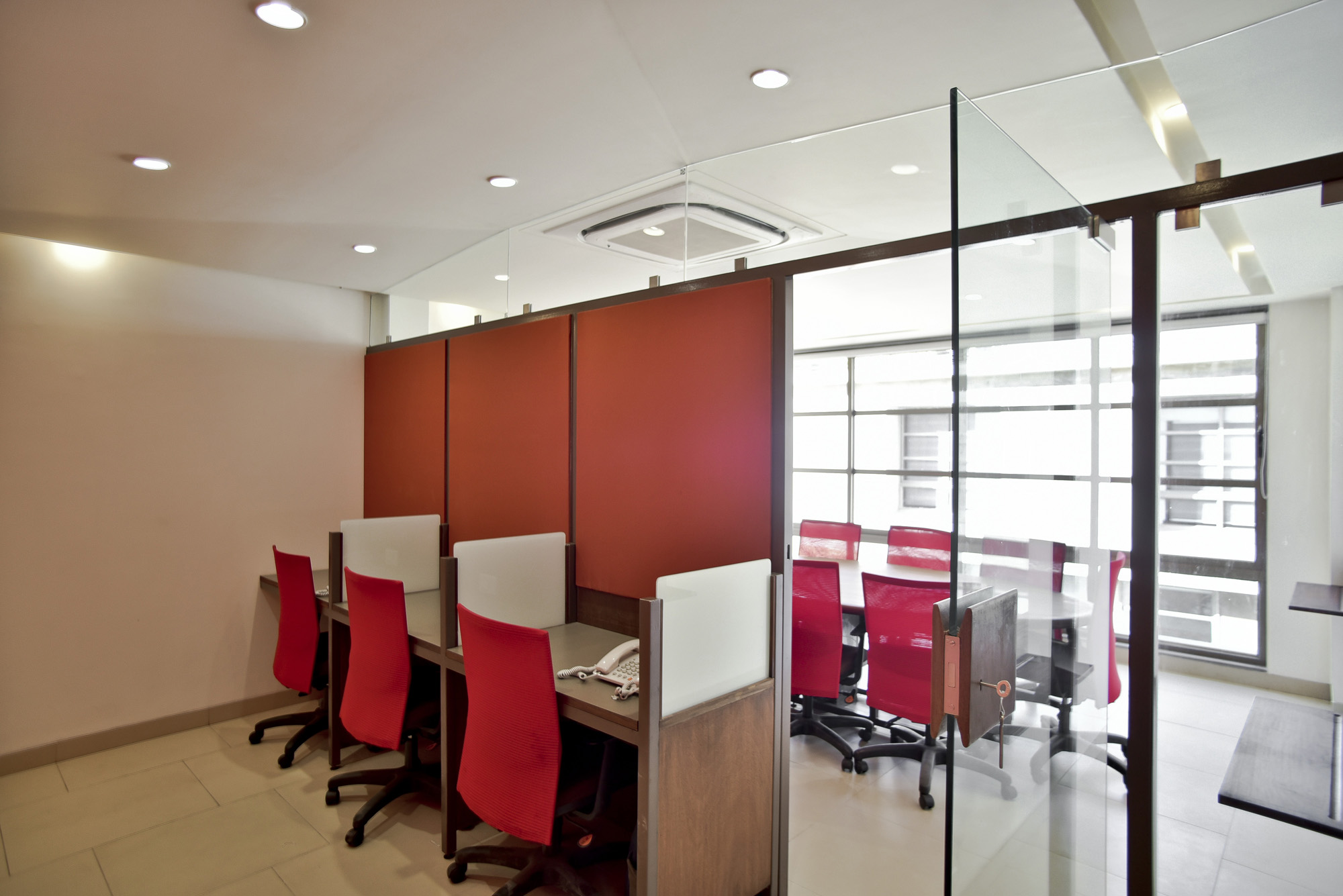
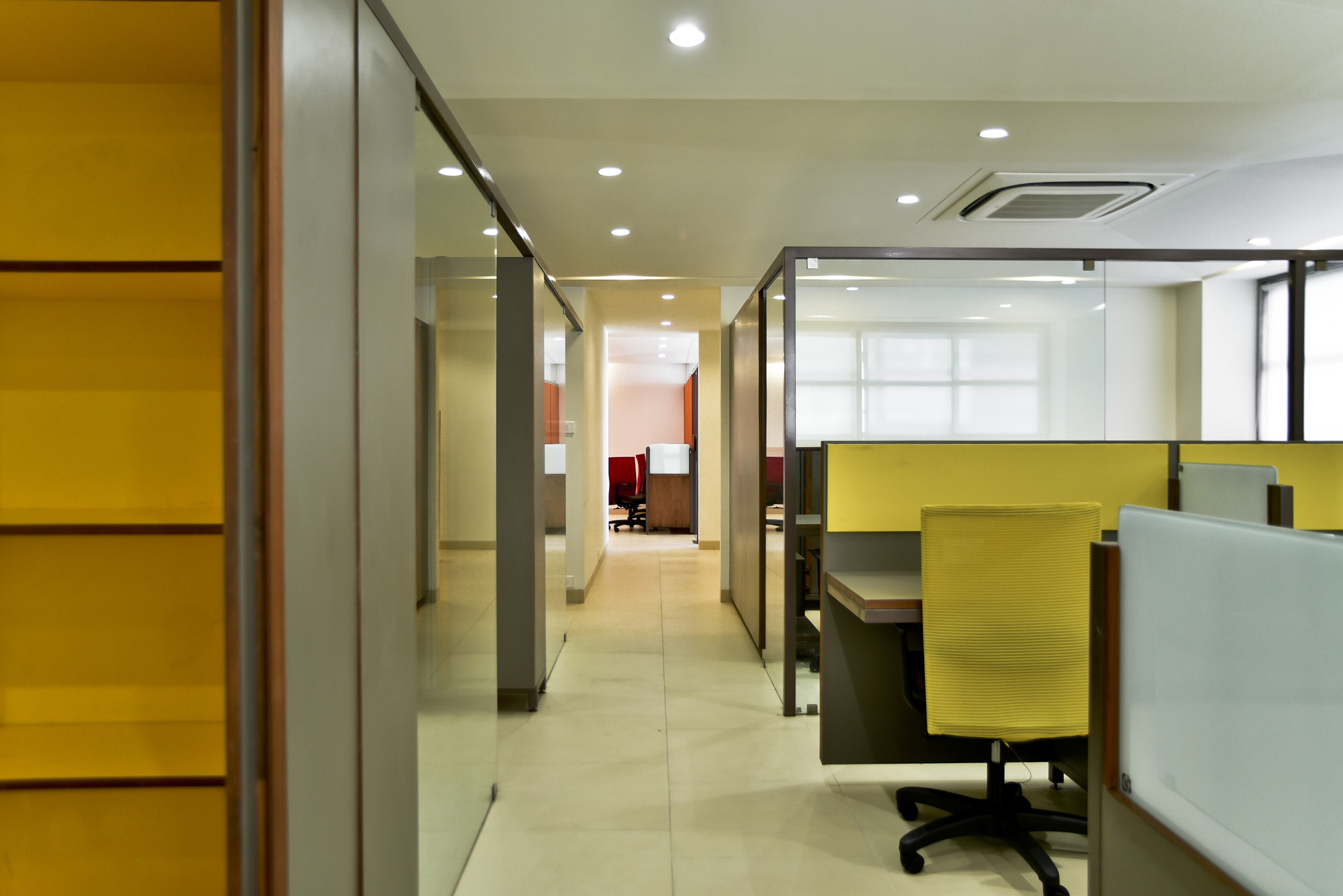
This corporate office for a precision engineering office spreads over 2000 sq m on two floors. The program spans director, board and support staff, with a conference room for 20, director's cabin, smaller scale meeting rooms and semi private offices, with cublic seating for approximately 30 people. Courtyard, dining, pantry and bathroom spaces fill out the support services.
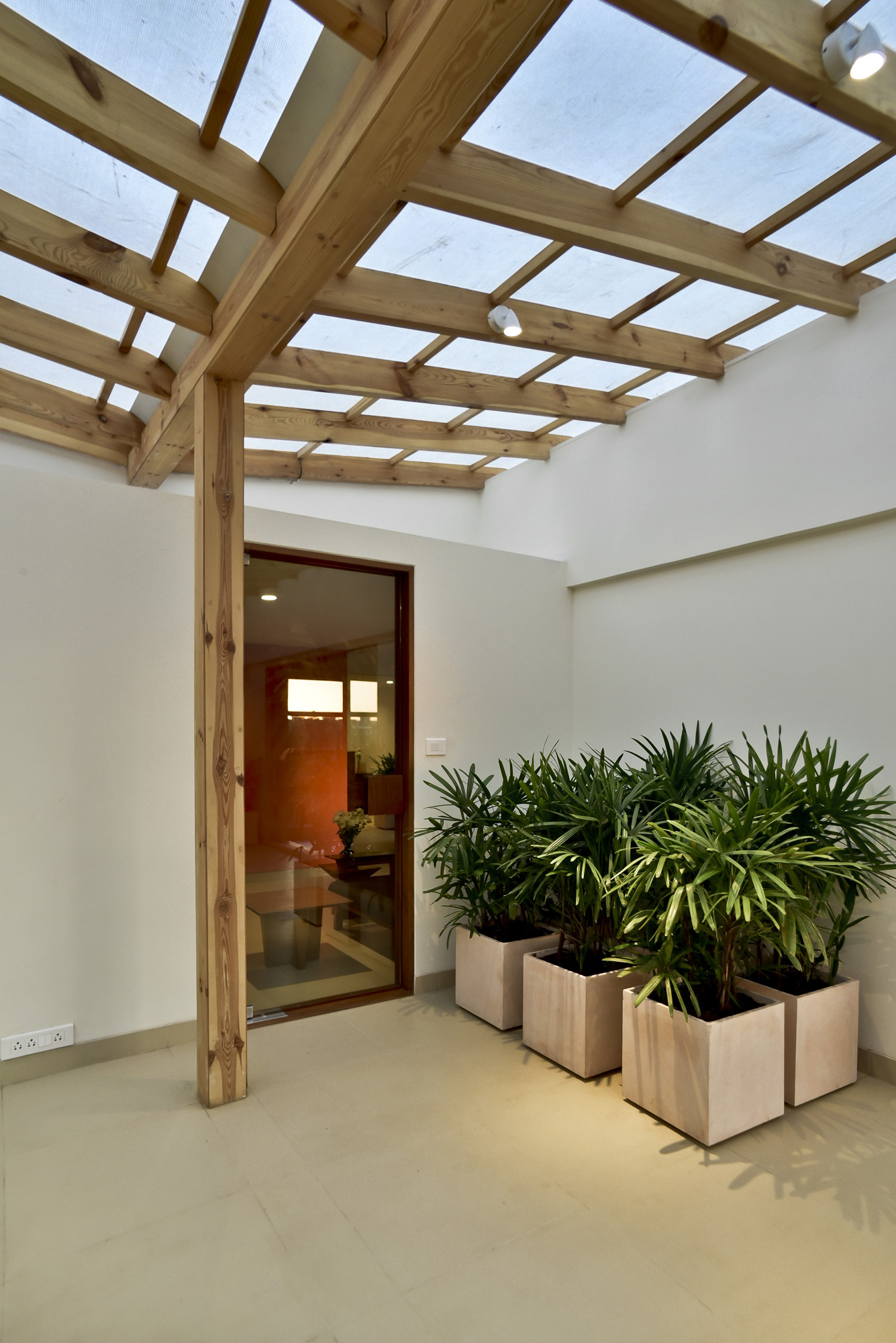
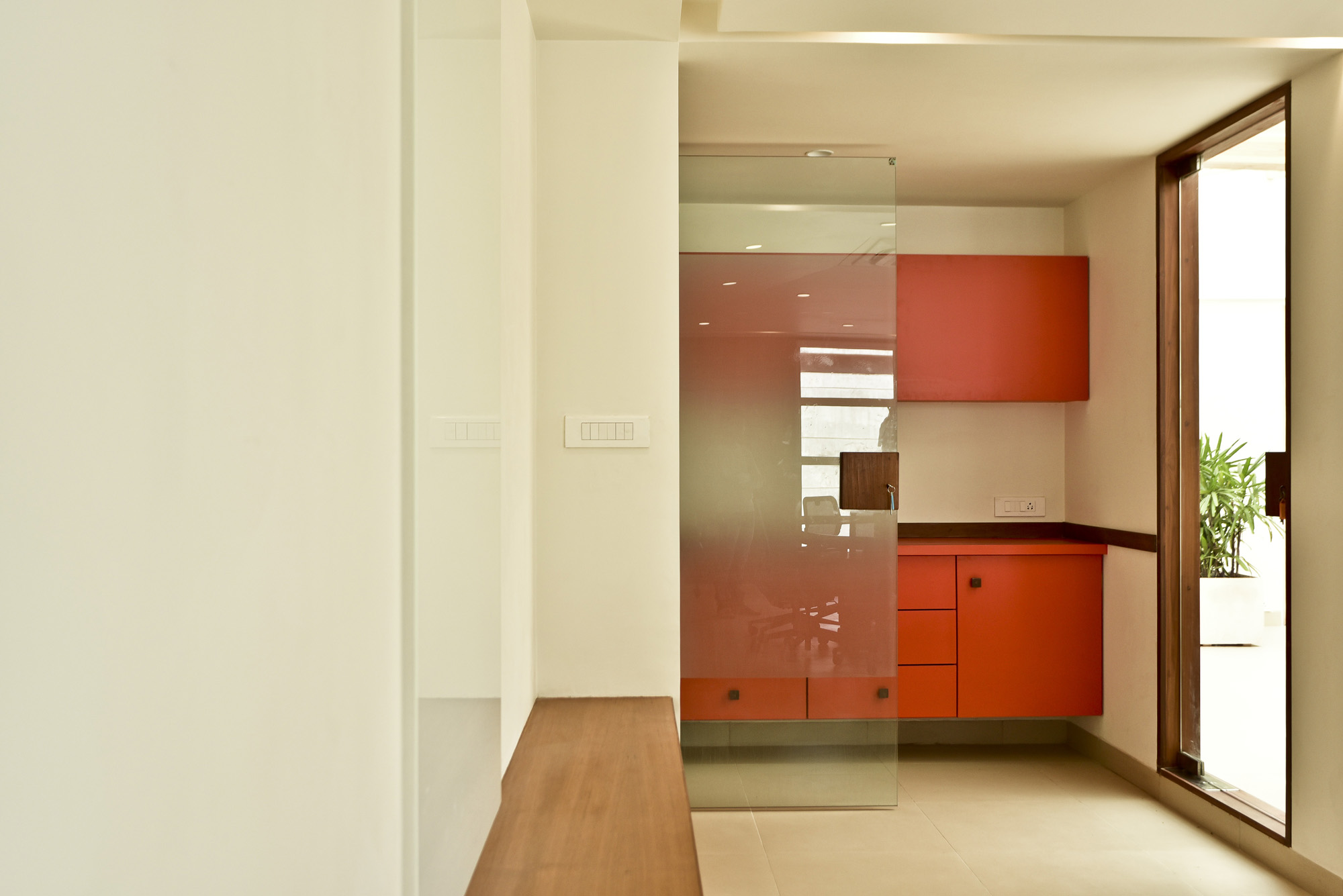
The project is envisioned as a seamless flow of spaces which blur divisions and connect openly designed spaces as they wrap around a central core stair. A courtyard between boardroom and director's cabin is lightly covered by an inverted pitched roof trellis which filters diffuse light into both spaces and gathers rain during the monsoon.The color palette shifts with changing functions of the spaces, tied by a common offset of grey, which ties together the chromatic surprise.
photo credit: Vishal Mehta