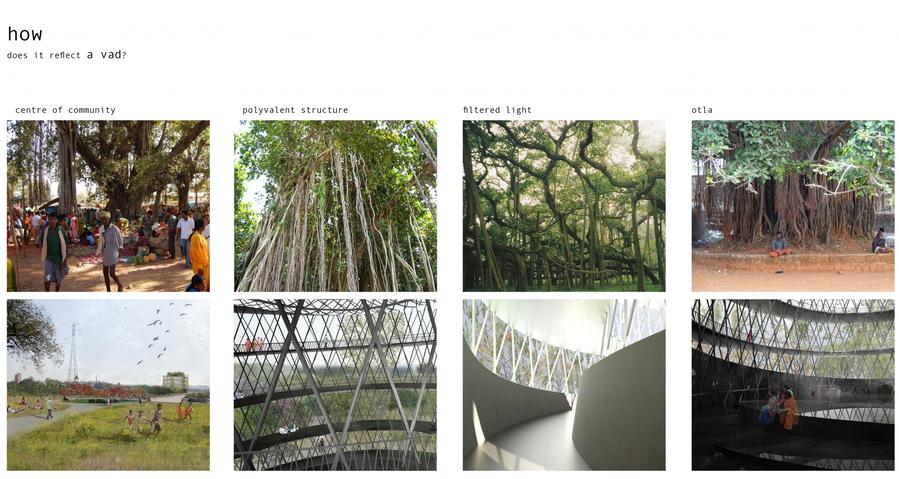
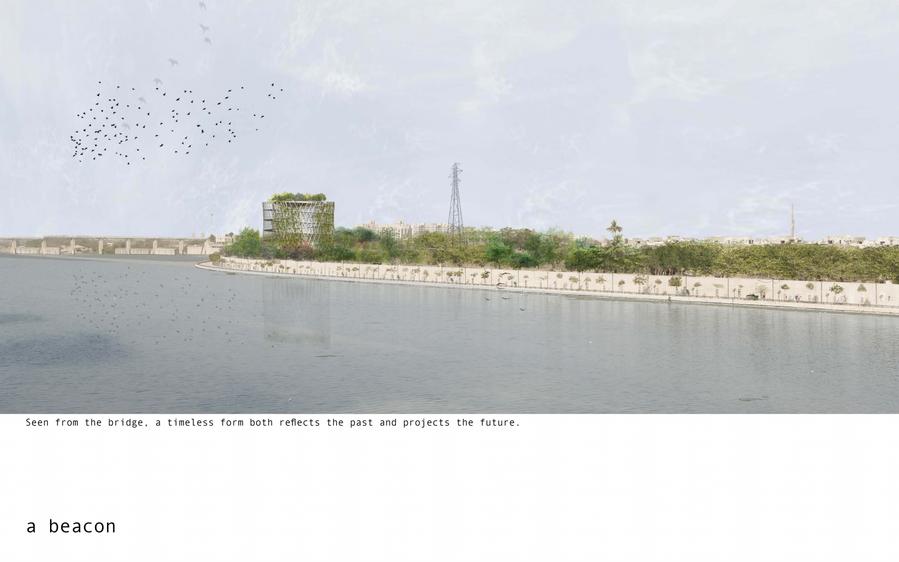
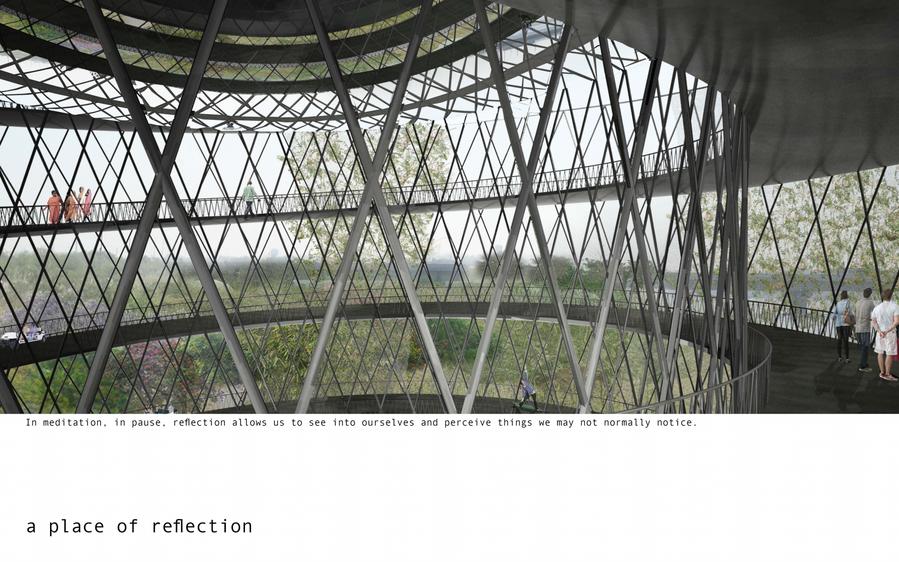
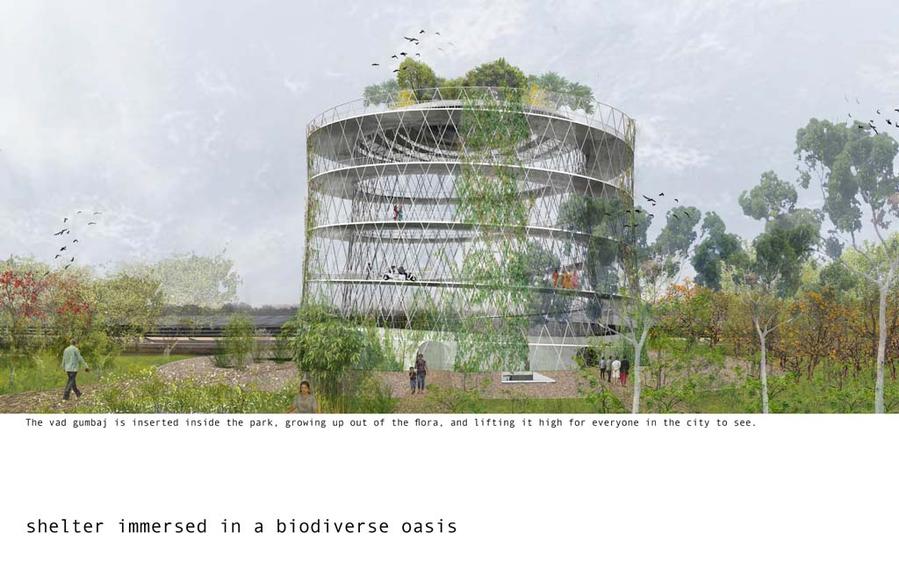
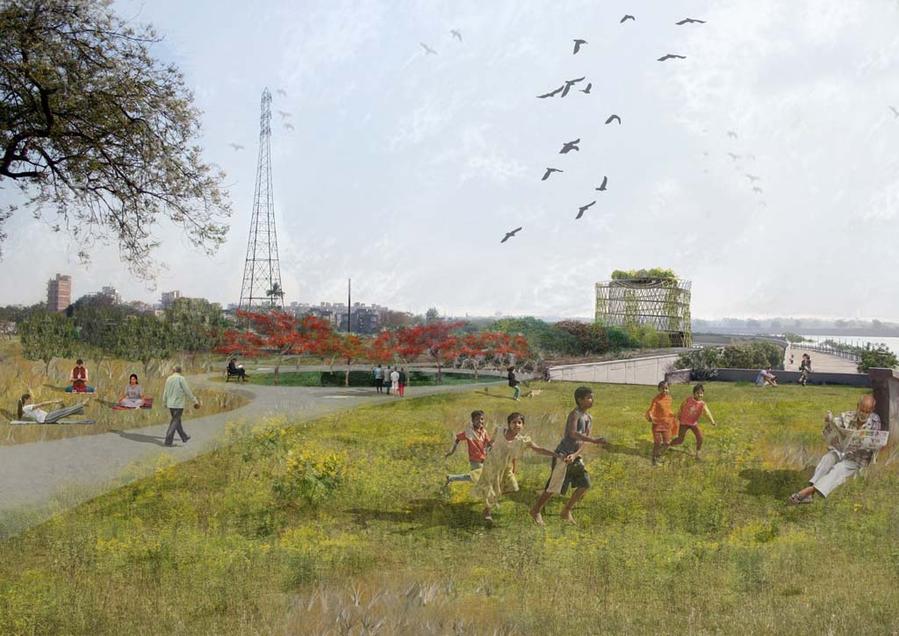
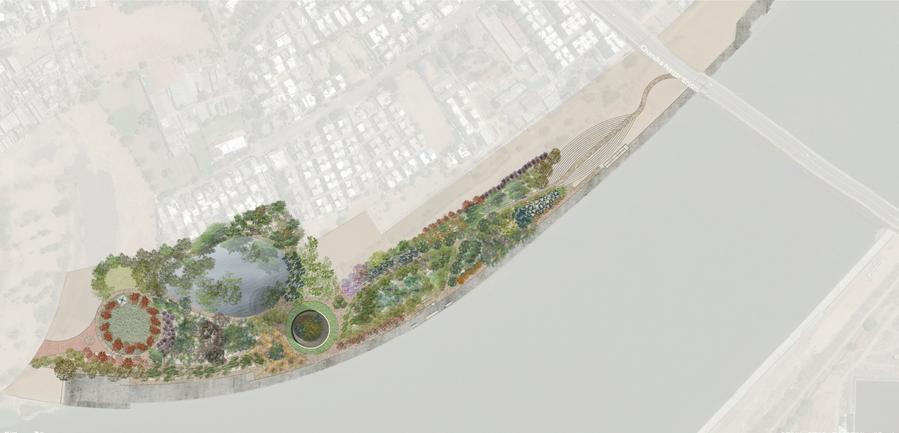
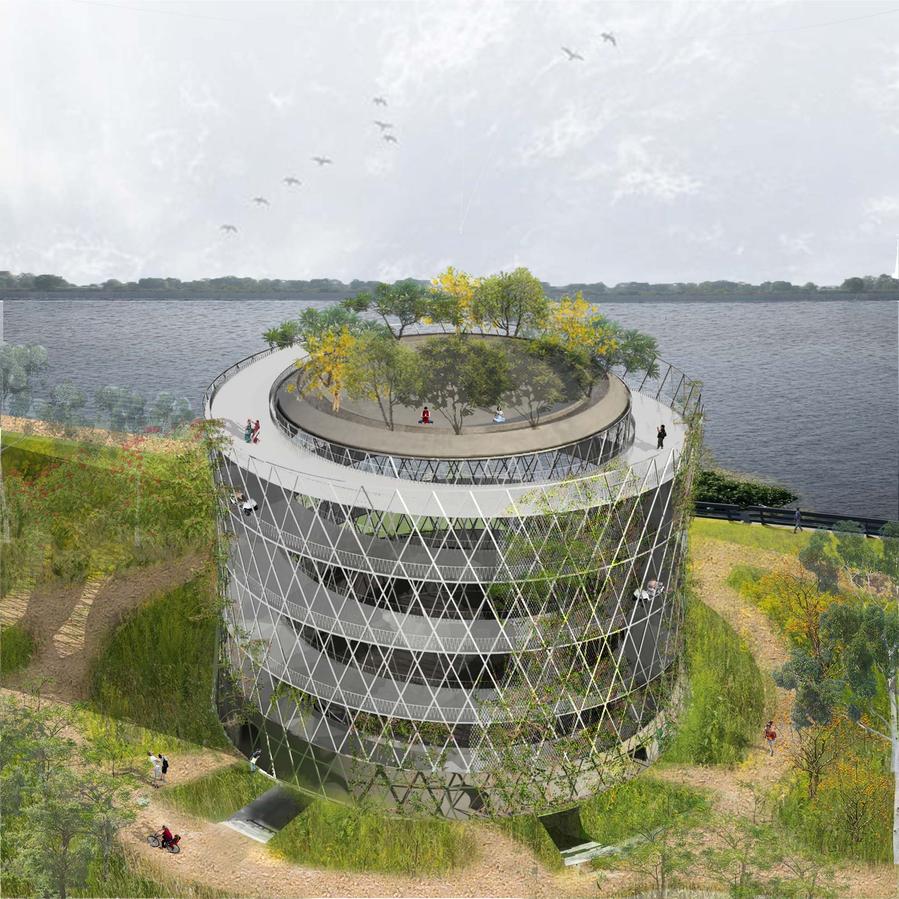
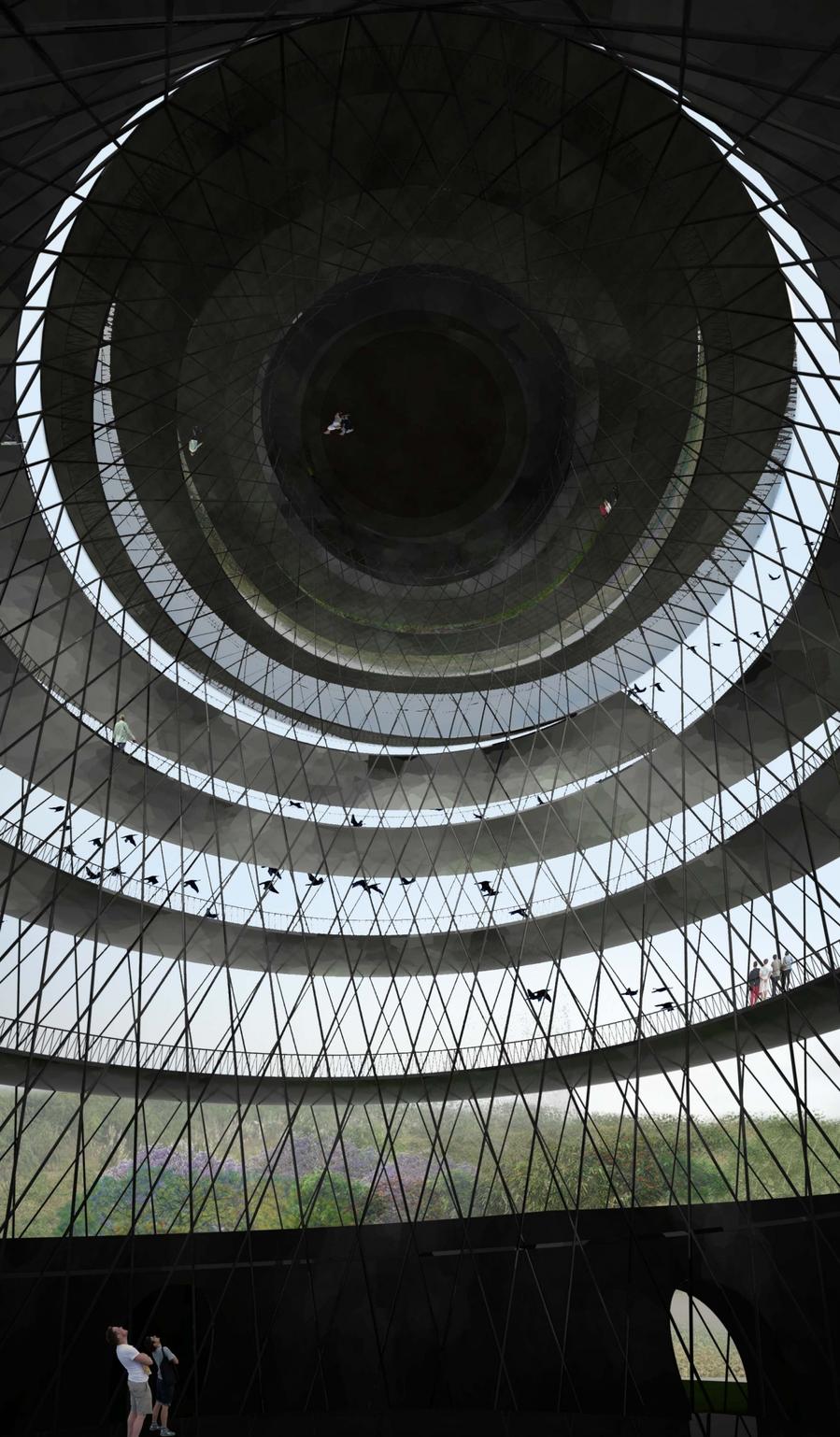
The biodiversity park sits at the bottom of the urban riverfront in Ahmedabad, a resting place for flora and fauna, a moment of pause, to breathe, in the busy city. The vad gumbaj is inserted inside, growing up out of the flora of the park, and lifting it high for everyone to see. Its profile pushes out into the view of the river when seen from far. It is nestled within the species, and takes advantage of existing landscape.
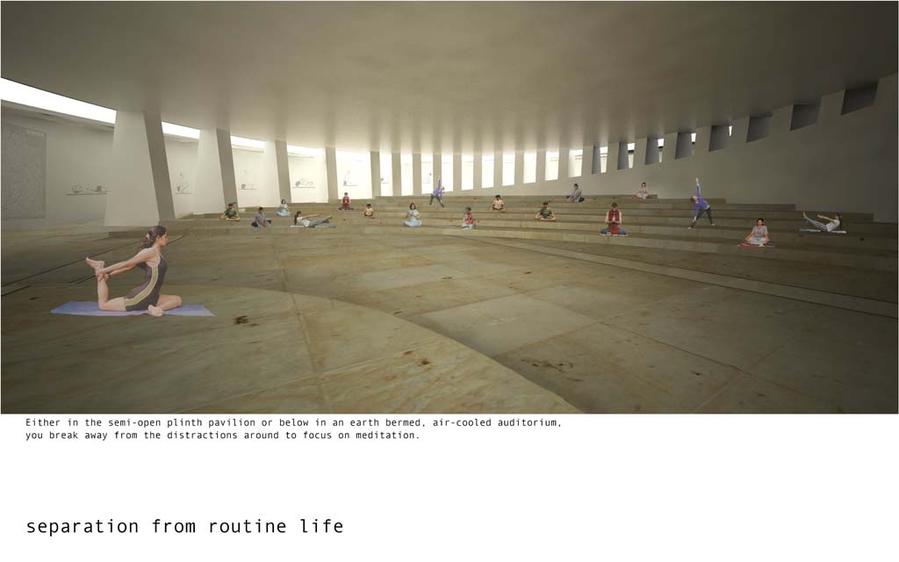
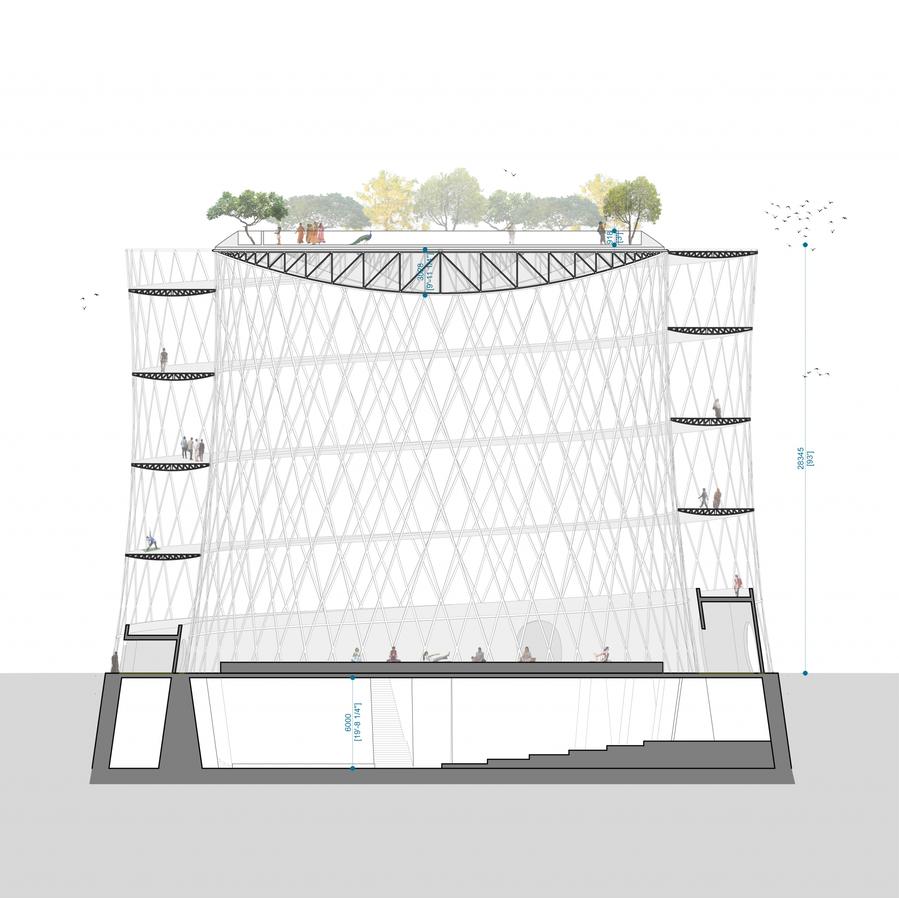
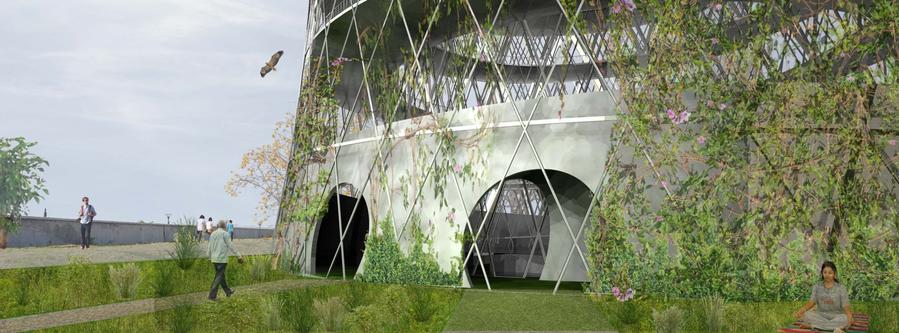
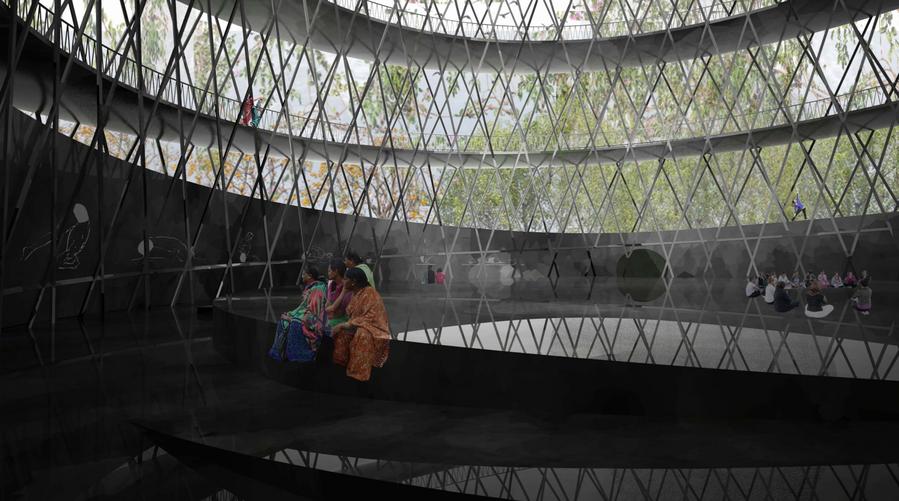
This is a place for ‘one’ and ‘all’, You who want to meditate and connect to yourself, and everybody else too, who just want to watch the reflections of themselves. At the ground level, the heavy walls of the vad gumbaj separate you from the sounds outside. The immediate space is held in quiet. A plinth at the center holds yoga and meditation, while other people circumambulate, following the etched drawings and sayings on the granite clad internal wall.
The inverted dome, hanging above, draws reflections in of the ground, plants and the river outside, merging them with the reflections of people on the plinth.
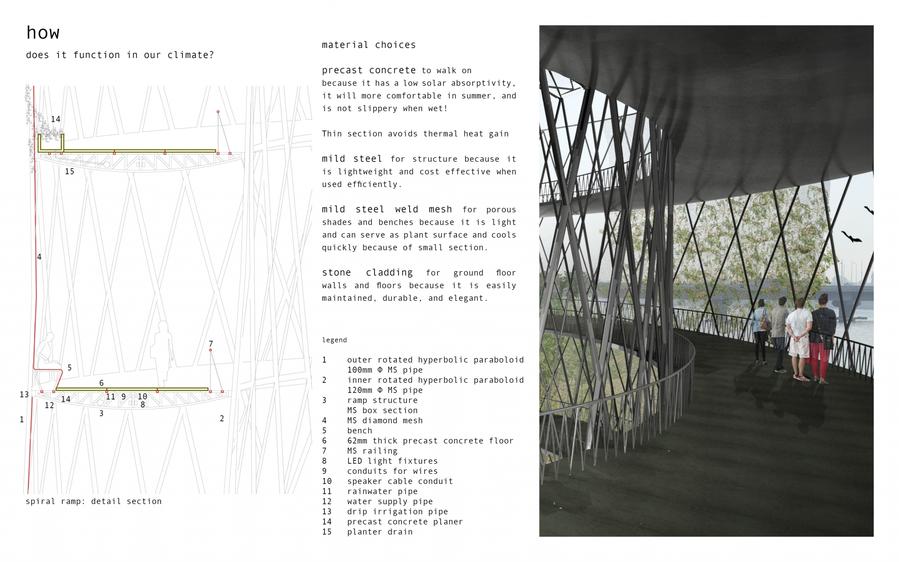
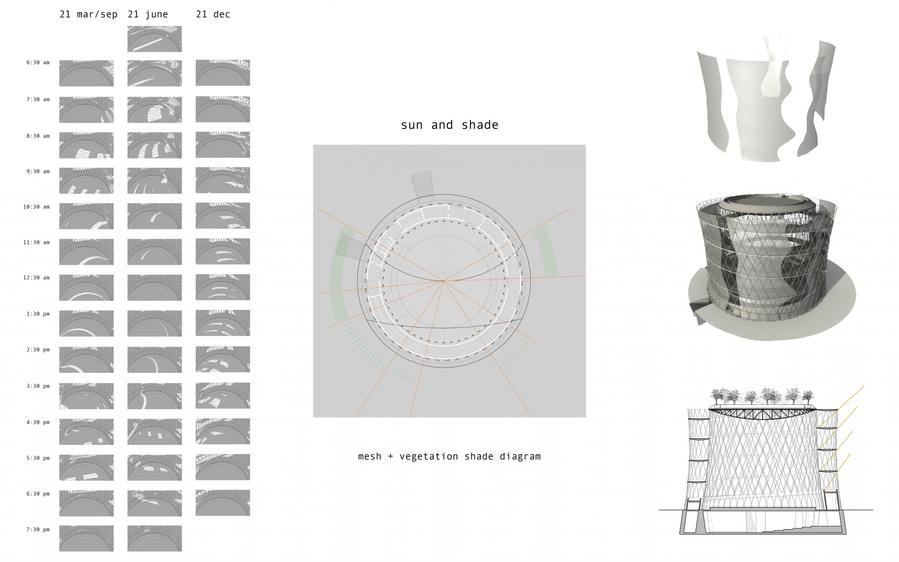
Weld mesh screens attached to the steel structure at critical locations create additional shade at crucial points of the day, while the deep ramp is tuned to act as a chhajja to prevent higher sun rays from entering during the warm midday from March to September. In winter, when more sun is desirable, the low altitude angle lets it come in.
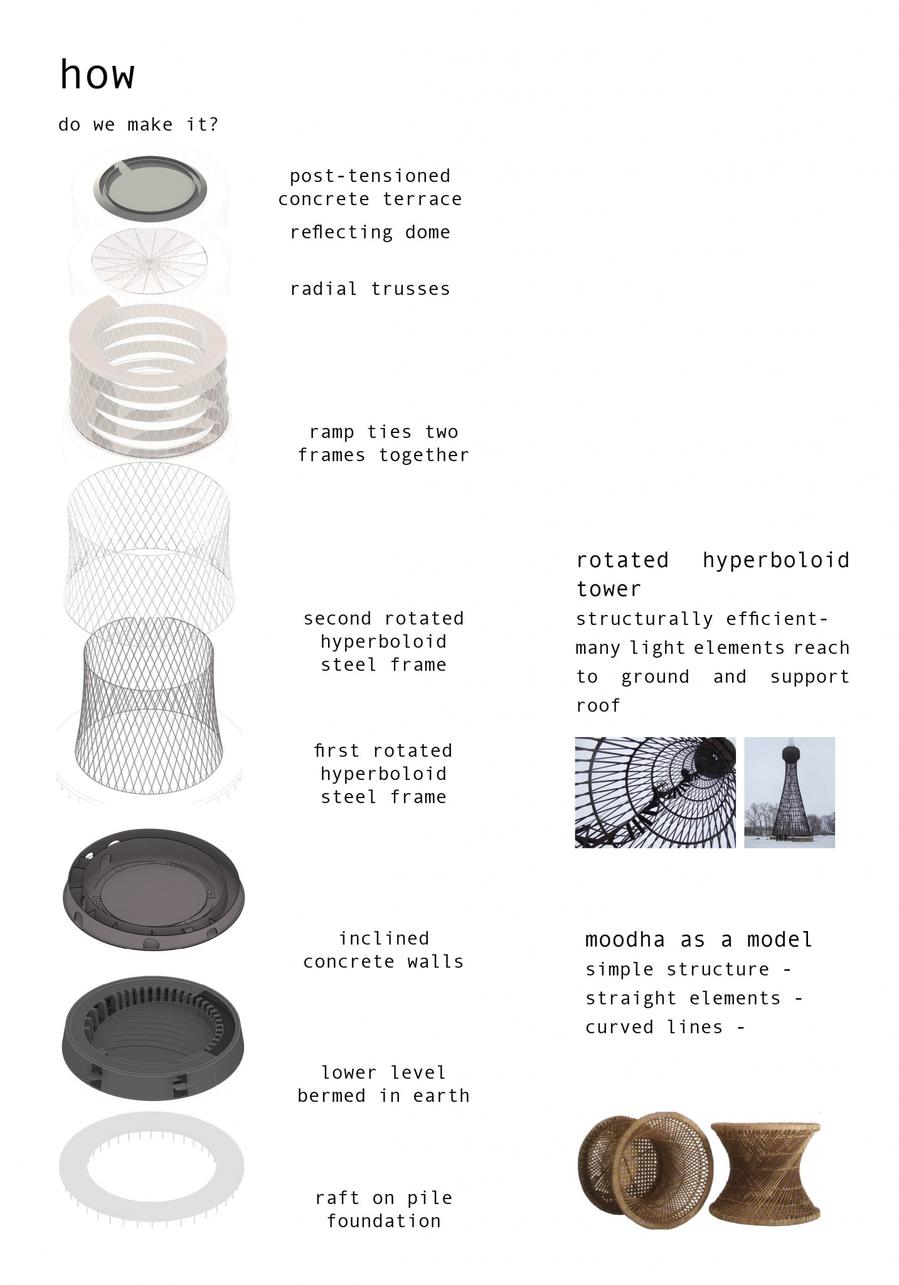
A raft on pile foundation supports the two frames and the ring of concrete walls. Two rotated hyperboloid steel frames rise in and outside the walls. The fabricated ramp acts as a brace for the two frames. Rotated trusses structure the upper level and the reflective inverted dome is suspended from them. The post-tensioned concrete slab is poured on top, with the trusses serving also as a structure for the formwork. This system is lightweight, materially economic, and cost efficient.
Ahmedabad, Gujarat | 2023
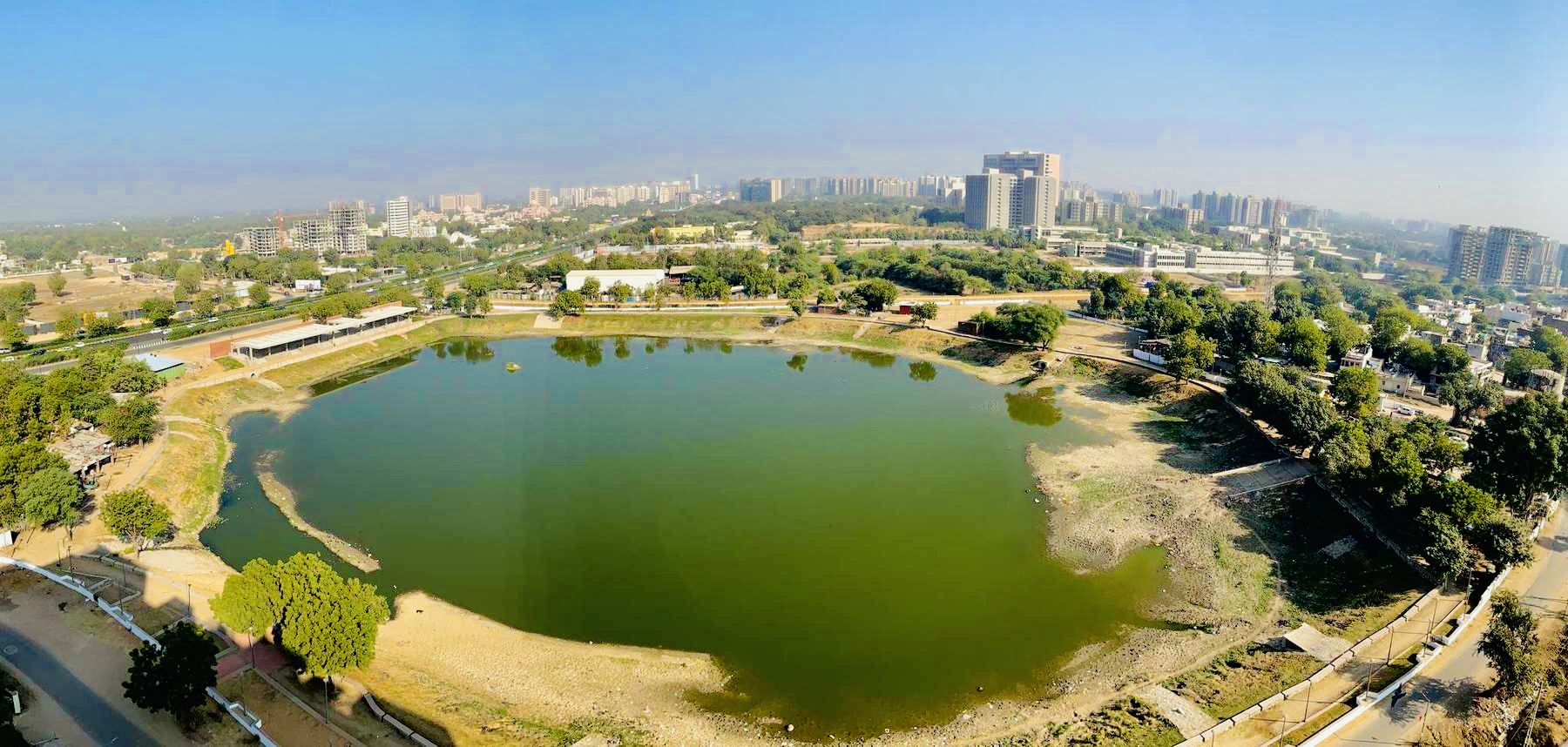
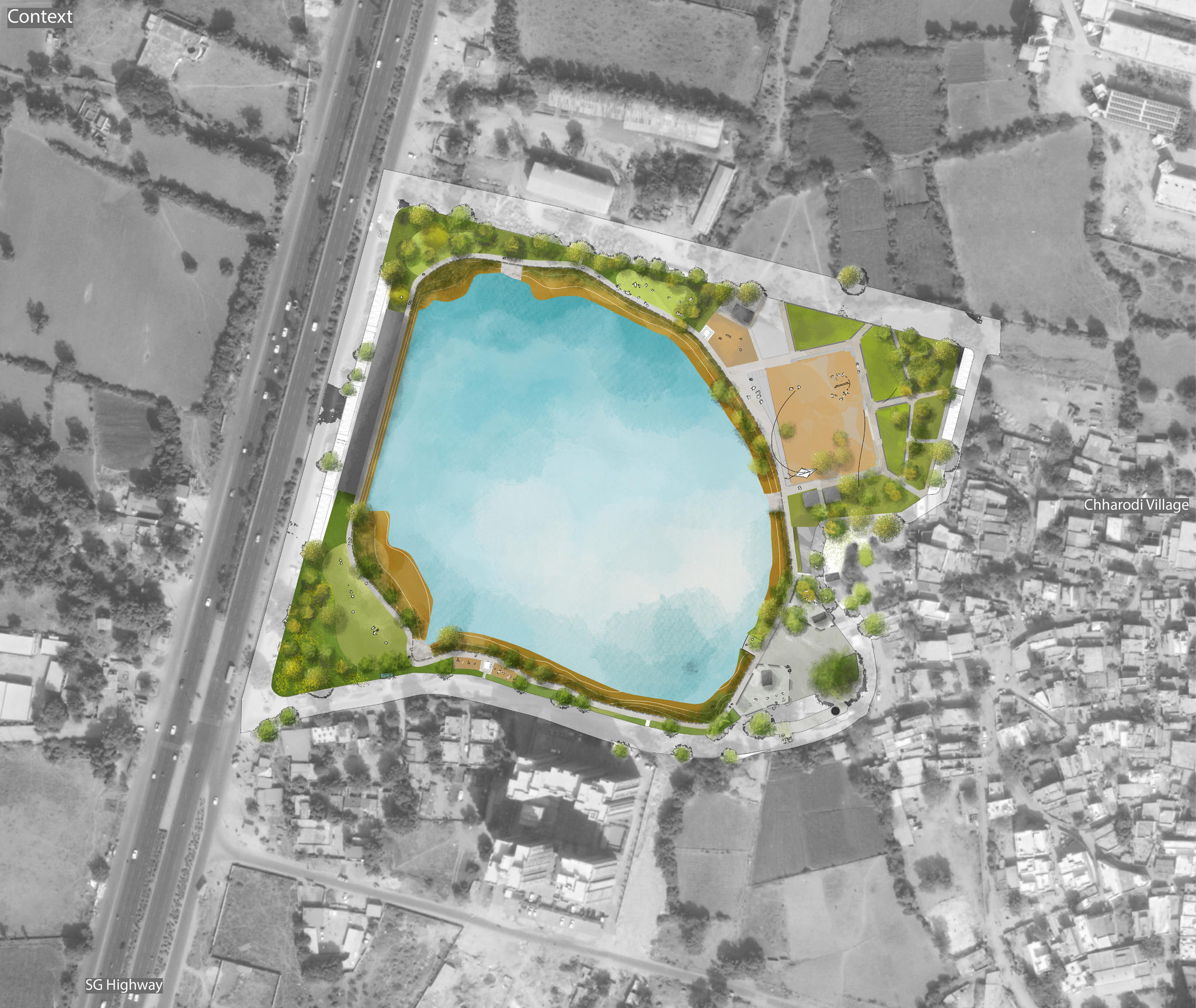
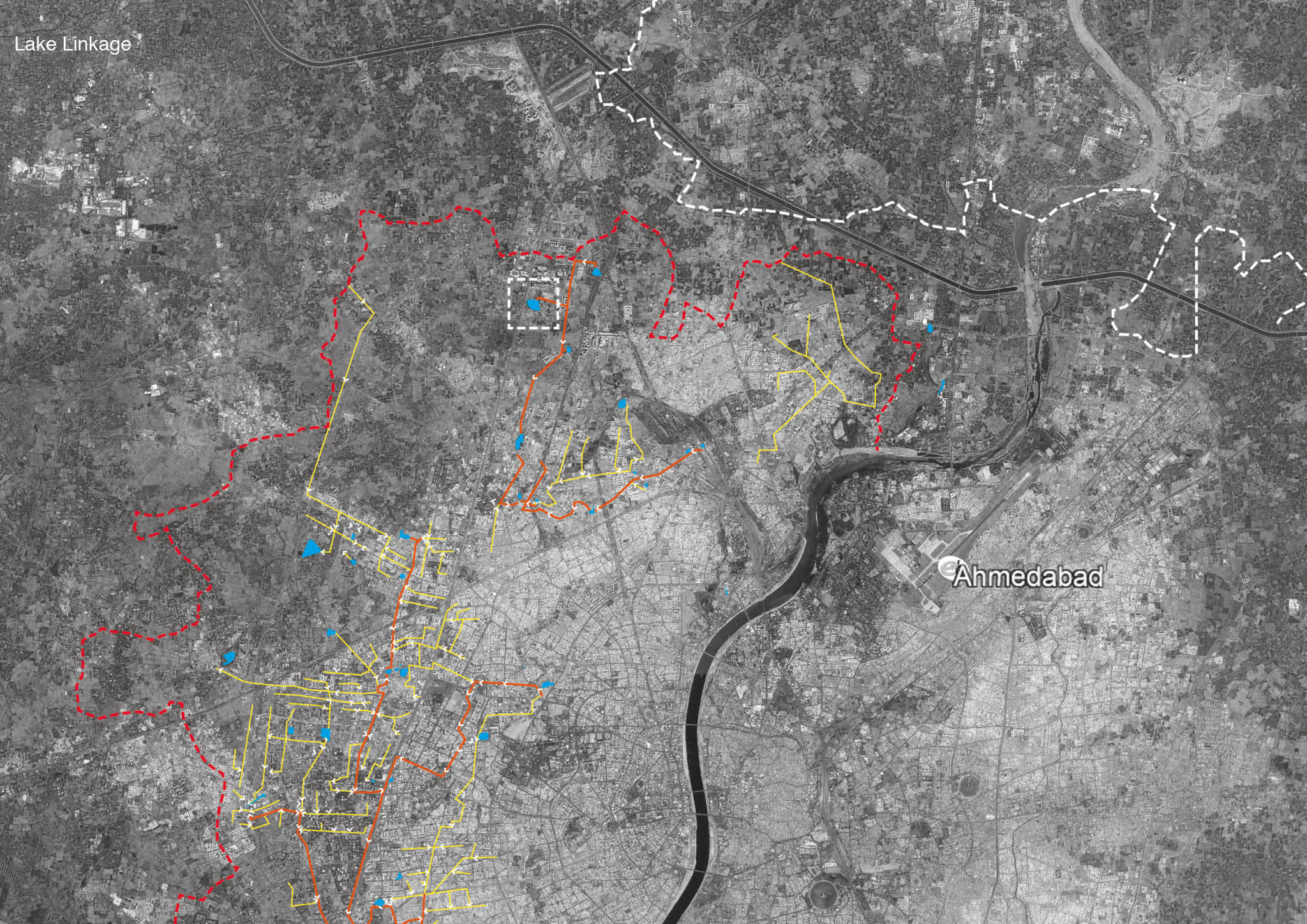
Chharodi lake sits at the urban periphery, poised for rapid urbanisation. Unconnected to urban systems yet surrounded by piecemeal development, it caught untreated sewage and supported rural animal systems simultaneously. The revival strategies for the lake involved careful assessment of multiple factors like ownerships, encroachments and edge conditions in order to define the scope of development.
The proposal defines a new lake edge while retaining the natural slopes for surface water run off, retains all natural species of plants that form a wetland shoreline offset around it for natural filtration and a soft landscape scheme is planned further to aid this entire system of natural filtration. This activated edge is then further developed to draw people in with various amenities of public life: gardens, café, toilets, and a stepped access into the lake. Areas around the anchoring village are opened and connected to support robust public use, and an open maidan hosts large and dispersed activity.
Ahmedabad, Gujarat | 2014 – 2015
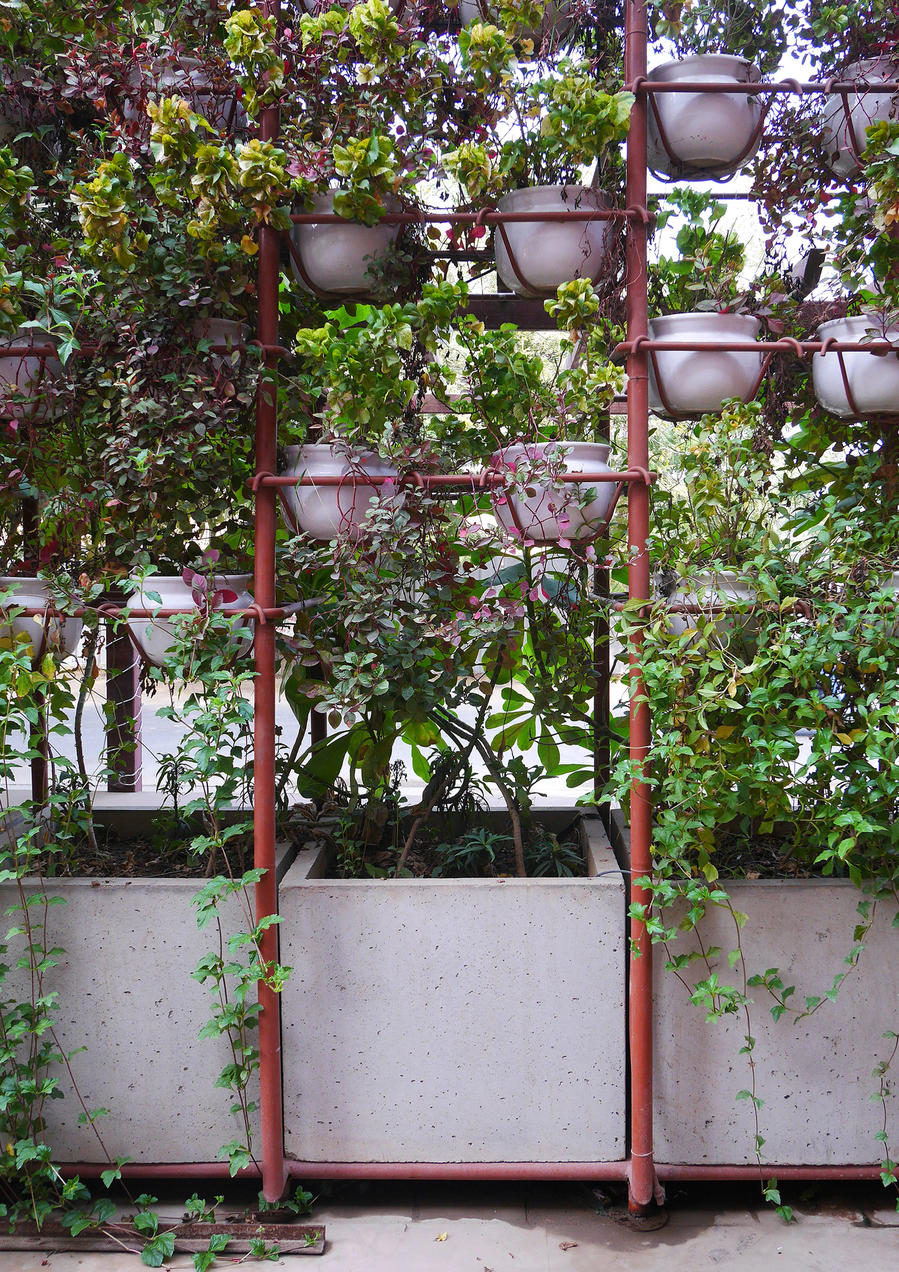
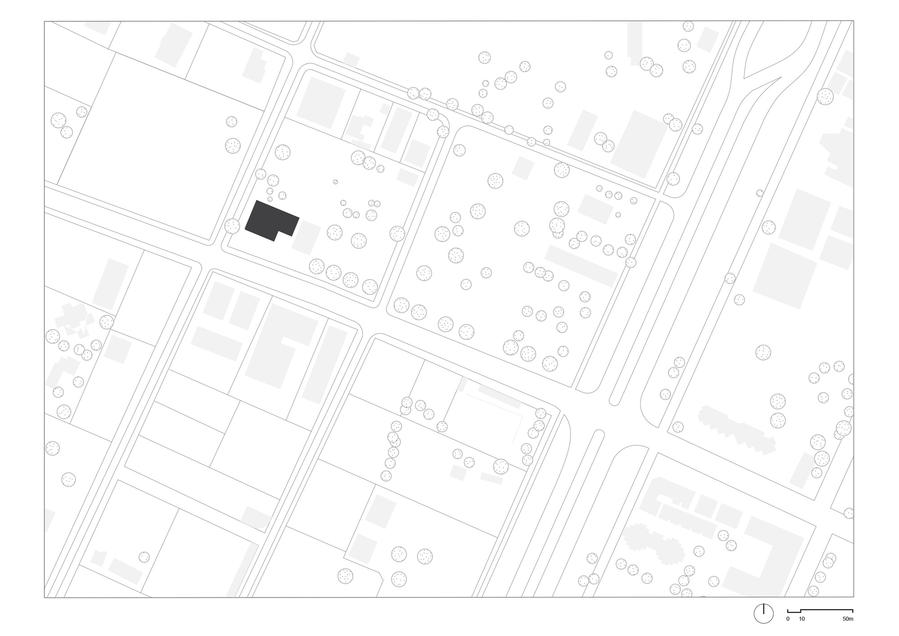
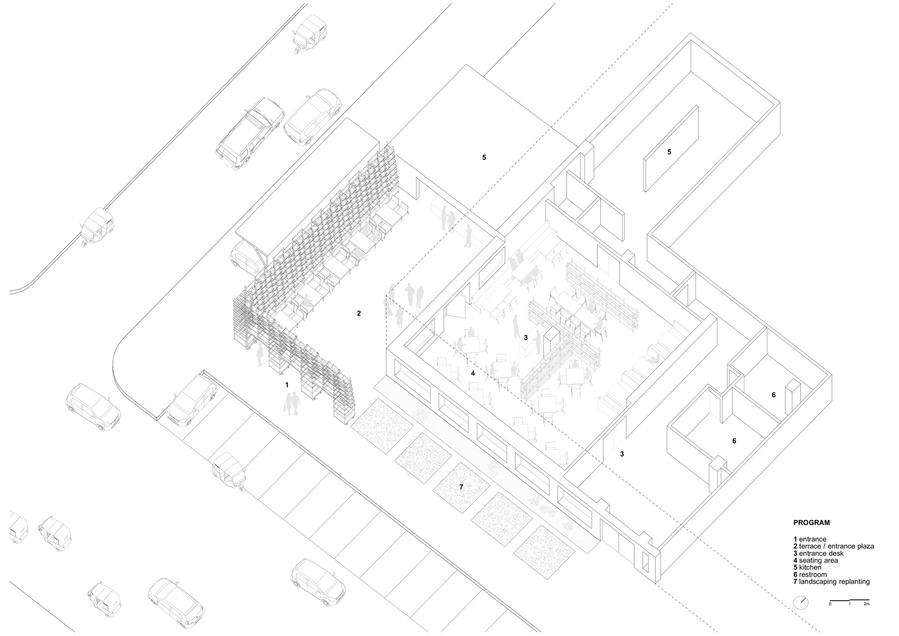
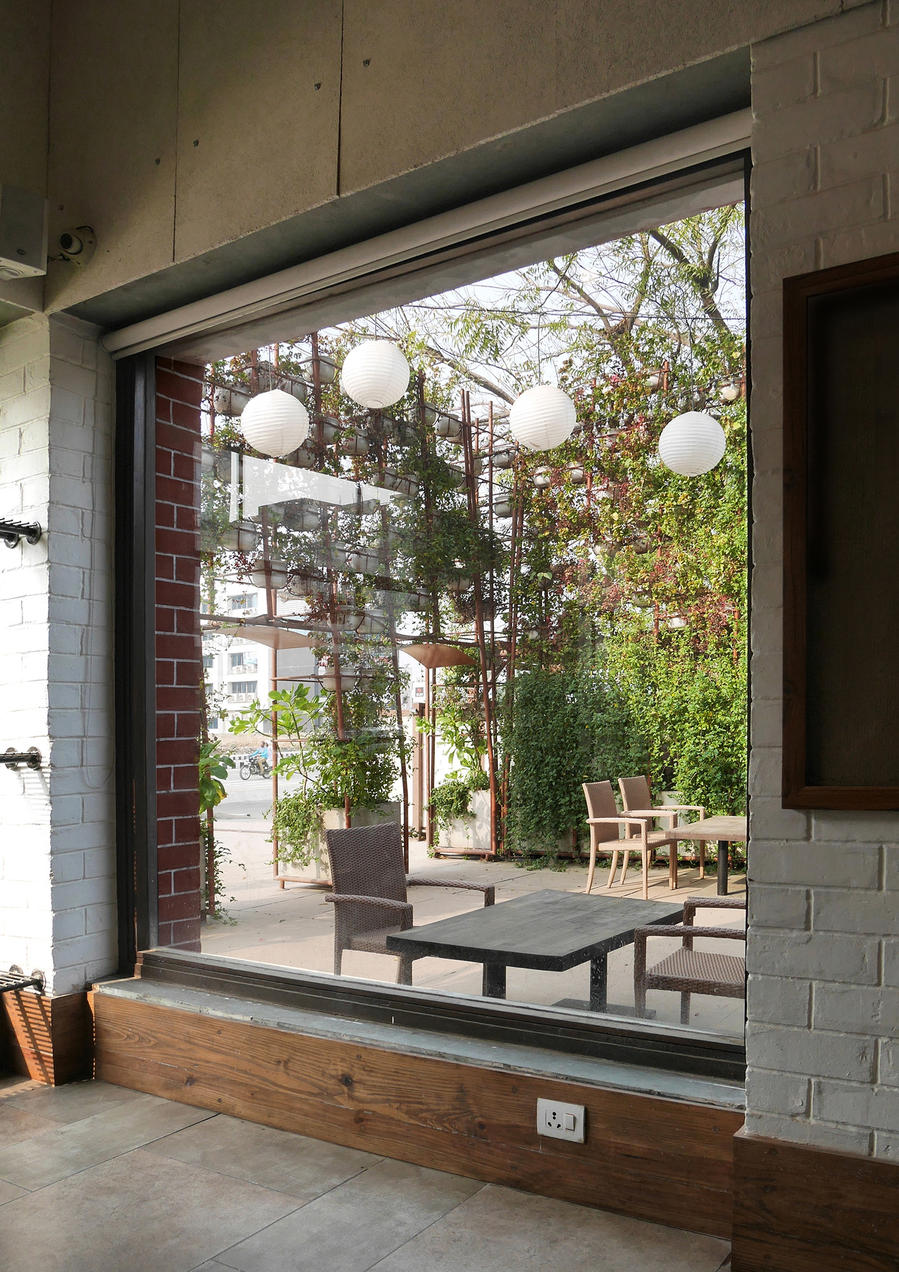
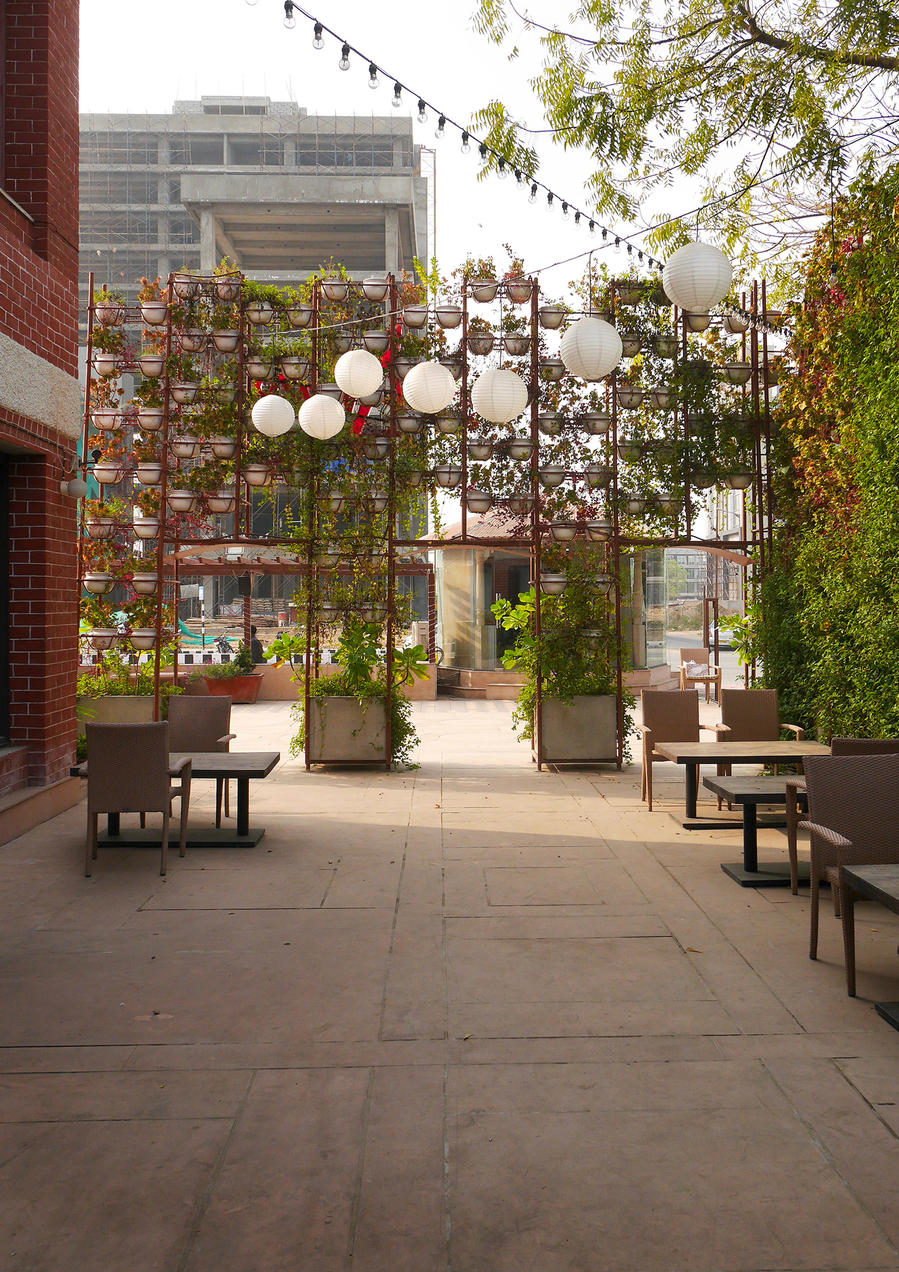
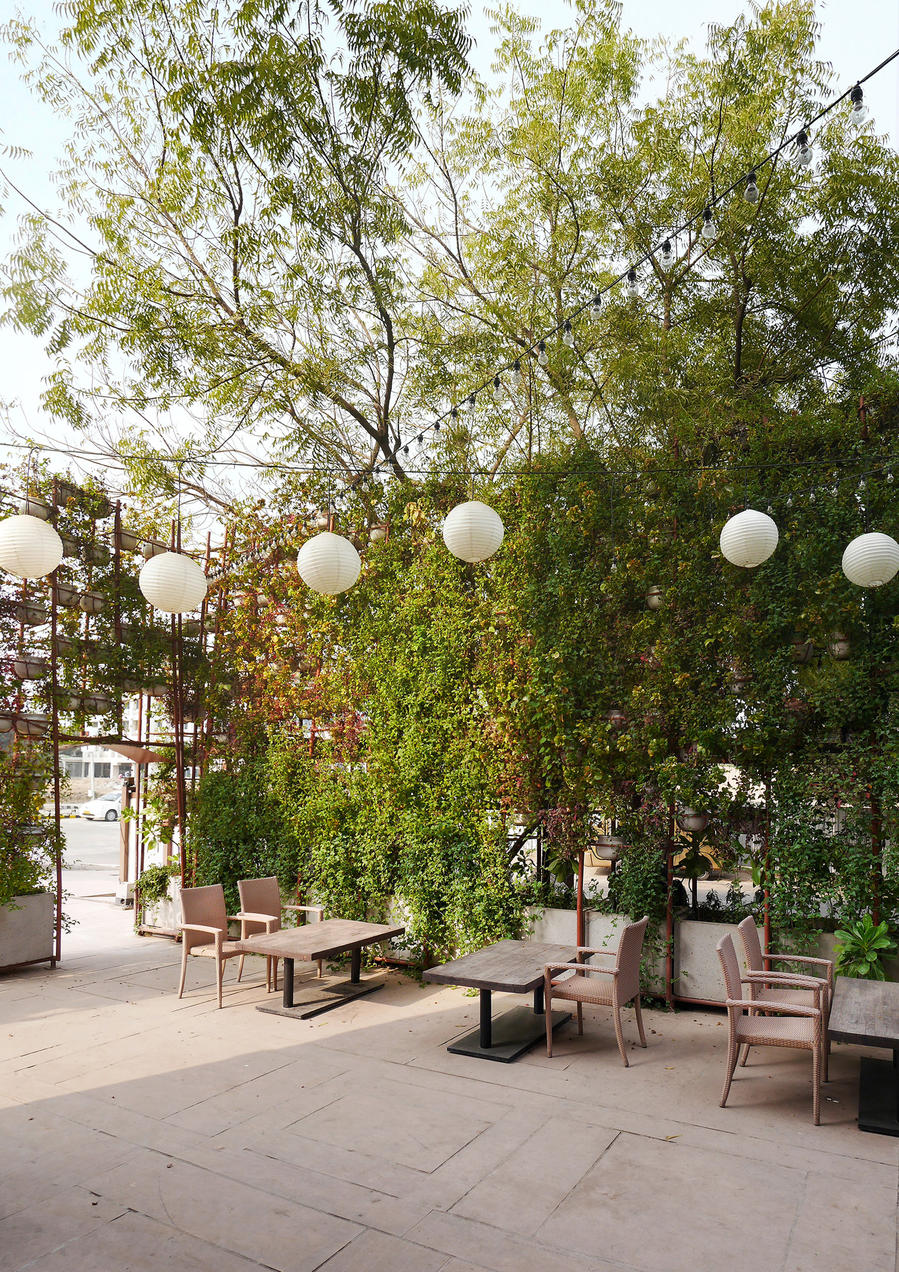
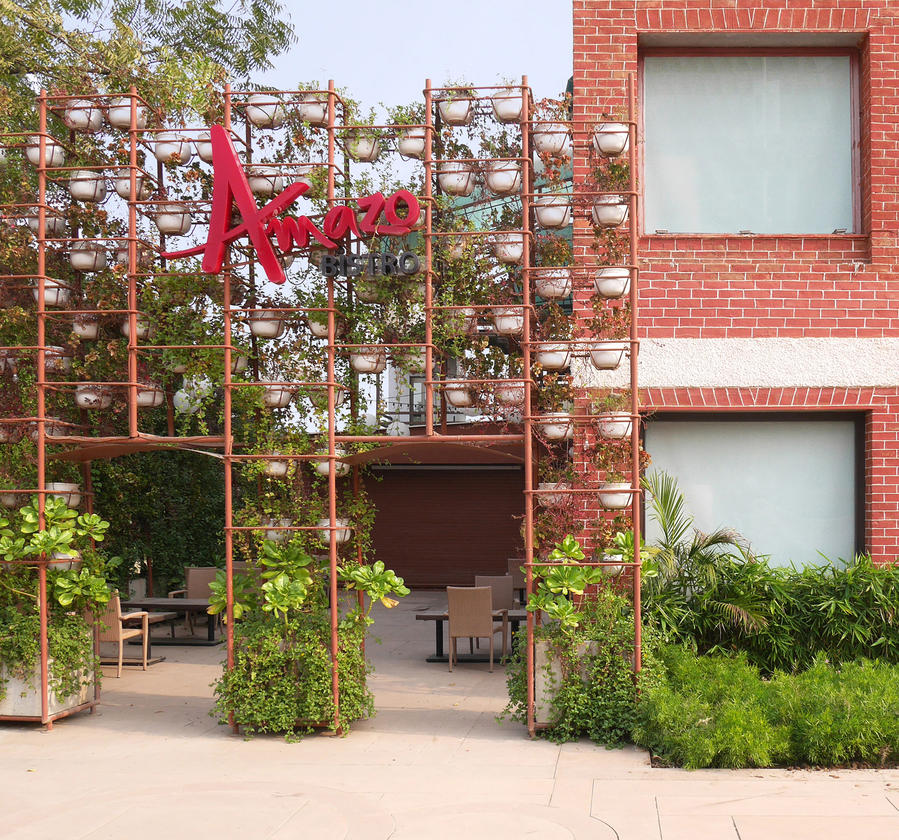
Amazo Bistro is an all day café and restaurant on the edge of Ahmedabad. The restaurant space occupies the corner ground floor of a building, with an adjacent area for outdoor seating. The building sits on the north side of a busy road that connects SG Highway to SP Ring Road, two major thoroughfares in the city. While the adjacent seating area could be a fantastic addition to the restaurant, and a great opportunity to bring the ambience outside, its drawbacks were that it perches on the edge of a busy road, and it is soaked in sun all afternoon. For us the challenge was to create an enclosure structure that extended the character of the interior space outside, but which also protected the exterior from noise and sun, all while feeling open and engaging.
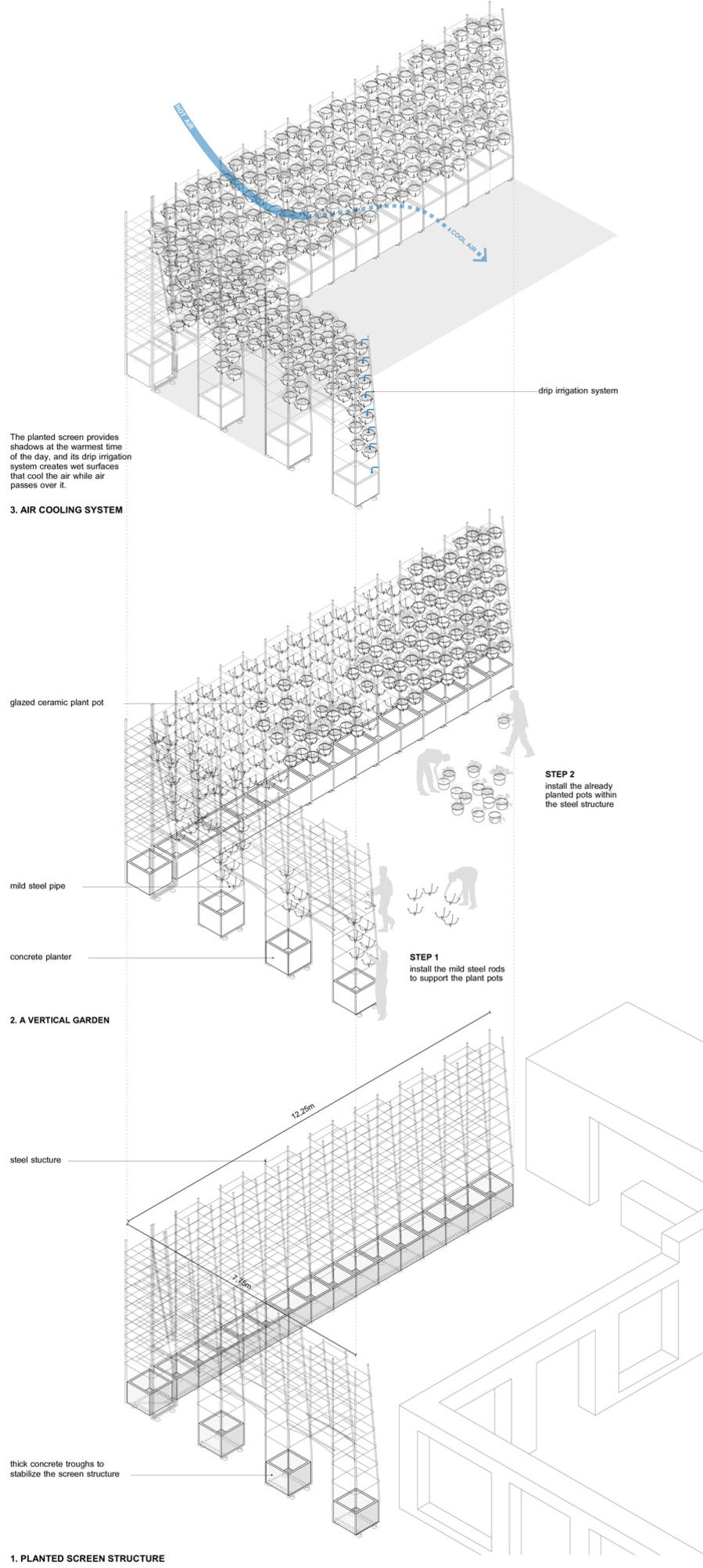
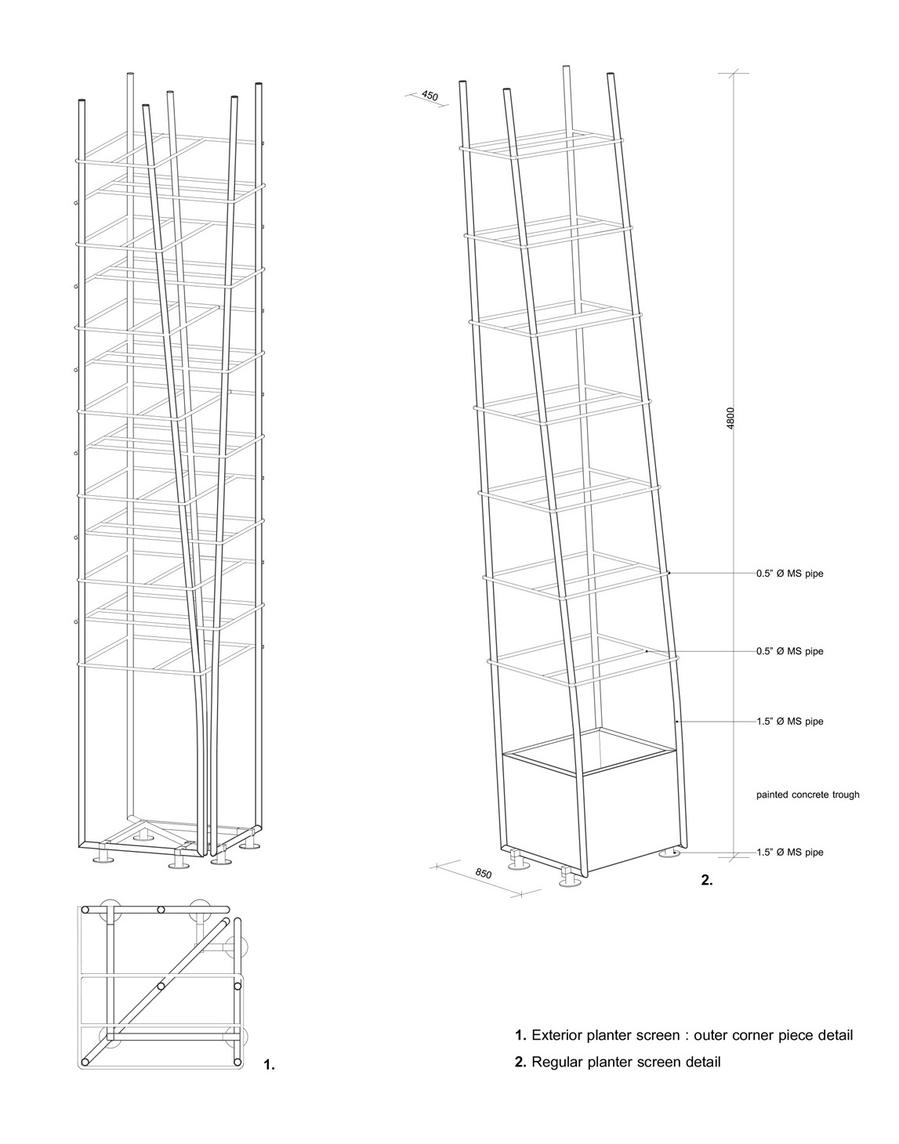
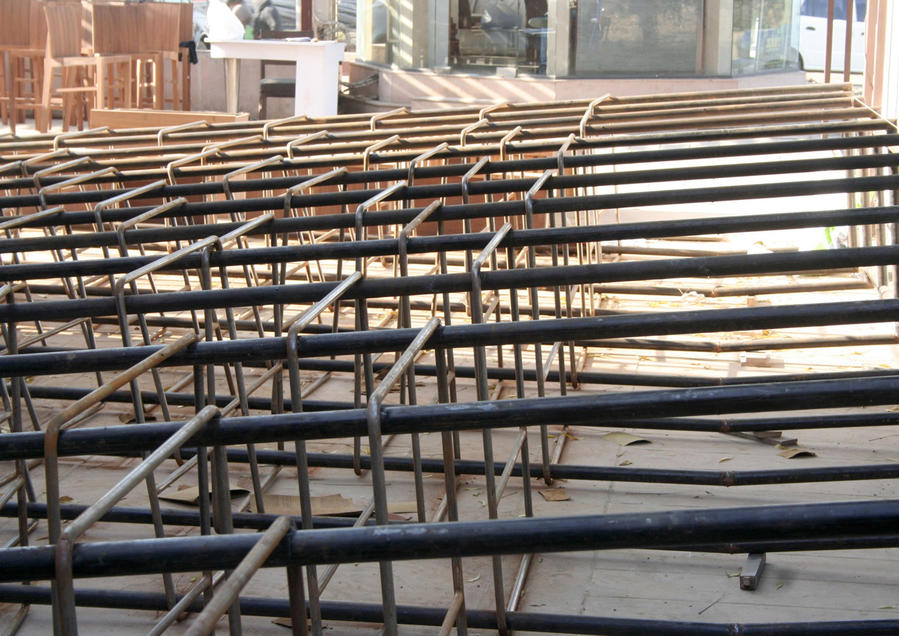
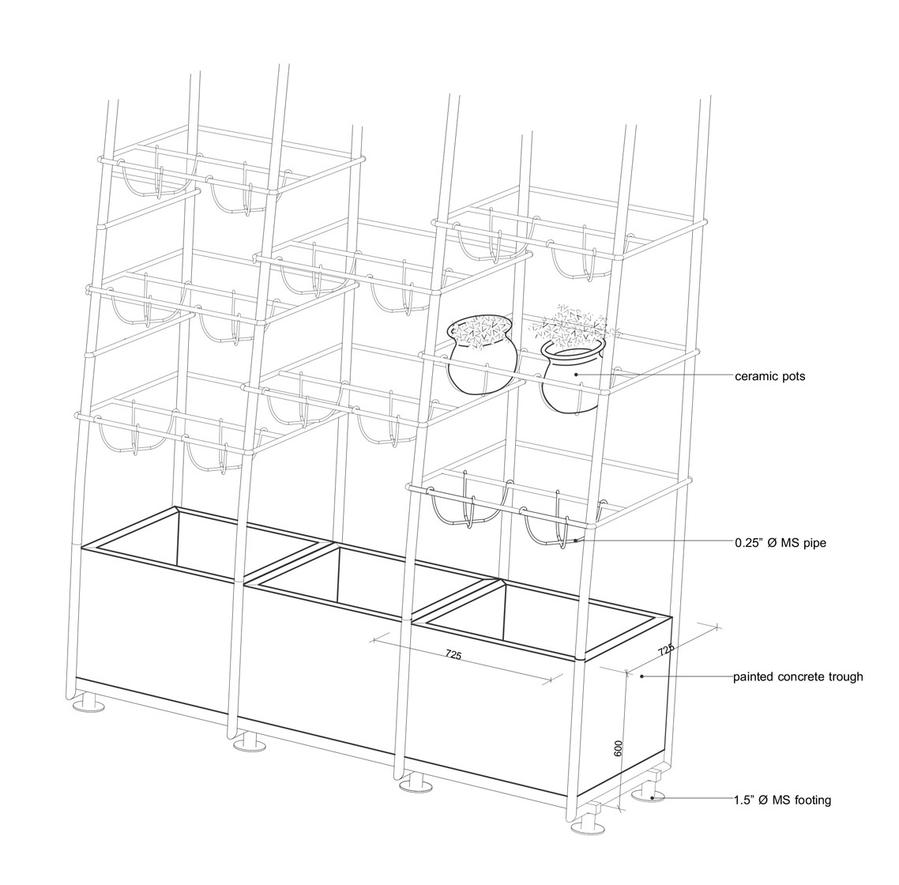
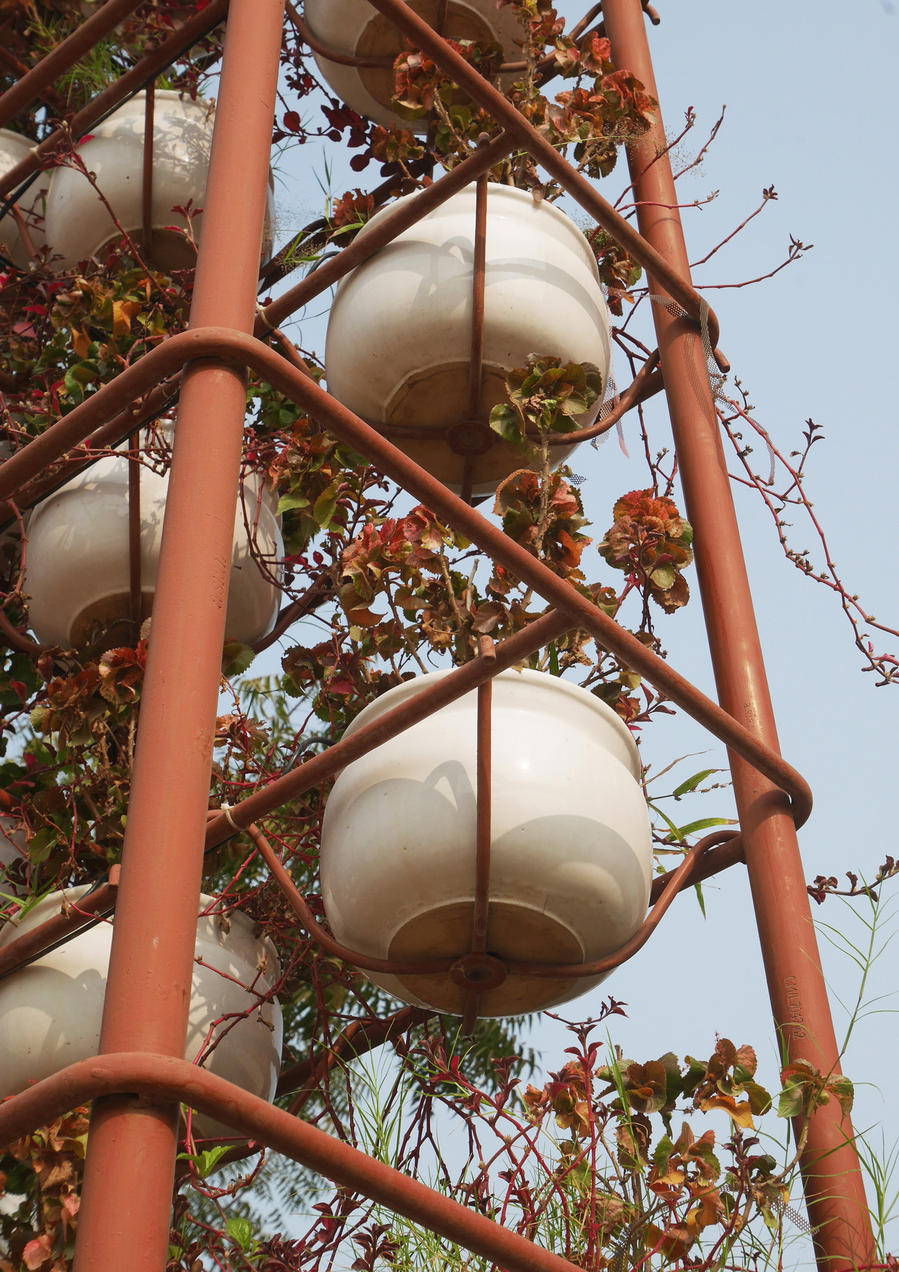
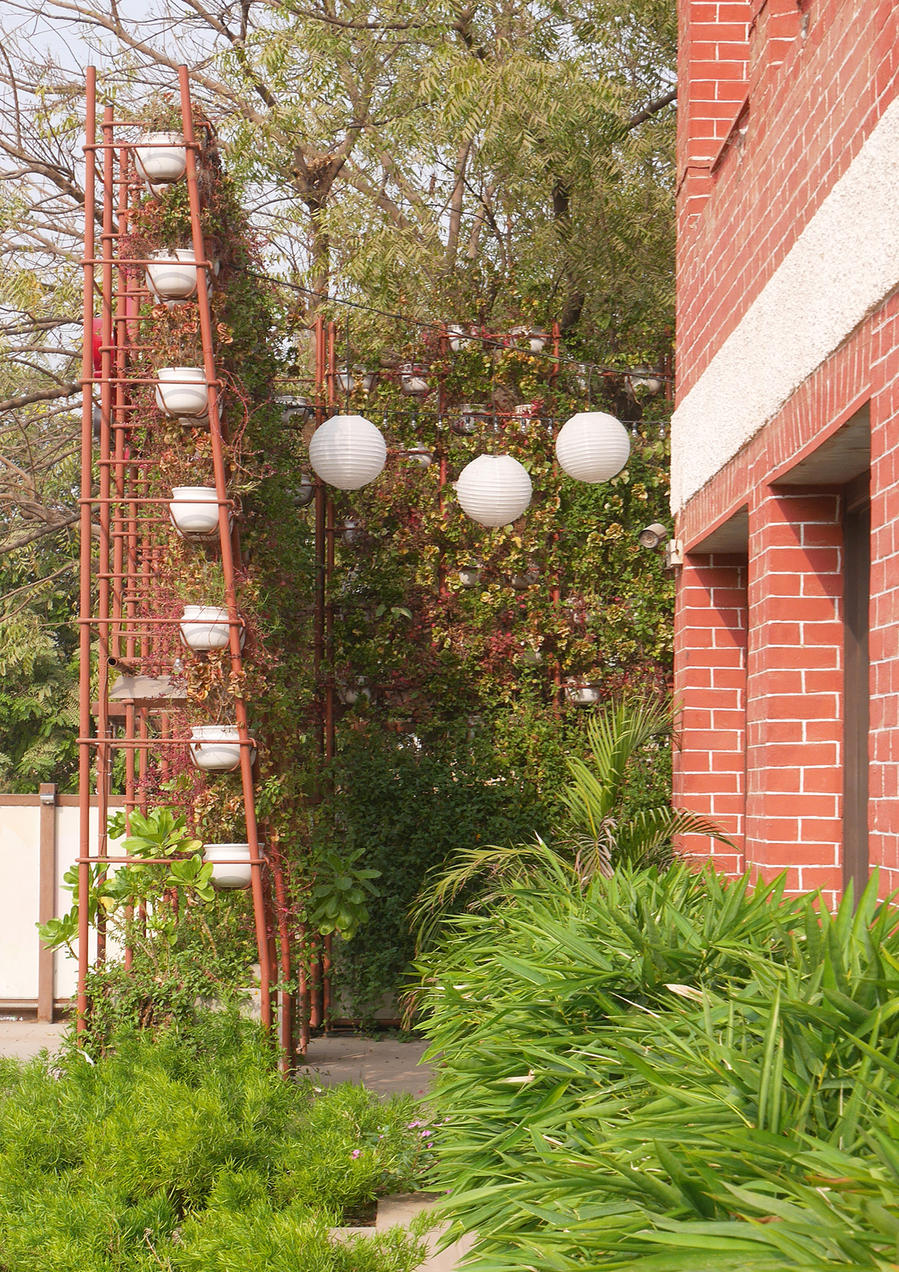
For this we came up with a custom made vertical garden, formed from interlocked bent pipe mild steel frames, and anchored with a floating foundation of exposed concrete planters. The system had to be simple to construct and simpler to maintain, with robust plants to withstand the southwest sun. Each vertical frame stands on its own feet, weighted by its concrete planter. Neighbouring frames are interlocked with smaller, alternating mild steel pipes. These were welded together on site and tilted up into place. Then the concrete planters were placed inside and filled. The same interlocking pipes support a mild steel rod basket for ceramic pots which each hold a combination of upward growing and hanging plants that climb out of their perch to eventually camouflage the frame that supports them. The pots step back as they rise, pushing the overall centre of gravity toward the centre of the planter, and helping to stabilize the structure, even in high winds. A drip irrigation system runs along each pot, irrigating the plants while at the same time turning the whole screen into a wet, porous mesh whose evaporation cools the hot prevailing south-westerly winds that pass through it.
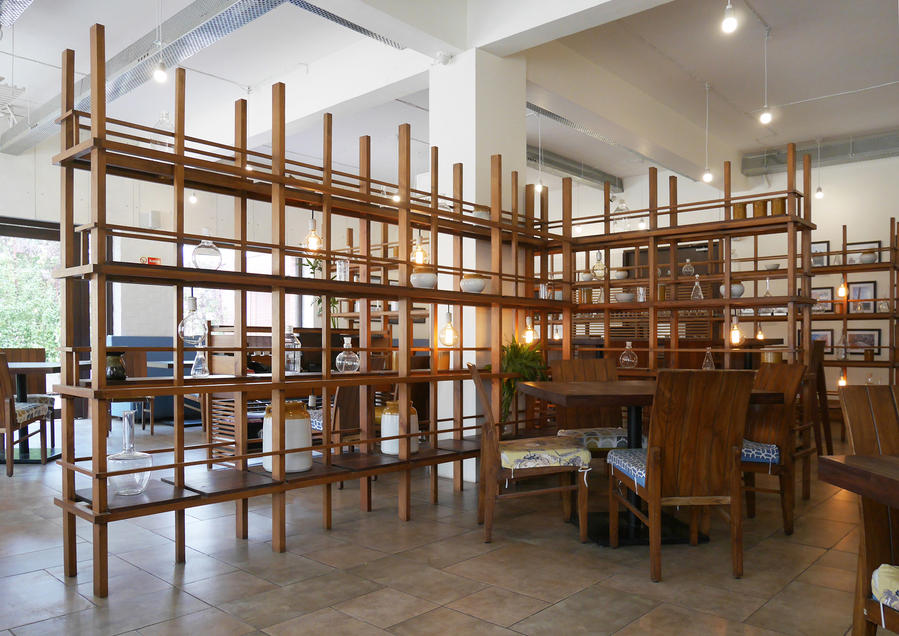
The planted frame both shades and buffers the outdoor space from sun and road, but this containment also draws the space into conversation with the restaurant inside. The language of the garden is reiterated in the stripped down, open interior, split with lightly framed shelving units that form intimate dining areas connected through a blur of lightweight wood, jars and glasses.
Photography credits: Sachin Bandukwala
Design Team: Melissa Smith, Sachin Bandukwala, Sam Stalker
Structural Consultancy: -
MEP Consultancy: -
Contractor: Hitesh Purohit
Carpentry: Mangilal
Fabrication: Sai fabrication
Ranchhodpura, Gujarat 2010 - 2015
In many ways, this project is more about its making than anything else. For us, an opportunity to reflect on the contingencies of the design process—where they happen and how, at what scales they interact, and which points we must fix to let others remain loose.
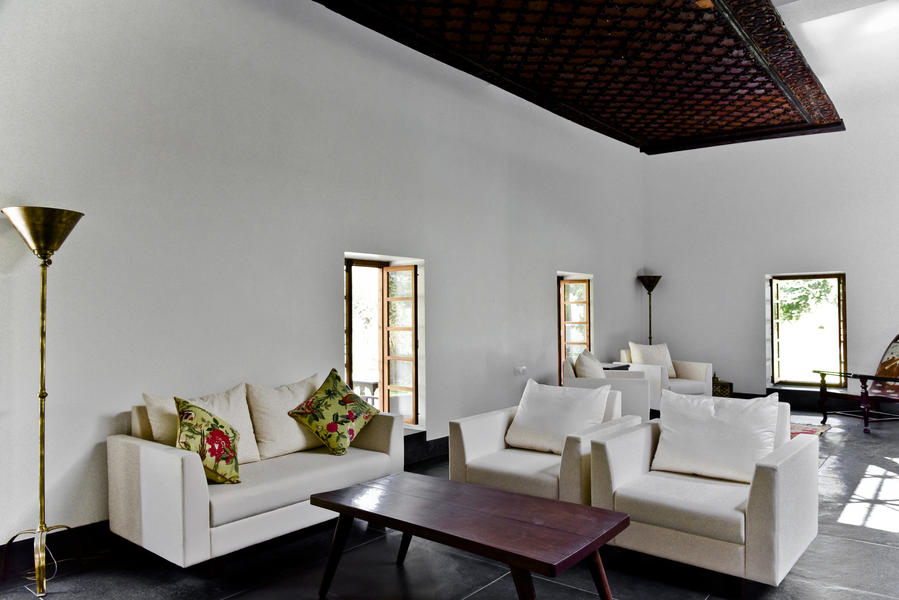
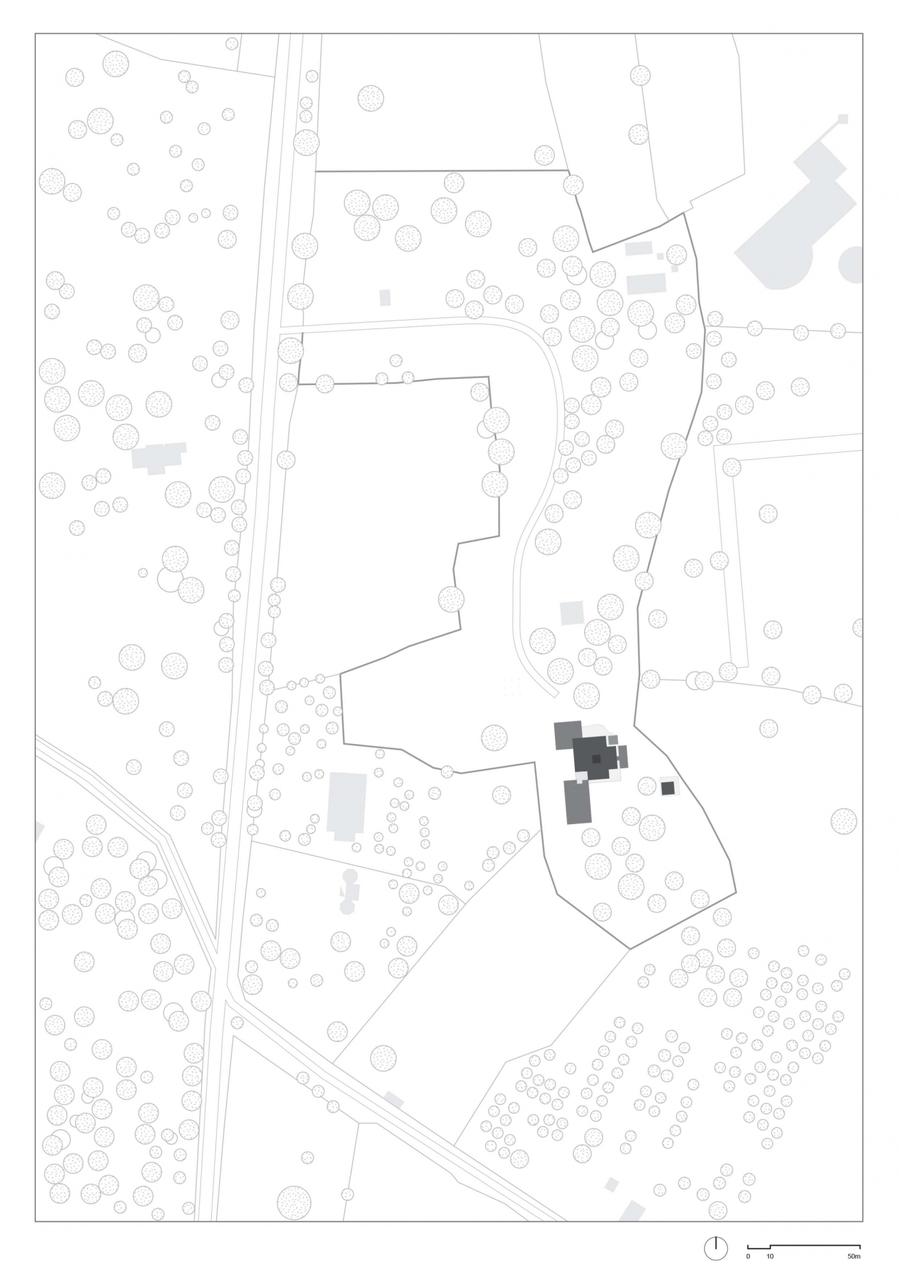
The house in the landscape was recreated from the pieces of a 300 year oldhaveli. In this structure we merge new and old systems of assembly, combining 18 inch brick walls in concrete frame with gutai lime plaster and restored telpaanifinished teakwood elements. The basic form follows the original courtyard layout, flanked by bedroom, kitchen and mezzanine, while the wrapping terrace and sunken entry extend into the spaces outside, to transform the original row house layout into a part of the landscape.
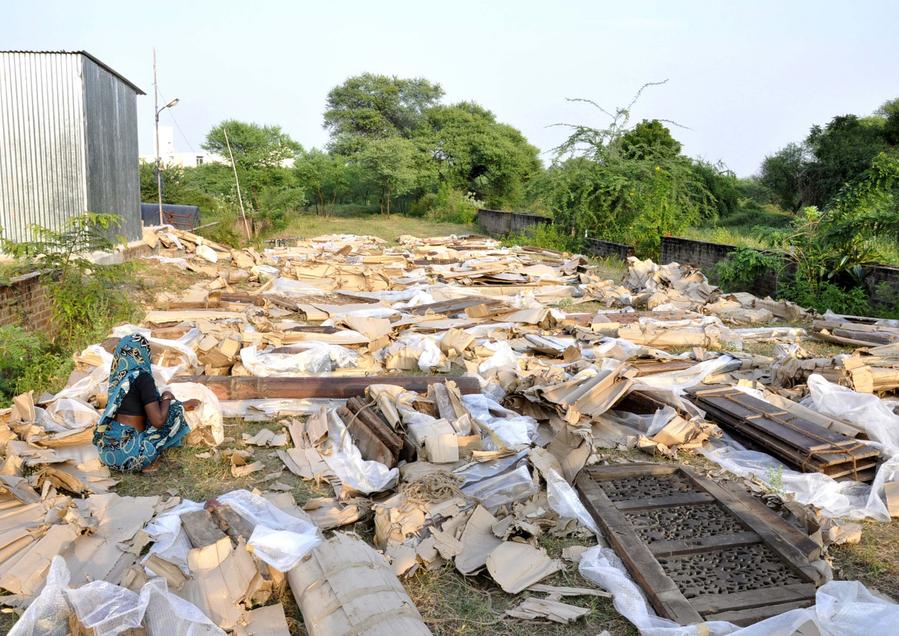
The process began with a video, taken by an owner ready to demolish a termite damaged but beautiful row house in northern Gujarat. Normally when this type of house is destroyed its parts of value are sold to various antique dealers. Instead, our client acquired the entire house, packed up all its parts, and stored them on his property near Ahmedabad. We began the conceptual design process with the video and a short list of elements with their basic dimensions. Only after agreeing on the direction of the design did we take one day (because we couldn’t risk the damage or theft associated with leaving elements out all night) to unpack as much as we could and measure critical dimensions. Already there we found many pieces not present in the list, and barely covered in the imagery. From those basic measurements we drew up the elements and developed the design. The first time we could completely open the elements and start to puzzle them out came after the columns, roof and plinth were finished. It was then that we began the conversations with our carpenters about what, where and how, given the basic framework of the courtyard we had seen and planned. As elements were unearthed, projected locations shifted to accommodate new pieces, or to hold related parts. We gradually moved away from drawings, making more decisions on site, because the argument couldn’t be divorced from the place and the artisan’s perspective.
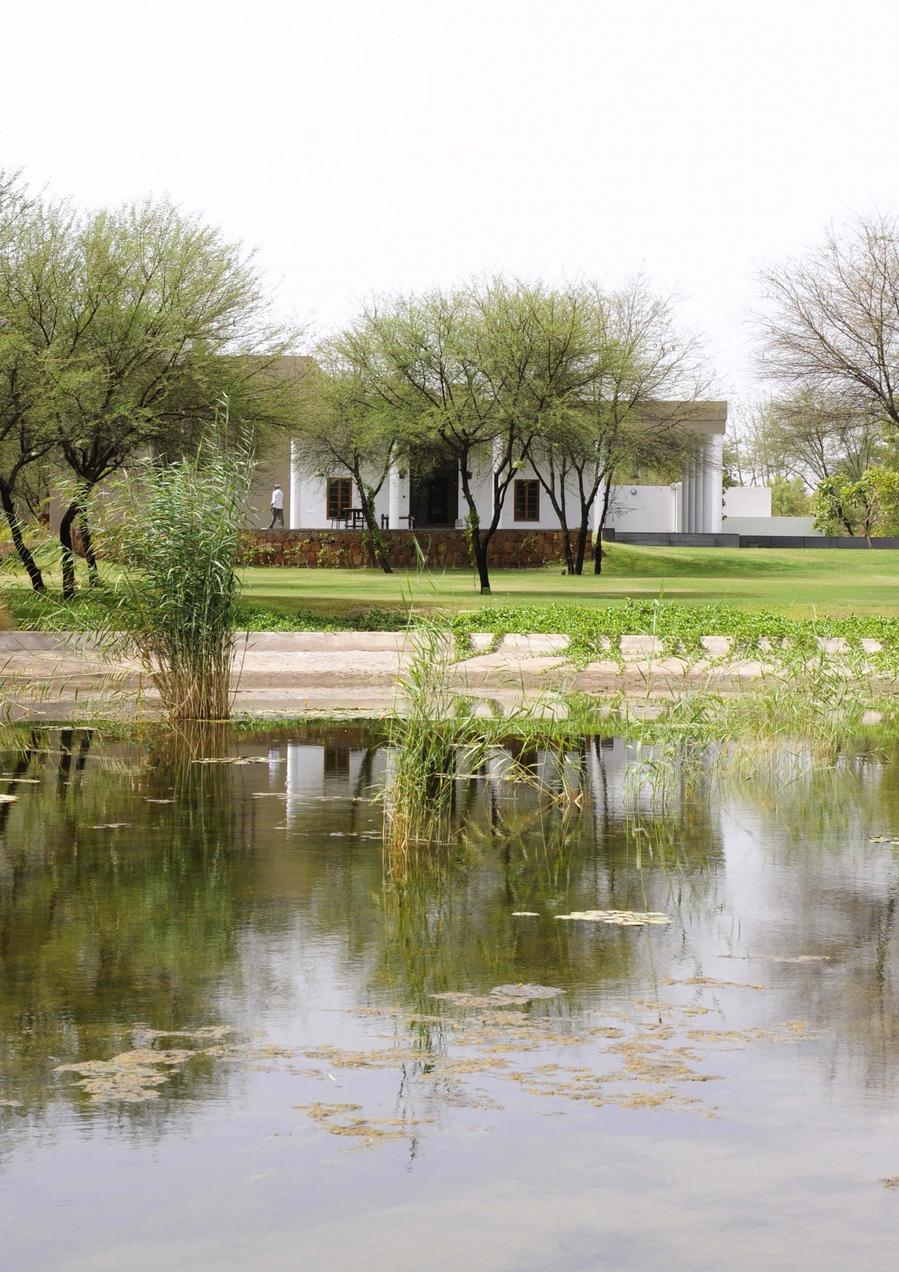
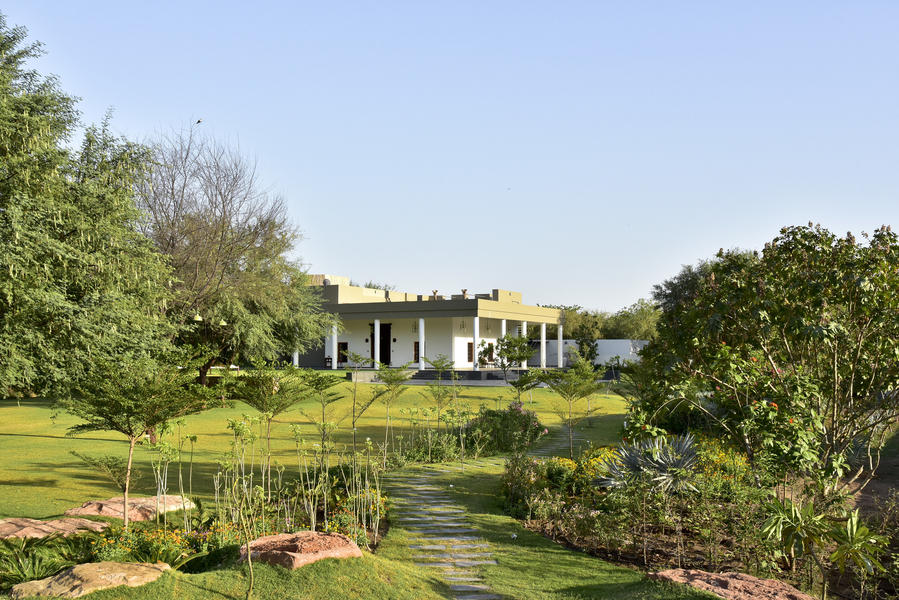
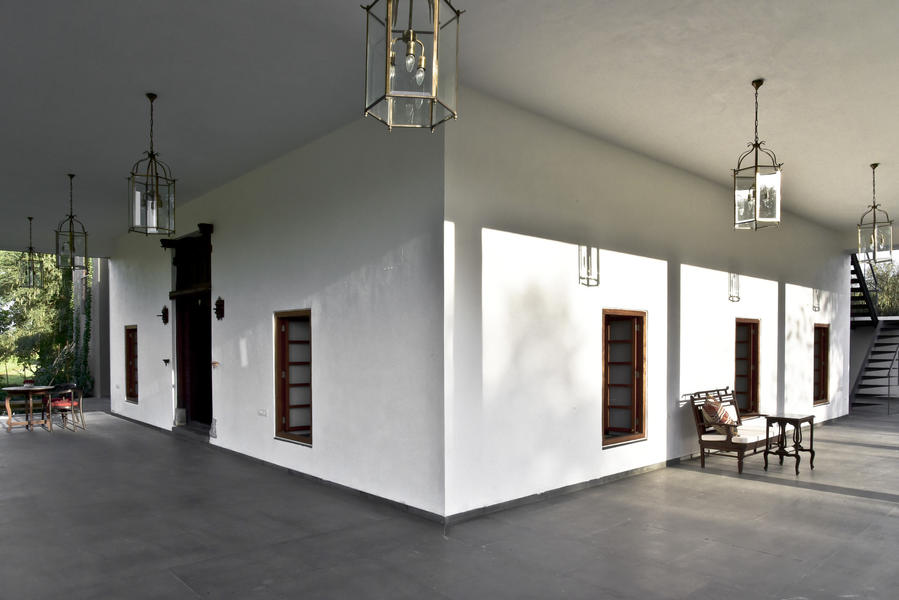
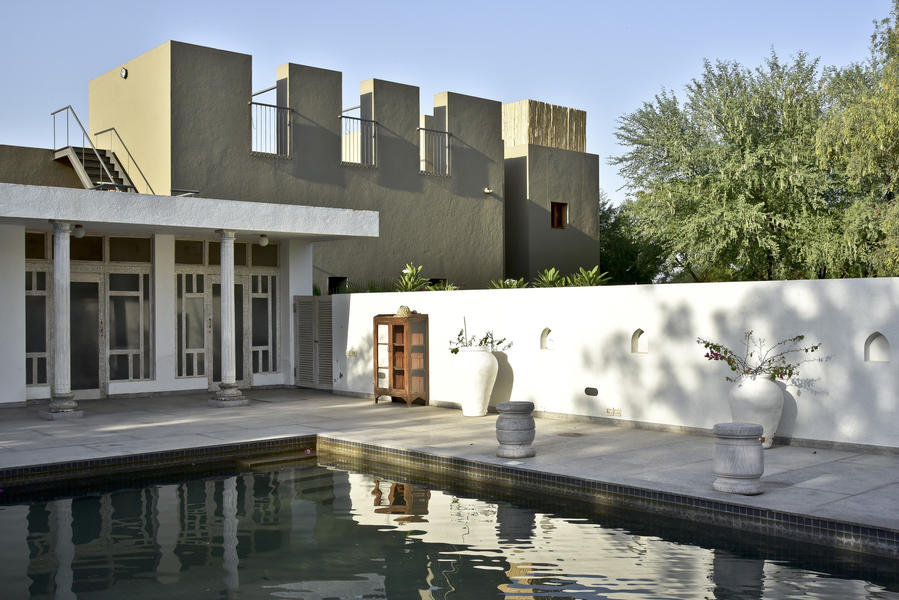
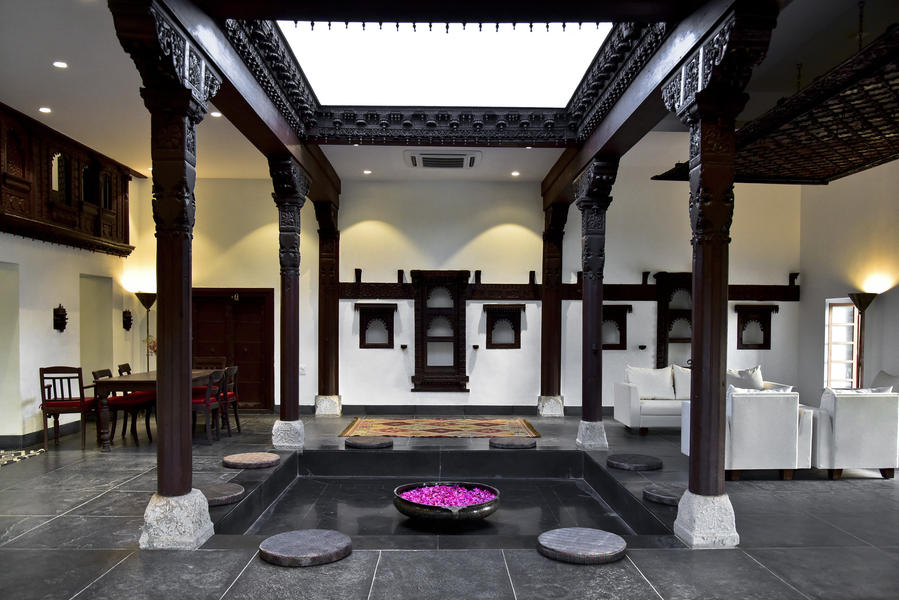
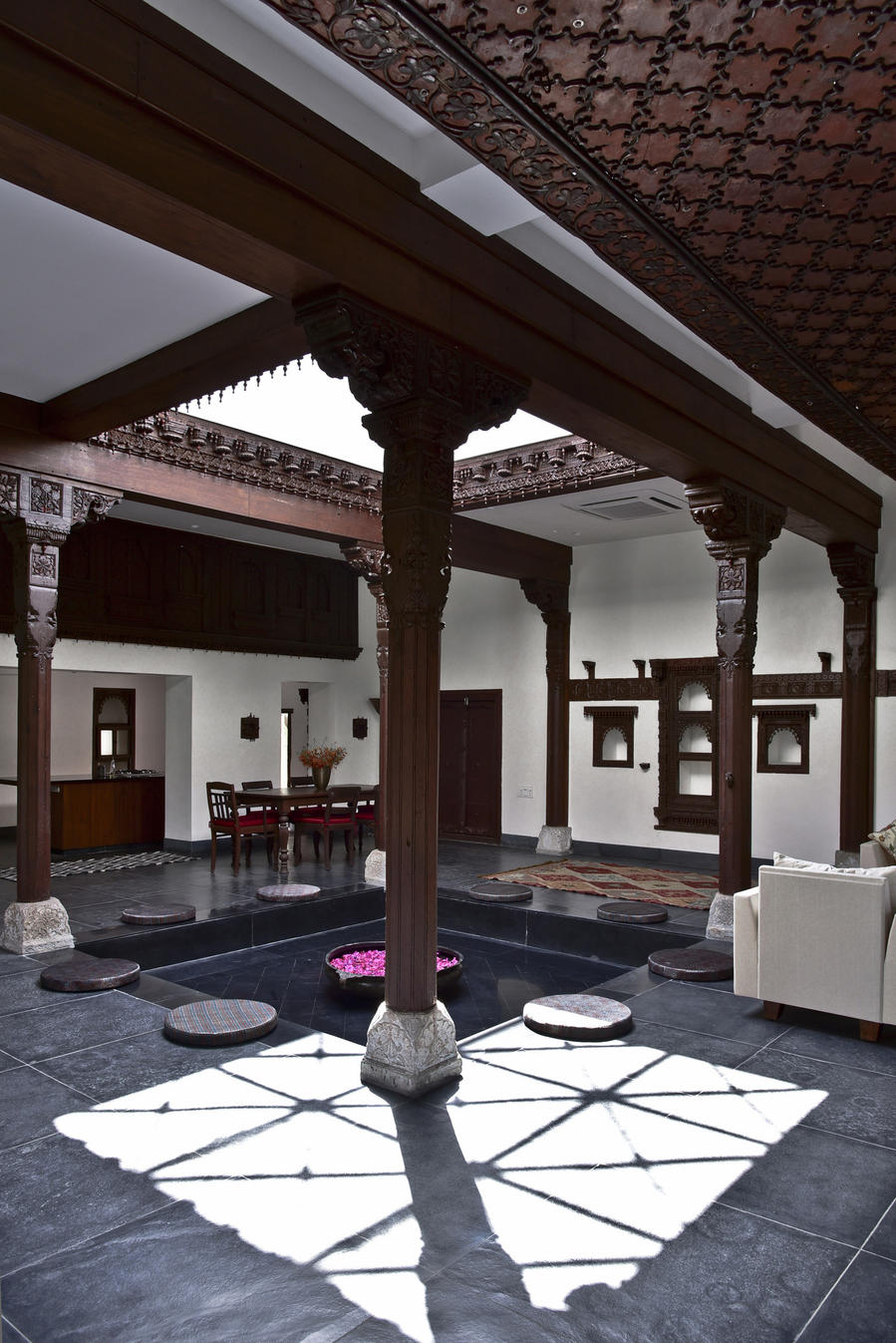
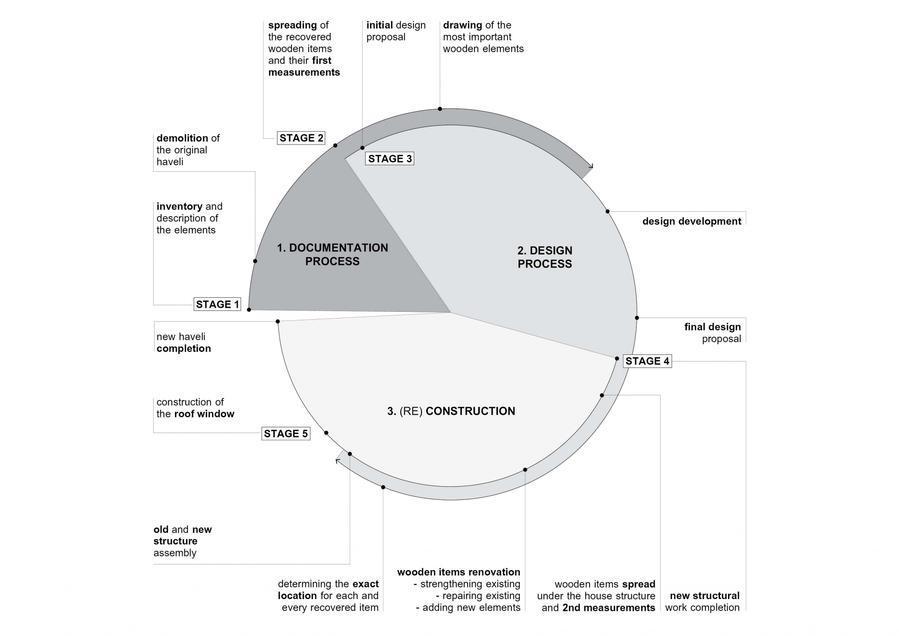
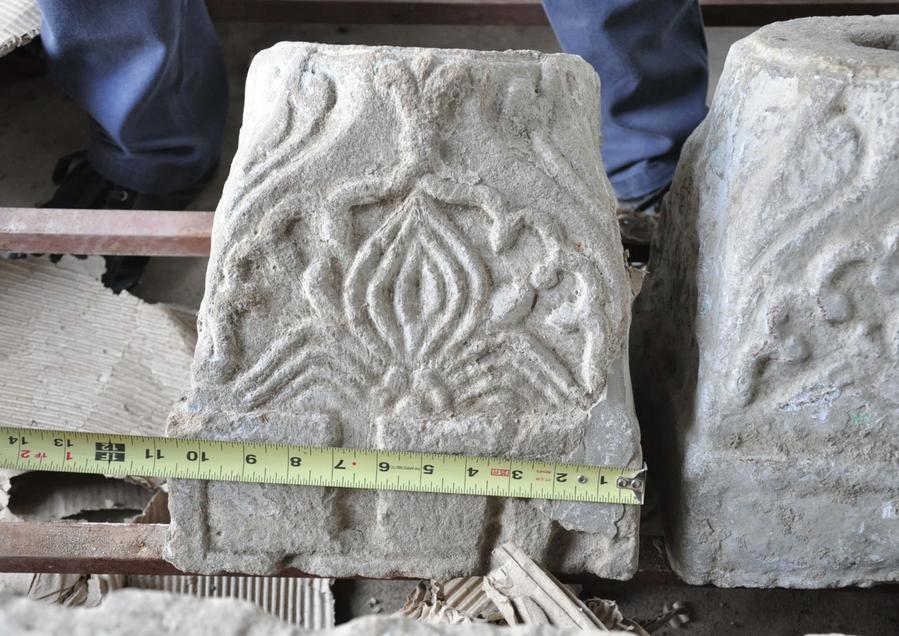
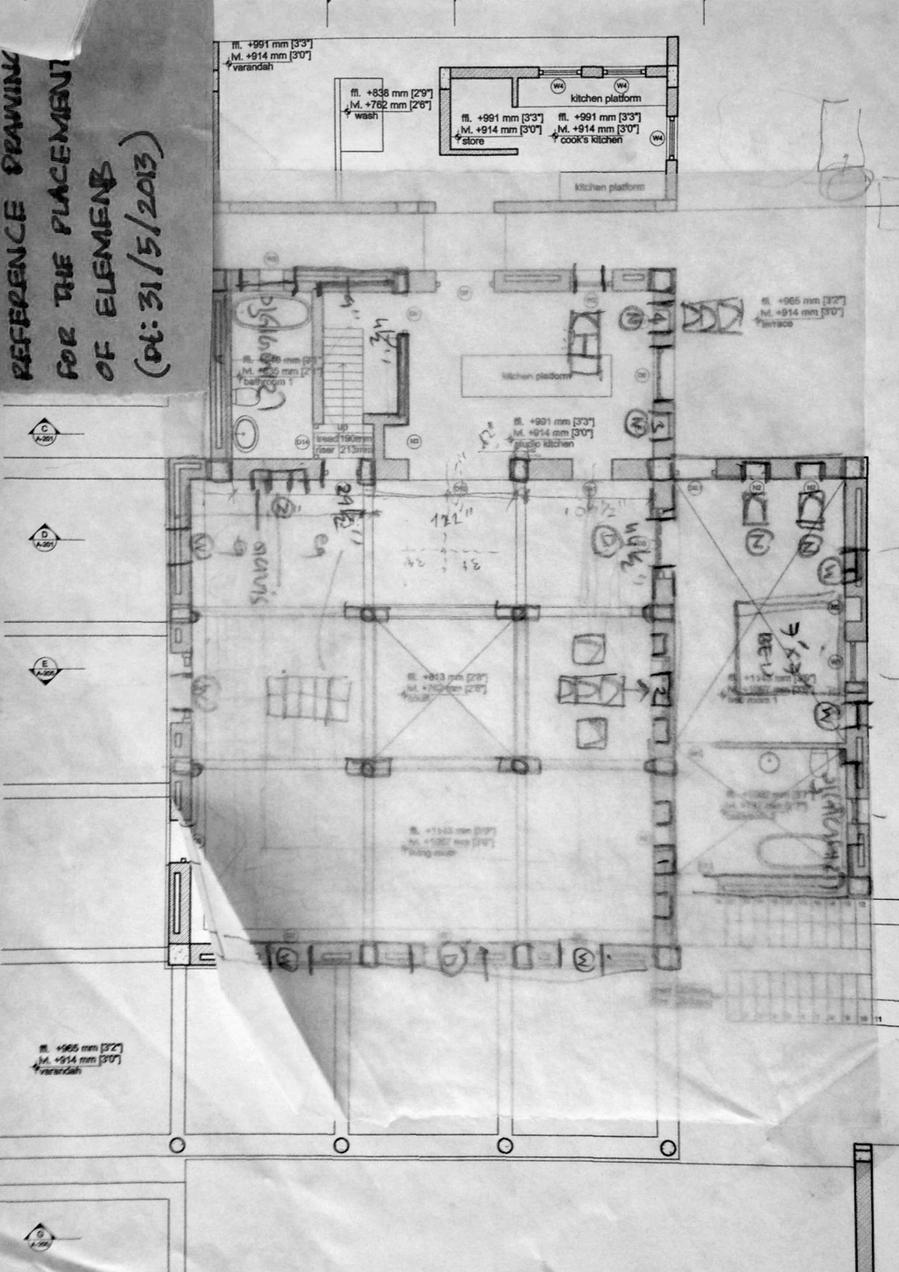
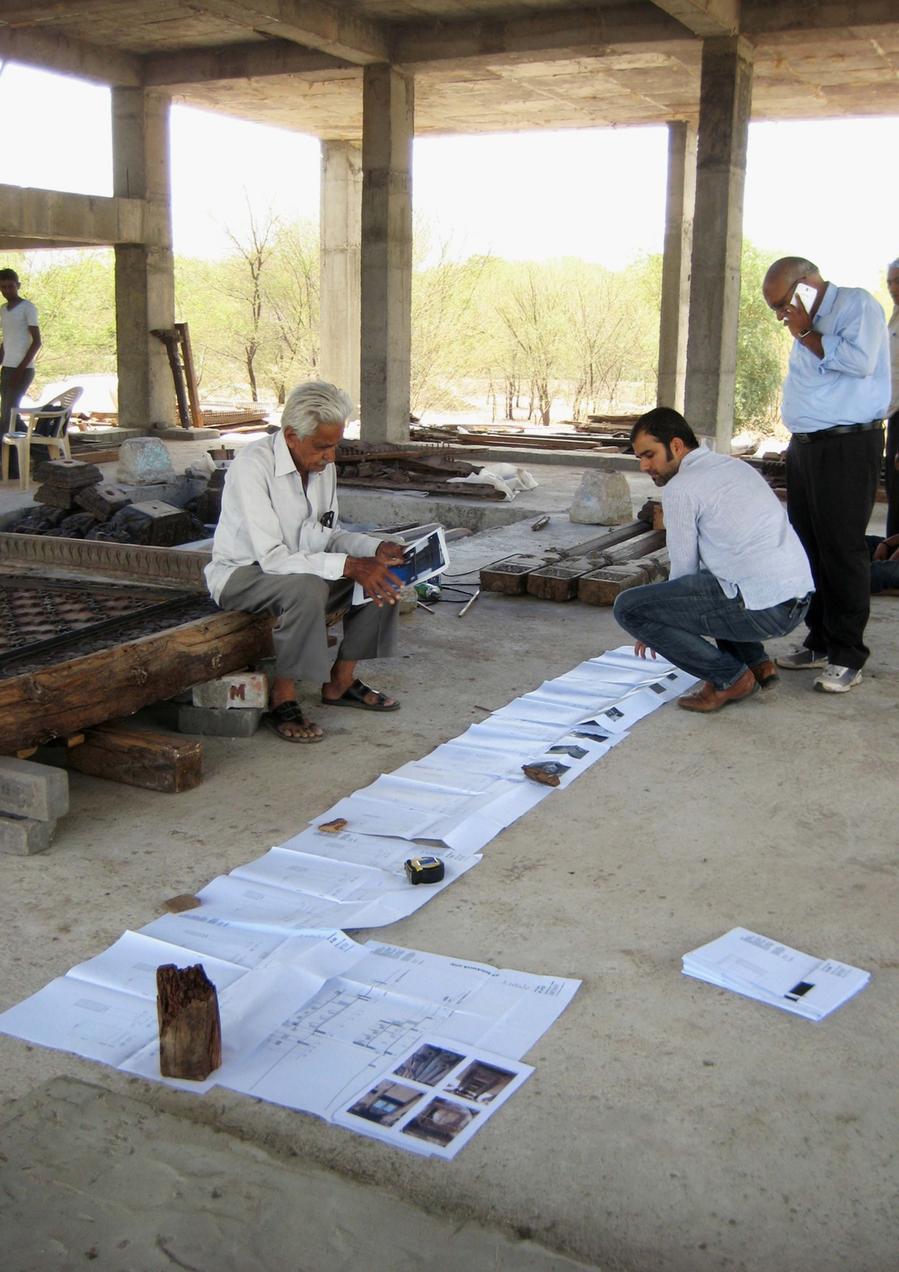
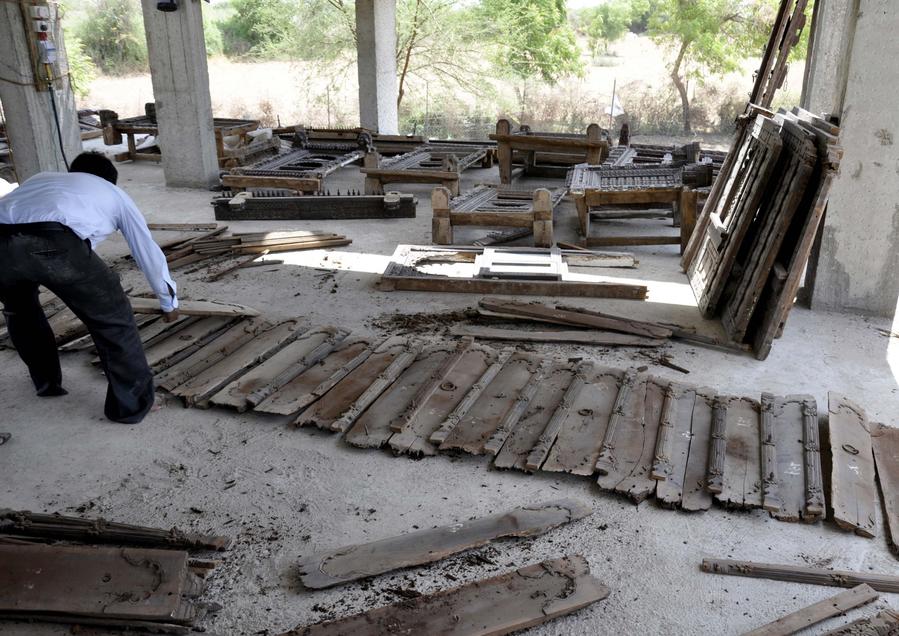
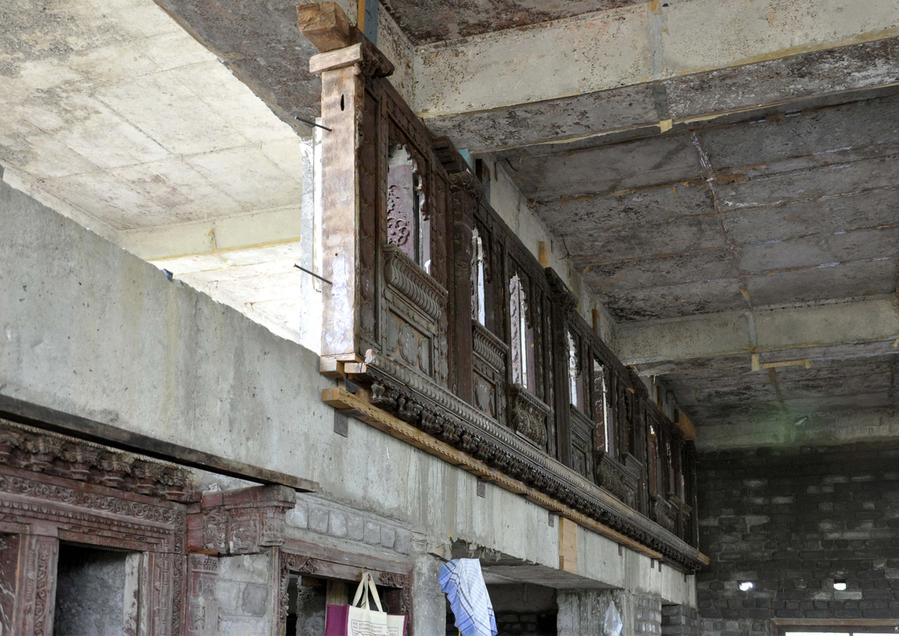
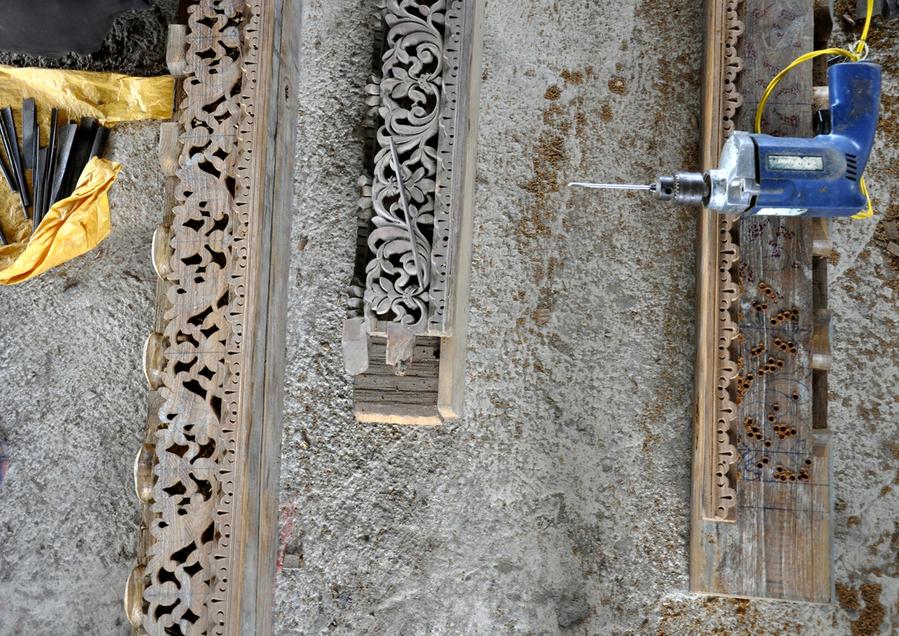
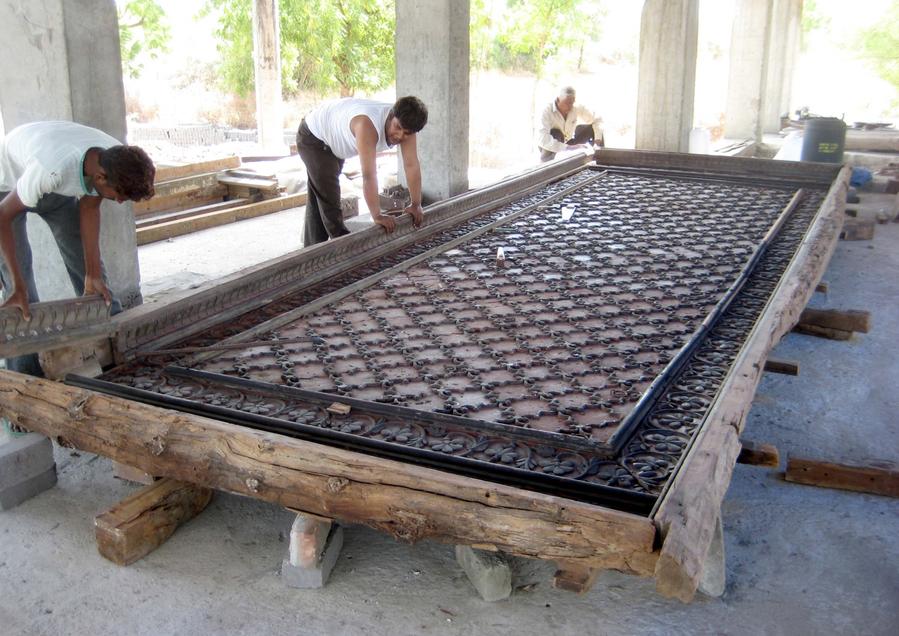
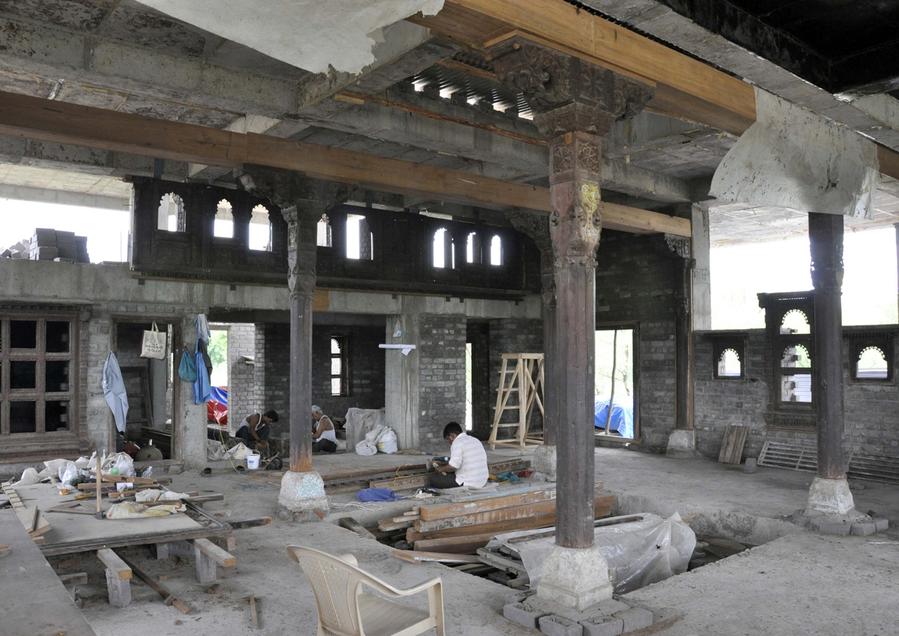
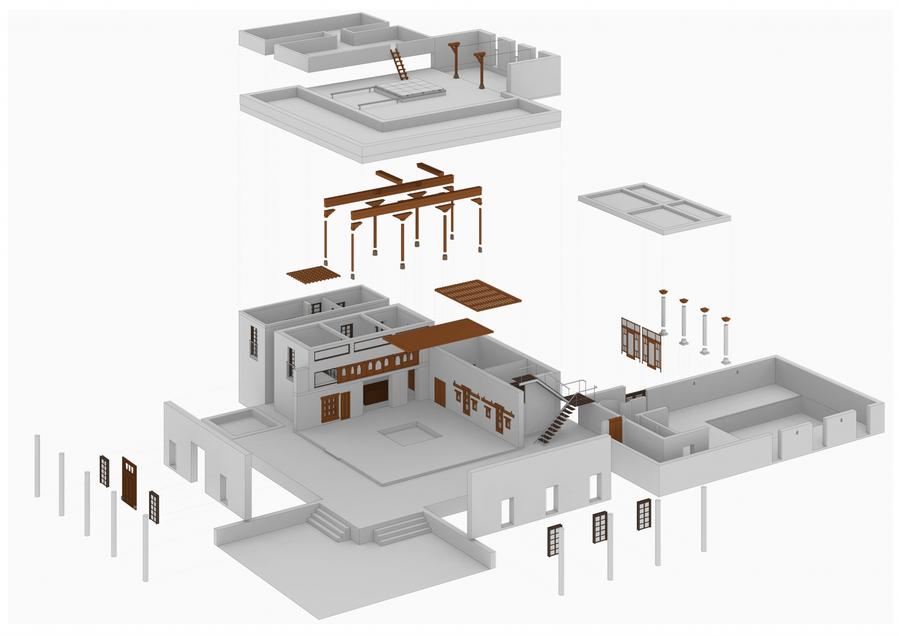
Here the logic of new and old coming together was reflected in the process by which they were made. Old elements needed conversations, placements, and at most, hand drawings. Their unique form and dissimilarities rendered digital drawings complicated and unnecessary, while the new elements, inserted alongside old in the structure, were designed, drawn and executed according to a more typical practice of construction drawings and site checks. These parallel processes resulted in an intensely site driven design, which evolved as much during its process of construction as during its so-called design phase.
Deesa, Gujarat 2012 - 2014
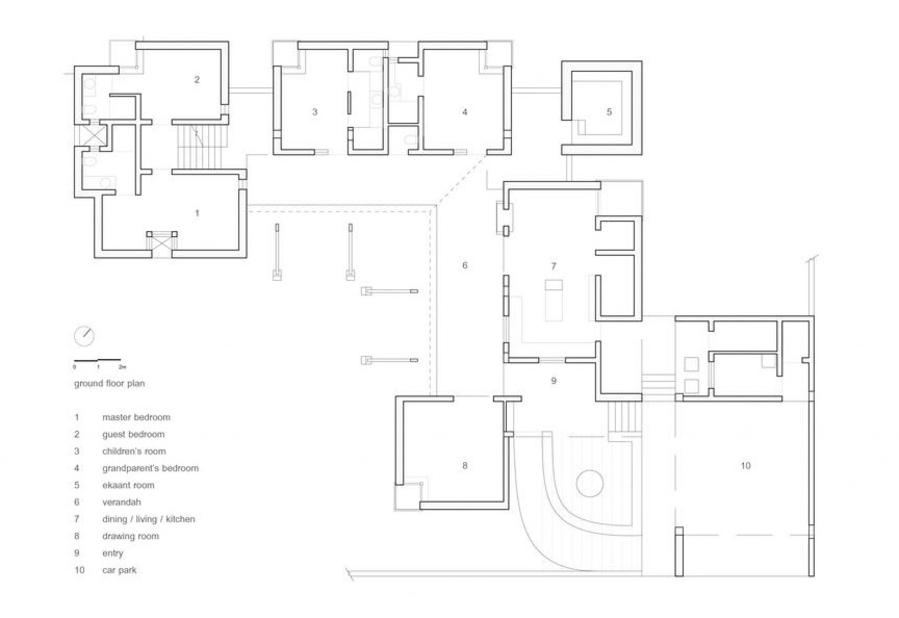
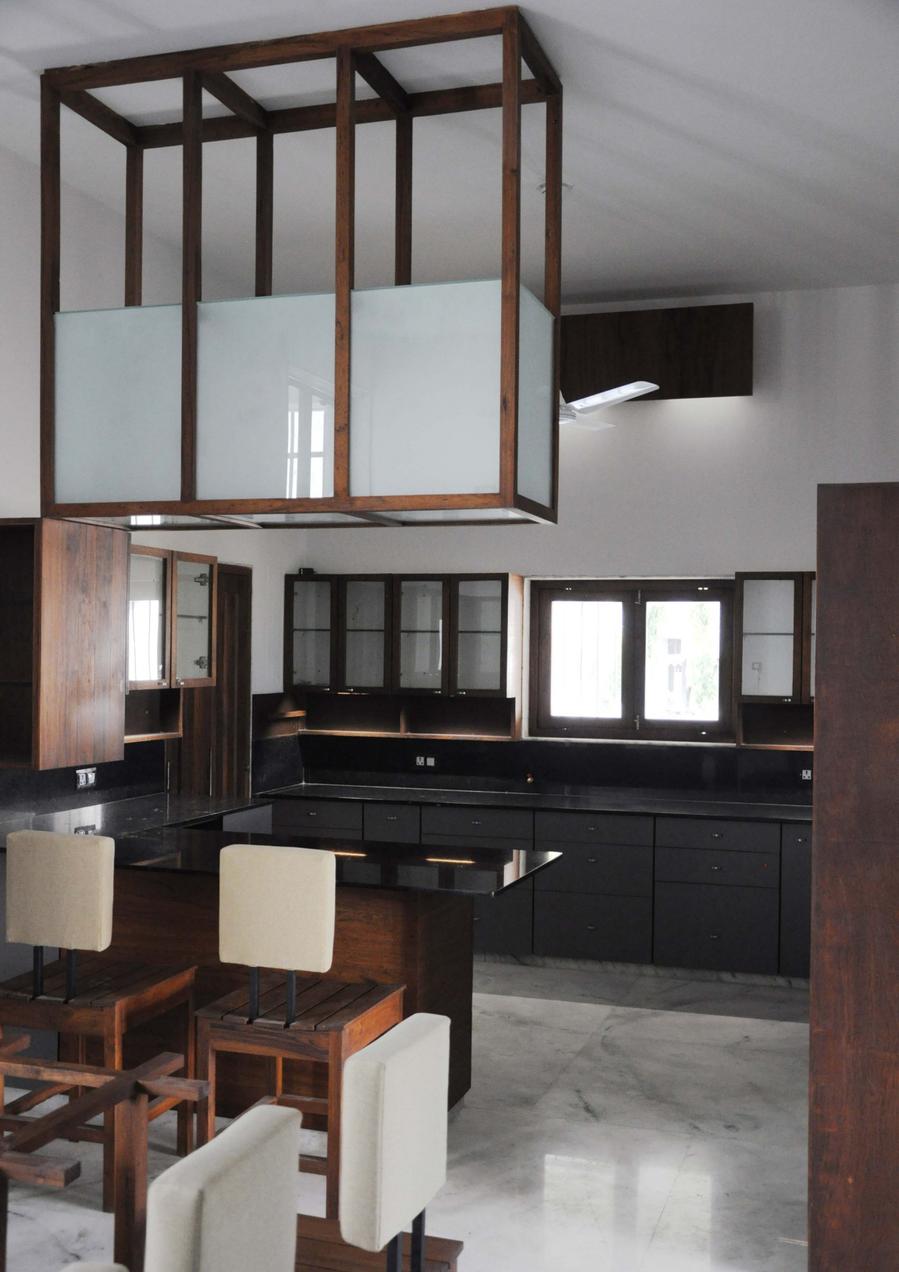
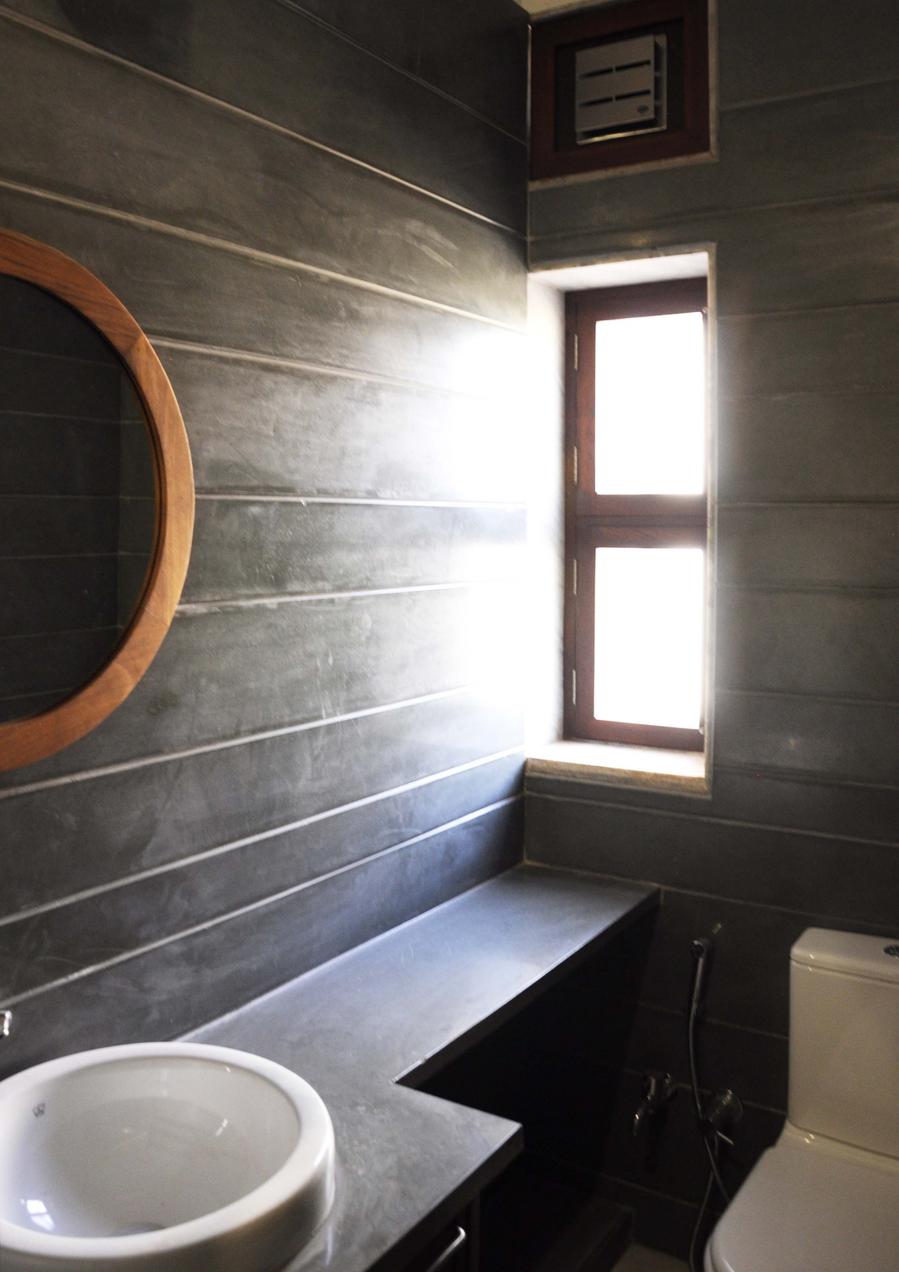
A multi-generational family of eight asked for a straightforward house that would naturally withstand the harsh climate conditions of northern Gujarat and weather well over time. In line with their clarity of mind, they submitted a list of their specific requirements, outlining the way that they needed to use their home, and their expectation of a durable, simply designed structure.
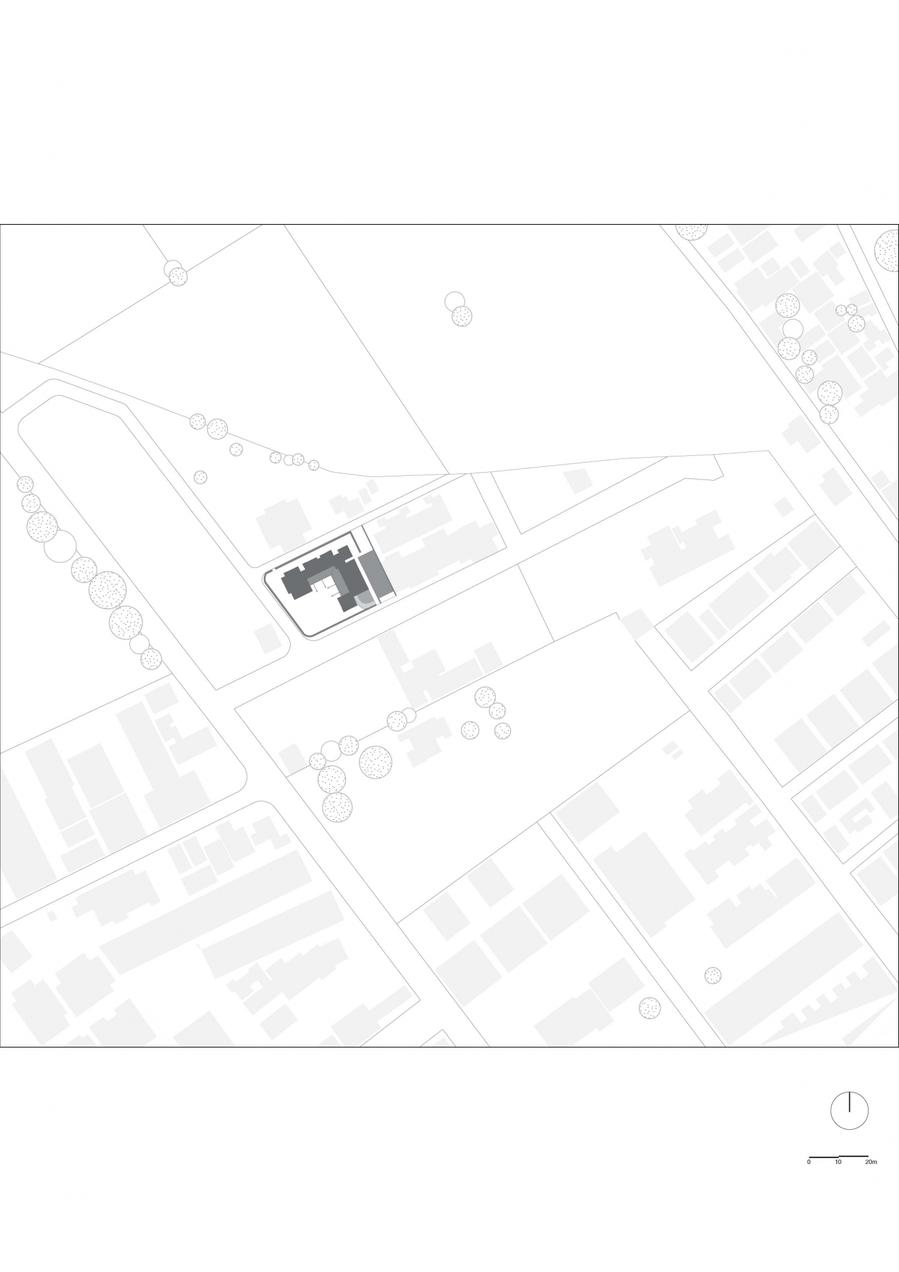
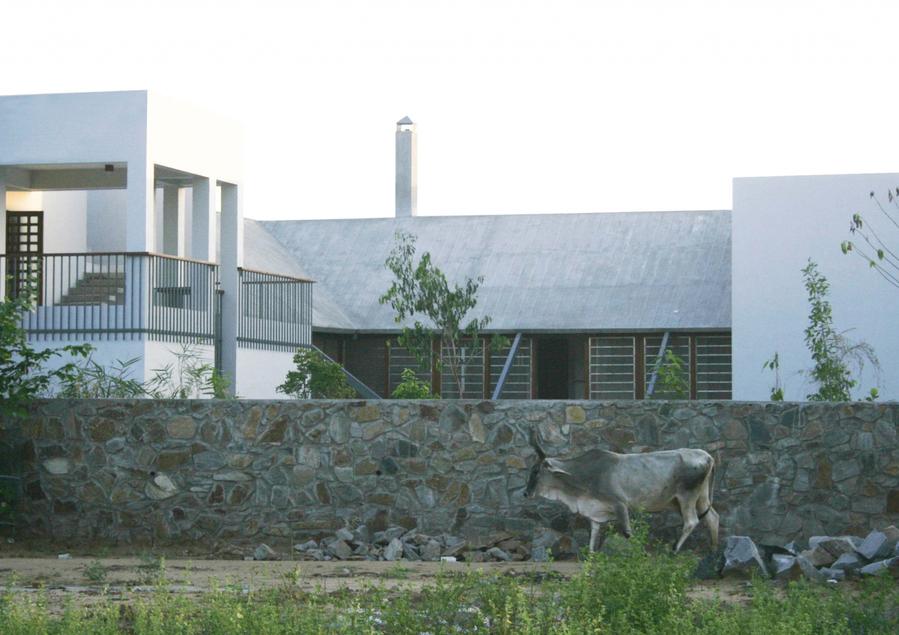
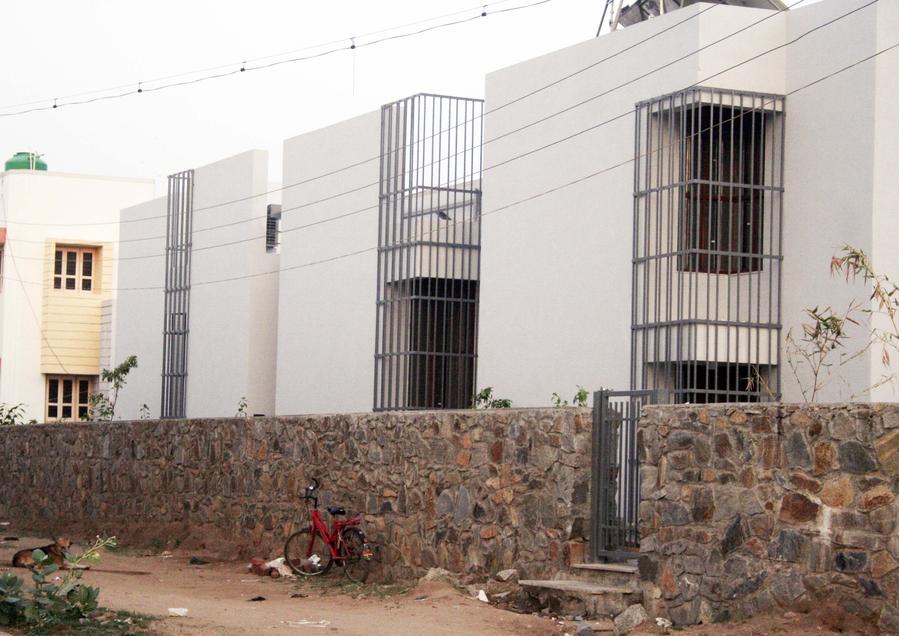
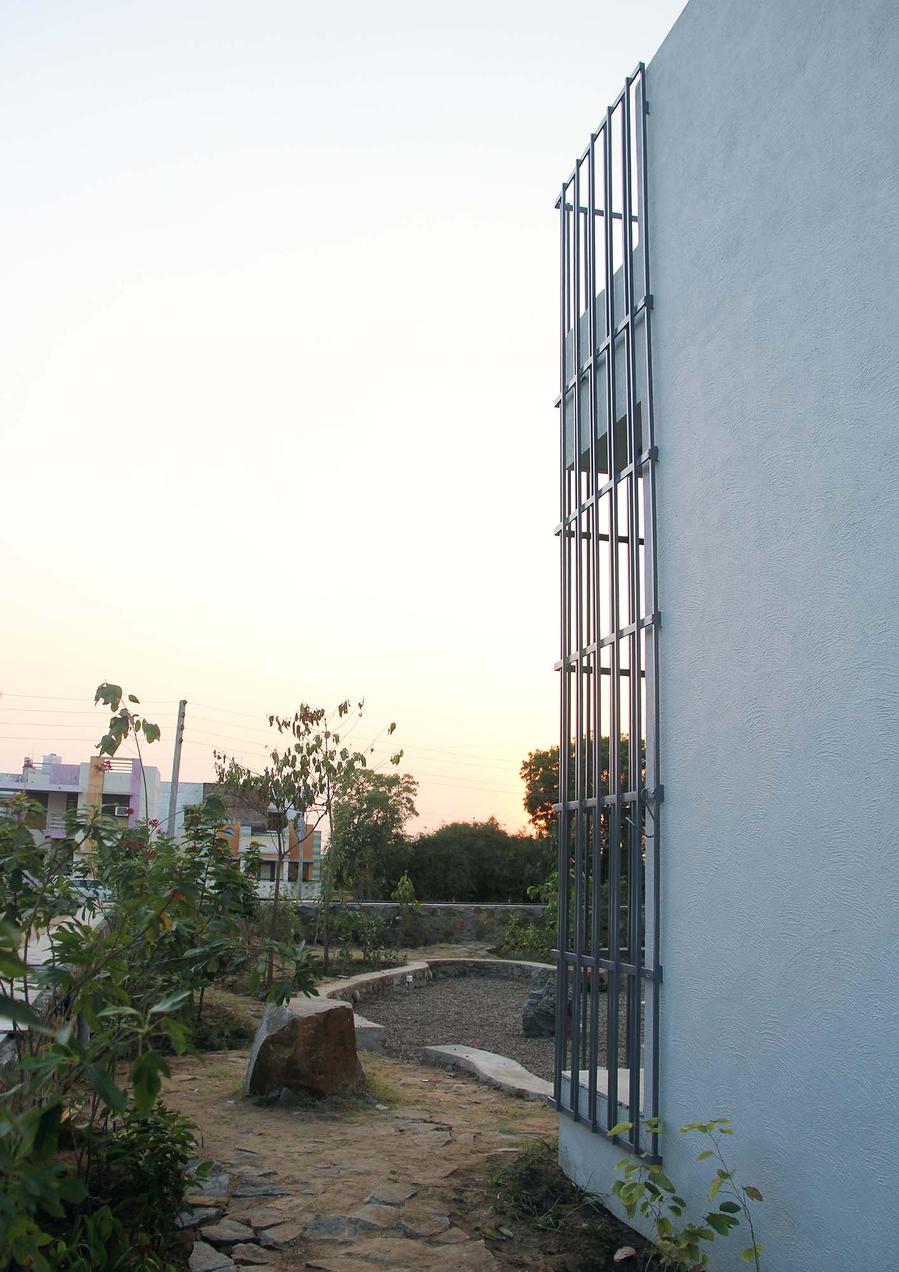
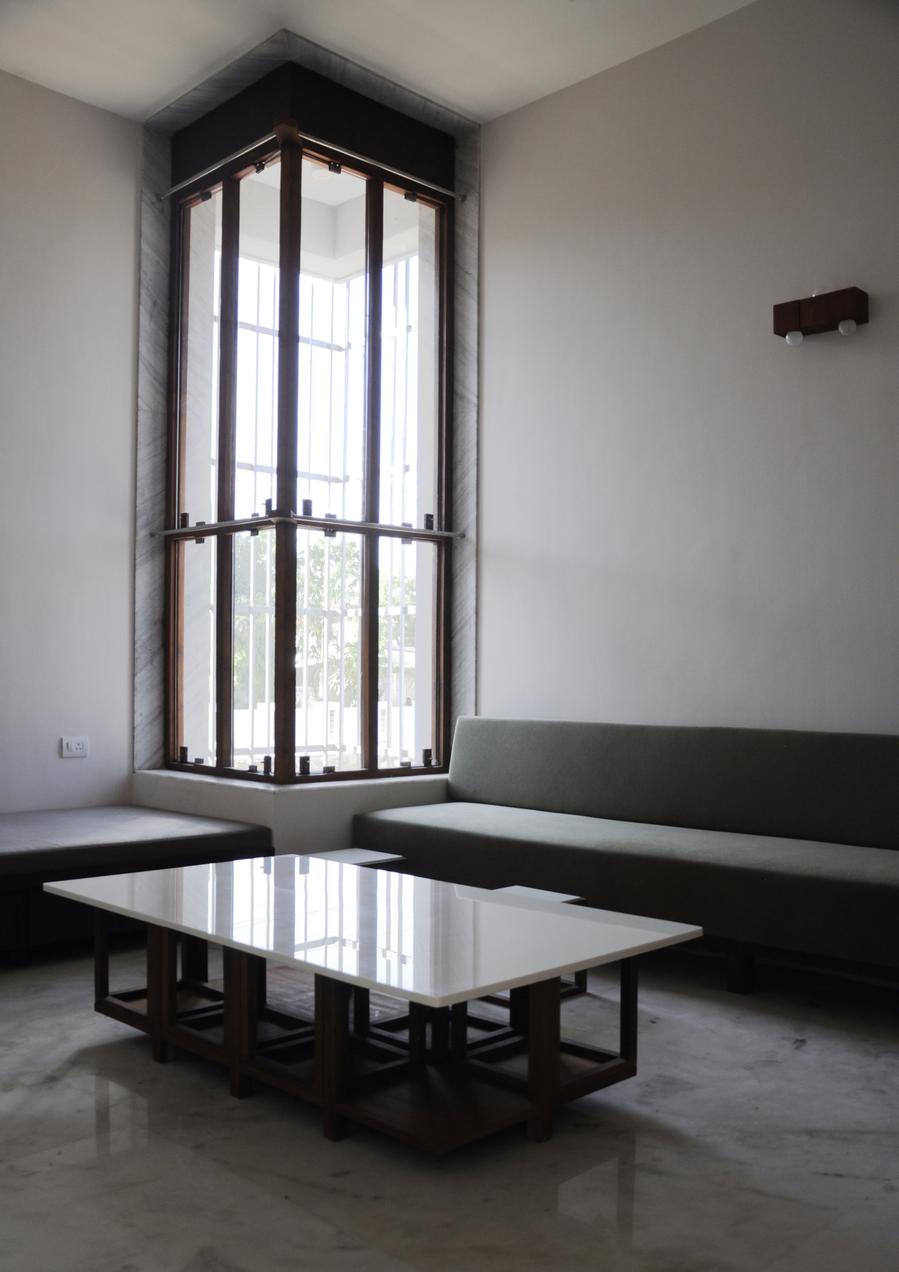
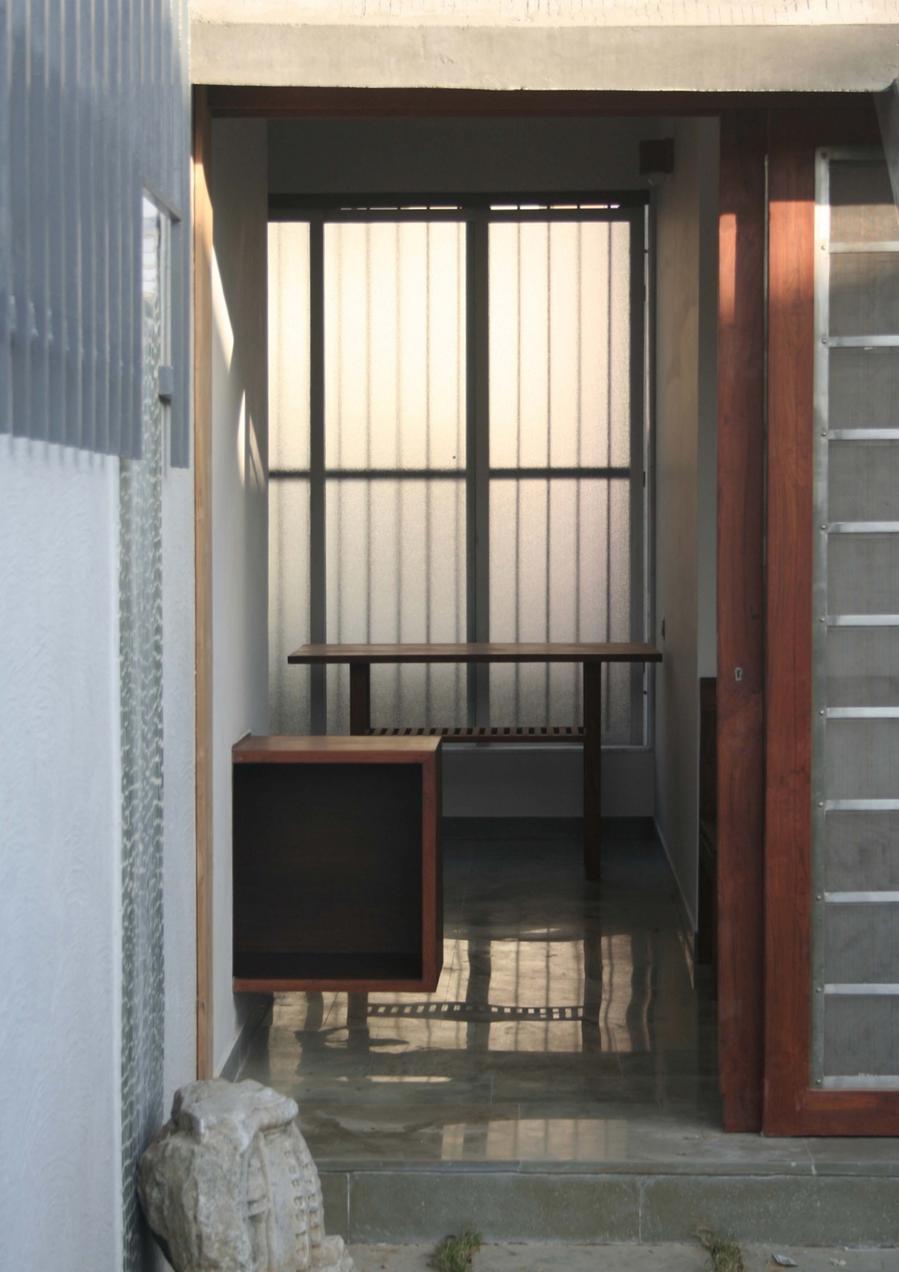
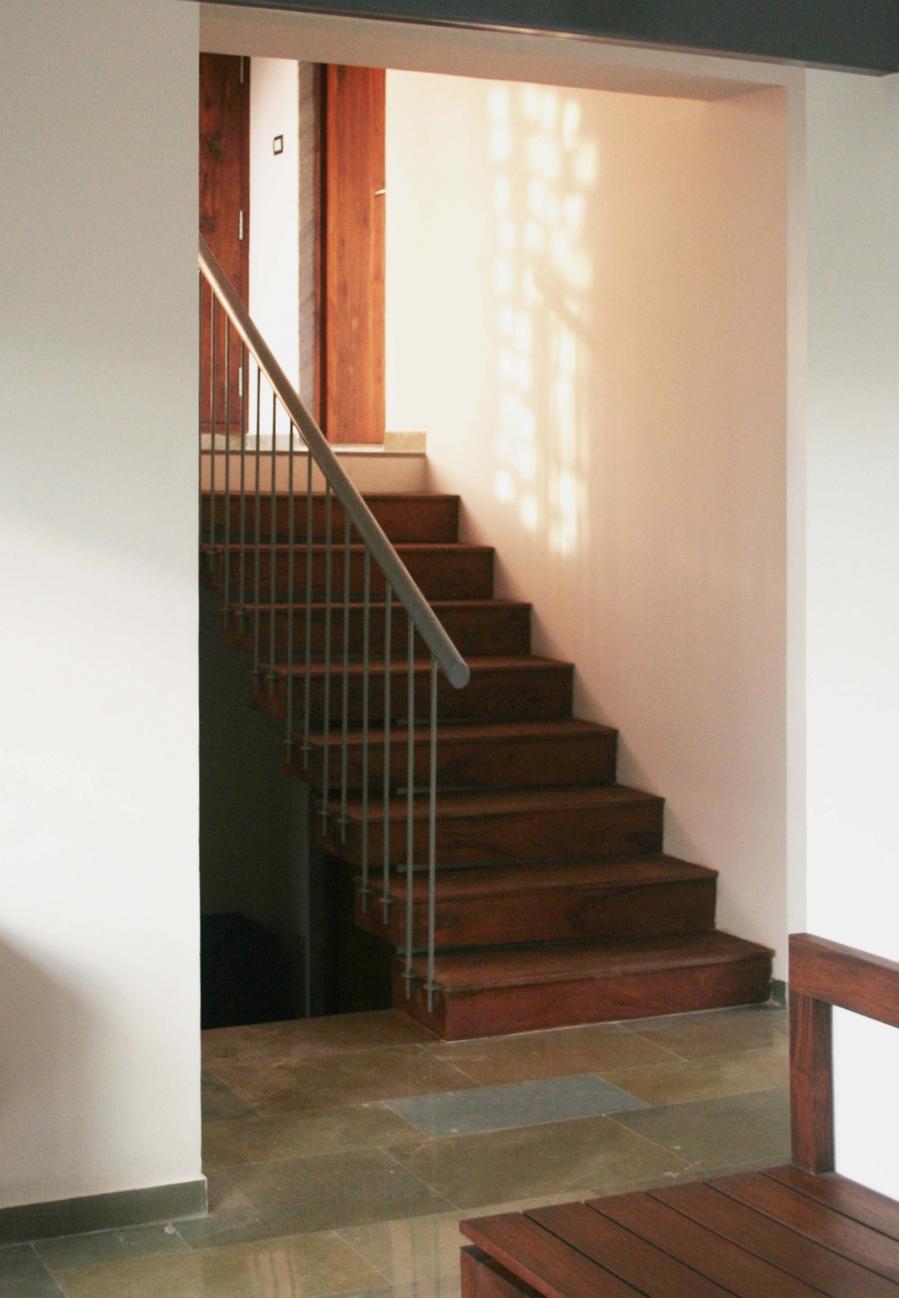
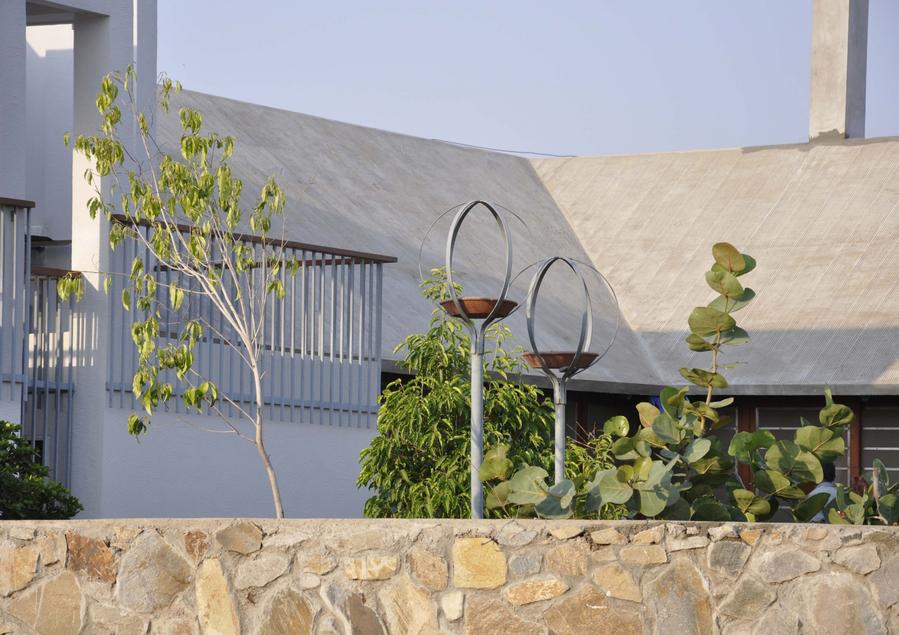
In response to the aspiring family, the project balances innovate design ideas and methods with the traditions important to their lives and locally available construction skill, material and knowledge. Integrated into the landscape, the house inhabits a corner site near a series of twin bungalows. A low profile with articulated volumes allows the house to merge with the scale of the surrounding homes, feeling at once both expansive for the family and in conversation with the neighbourhood.
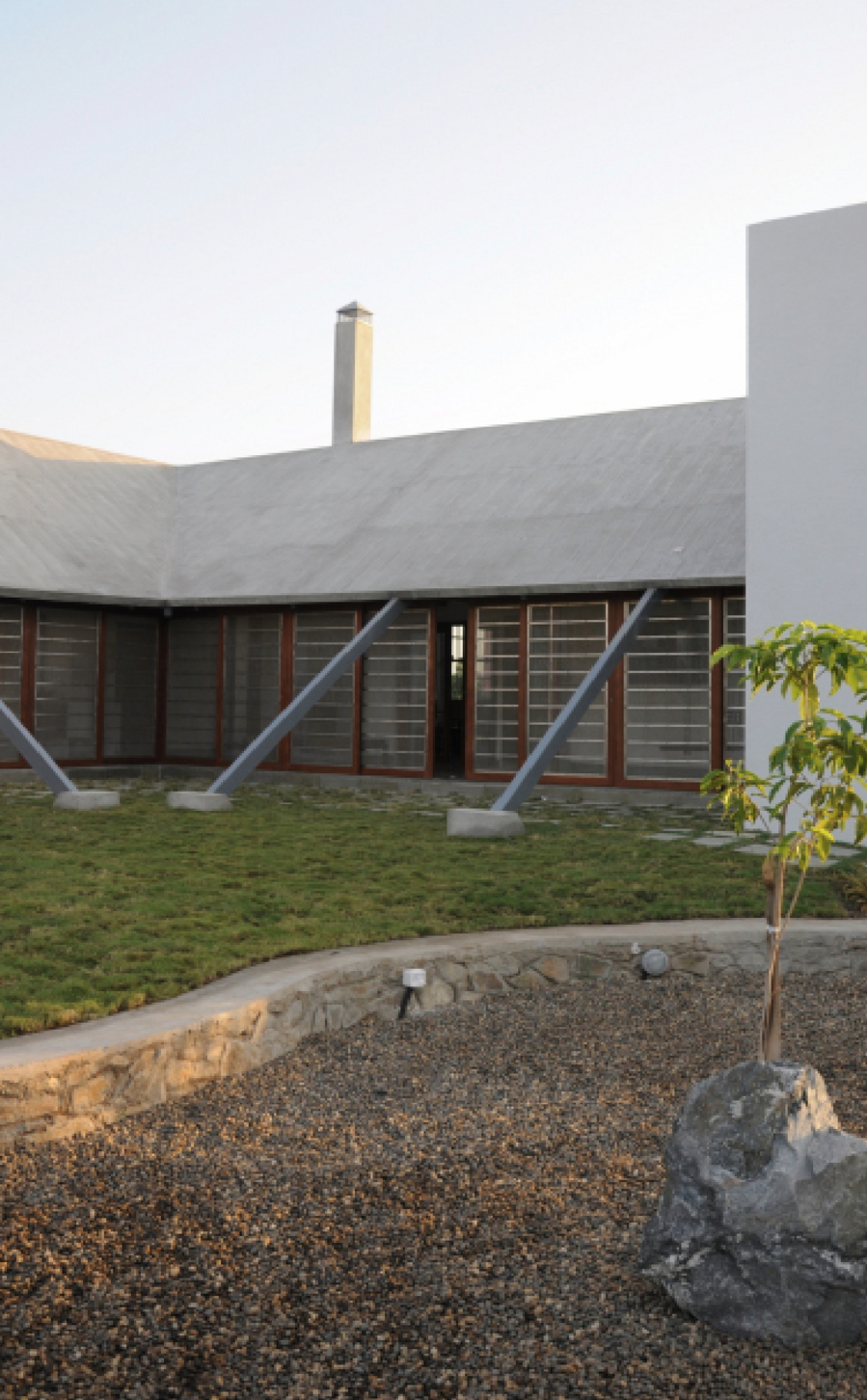
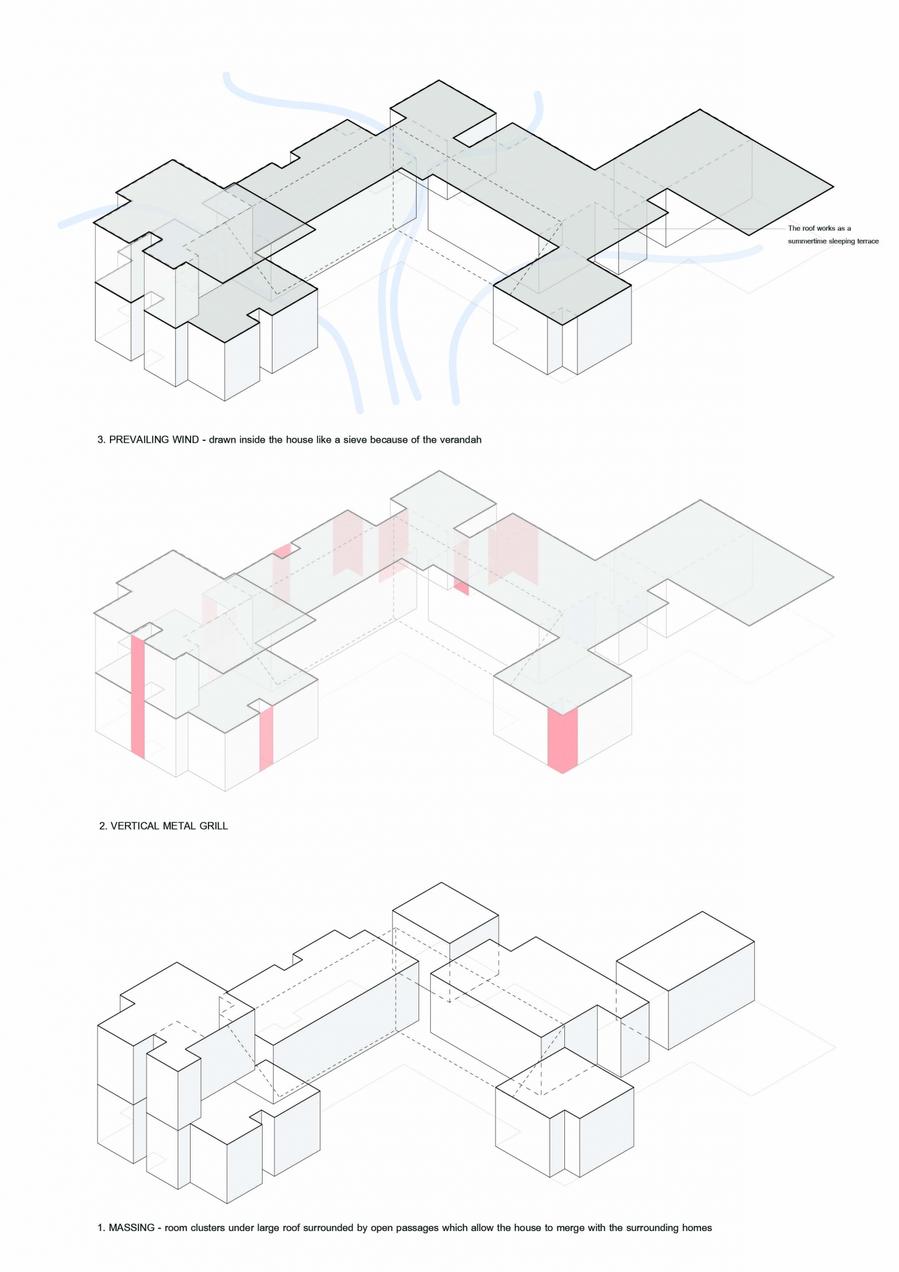
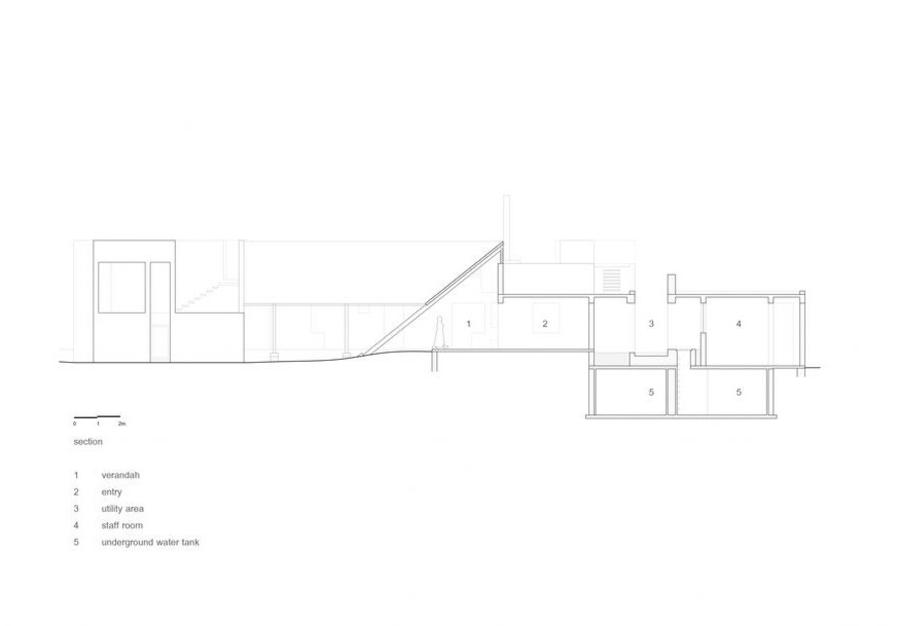
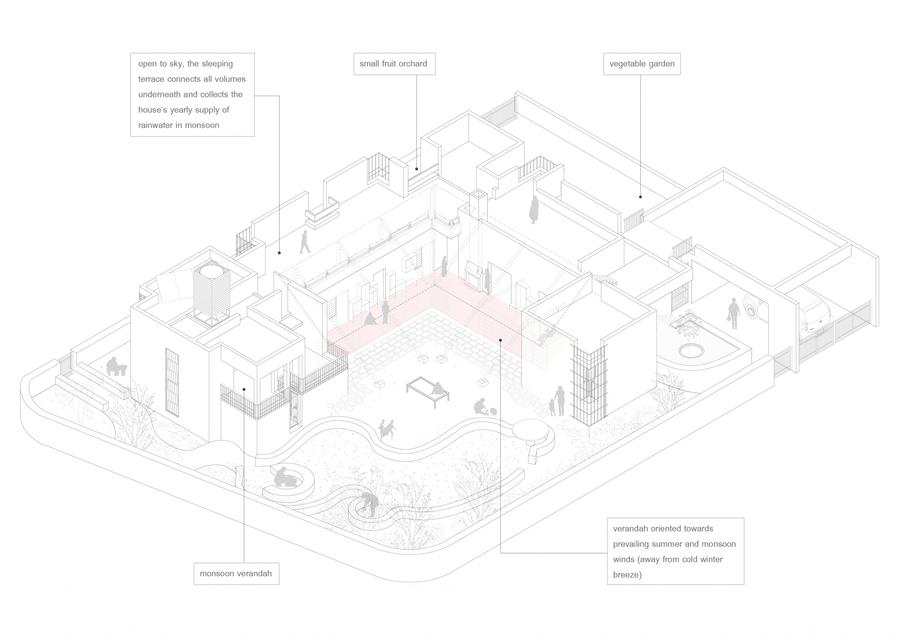
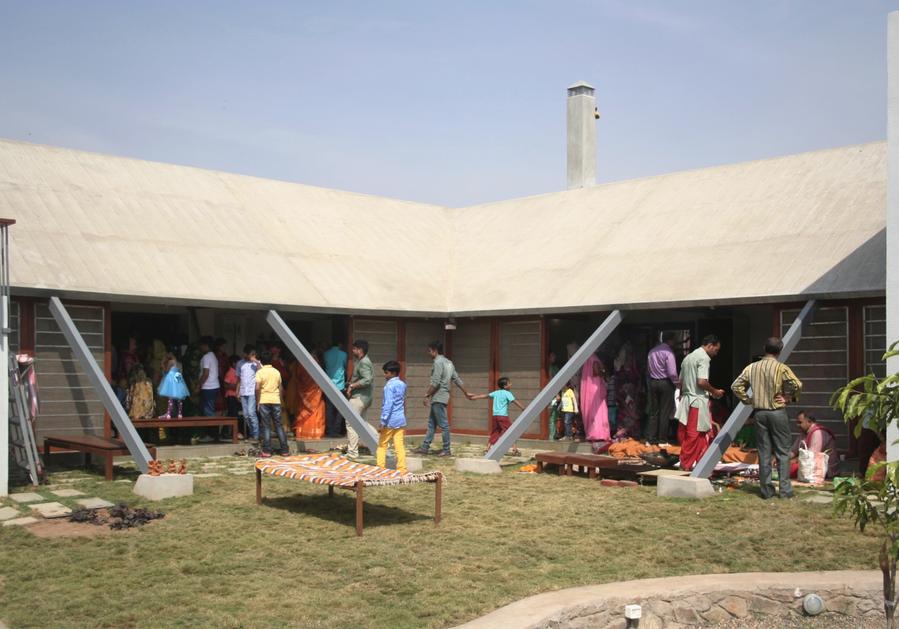
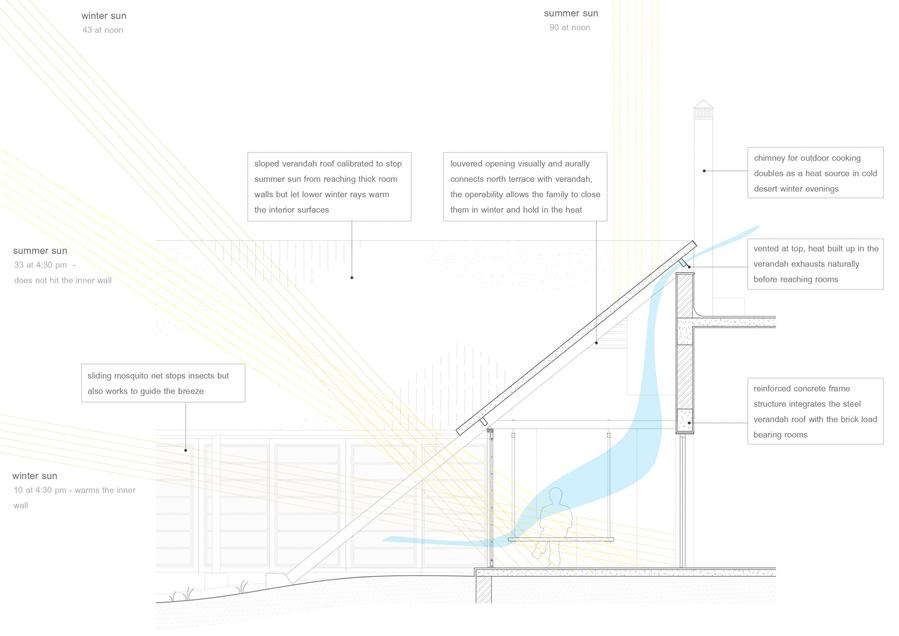
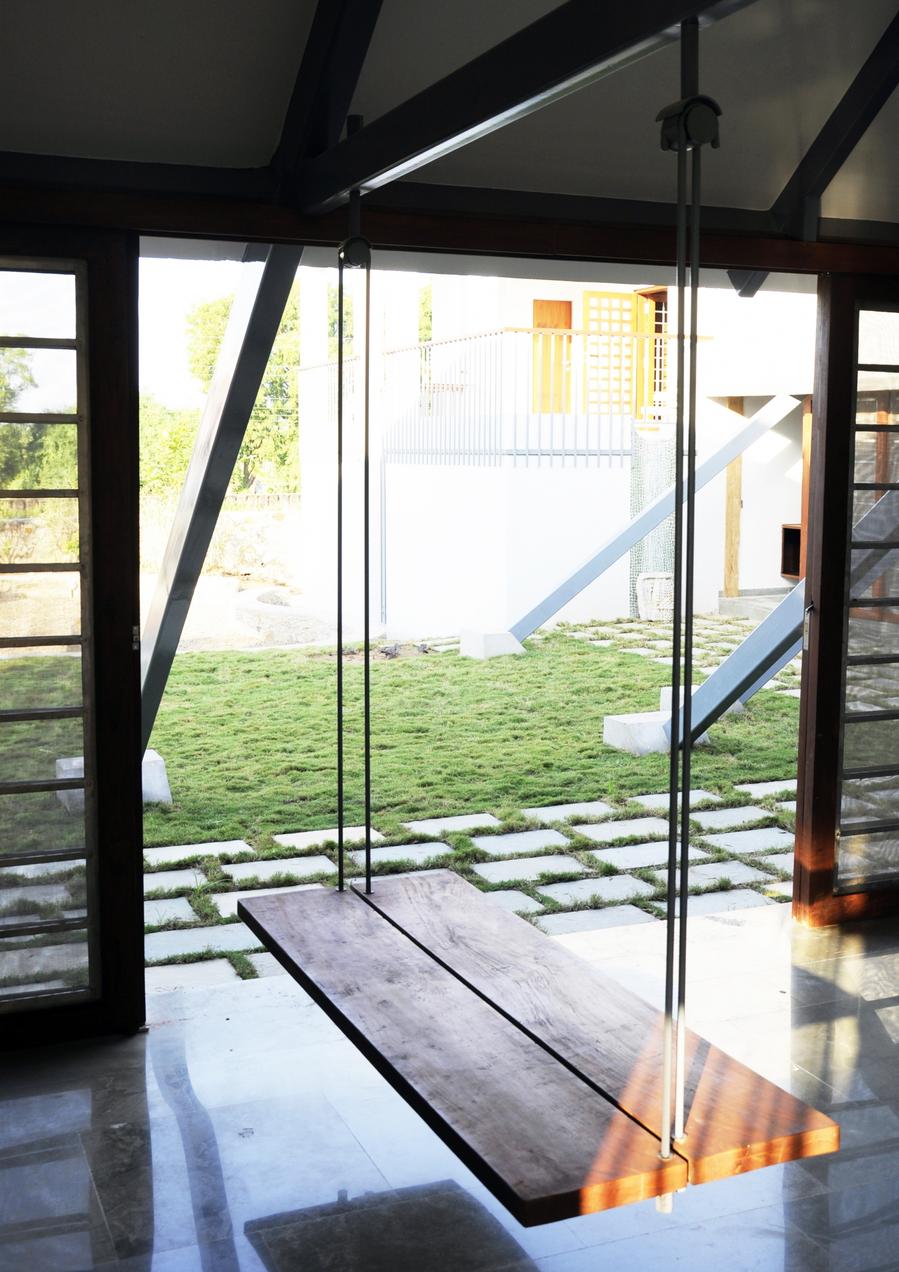
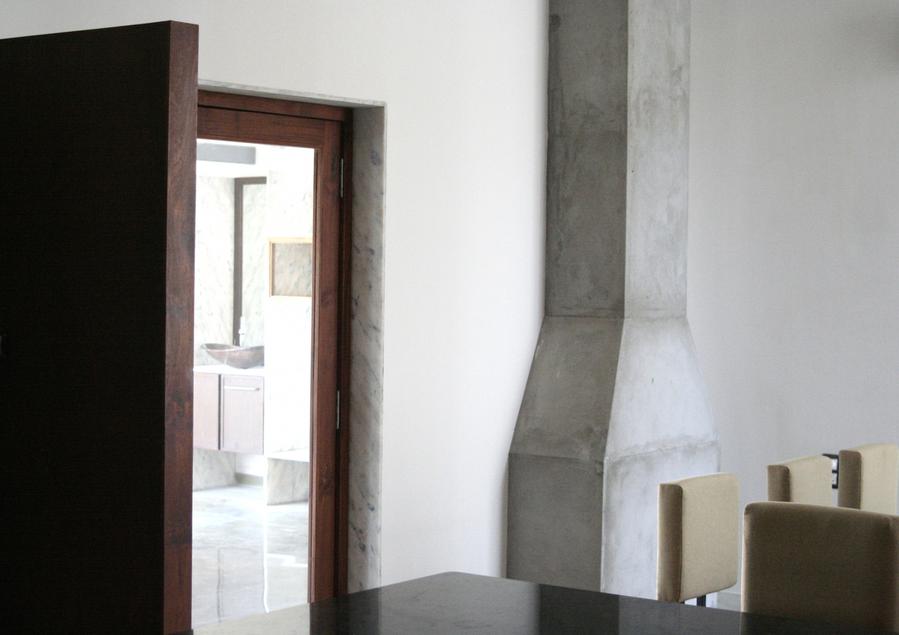
To support their condition of living between inside and out, the home consists of a group of shaded volumes clustered around an L-shaped verandah. Sheltered under the large roof, rooms are surrounded by open passages that draw wind through the house like a sieve. Thick brick walls temper the inside spaces against high diurnal temperature variation. The roof doubles as a summertime sleeping terrace, protected with high walls pocked by openings for targeted ventilation, and during monsoon it gathers rain for storage in a 40,000L underground water tank.
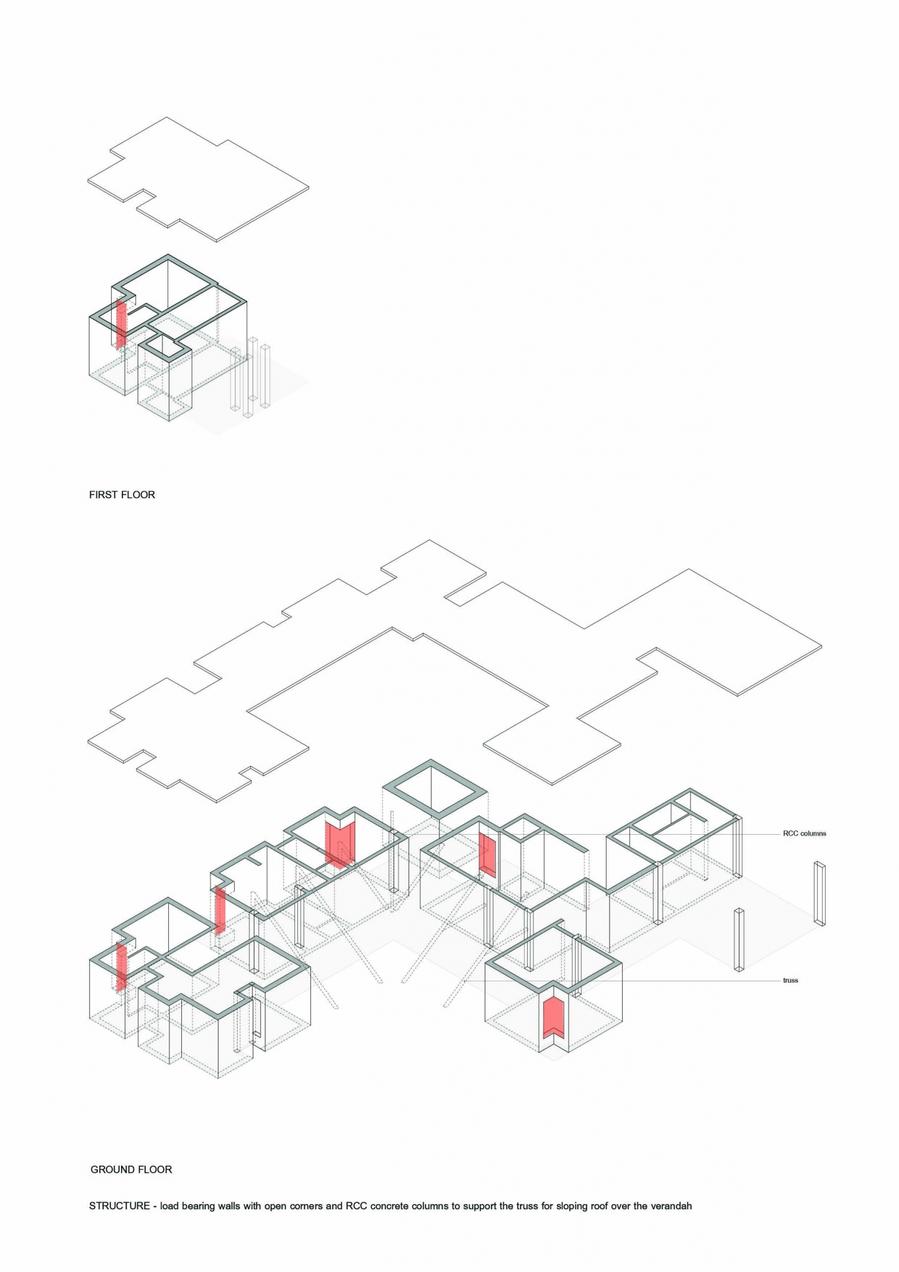
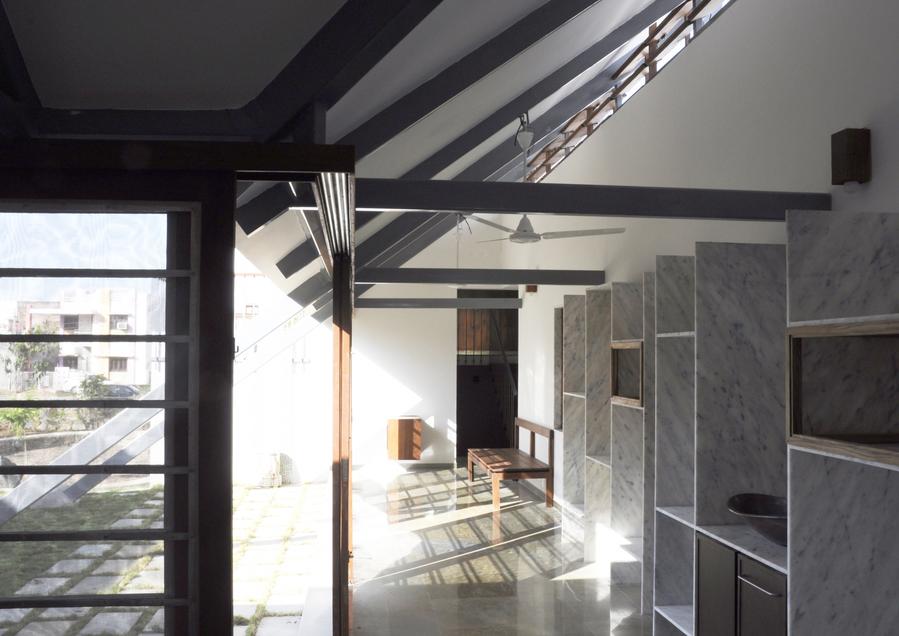
The plan is oriented toward the prevailing south-westerly winds, and while the deep verandah and covered passages protect the volumes from summer sun, the roof allows the low winter sun in to warm their outside walls. The thin sloping concrete slab of the verandah roof structure is supported by a concrete-anchored steel frame embedded into a composite frame and load-bearing structure for the house.
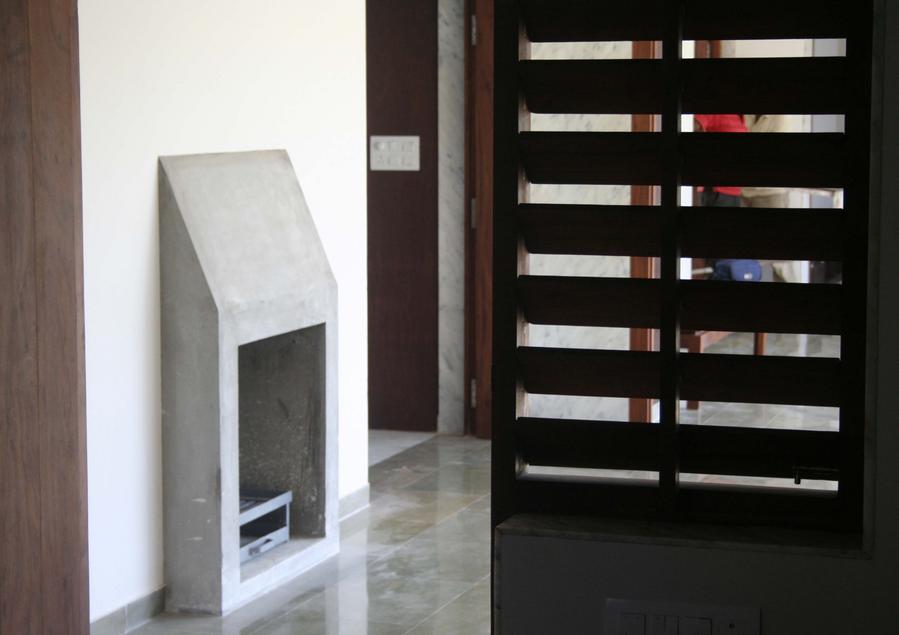
The verandah is the heart of the house. All rooms and all levels empty into it, and it mediates the experience between inside and out. Because much of the family activities occur in this intermediate space, what might have become a passage instead is a place. As a climate responsive element, it absorbs and exhausts the heat of the summer, welcomes warmth in winter, and encourages the movement of air in muggy monsoon. The high summer sun cannot reach direct room walls, and the sloping roof with ventilated openings at the top allows the hot air to rise and naturally exhaust, moving it faster because negative pressure behind the thrust of the wind moving up the verandah roof draws air out faster. In winter, these openings, which are fitted with operable louvers, can be closed to hold in the hot air. The fireplace in the verandah also adds to radiating heat in the space. In monsoon, and on summer evenings, gaps between the room clusters open to draw air through the space, cooling both the verandah and the outer surfaces of inside rooms.
Photography credits: Sachin Bandukwala
Design Team: Melissa Smith, Sachin Bandukwala, Sagar Shah
Structural Consultancy: Vatsal Shah
MEP Consultancy: -
Contractor: Haresh Prajapati
Carpentry: Mukesh Mevada
Fabrication : Dayaram
Ahmedabad, Gujarat 2012 - 2013
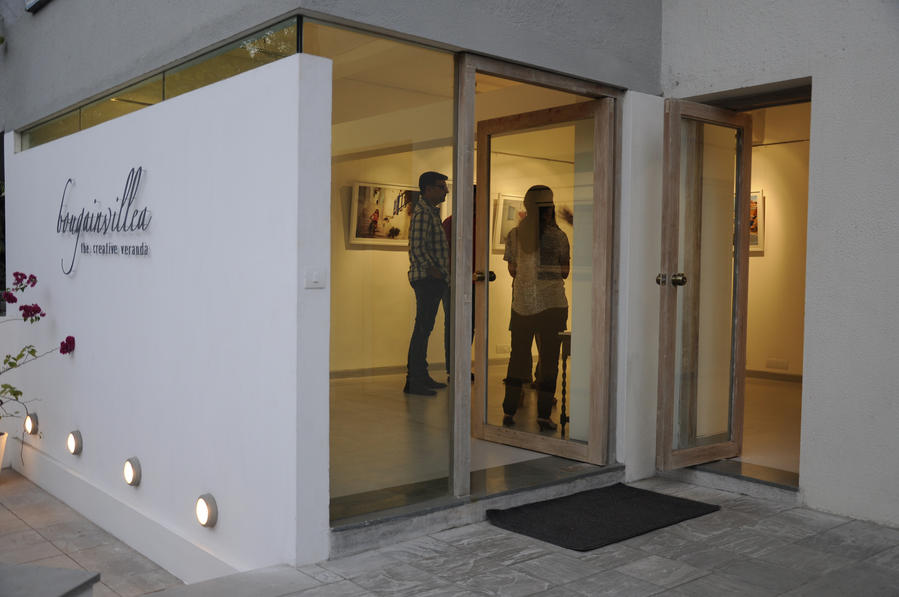
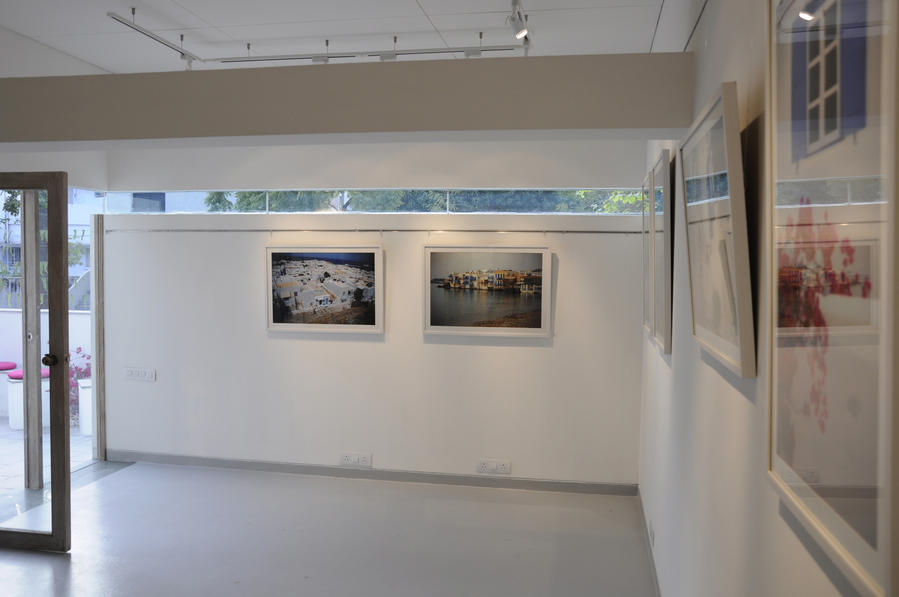
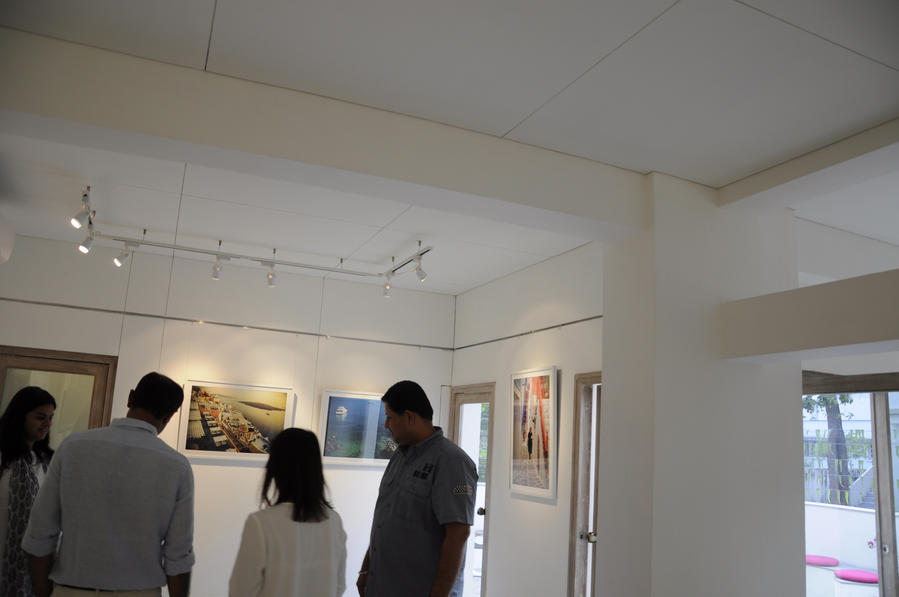
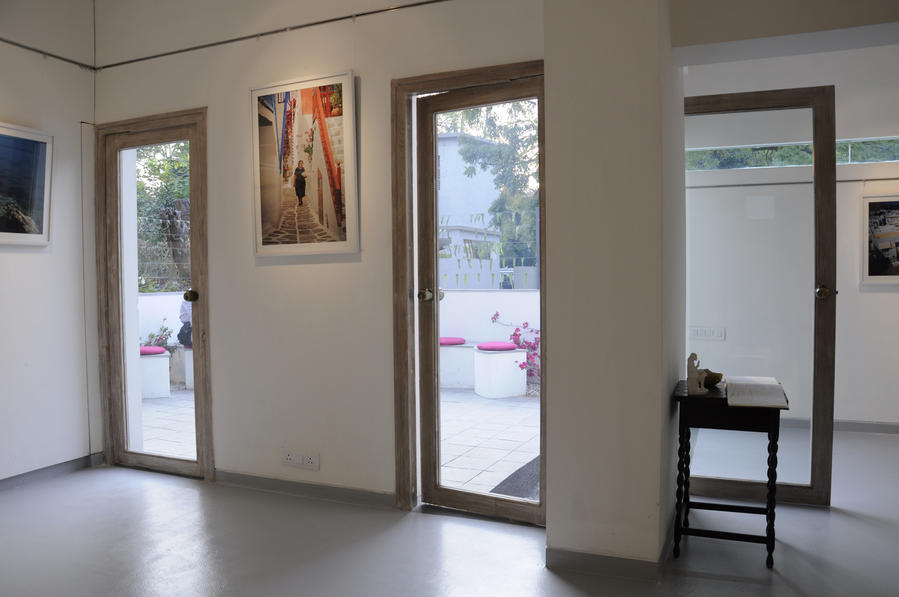
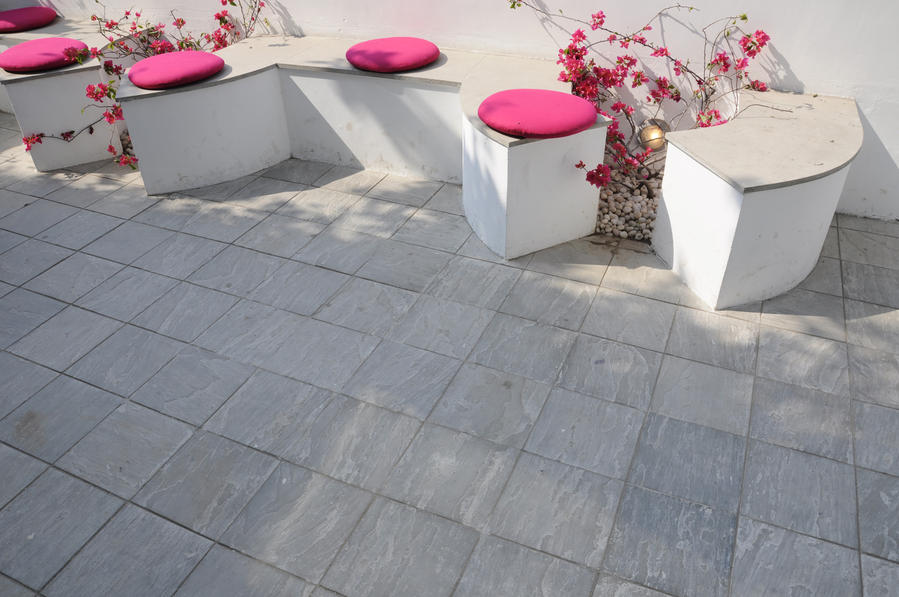
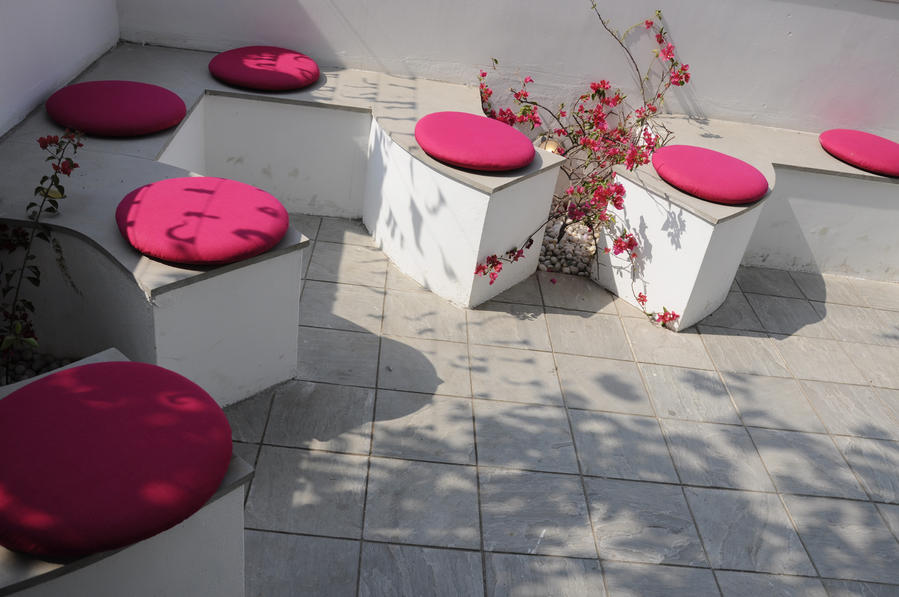
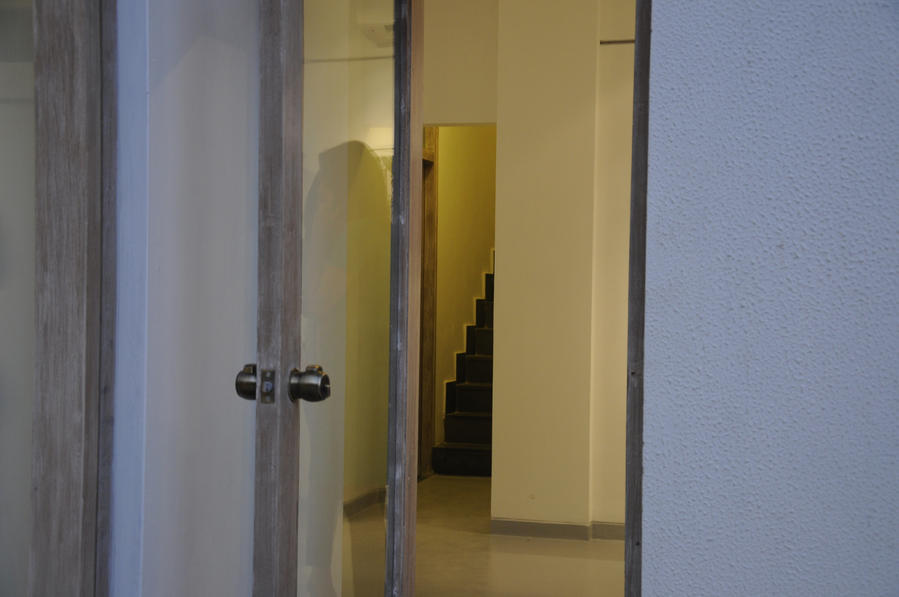
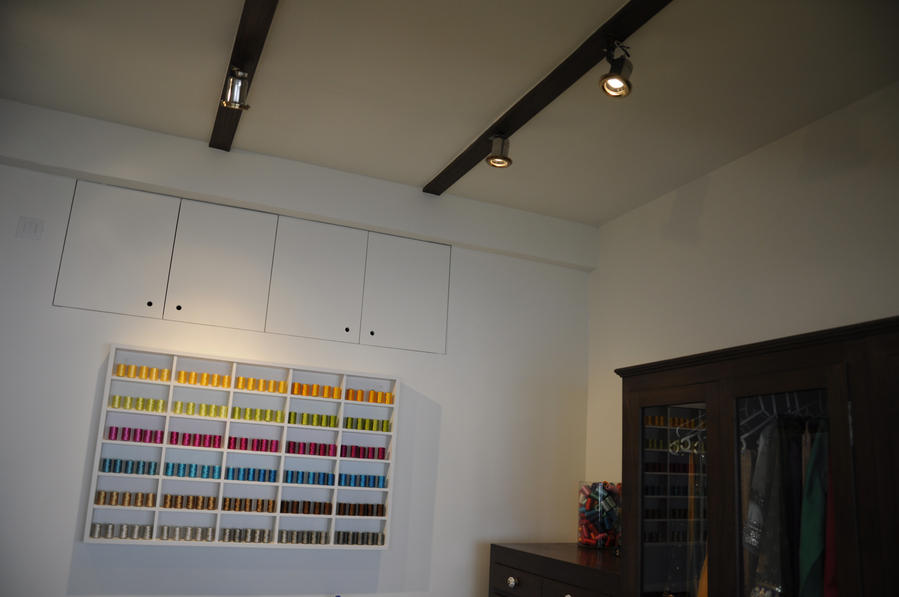
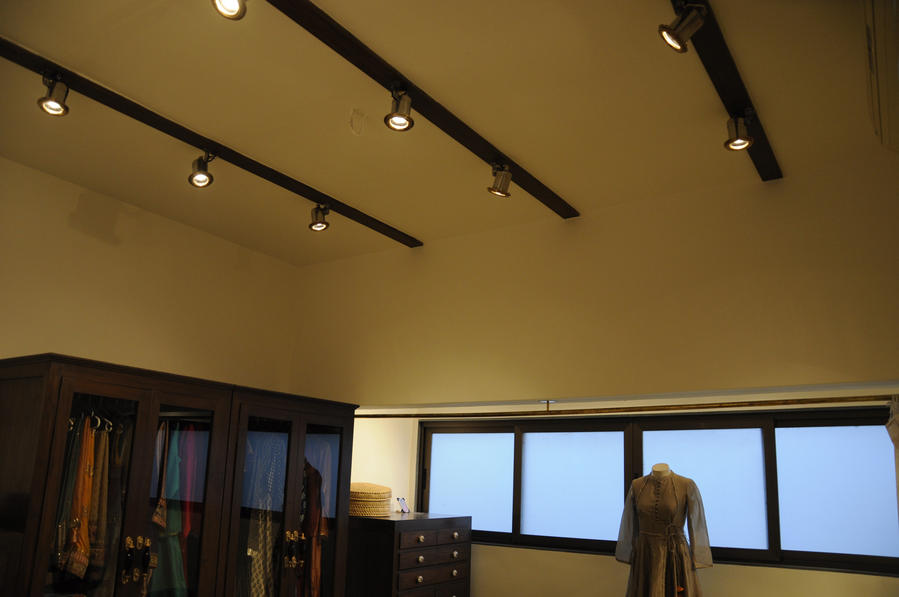
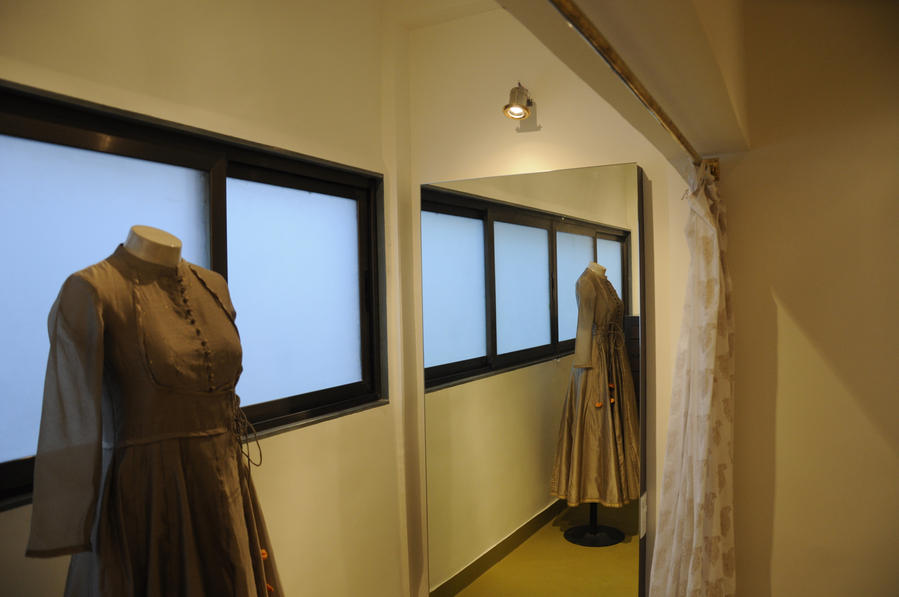
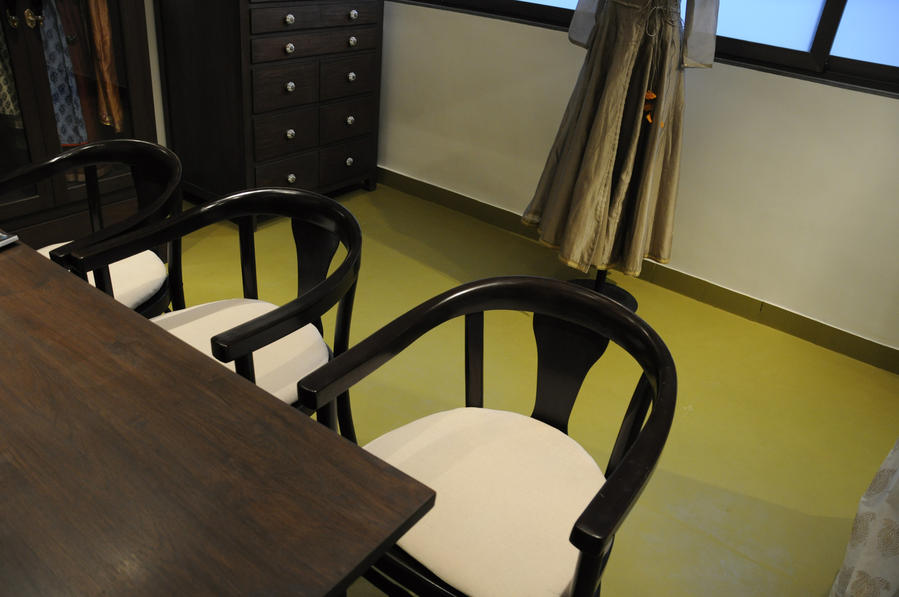
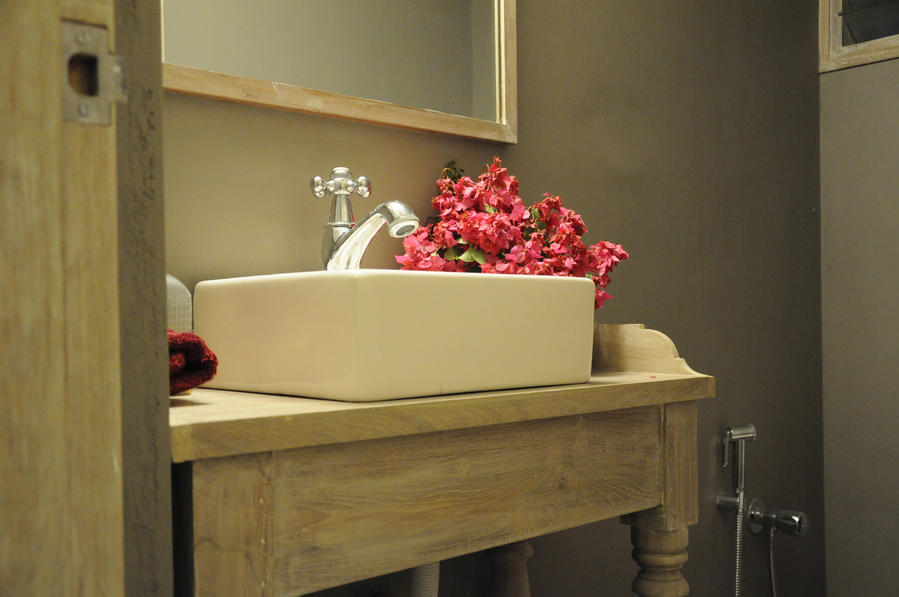
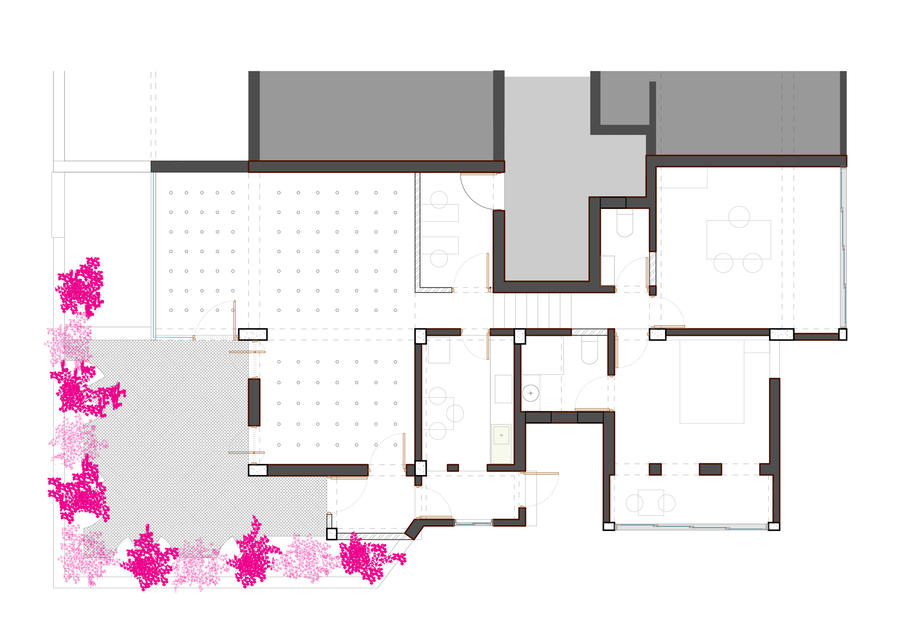
We renovated an ailing apartment to create a studio for a fashion designer, and adjoining gallery for traveling exhibitions. The split level of the apartment works to separate private working spaces from public gallery, which opens into a cozy garden that occupies the corner of the plot, nestled against the street. A limited color palette of materials accentuates the bright bougainvillea that surround the space.
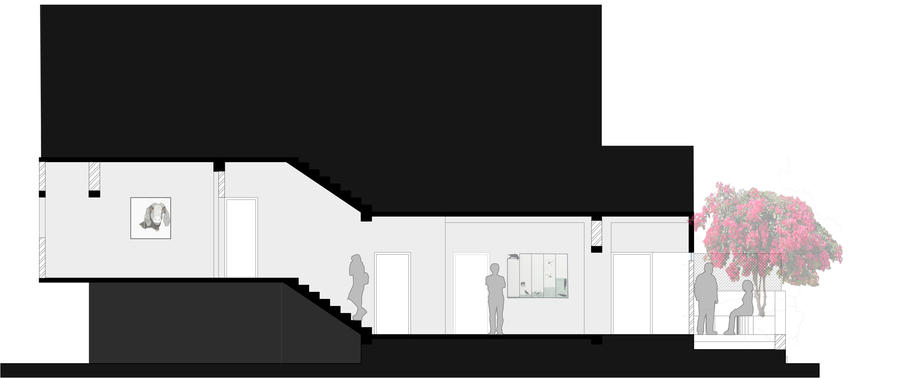
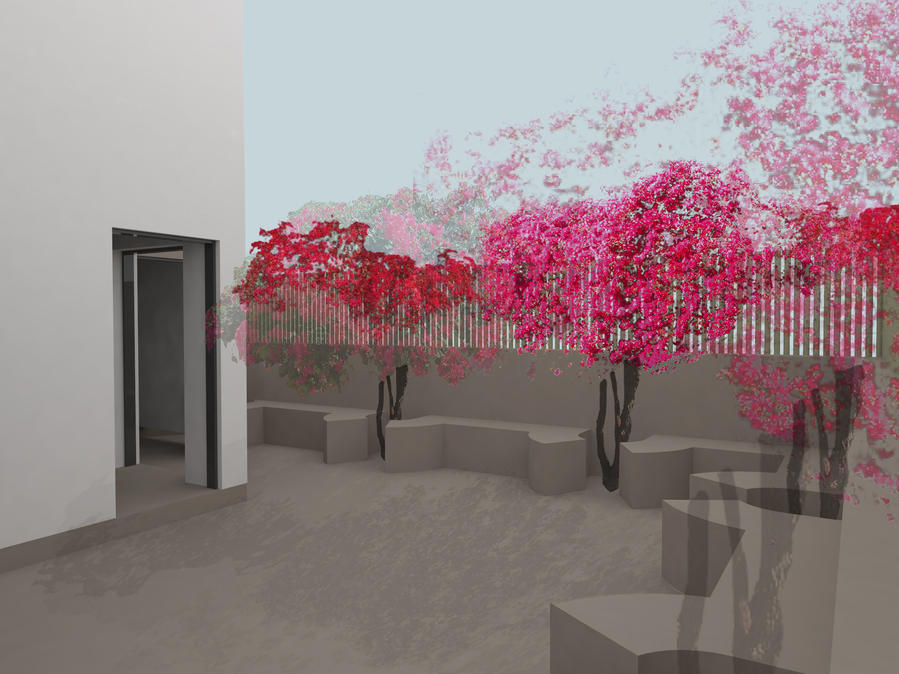
Pamol, Gujarat 2012
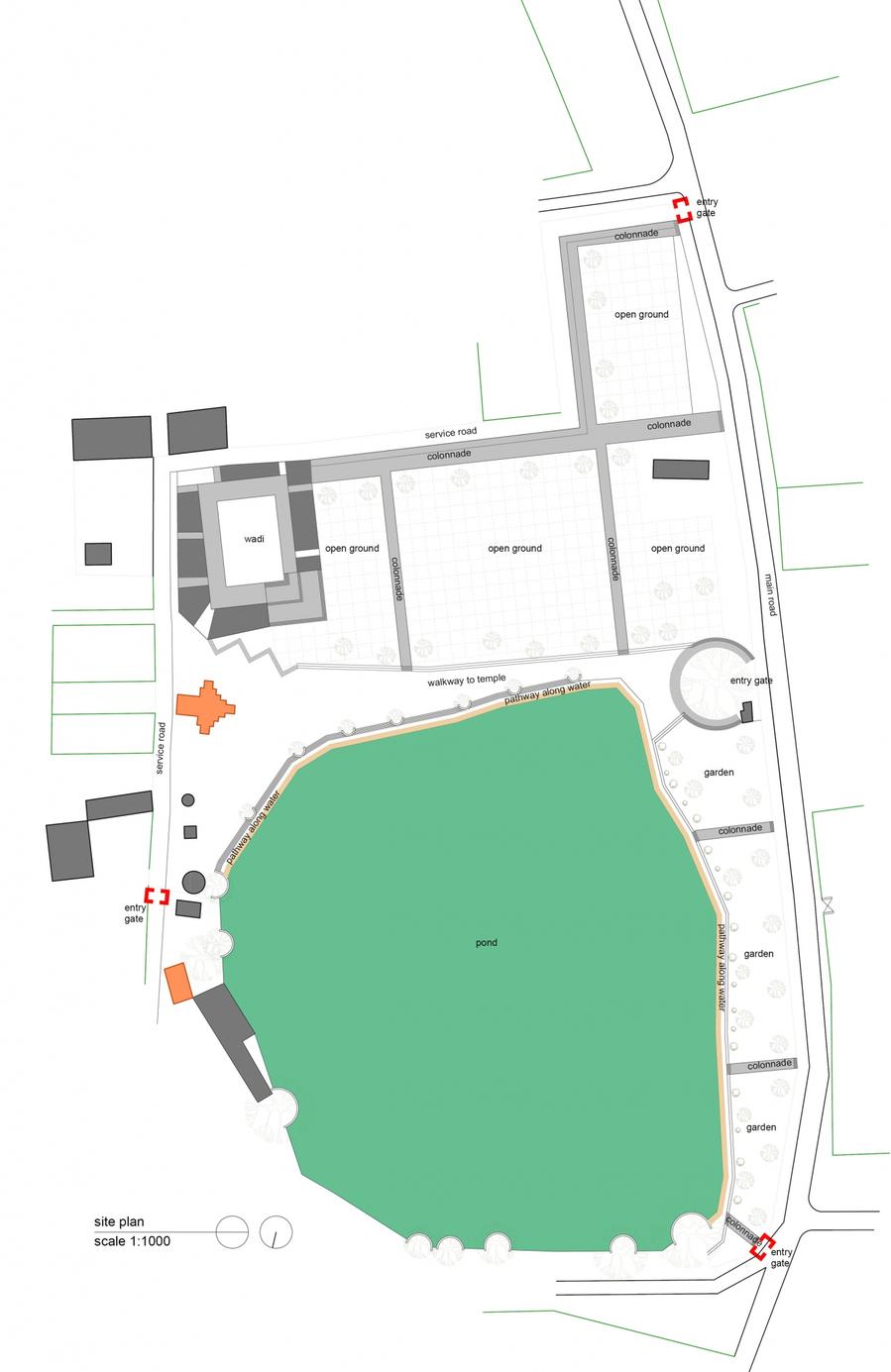
This project bridges architecture and urban design to propose a community center for the heart of a northern Gujarat village. While the village has around 5000 residents, twice or thrice in a year it plays host to between 10 and 20,000 people for mass marriage ceremonies and other celebrations. And as these gatherings serve meals, the scale of food production is enormous, requiring camel carts for rice, six foot diameter pots for dal, and trucks for water and buttermilk.
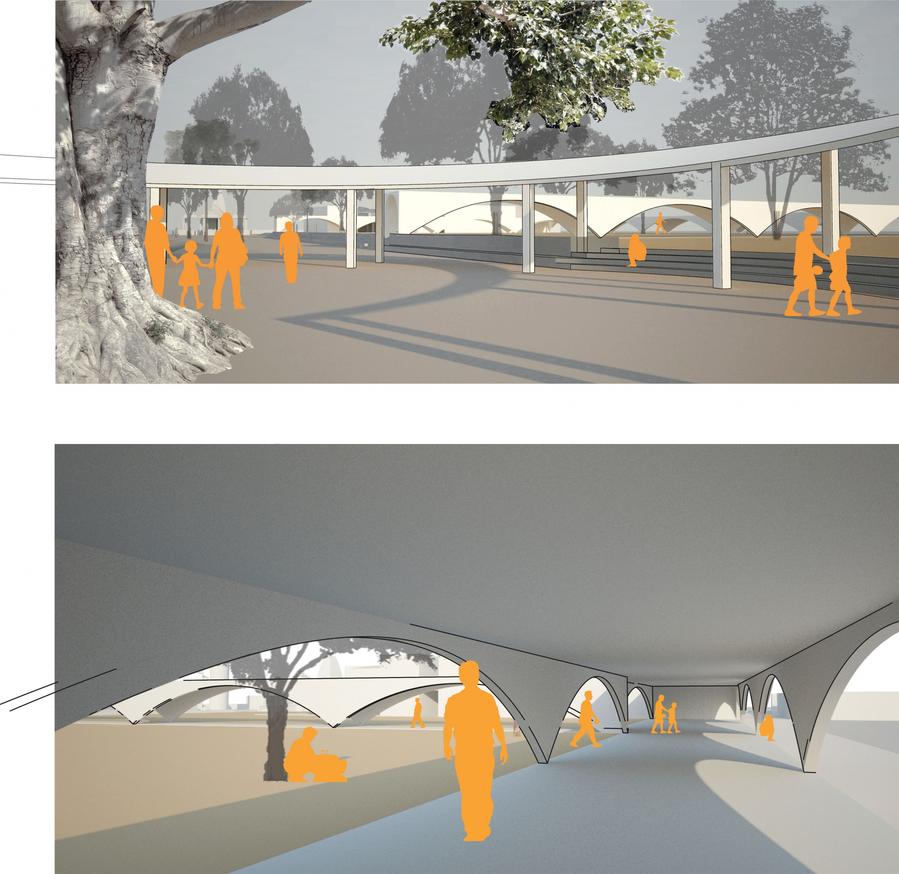
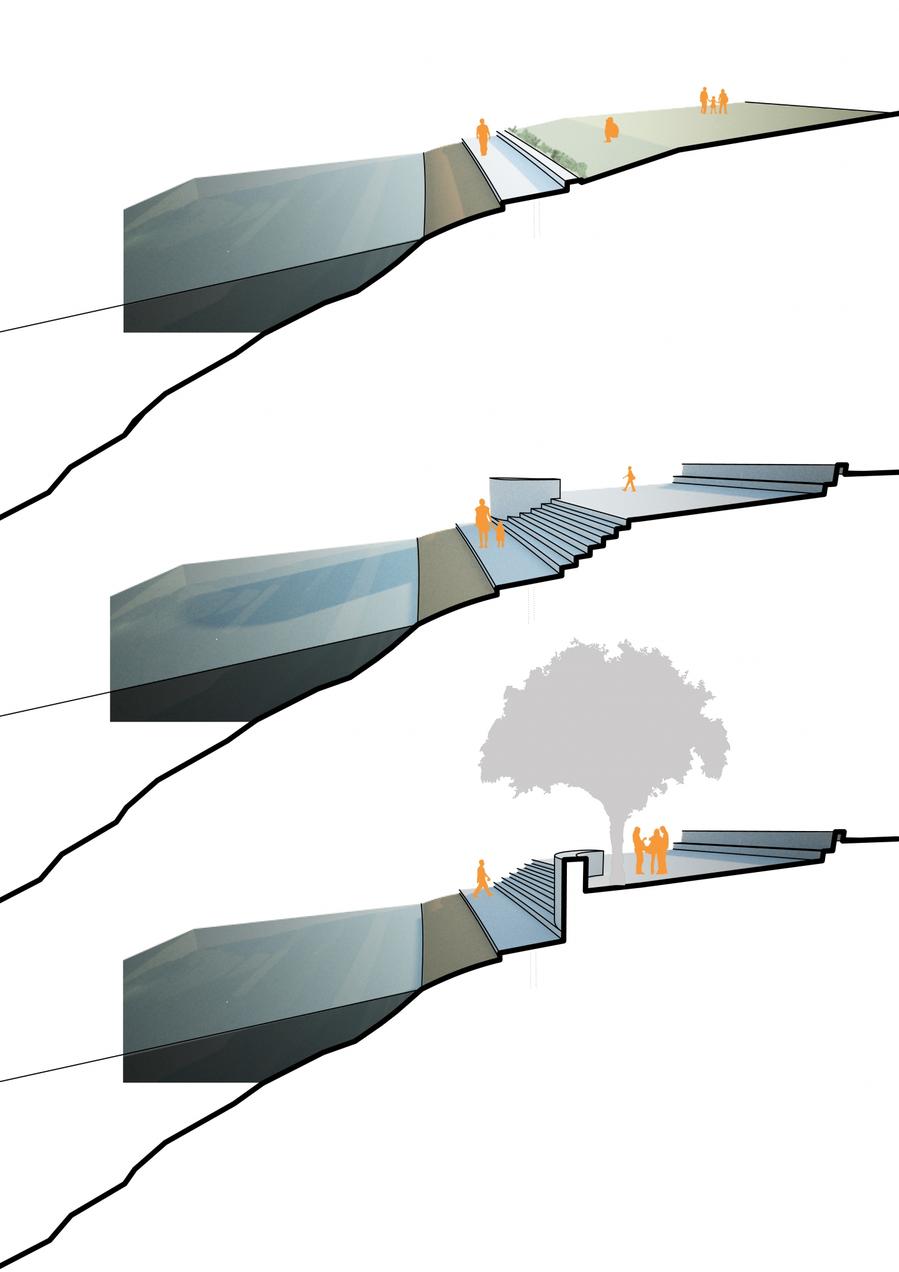
Pamol Gam grows on both sides of the main road that runs through it. To weave together the village pieces, this project proposes a center of three parts: community grounds, pond and market area. Anchoring the community grounds is a Wadi that opens toward the temple and pond. The market area is grouped around a central chabutro. The three spaces meet at the village bus stop. The community ground is organized by covered pathways that provide shade in the ground, and also serve as the base for constructing a blanket of temporary shade structures for large functions. They are located according to varied scales for possible gatherings, and culminate in the Wadi, which holds up to two thousand people, with more overflowing into the open ground. An infrastructural road along the back of the site brings trucks into the main cooking area, and gives space for dish washing and serving. Around the pond, a footpath meets the water with edges varying as per use.
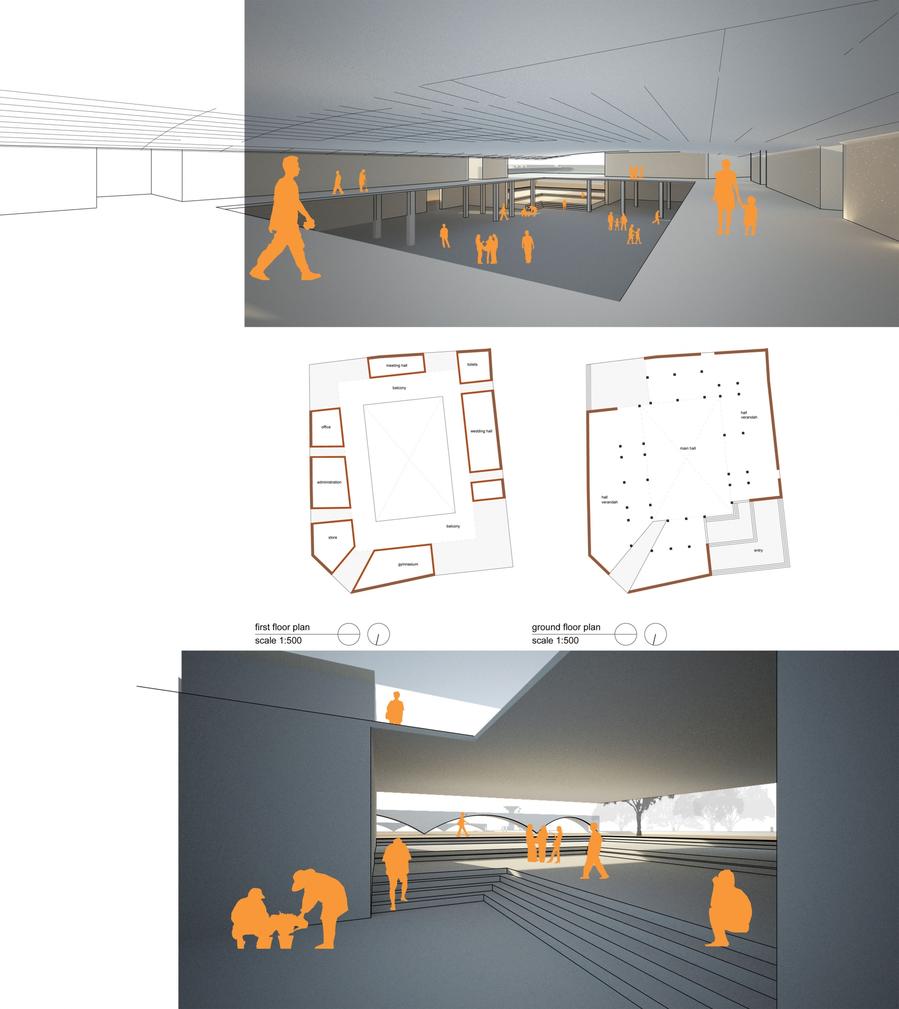
The building is conceived as a thickened wall around a courtyard, punctured to bring the wind through. Rooms around the edge of the vaulted central space provide the insulation for the main hall, and the height of the hall lets hot air rise to the lightweight shade, vented at the top. The ground floor is embedded in the earth for additional insulation, and the single-height areas along the edges can be closed for smaller events. On the first floor, a balcony wraps the main hall, behind which rooms for the village organizations perch, shading the hall below.
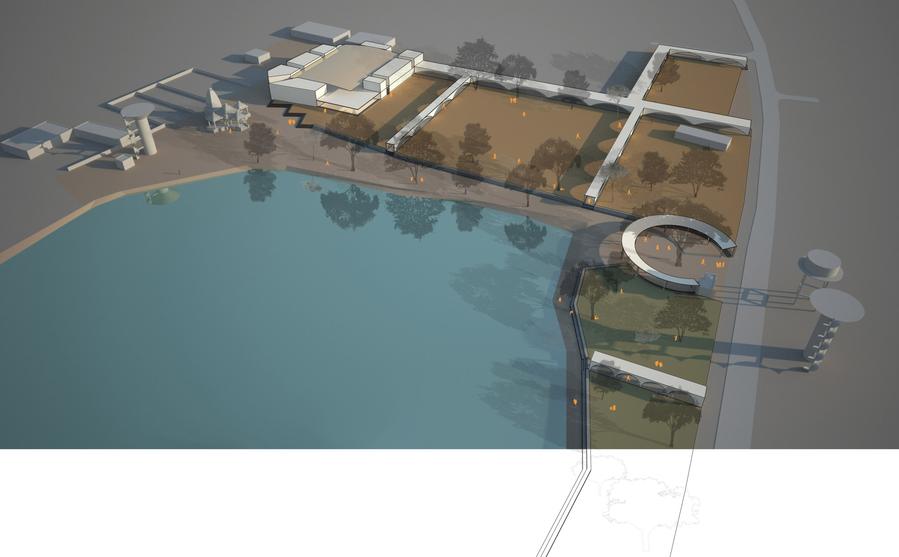
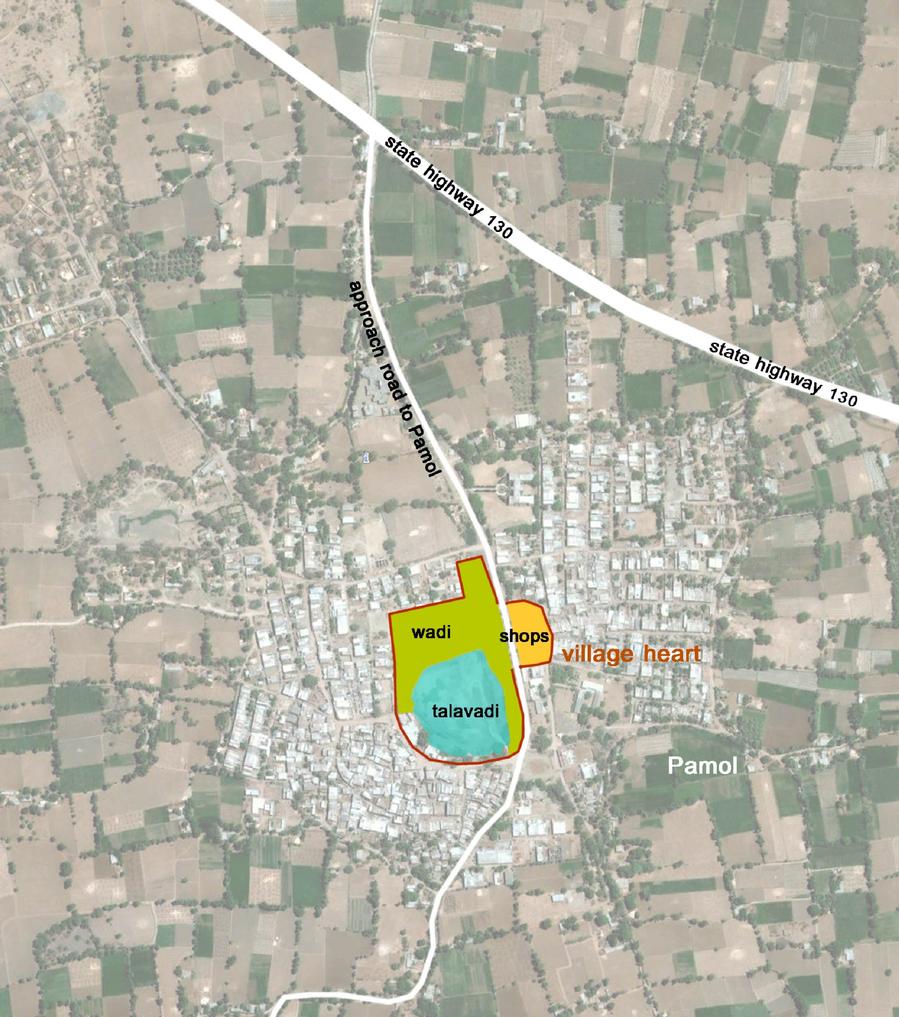
Ahmedabad area, Gujarat 2010 - 2013
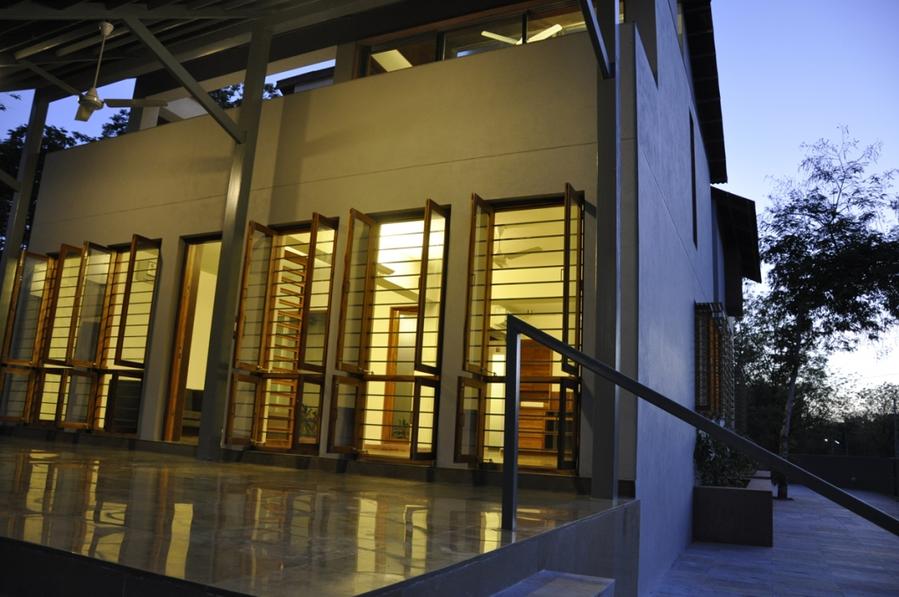
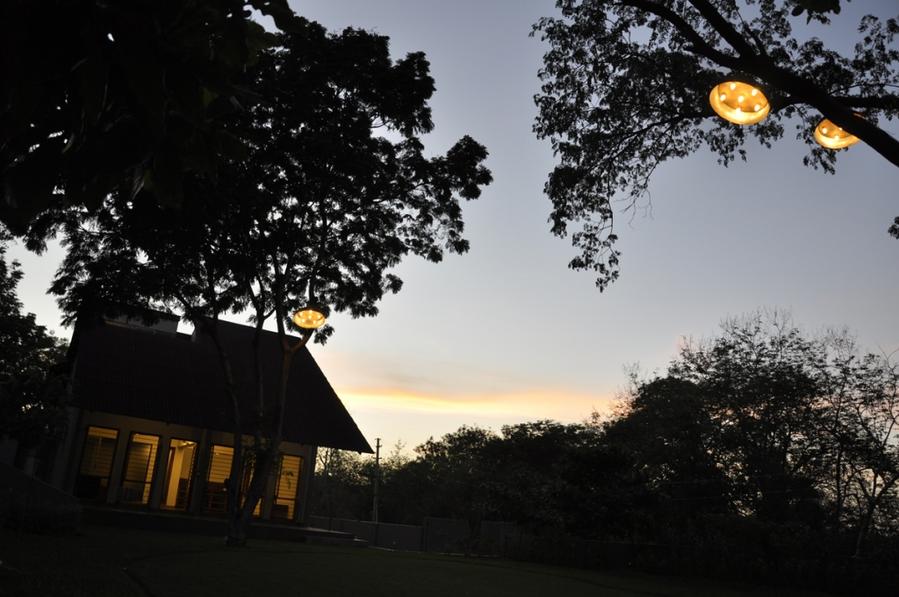
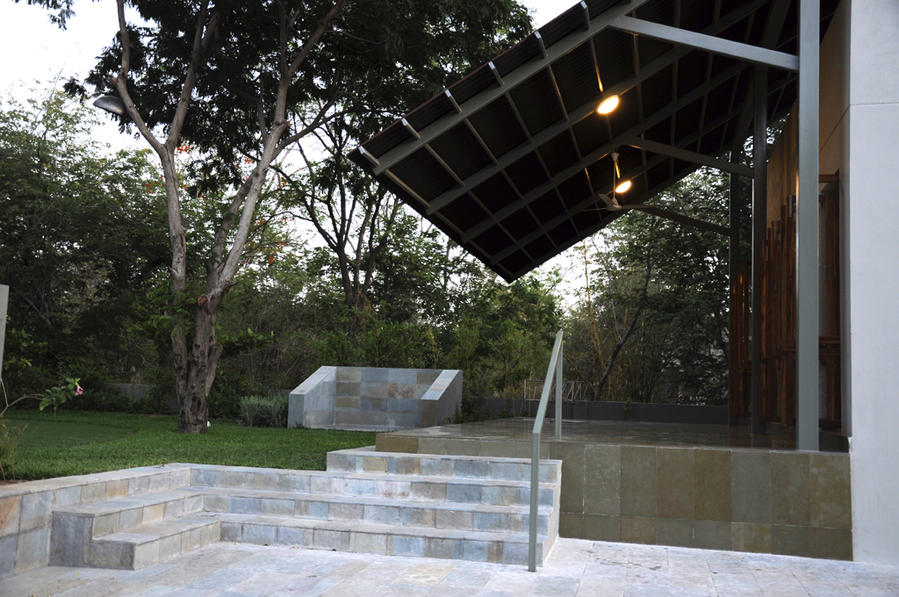
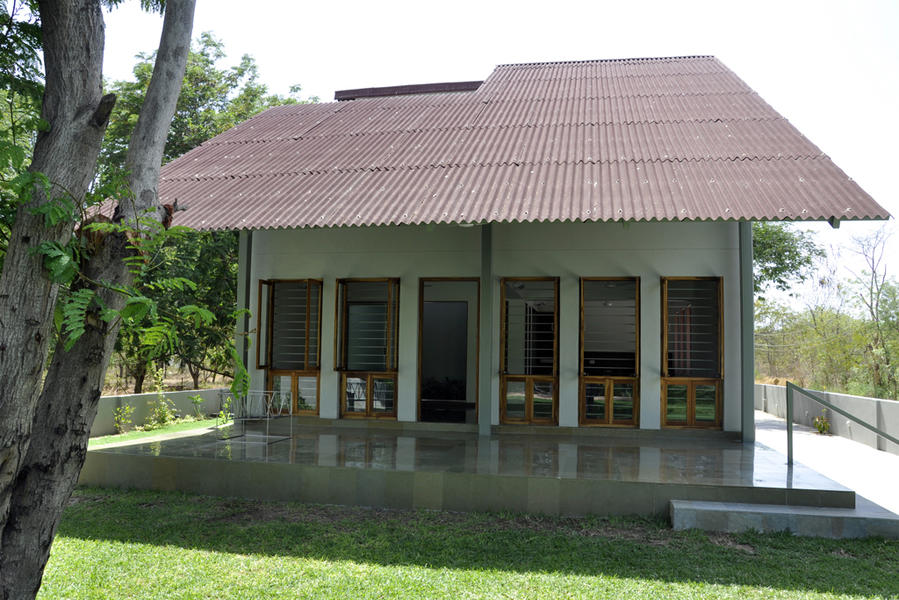
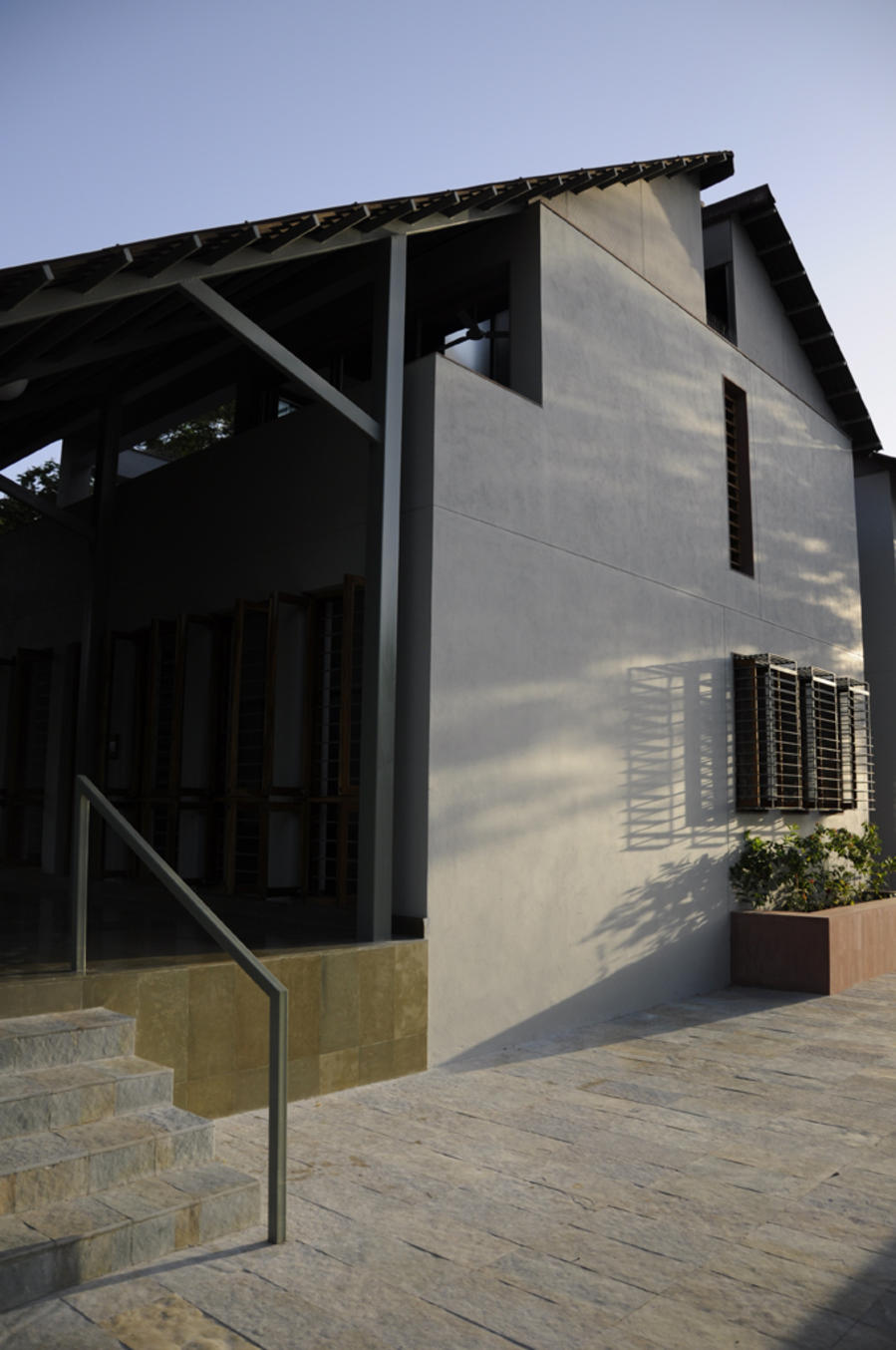
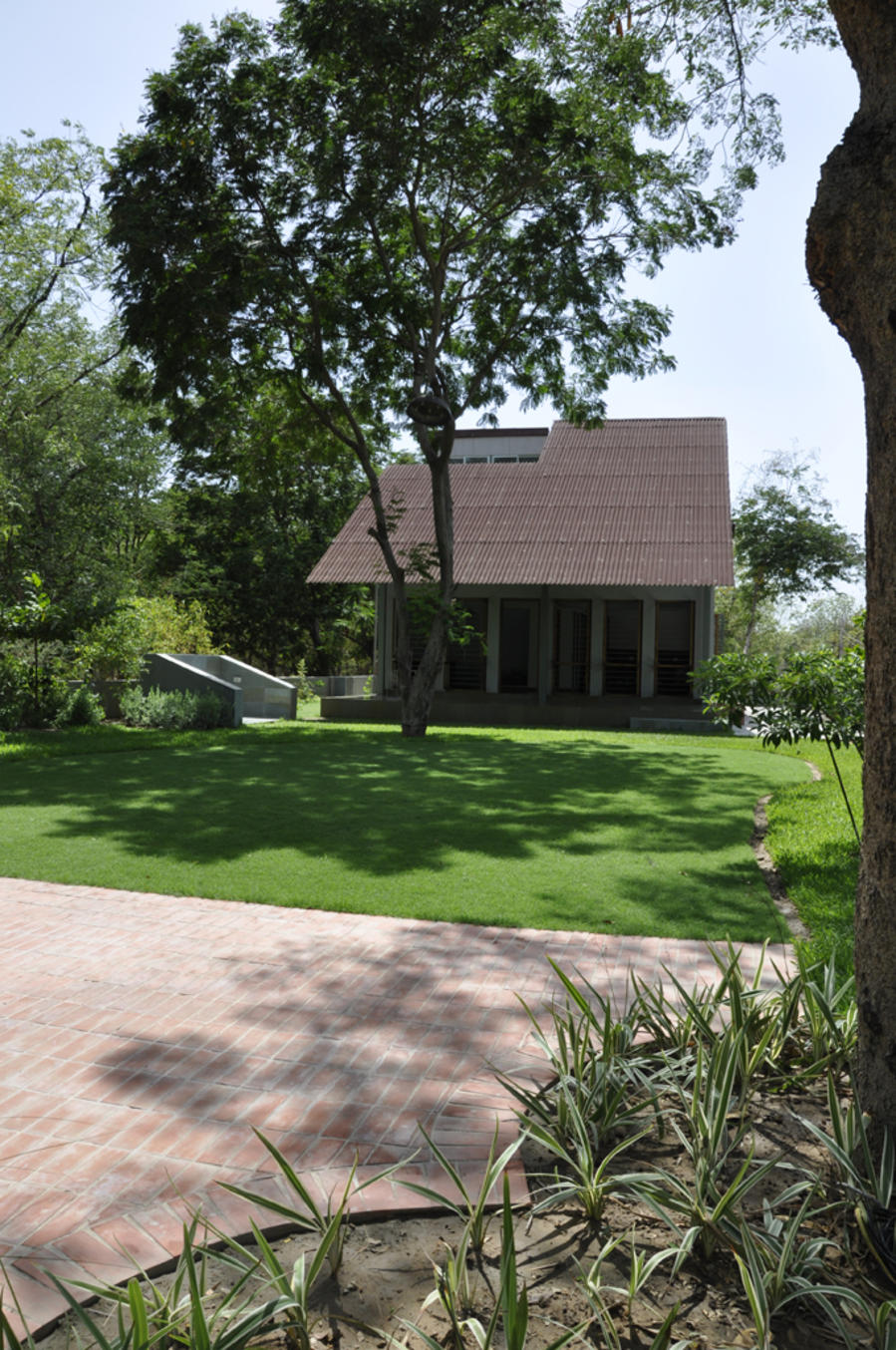
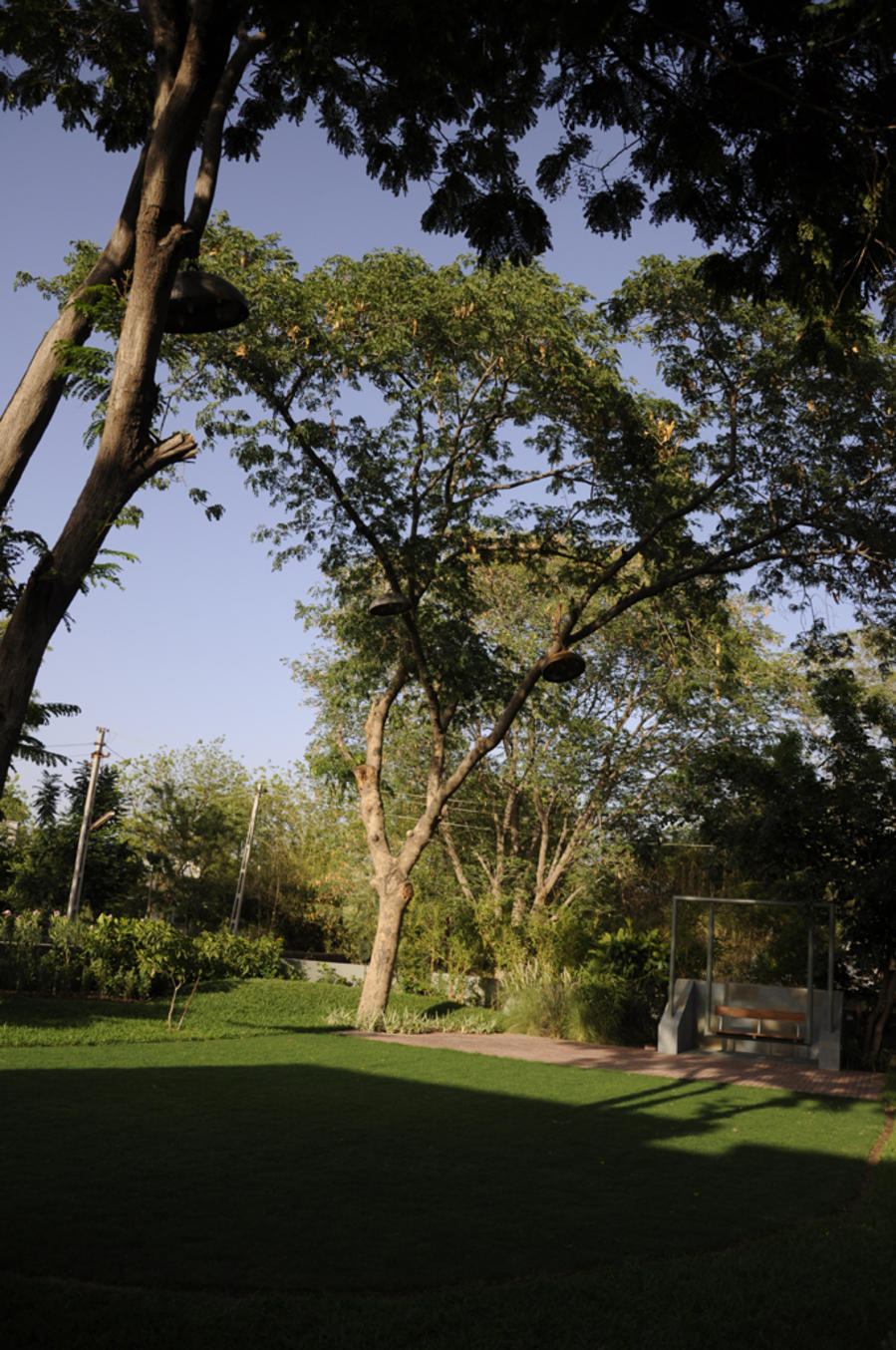
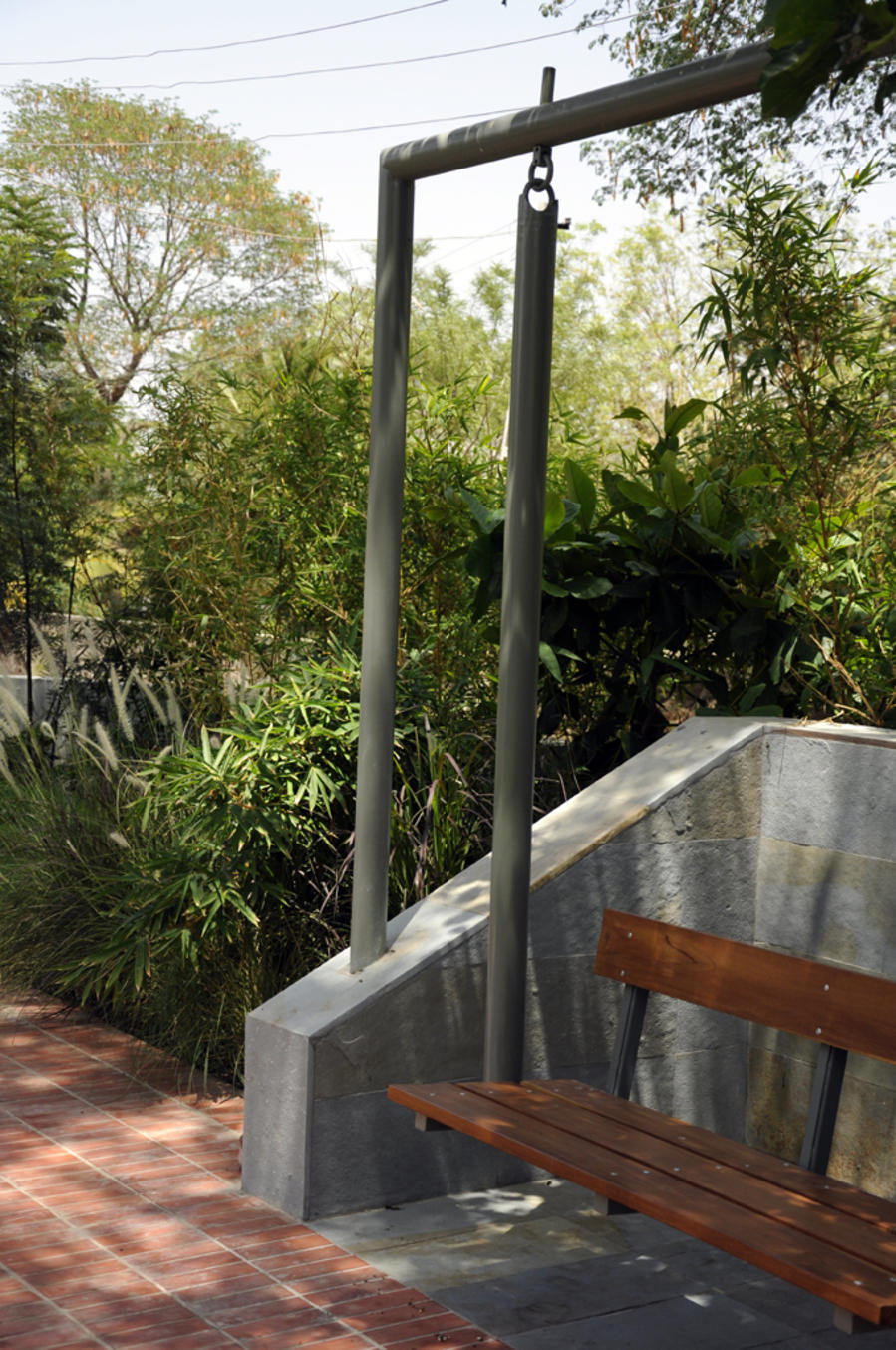
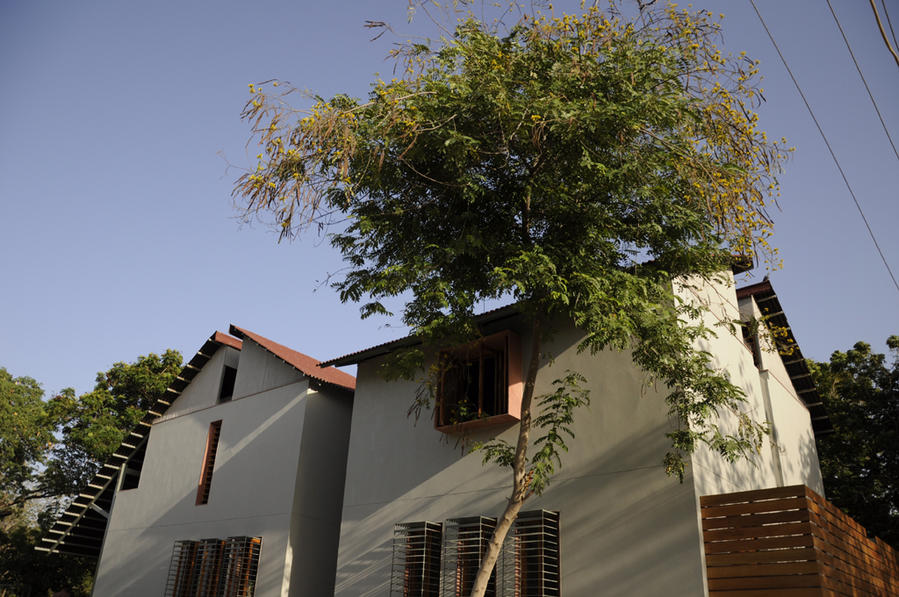
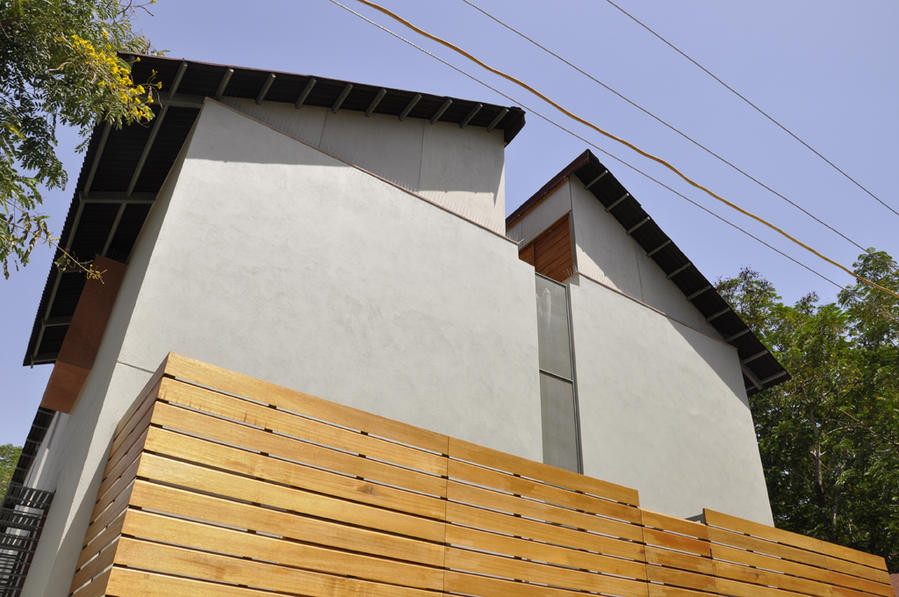
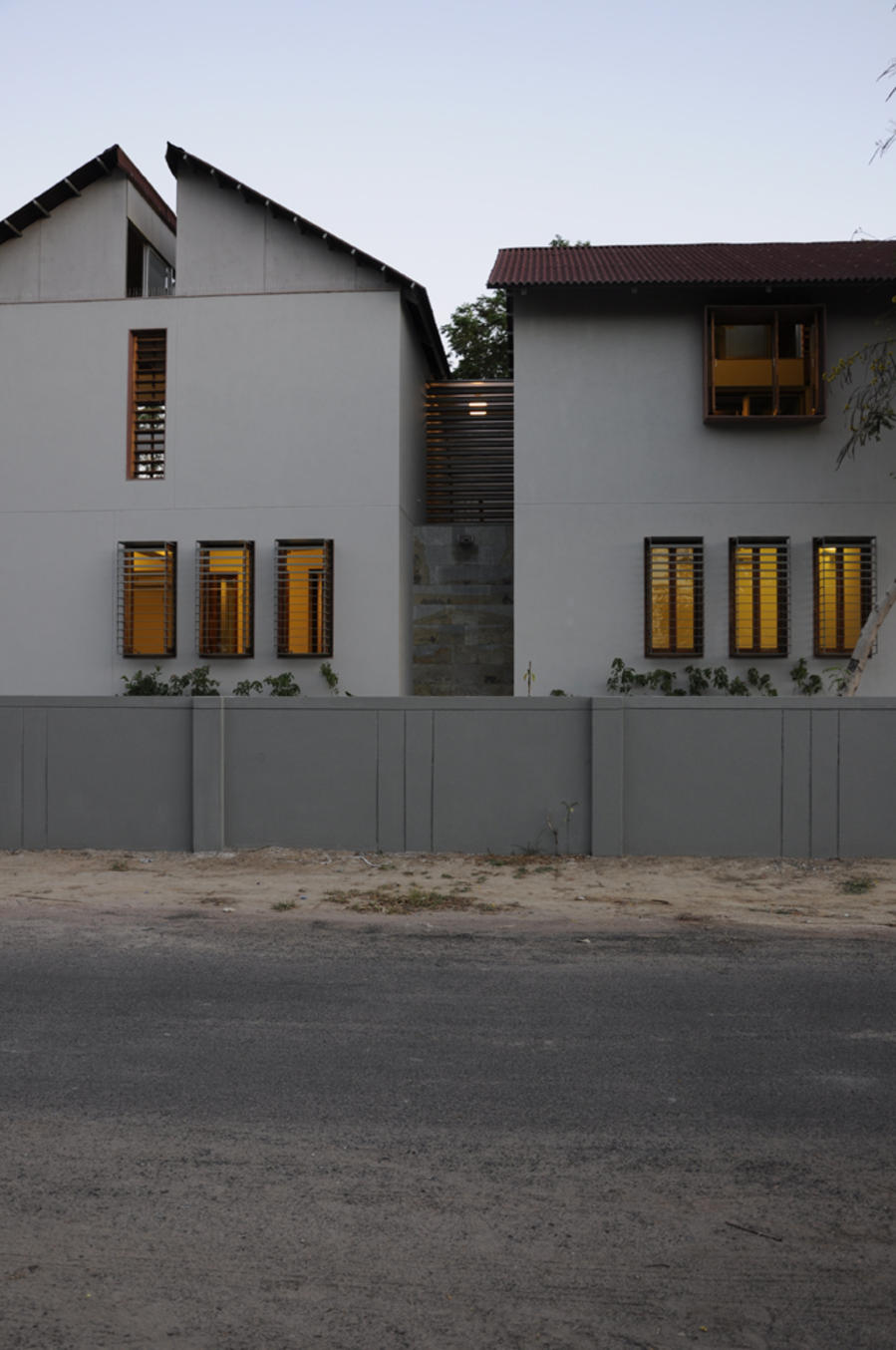
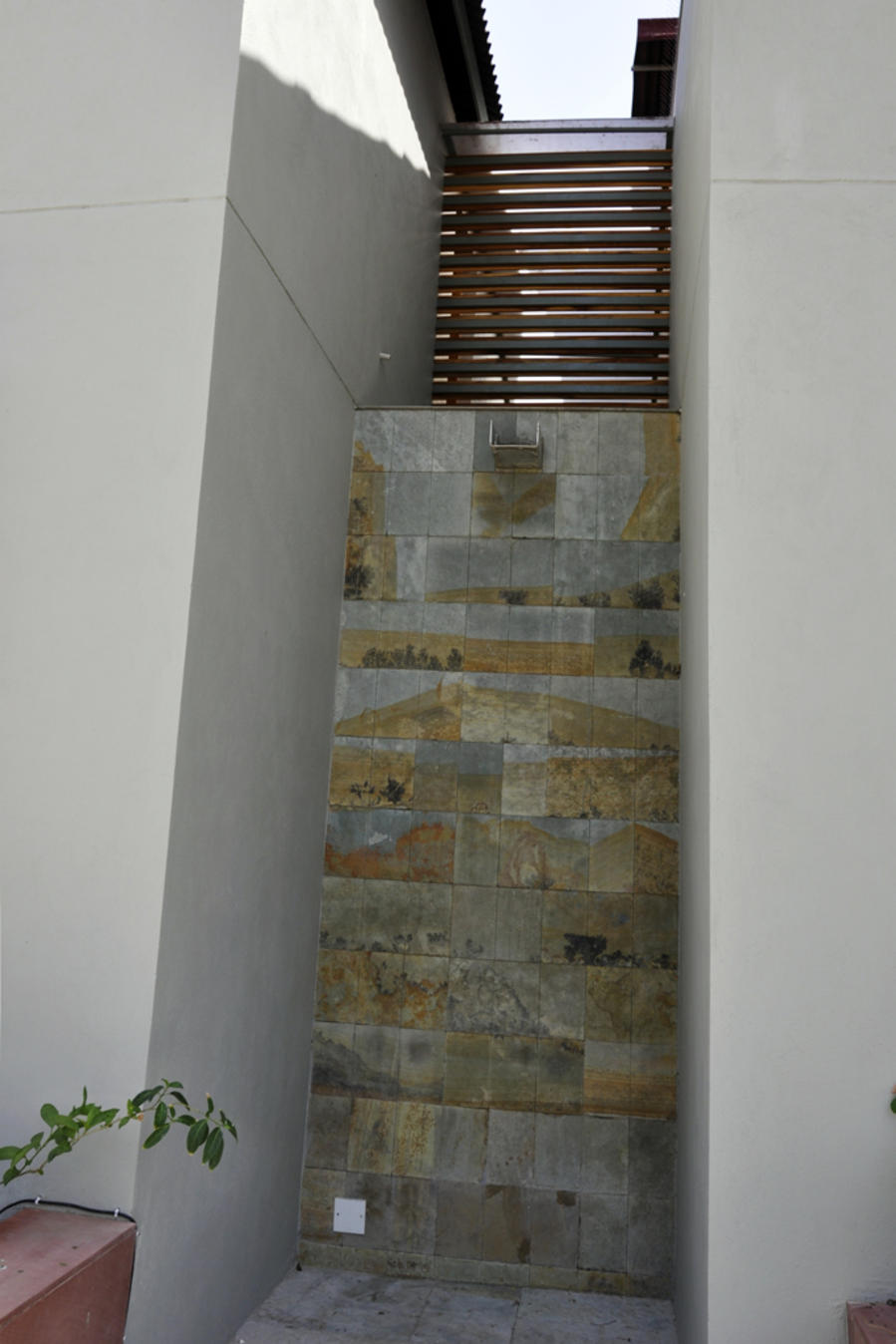
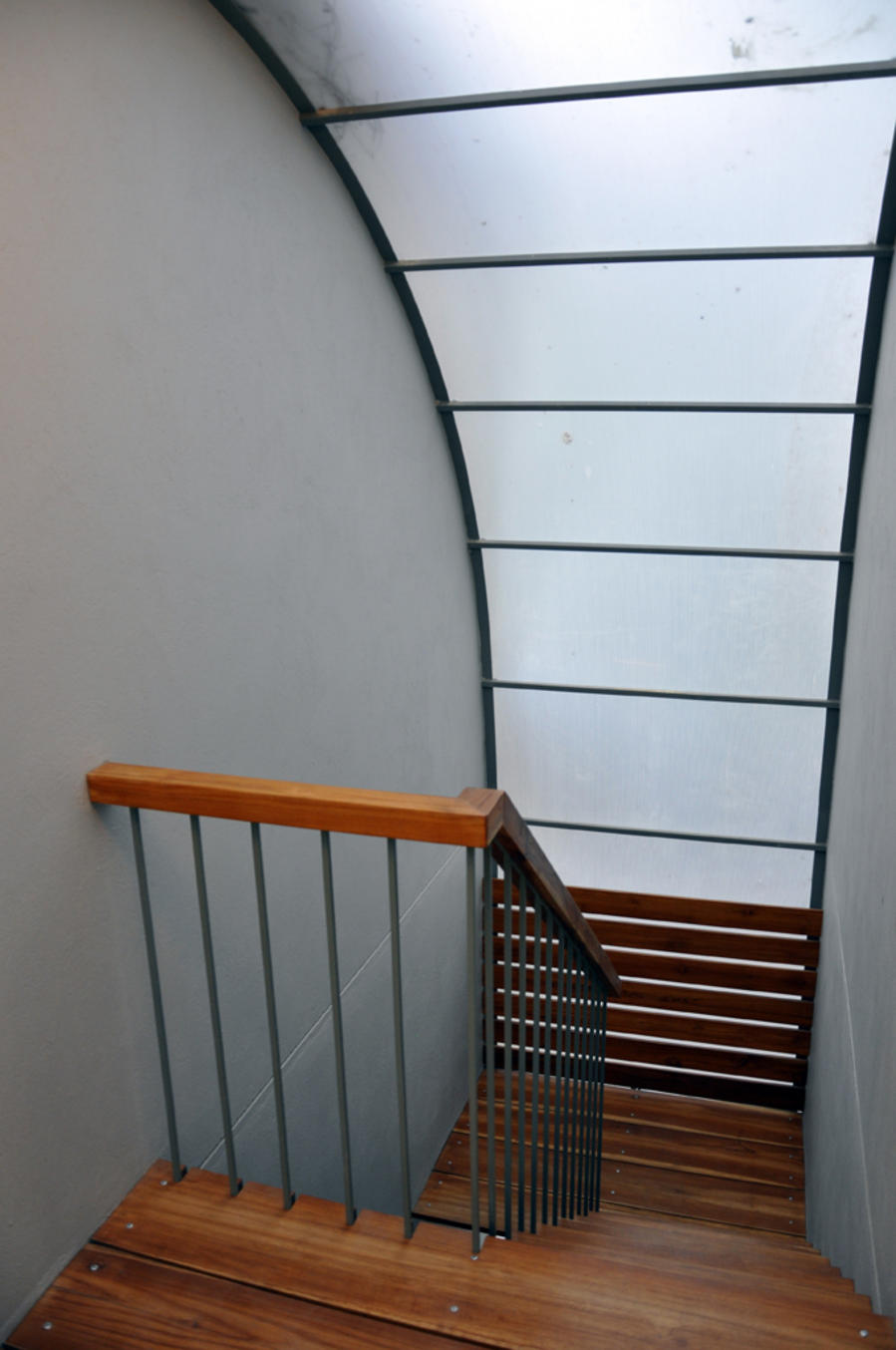
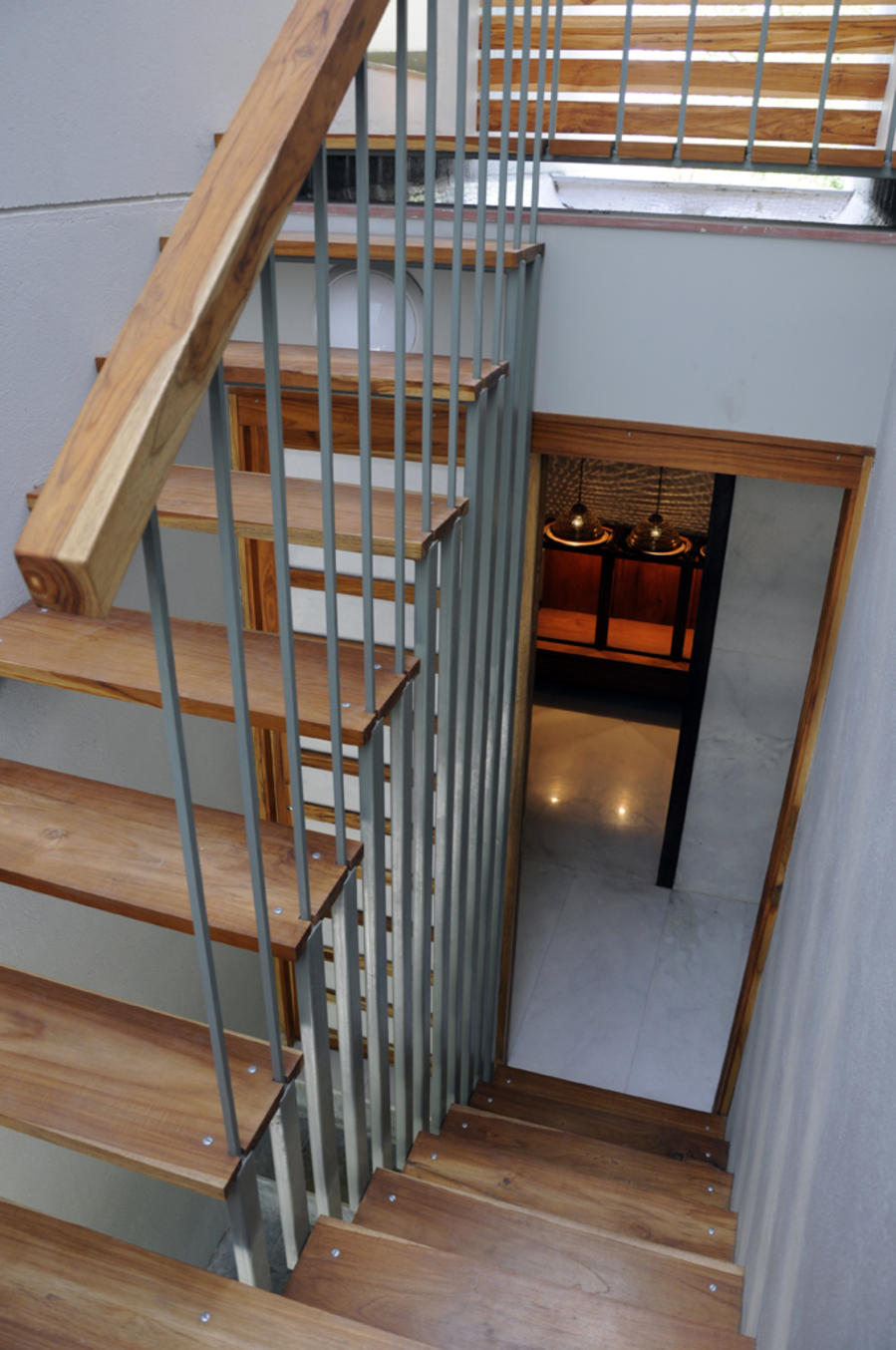
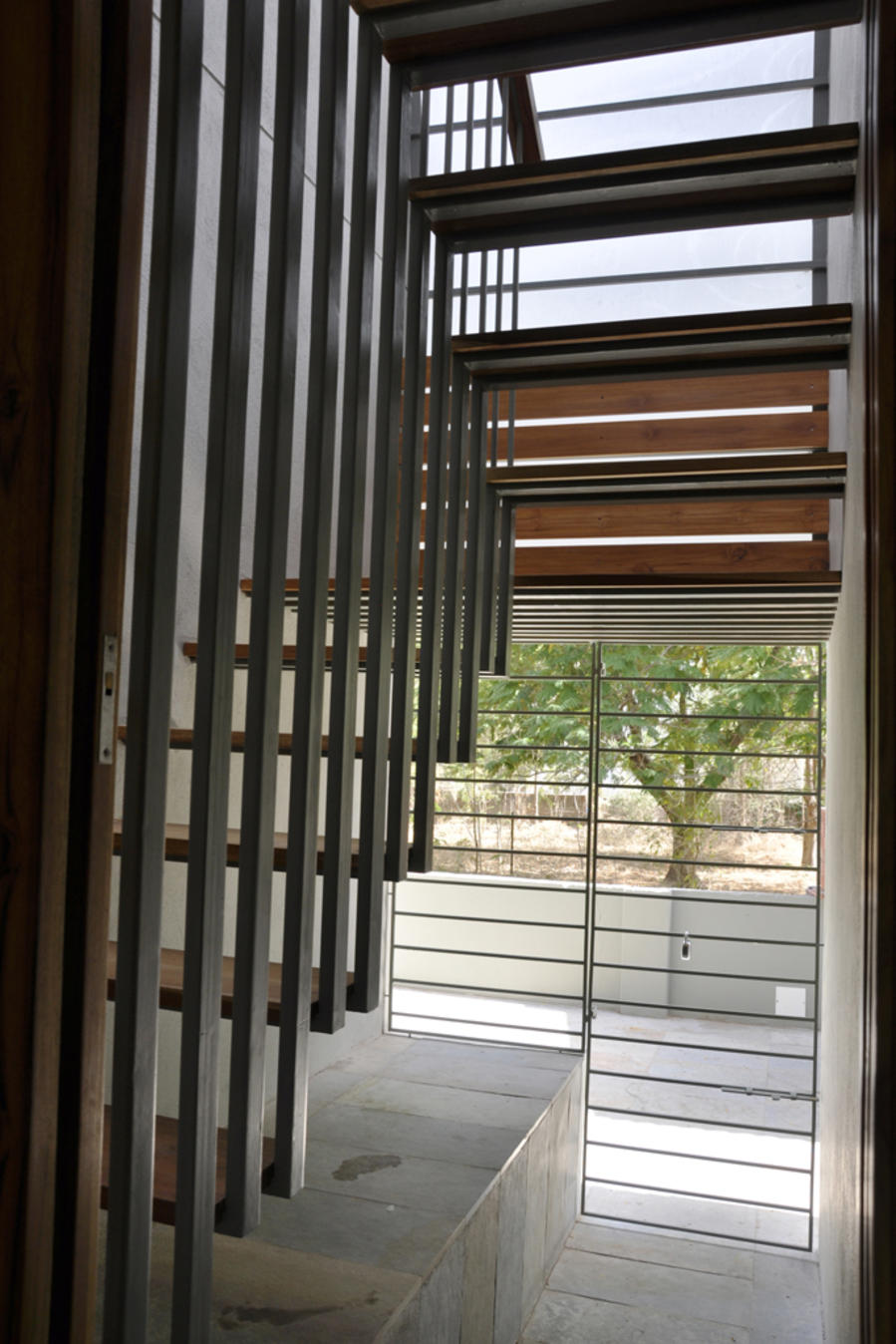
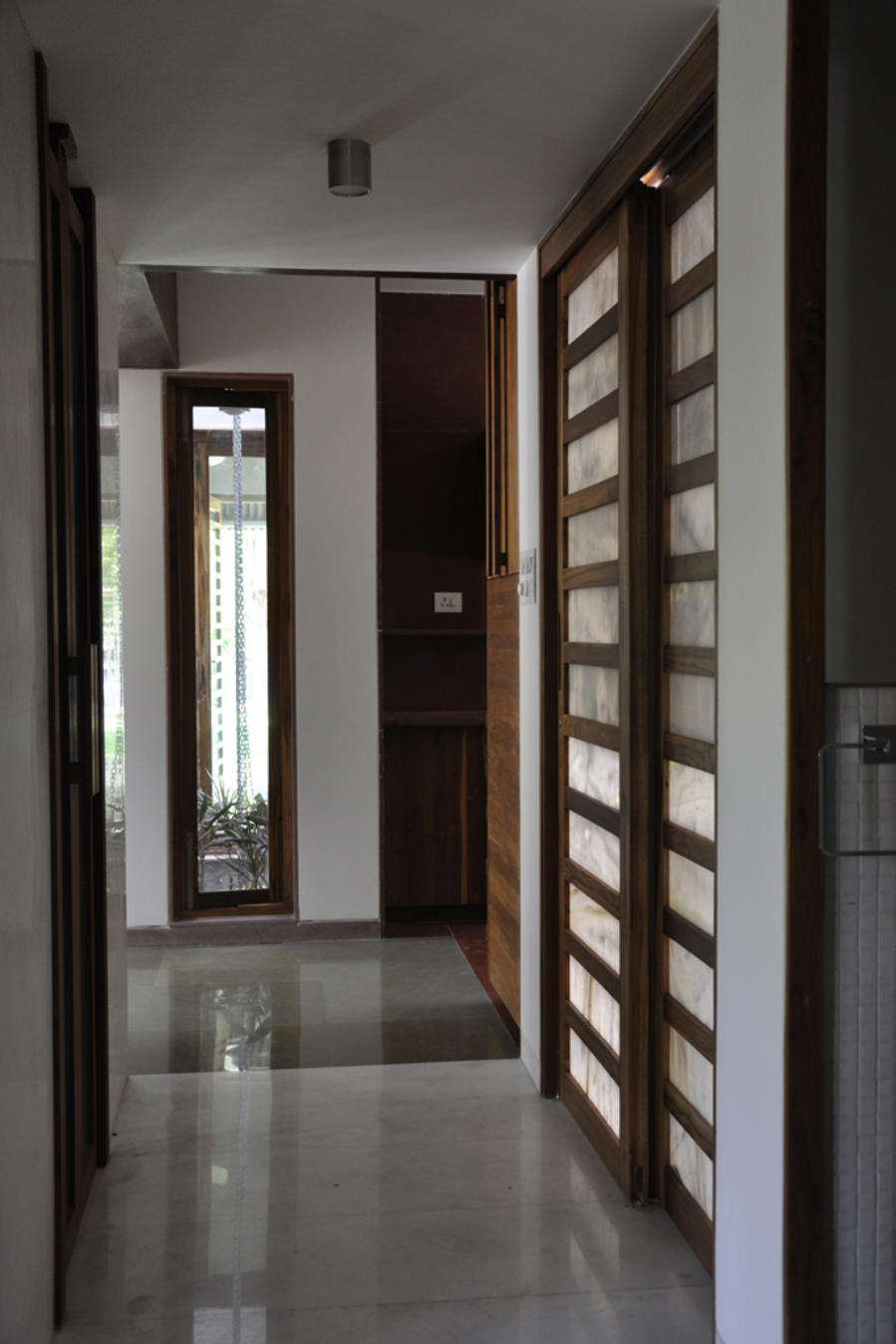
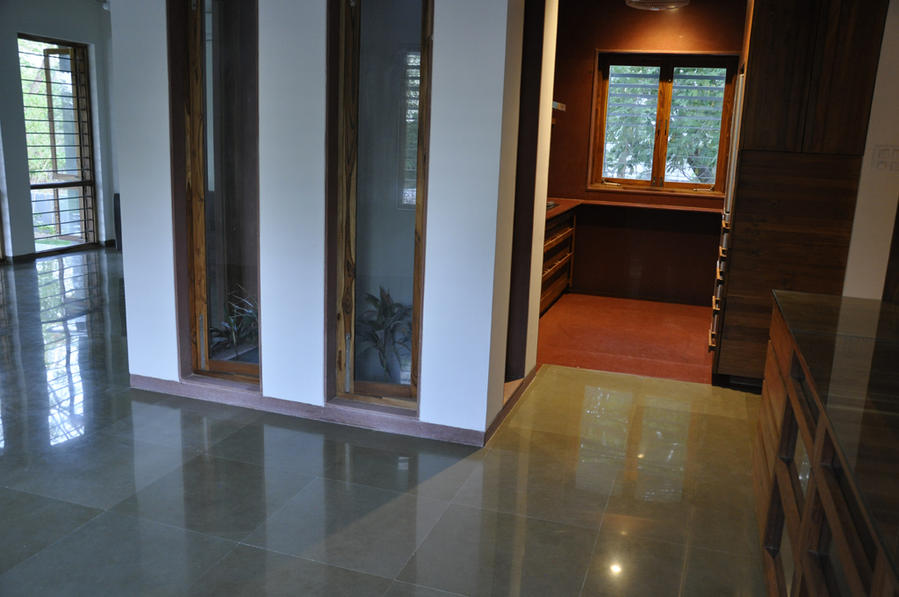
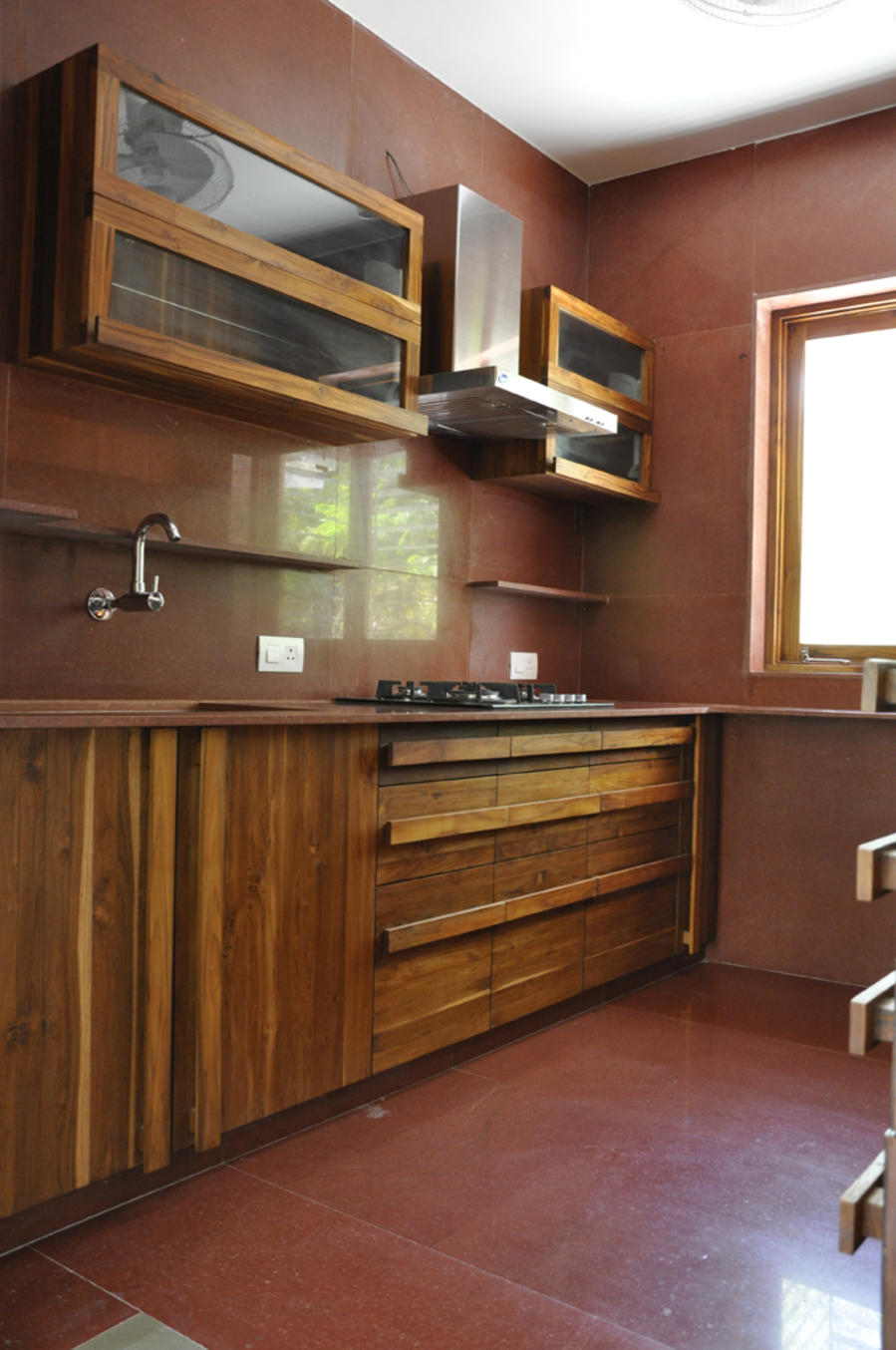
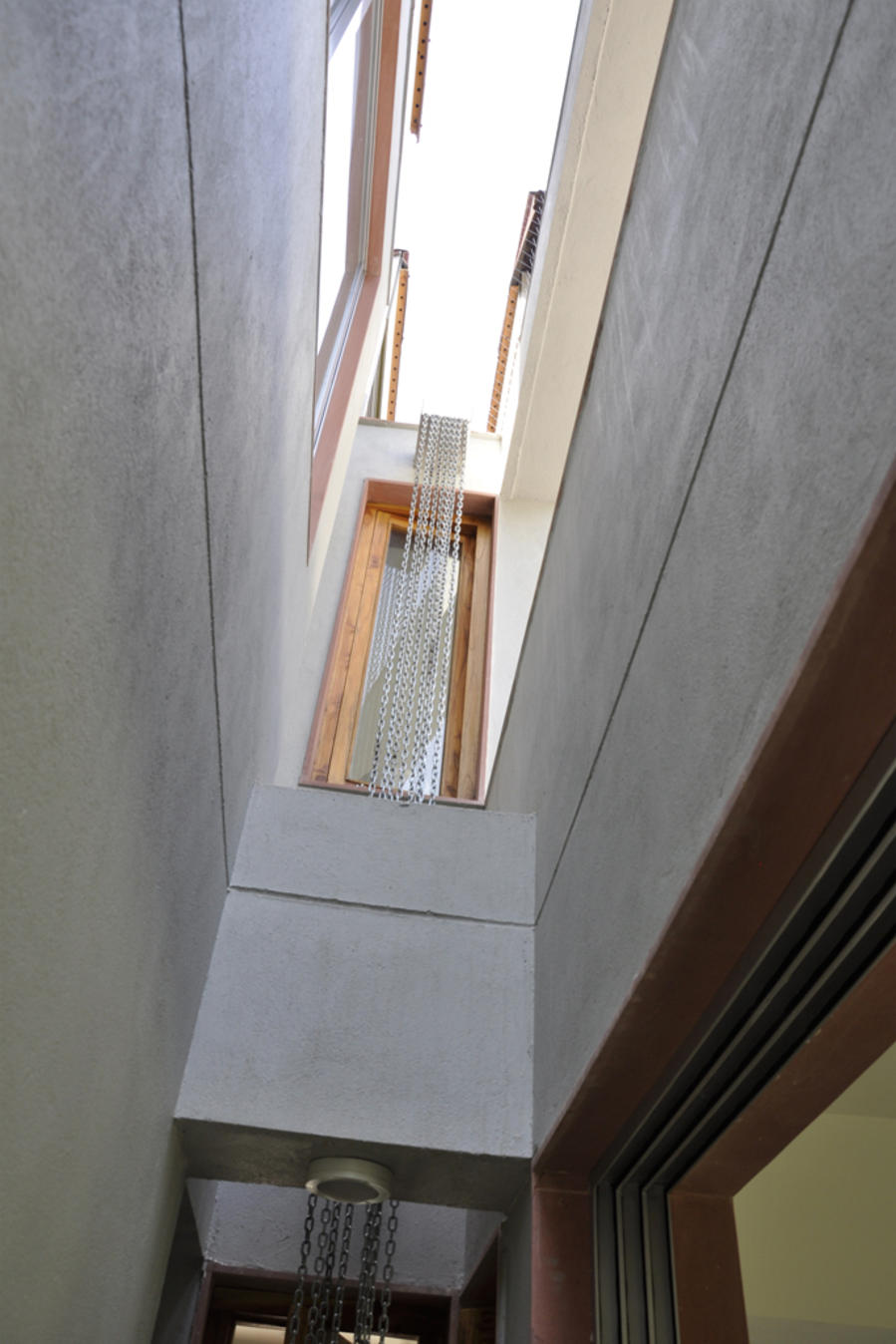
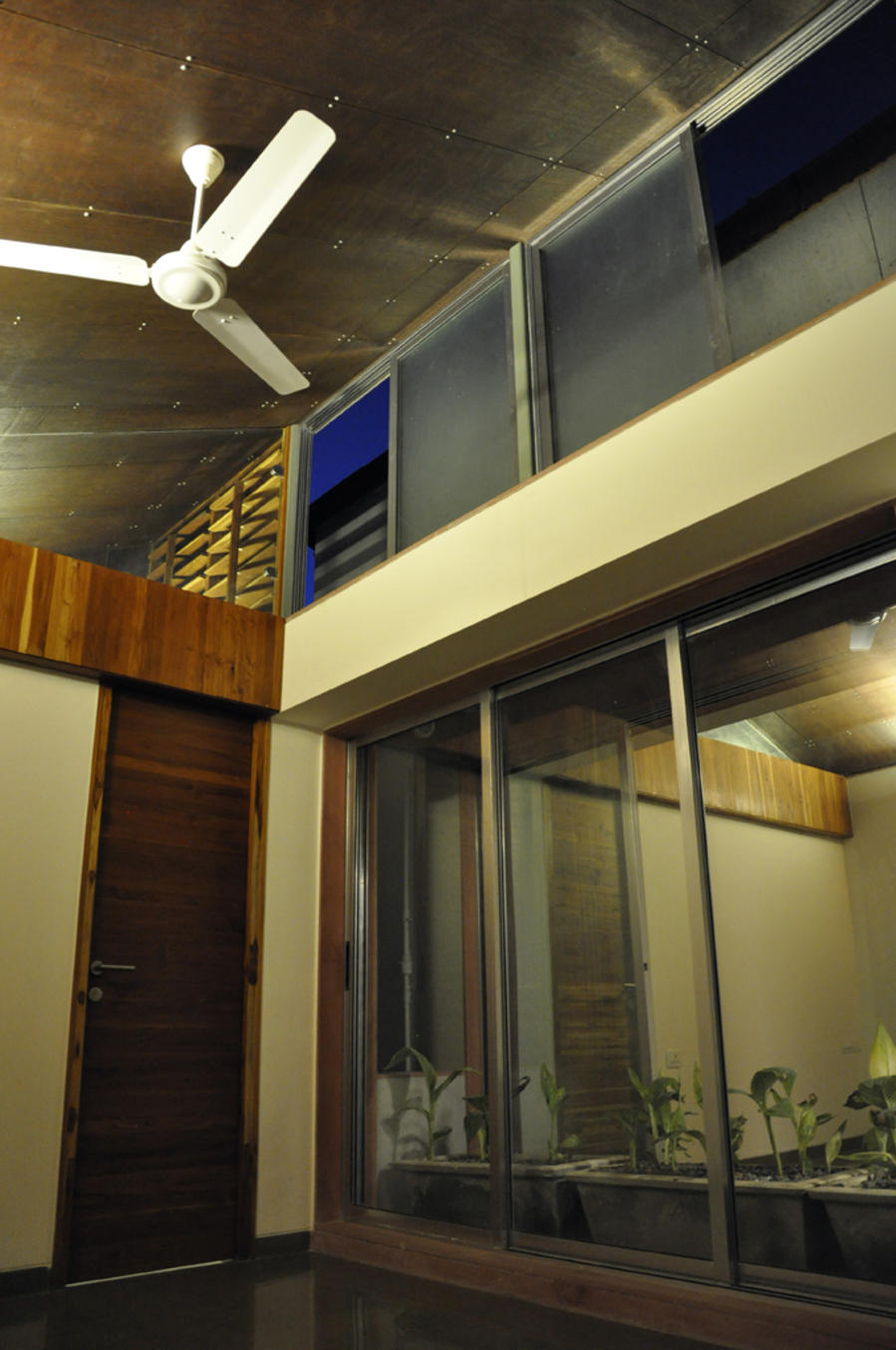
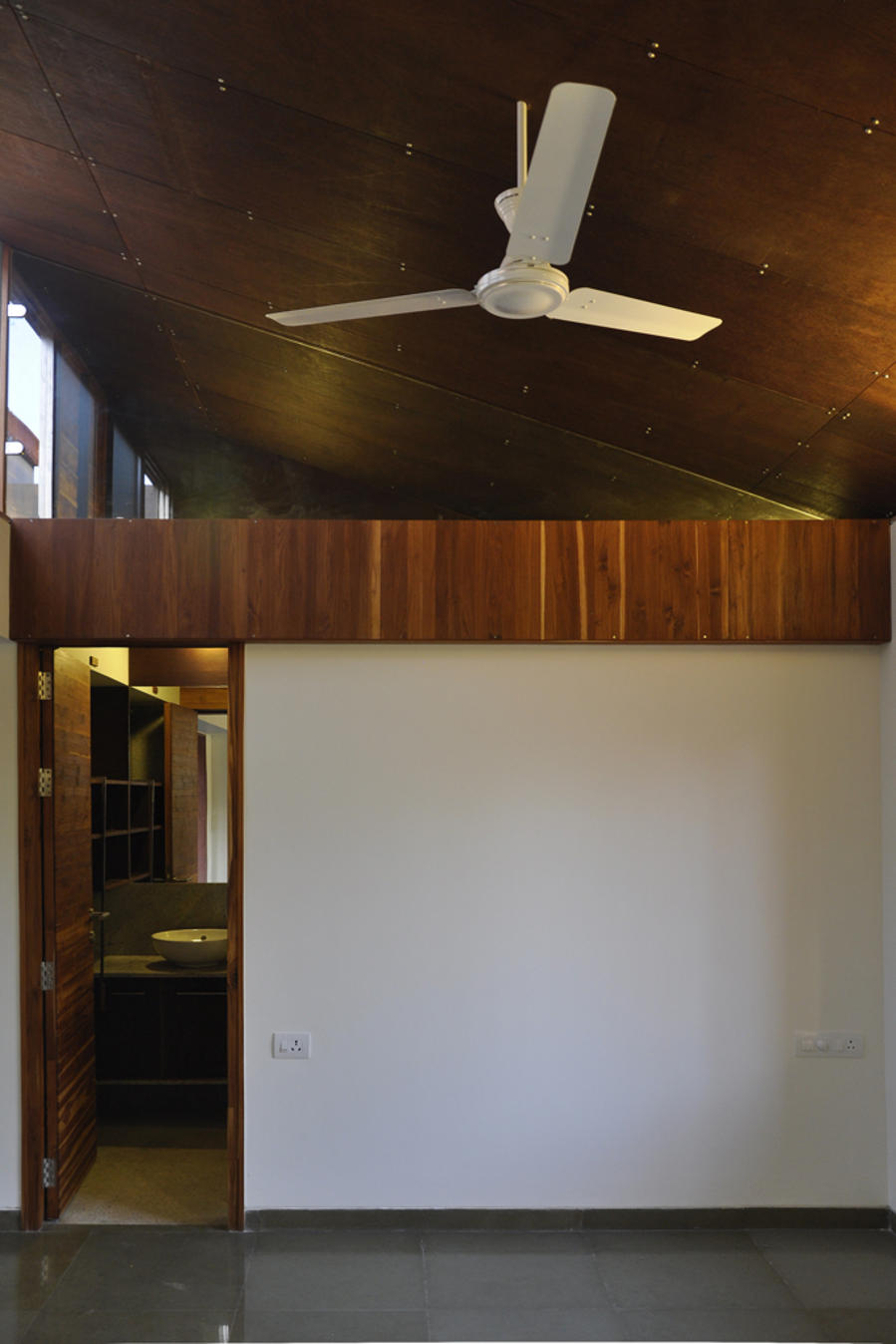
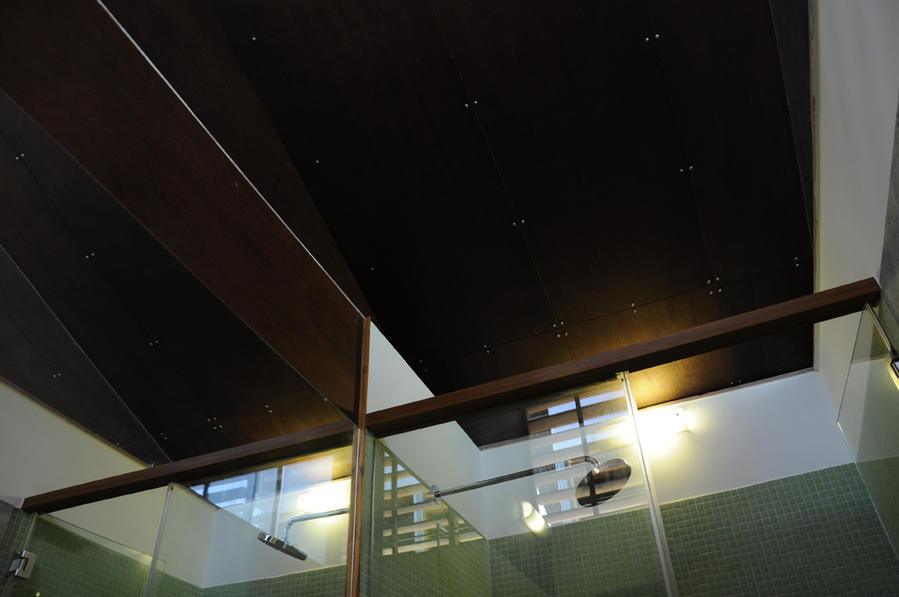
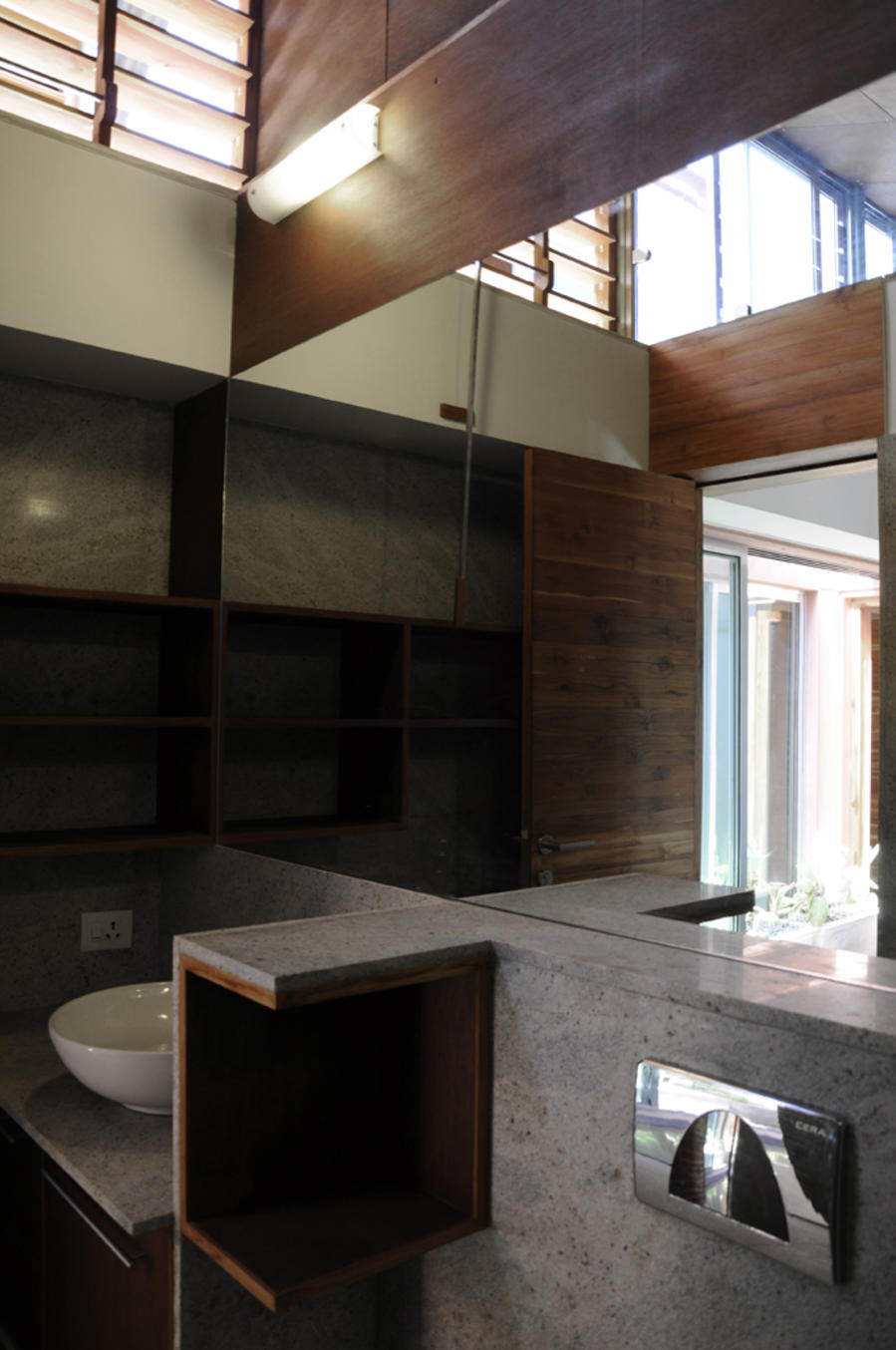
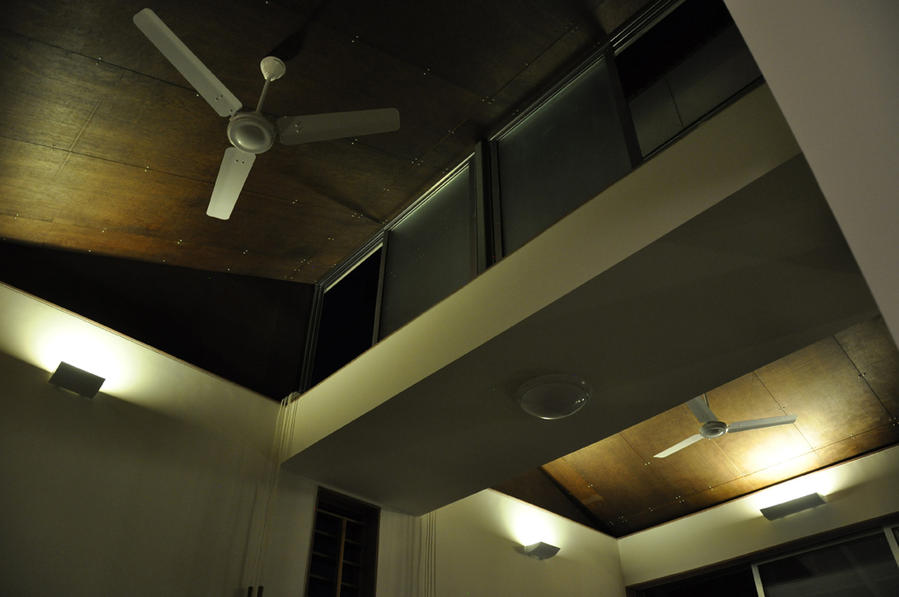
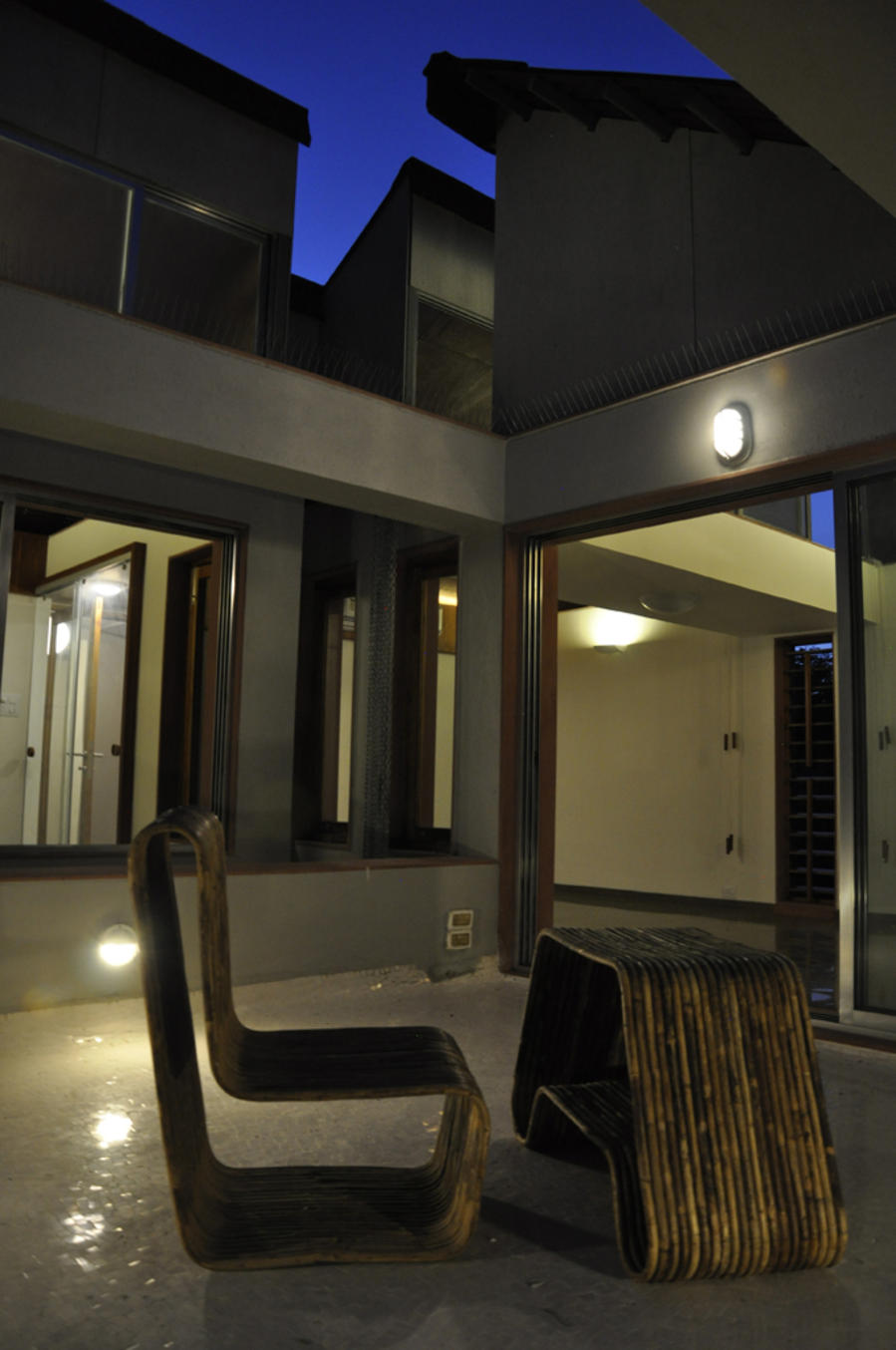
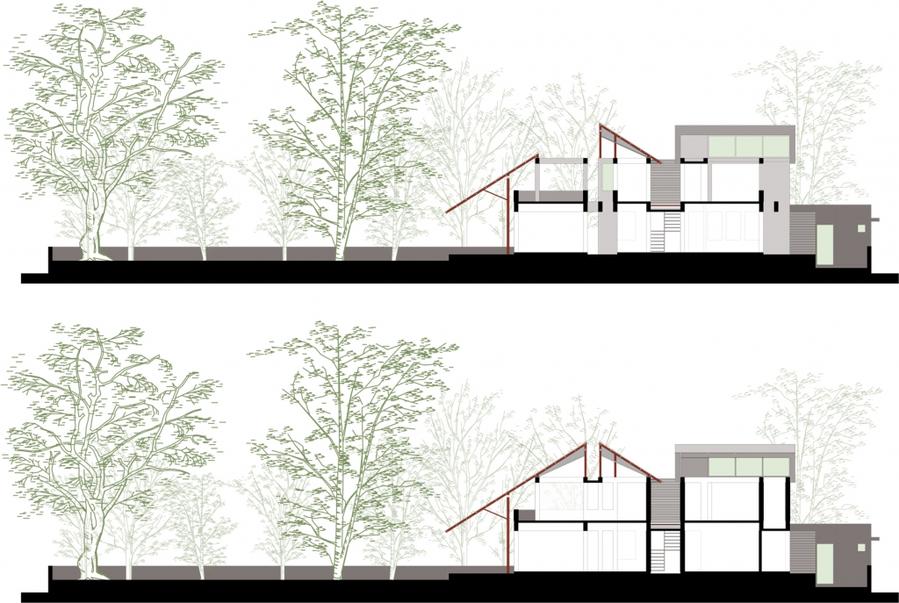
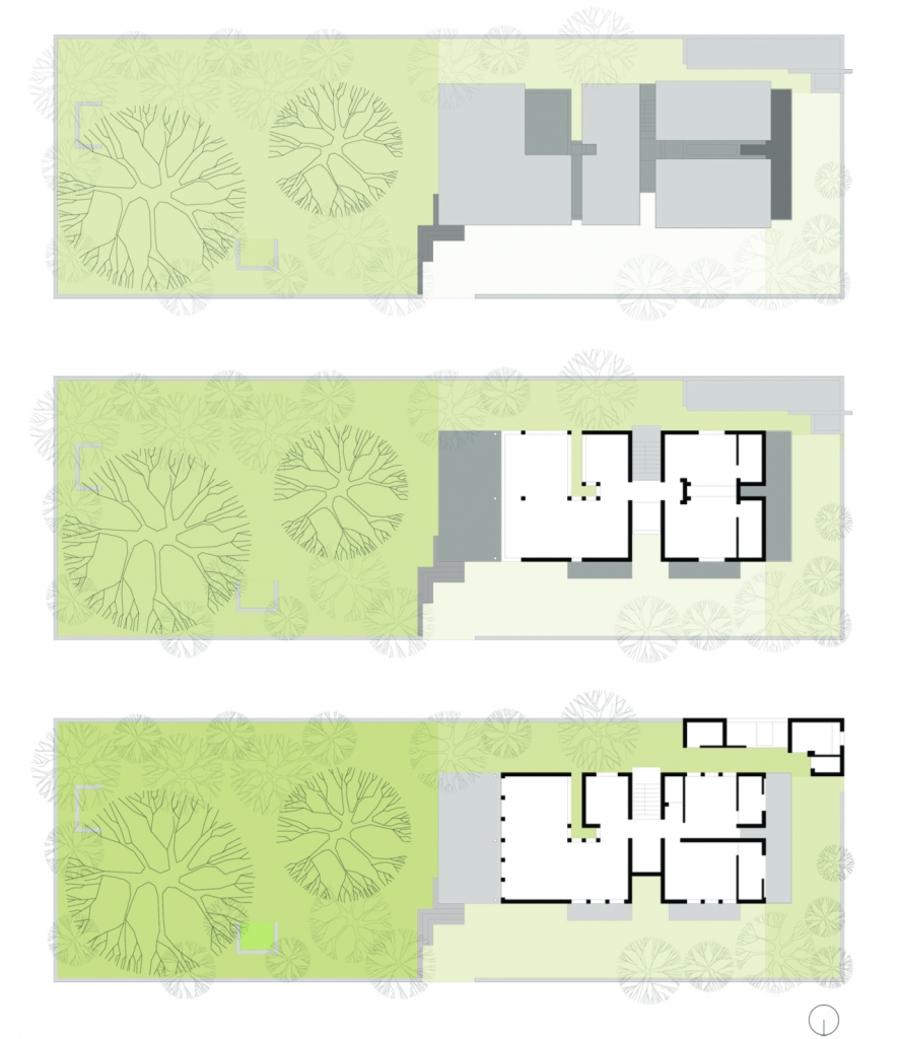
Two heavy cubes, connected by a bridge and sheltered by steel supported roof shades, house four bedrooms, kitchen, dining and gathering spaces that open onto a deep verandah and extend into a long garden outside.
The pitched roof is pulled apart at the ridge to allow light in, and hot air out, while its double layered structure uses the ventilated air space between two surfaces to mediate the sun's heat. Openings that cut through the length of the building allow air to pass through the ground floor and rise to release from first floor spaces.
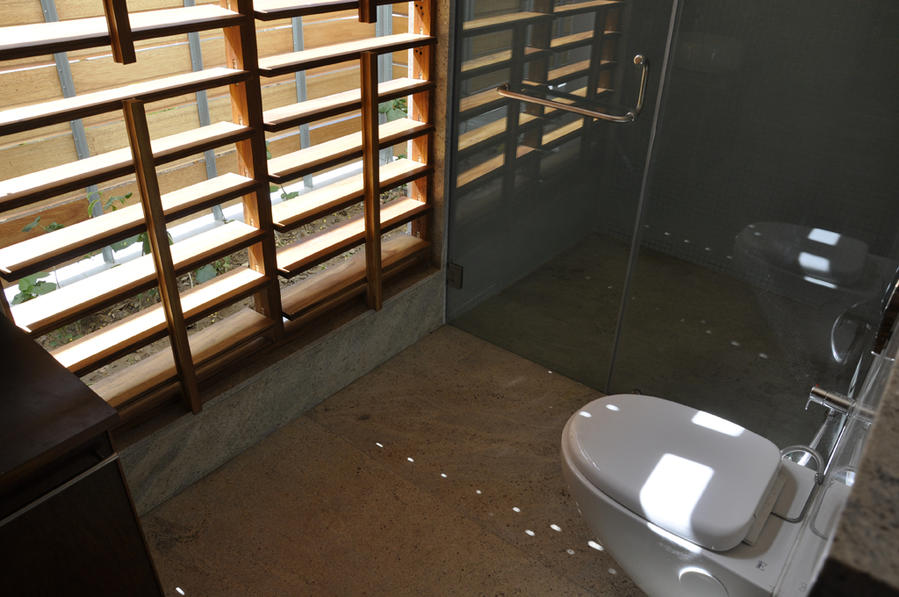
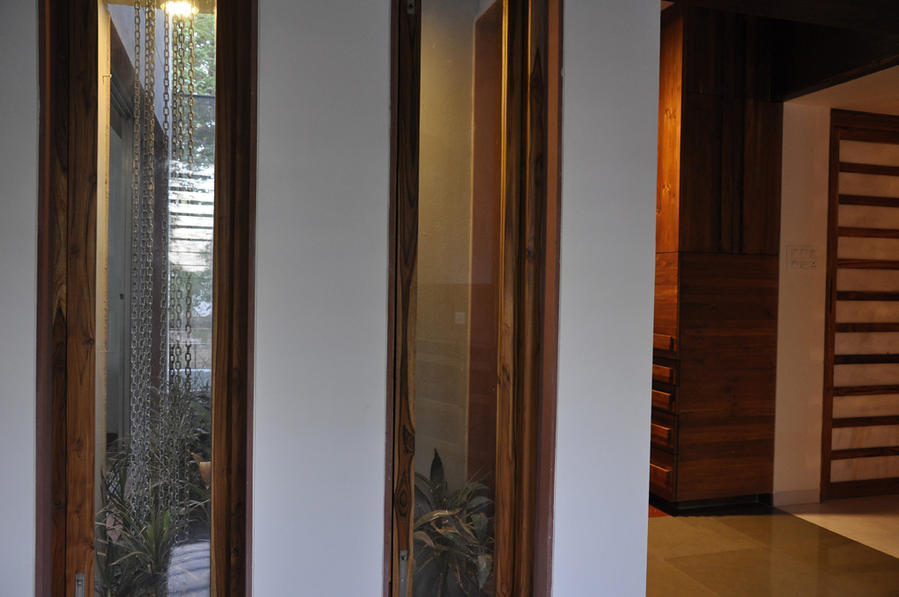
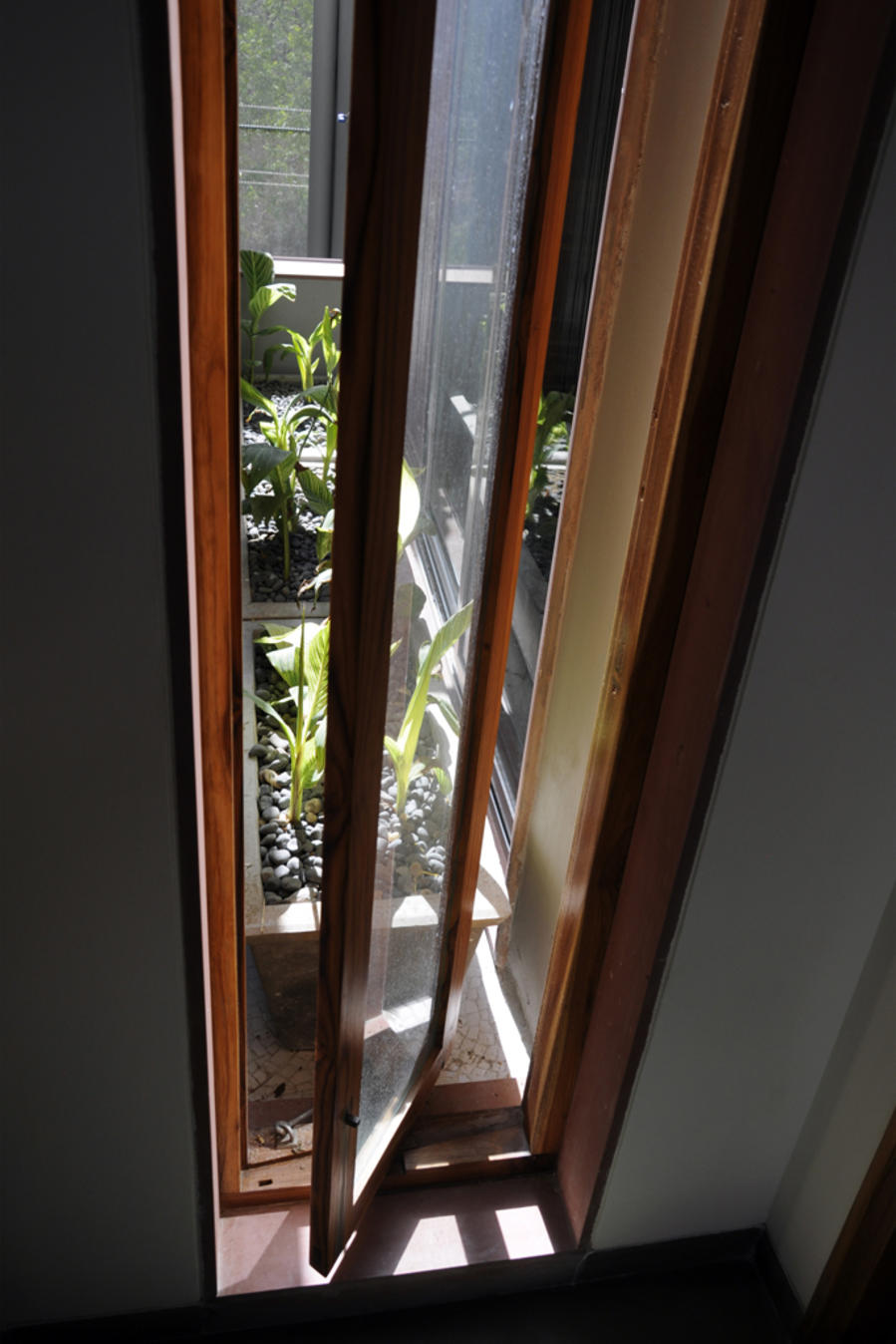
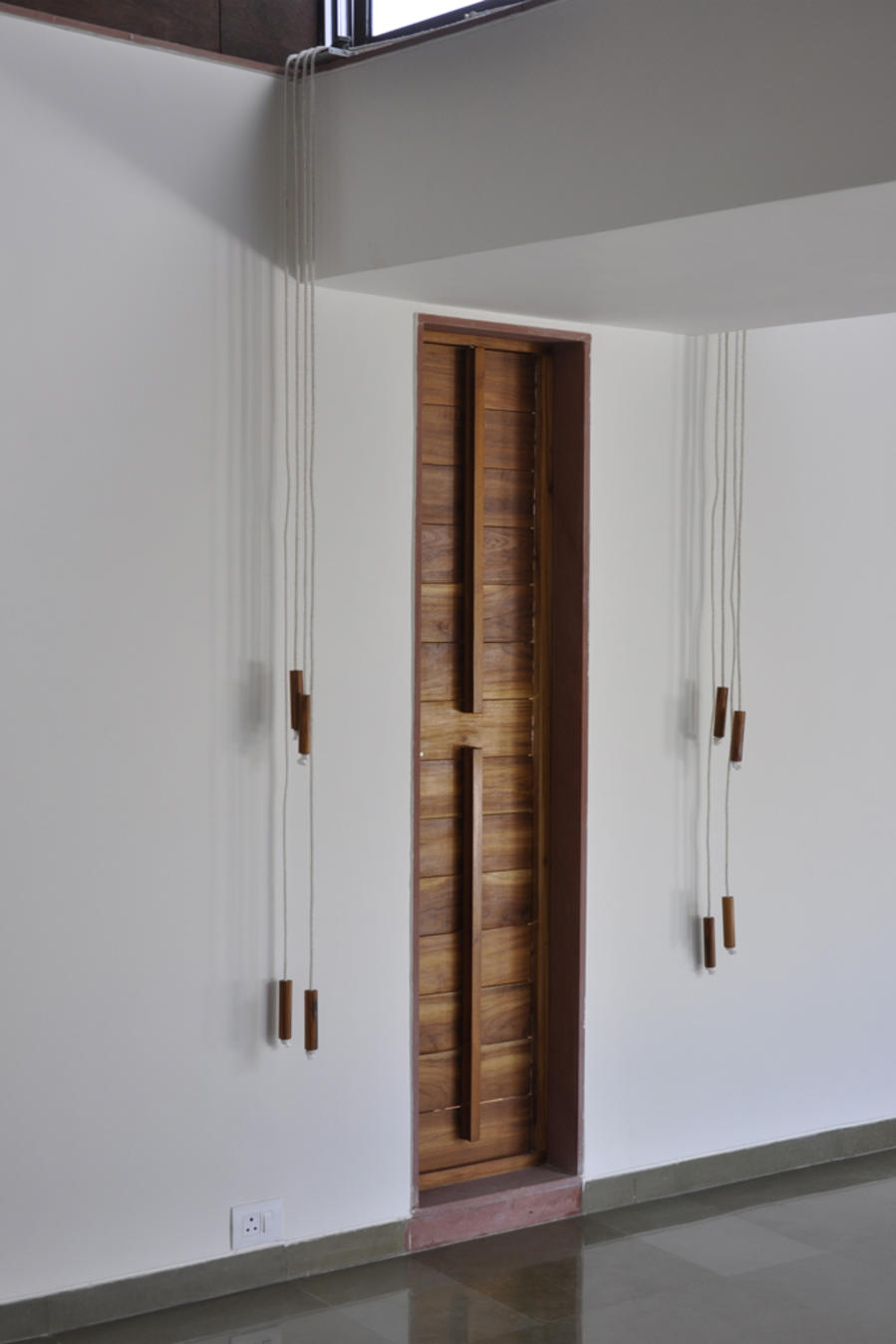
Inside, pivoted glass frames sit canted so that they could be cut from one piece of wood, a fabricated pulley system with silken threads opens clerestory windows, and marble door panels let diffuse light into a puja space adorned by the light sprinkled from hammered brass chhatri.
Ahmedabad, Gujarat 2010
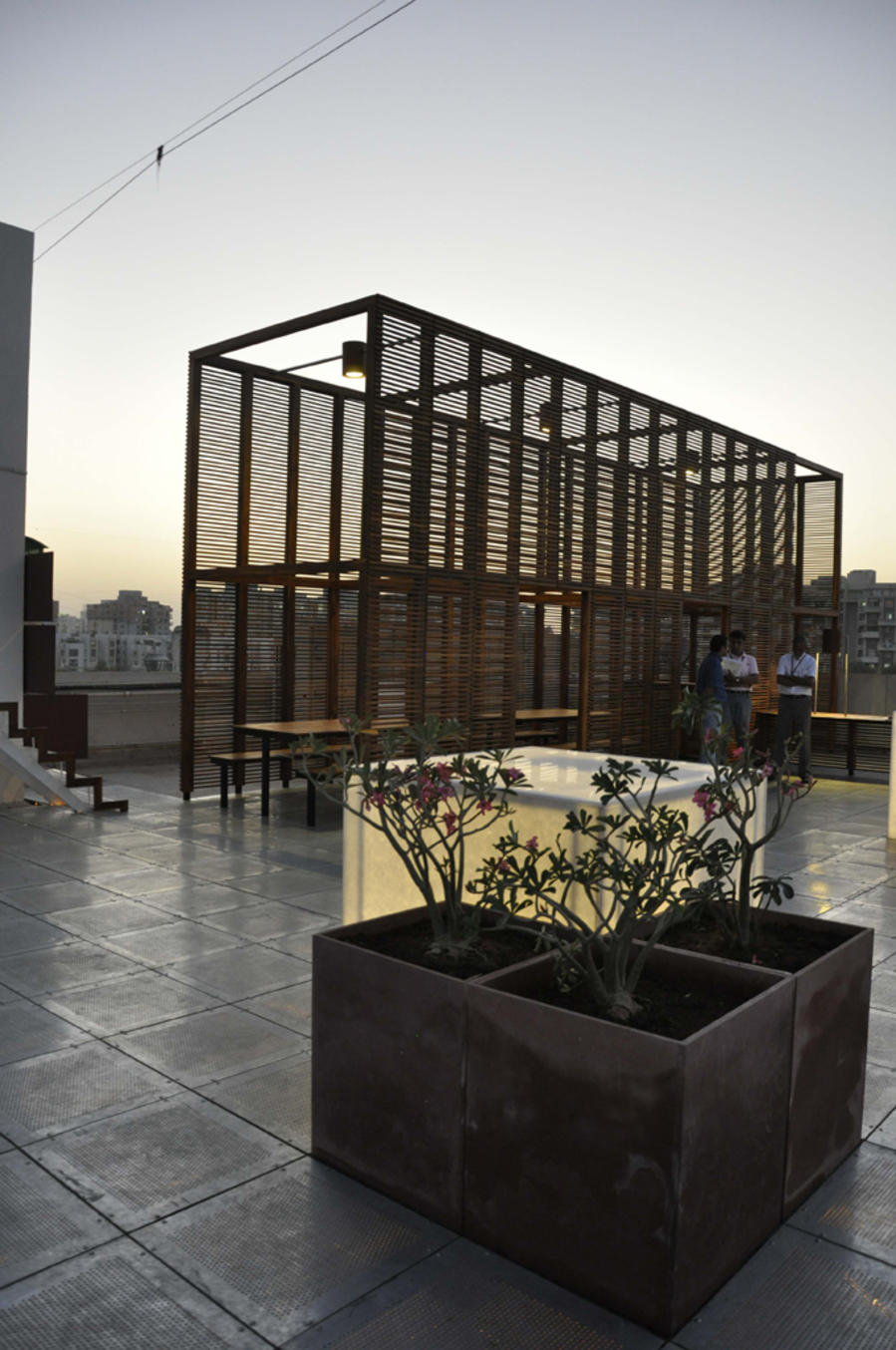
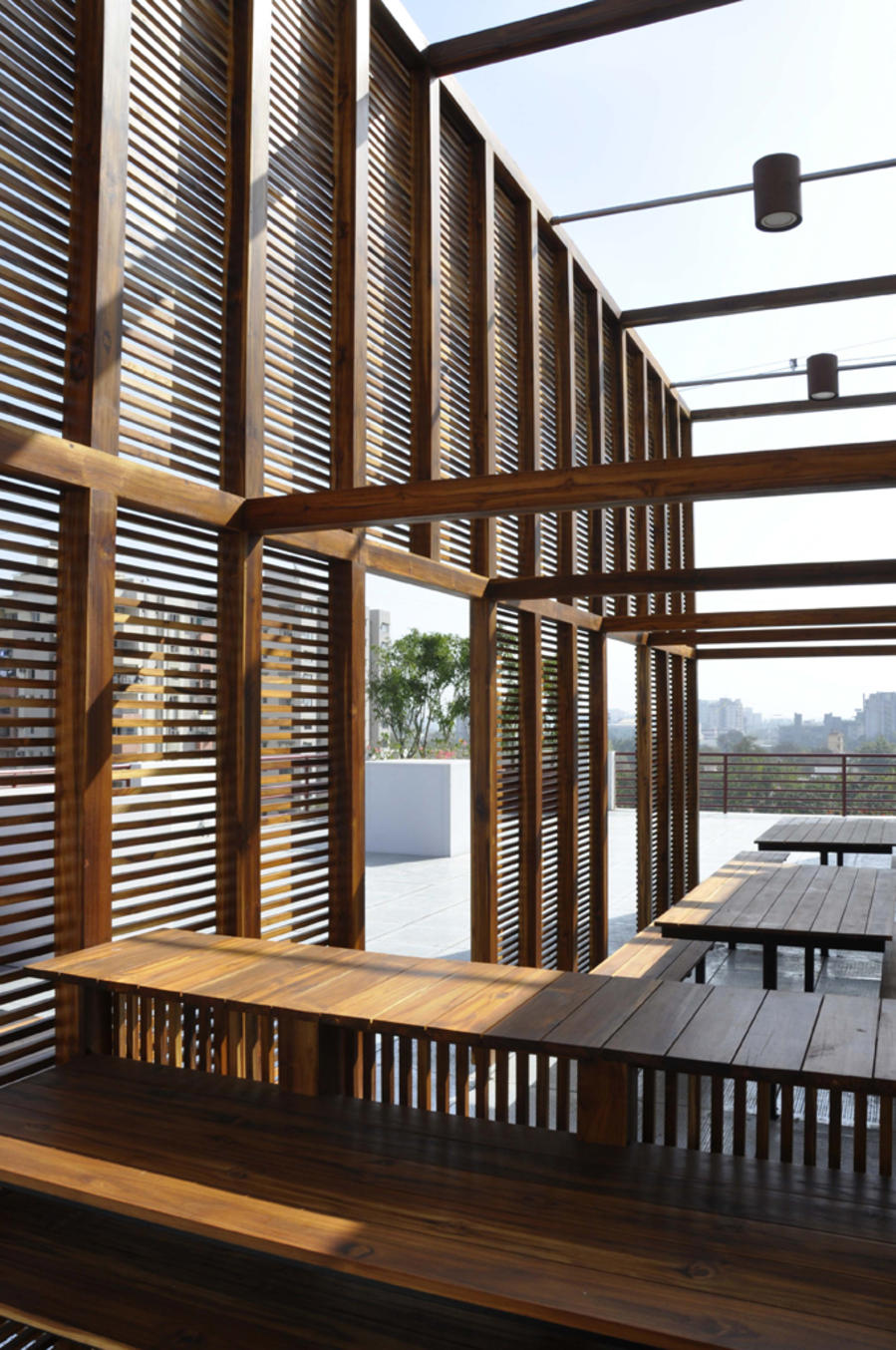
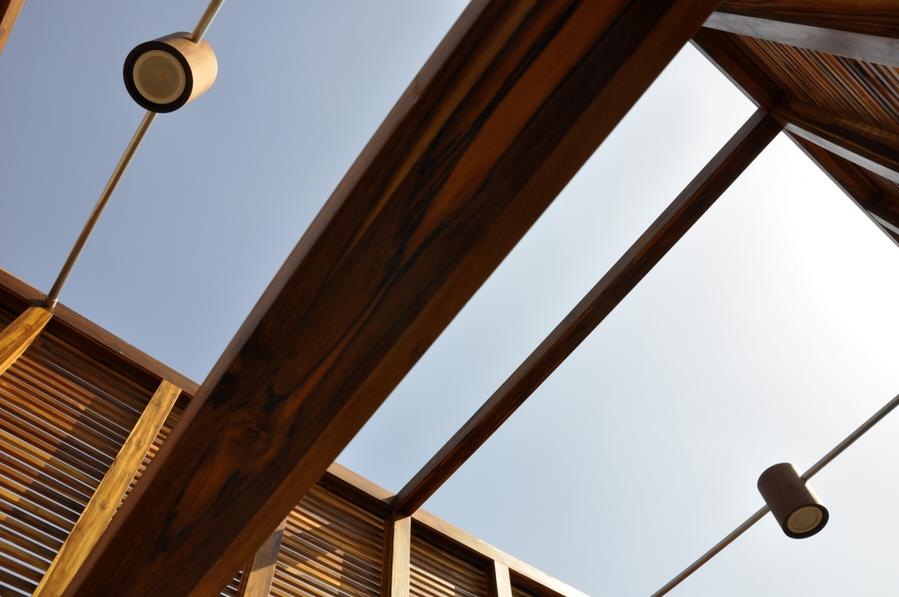
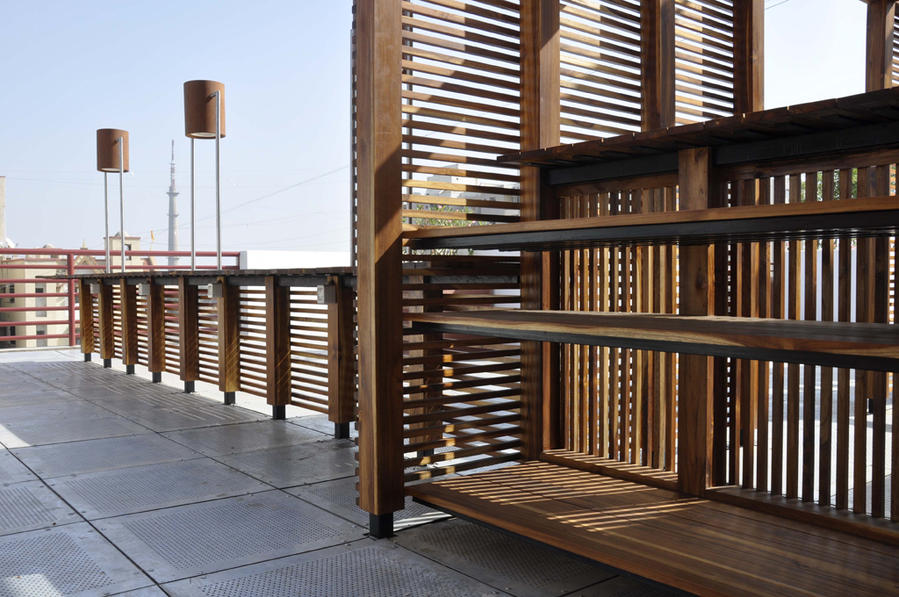
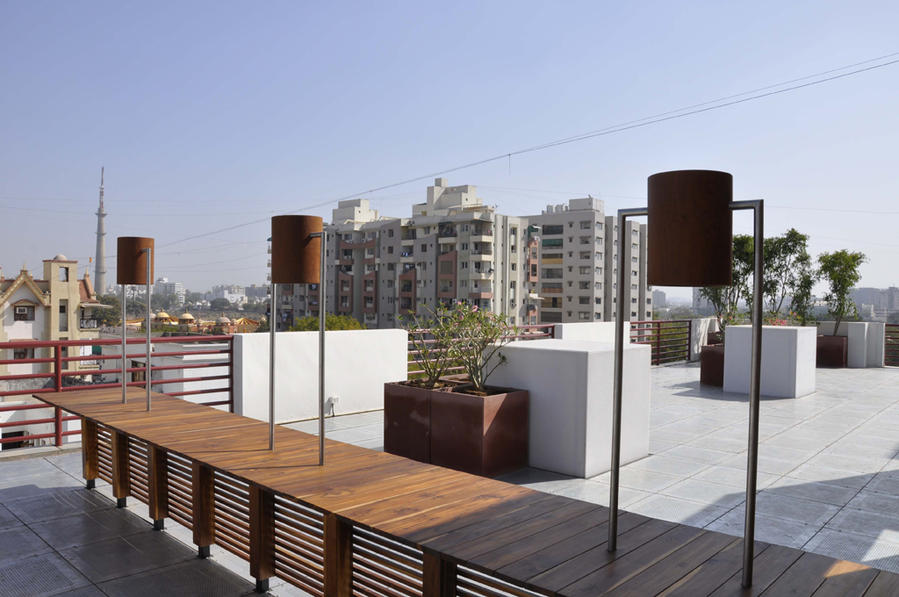
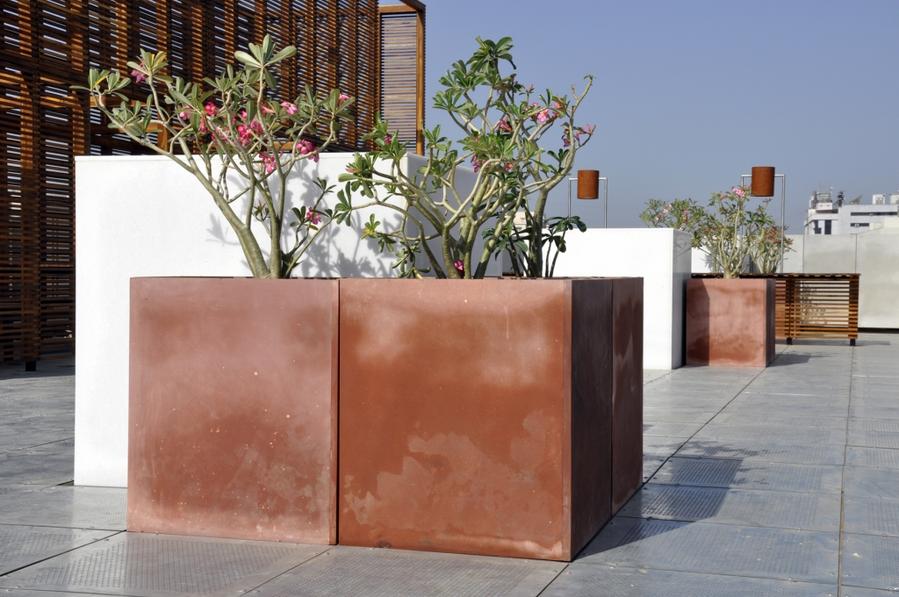
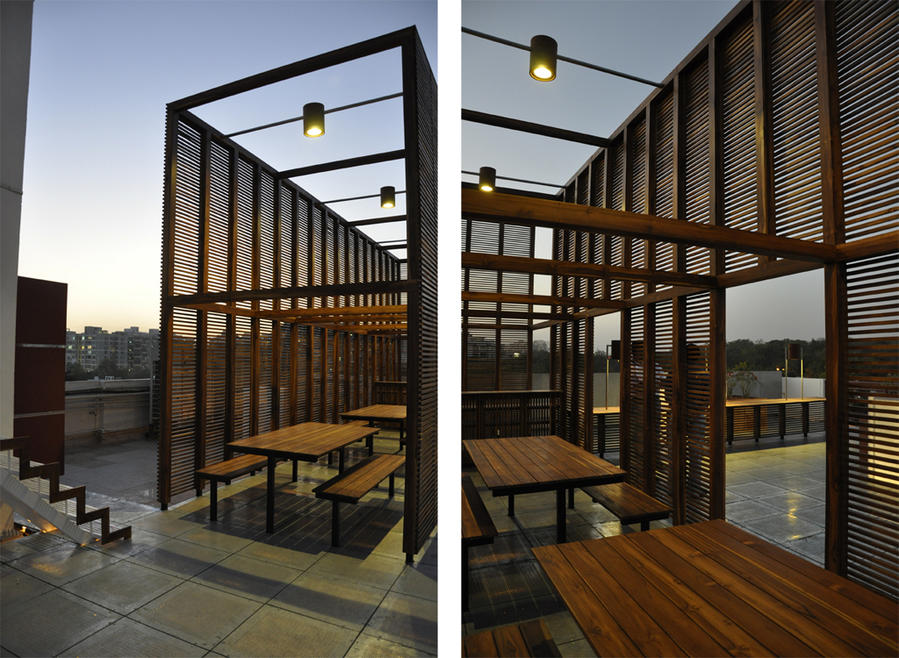
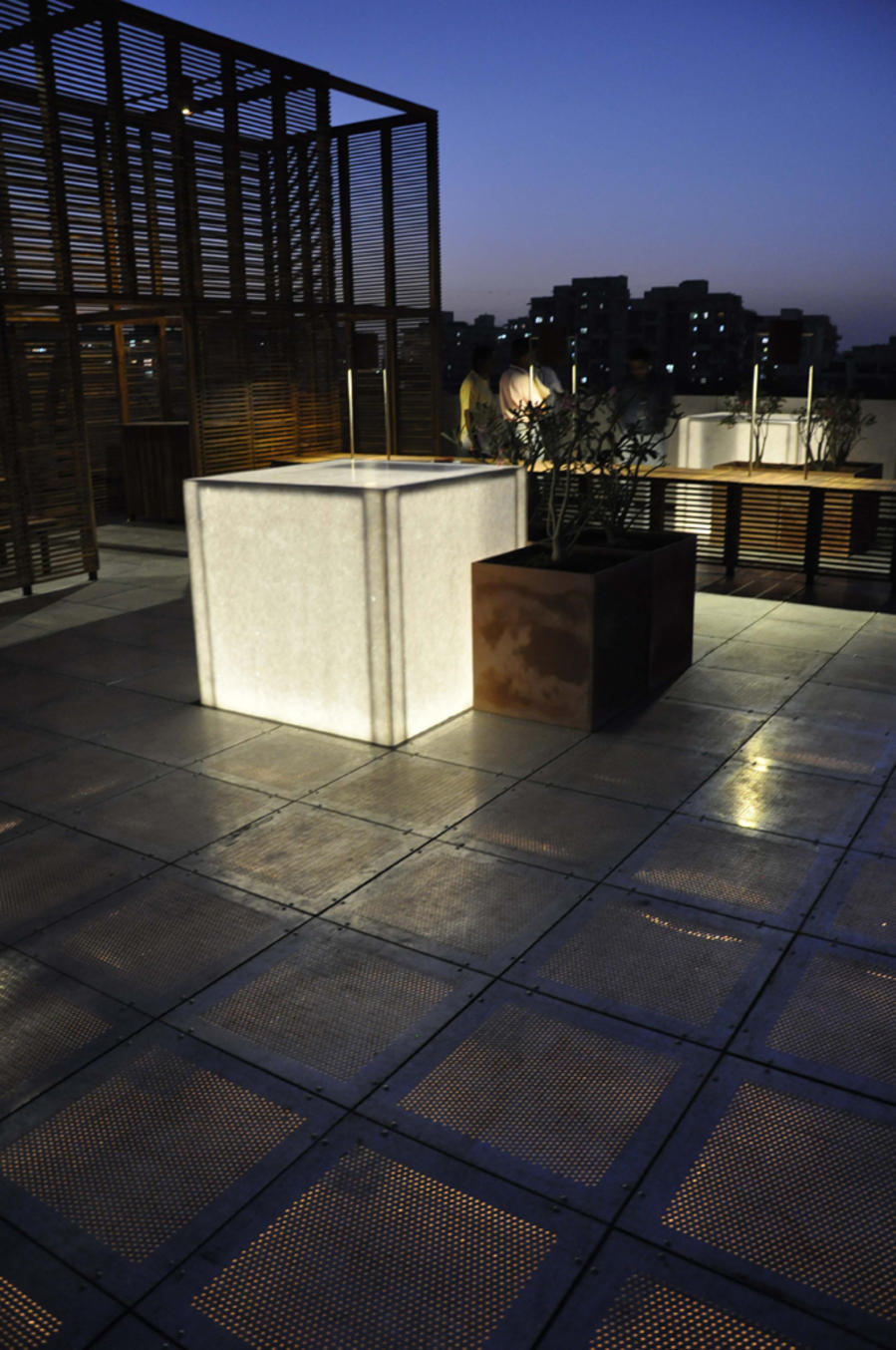
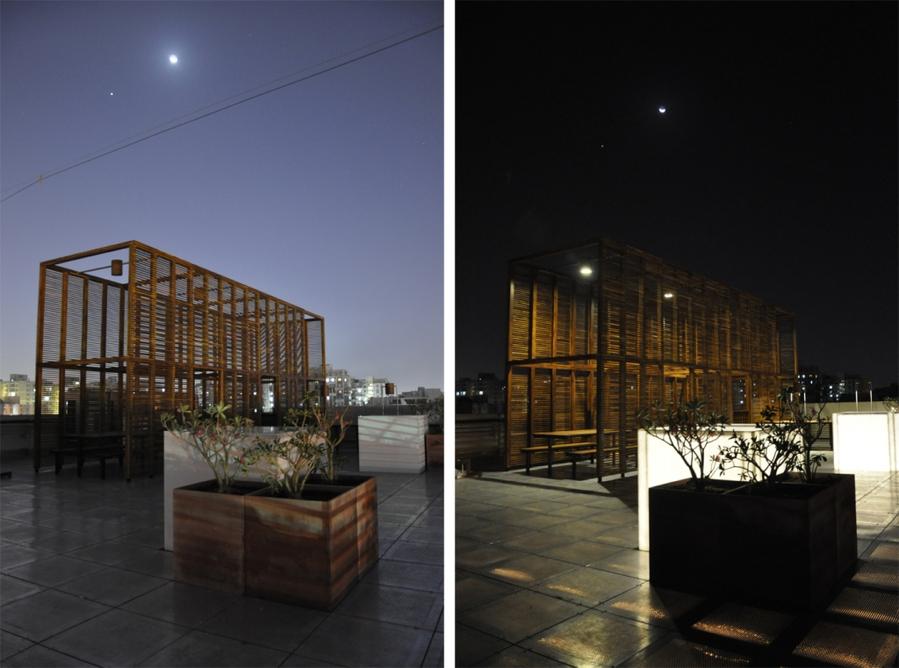
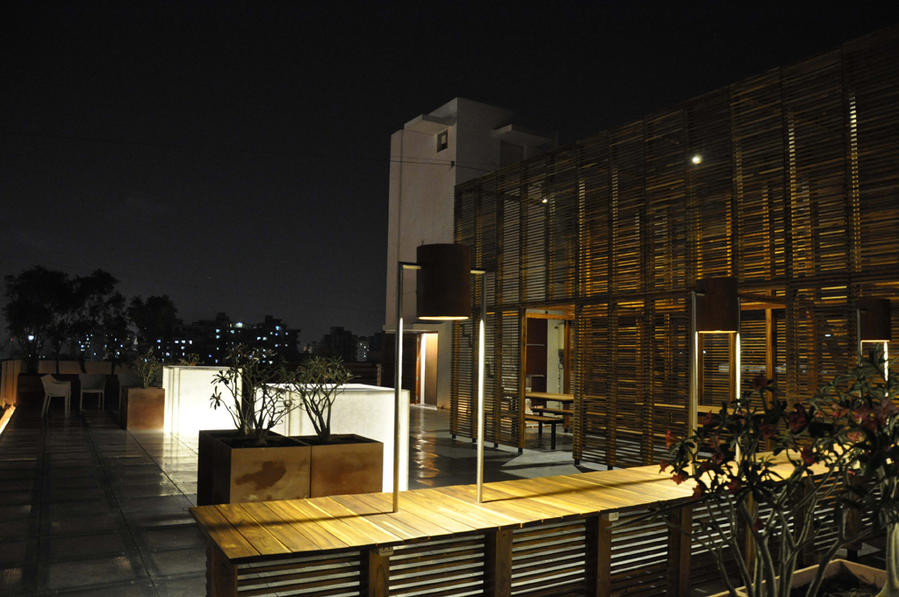
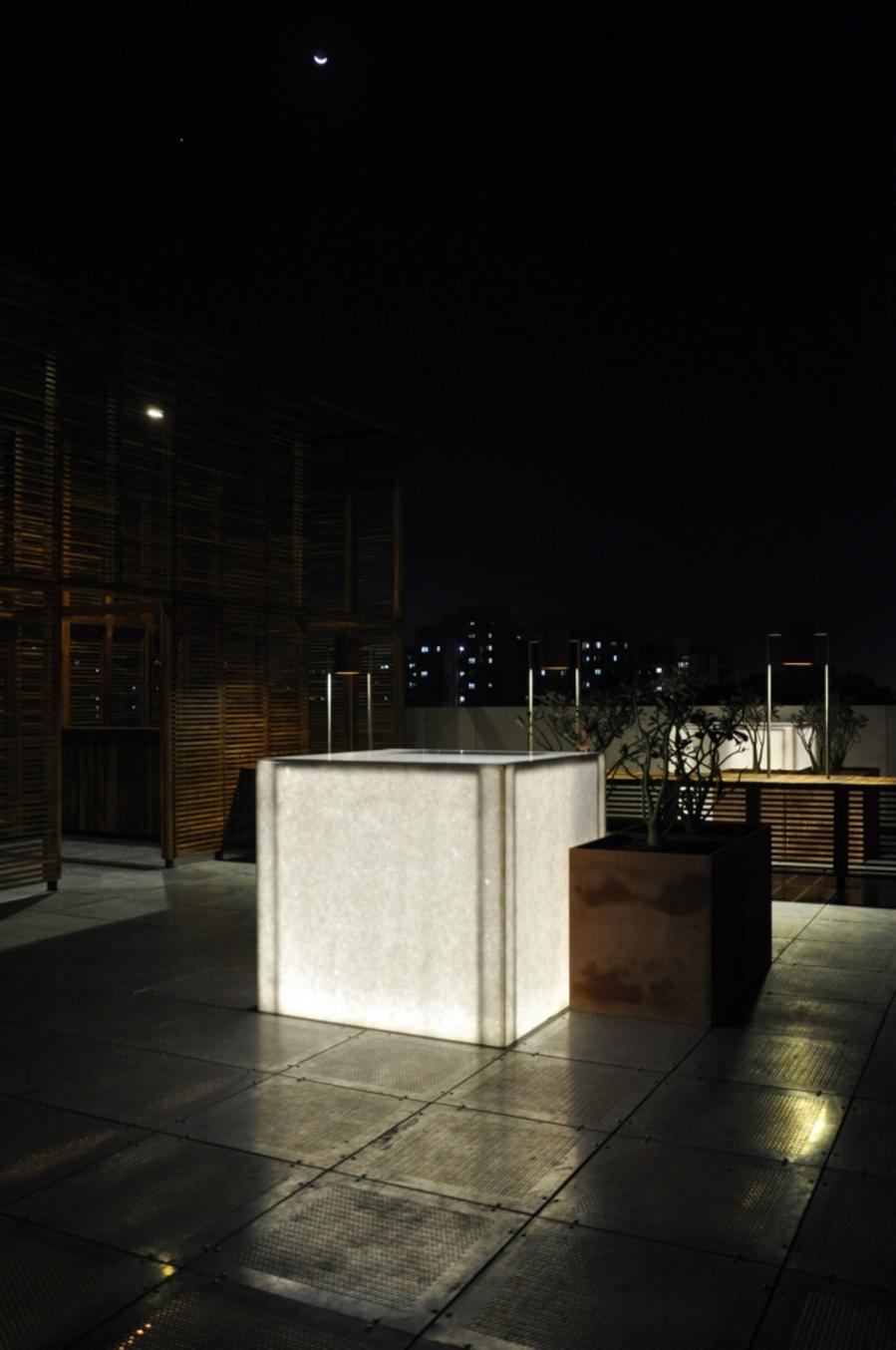
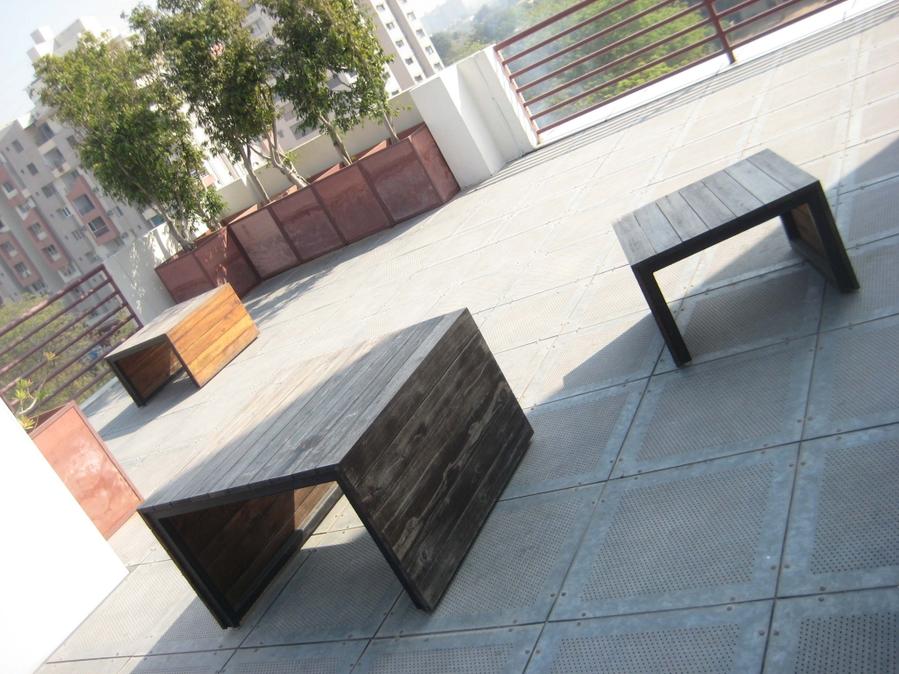
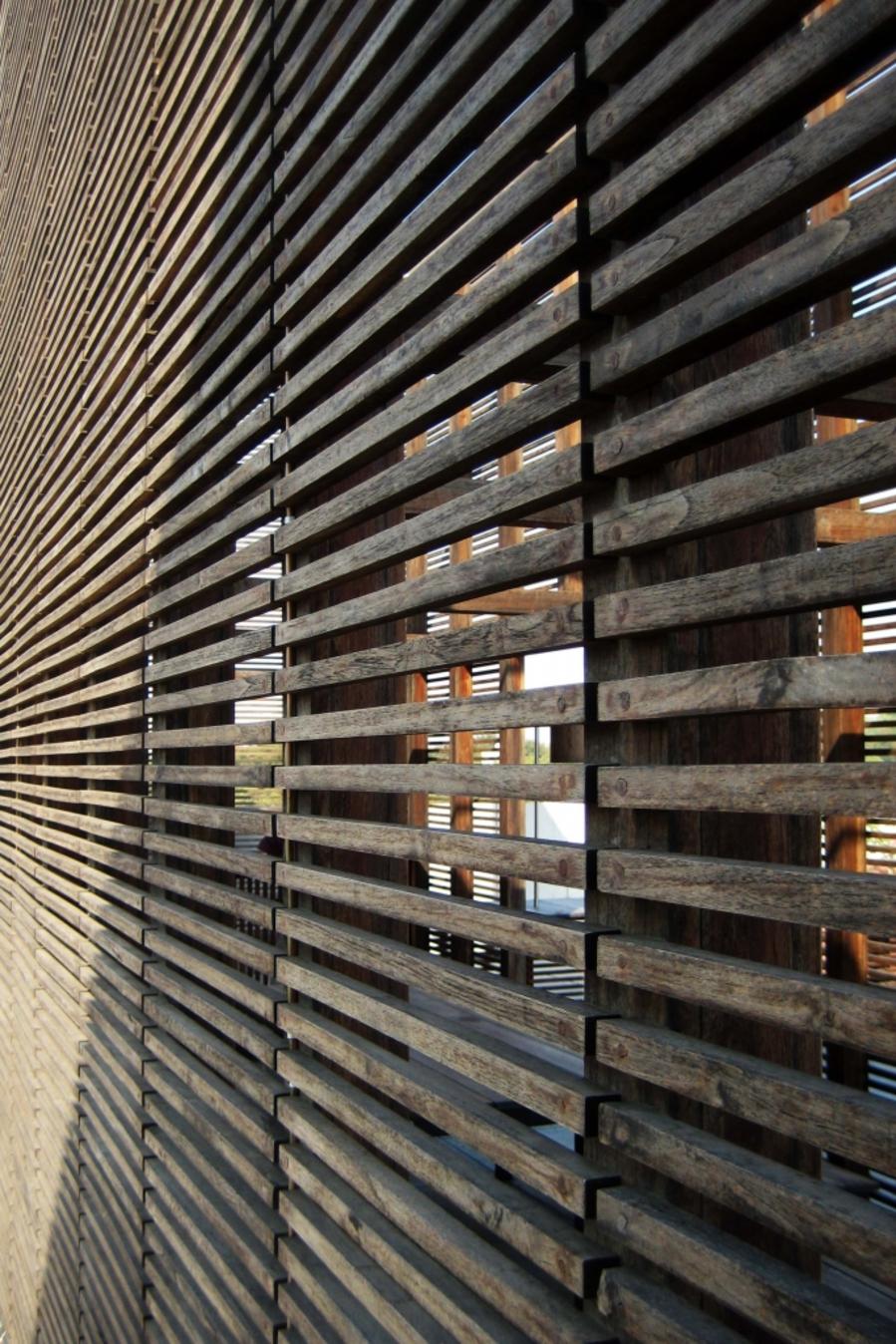
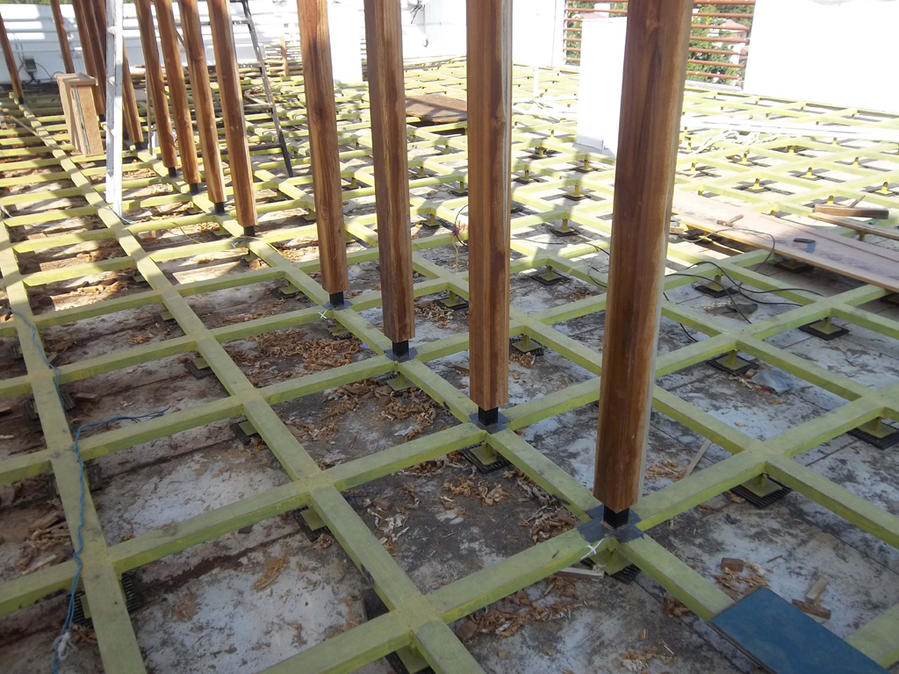
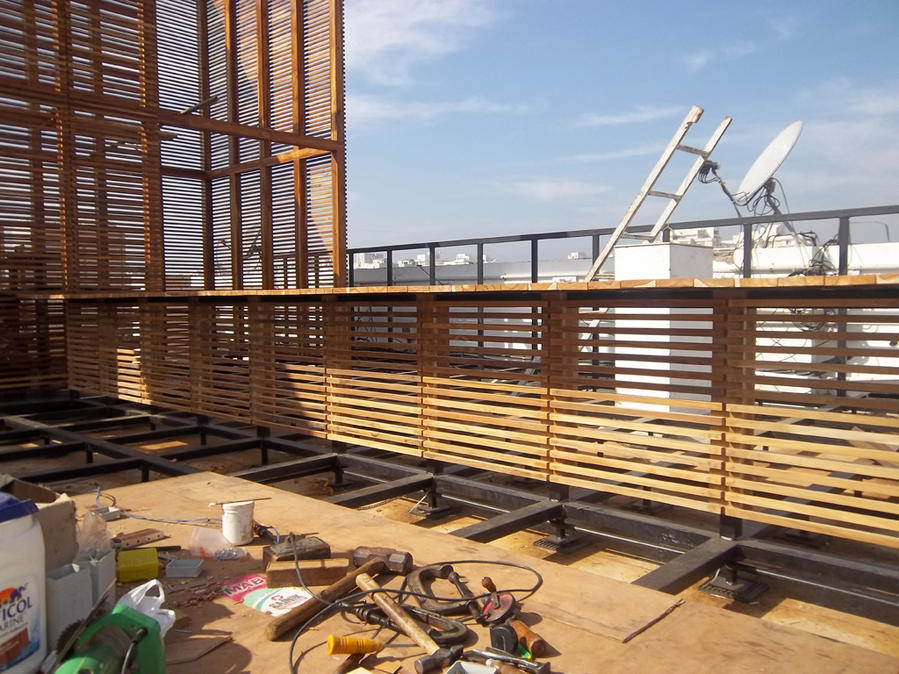
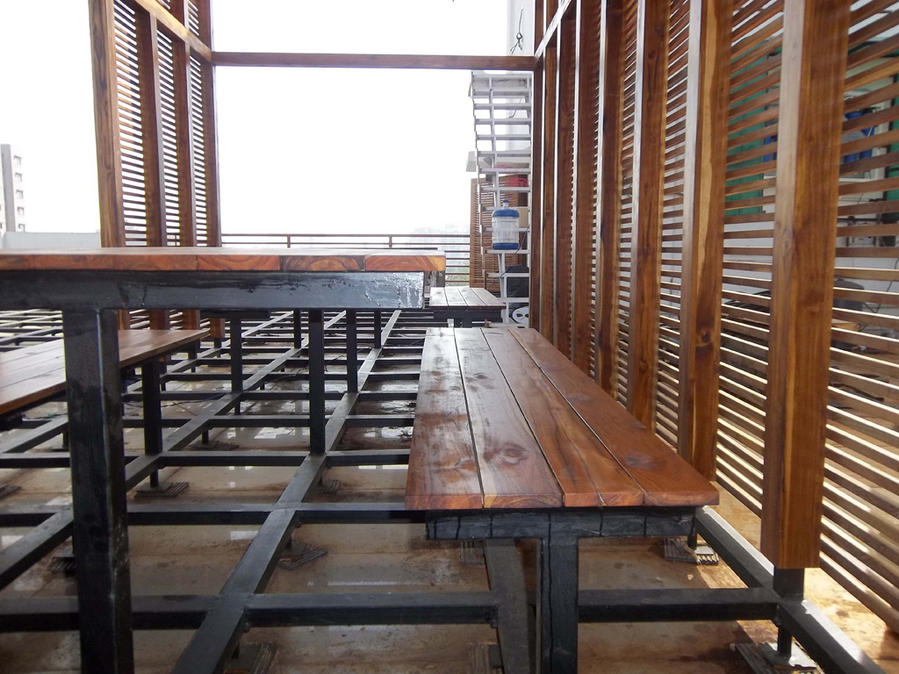
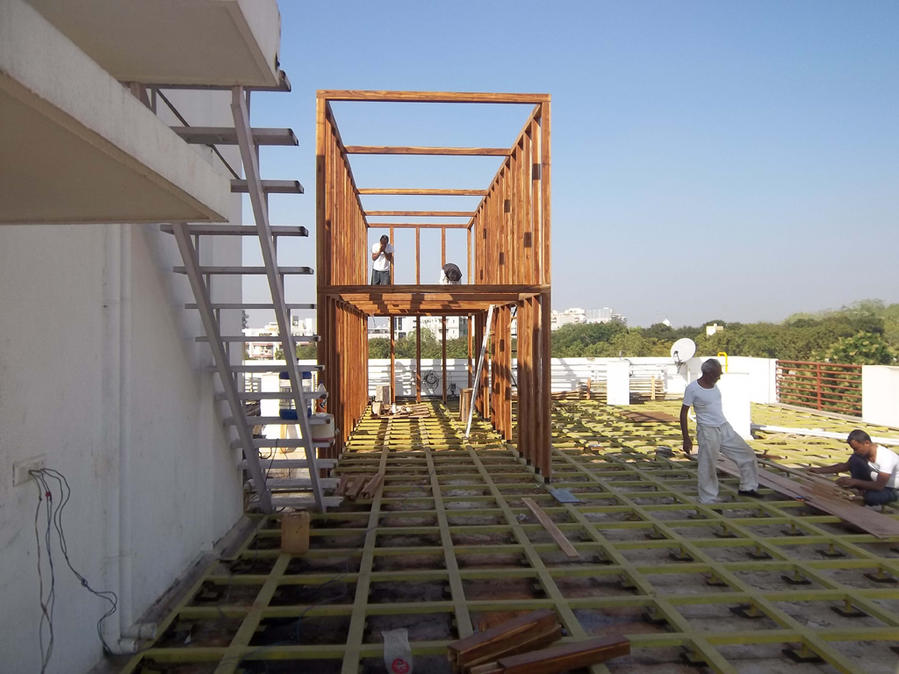
This installation uses a 2' x 2' ms grid to structure every element of this gathering space. Out of it grow benches, tables, bar, lights, serving counter and shelter. Teakwood strips create the shade, surfaces and seats, while white marble cubes, directed lighting and a glowing floor subtly light the place. The floor is elevated 6 inches and clad with perforated galvanized iron sheets, providing shade to the roof below and a well ventilated, quick-cooling surface for night time events.
The project was also an experiment in remote supervision, designed to detail and conveyed through skype, photos and phone calls, constructed while we traveled.
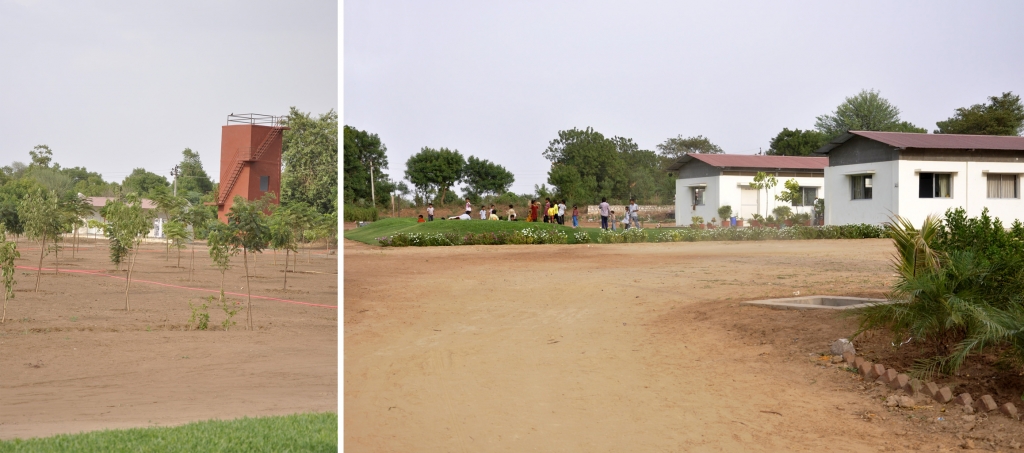
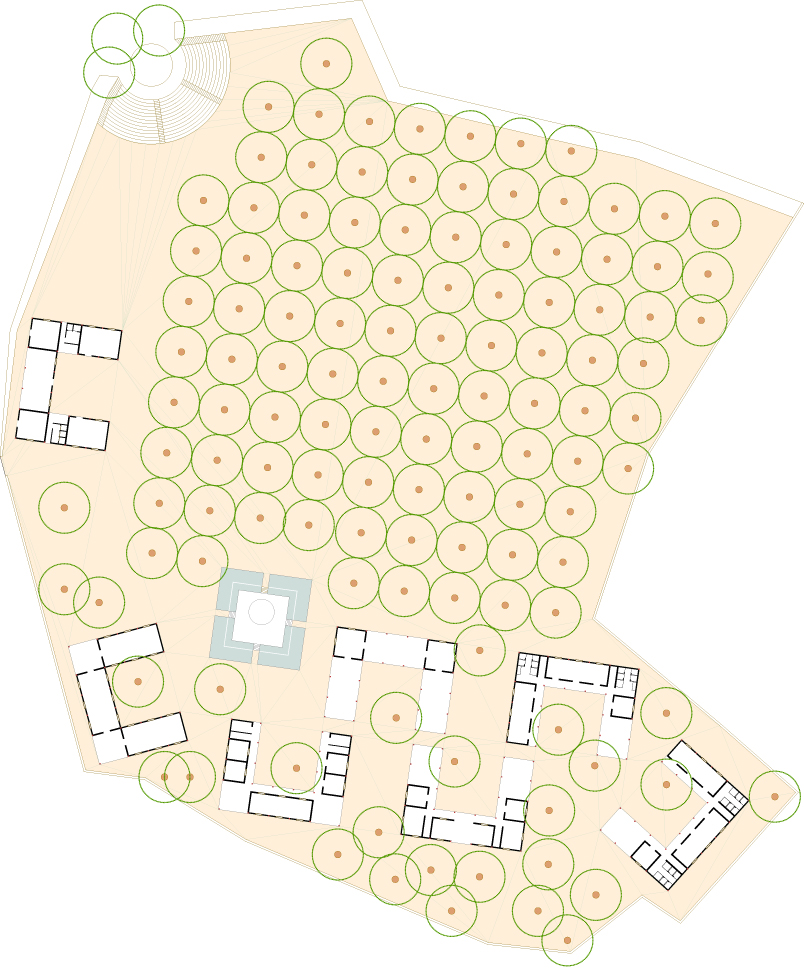
Sadara, Gujarat 2010
This building is the first installment in a community center for a village near Ahmedabad. The campus sits near the edge of the village, and is now home to a growing number of community programs such as khakhra making, tuition classes, music performances, and health camps. The module can be repeated in the future, alternating along an axis that runs at the edge of the planted orchard. Plans for its expansion include an old age home, ayurvedic, homeopathic and allopathic clinics, yoga and organic farming facilities.