We wrote a piece for the Global Urban Humanities Special Issue of Room One Thousand on the transforming identity and architecture of the gaduliya lohar - nomad cart blacksmiths that wander western India. Excerpts are included here, find the full article at roomonethousand.com.
[cart blacksmiths]
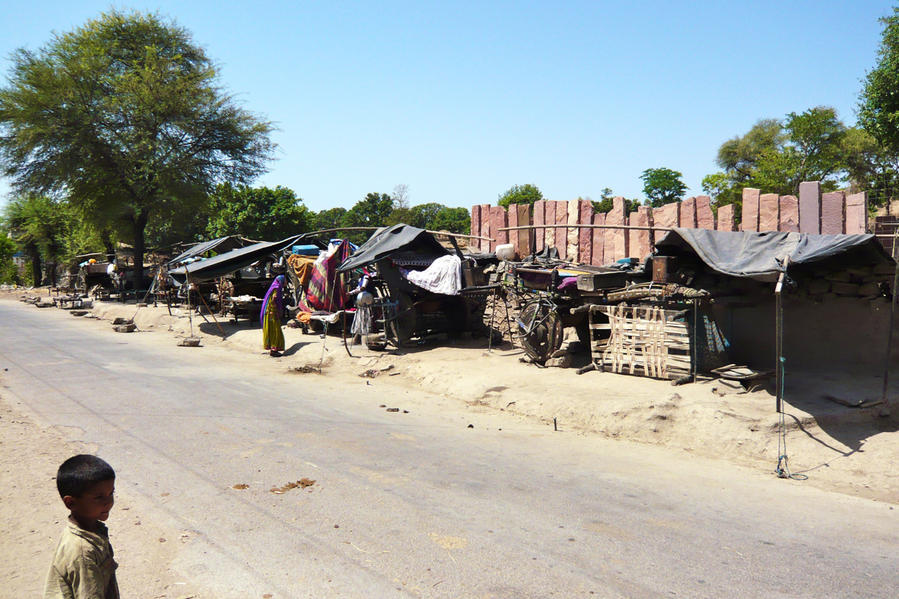
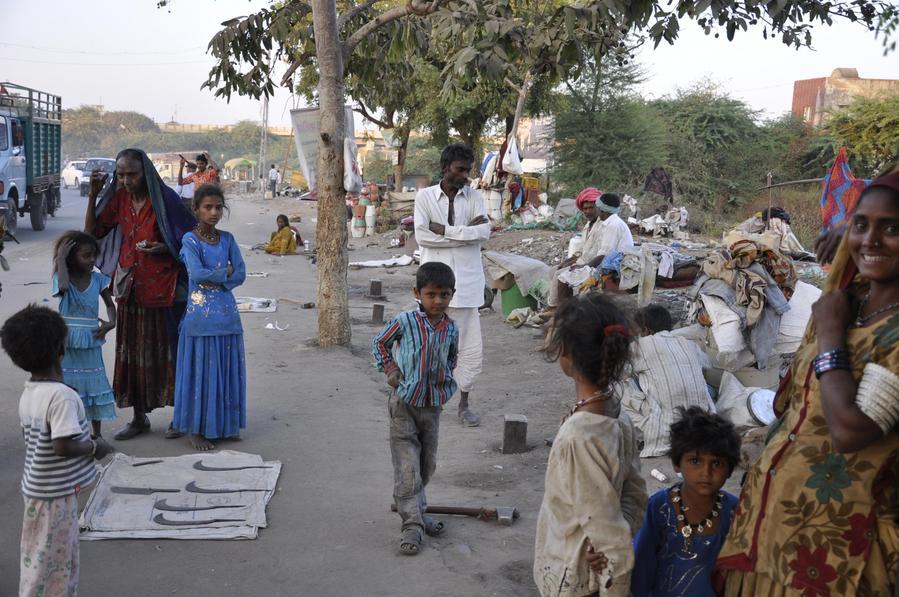
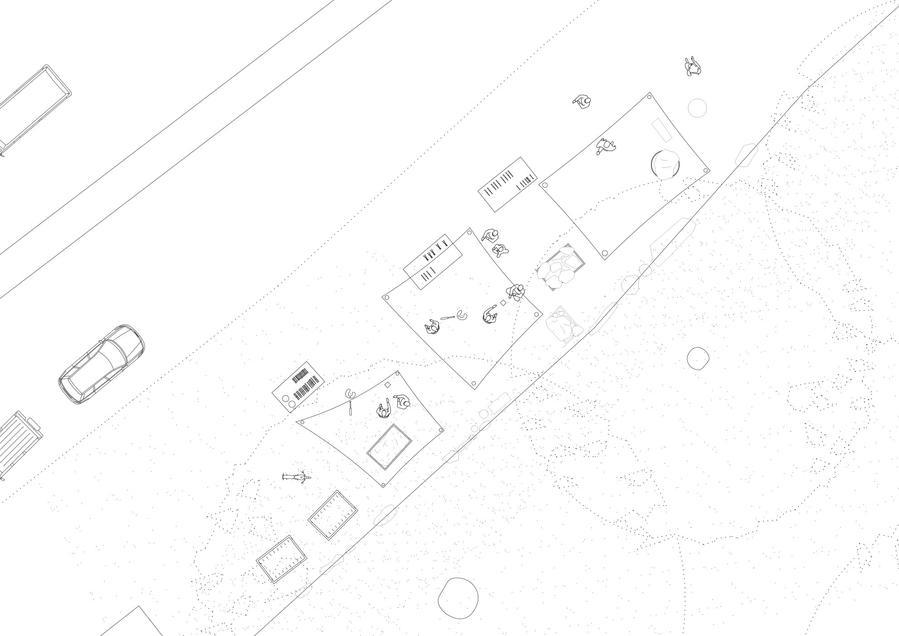
The gaduliya lohar are the traditional travelling blacksmiths of southeastern Rajasthan, who identify their ancestry as weapon makers of the Rajput rulers of Mewad at Chittorgarh. When Mogul king Akbar invaded the fort, they escaped, and ashamed at the failure of their weapons, vowed never to return to Chittorgarh until Mewad was restored. This identity has carried forward to the present, and still defines them as a community. Throughout their history, they have travelled from village to village, repairing and selling farm and household tools. As cities have expanded and industrialized implements have taken the market, the competition is stiff and work has dwindled. But the draw of the city remains, and many lohar have set up camp in the city, for longer periods and with fewer caravan accoutrements, because ox carts are bulky and urban oxen are expensive to maintain. Yet they remain squatters, treated as outsiders wherever they are, because they are permanently camping, just temporary residents.
[camp system]
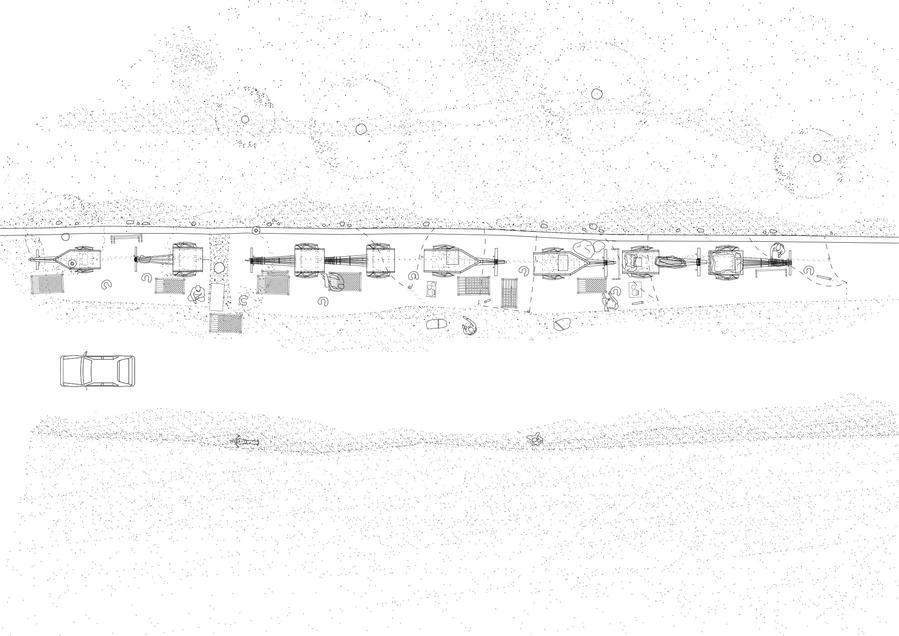
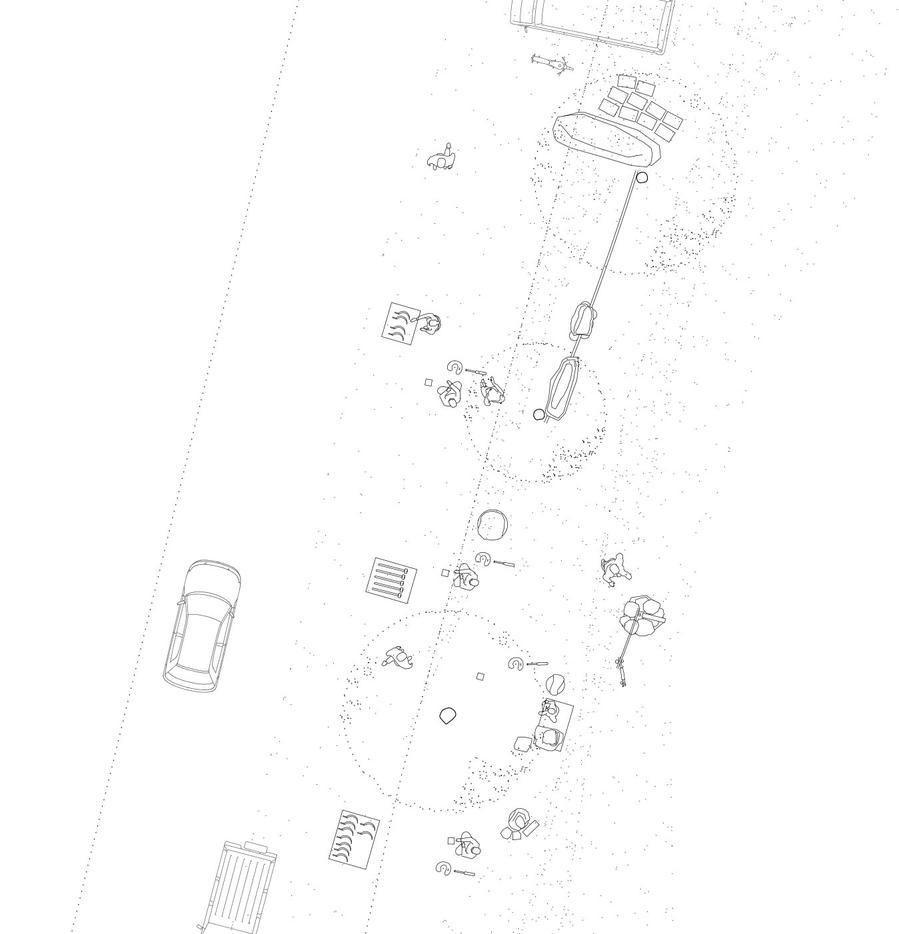
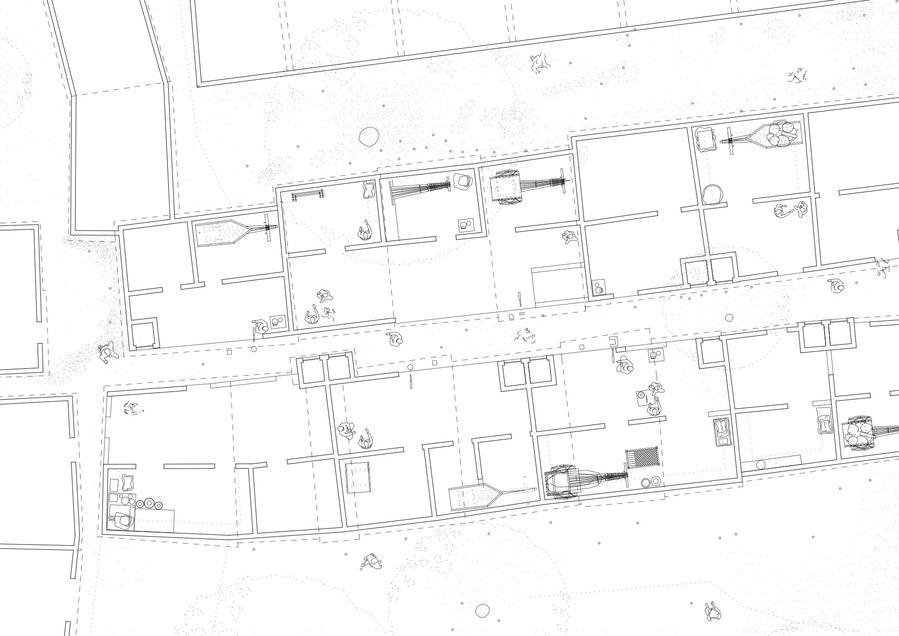
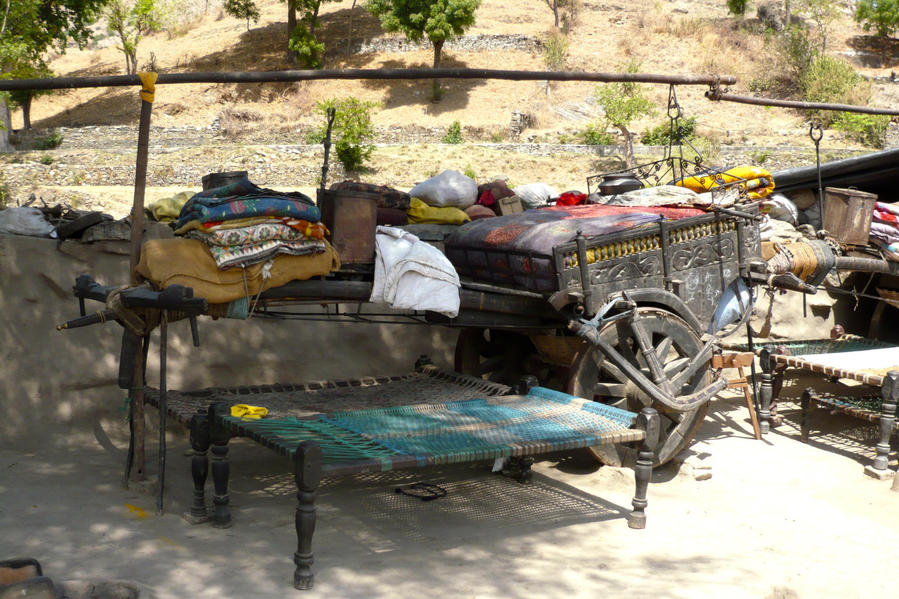
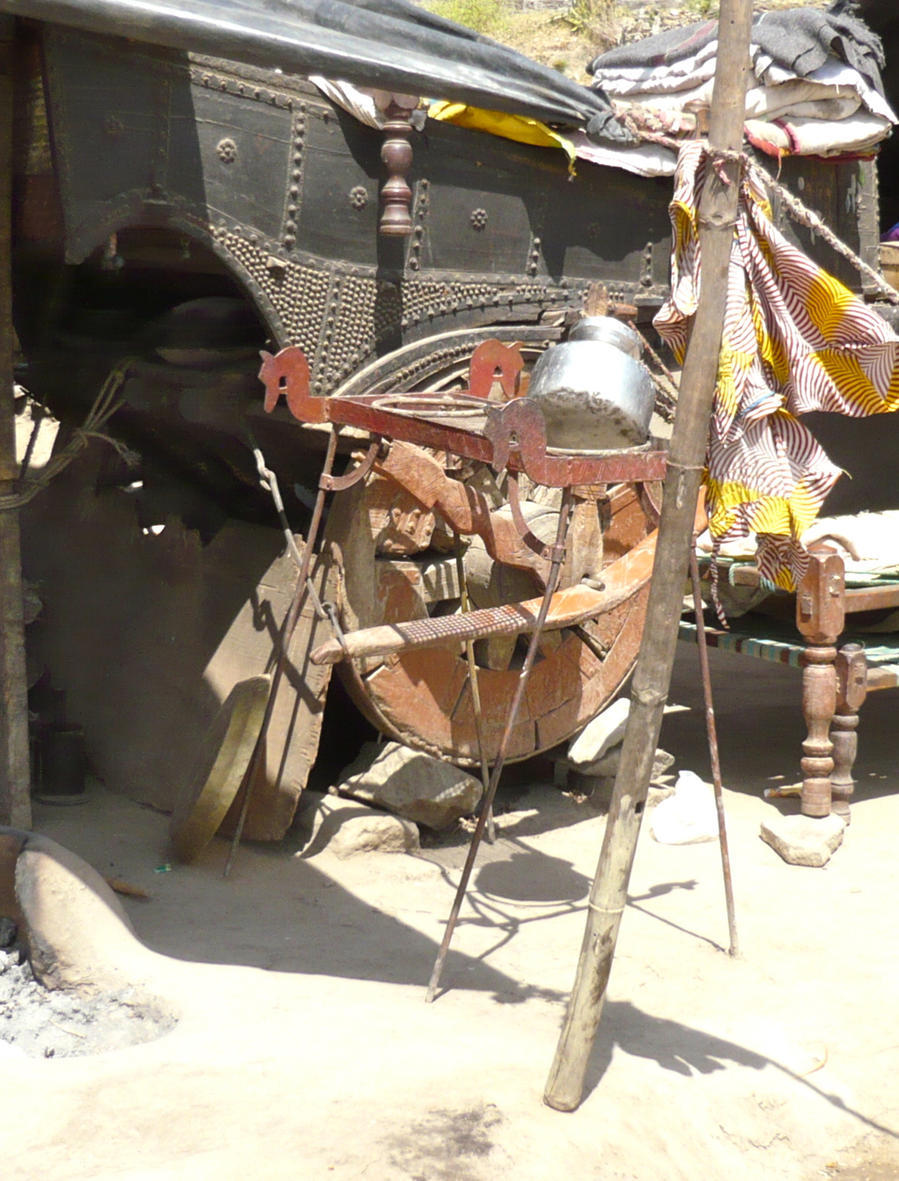
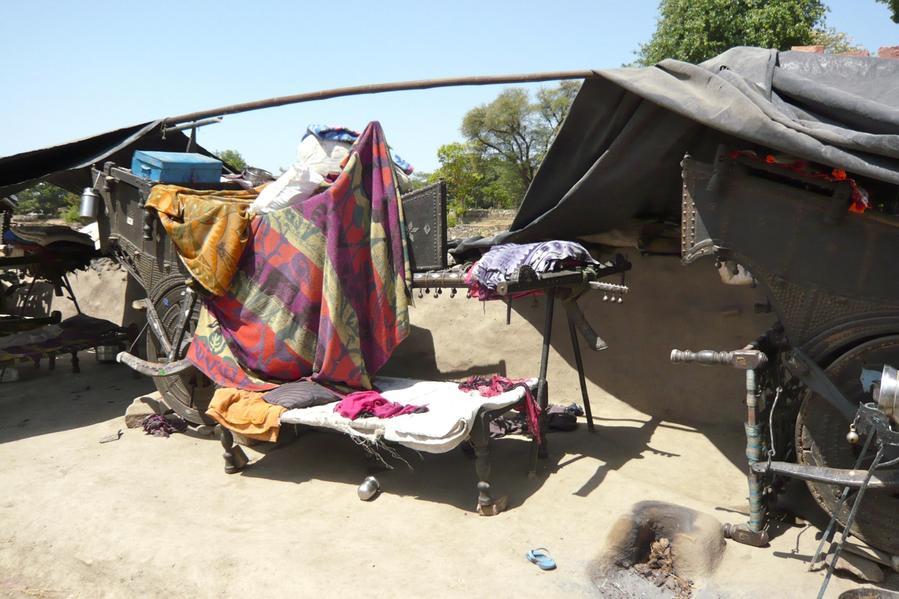
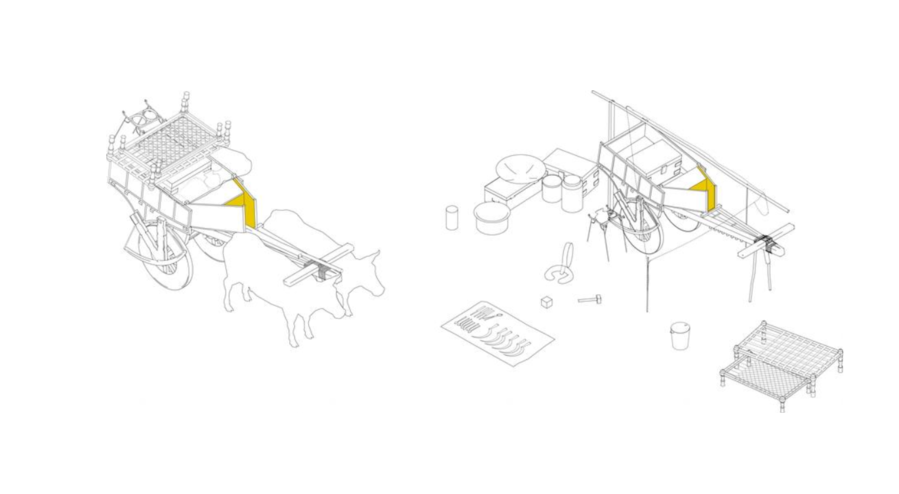
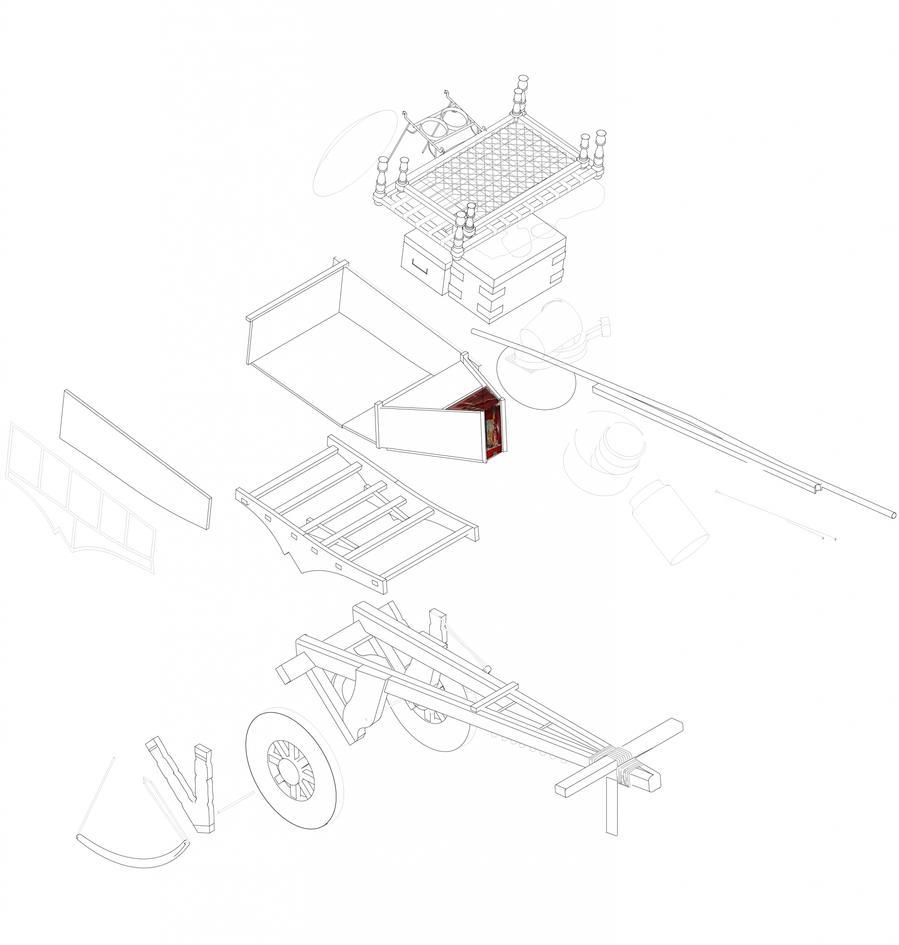
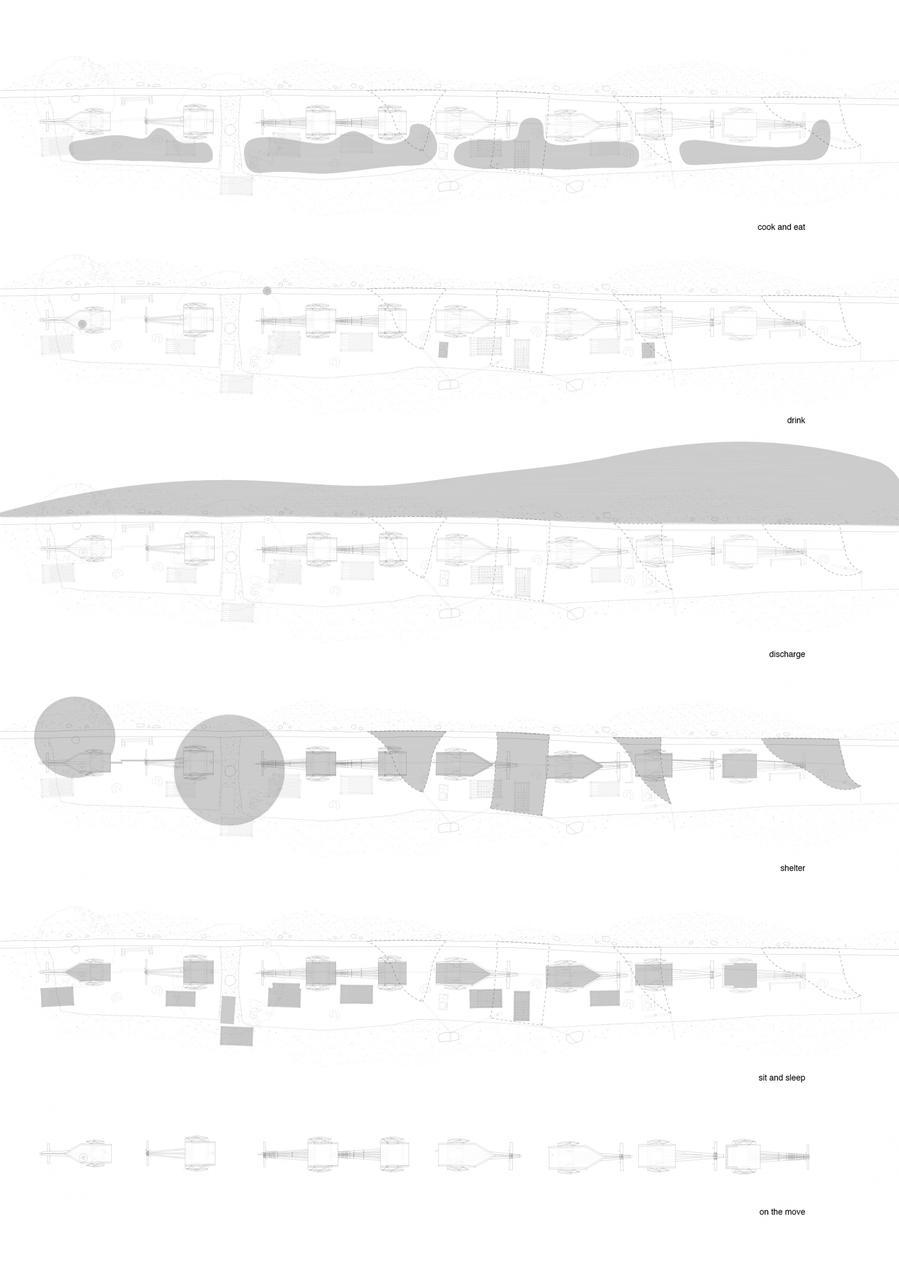
Despite their continuing inability to fit into the recognized structures of the contemporary country, the simple system they have evolved offers a potentially powerful model for the occupation of seasonal and cyclical spaces in dynamic, under-regulated, twenty-first century cities. The structure and organization of the gaduliya lohar camp is innovative in its ability to generate a complex social space on any site that fits the very basic parameters of roadside with adjacent wall, tree or fence. This capacity is built through the simple organizational structure—a string of carts lined up one by one—with a strong base element—the cart—and a tied joint that connects elements in predefined relationships carefully to certain elements and loosely to others. The organization of horizontal planes, vertical columns, inclined columns, horizontal beams and heavy wheels on a hand-molded plinth structures the ground temporarily, forms a space occupied by a group of families, and then disappears, leaving light traces behind. At once shelter, storage, sleep space and transport, the cart unfolds and refolds in a relaxed cycle, regenerating the social and physical organization of its space as it arrives in each new context.
[cart in place]
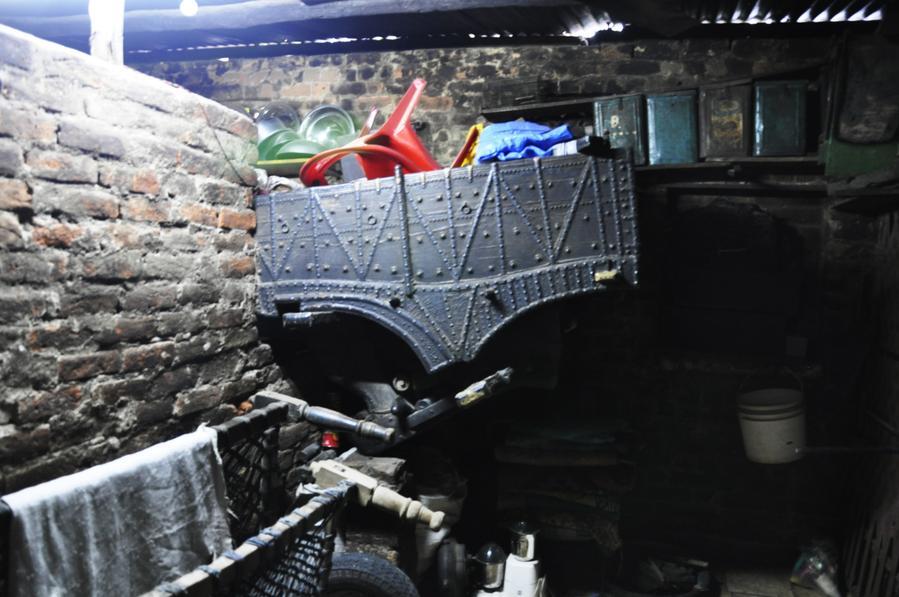
Because they move around, the gaduliya lohar are pushed uncomfortably into India’s contemporary systems of governance, which fails and ultimately they are marginalized. Without a home, without land, with a history of dependence on the goodwill of neighbors and of trade in kind, they are ill-equipped to function with the common denominator of money and ownership. The cart has become a relic, yet its presence defines the space as it did before, essentially a pinned down version of the roadside settlements. Still occupying the in-between land, this time between buildings rather than road and boundary wall, carts stand at the back of the site, anchoring the storage, while wide verandahs approach the path, and a chula (stove), helped by a blower, which is cemented into the finished floor. Walls and columns replace tent stakes and IPS (Indian Patent Stone, or poured cement floor) replaces packed earth plinths.
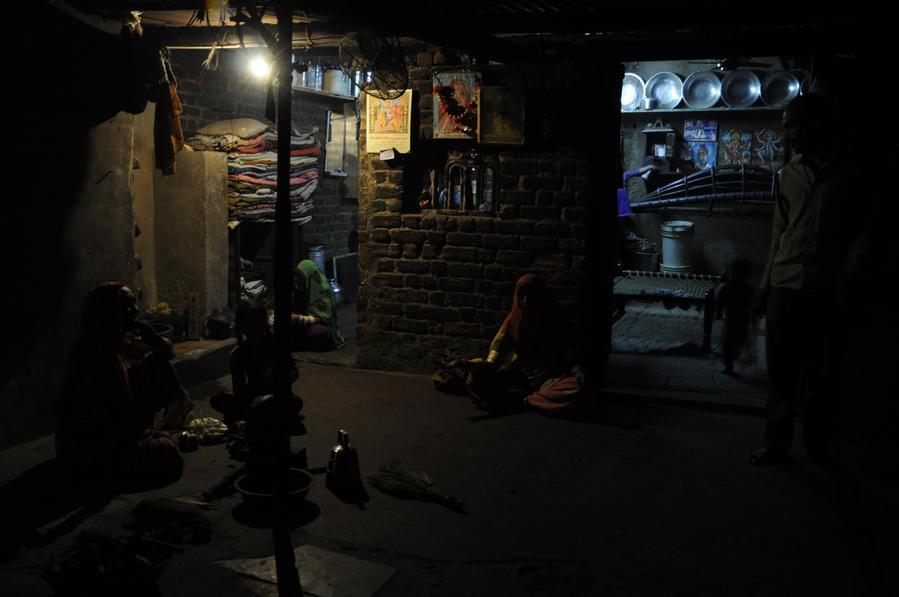
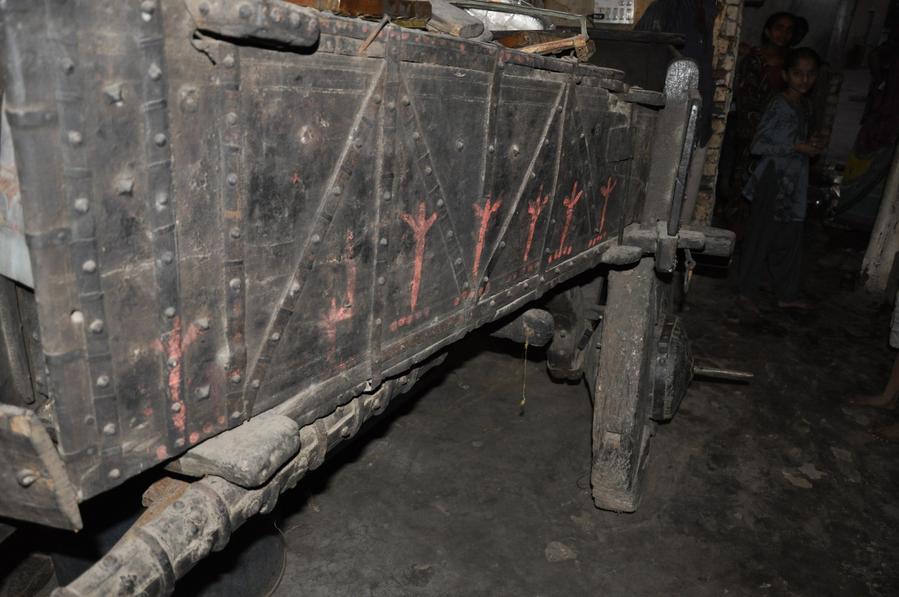
[cart as identity]
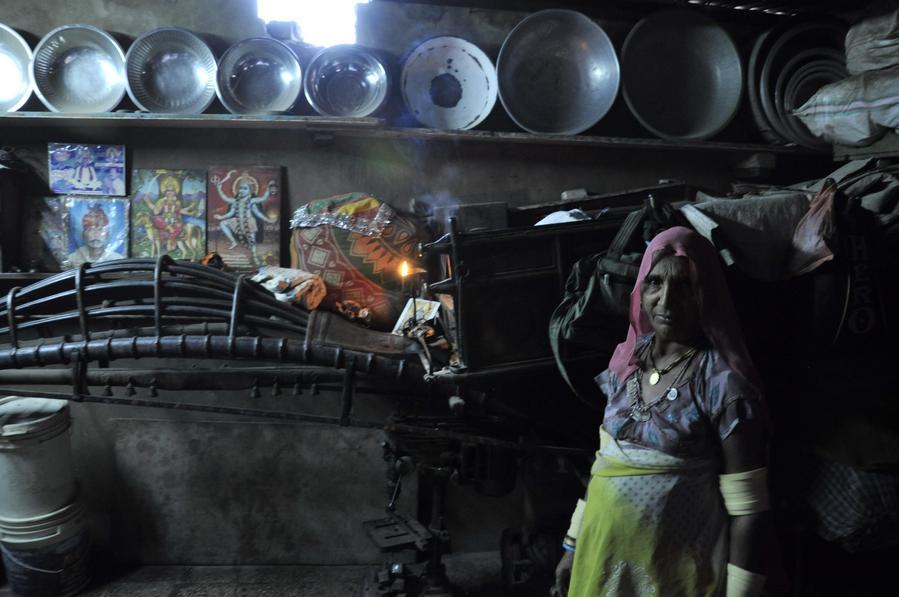
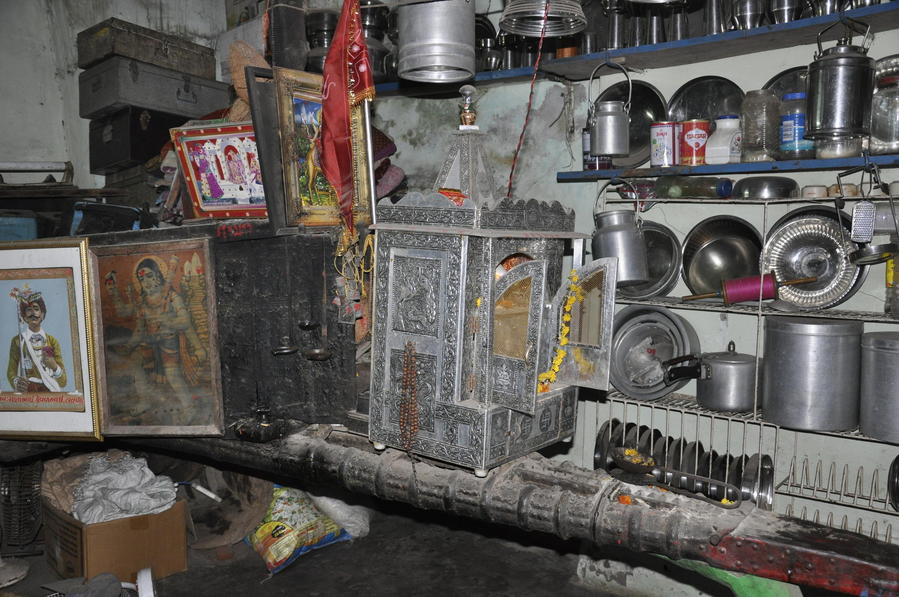
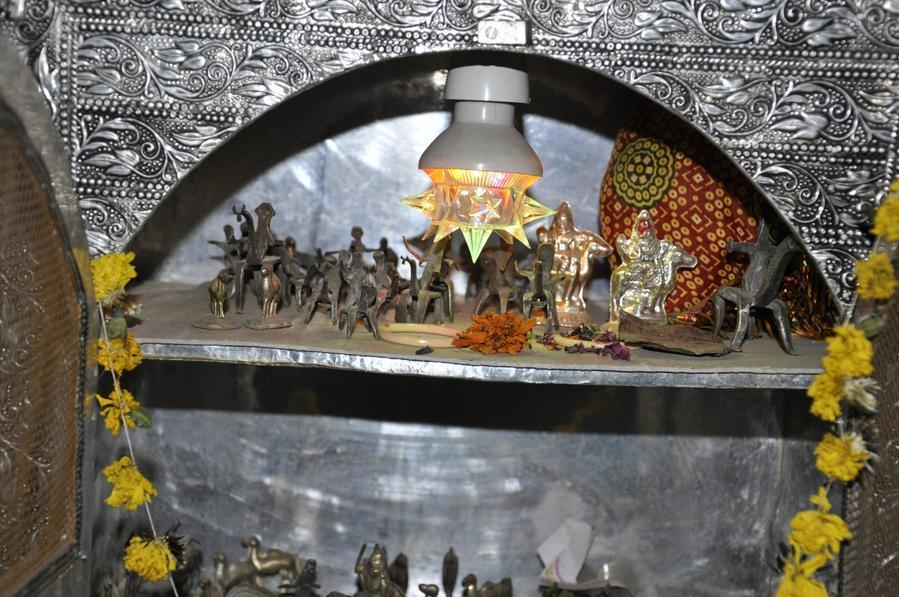
The draw of the city and the push of the urban slowly strips away everything but the memory—of who they are, where they are from, and what they once did. The response to this loss is manifested in the exaggerated position of puja on the cart. What once occupied a small, protected opening on the cart body, now extends onto the shaft, across the surface and even off the cart into whole room installations. As they move further from the continuous journey, and are drawn into the apparent permanence of urbanity, the symbolism of the element that once carried them grows stronger, a relic—gaadu—and a name—gaduliya—necessary to define their identity as they slip into the life of the city.
Deesa, Gujarat 2012 - 2014
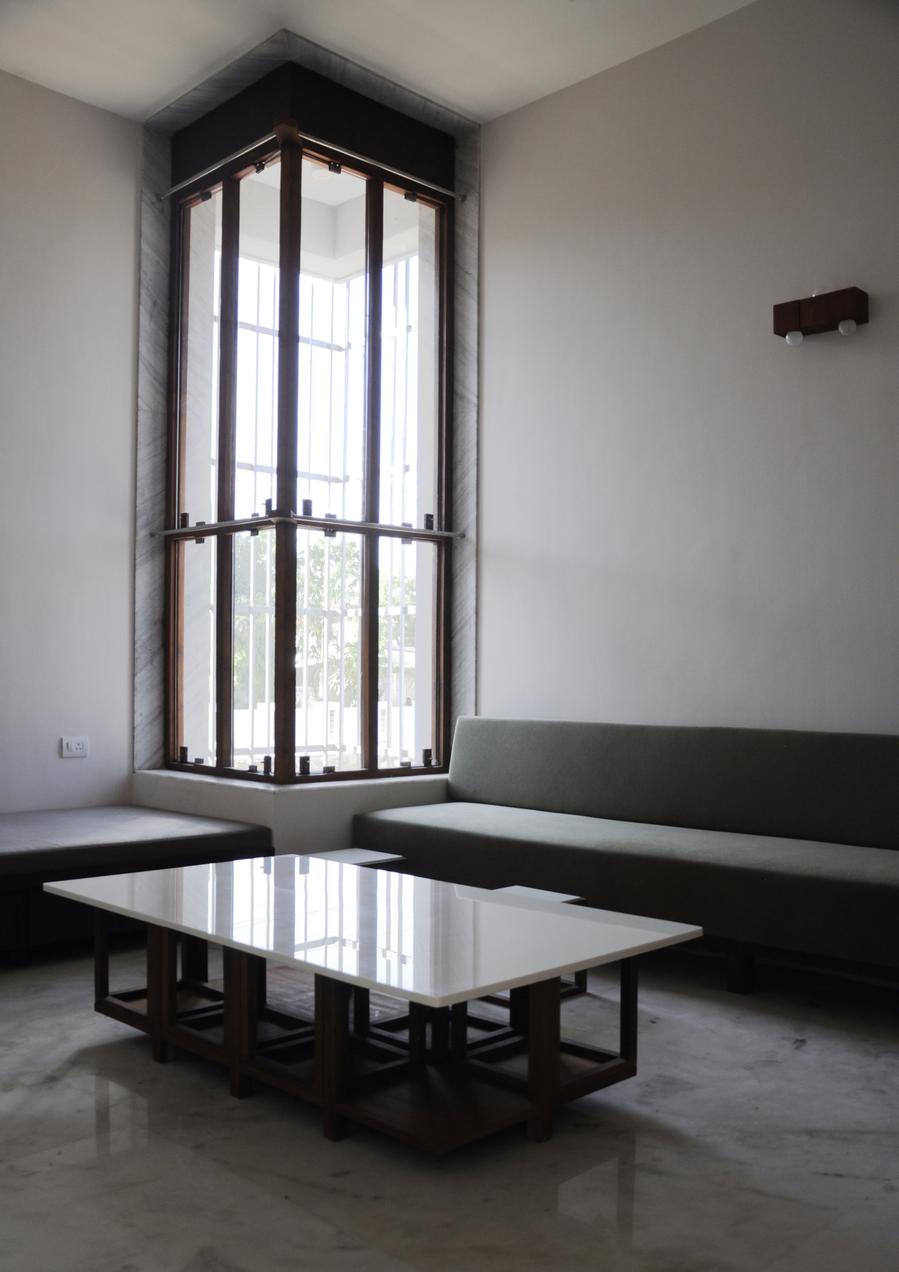
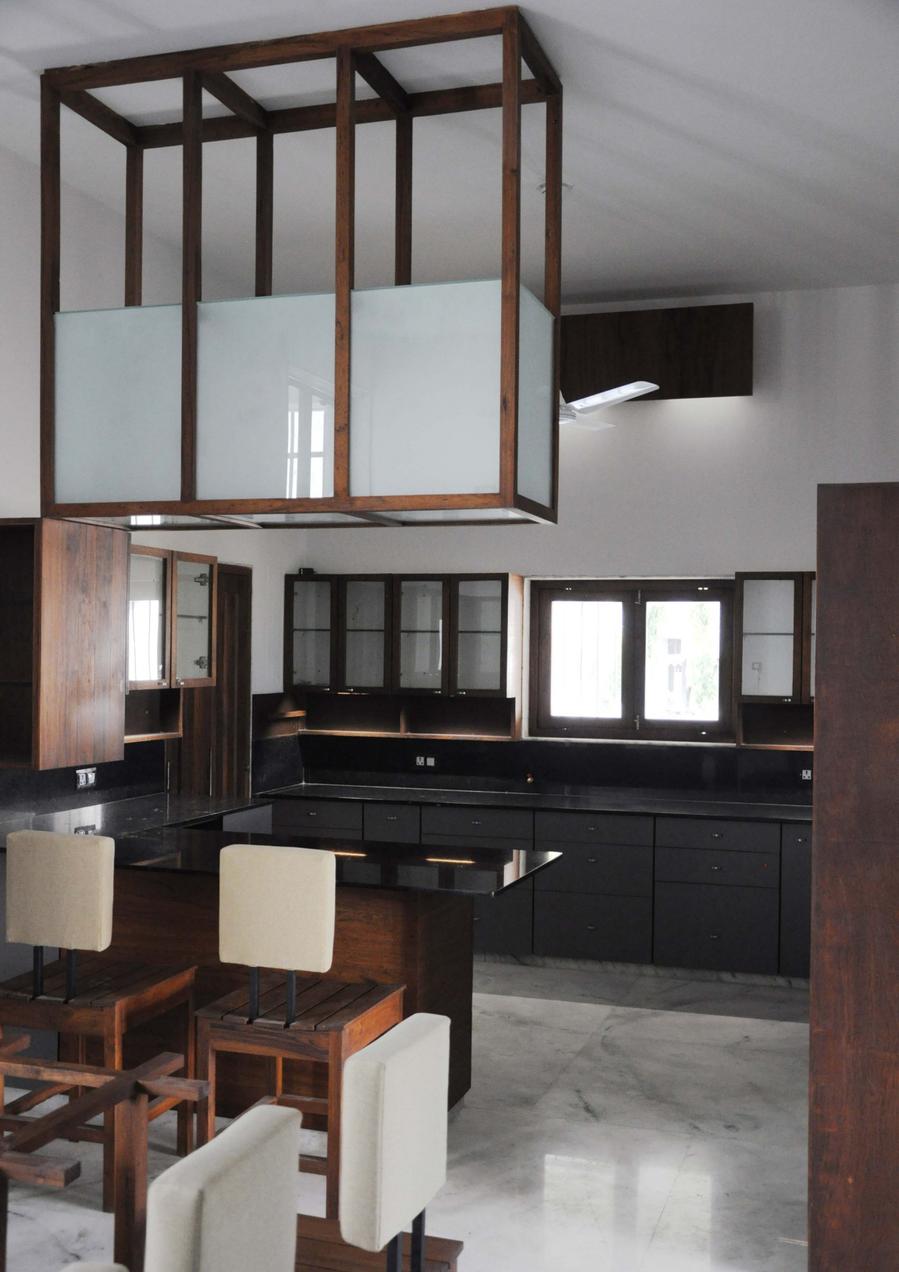
A multi-generational family of eight asked for a straightforward house that would naturally withstand the harsh climate conditions of northern Gujarat and weather well over time. In line with their clarity of mind, they submitted a list of their specific requirements, outlining the way that they needed to use their home, and their expectation of a durable, simply designed structure.
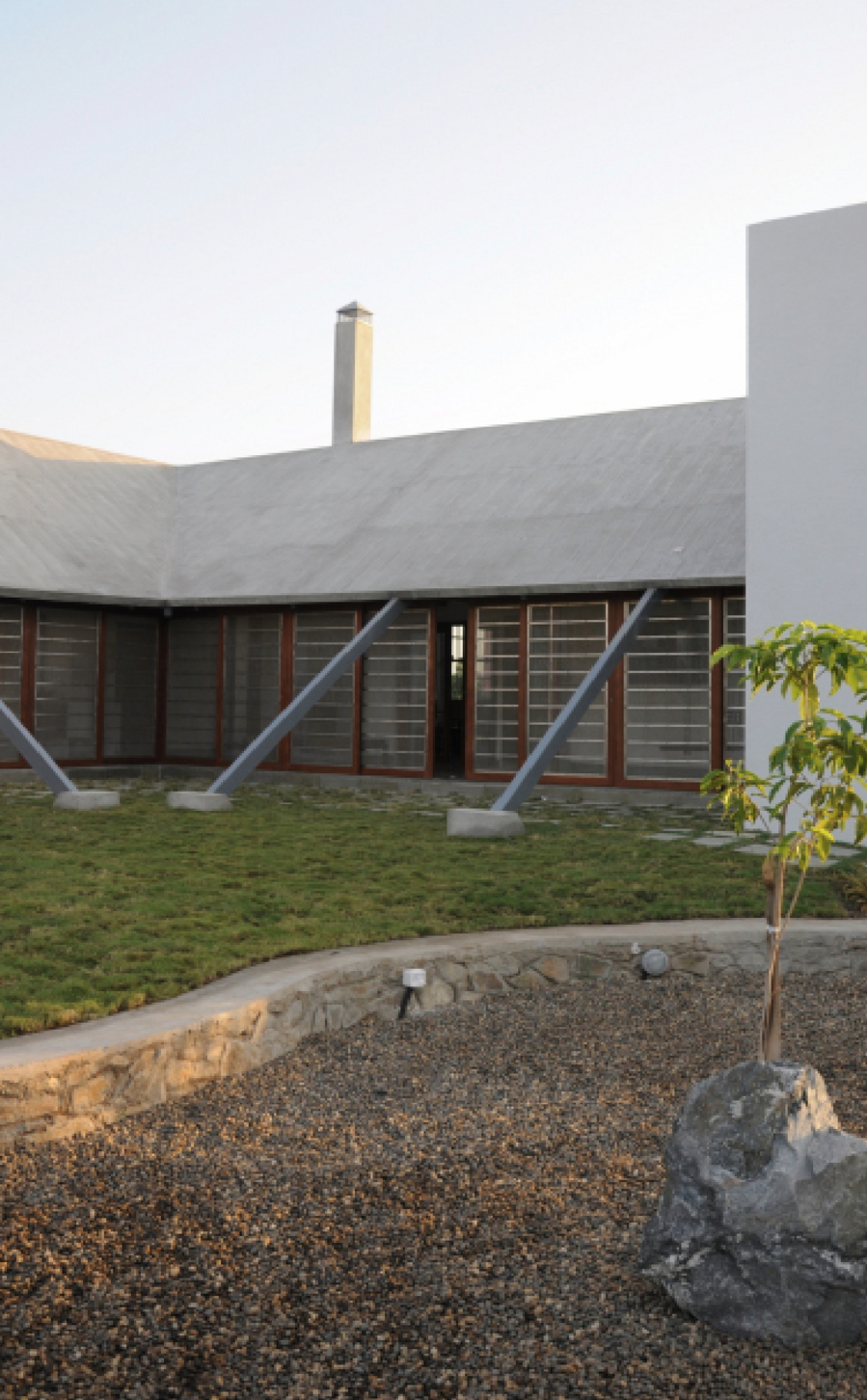
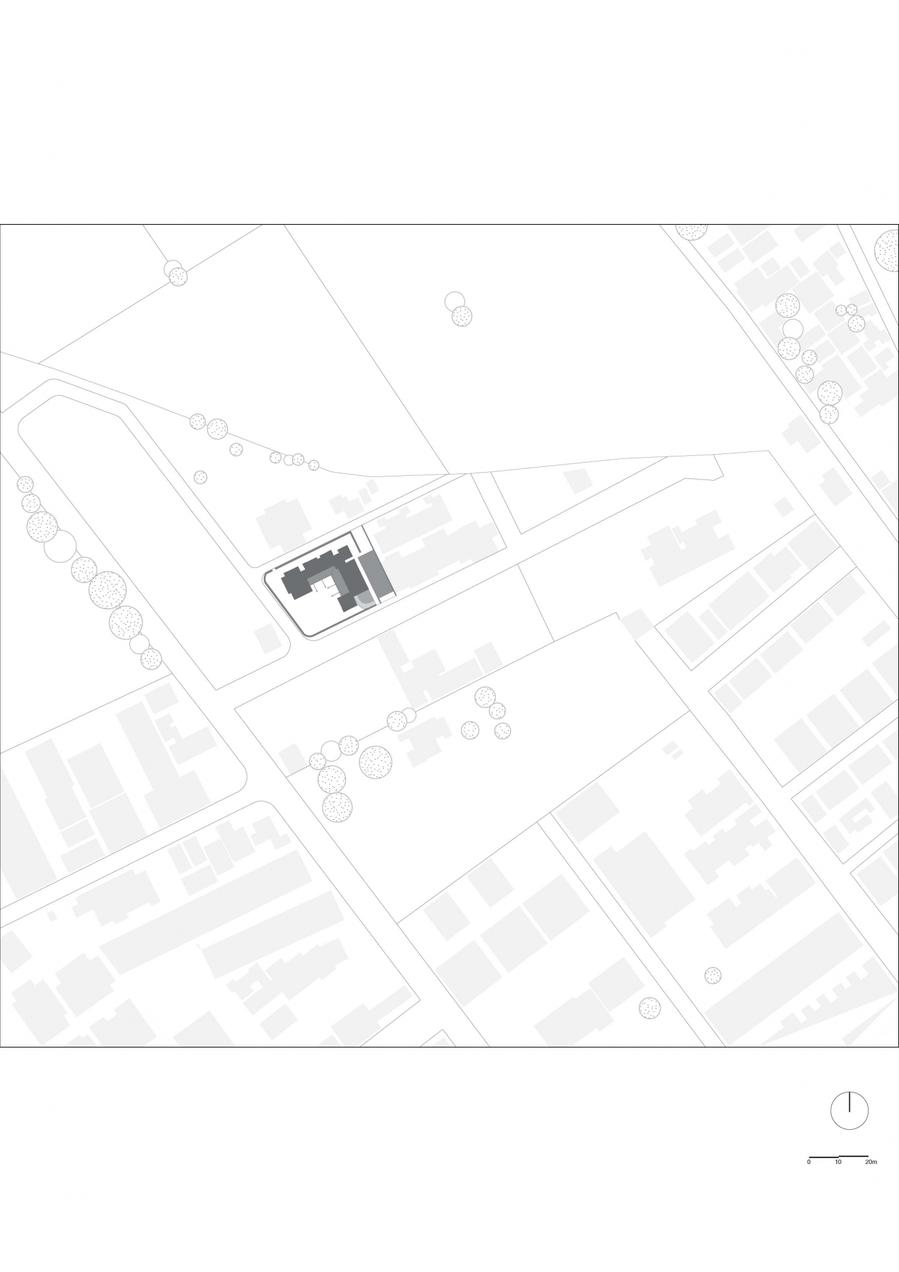
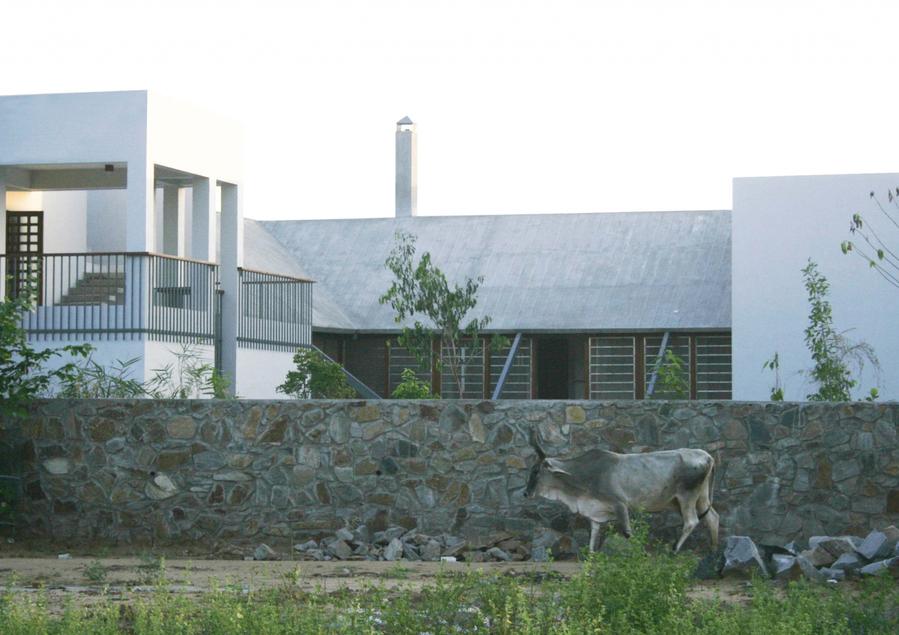
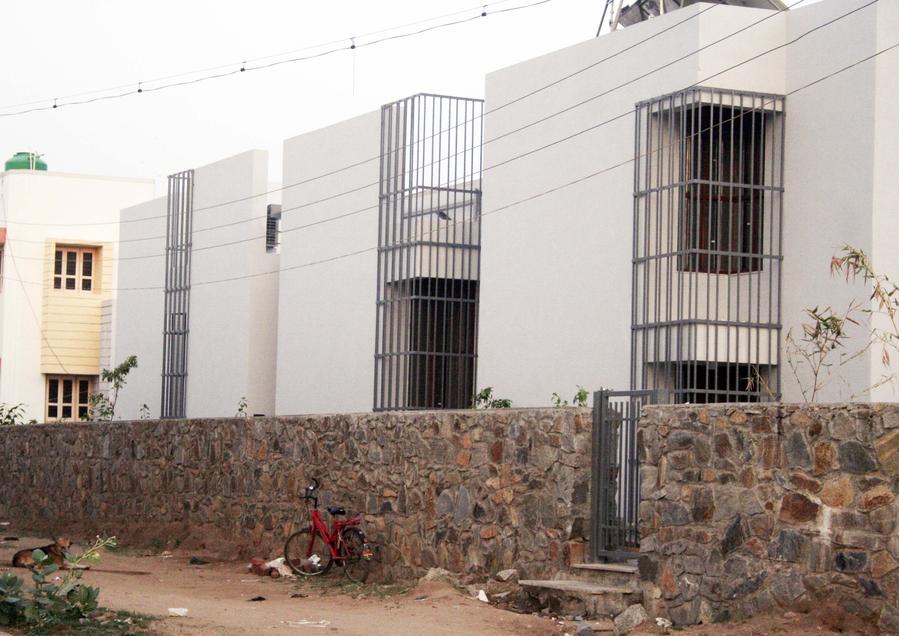
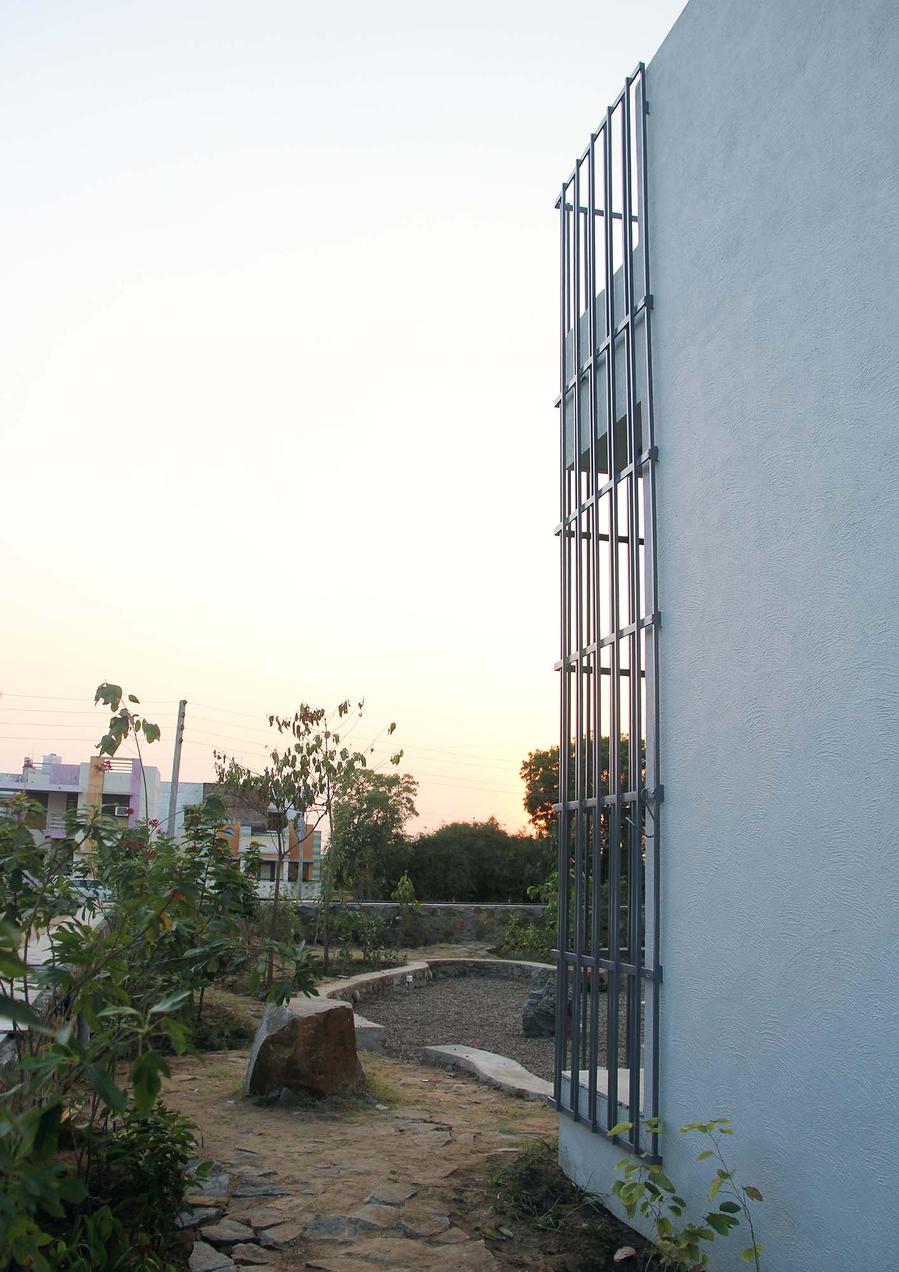
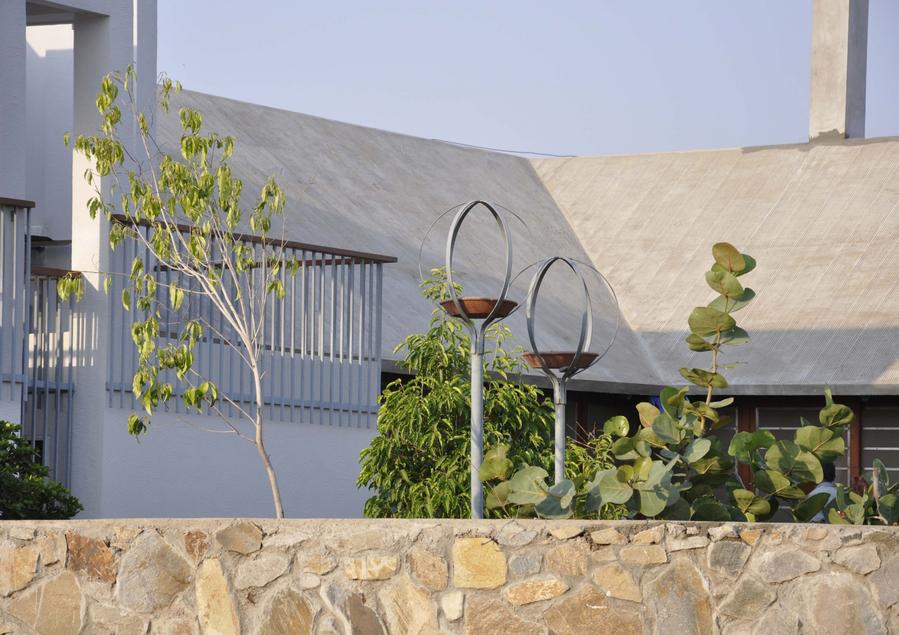
In response to the aspiring family, the project balances innovate design ideas and methods with the traditions important to their lives and locally available construction skill, material and knowledge. Integrated into the landscape, the house inhabits a corner site near a series of twin bungalows. A low profile with articulated volumes allows the house to merge with the scale of the surrounding homes, feeling at once both expansive for the family and in conversation with the neighbourhood.
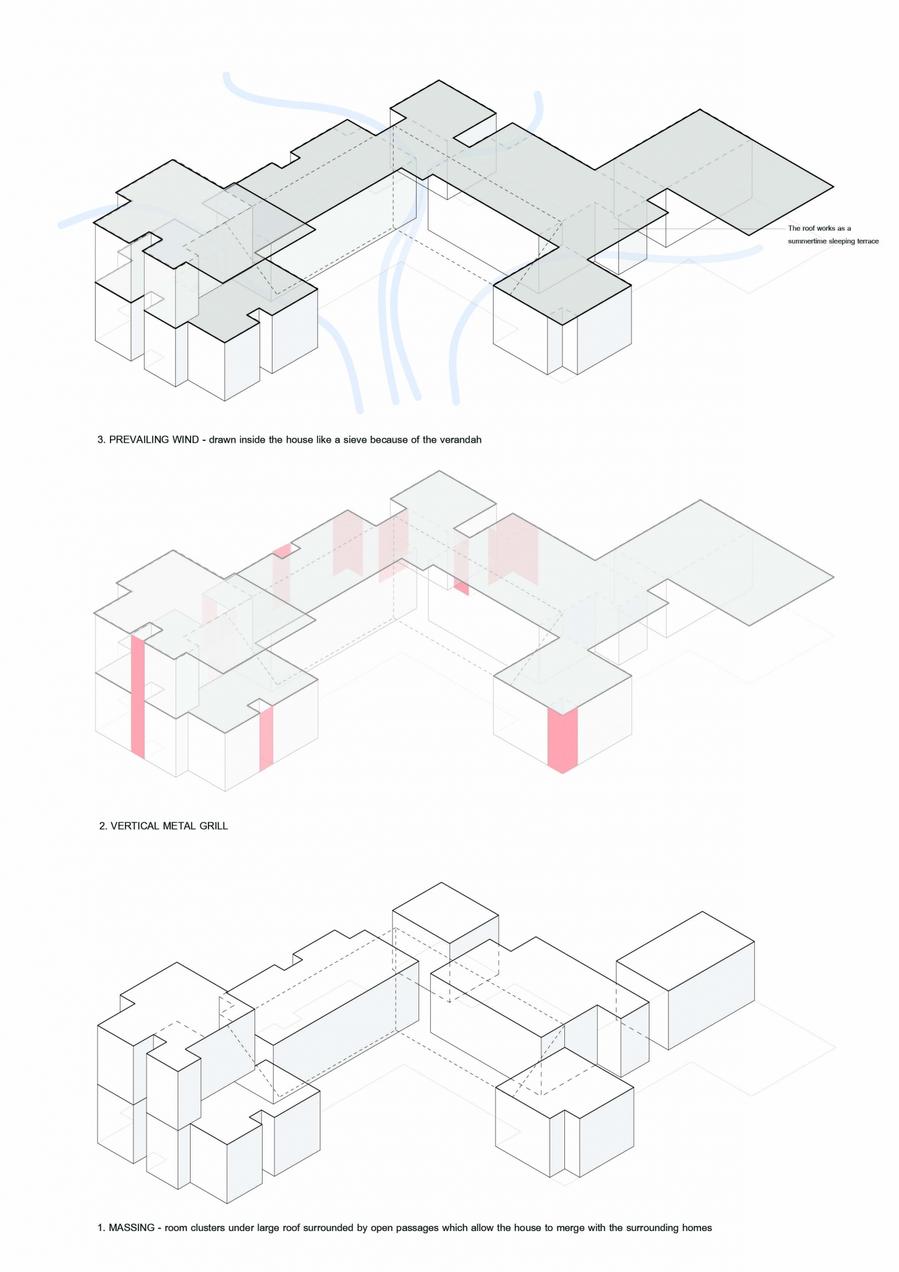
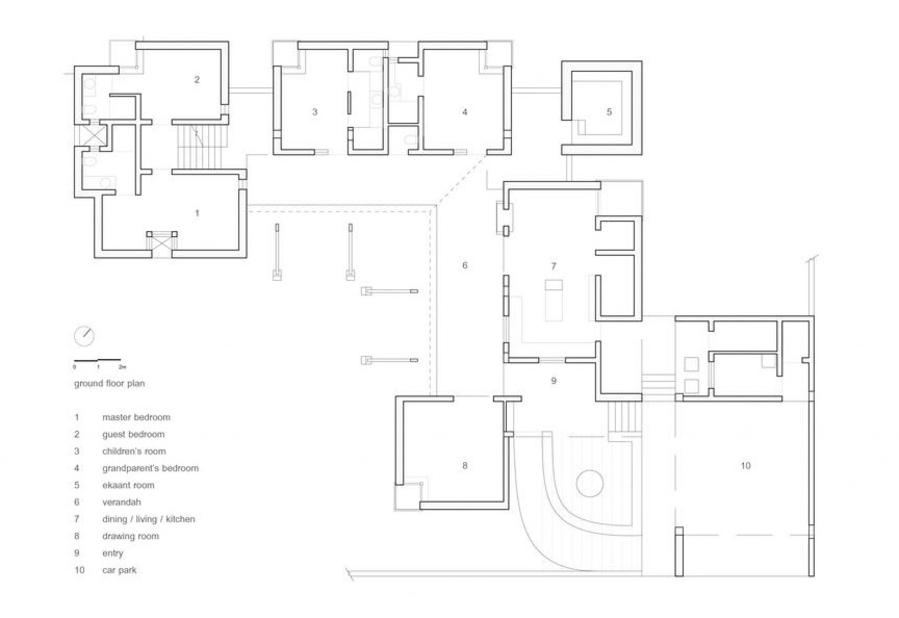
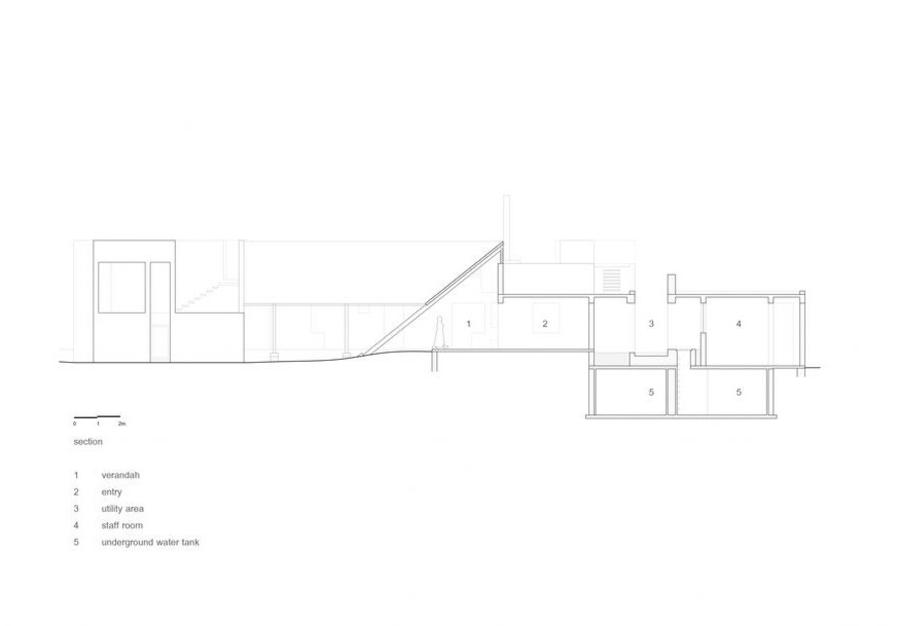
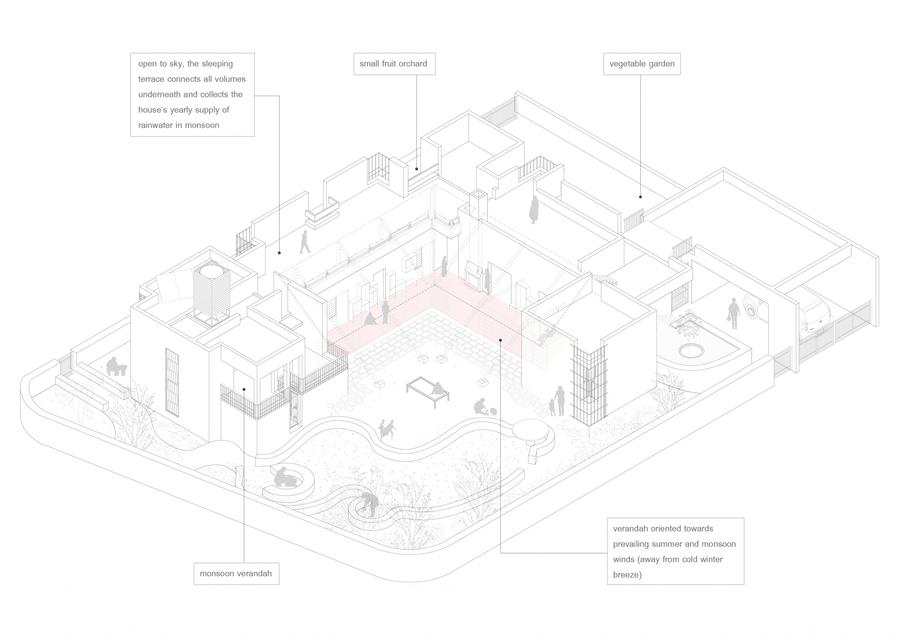
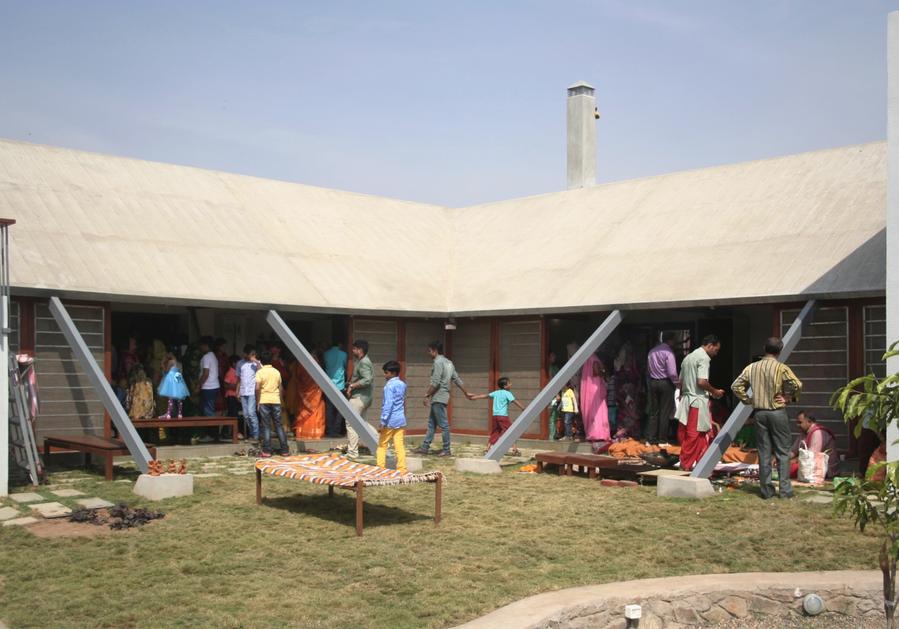
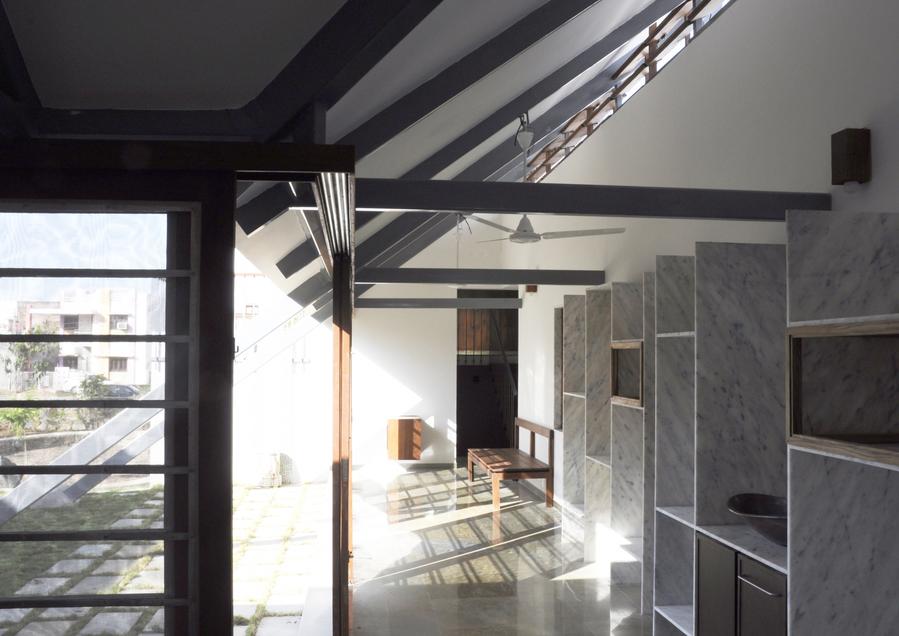
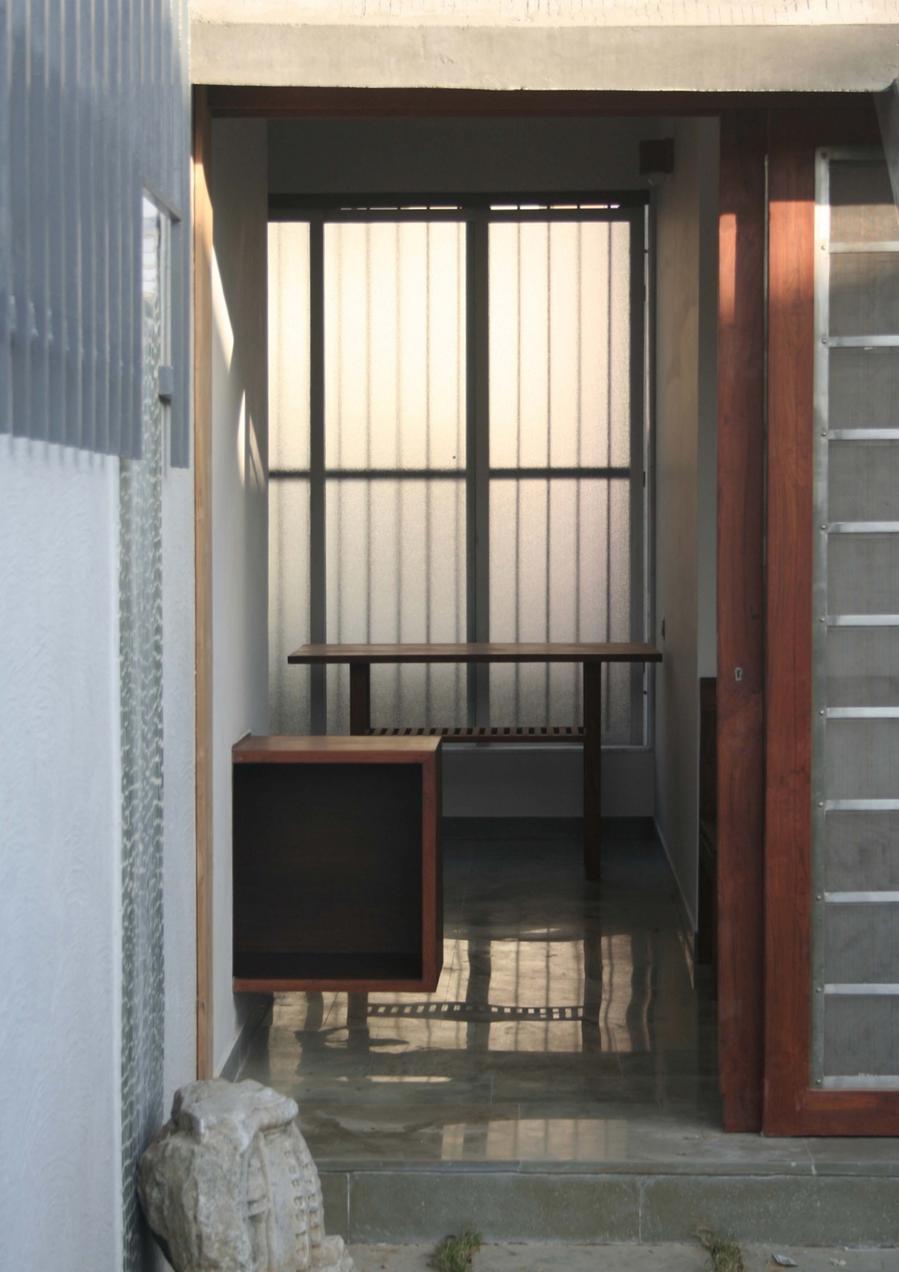
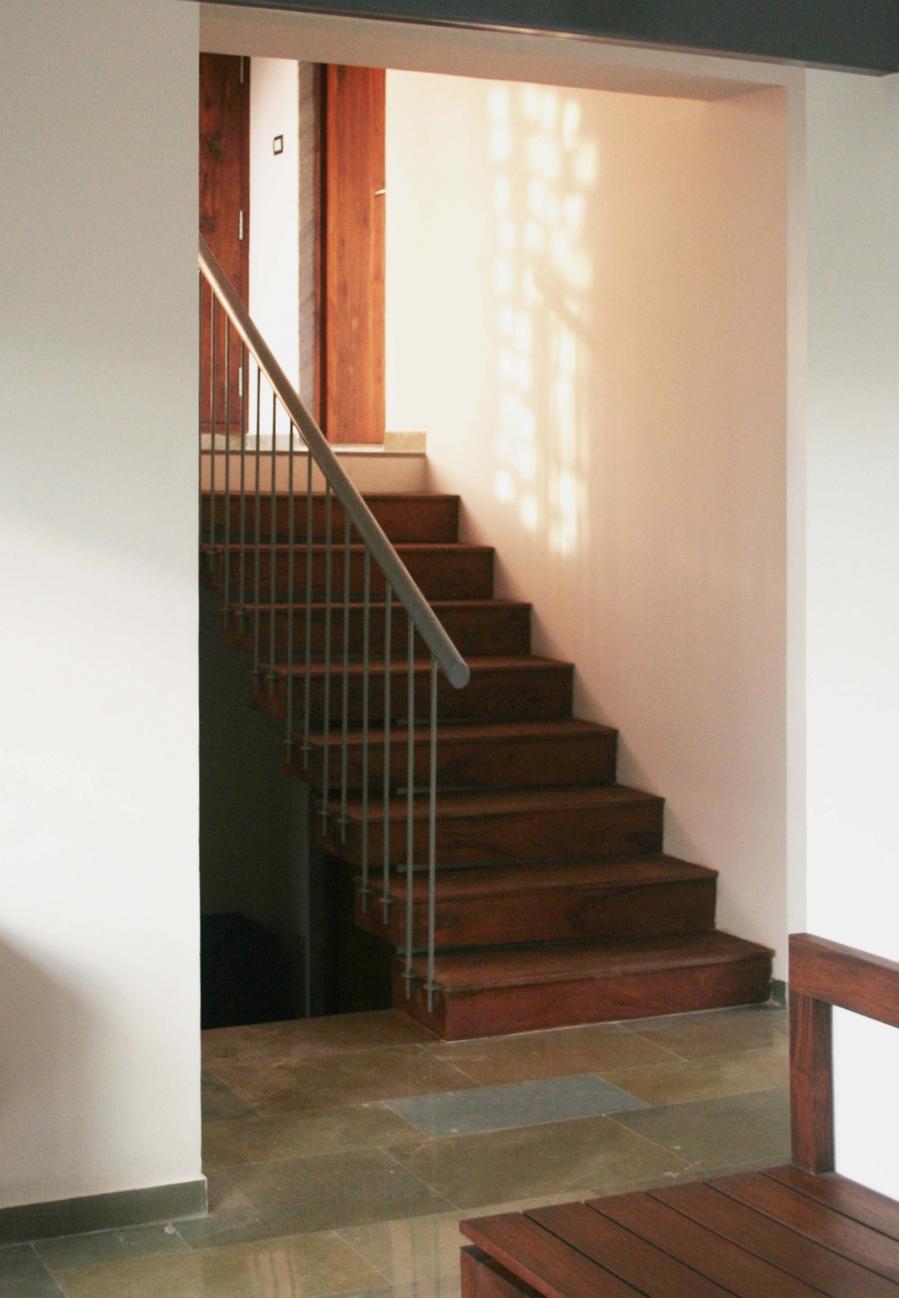
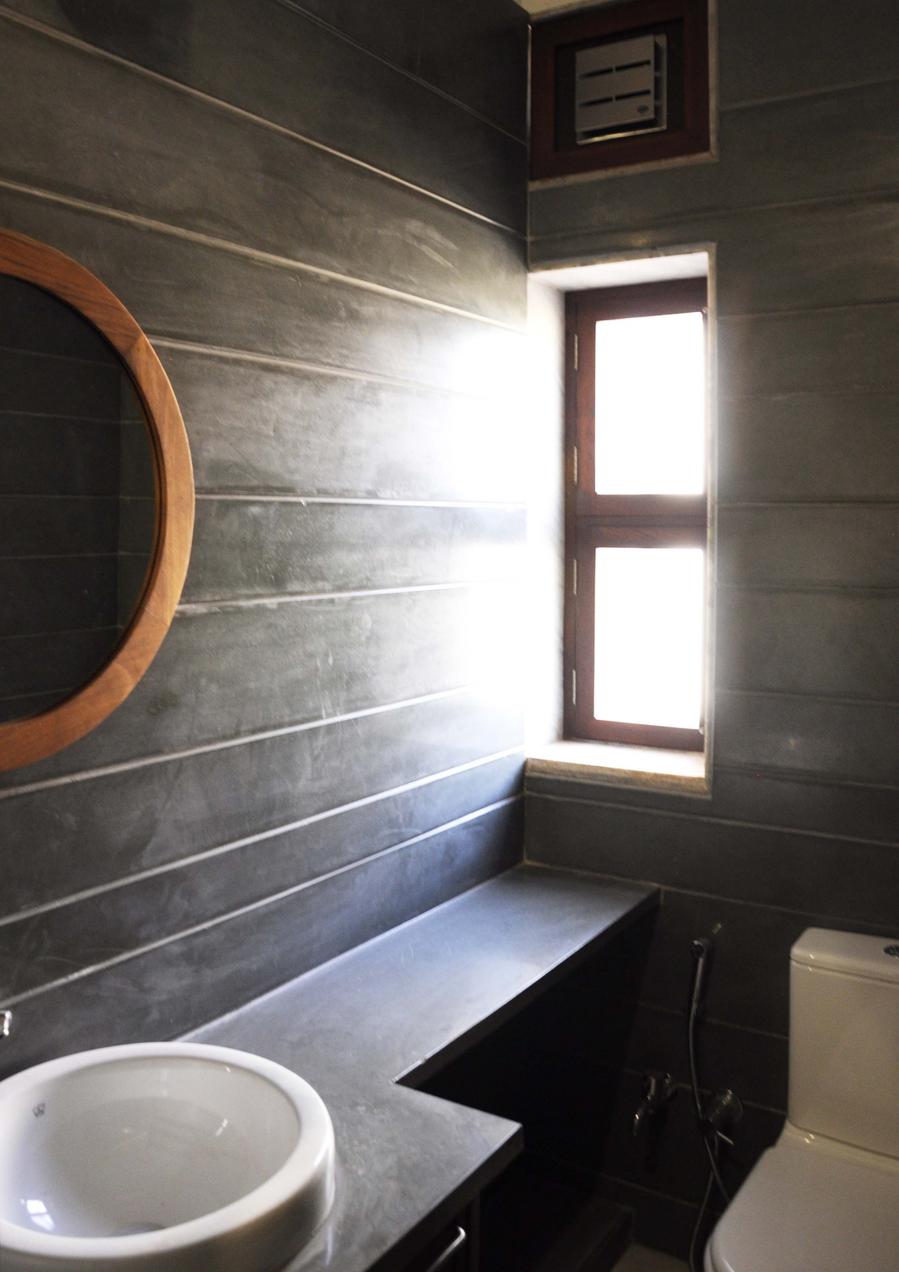
To support their condition of living between inside and out, the home consists of a group of shaded volumes clustered around an L-shaped verandah. Sheltered under the large roof, rooms are surrounded by open passages that draw wind through the house like a sieve. Thick brick walls temper the inside spaces against high diurnal temperature variation. The roof doubles as a summertime sleeping terrace, protected with high walls pocked by openings for targeted ventilation, and during monsoon it gathers rain for storage in a 40,000L underground water tank.
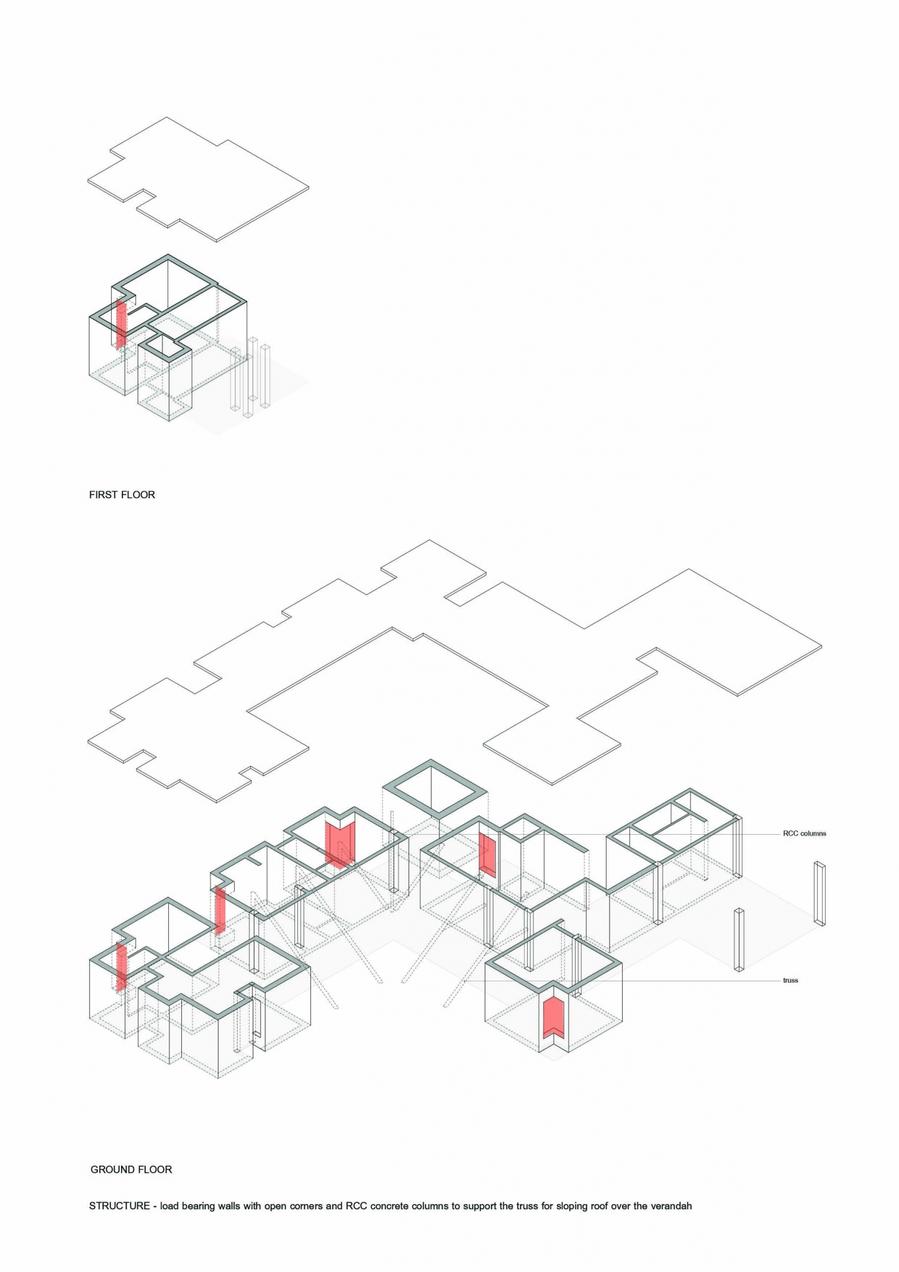
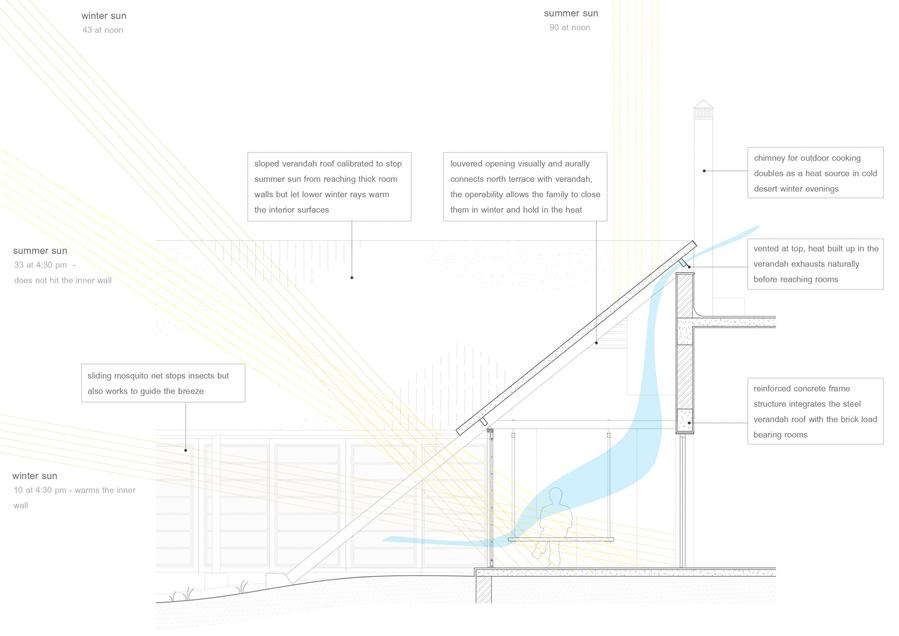
The plan is oriented toward the prevailing south-westerly winds, and while the deep verandah and covered passages protect the volumes from summer sun, the roof allows the low winter sun in to warm their outside walls. The thin sloping concrete slab of the verandah roof structure is supported by a concrete-anchored steel frame embedded into a composite frame and load-bearing structure for the house.
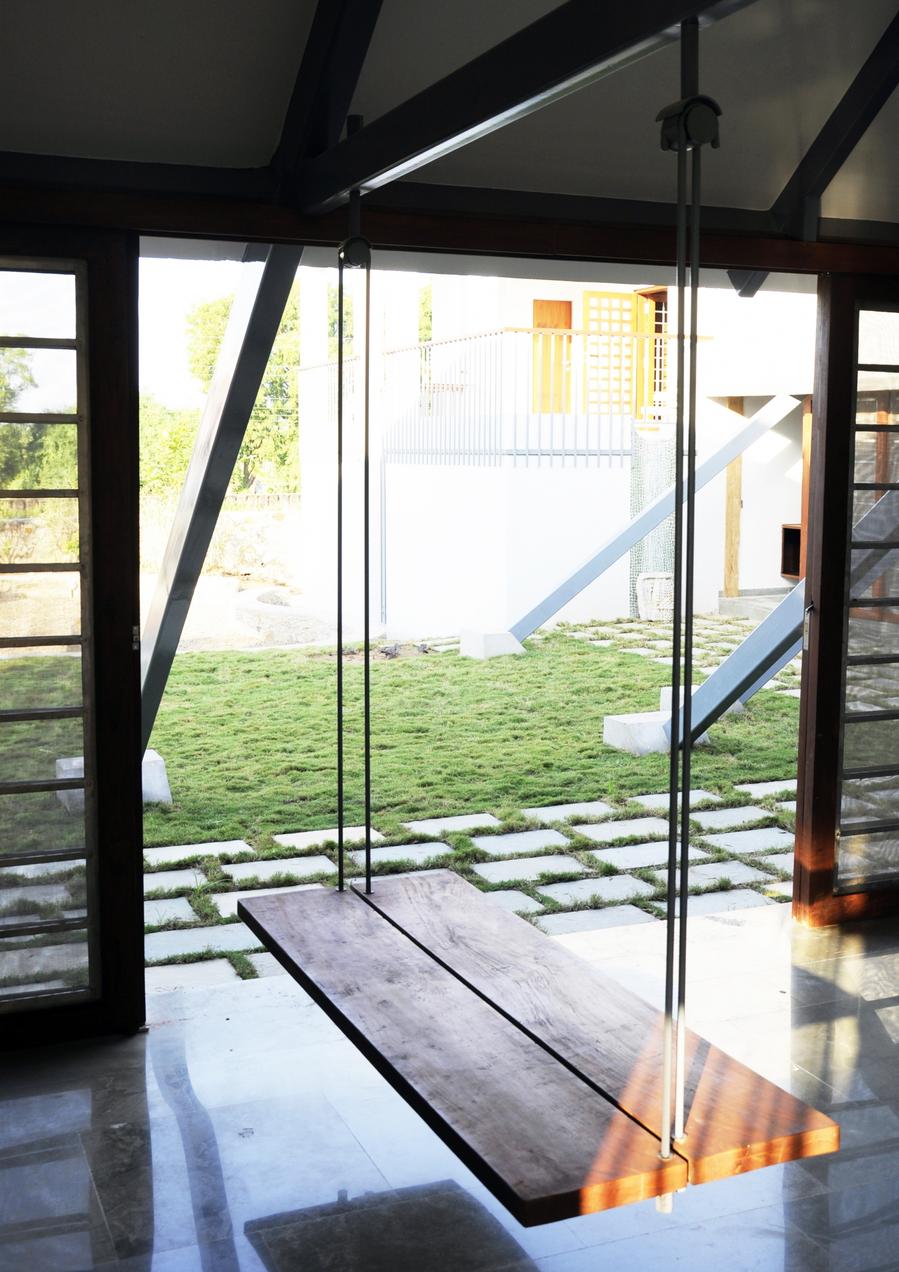
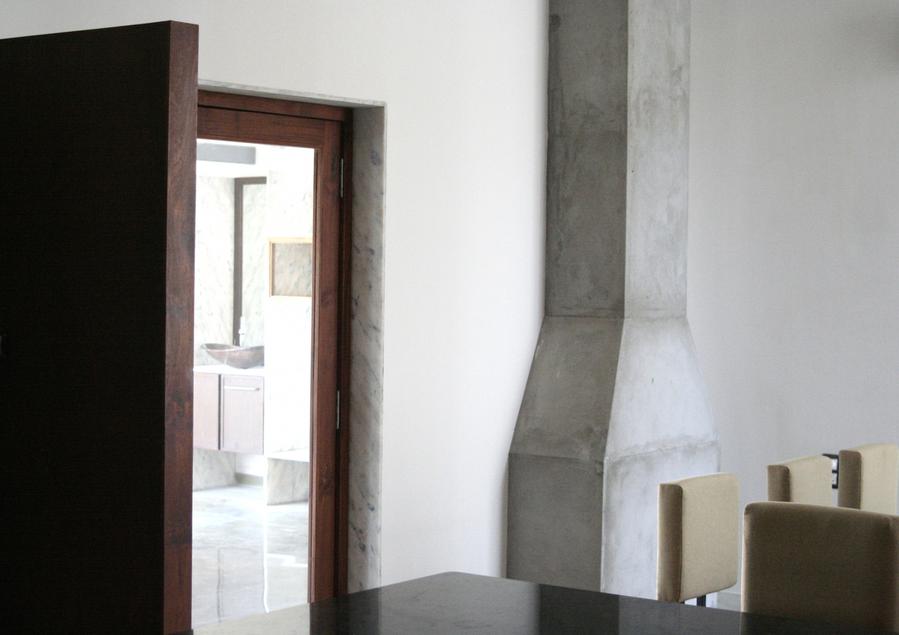
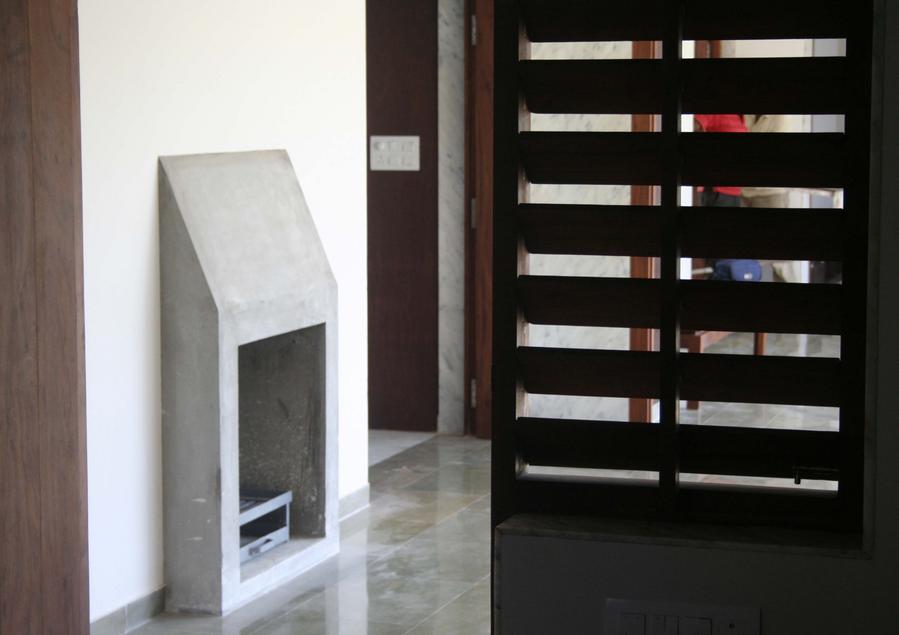
The verandah is the heart of the house. All rooms and all levels empty into it, and it mediates the experience between inside and out. Because much of the family activities occur in this intermediate space, what might have become a passage instead is a place. As a climate responsive element, it absorbs and exhausts the heat of the summer, welcomes warmth in winter, and encourages the movement of air in muggy monsoon. The high summer sun cannot reach direct room walls, and the sloping roof with ventilated openings at the top allows the hot air to rise and naturally exhaust, moving it faster because negative pressure behind the thrust of the wind moving up the verandah roof draws air out faster. In winter, these openings, which are fitted with operable louvers, can be closed to hold in the hot air. The fireplace in the verandah also adds to radiating heat in the space. In monsoon, and on summer evenings, gaps between the room clusters open to draw air through the space, cooling both the verandah and the outer surfaces of inside rooms.
Photography credits: Sachin Bandukwala
Design Team: Melissa Smith, Sachin Bandukwala, Sagar Shah
Structural Consultancy: Vatsal Shah
MEP Consultancy: -
Contractor: Haresh Prajapati
Carpentry: Mukesh Mevada
Fabrication : Dayaram
[beautiful] architecture of imperfect translations
essay written Sachin Bandukwala & Melissa Smith
published in Identity Matters: Architecture between Individualism and Homologation, Riccardo Salvi, Milan, Italy: Franco Angeli Editore, 2014. Released in the Venice Biennale Library, as part of the collection of the 2014 Venice Biennale.
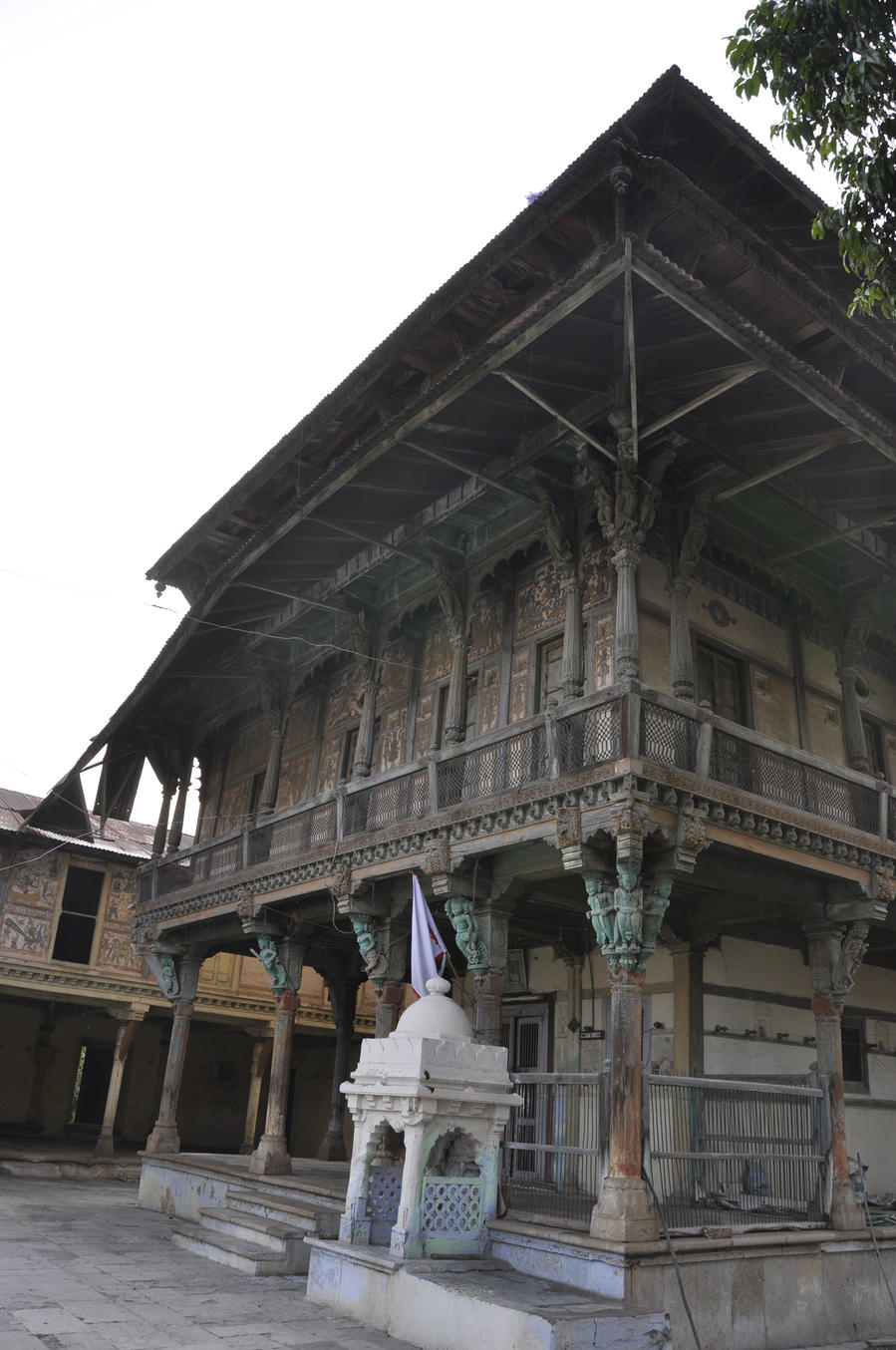
excerpts-
In the Indian subcontinent, architecture has always been rooted in the simplicity of details. Many heavy structures relied on mortarless joints, and lightweight frames on exposed brackets. In these simple connections, the range of elaborations through carving and joinery brought voice to the variation in local craft, according to material. Idiosyncrasies grown upon a basic form, rooted in the artisan, expressed on surface as volume. As time continues, these variations remain with the architecture, though they may no longer be permanently integrated. What was once carved in wood and stone now floats in cement, plastic, paper, steel and light.
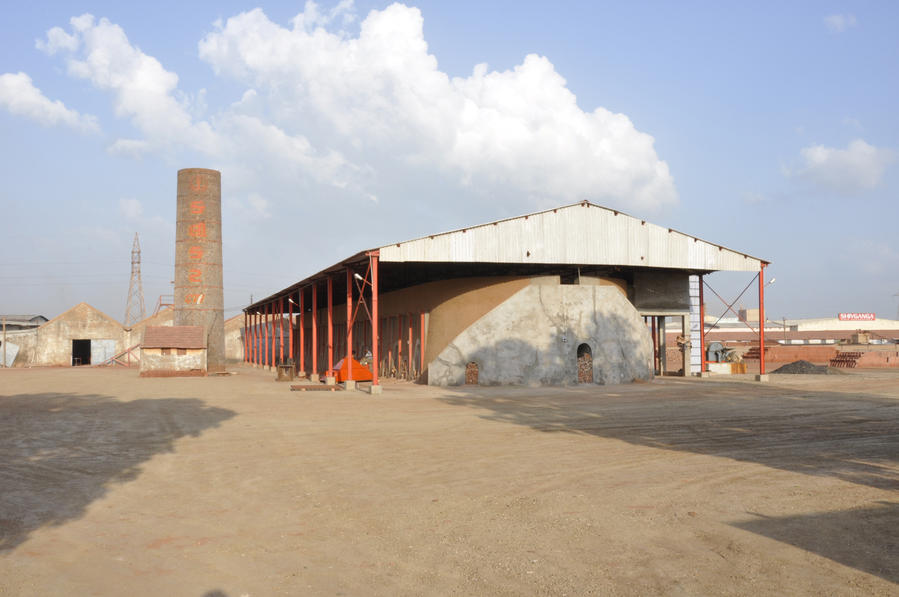
globalization
In the context of the levelling force of globalization, architecture across the globe becomes increasingly polarized between two extremes: an extreme global chic, buildings directly exported and importaed, reproduced almost identity regardless of place, and another of the purely local architecture of rural, remote or resistant areas, one whose limitation of material and cultural isolation allows it to continue apart from the world outside. But the majority of Indian architecture operates in another system—one in which global expectation and experience influence the type of space created, but do not entirely take over. Those who create this space struggle with the balance of things that are fundamentally universal—the sense of gravity—and combine it with changing expectation and exposure, to produce it in a local climate for people of local temperament, and built with local craft. The result is sometimes grotesque and sometimes transcendent—an imperfect translation of universal aspirations for local application.
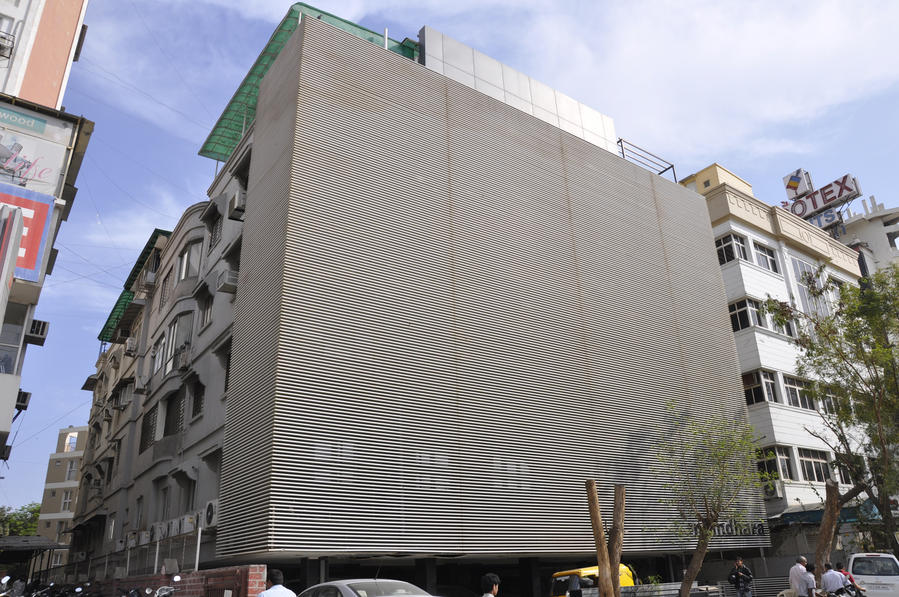
schizophrenic translations
In the translation of globalized ideas to local form, some meanings are lost or changed, and some realities are simplified, traded or complicated by local influence, which cannot be entirely wiped out. As the climate is local, so are many materials—at least in their availability—as well as craft and rituals. Some of these translations don’t make sense, or the thread that connects them is so thin it might be hard to recognize the connection. Others are obvious, but ugly. Still more are earnest attempts to reproduce a Western style, which fall short on workmanship. These weird results come out of the local application of sleek expectations—they are the problems of the reality of construction.
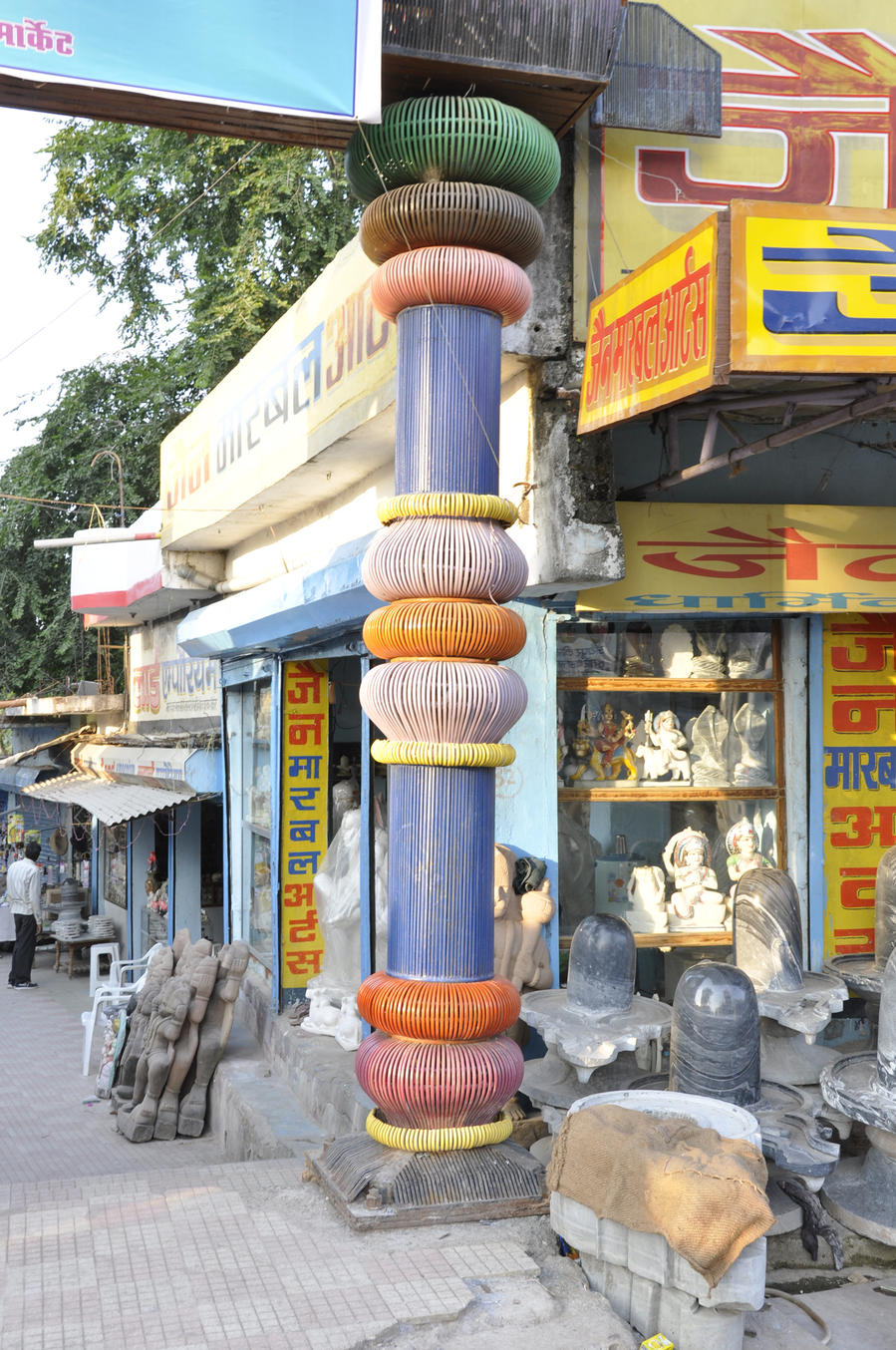
unexpected applications
The influence of globalization is not necessarily ugly, odd or misguided. Beautiful congruences also emerge, in which the influence of a mainstream aesthetic or system, foreign to the regional type, dovetails seamlessly with changing expectations, though not necessarily working as intended. Massive industrial elements are shipped for construction, welded with precision but wrapped in dented corrugated galvanized iron sheets and chains, and because the speed of transit is so slow, the leisurely movement accommodates a more personal detail than the type wide load flag. Plastic casings for fibre optic installation double as flexible tent poles for installers’ temporary tube houses. Steel structures for regional power lines serve as support for vegetable vendor shades, and widely available plastic sheets lead to innovative drains on ancient wooden pushcarts.
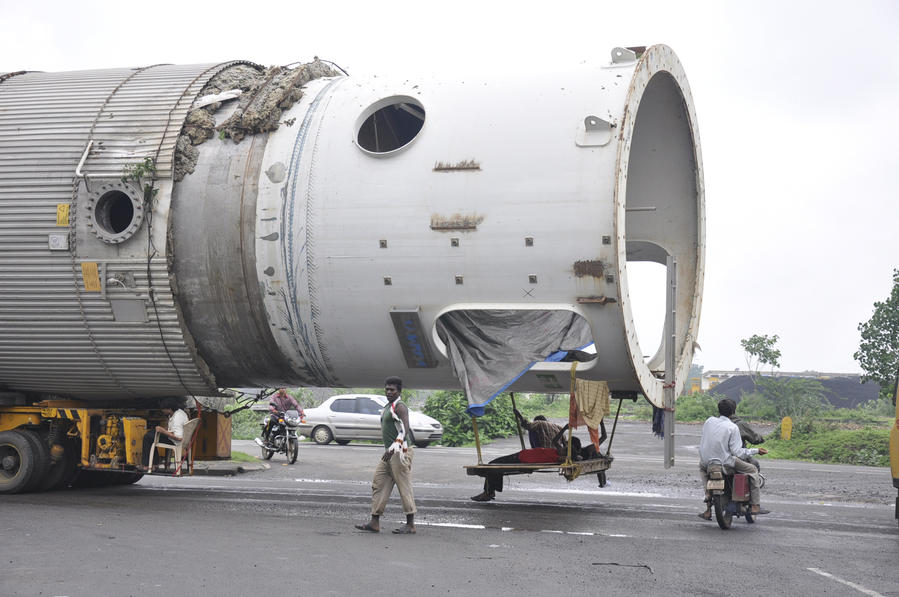
imperfect links
Along with adapted influences from outside, local users adopt the newer, barren structures as canvas for their own expression. The nature of the modern building, which has arrived under the advent of globalization, at a basic level is extremely relatable. And perhaps this is why it has been consumed so intensely by people of all strata of the population. The bare form becomes culturally significant: local grows over it like lichen. The concrete frame that houses glass and aluminium clad façades can also be plastered and filled with brick, carry an additional shade of galvanized aluminium corrugated sheets, and most importantly, can very easily be altered. It is a simple, blank frame, which gets filled in by its users, whomever they may be. Thus the bare form gains cultural latitude—local identity—either through the translations in the construction process, or afterwards when people move in.
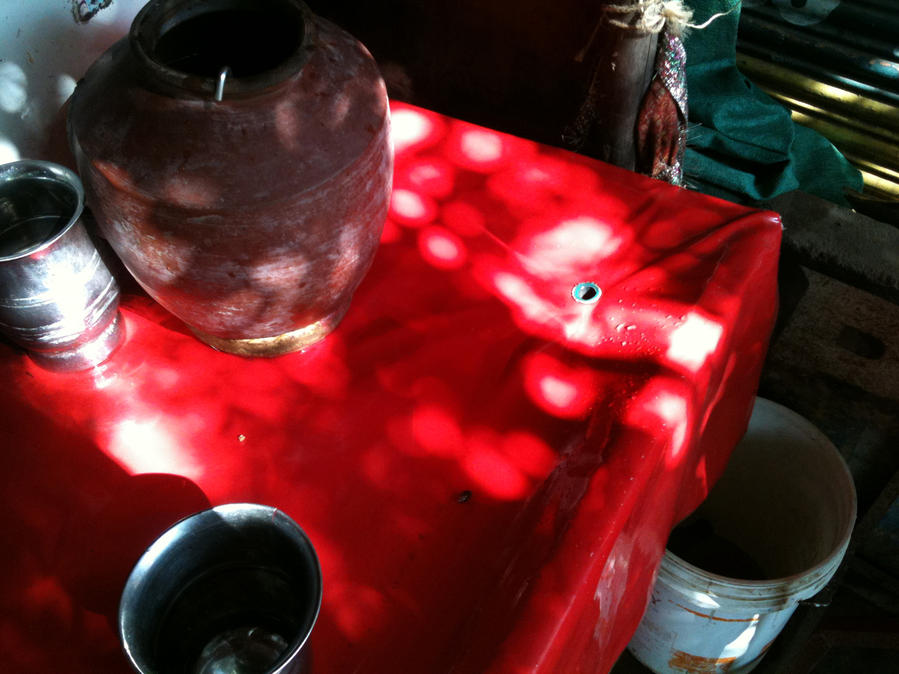
beautiful remnants
As hopeful actors in the building process, we want to see and encourage the beautiful remnants of an aspiration imperfectly matched with local conditions. It is in this incompleteness where a notion of Indian architecture might exist. In this void, nothing goes to waste. It is loosely perfect—ready to adapt, almost like an ever-evolving jungle of trees and animals, where every column acts like a tree trunk under foliage and in every wall comes the opportunity to form a roof. Ideas have travelled, but their implementation is not yet mobile enough to influence the local responses to universal problems of defying gravity and making shelter for climate. The flatness of a globalized world has arrived in abstract, but the concrete reality has yet to level itself, whether by design or lack of it. It is here, rocking in the tension of heady ideals and dirty sites, where architecture, particularly in India, is at its best, evolving ad hoc and ingenious solutions alongside elegant designed responses to the hot white sun, dusty streets, and global outlooks.
Ahmedabad, Gujarat | 2014
Tower House is an experiment in vertical living. A typical bungalow of 400 square meters is squeezed into a footprint of 6.5 x 12.5m, forcing the program up five stories rather than spread along the ground. Despite the stacked floors, the design generates the experience of a house, with a diversity of spatial types throughout its section. At the same time, it takes advantage of the benefits of moving vertically with efficiently organized services, views across the city, and greater potentials for both stack and cross ventilation.
A concrete frame provides the skeleton, while central vertical circulation allows openings on all sides, and an outward looking entry to every room. Walls wrap the interior spaces, while balconies move around on each floor to open new vistas. Rooms are treated as pockets within the larger framework, minimizing the need for air conditioning and maintaining the connection to the outdoors. While balconies bring a corner of outdoor space into the room, punched windows around the wall create an intimate experience, whose deeply protected view is found only from a seated position.
The design balances two driving forces: conveying a house not a tower, and using verticality for an efficient, climate responsive building. The central stair, critical for both, is the core of the design. It organises services and treats vertical movement as part of the house. Each room opens from it and moves back toward it. On first and fourth floors, glass panels reveal the stair and further envelop it inside the rooms. As a passive cooling element, the semi-open stair draws air through the house, while ventilation in each room can be controlled by opening windows. A ceramic rain screen filters light and shields the stair from water, protecting the privacy of the space.


Photography credits: Sachin Bandukwala, Ayush Lohia, Tejas Varade, Utsav Patel
Design Team: Melissa Smith, Sachin Bandukwala, Mithun Thiyagarajan, Raul Saez Ujaque
Structural Consultancy: NK Shah Consulting Engineers
MEP Consultancy: Jhaveri Associates, Transenergy
Contractor: Gopalbhai
Carpentry: Kantibhai and brothers, Ganpathbhai