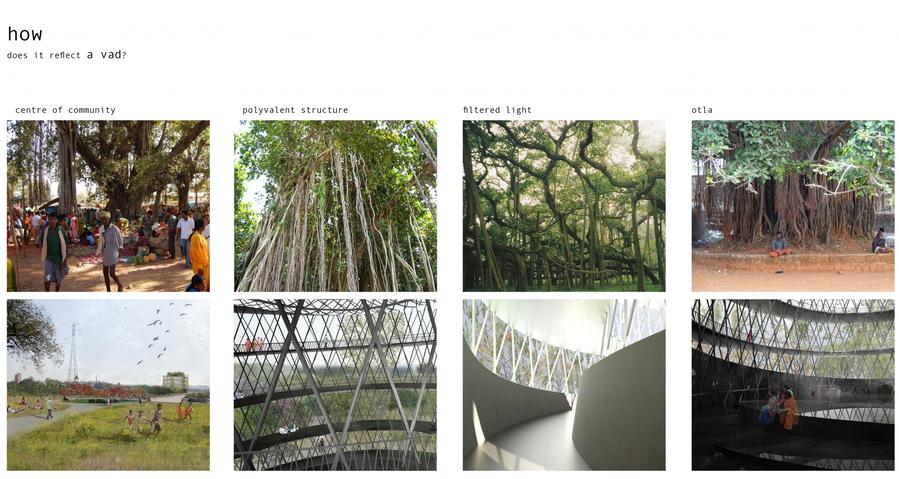
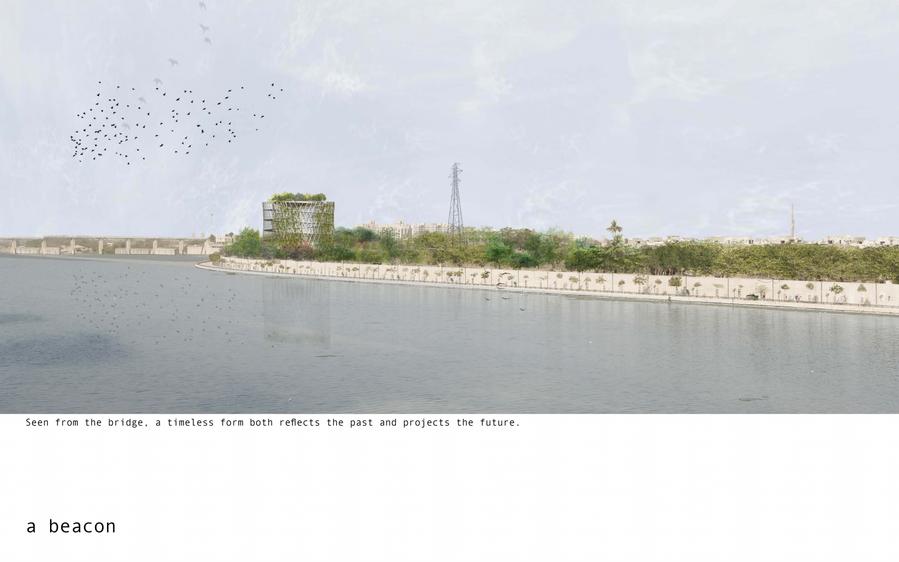
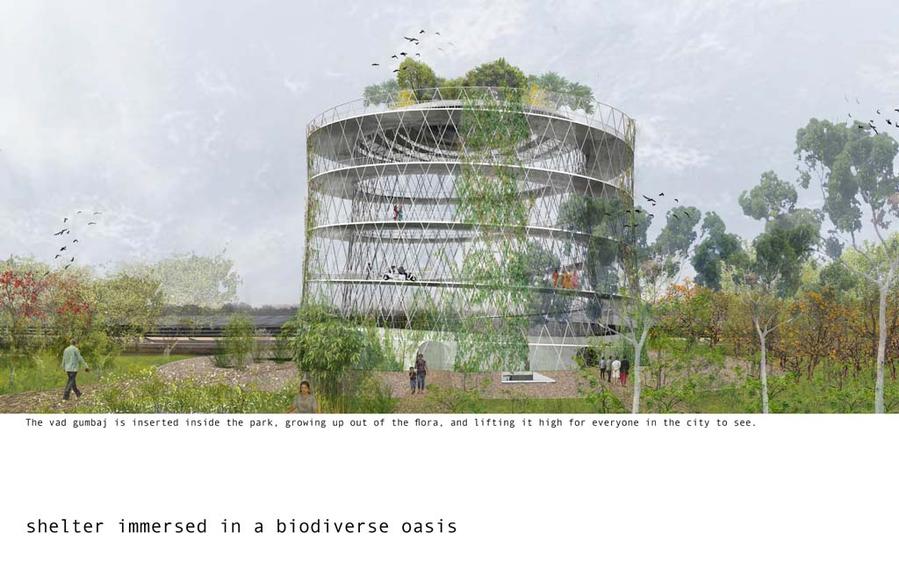
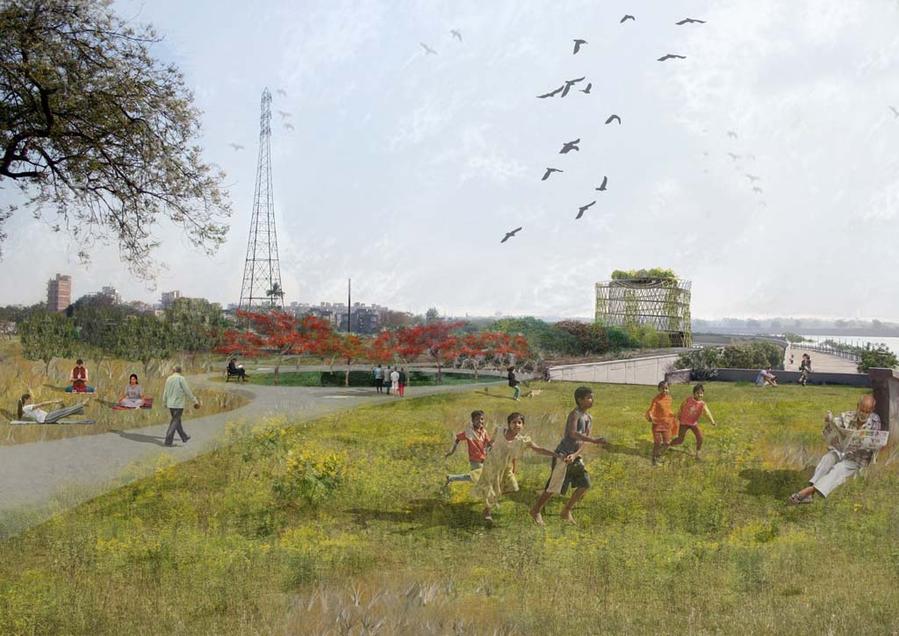
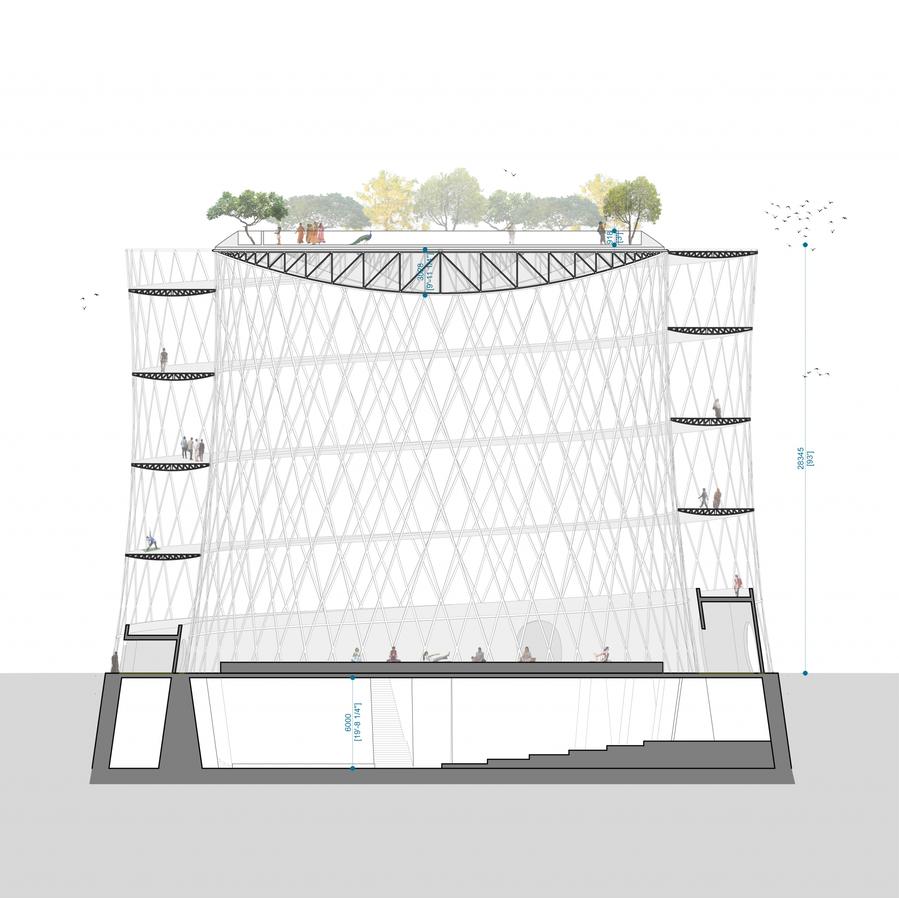
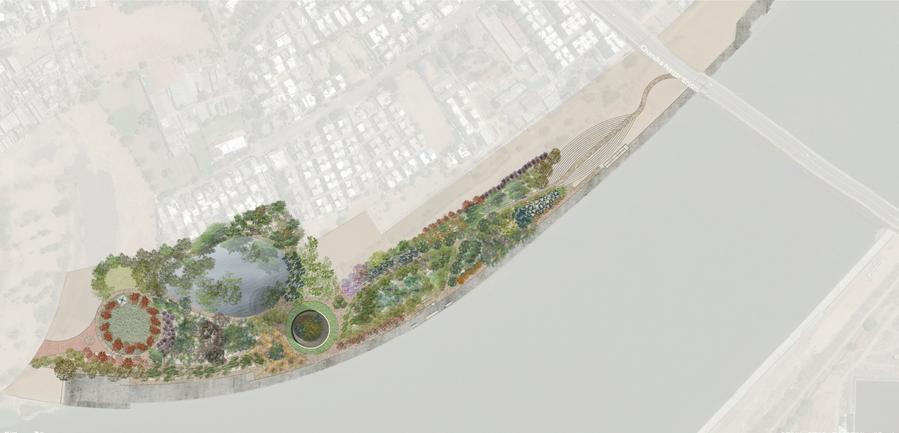
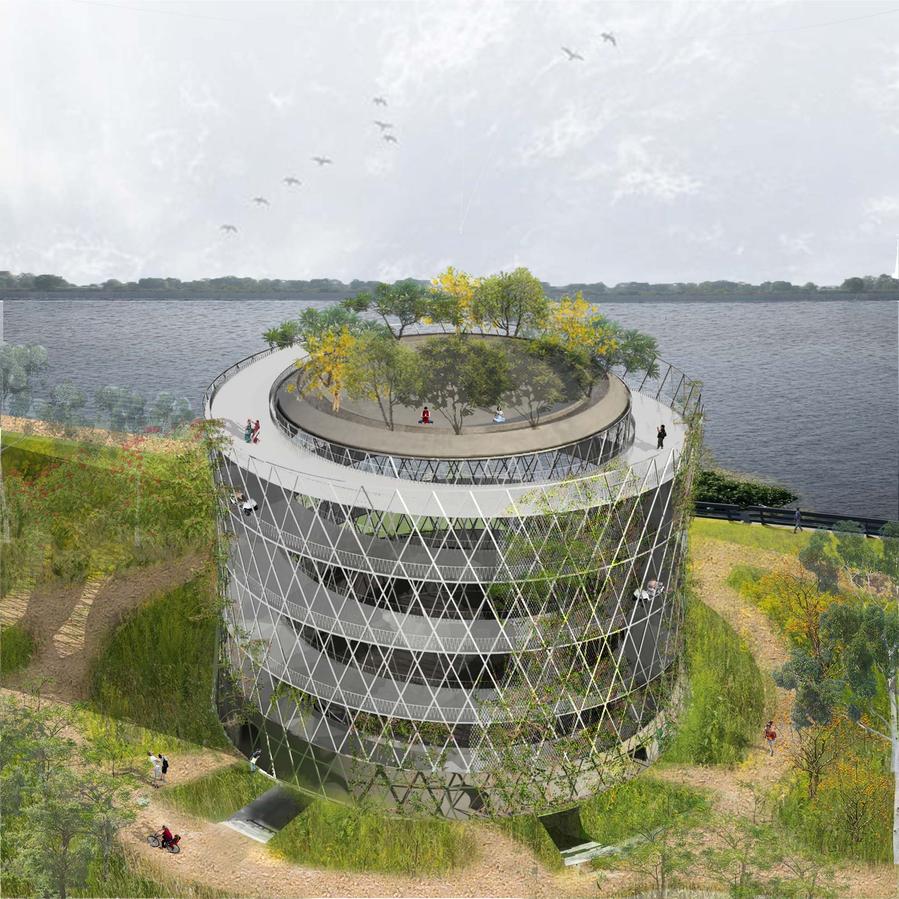
The biodiversity park sits at the bottom of the urban riverfront in Ahmedabad, a resting place for flora and fauna, a moment of pause, to breathe, in the busy city. The vad gumbaj is inserted inside, growing up out of the flora of the park, and lifting it high for everyone to see. Its profile pushes out into the view of the river when seen from far. It is nestled within the species, and takes advantage of existing landscape.
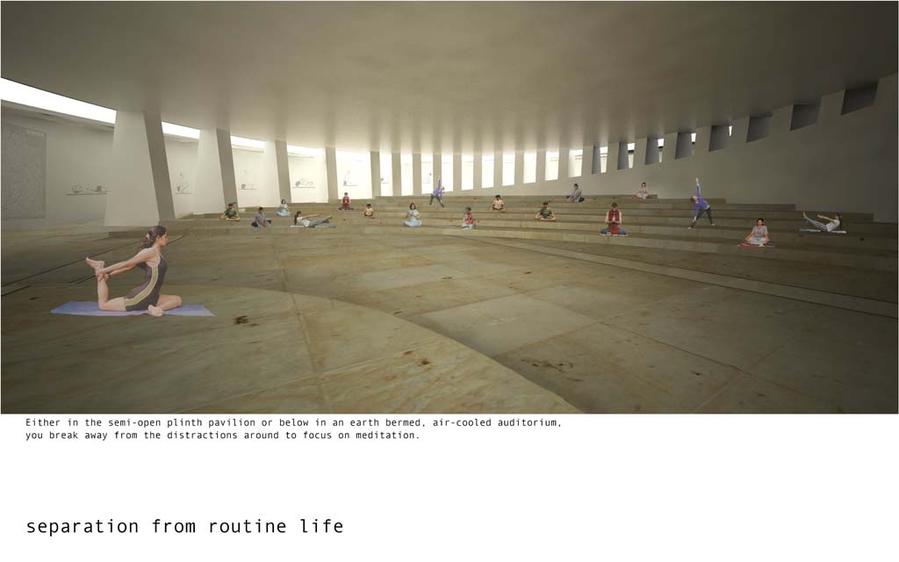
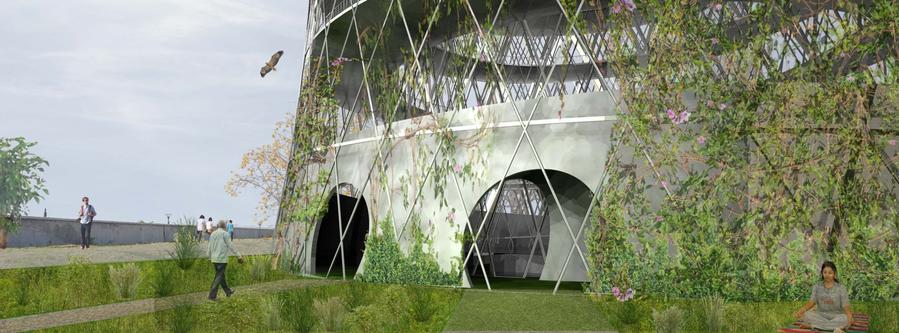
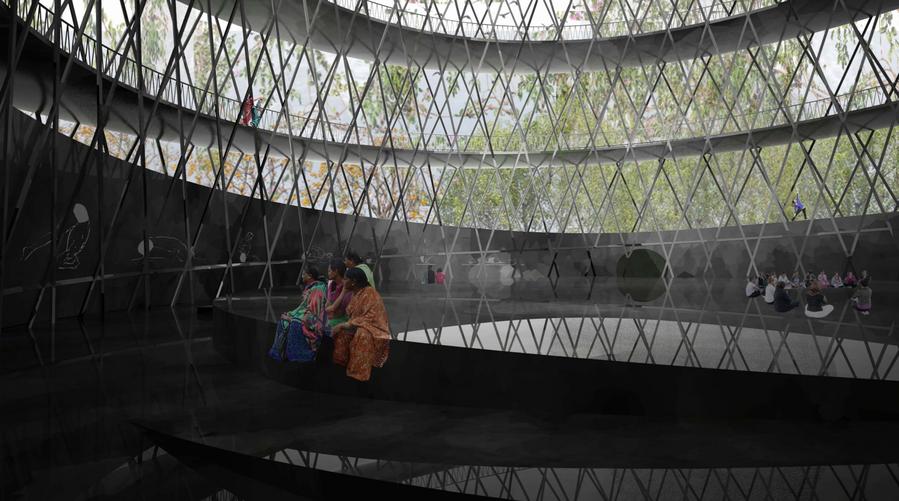
This is a place for ‘one’ and ‘all’, You who want to meditate and connect to yourself, and everybody else too, who just want to watch the reflections of themselves. At the ground level, the heavy walls of the vad gumbaj separate you from the sounds outside. The immediate space is held in quiet. A plinth at the center holds yoga and meditation, while other people circumambulate, following the etched drawings and sayings on the granite clad internal wall.
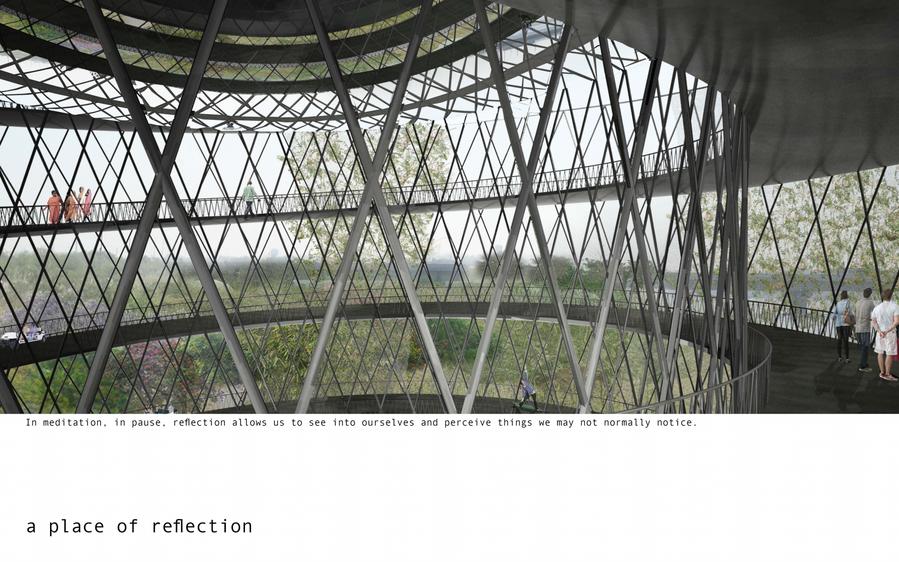
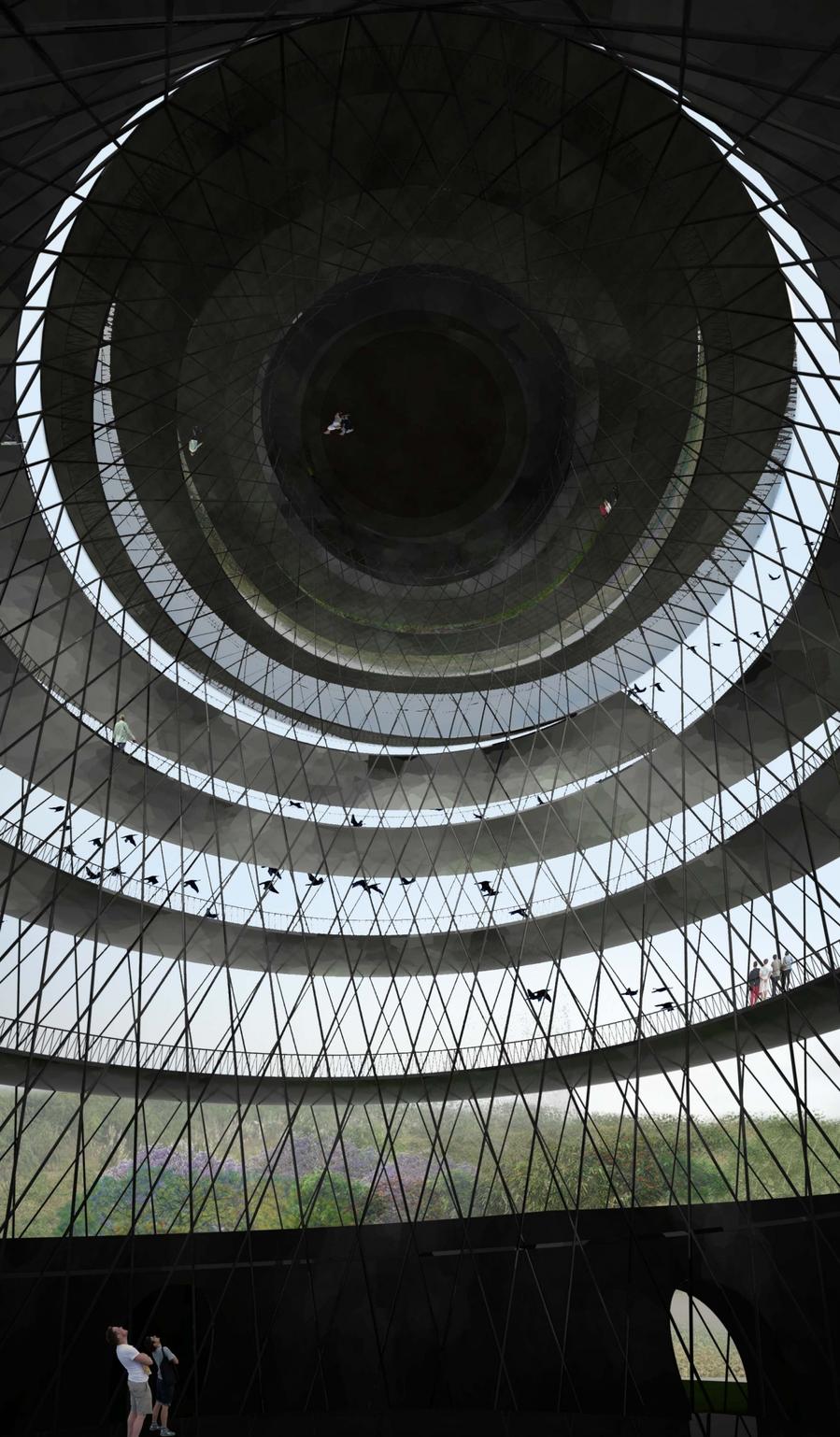
The inverted dome, hanging above, draws reflections in of the ground, plants and the river outside, merging them with the reflections of people on the plinth.
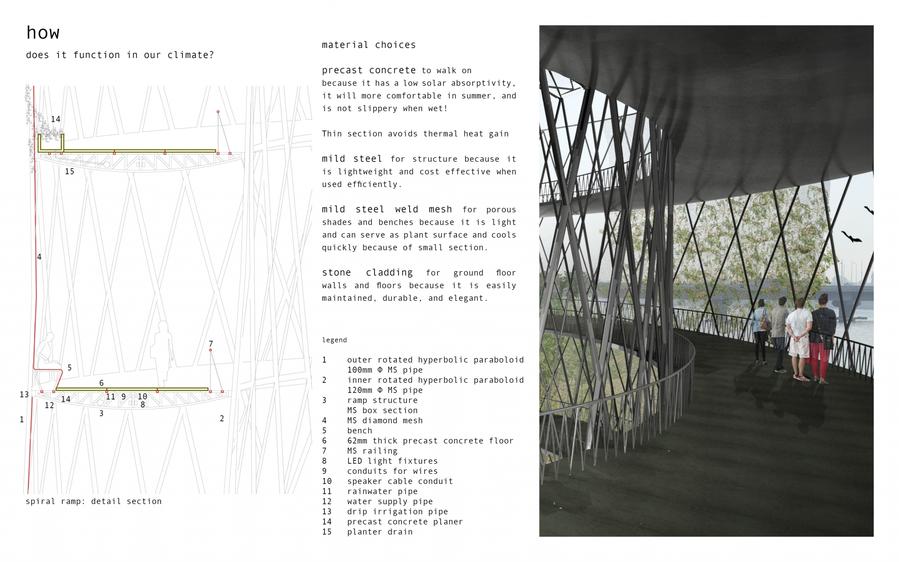
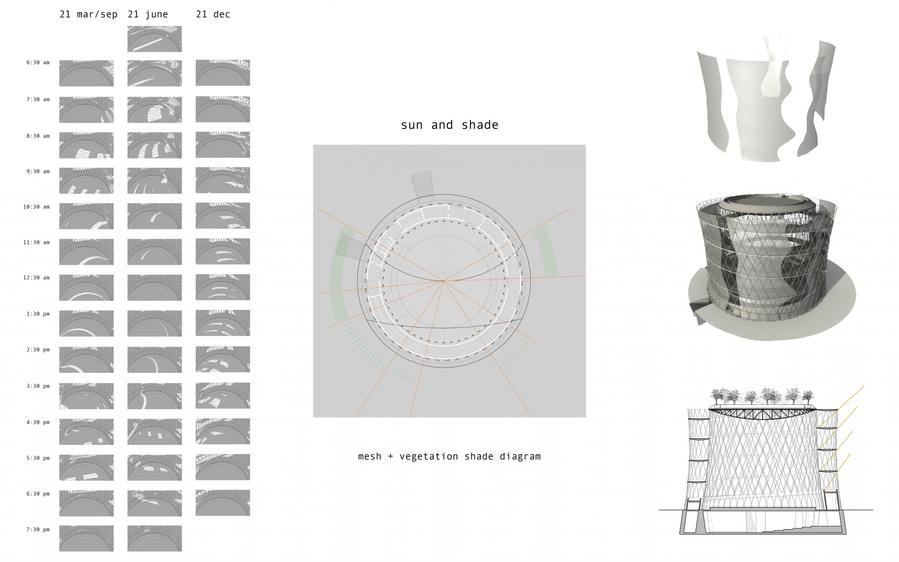
Weld mesh screens attached to the steel structure at critical locations create additional shade at crucial points of the day, while the deep ramp is tuned to act as a chhajja to prevent higher sun rays from entering during the warm midday from March to September. In winter, when more sun is desirable, the low altitude angle lets it come in.
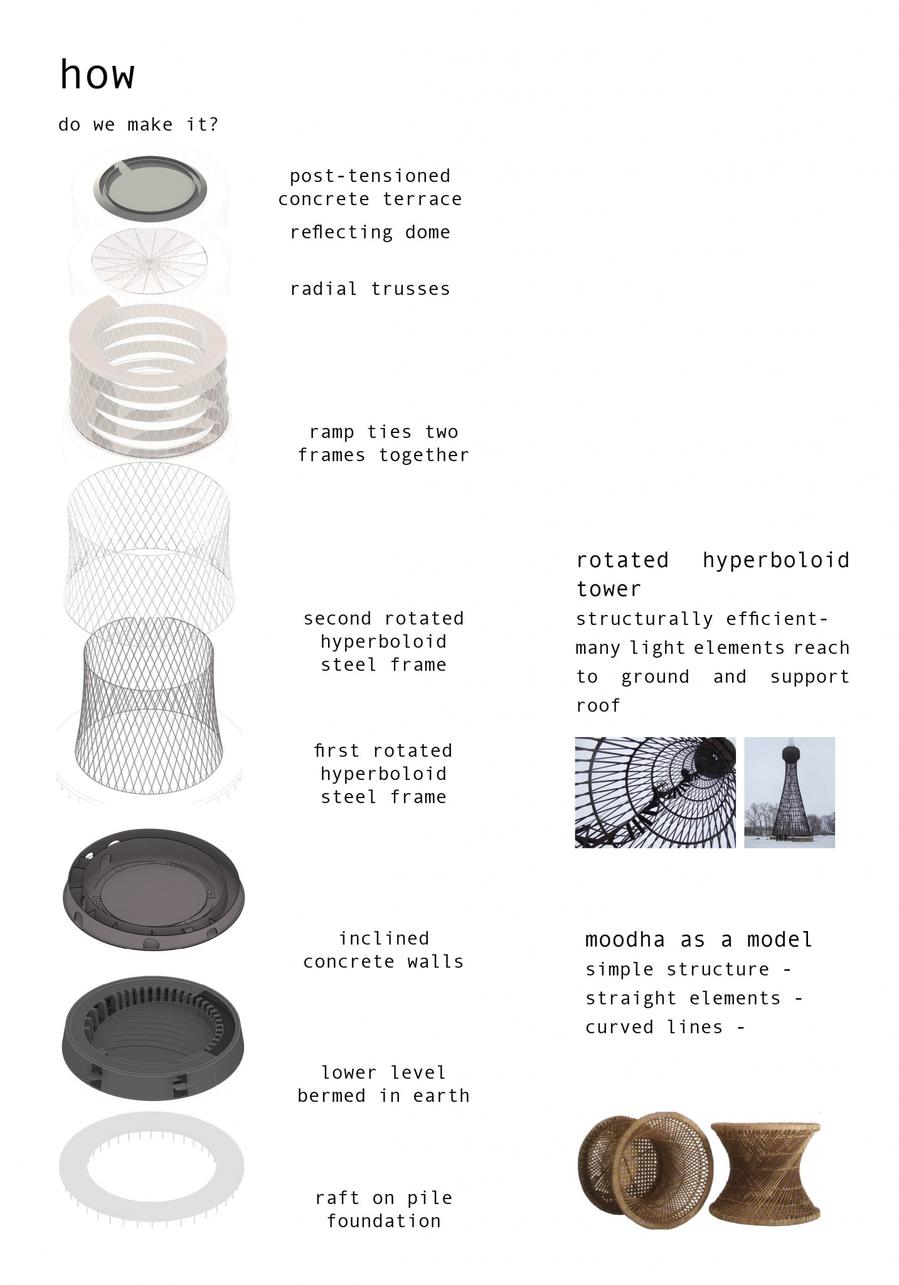
A raft on pile foundation supports the two frames and the ring of concrete walls. Two rotated hyperboloid steel frames rise in and outside the walls. The fabricated ramp acts as a brace for the two frames. Rotated trusses structure the upper level and the reflective inverted dome is suspended from them. The post-tensioned concrete slab is poured on top, with the trusses serving also as a structure for the formwork. This system is lightweight, materially economic, and cost efficient.
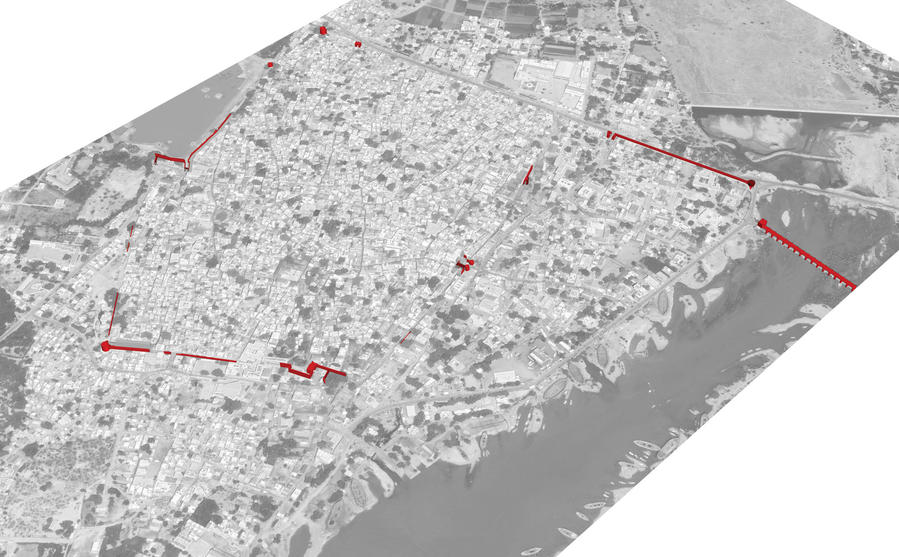
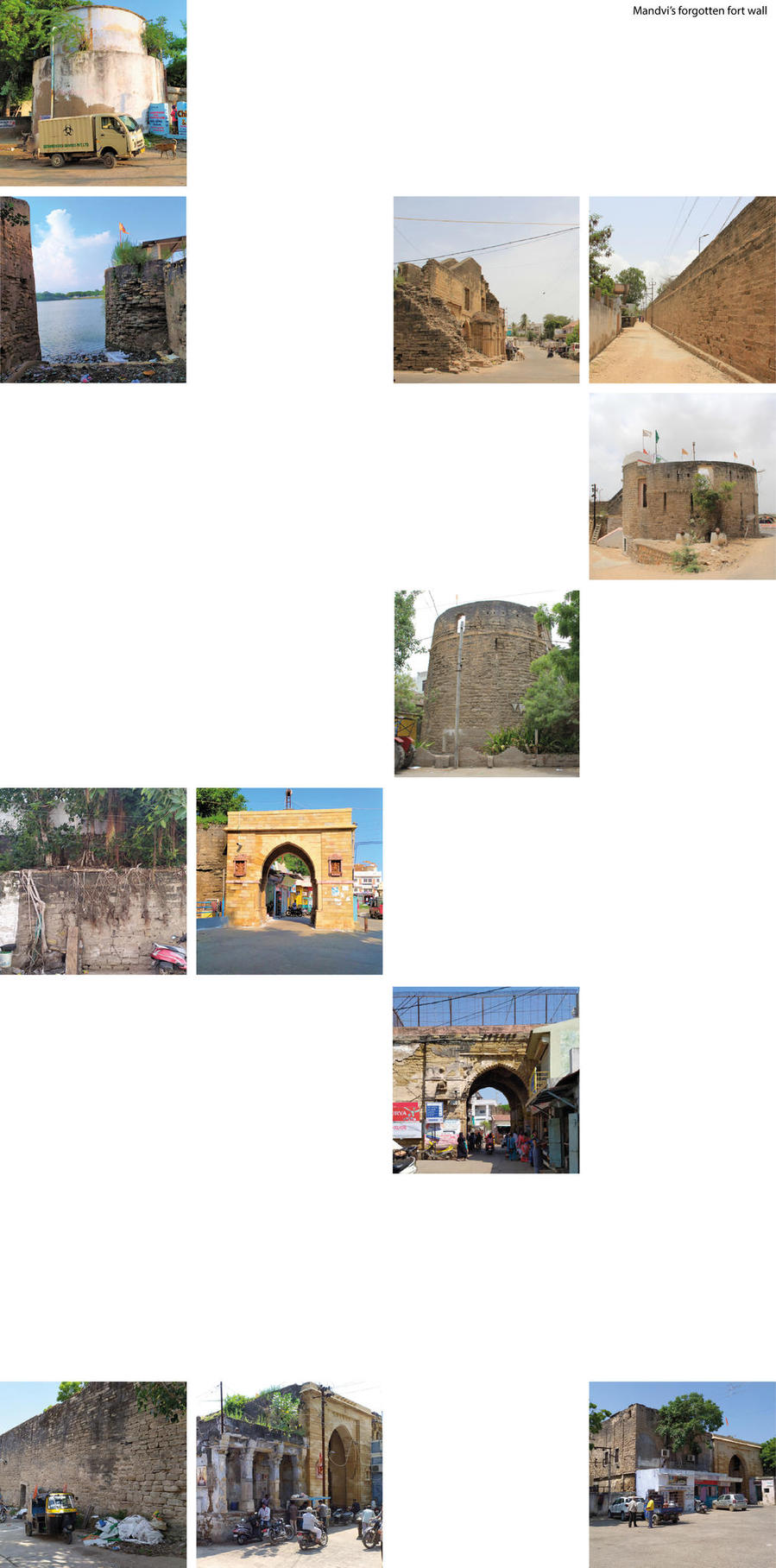
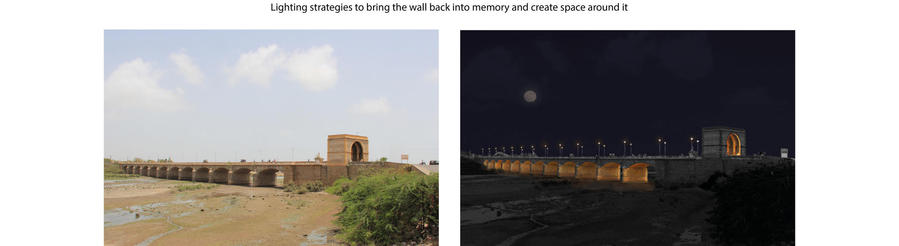
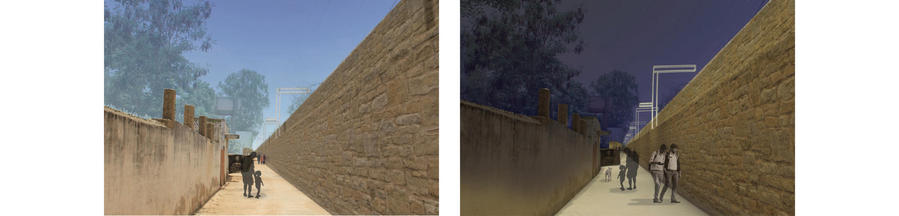
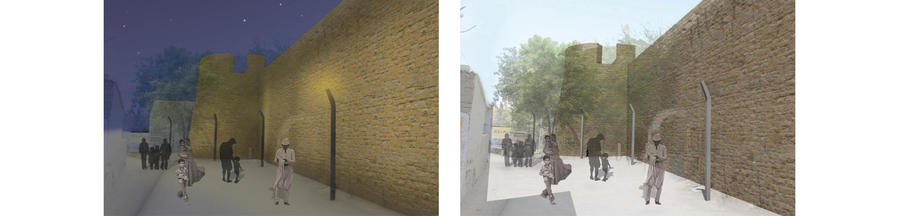
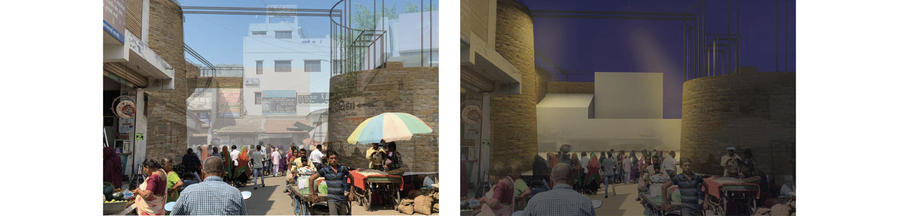
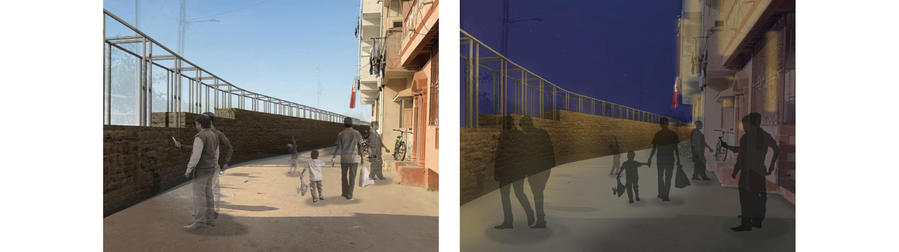
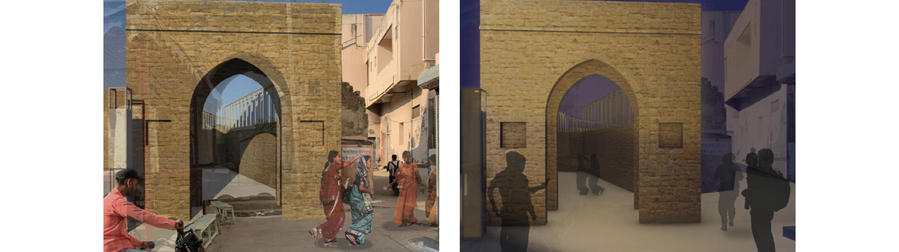
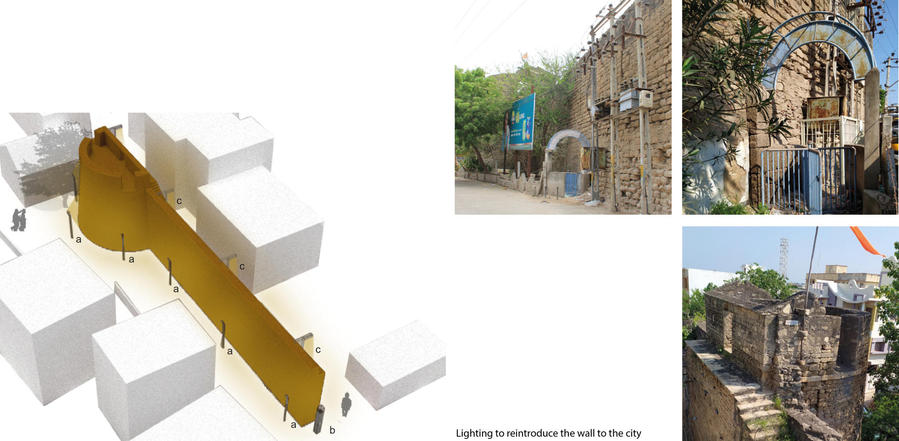
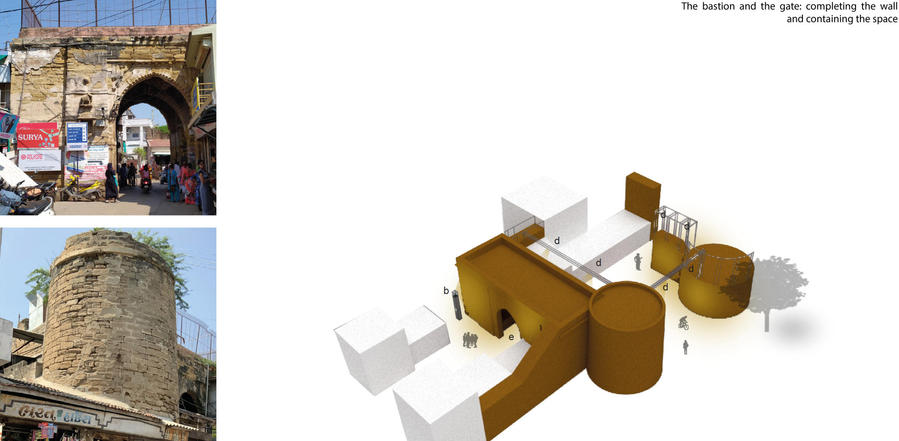
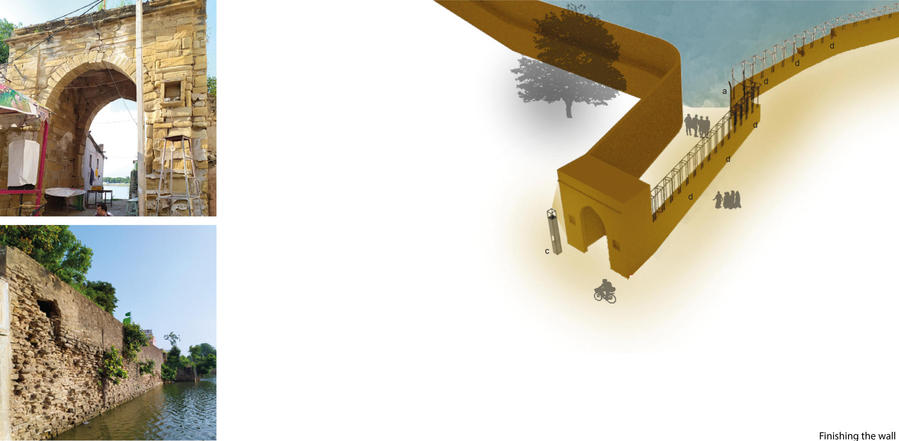
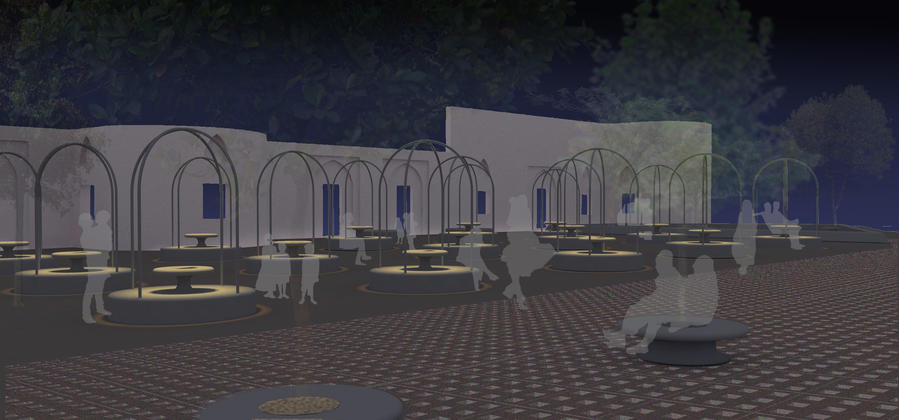
The remains of the Mandvi Fort Wall, which dates back to the 14th century, stand in varied states of disrepair. This project refocuses attention to the dilapidated wall by illuminating it and the public spaces it frames, using the necessary scaffolding to render the wall notionally complete, while also shoring up its precarious moments.

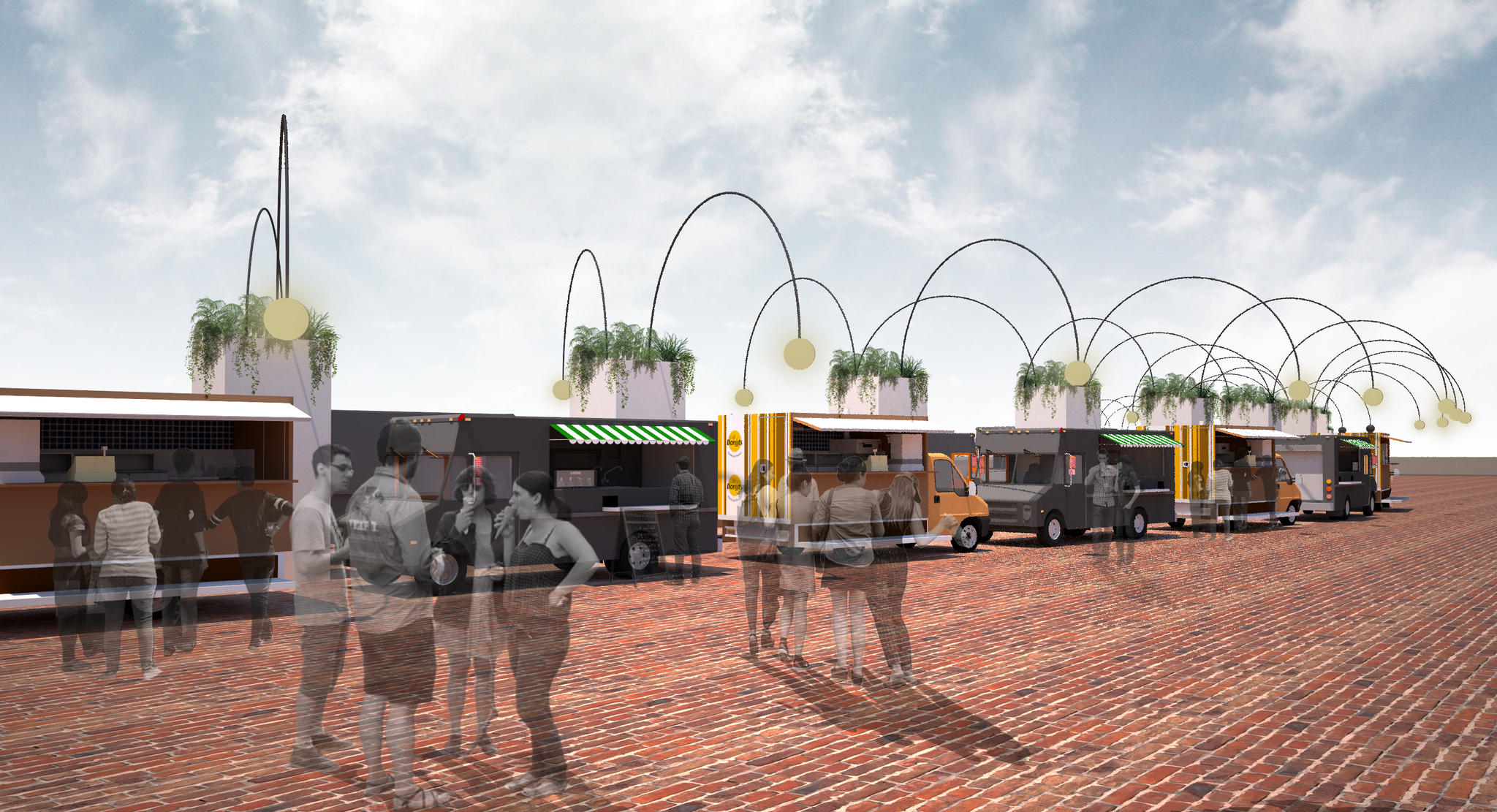
In small towns and cities across India, the provision of infrastructure for water supply and sanitation is an ongoing project. Many places, with populations of tens of lakhs, maintain incomplete sewerage networks and spotty water supply systems. They also host significant informal commerce, a typical condition of the Indian street, which is flexible and adaptive, but produces significant amounts of waste. This proposal for the municipality of Mehsana, Gujarat, uses the introduction of a new sewage and storm water line to create plugin infrastructure for a food vendor park.
It is an important project for the future, because it imagines what happens when public infrastructure is leveraged for the creation of good public space, and works with existing chaos. Instead of removing informal elements to “clean” the city, this taps into their latent organizational structures and simply adds service points that can support a healthy system of public space temporary commerce.

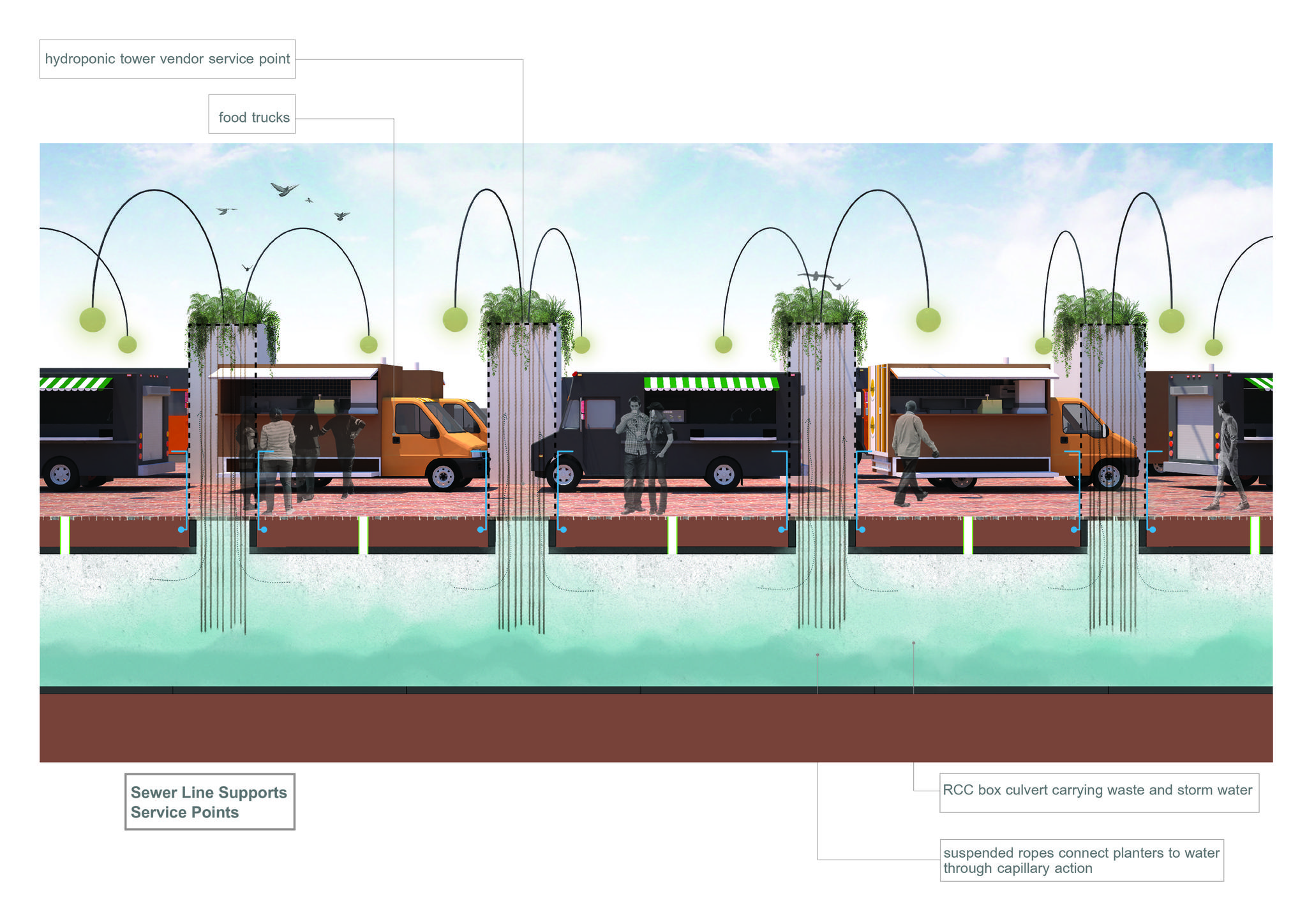
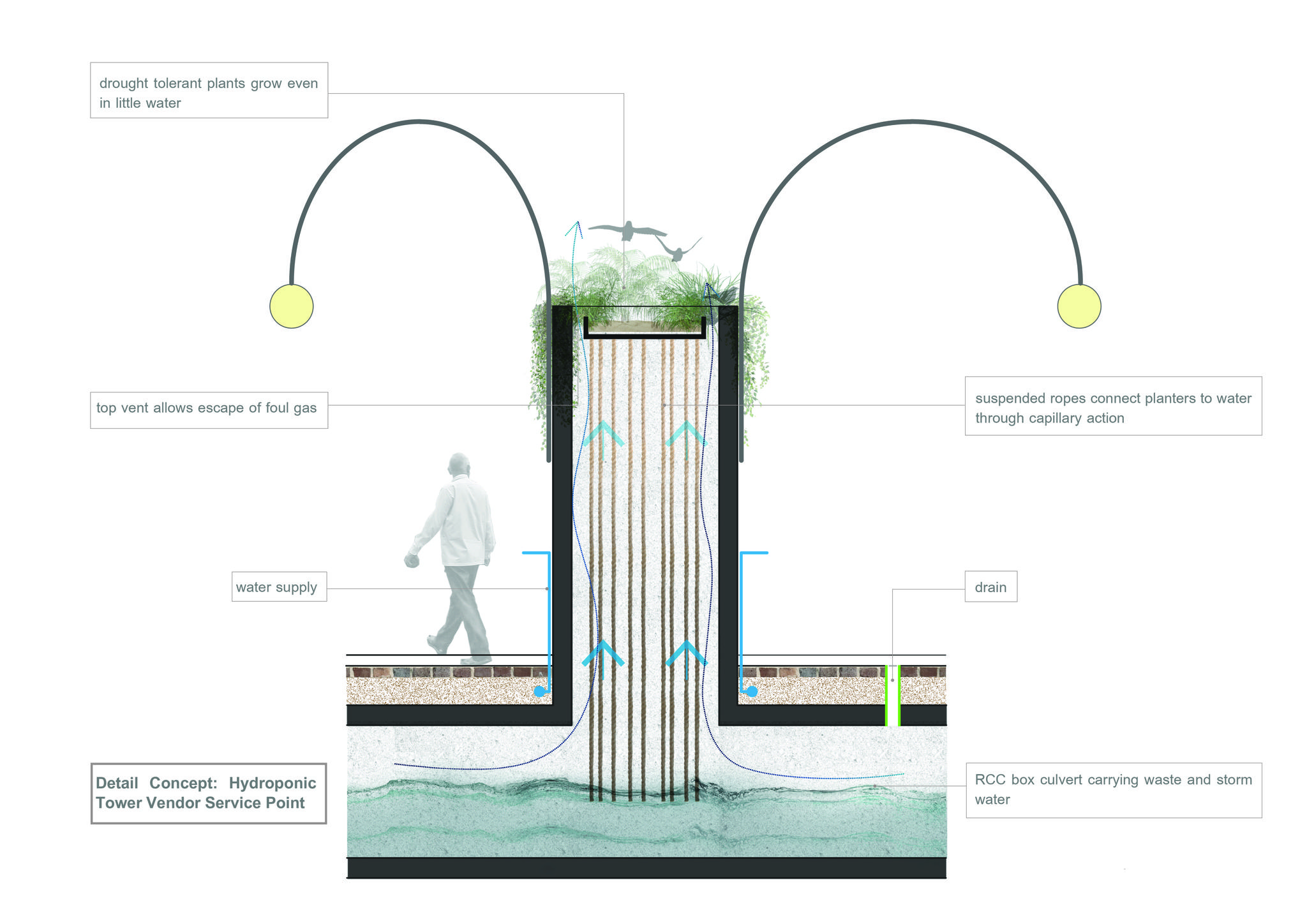
The design takes a box culvert, already planned for the containment of open sewage in a low lying area in Mehsana’s town centre, and adds to it a series of “hydroponic towers.” Dispersed along the line, these extruded, reinforced concrete boxes work to filter noxious gases from the sewage, and provide service points for vendors, which also gives them a fixed location along the line. The towers support a tray of drought resistant plans through a simple, non-mechanical system of suspended ropes, relying on the capillary action of the material to move the water up to the plant roots. As they process the water they may also reduce pollutants in it. The height of the tower shields people from any effect of gases released. As a vendor service point, it is outfitted with taps and electrical points. Lighting for the public space sprouts from the sides of the tower, and drainage for runoff is positioned between, along the line.
Ahmedabad, Gujarat | 2023
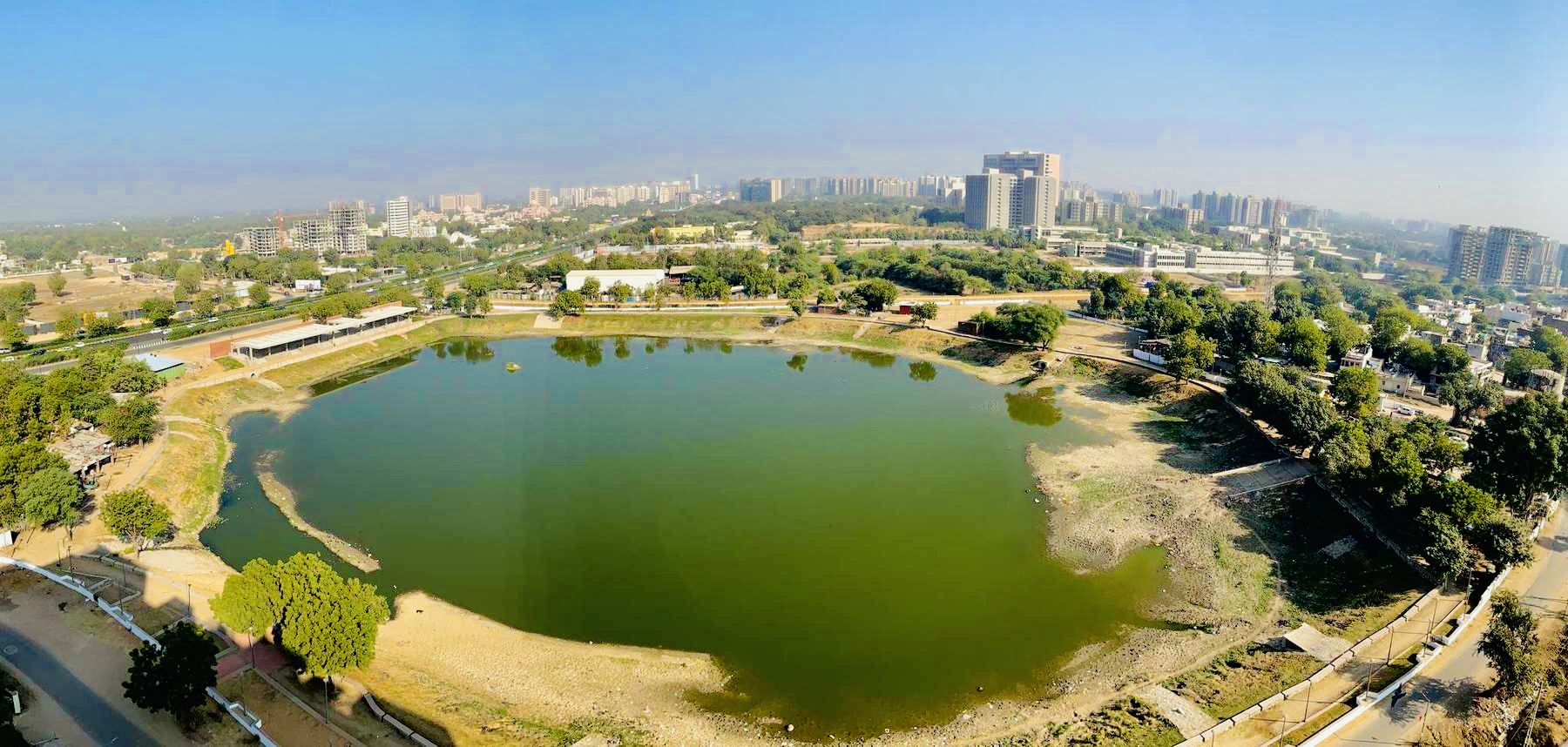
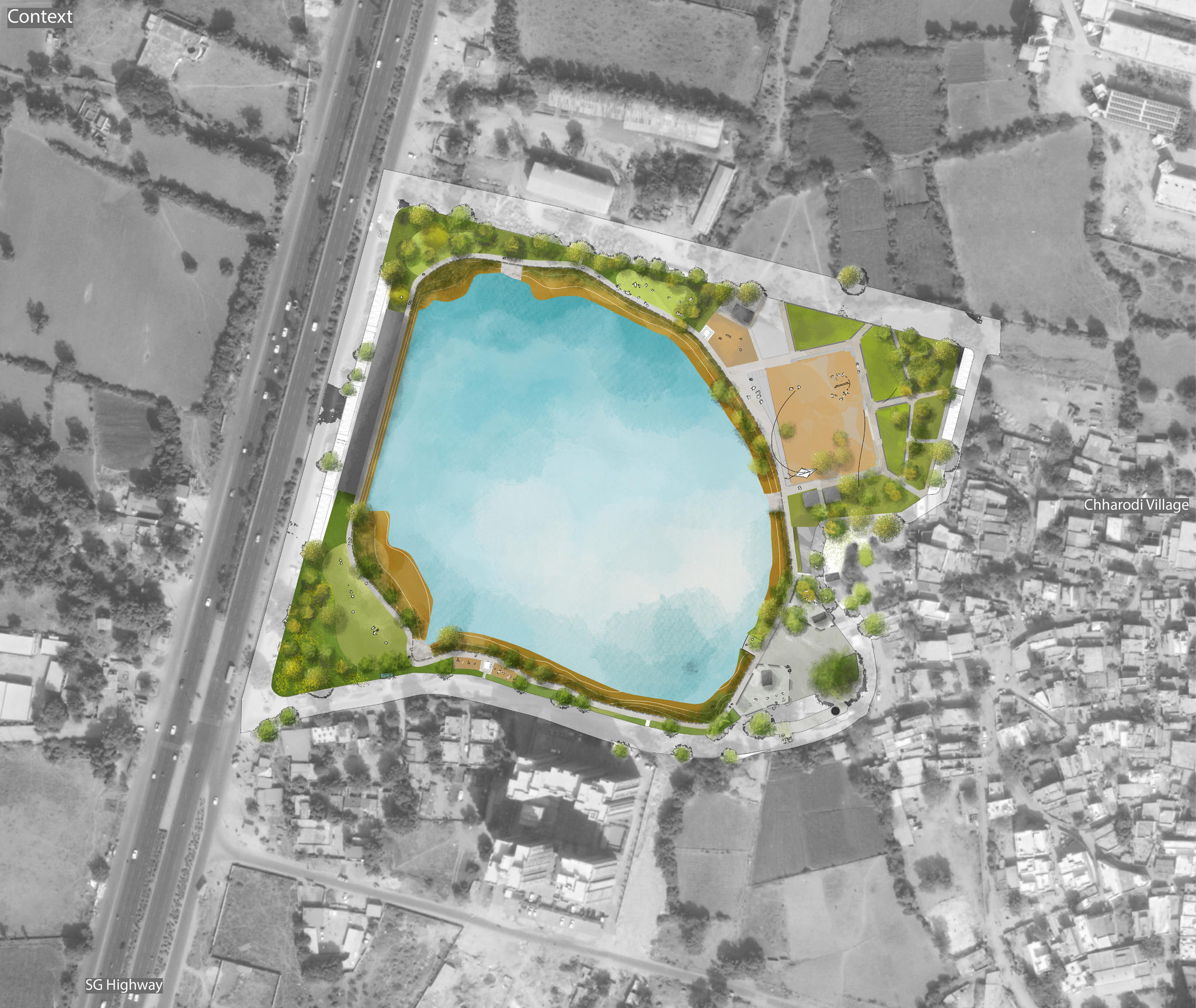
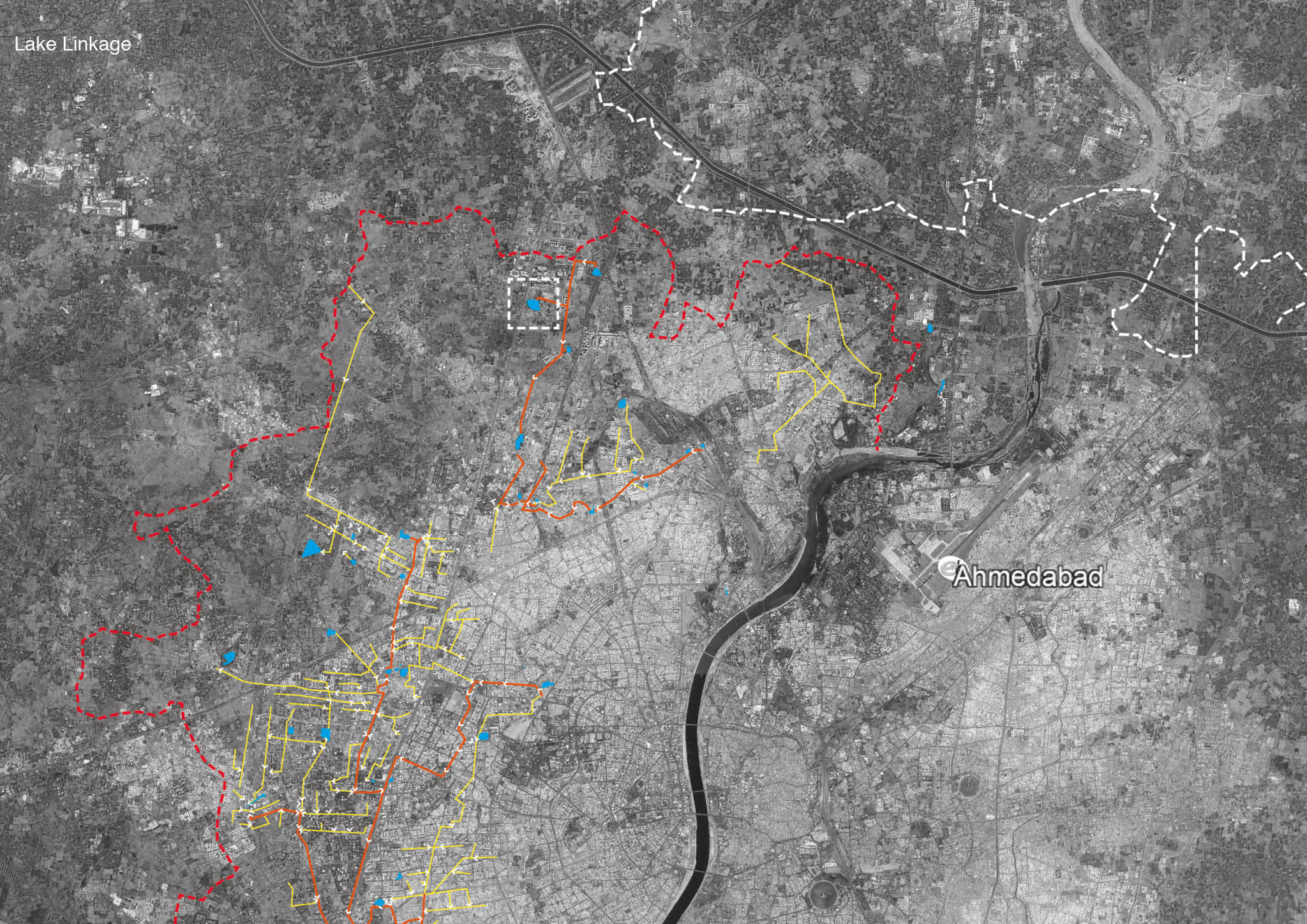
Chharodi lake sits at the urban periphery, poised for rapid urbanisation. Unconnected to urban systems yet surrounded by piecemeal development, it caught untreated sewage and supported rural animal systems simultaneously. The revival strategies for the lake involved careful assessment of multiple factors like ownerships, encroachments and edge conditions in order to define the scope of development.
The proposal defines a new lake edge while retaining the natural slopes for surface water run off, retains all natural species of plants that form a wetland shoreline offset around it for natural filtration and a soft landscape scheme is planned further to aid this entire system of natural filtration. This activated edge is then further developed to draw people in with various amenities of public life: gardens, café, toilets, and a stepped access into the lake. Areas around the anchoring village are opened and connected to support robust public use, and an open maidan hosts large and dispersed activity.
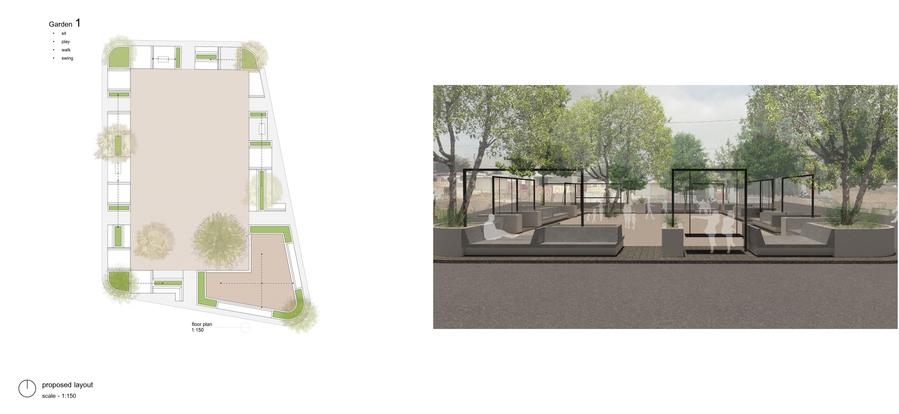
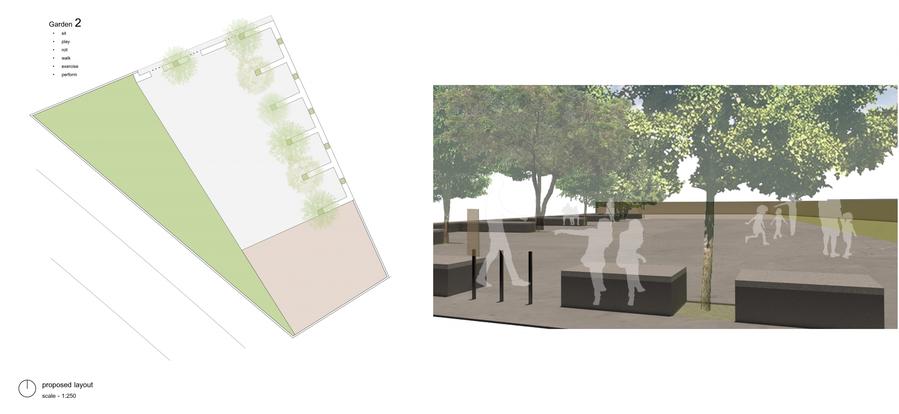
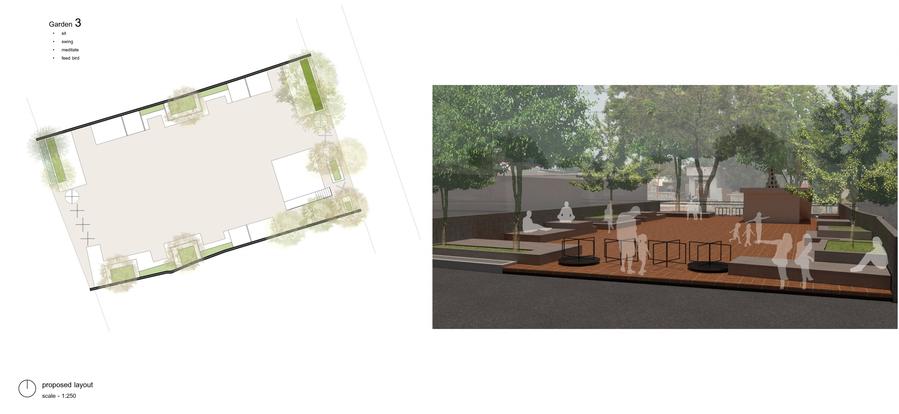
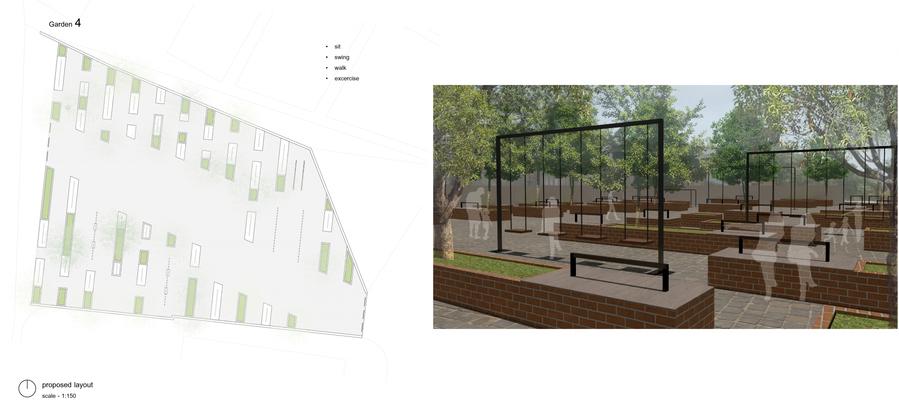
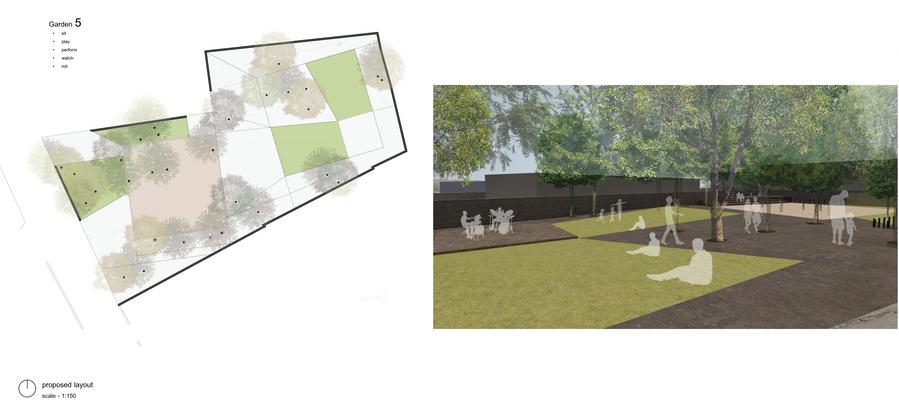
The Bhachau urban regeneration project adopts various processes of incremental design strategies and intervention schemes of place-making to re-imagine several dormant plots that were identified across the town by the Bhachau Municipality.
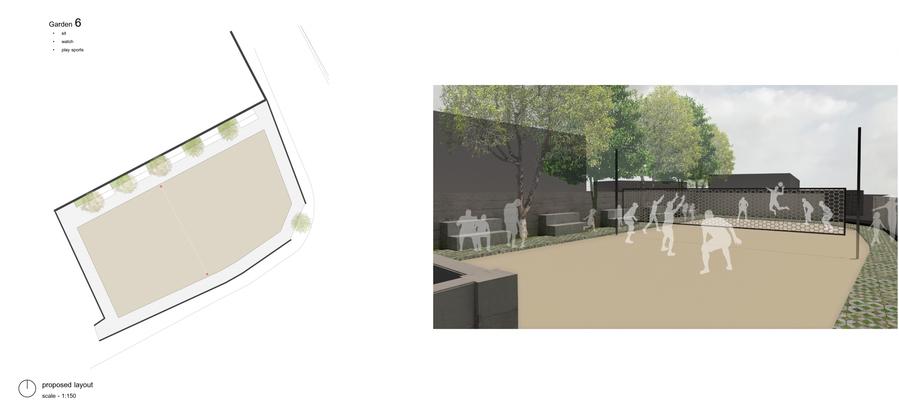
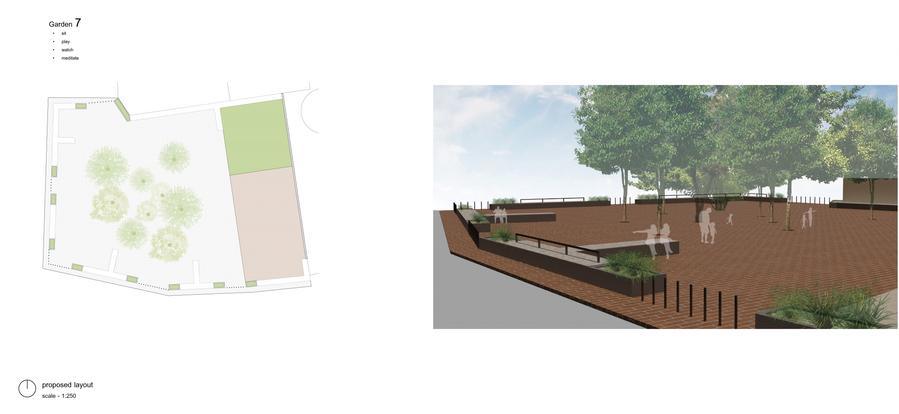
A cluster of 7 gardens has been designed, each with a different set of usage iteration that effectively responds to their immediate setting. The design process was directed to allow for larger proportion of consolidated open spaces to be realized for various flexible future user adaptations while deciding on placements for seating, conversation clusters, play spaces or circulation paths, all put together with minimal elements that are robust in nature.
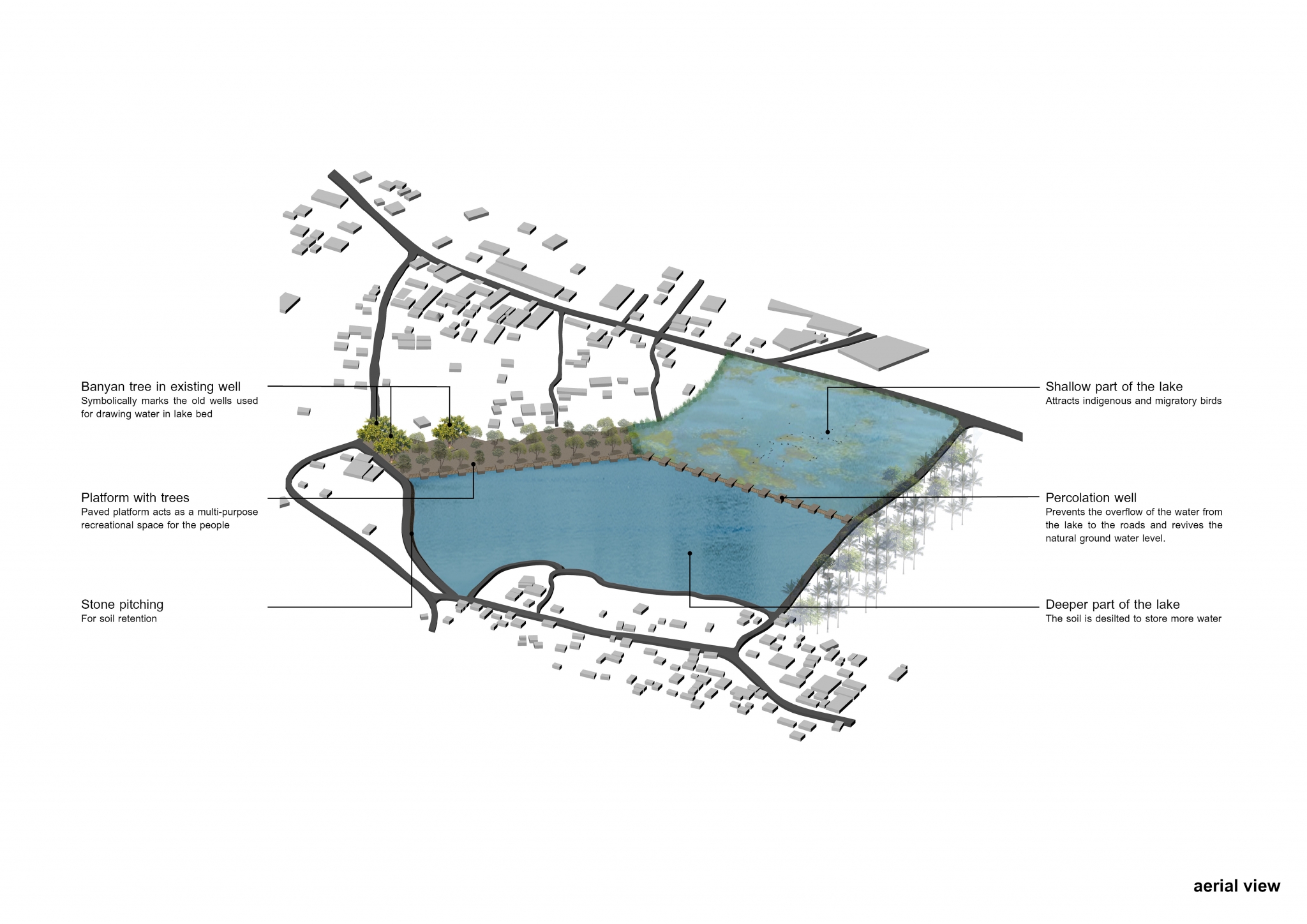
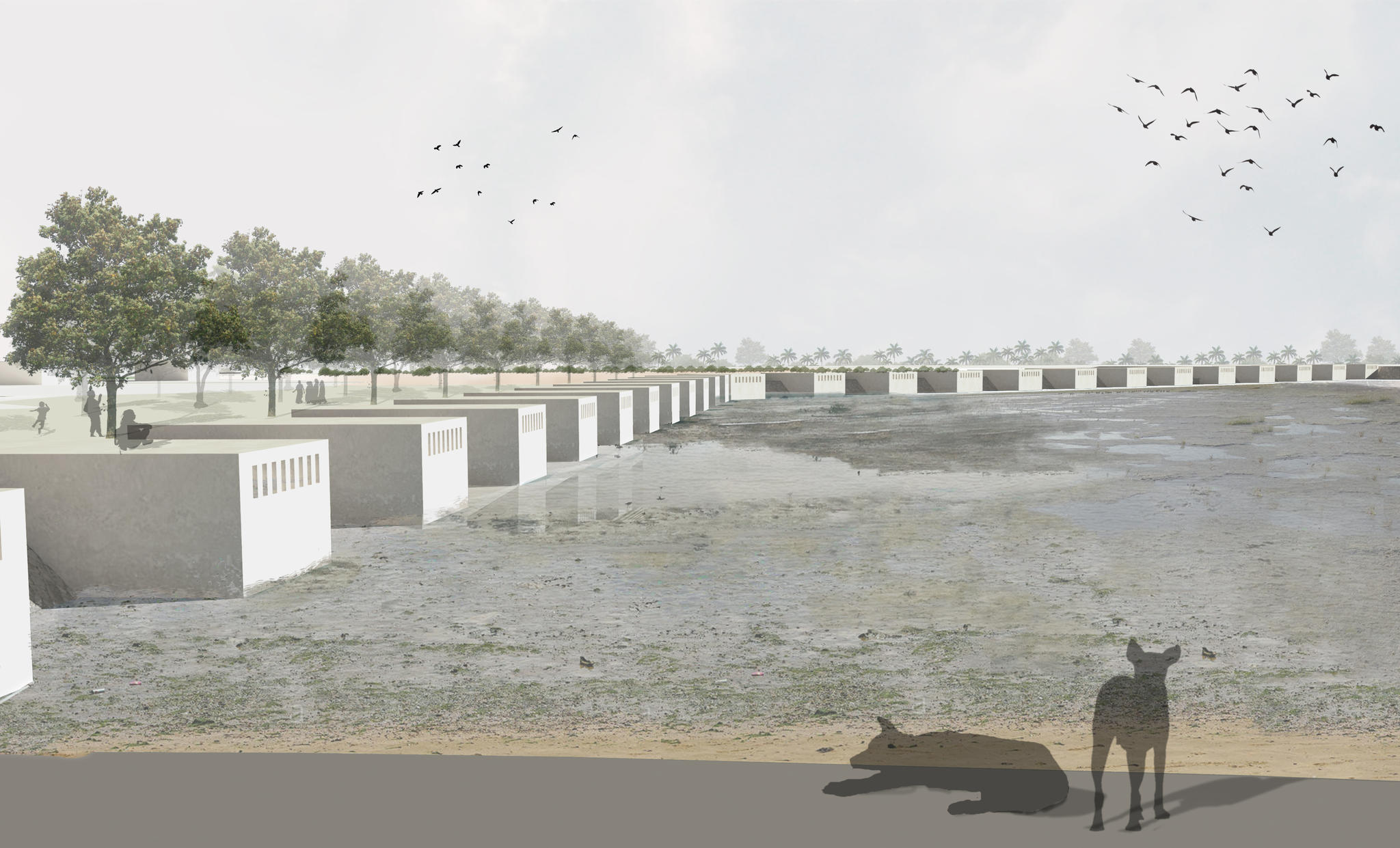
The rapar lake is located amidst a network of roads and tends to swell and overflow onto them during the monsoon. The proposal creates one large patch of land with shallow waters as an offset from the road edge by designing a wide band of linearly placed percolation wells embedded in the land that takes excess water flow and recharges the groundwater levels, thus thoroughly preventing any surface flooding. Meanwhile, the shallow water patch would attract indigenous or migratory bird species visible from the road edge while the percolation tank top platform acts as a recreational space for people to interact with the lake.
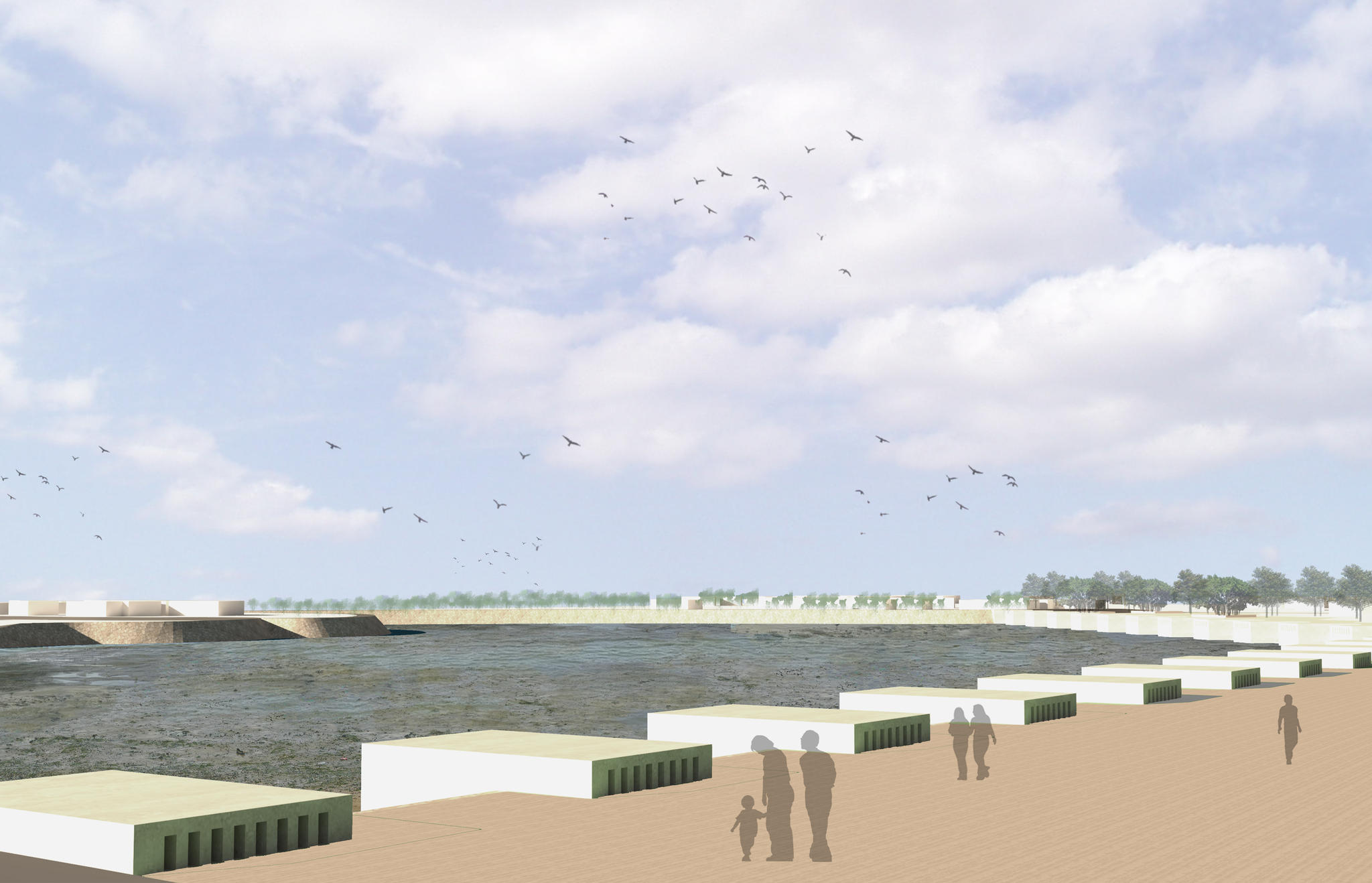
Ahmedabad, Gujarat 2015
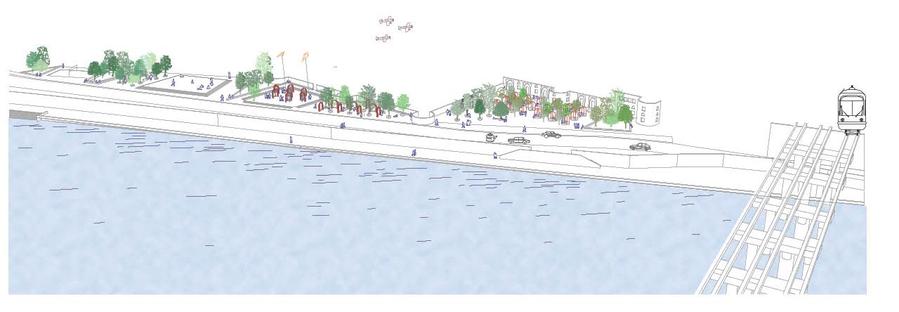
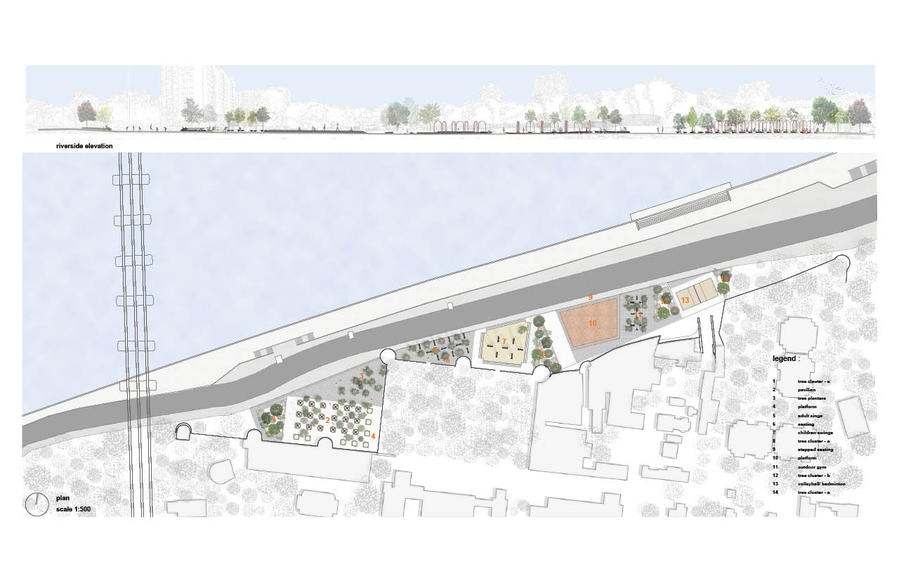
Conceived as a place between the individual plots of the city and the riverside road, the project reacts to the specific condition of each location in terms of its architectural presence on the river edge as well as the function it serves, may it be a house, a public institution, an open plot or a fort wall.
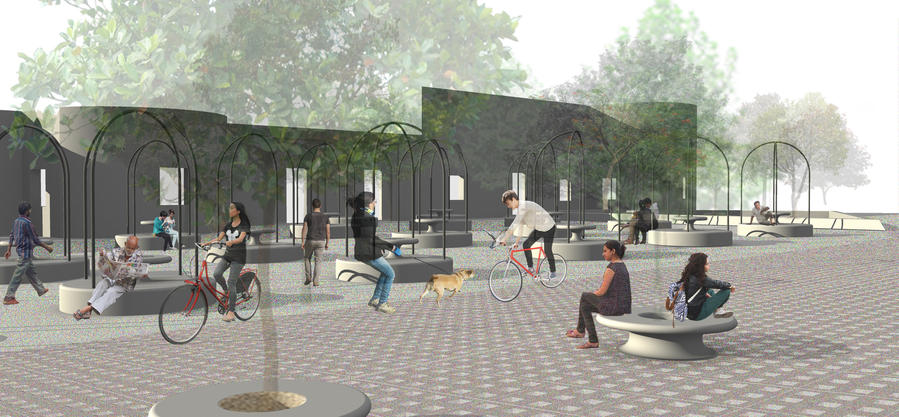
The project responds to the presence of the Mughal Era palace built by Shah Jahan, currently functioning as Sardar Patel Smarak, in similar powerful approach by offering pavilions and platforms with trees and open spaces. Adult swings and children swings sit with the backdrop of existing greenery. Multipurpose platform outside Gayatri Shakti Peeth offer space for yoga and meditation. Outdoor gym, volleyball court, badminton court works for the physical and mental health for its users along with many different locations to just sit and hangout under the tree.
palanpur, gujarat; 2010 (2013, 2018...)
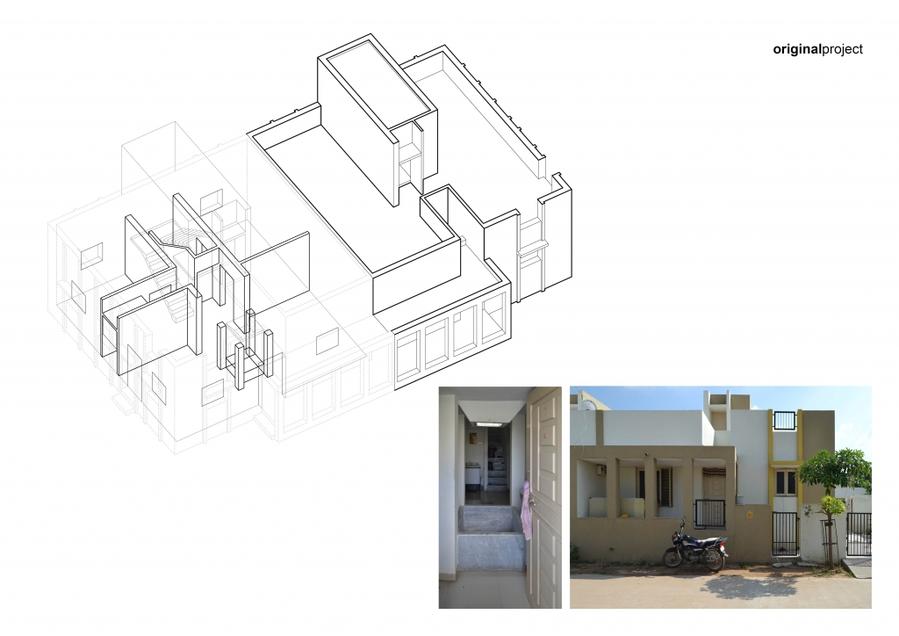
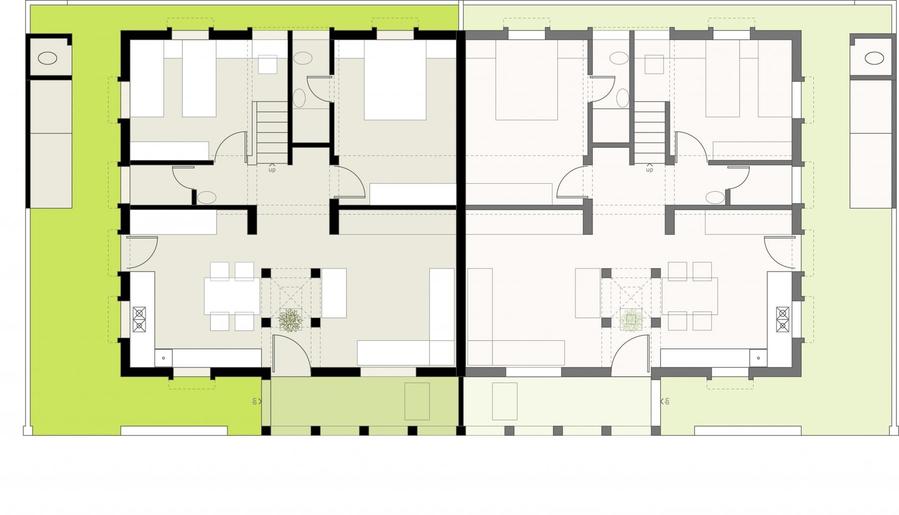
This 60 house twin bungalow project was developed for a site at the edge of the city. Three large open spaces work as lungs for the dense plots while one way roads loop around to avoid the tight turn at a dead end! A first, paved garba surface for dances and processions, a second, soft with grass and pipal trees cools the site at the heart, and a third, laid with sand, gives a small play area for exploratory children.
House plans are simple and open with a verandah at front that mediates the living space with the street, and at entry a bit of sky drops in to light the tulsi, whose position ties together the living and eating spaces inside. The stair travels to top, built out to provide a safe and organizing structure for inevitable and invited family expansion.
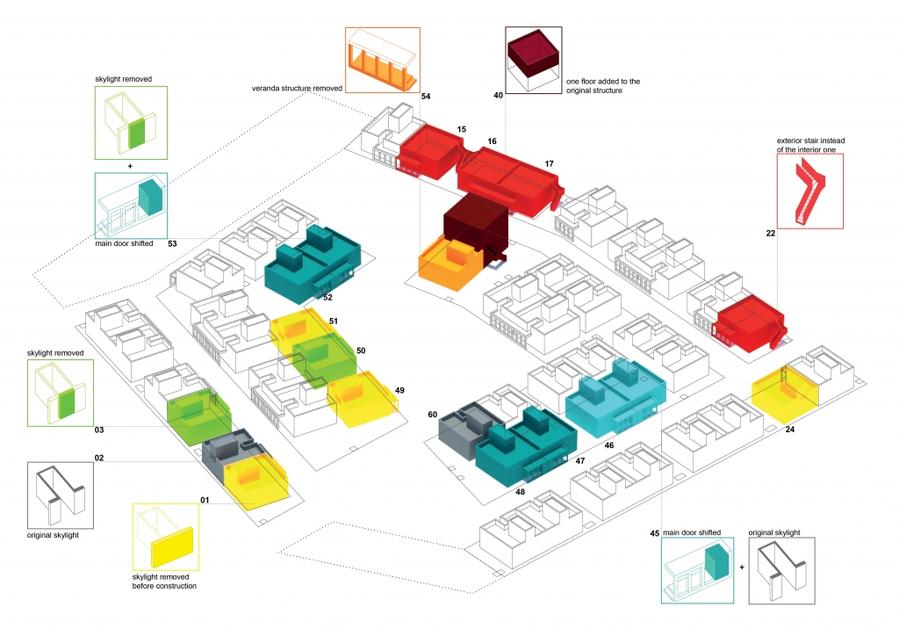
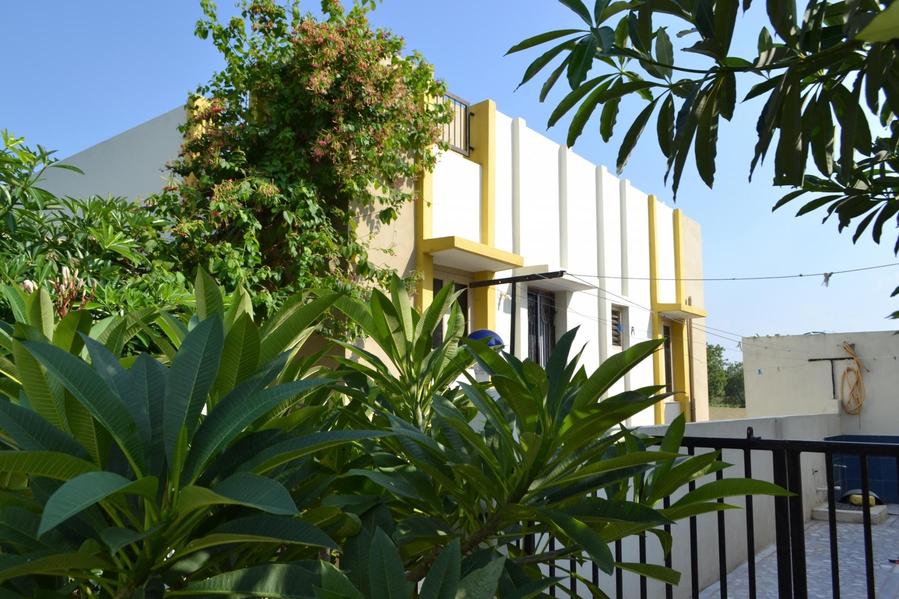
As part of our practice, we study the buildings we design after they have been occupied. This allows us to learn what works as we expect, what doesn't, and how people have transformed and adapted aspects of our designs as their needs change over time. The tulsi villa twin bungalow project gave us the oppportunity to study not just one scenario, but sixty, and to look at trends and variations among the responses to the architecture.
The first studies have been carried out three - and then eight - years after the completion of construction. Certain changes, like the removal of a skylight, shift to outdoor staircase, or the ninety degree rotation of a once south facing entrance, were given as design alternatives during construction, to satisfy the requirements of families who had purchased houses in advance. Others, like the insertion of a steel beam to remove verandah columns, or the expansion of the first floor, were residents' self-designed innovations, implemented after the completion of the project.