Ahmedabad, Gujarat | 2024
Parikrama is a new house on a large green plot of land in the western, growing, edge of Ahmedabad for an introverted family. The core idea was an architectural strategy to circumambulate the land. To maximise the luxury of space, the mass of the house hugs the boundary, rooms looking inward through a deep verandah, onto an oversized, planted courtyard. Verandahs of varied widths wrap three sides of the central courtyard, which is thickly planted, and lifted up to the viewer’s eye level, with views and foci that shift as one moves around. Along the fourth edge, a ramp rises up, connecting the lower verandah to open terraces in the corners of the house, themselves connected by a narrow passage concealed between the walls.
A miniature inspired plan drawing brings together the influences and heritage of the royal family who commissioned the house with architectural strategies at play.
In the courtyard, a central lawn is surrounded by corners planted with dense native plants to produce a healthy ecosystem in the center of the house. An old neem tree was saved and surrounded by new grasses. An array of carefully selected plants have already invited birds and butterflies to make themselves at home in the central court, while a lone, elevated tree perches on the peak of the roof. A slim verandah shades bedrooms along the courtyard, opening to the land. A series of fountains and water friendly plants line the first step of the landscape, strategically placed to passively cool the breeze as it is drawn through the house. The main living and dining space sits off the wide verandah, behind a series of teakwood doors, anchored in a marble partition. A tall teakwood panel separates the kitchen from the dining, and rich array of brass and glass fixtures are suspenders from the sloped roof to light the tall space.
Stained, patterned glass brings soft light in from the thick, protective exterior wall, reflected by the marble dust gutai plaster and grey terrazzo tiles. Bright furniture pieces soak in all the light and evoke a strong connection to the traditions of craft and bespoke design that have characterised the houses of royal families for centuries in India. The dining table for ten is made with a green marble slab inlaid with semi precious stones, a stone inlay craft that Agra is famous for. Traditional embossed, patterned glass allows light through the teakwood partition between the kitchen and dining areas. The marble partitions were carved from full slabs and shaped into columns that support slotted marble screens - the connection between outside and in, mediated by the soft glow of diffuse light passing through the stone.


Photography credits: Sachin Bandukwala, Ayush Lohia, Tejas Varade, Utsav Patel
Design Team: Melissa Smith, Sachin Bandukwala, Ayush Lohia, Megha Jhawar
Structural Consultancy: Ami Engineers
MEP Consultancy: Jhaveri Associates
Landscape Consultancy: Studio 23N|72E
Contractor: ID Projects Pvt Ltd
Carpentry: Gopal Suthar
Ahmedabad, Gujarat | 2015 - ongoing
Two homes for the families of two brothers are stacked vertically into one joint house. A private, protected haven, the four storey structure is sheltered by a series of floating brick walls, and illuminated indirectly through a wood and marble core "chandelier" that peaks out into one corner of the facade and filters in light, spread deep into the house by the soft glow of white marble.
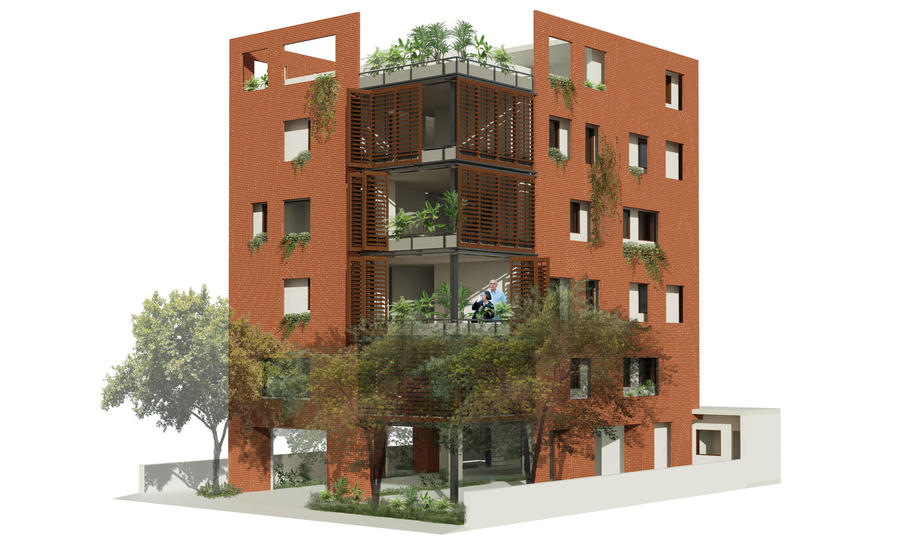
Bhandotra, Rajasthan | 2018
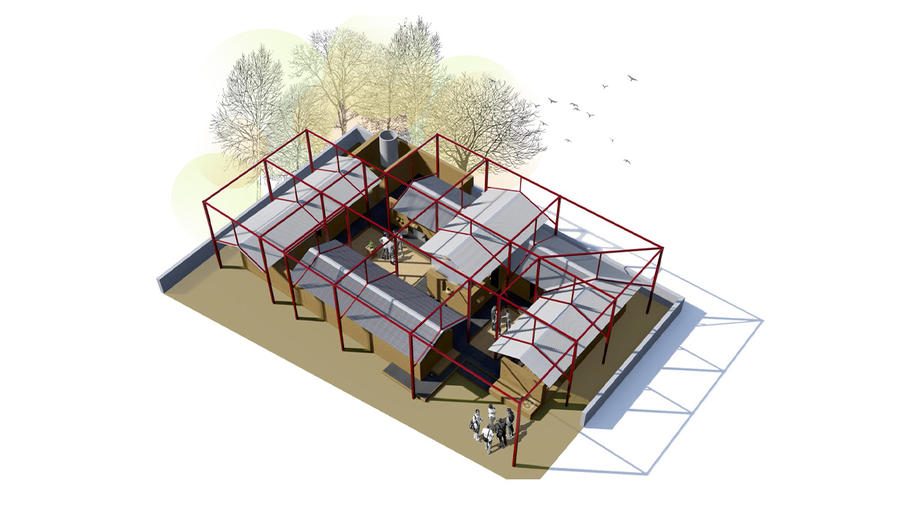
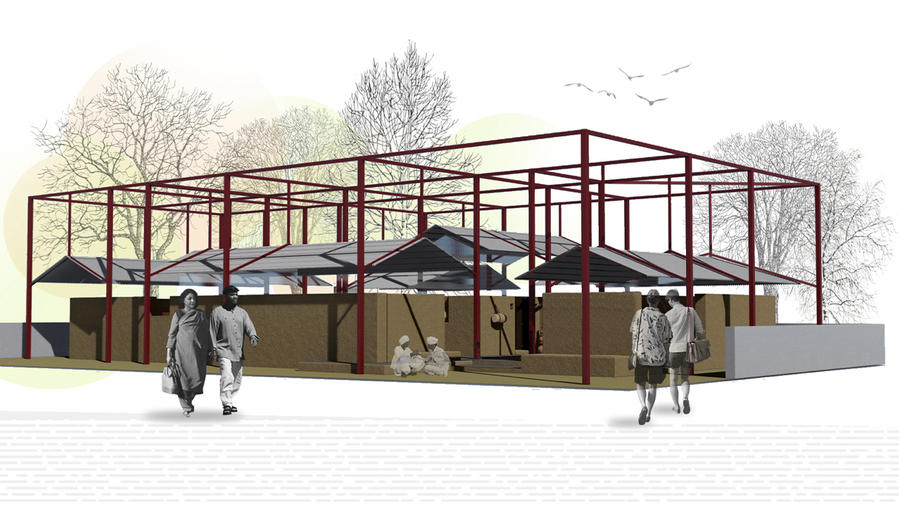
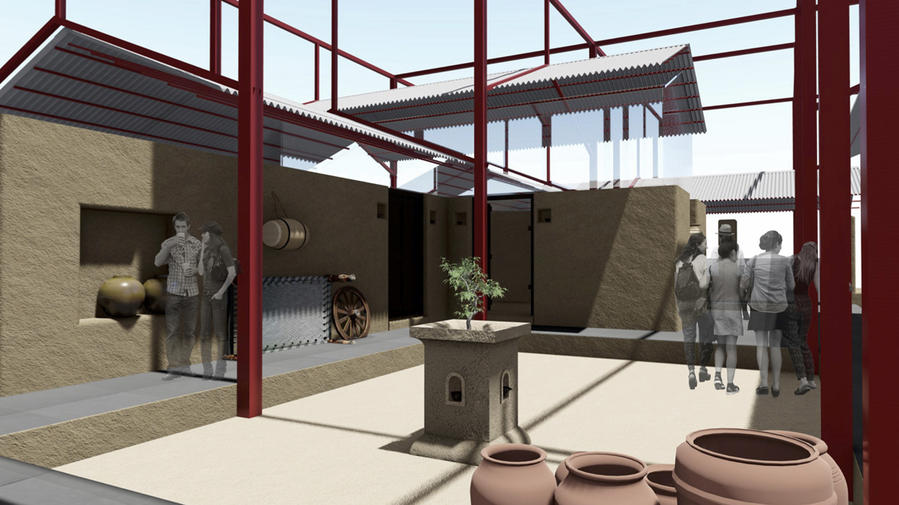
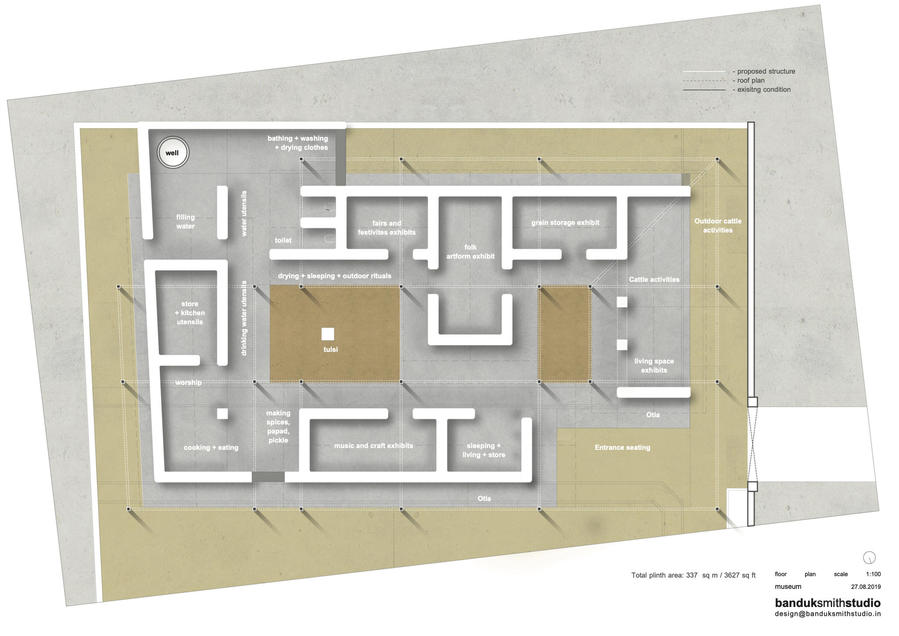
Bhandotra Museum is a folk museum near the border of Gujarat and Rajasthan, designed to commemorate the traditional rituals of village life. We proposed a hybrid technology - using traditional stone studded, rammed earth walls and "lifting" the roof as a means to open up the interiors to light (and make them taller - traditional houses are low to the ground), by hanging corrugated sheet roofs from a light steel frame that encompasses the campus.
Deesa, Gujarat | 2023
The orchard sits near the foot of the Aravalli Range in western India, surrounded by potato farms. With a raised deck, a few choice cuts and a linear plan that bends around corners, the house delicately navigates a grid of mango trees while its vistas peak down the rows for glimpses of the first stone of the mountains.
To create a living space that sits lightly between mango trees in an orchard on a working farm, and to balance the realities of growing and the beauty of the site, the elevated structure floats eight feet above the ground, and the house is placed in gaps left where trees had not survived, with a canted roof that protects its residents from the harsh sun, and a rich interior that views the lush green canopies from all its sides.
A structural steel deck laid with wooden planks extends around the house, perforated by wide circular cutouts for mango trees that grow up through the space, protecting the residents. A pool playfully juts off into the trees, while one cutout conceals a spiraling stair that reaches down to the ground. Below the floating deck, strips of light reach the cool, shaded ground below, and a series of sunken rooms, plastered in a traditional marble dust ”gutai” plaster, selectively draw in light, which is amplified across bright white marble floors and the sheen of the plaster, without drawing in its harsh heat. The heavy, lower portion of the house keeps residents cool in the hot afternoons, while the upper pavilion cools quickly once the sun lowers in the evening, allowing the space to open and extend into the protective vegetation that surrounds it.
The balance of the project puts to use every bit of material wastage, converting stone slivers into pathways and plinths, and drawing on leftover wood to develop interior panelling details, and to facilitate improvements in the barns and sheds for crop harvesting.


Photography credits: The Space Tracing Company
Design Team: Melissa Smith, Sachin Bandukwala, Megha Jhawar, Mudit Tikmani, Vishant Solanki
Structural Consultancy: StrucArt Design Consultancy
MEP Consultancy: -
Contractor: Mohan Prajapati
Carpentry: Mukesh Mevada
Ahmedabad, Gujarat | 2022
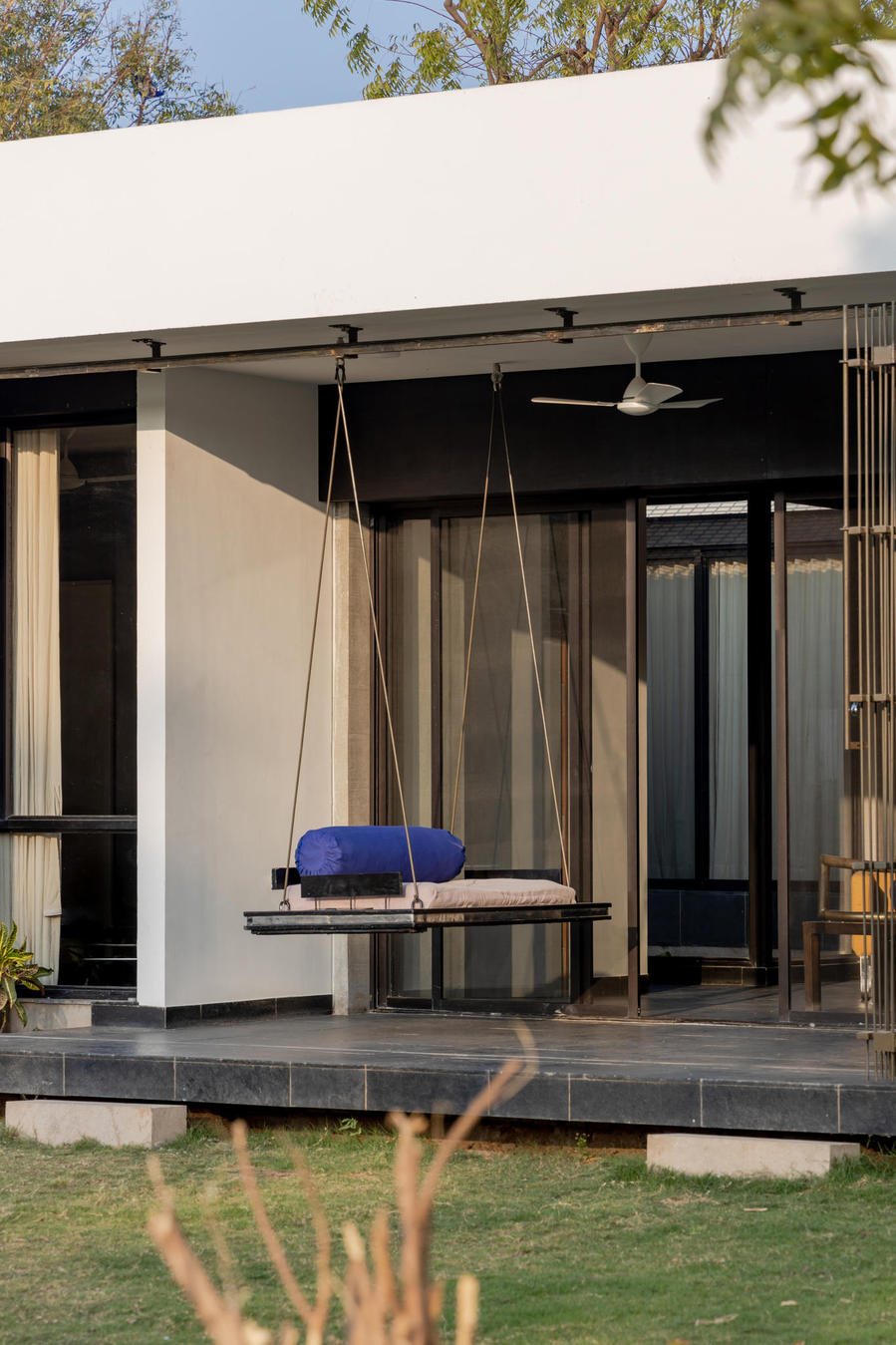
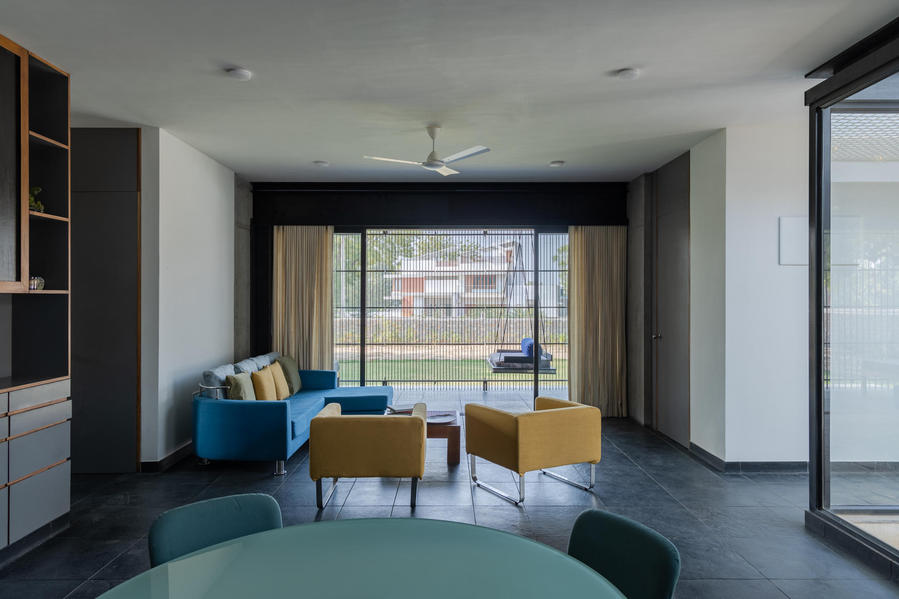
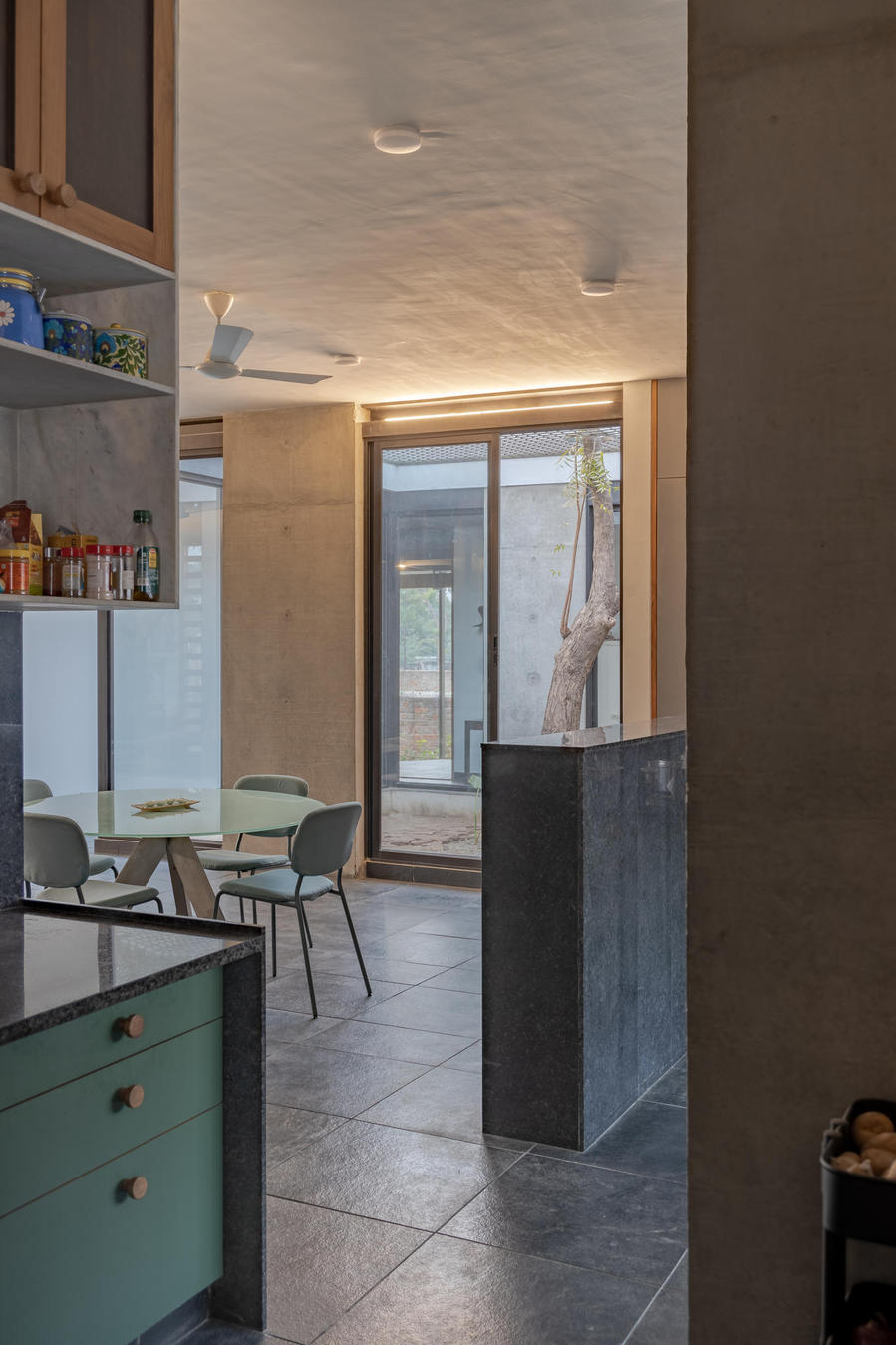
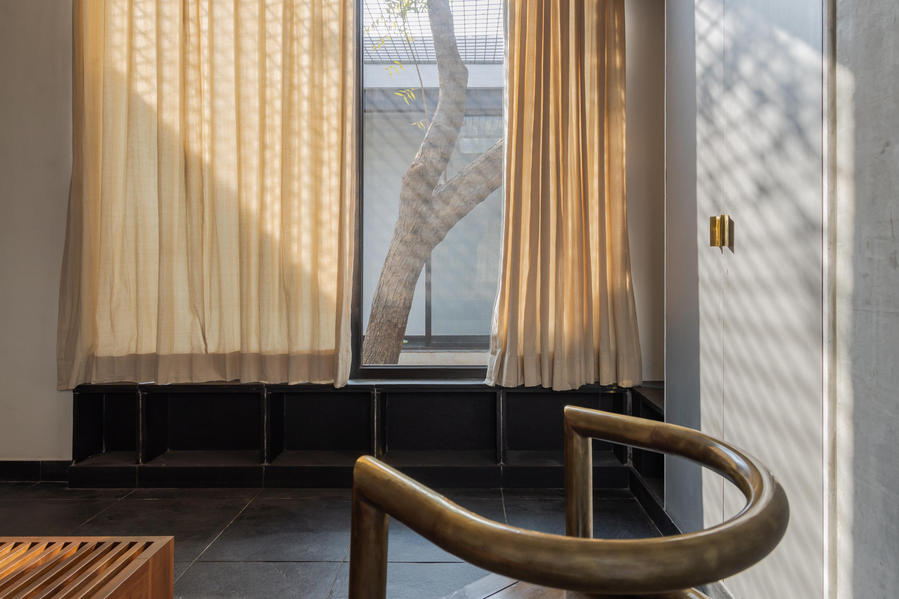
This four-bedroom courtyard house for a family of three sits in the outskirts of Ahmedabad. The brief was to design a thermally comfortable, minimal home with clean movement and flexibility in the spaces while acknowledging the existing trees on site. The aim was to achieve a delicate balance in the spatial arrangement and materials used in the project.
The plan is oriented toward the entrance on the north, with common space on the central axis. Bathrooms kept in the four corners insulate the interior. No rooms are directly exposed to exterior light; green strips bring indirect daylight deep into the square plan.


Photography credits: The Space Tracing Company
Design Team: Melissa Smith, Sachin Bandukwala, Hiral Kandoi, Mishal Dodia, Rushikesh Gawade
Structural Consultancy: StrucArt Design Consultants
MEP Consultancy: Jhaveri Associates
Contractor: Hitesh Purohit
Carpentry: Omprakash Suthar
Deesa, Gujarat | 2021
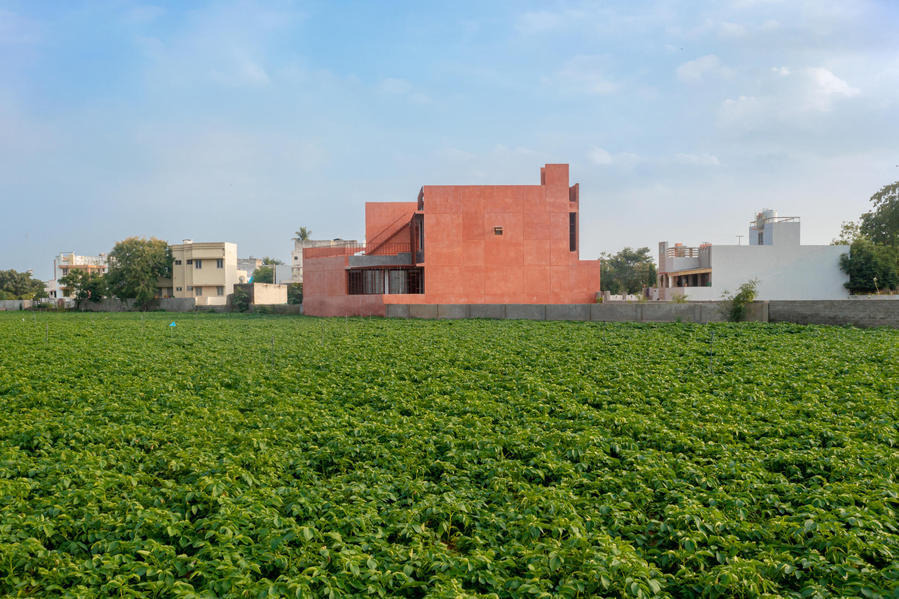
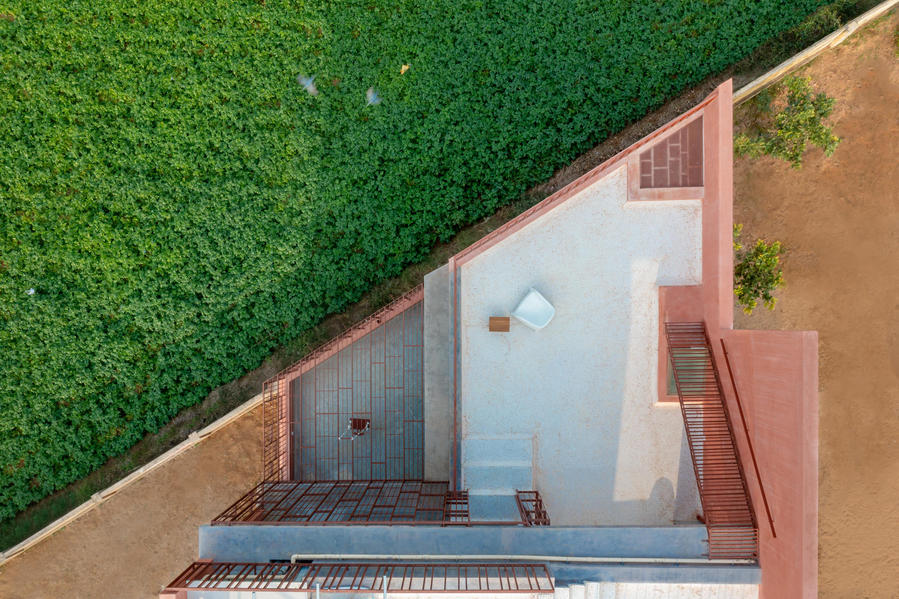
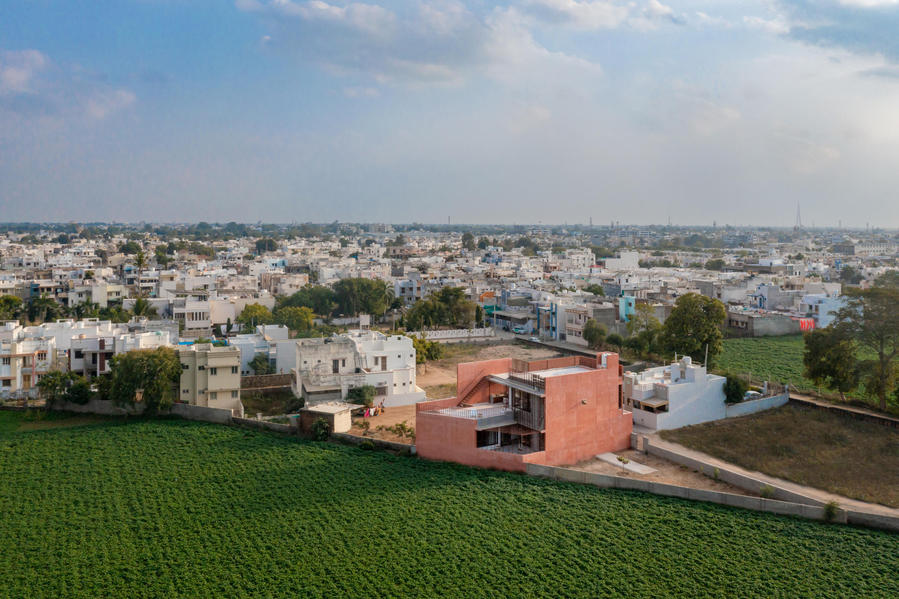
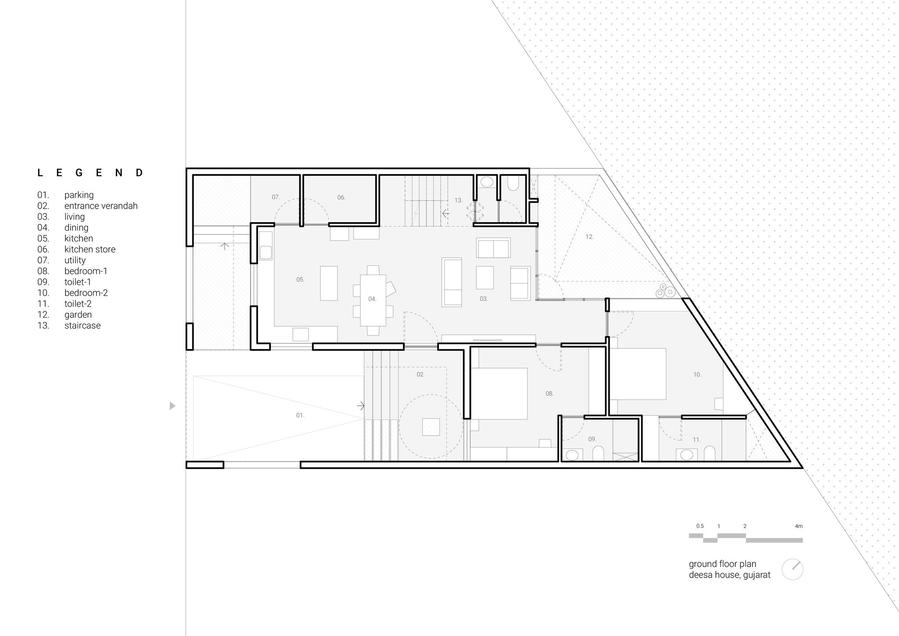
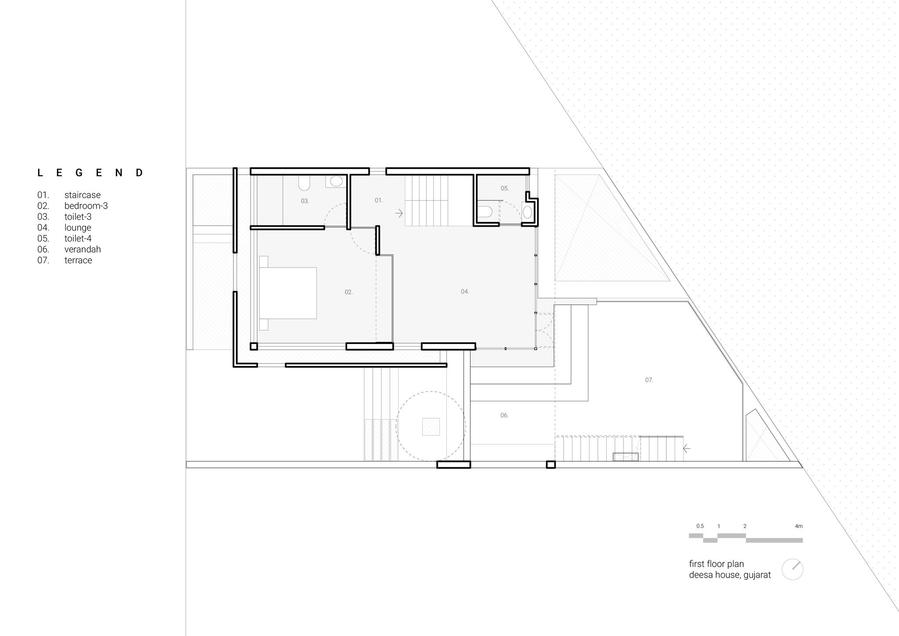
Perched on the edge of town, along a buffer of potato farmlands, is a residence, Shoonya (meaning zero) designed for a young family. The brief was to design a house that would naturally withstand the harsh climate conditions of northern Gujarat and create various scales of openness within the house.
In response to these aspirations, the project balances experimental design methods with traditions of the neighbourhood and locally available construction skill, material and knowledge.
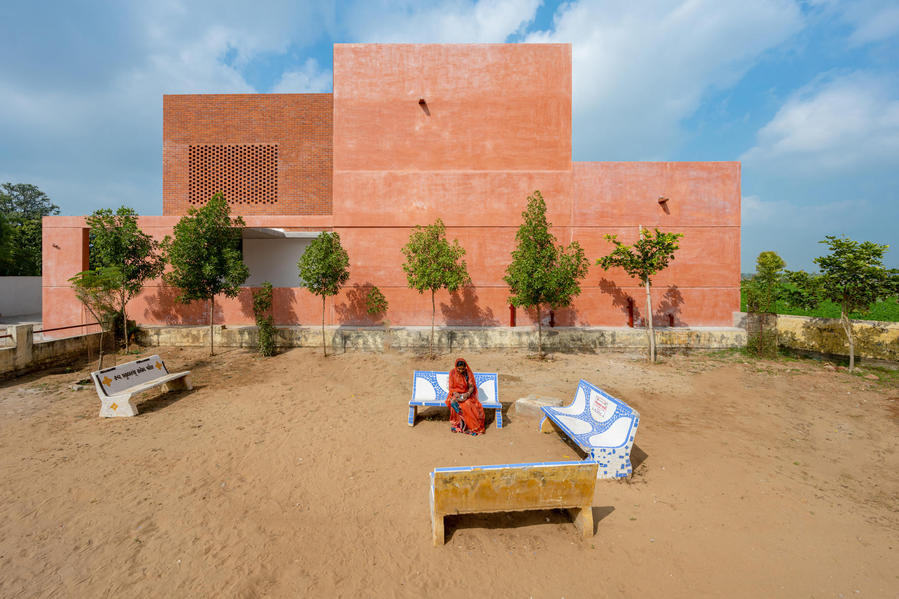
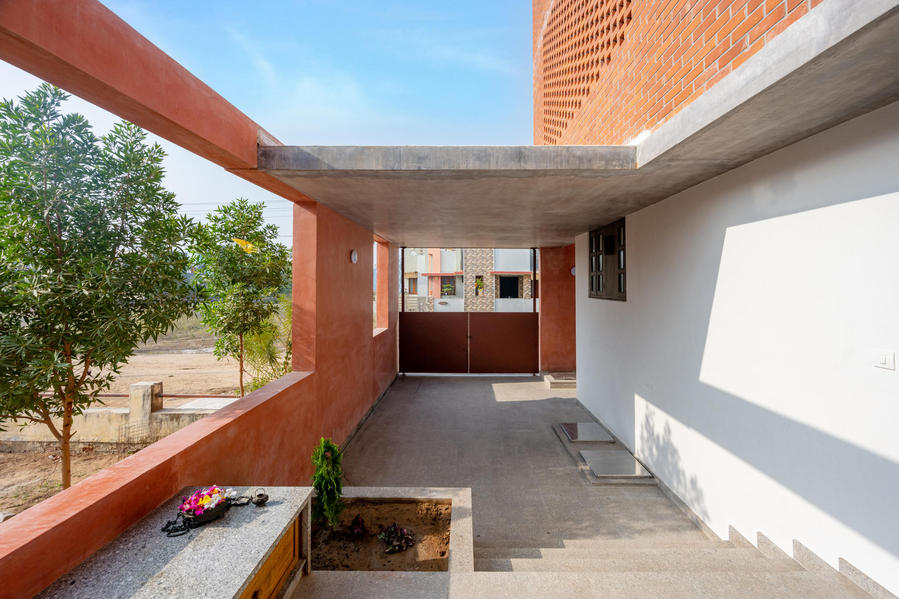
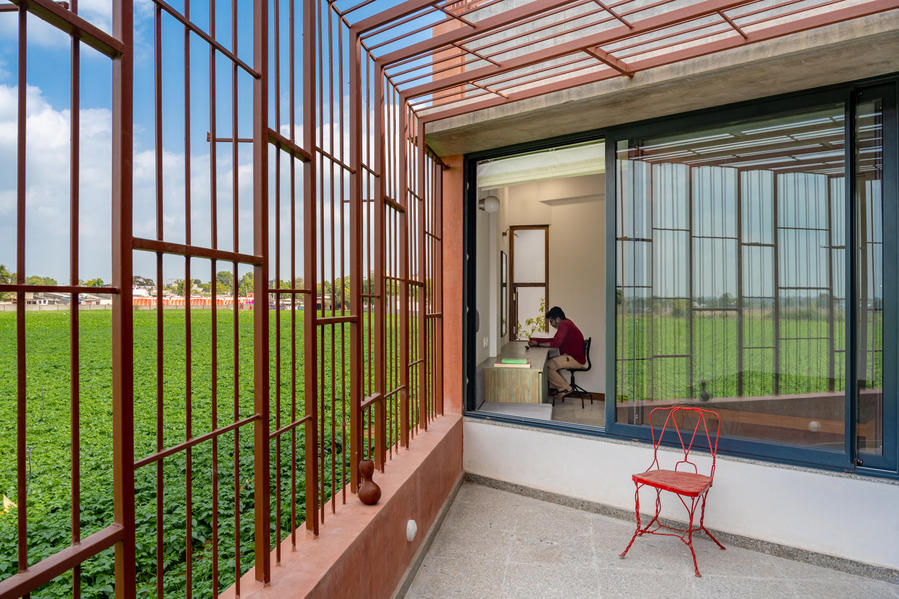
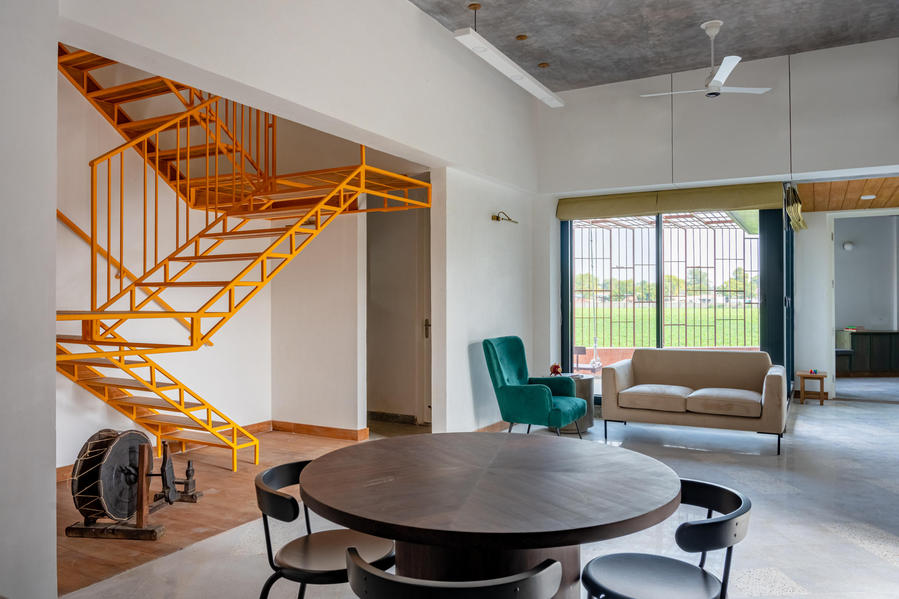
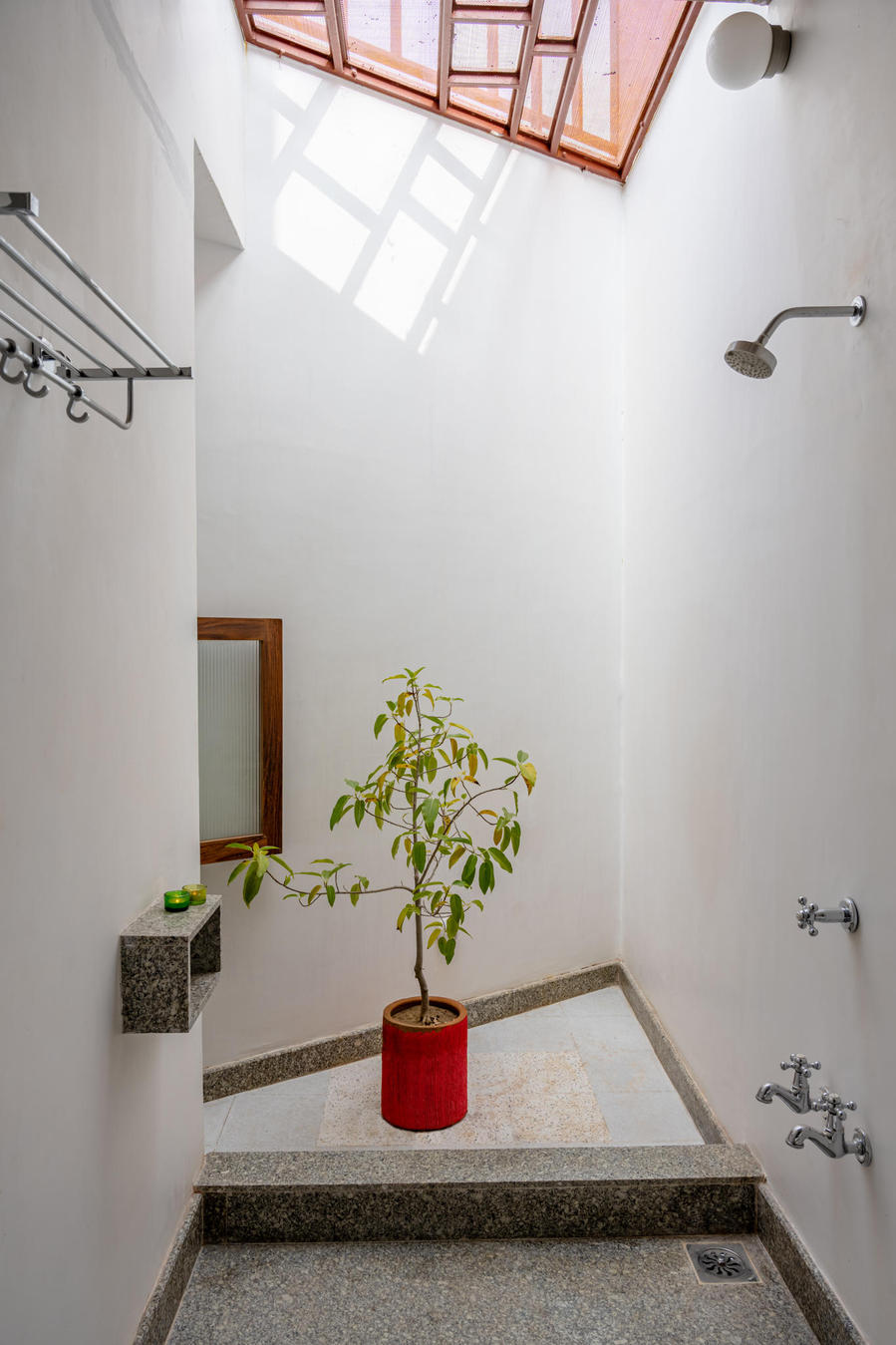
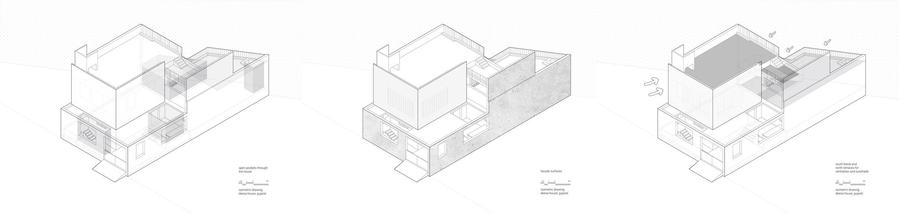
The protective house uses thick walls, insulated slab strategies, and smartly controlled openings to shield its inhabitants from the hot summer sun. The plan is oriented to the entrance on the southern side while potato farmlands stretch along the northern end. The design is revealed through solar strategies of closed mass on the south and open terraces for transparency on the northern side, strategic cut outs where light and shadow can play, and walls of different materials and porosities. The house is constructed through a combined structural system; with load bearing external walls and an internal frame structure.
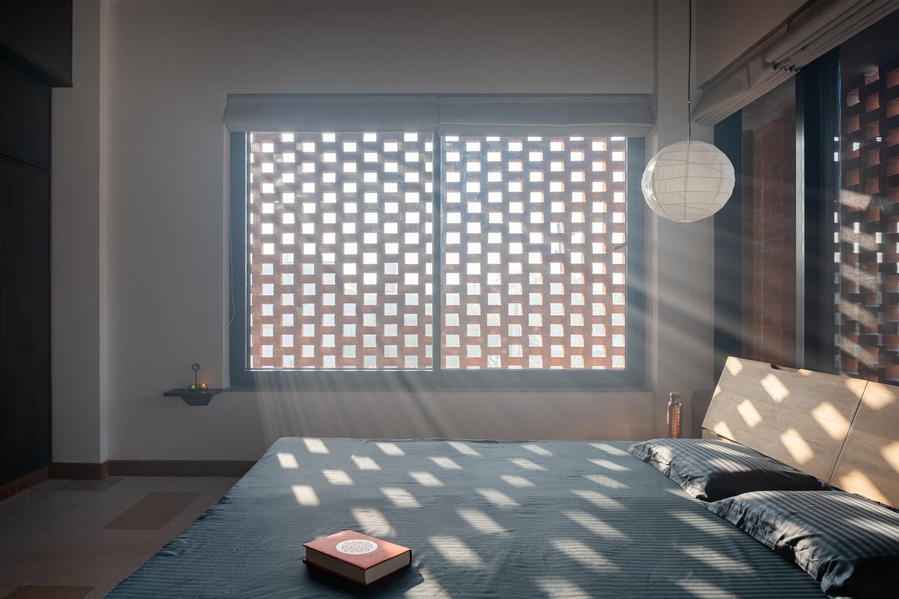
Lime plastered walls, exposed brick jaali (screen) facades, steel frame fenestrations, and flowing terrazzo flooring come together to bring in coolness into the space and form a sense familiarity. In the earthy tones of the built house, the furniture and fabricated staircase add a pop of color and eccentricity. Shoonya is powered through solar panels, installed on the terrace.

Photography credits: Vinay Panjwani
Design Team: Melissa Smith, Sachin Bandukwala, Hiral Kandoi, Mudit Tikmani, Nabajyoti Dutta Choudhury
Structural Consultancy: StrucArt Design Consultants
MEP Consultancy: Jhaveri Associates
Contractor: Mukesh Mevada
Carpentry: Mukesh Mevada
Gandhinagar, Gujarat | 2018
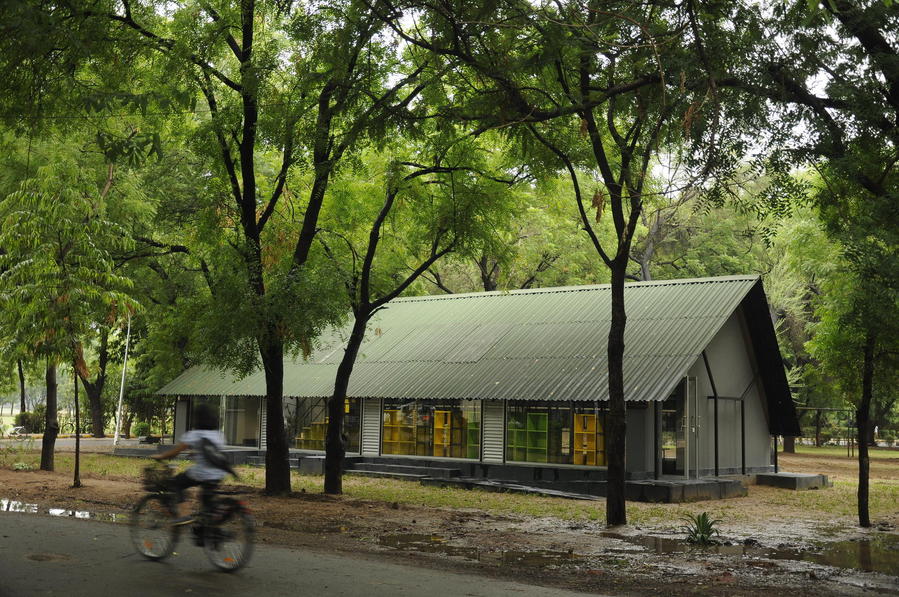
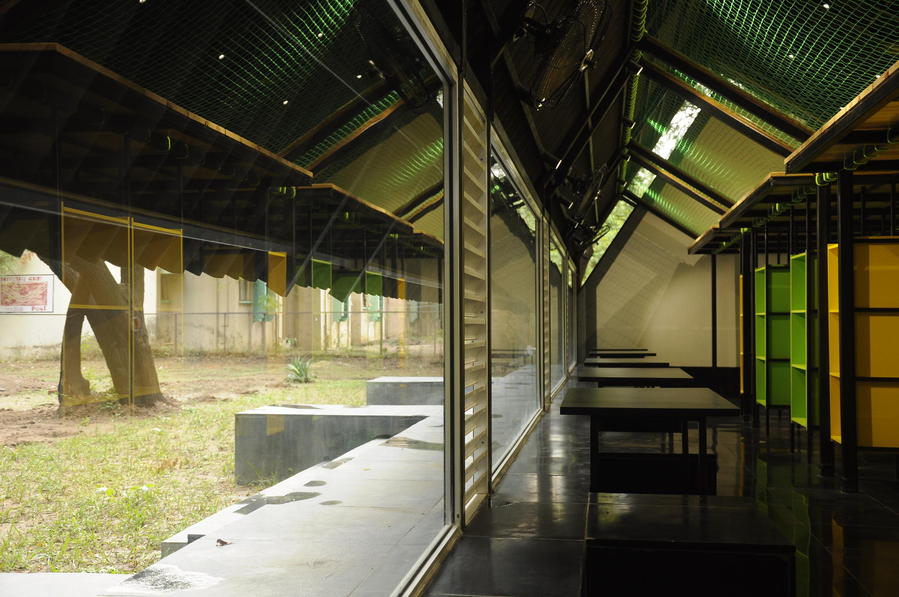
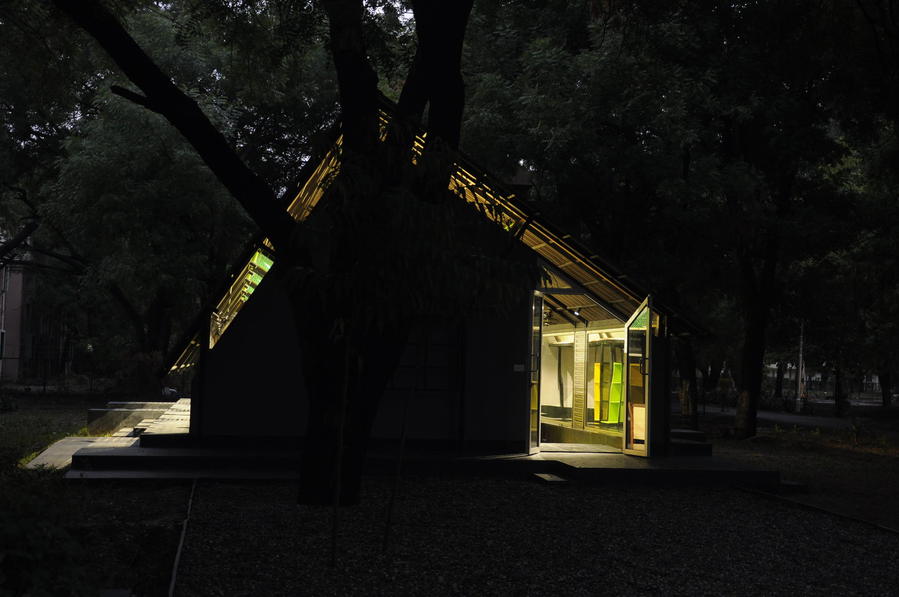
In the BSF campus of Gandhinagar, the Swadhyay Reading Room, designed for the children of BSF wards, sits nestled amidst a beautiful green canopy. Mimicking the ancient ashram tradition of studying under the trees, the simple, relatable form, both in terms of its spatial arrangement as well as its structural form, adds a layer of cover to the vibrant setting.
The 160 square meter project was constructed in a short span of ten weeks, made possible by the efforts of a dedicated construction team, and a design that is optimised for speed.
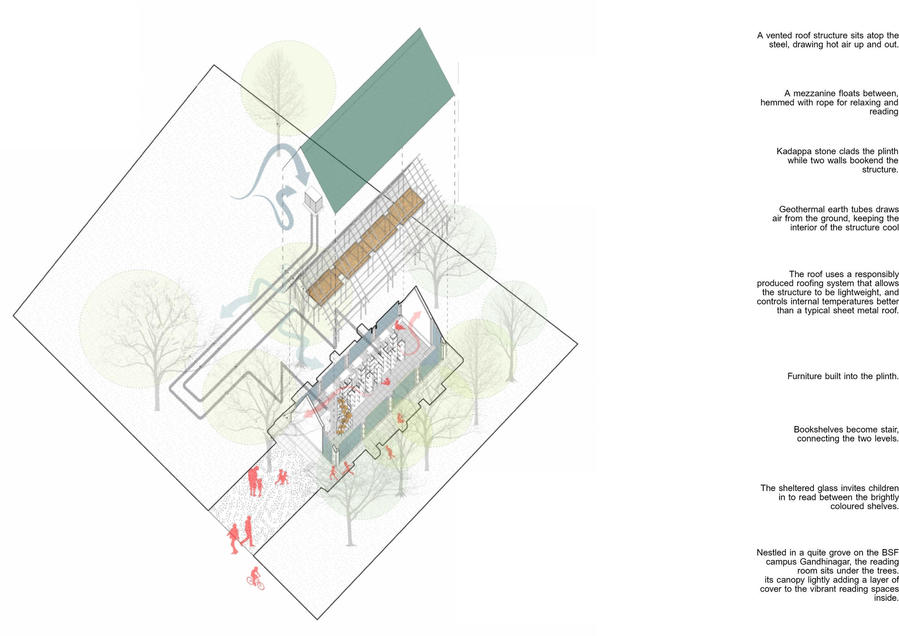
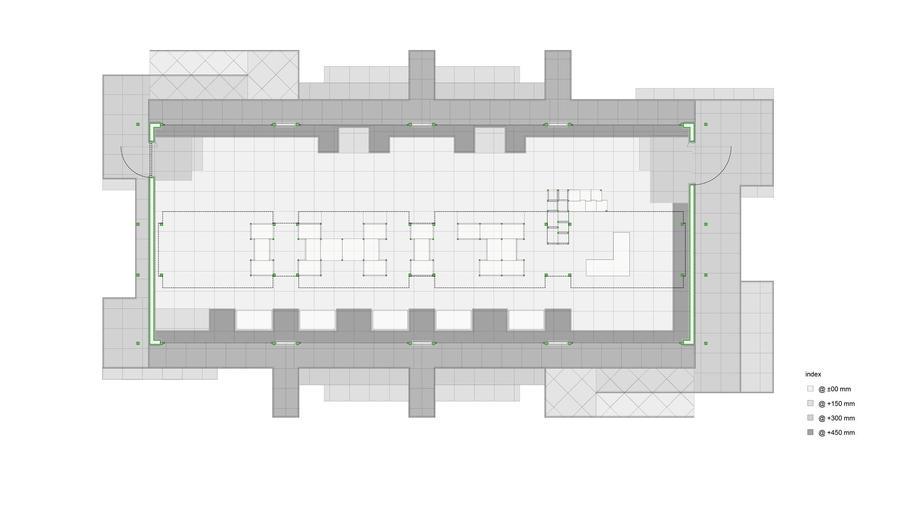
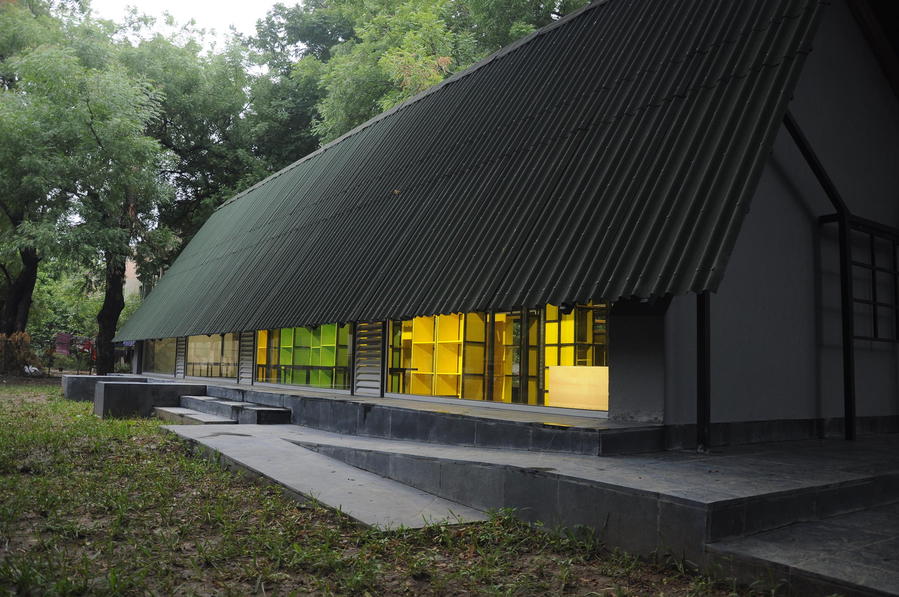
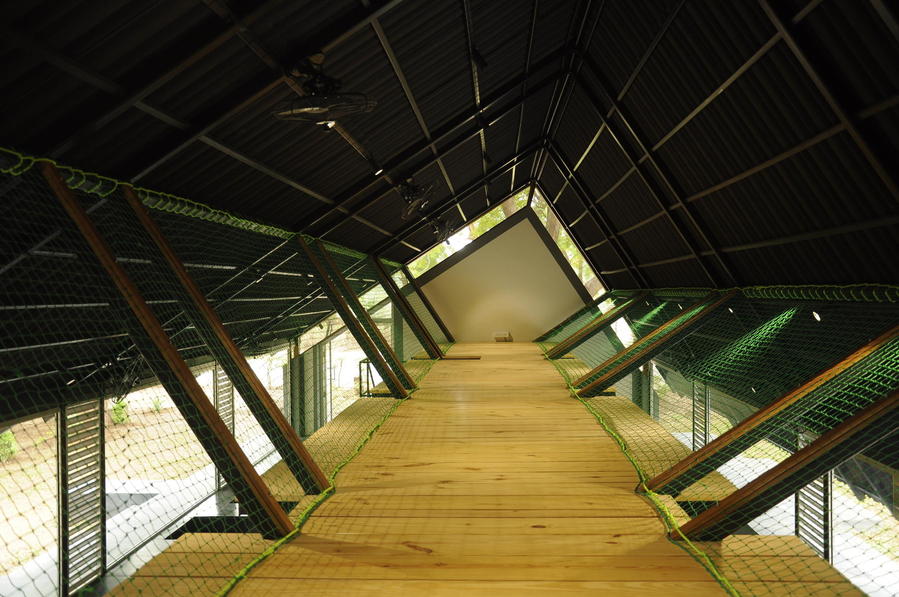
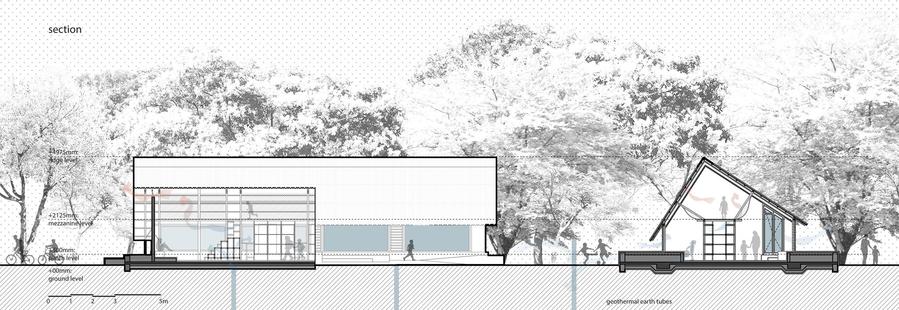
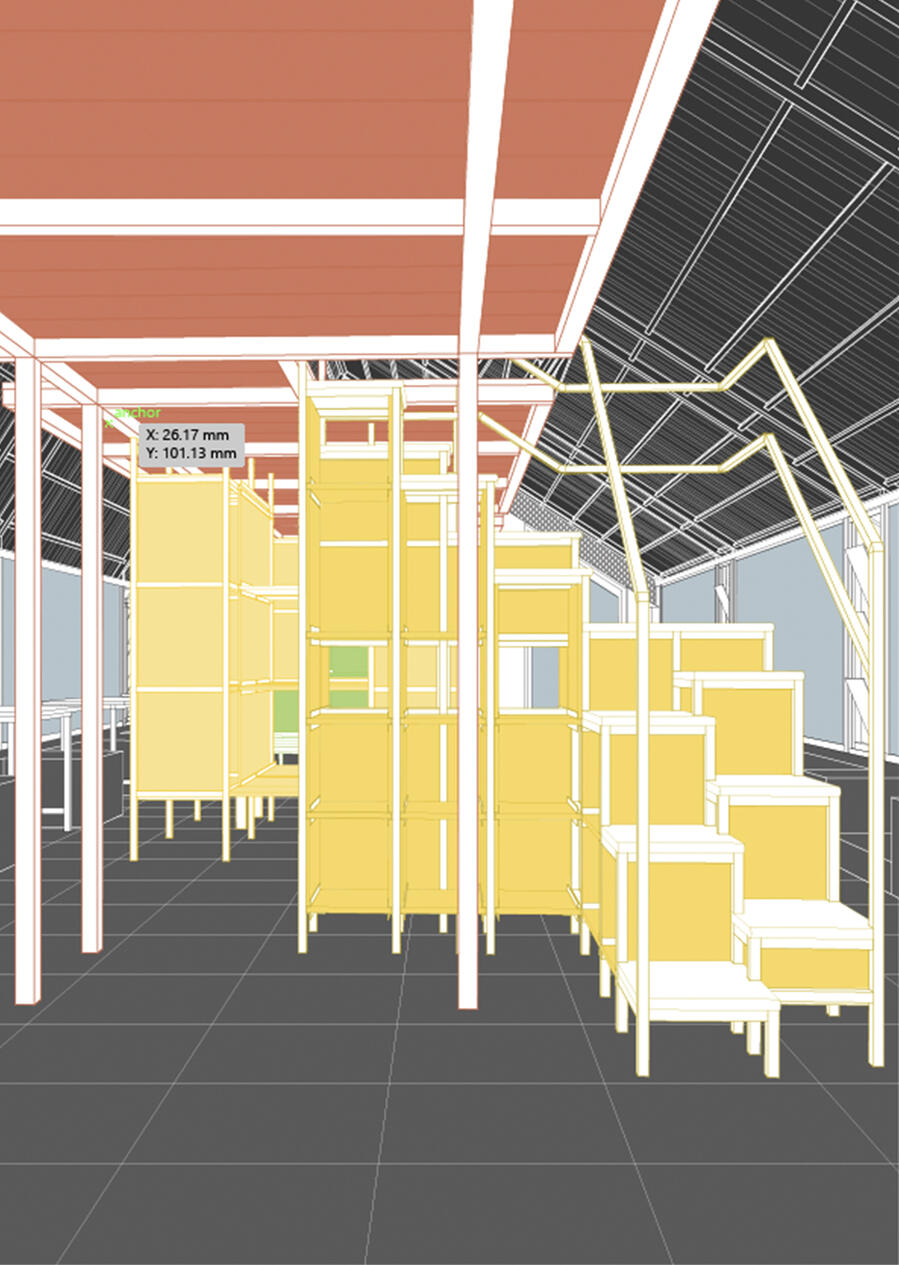
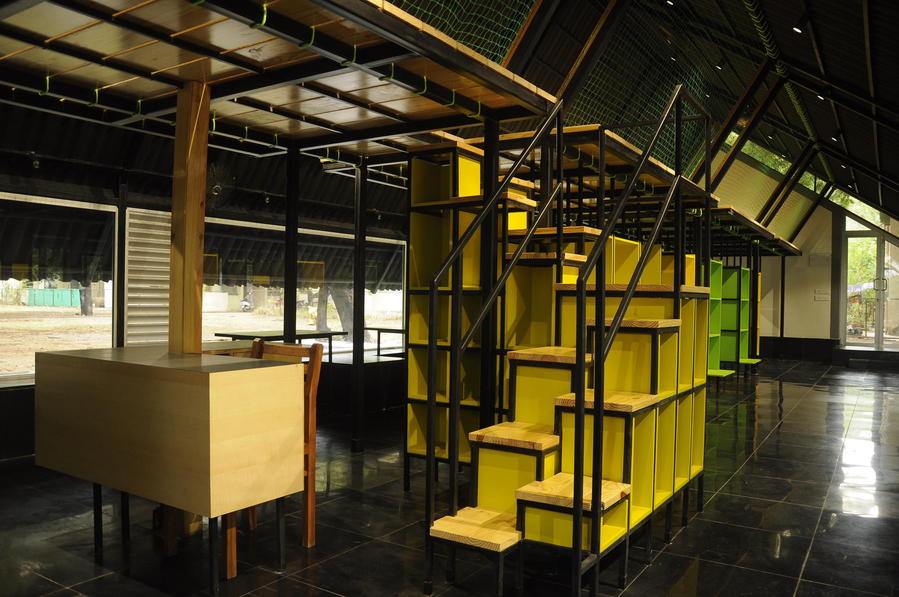
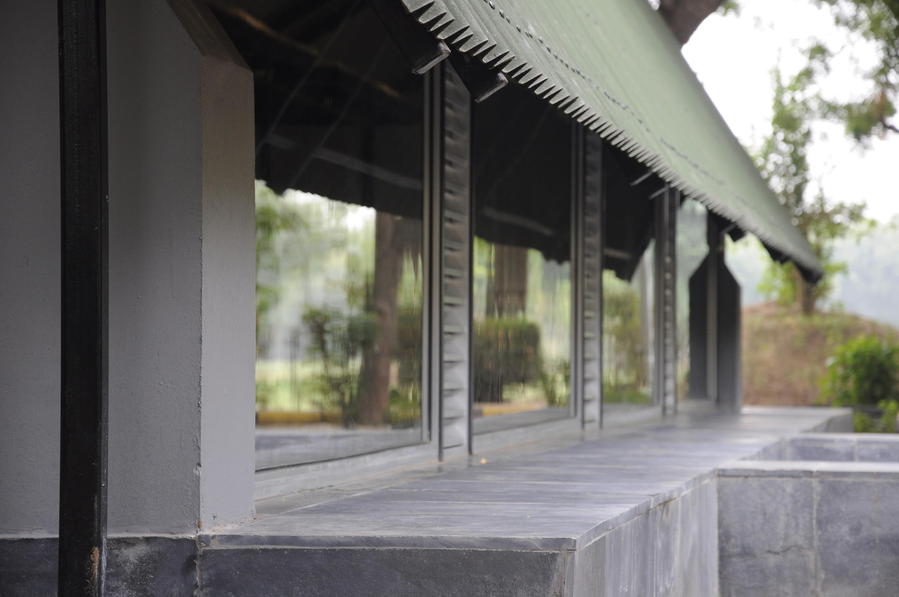
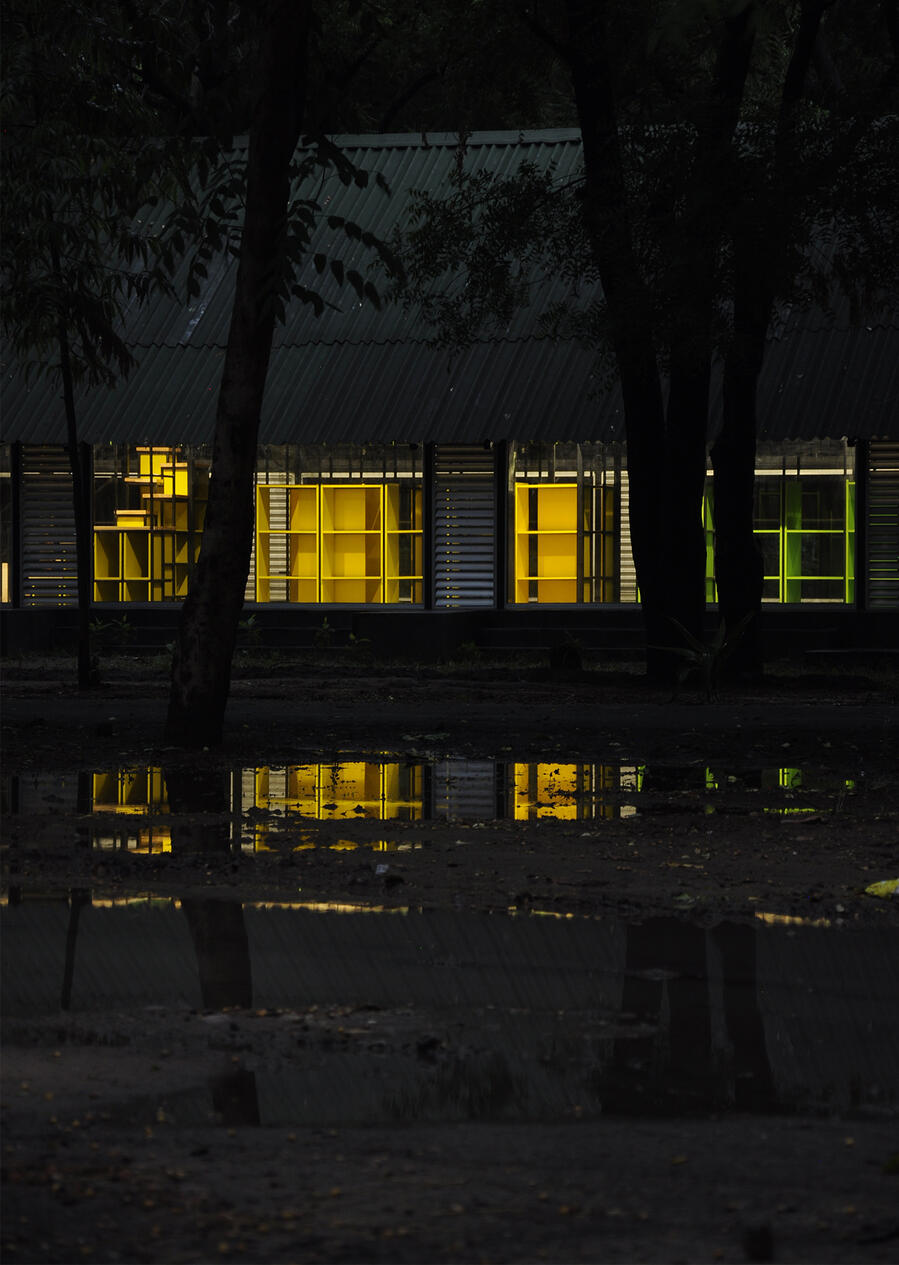
The building comprises of two parts: a heavy, articulated ground and a light, traditional yet modern eccentric shade perched upon it. The undulating brick plinth clad with kadappa stone holds users close to ground, merging with built-in tables and benches. A ventilated roof sits atop a steel framework, with extended eaves to protect the plinth, and a series of geothermal earth tubes draw air in through the ground, maintaining the structure's coolness. In addition to that, a mezzanine floats above brightly coloured bookshelves, accessed through a camouflaged stair. Planks of pine wood, hemmed in with rope nets for relaxed reading, adds to the playful vibe. As the dusk approaches, the vivid space inside reveals itself through the sheltered glass, inviting the children in, to read.
** Received The Merit List Citation for 2018-2019 **
Photography credits: Sachin Bandukwala
Design Team: Melissa Smith, Sachin Bandukwala, Nabajyoti Dutta Choudhury, Rupal Rathore
Structural Consultancy: StrucArt Design Consultants
MEP Consultancy: -
Contractor: ID Projects Pvt Ltd
Carpentry: Omprakash Suthar
Vapi, Gujarat | 2021
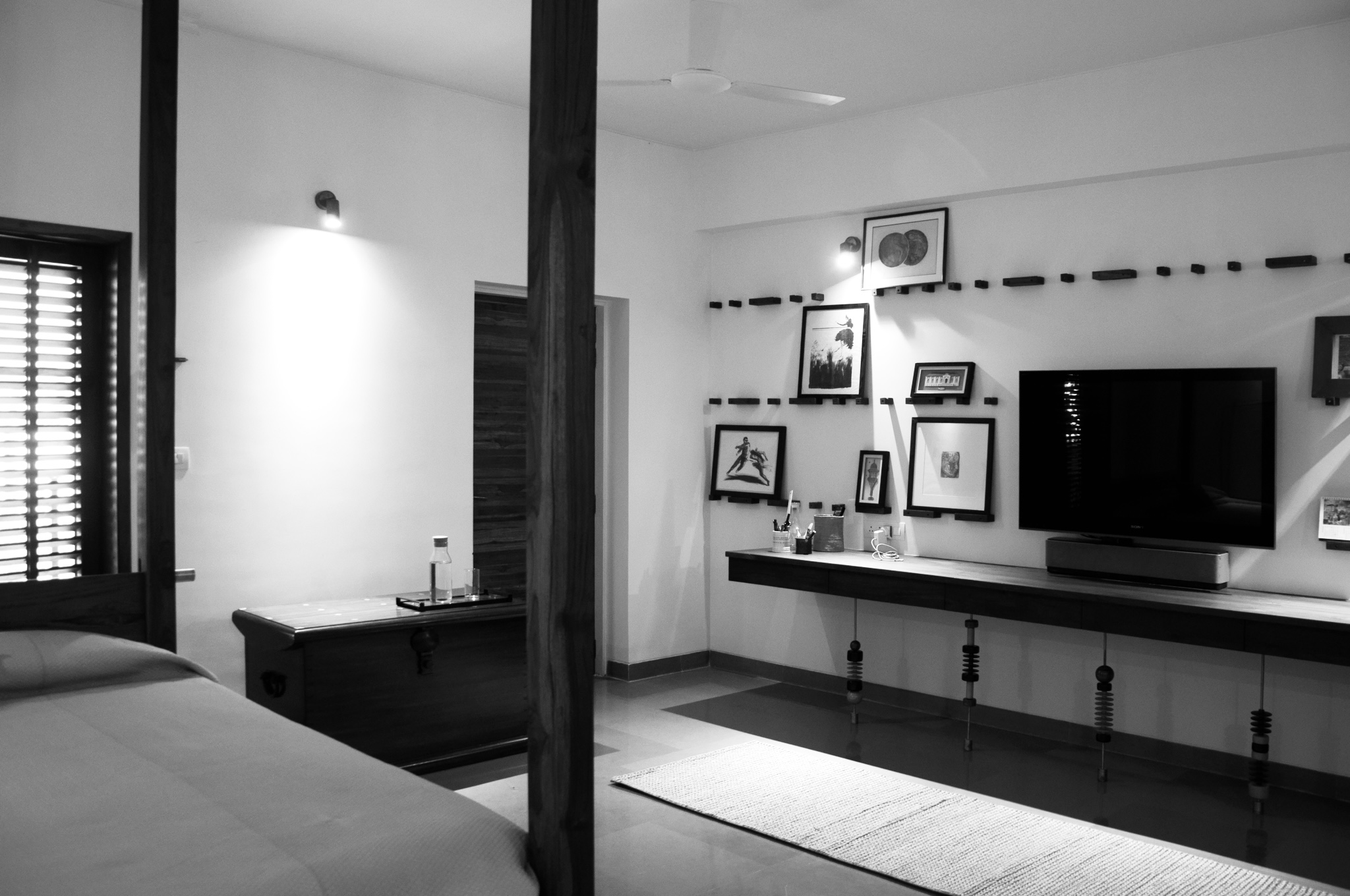
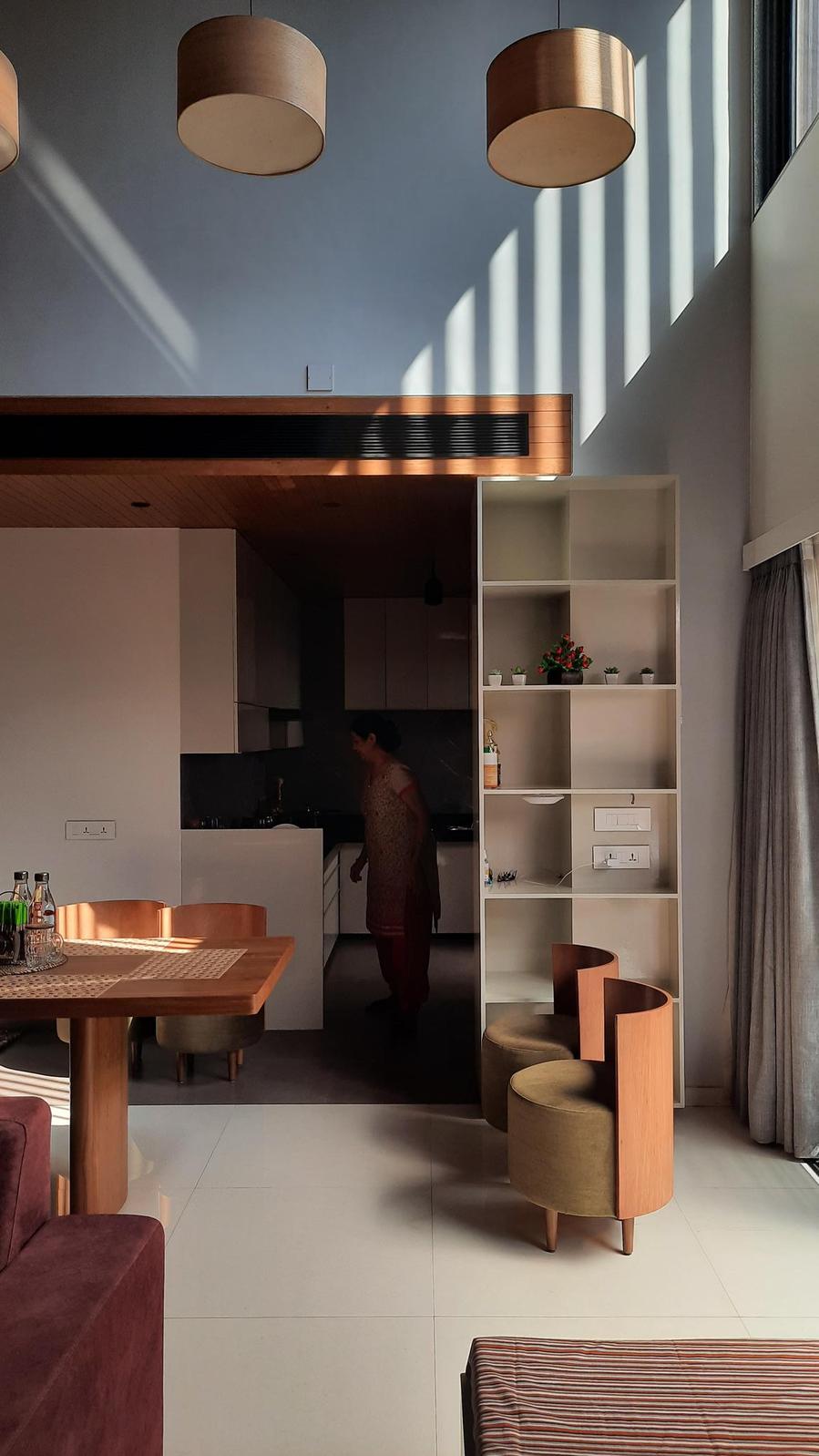
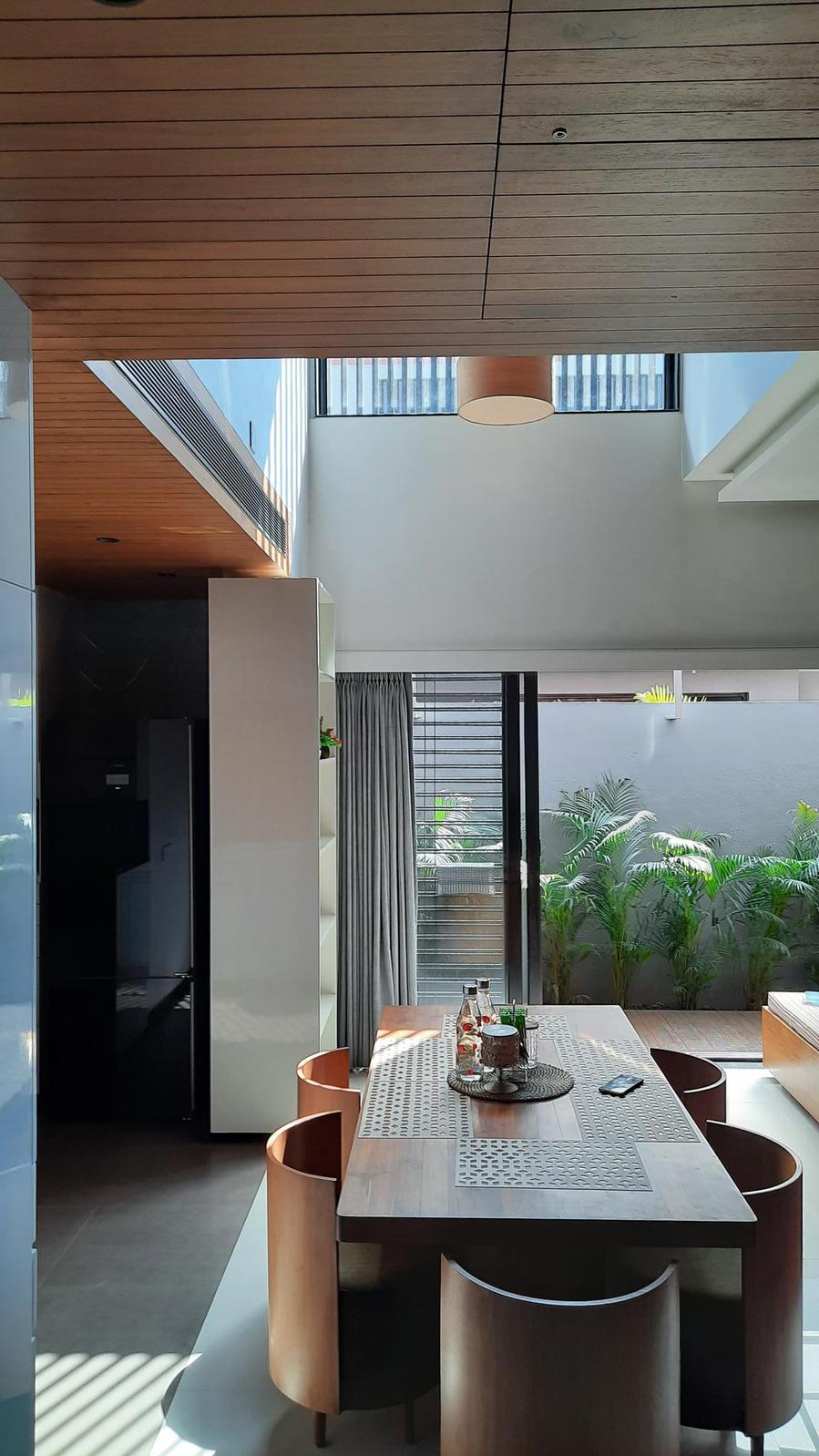
In order to create a sense of stability and permanence in a primary home, the core idea was to bring the mass of the space to the ground and the walls by treating the furniture, lighting, cladding, and other elements appropriately while keeping the ceilings lighter.
The idea gradually developed into bringing the interior volume of the home together via natural wood as the fundamental element.
The reclaimed Valsad teak became the space-defining element, starting from creating dynamic volumes in the living area to the vertical, floating, beam-like light fixtures which are housed in the double-height space, the wooden elements are introduced to establish a visual connection throughout.
Vapi, Gujarat | 2021
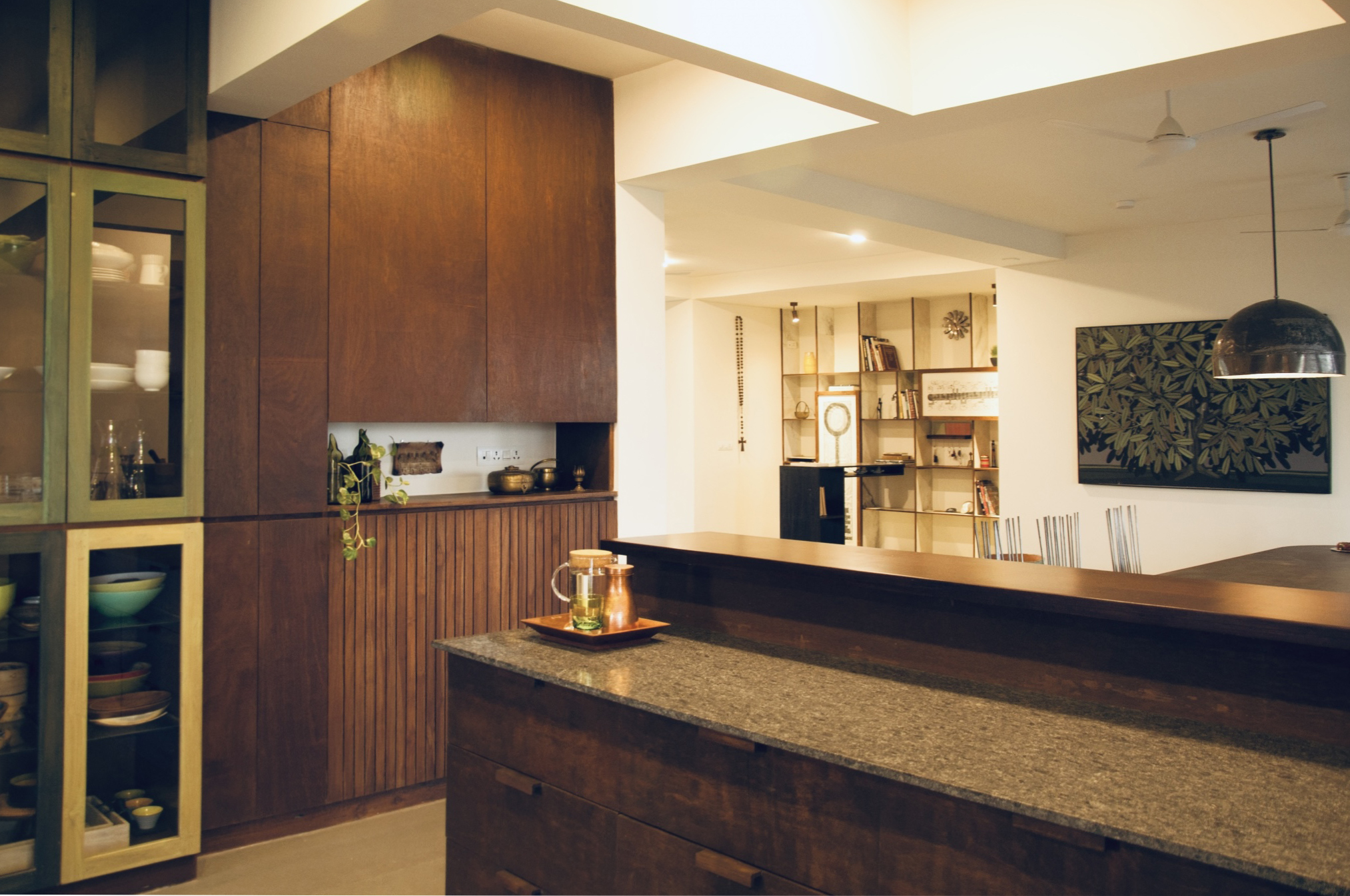
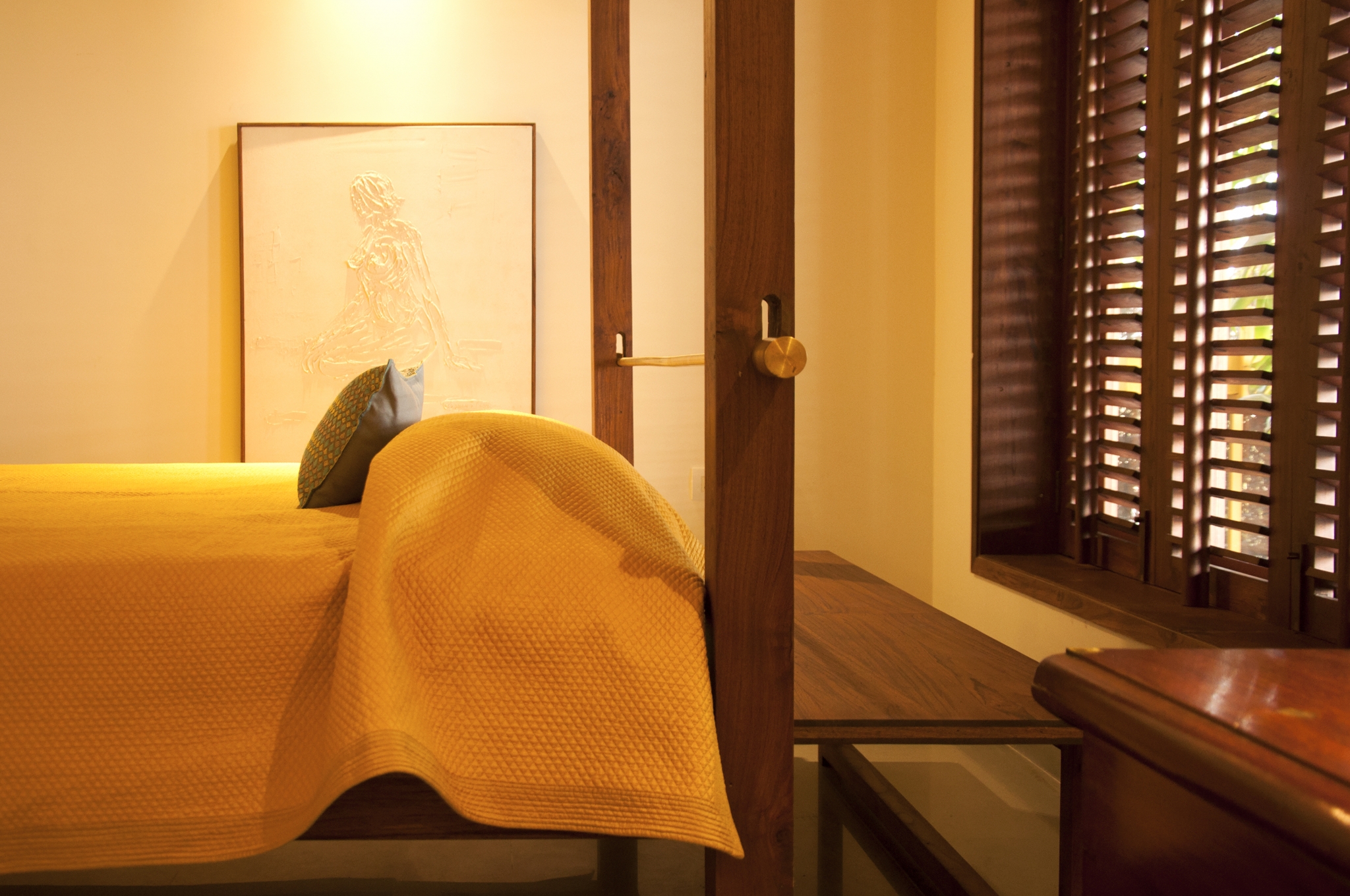
A 3BHK row house unit among 500+ similar units needs hyper customization to stand out from the neighbours, at least inside. A brass and wood handrail, teakwood bench ... pieces of a rich interior.
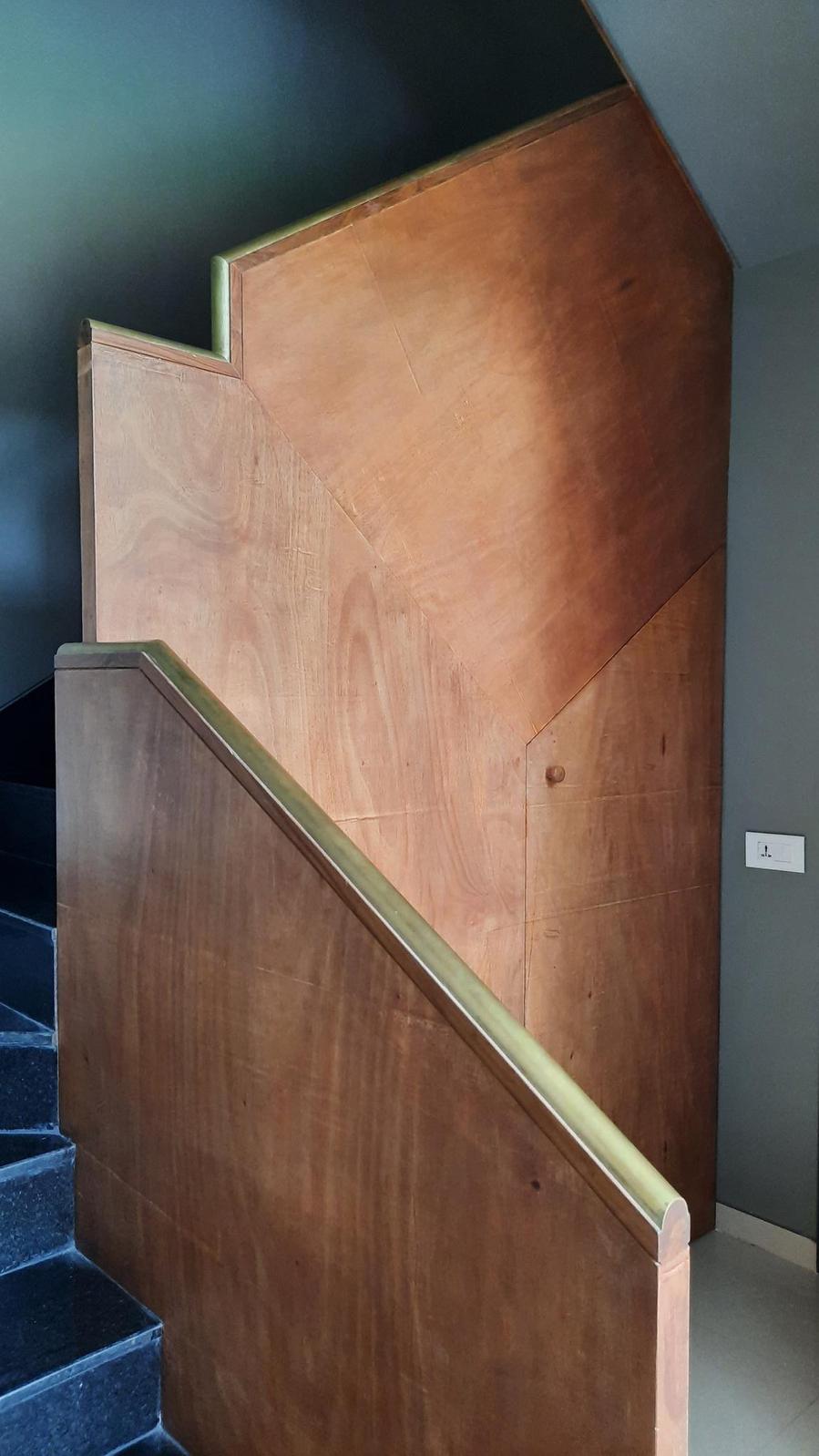
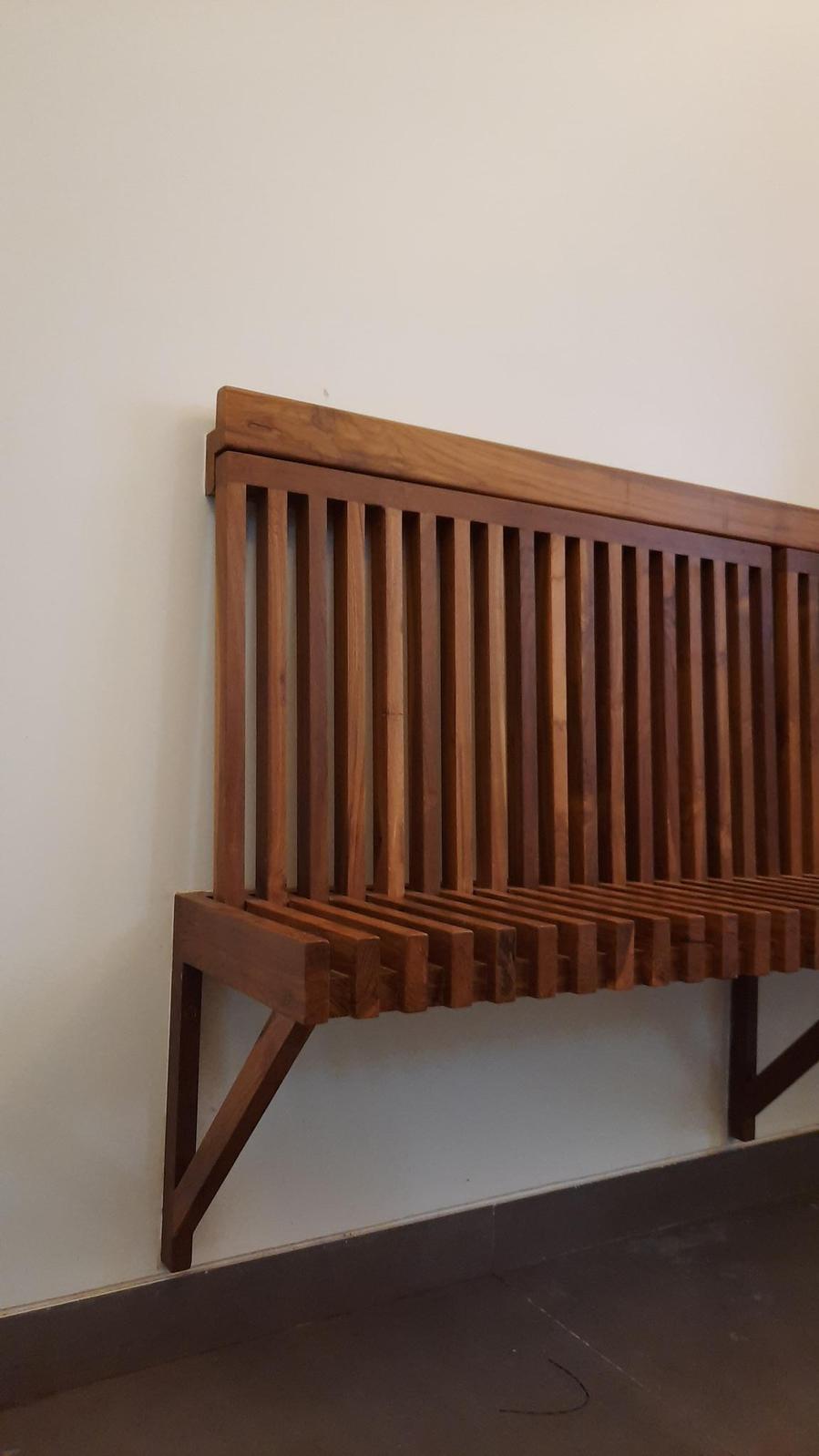
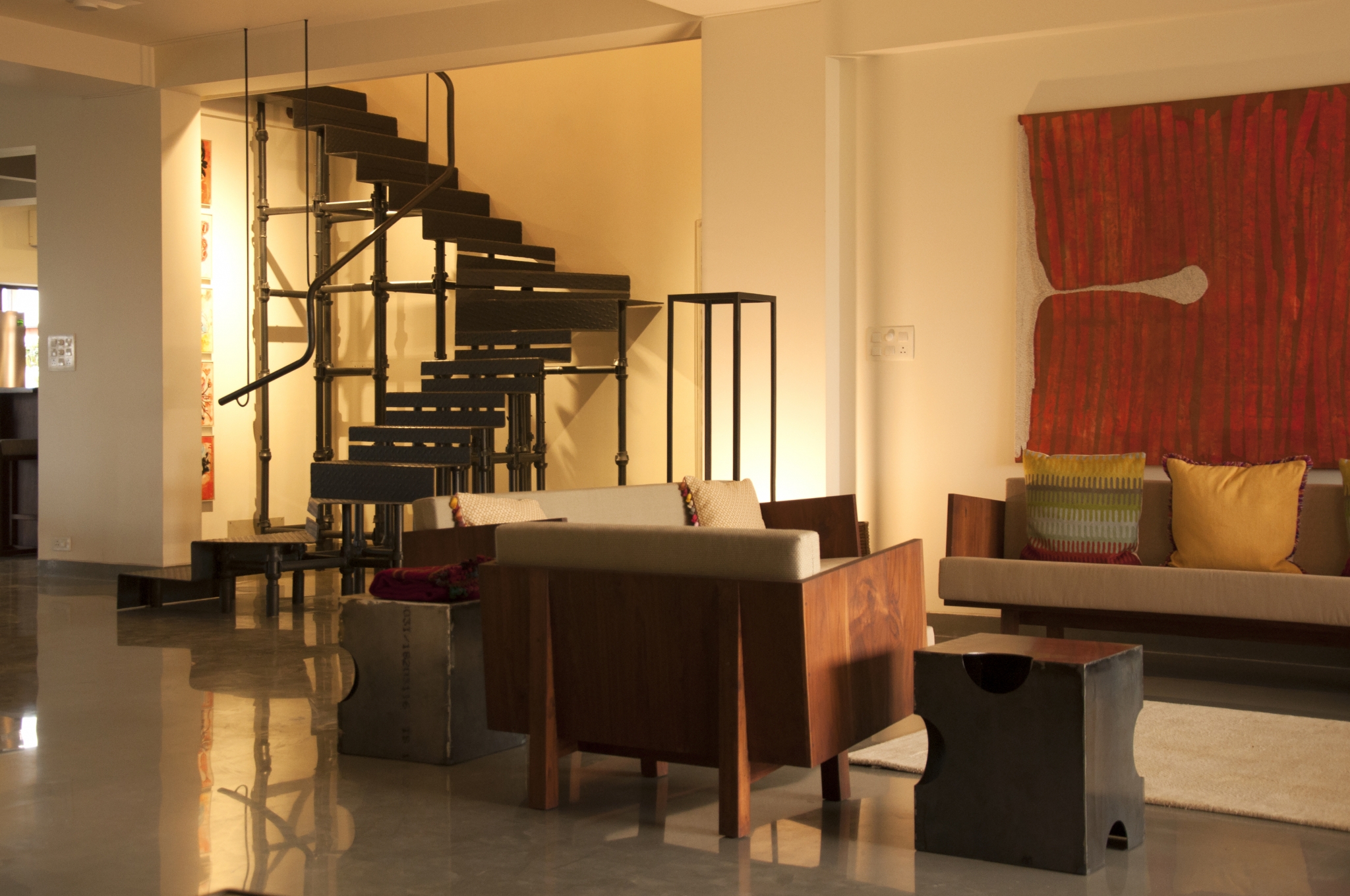
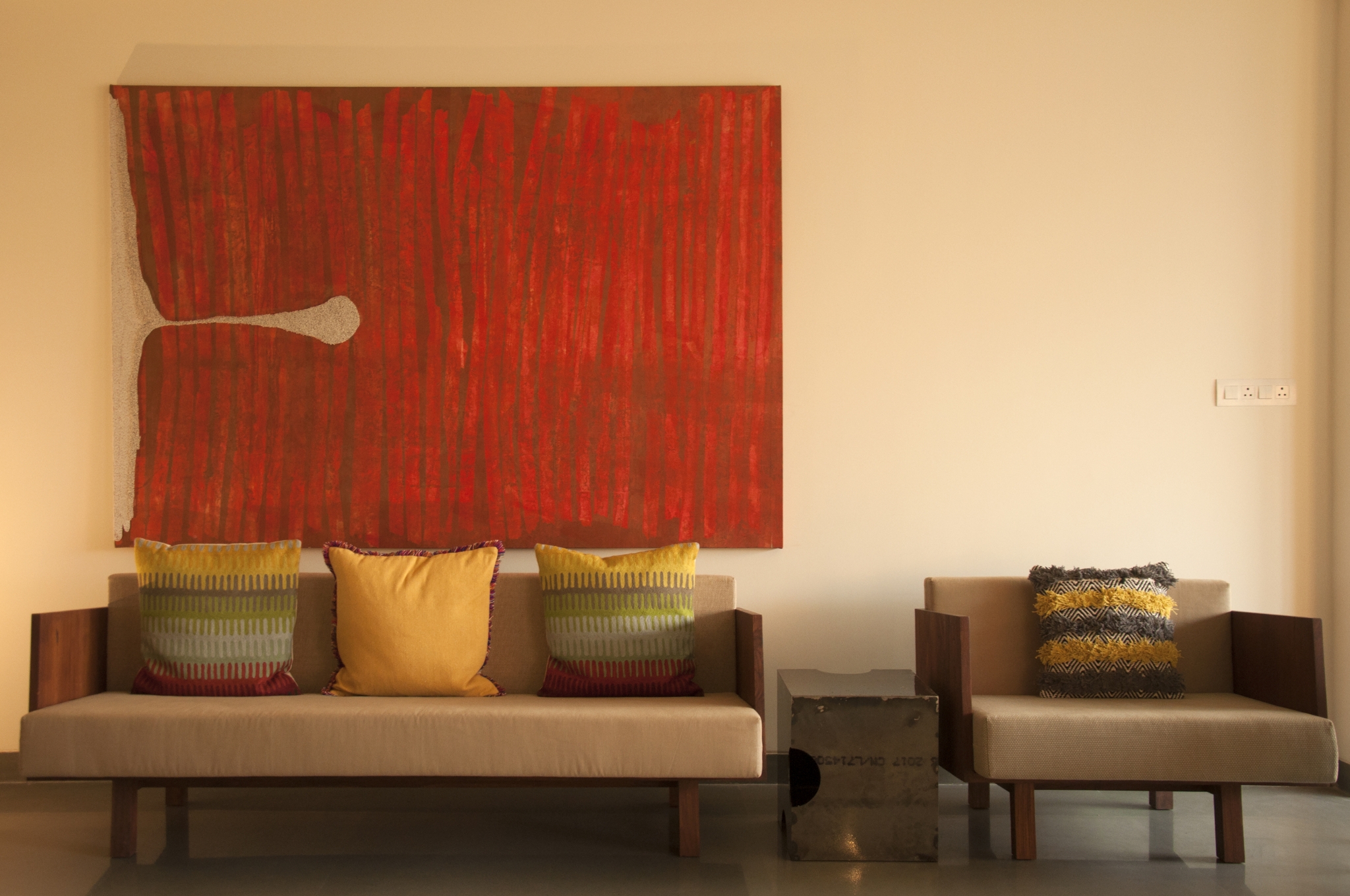
The home is a play of quiet corners and lively moments, the material and lighting are its backdrop. Traditional lacquer crafts, wood and steel meld together, inhabiting this two-storey penthouse. The narrative is interspersed as pops of colour in otherwise calm spaces.
A mechanical drum dome hangs in the dining room, the material playing off natural light. The deer legged dining table is paired with metal backrest chairs. Steel plates rest on scaffolding staircases. Brass, metal and lacquer leave their traces throughout the penthouse.