Deesa, Gujarat | 2021
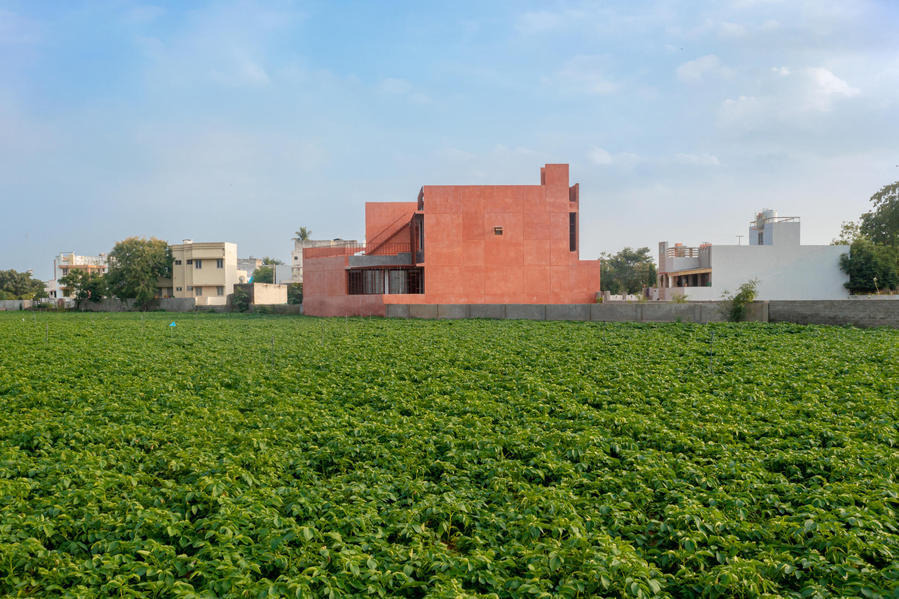
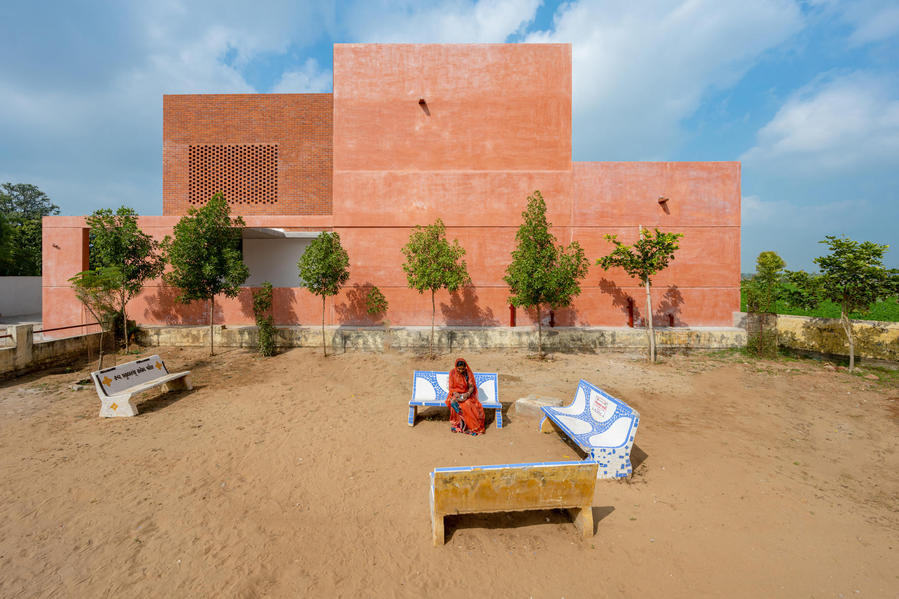
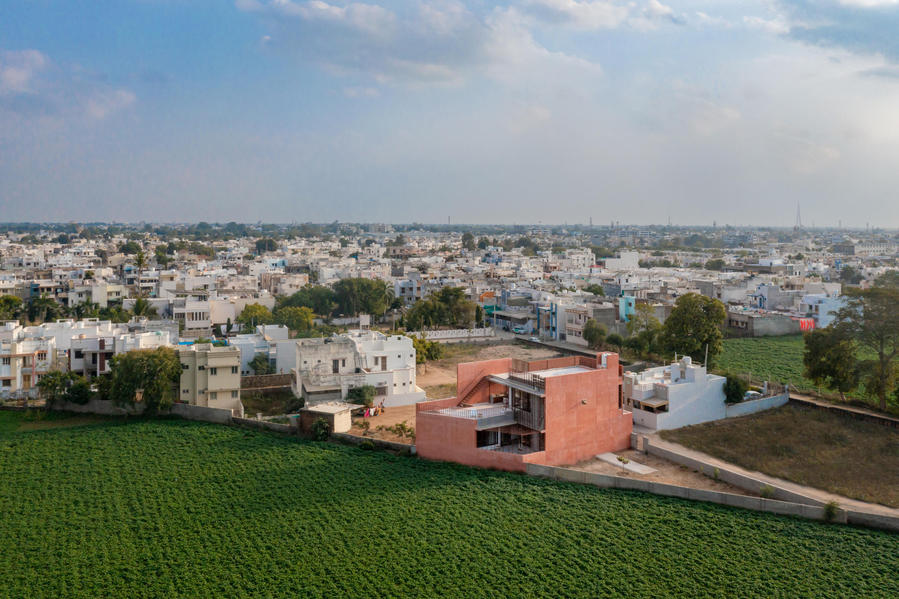
Perched on the edge of town, along a buffer of potato farmlands, is a residence, Shoonya (meaning zero) designed for a young family. The brief was to design a house that would naturally withstand the harsh climate conditions of northern Gujarat and create various scales of openness within the house.
In response to these aspirations, the project balances experimental design methods with traditions of the neighbourhood and locally available construction skill, material and knowledge.
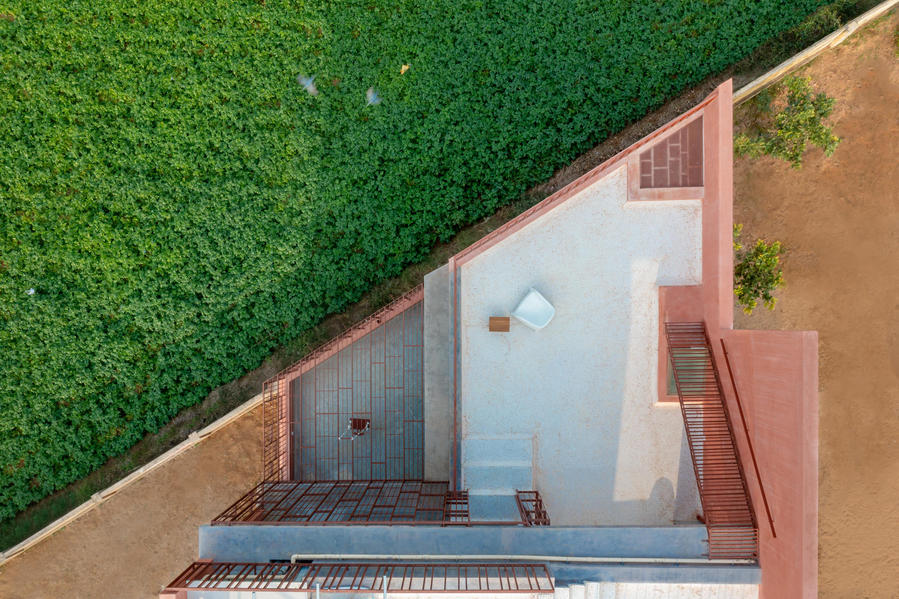
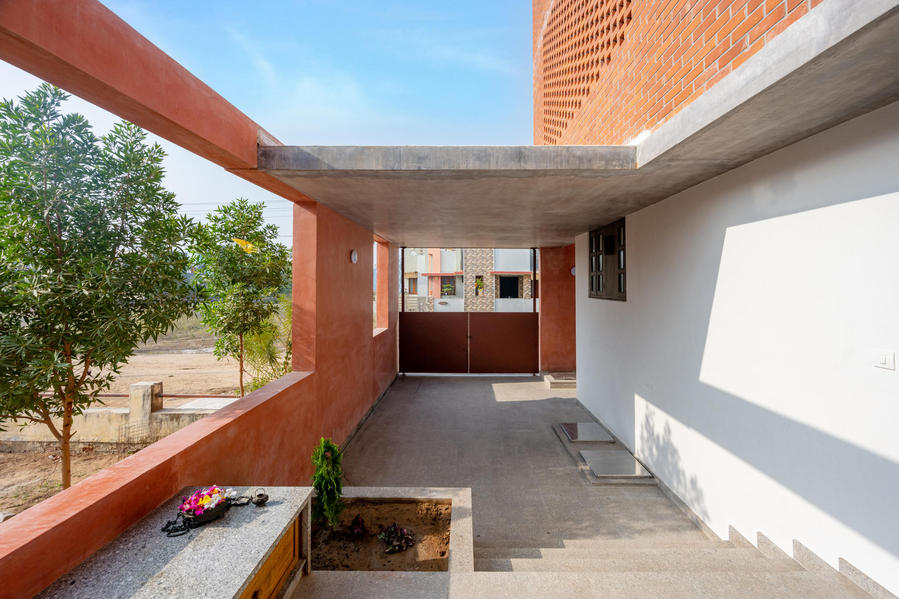
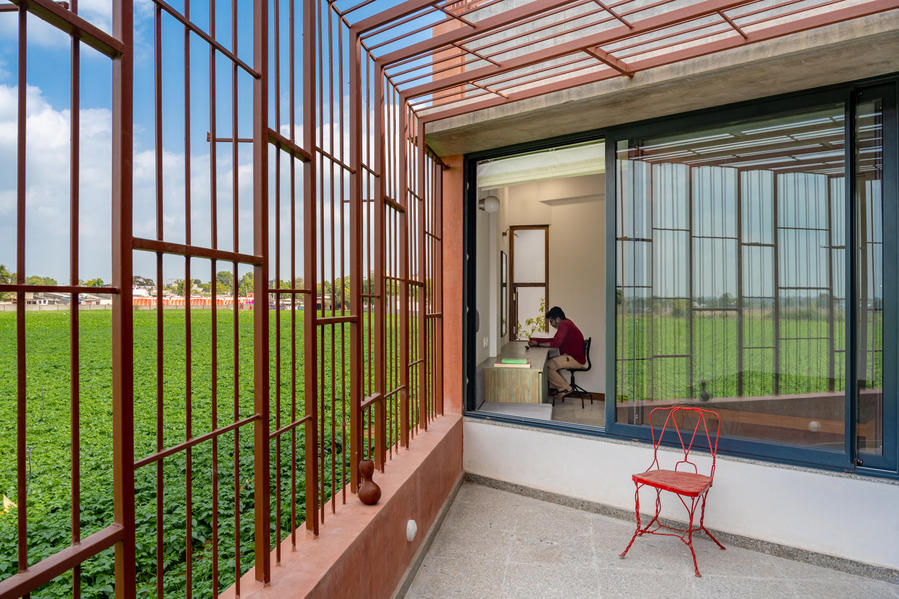
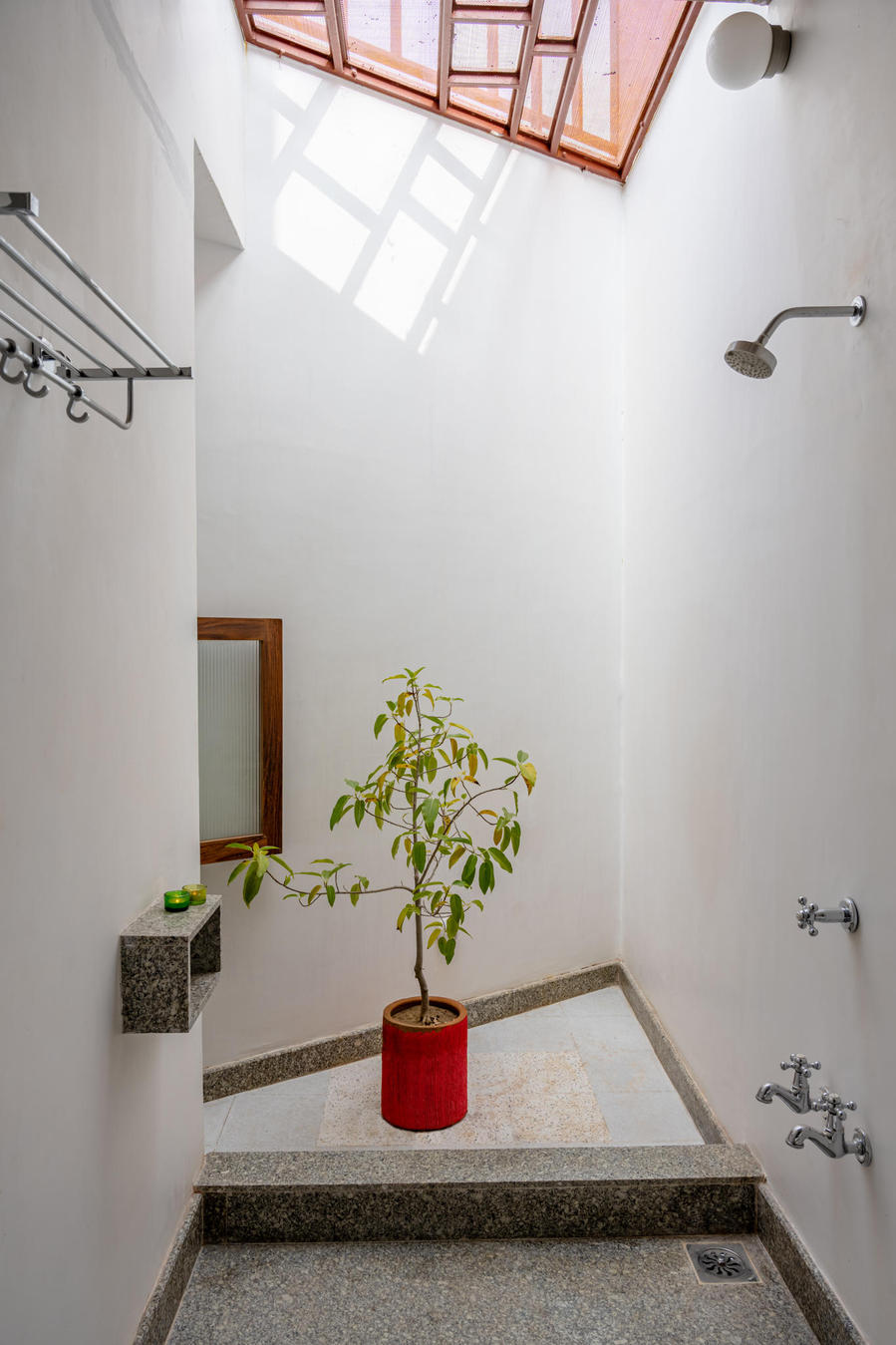
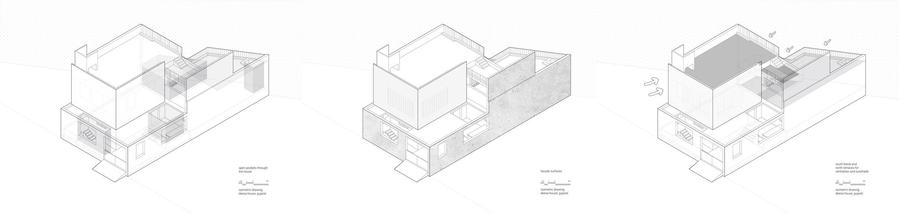
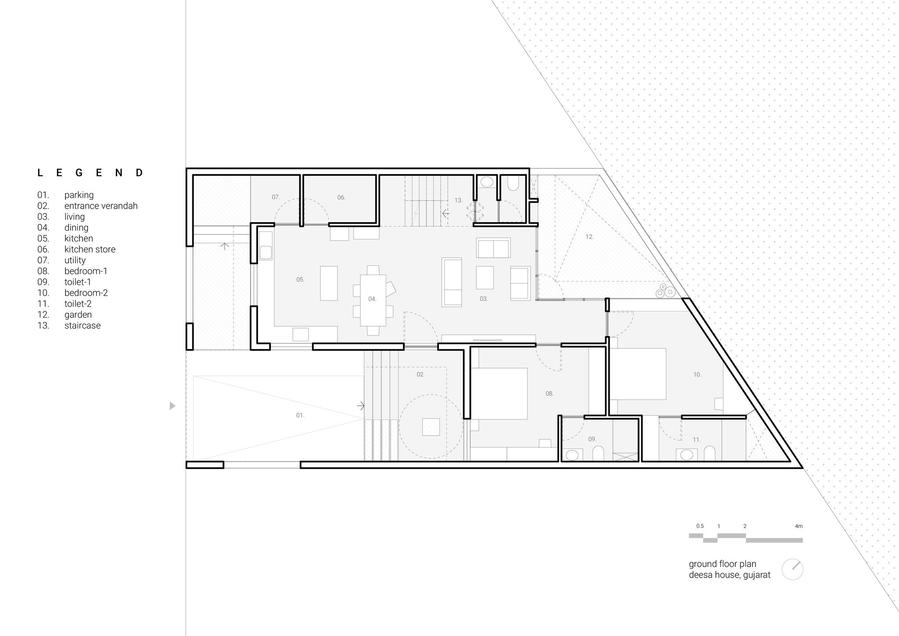
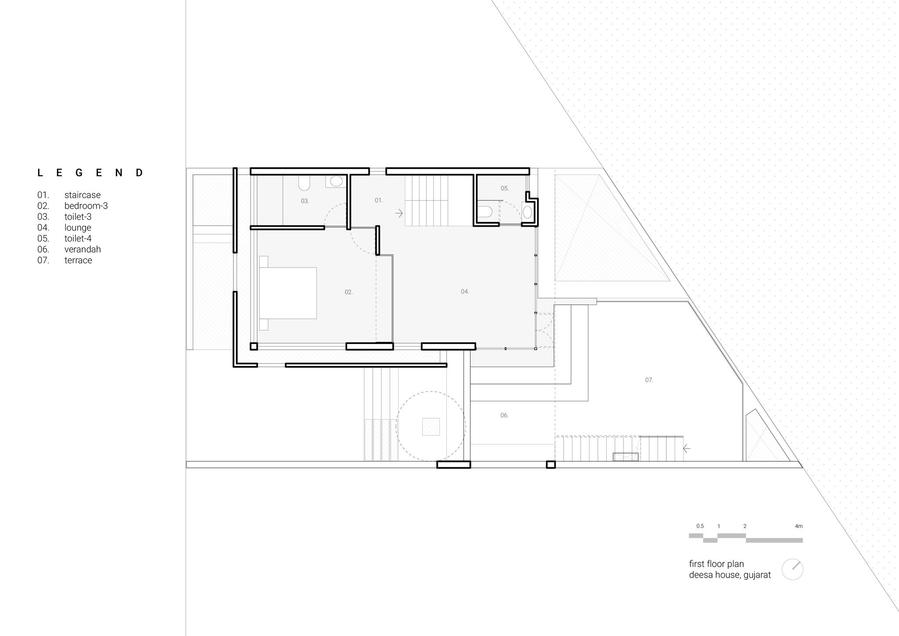
The protective house uses thick walls, insulated slab strategies, and smartly controlled openings to shield its inhabitants from the hot summer sun. The plan is oriented to the entrance on the southern side while potato farmlands stretch along the northern end. The design is revealed through solar strategies of closed mass on the south and open terraces for transparency on the northern side, strategic cut outs where light and shadow can play, and walls of different materials and porosities. The house is constructed through a combined structural system; with load bearing external walls and an internal frame structure.
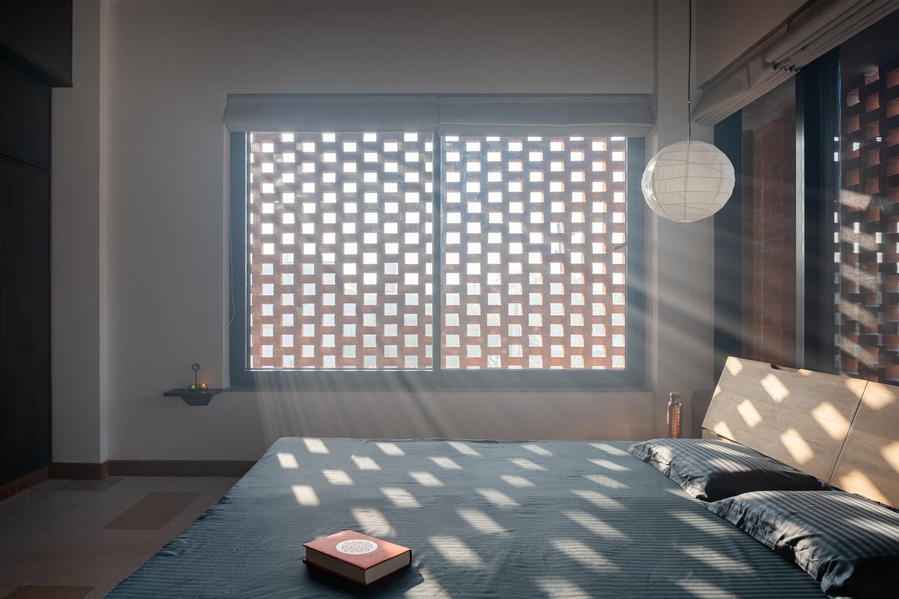
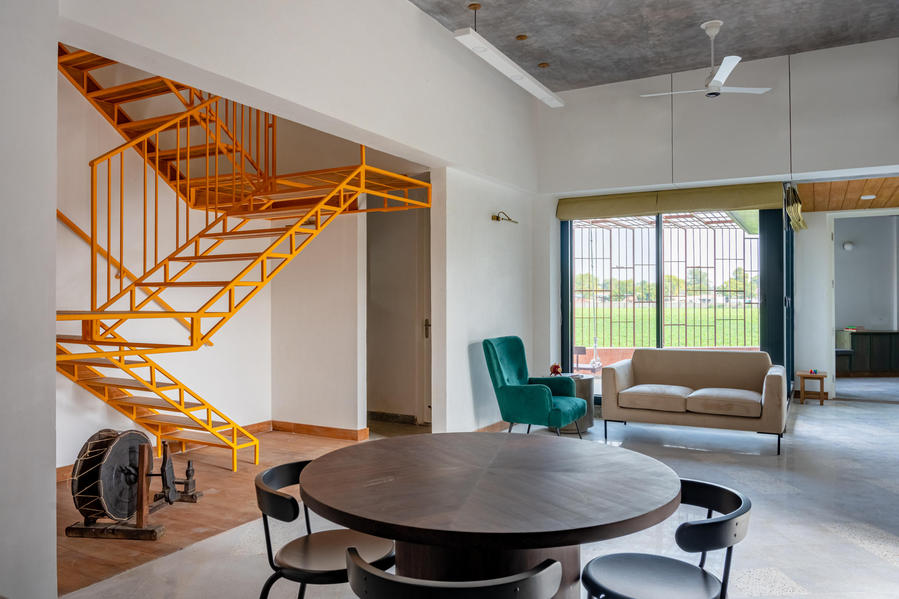
Lime plastered walls, exposed brick jaali (screen) facades, steel frame fenestrations, and flowing terrazzo flooring come together to bring in coolness into the space and form a sense familiarity. In the earthy tones of the built house, the furniture and fabricated staircase add a pop of color and eccentricity. Shoonya is powered through solar panels, installed on the terrace.

Photography credits: Vinay Panjwani
Design Team: Melissa Smith, Sachin Bandukwala, Hiral Kandoi, Mudit Tikmani, Nabajyoti Dutta Choudhury
Structural Consultancy: StrucArt Design Consultants
MEP Consultancy: Jhaveri Associates
Contractor: Mukesh Mevada
Carpentry: Mukesh Mevada
Nagpur, Maharashtra | 2021 - ongoing
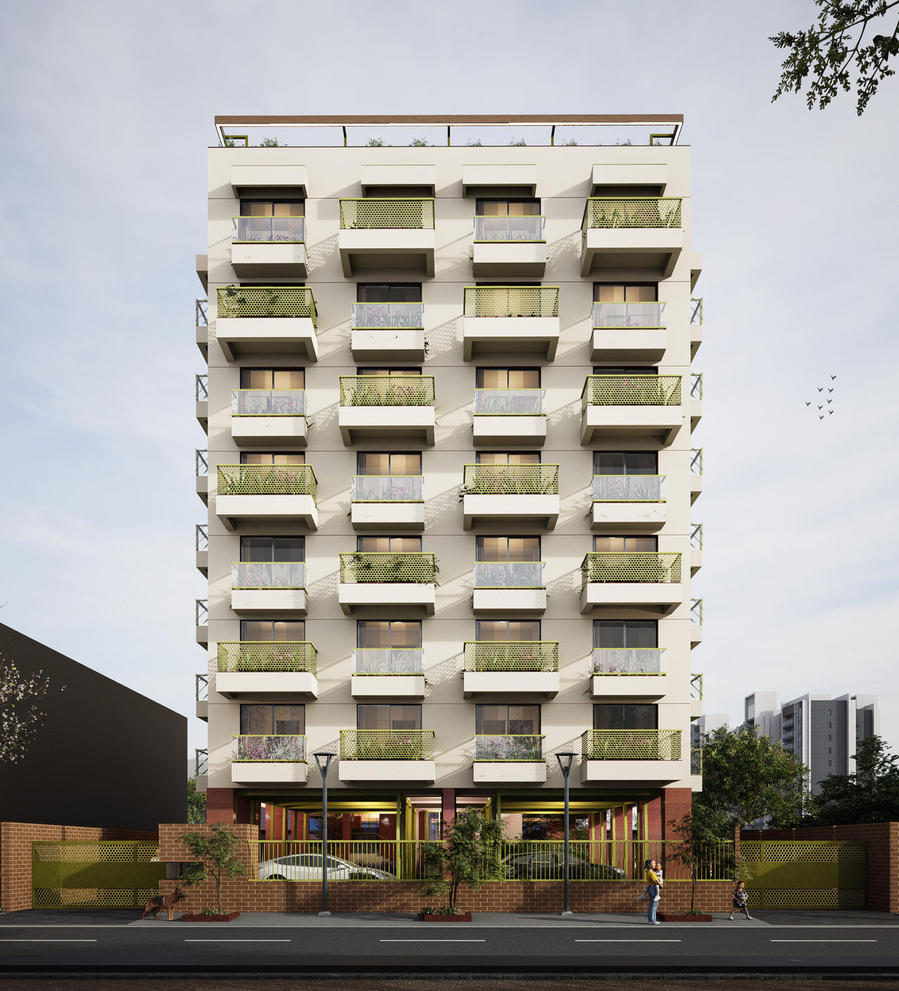
The Nagpur Apartment is located in a neighbourhood transitioning from industrial to residential uses. In order to cater to the aspirations and realities of potential buyers, the project uses a breezy central atrium for all vertical circulation. This creates room for airy apartments, ventilated on all sides. Amenities are pulled to the top. The units themselves borrow from the industrial history of the neighbourhood with a steel grating structure that forms the backdrop for a green screen; at the same time a passive cooling device and a privacy screen.
Gandhinagar, Gujarat | 2018
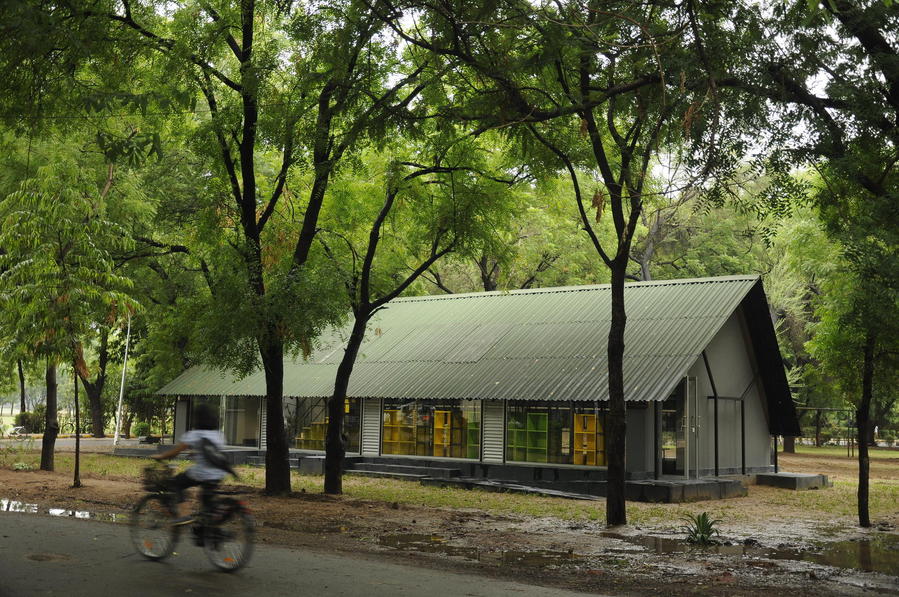
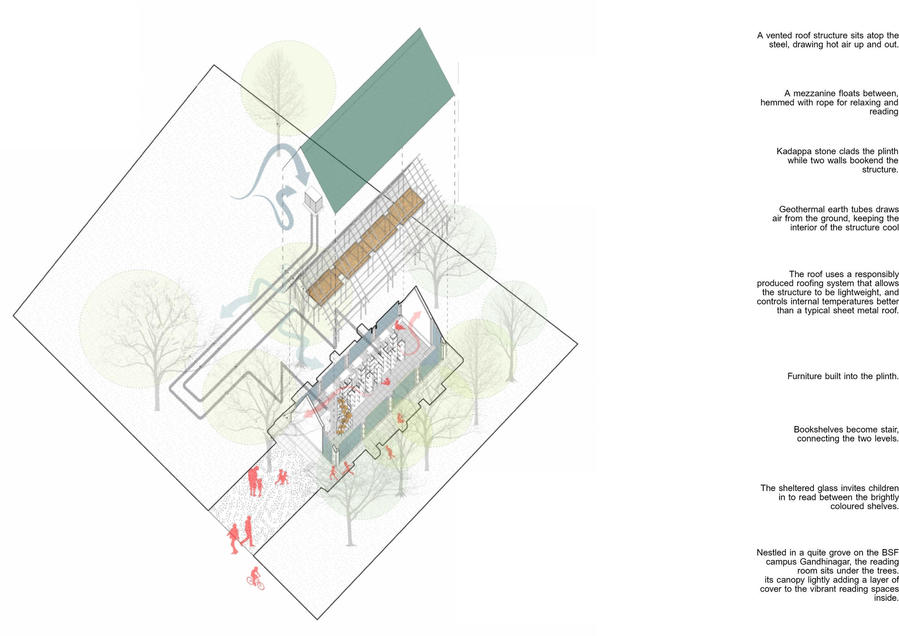
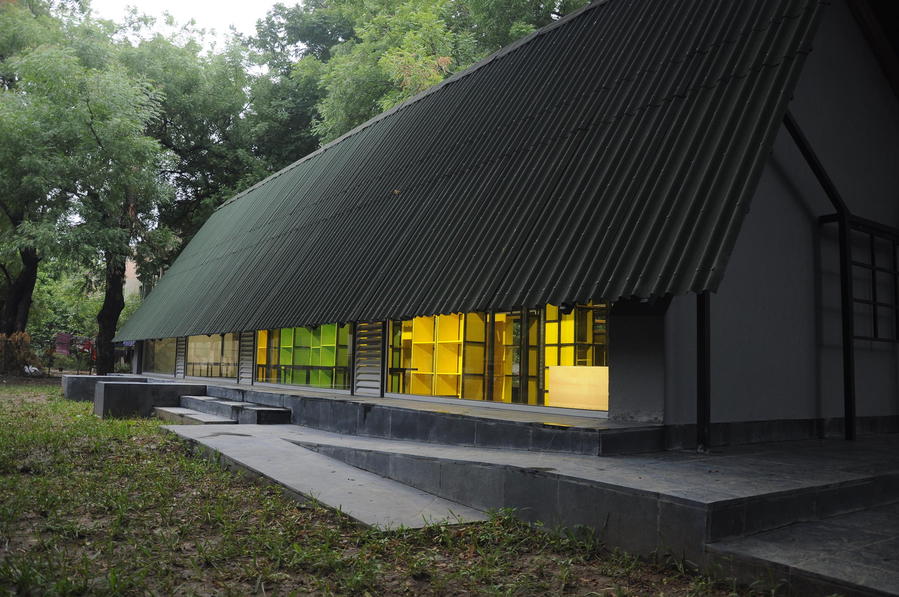
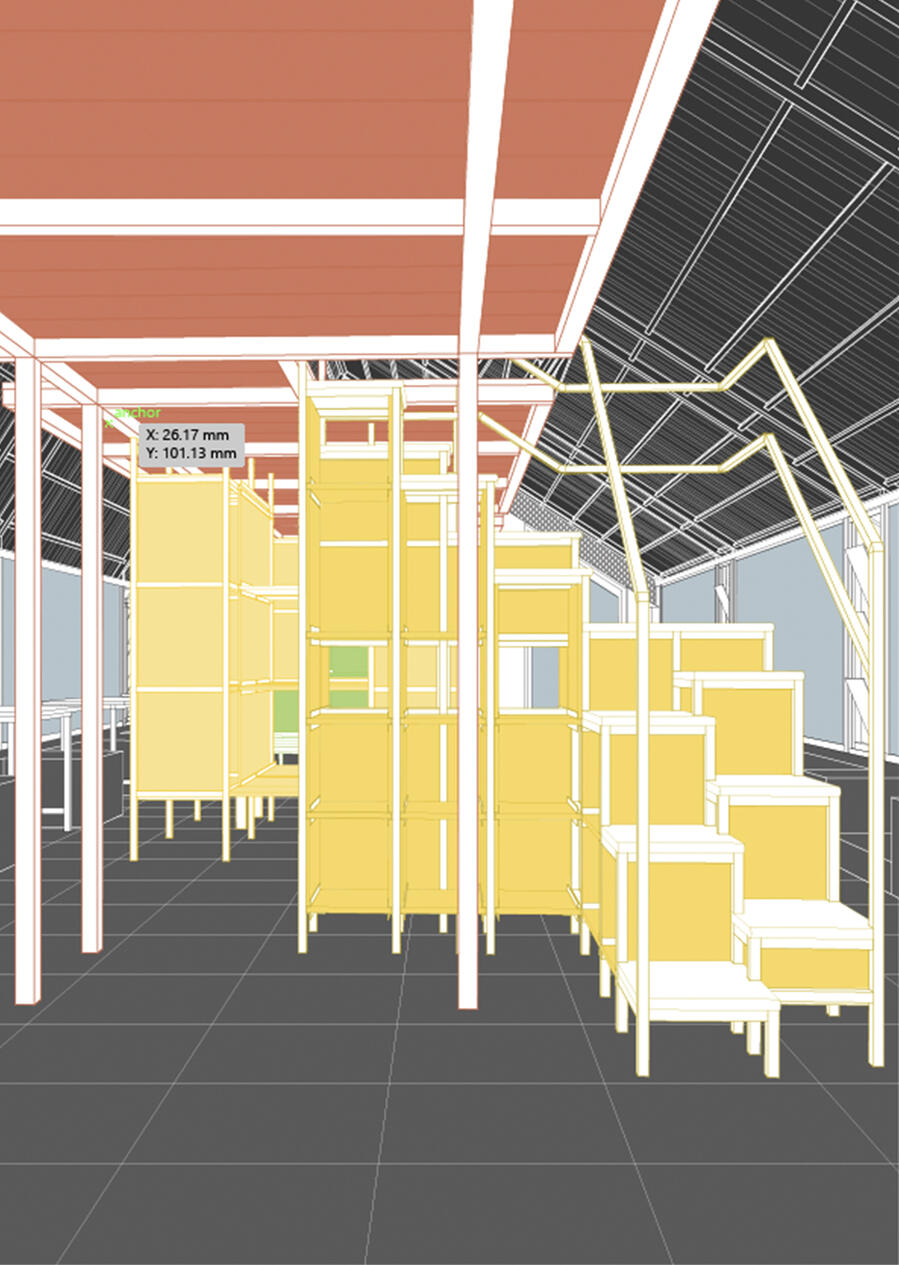
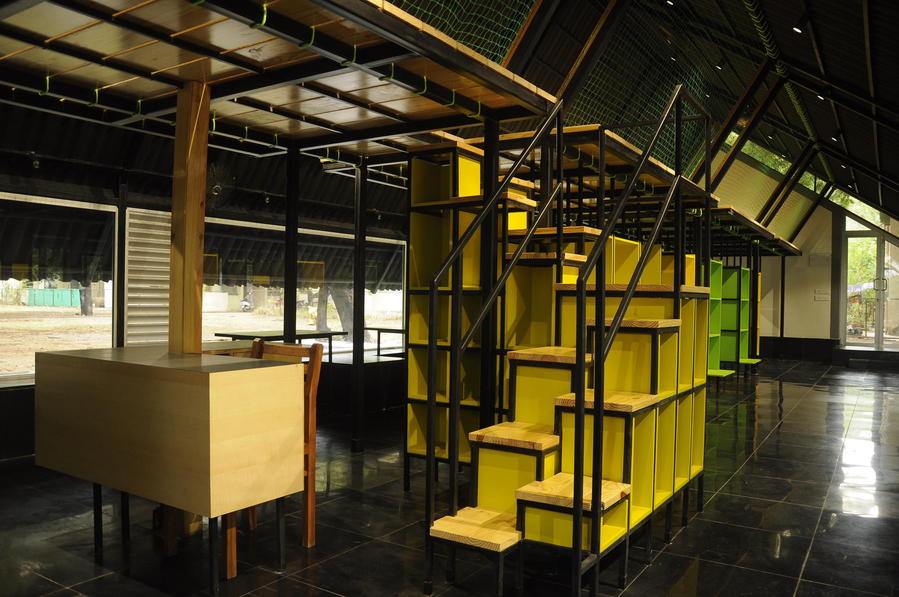
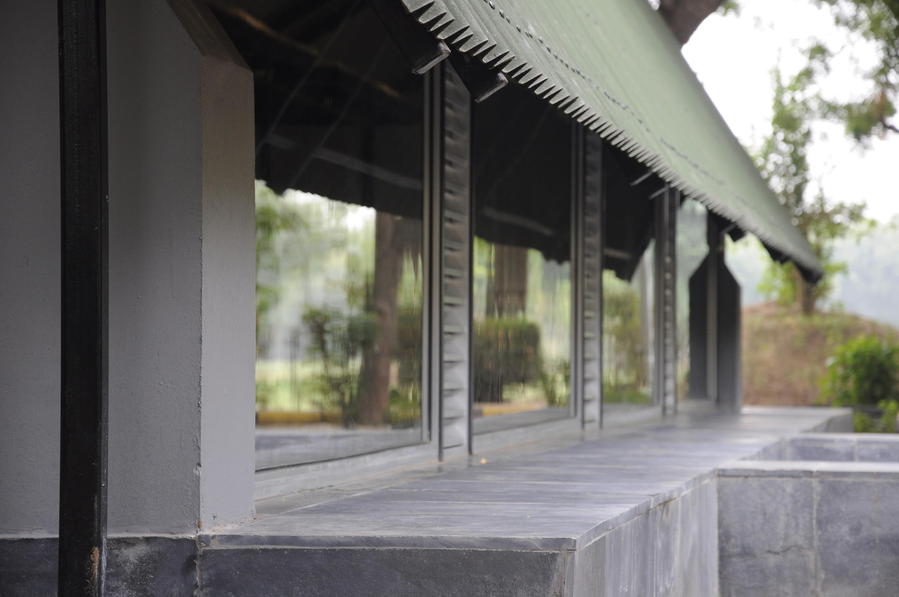
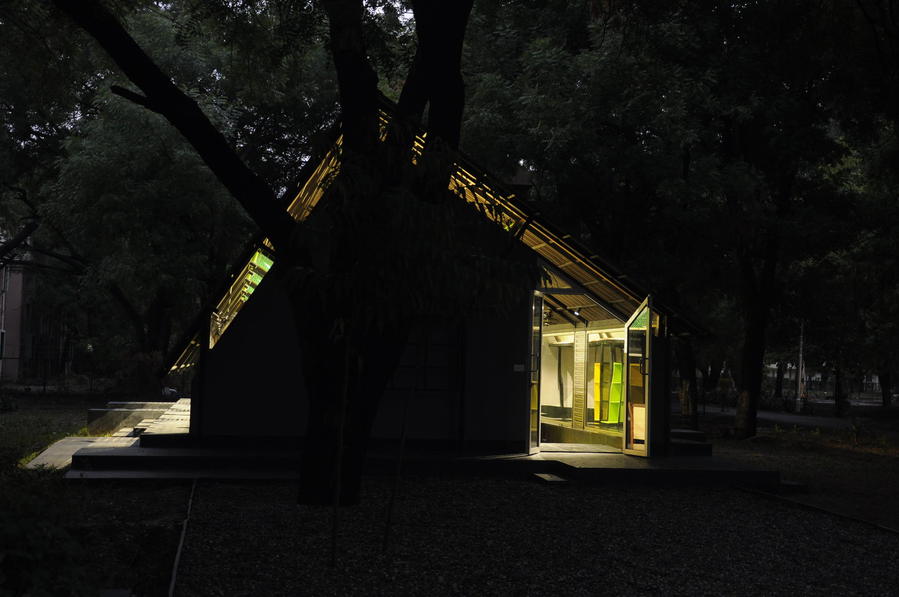
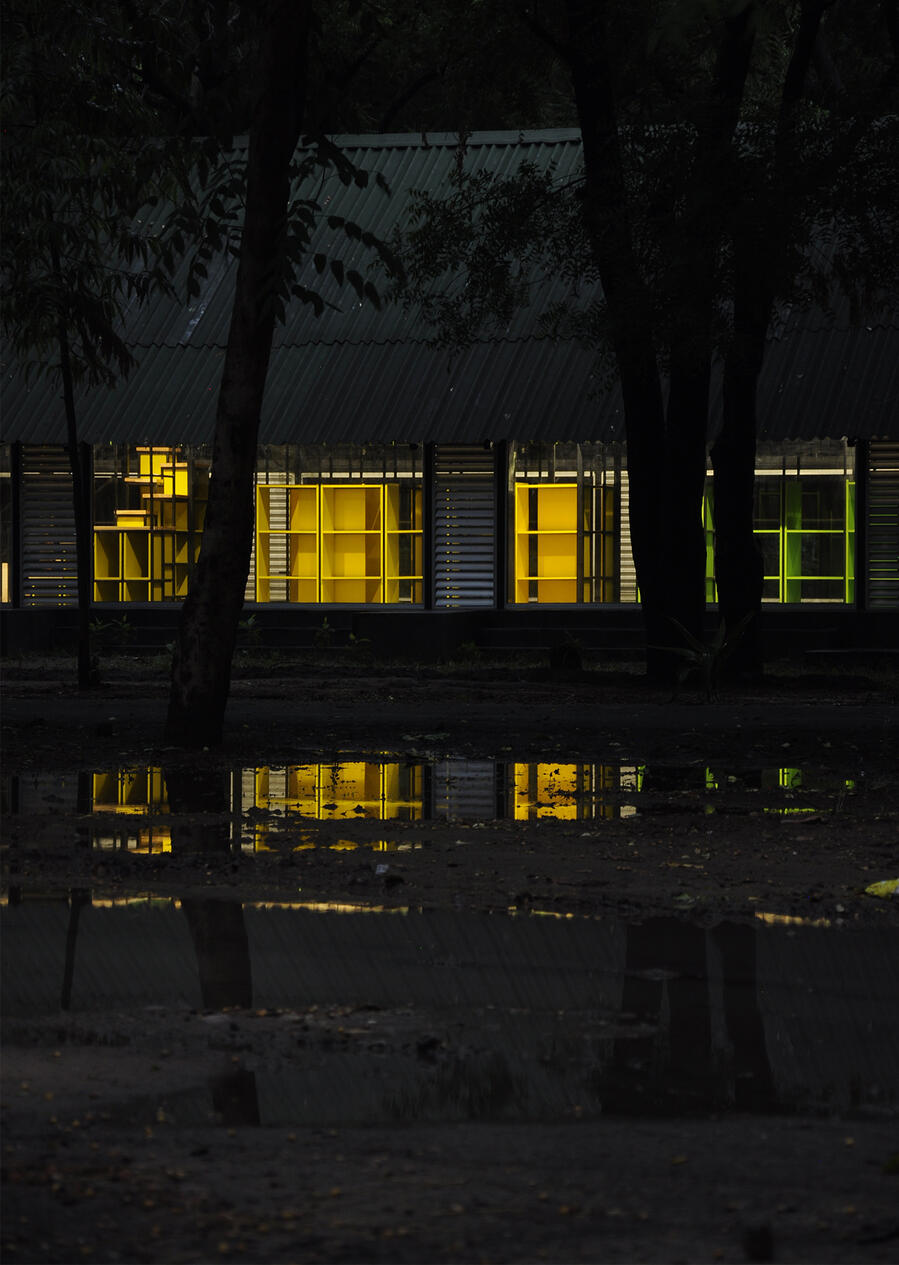
In the BSF campus of Gandhinagar, the Swadhyay Reading Room, designed for the children of BSF wards, sits nestled amidst a beautiful green canopy. Mimicking the ancient ashram tradition of studying under the trees, the simple, relatable form, both in terms of its spatial arrangement as well as its structural form, adds a layer of cover to the vibrant setting.
The 160 square meter project was constructed in a short span of ten weeks, made possible by the efforts of a dedicated construction team, and a design that is optimised for speed.
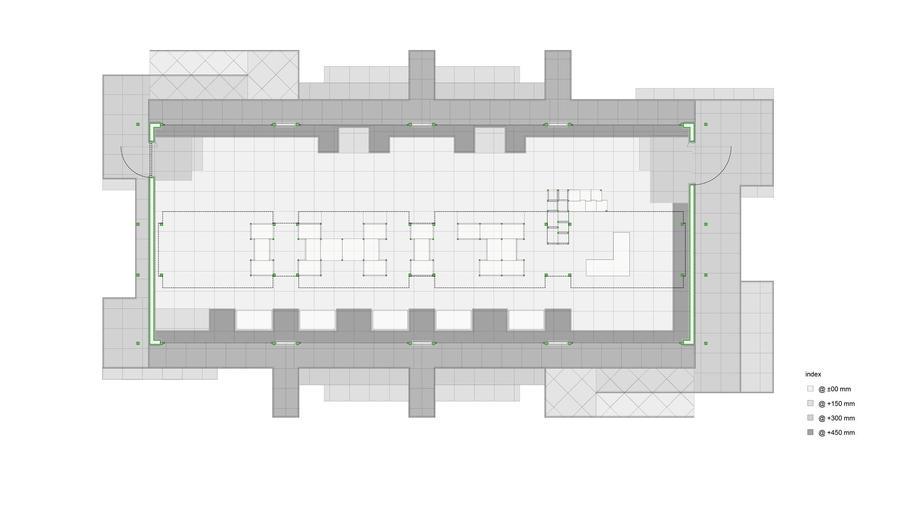
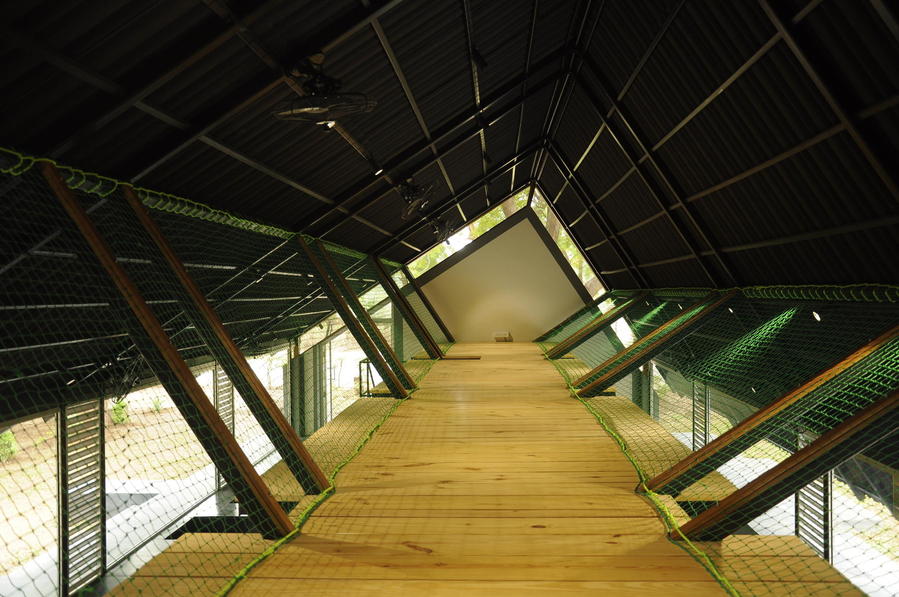
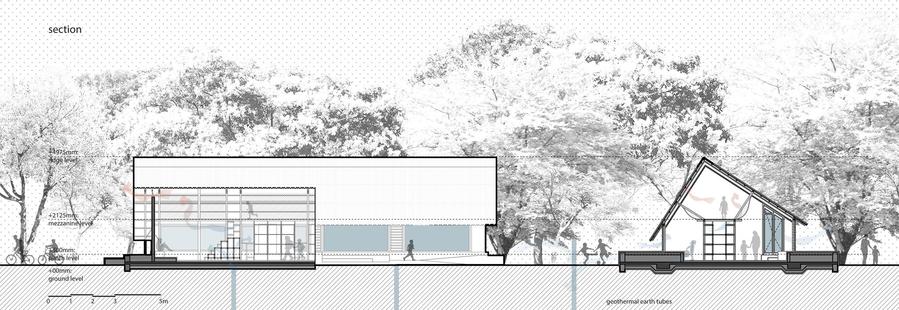
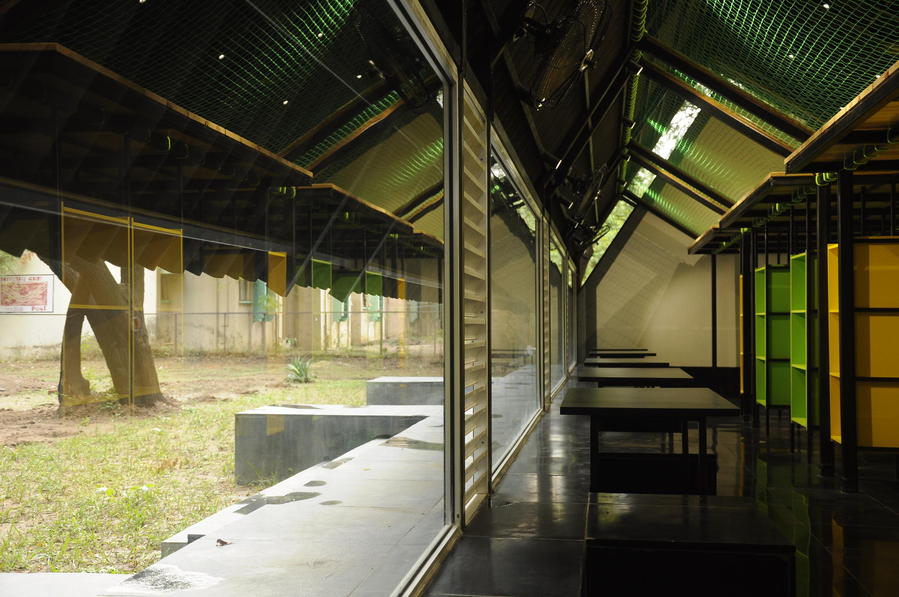
The building comprises of two parts: a heavy, articulated ground and a light, traditional yet modern eccentric shade perched upon it. The undulating brick plinth clad with kadappa stone holds users close to ground, merging with built-in tables and benches. A ventilated roof sits atop a steel framework, with extended eaves to protect the plinth, and a series of geothermal earth tubes draw air in through the ground, maintaining the structure's coolness. In addition to that, a mezzanine floats above brightly coloured bookshelves, accessed through a camouflaged stair. Planks of pine wood, hemmed in with rope nets for relaxed reading, adds to the playful vibe. As the dusk approaches, the vivid space inside reveals itself through the sheltered glass, inviting the children in, to read.
** Received The Merit List Citation for 2018-2019 **
Photography credits: Sachin Bandukwala
Design Team: Melissa Smith, Sachin Bandukwala, Nabajyoti Dutta Choudhury, Rupal Rathore
Structural Consultancy: StrucArt Design Consultants
MEP Consultancy: -
Contractor: ID Projects Pvt Ltd
Carpentry: Omprakash Suthar
Ahmedabad, Gujarat 2013 - 2020
As a project, the Chidambaram House gracefully demonstrates the opportunities that a deep engagement with time offers. It is an evolving place, layering phases of history onto its structure, shifting as its family matures and grows. When the site was first acquired, a small Art Deco structure stood in the land. Behind it, the original house designed by Gira Sarabhai, opened toward the Sabarmati River. Over time, Sarabhai’s house has expanded, extending back toward and finally wrapping all the way around the old Art Deco structure. Architects of varied approaches have brought new life and ideas to the place. What we have contributed to the layered campus is a project in three phases that uses the existing Art Deco Structure as an armature, and reaches out into the trees to develop a light, airy home within a home for the family and their dog.
PHASE 1: FLOATING A NEW TERRACE (2013-2014)
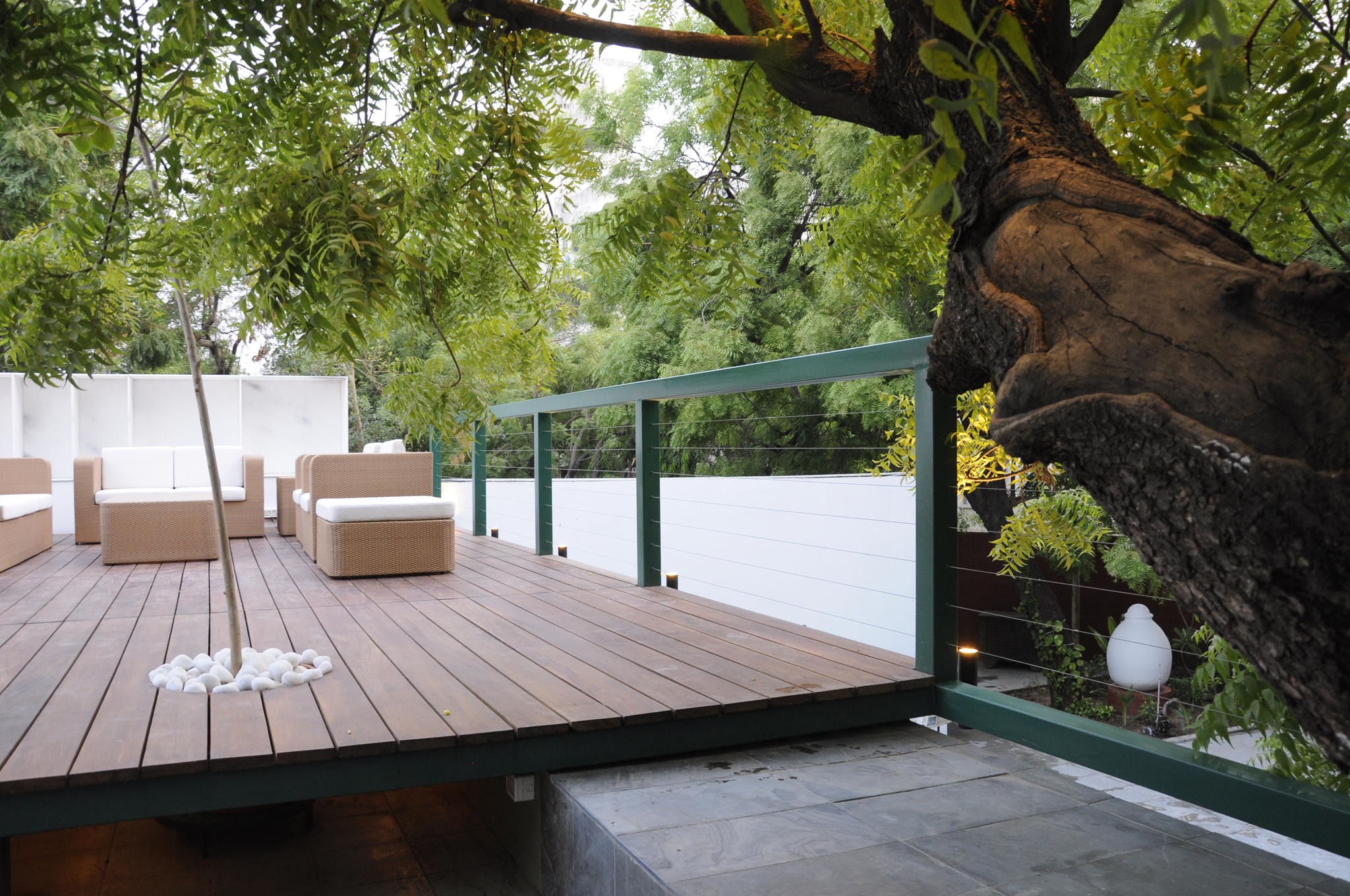
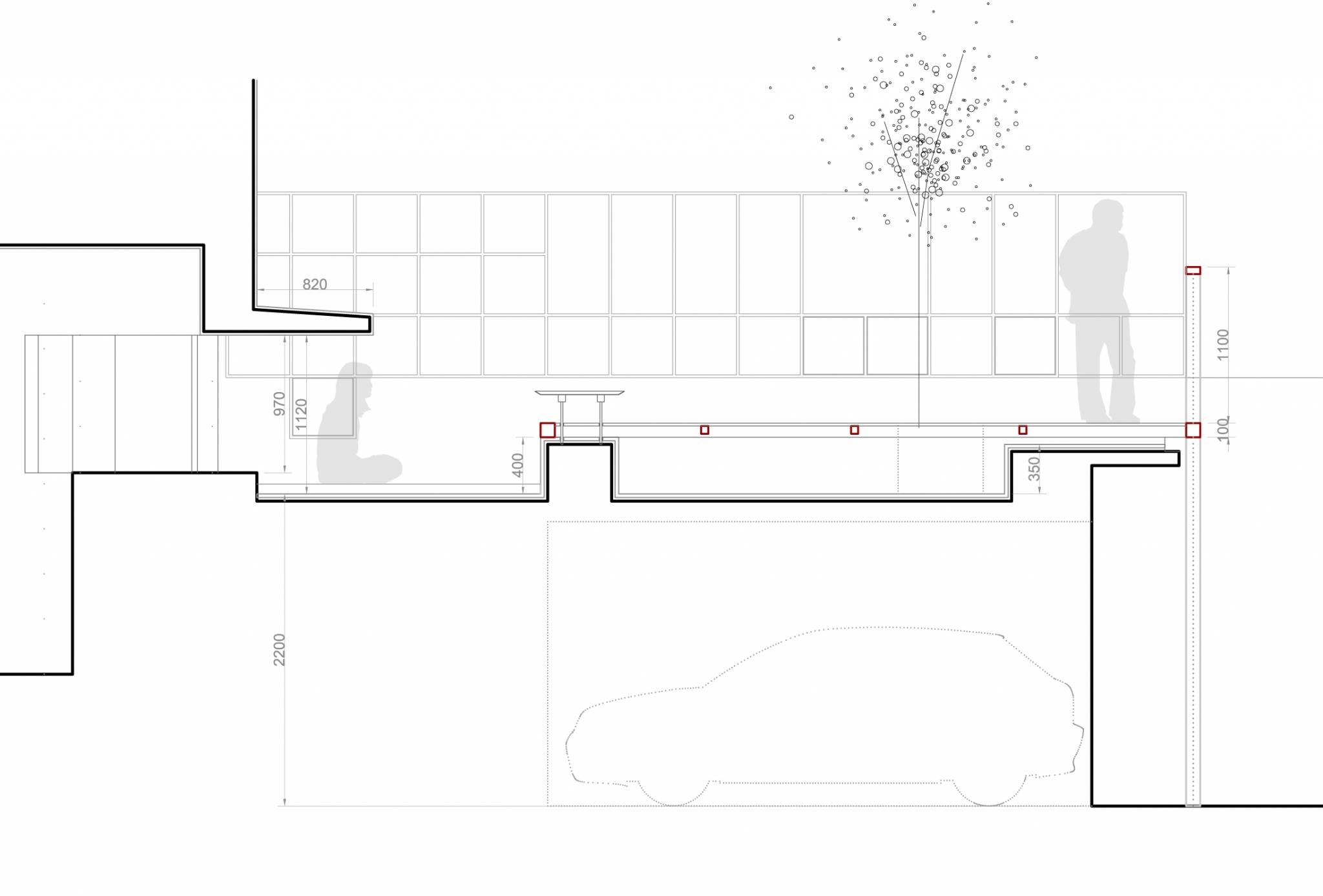
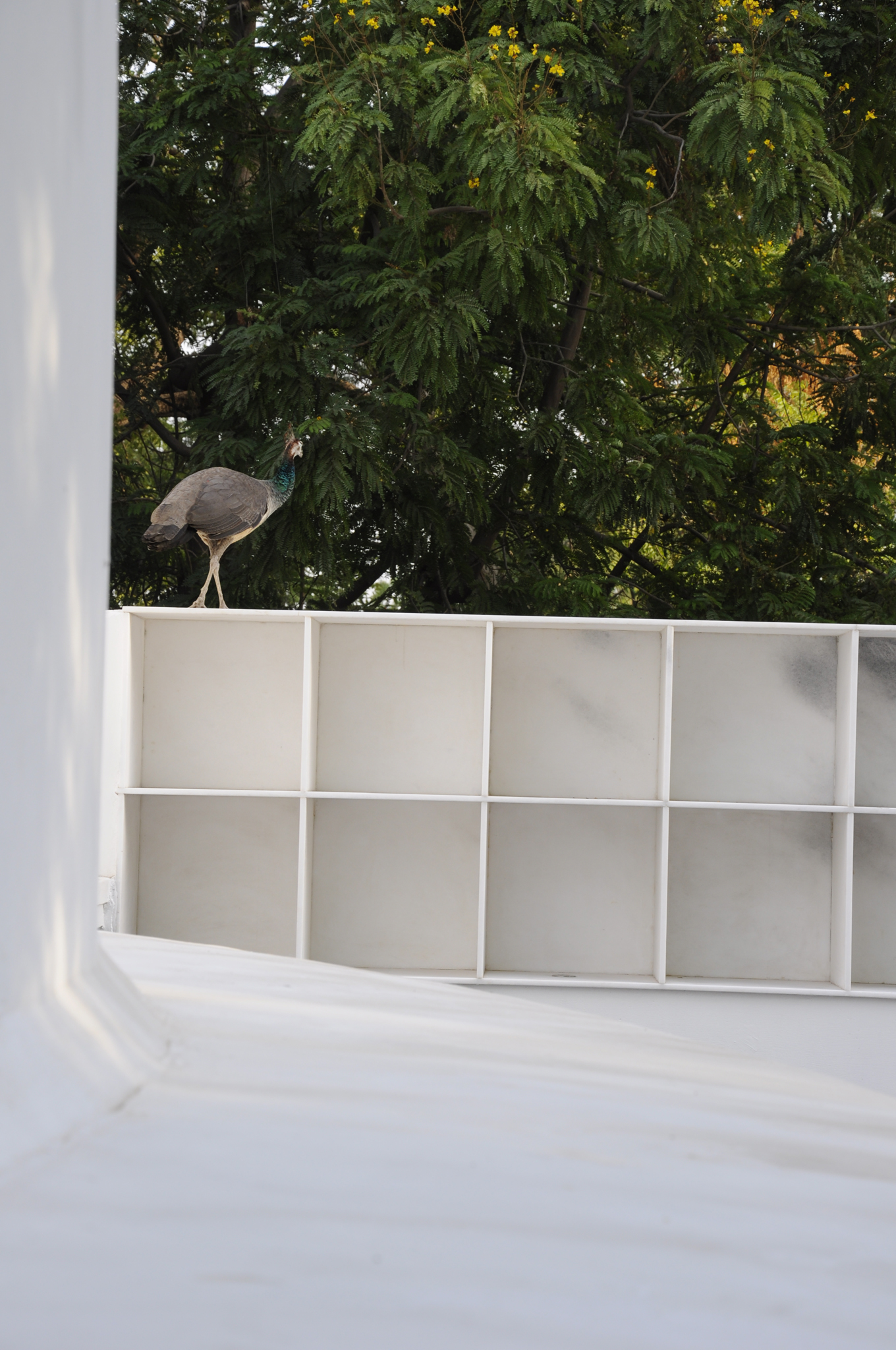
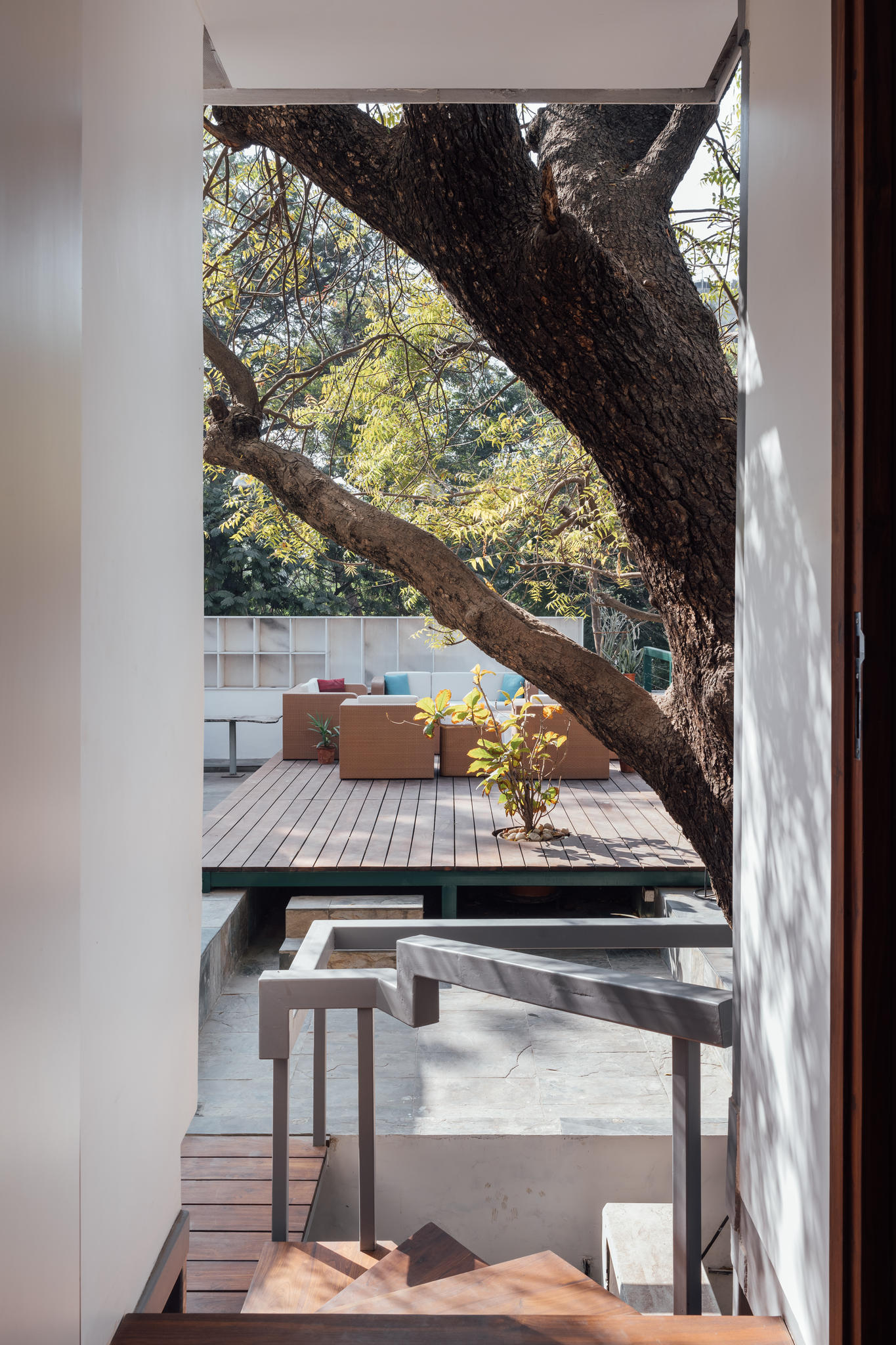
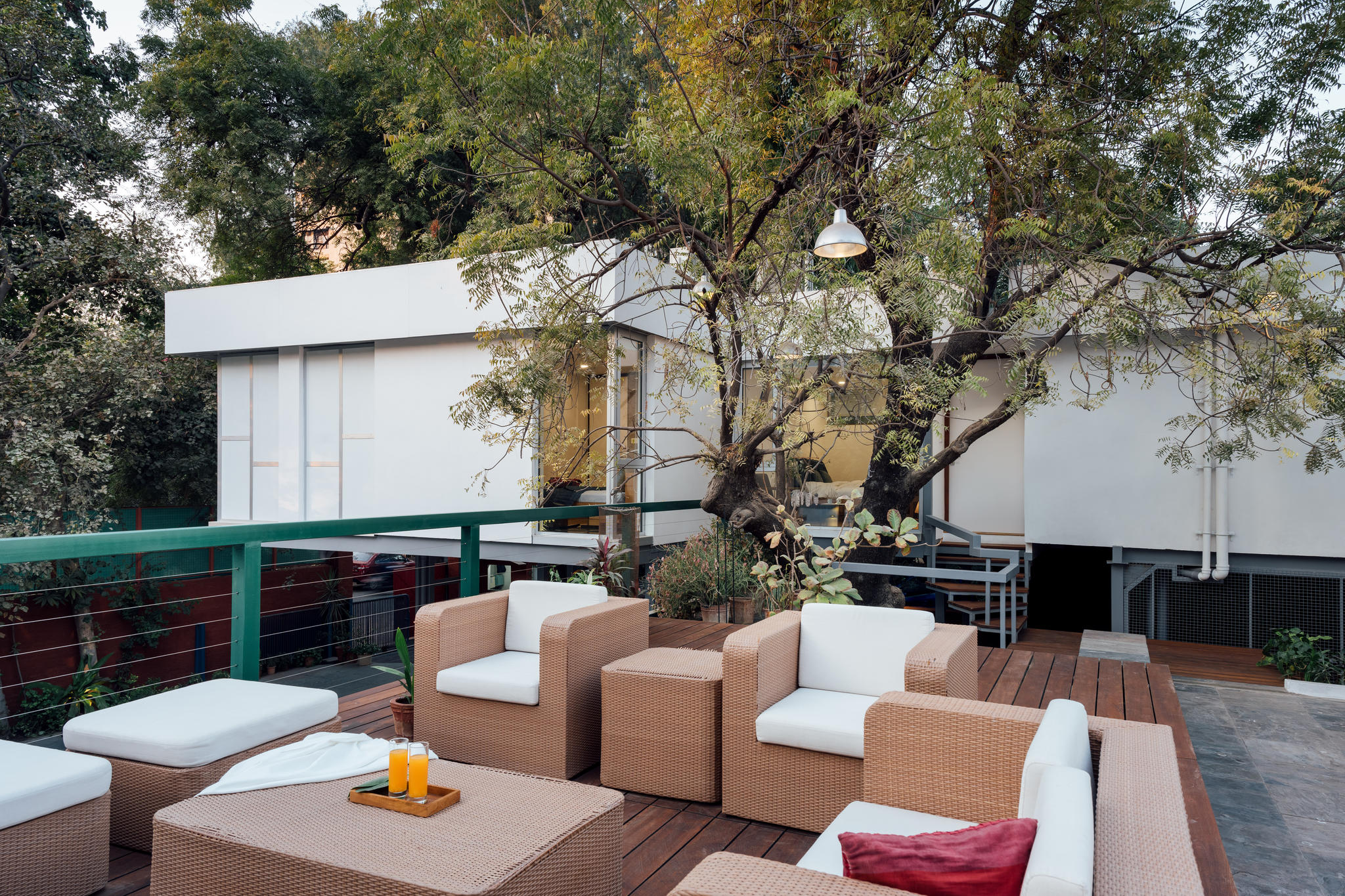
A new open terrace, hovering between openings of the old Art Deco facade, reclaims the space above an old garage for a three-sided elevated court. The steel frame rests on a raised beam, and projects over the existing facade, anchored in the ground below, to create a shaded arcade at the ground level, and a railing above. Simple teakwood planks, polished with linseed oil and water, complete a surface that floats in the branches of an old neem tree, flanked by a row of marble shelves.
 PHASE 2: RECLAIMING AN ART DECO VERANDAH (2015-2016)
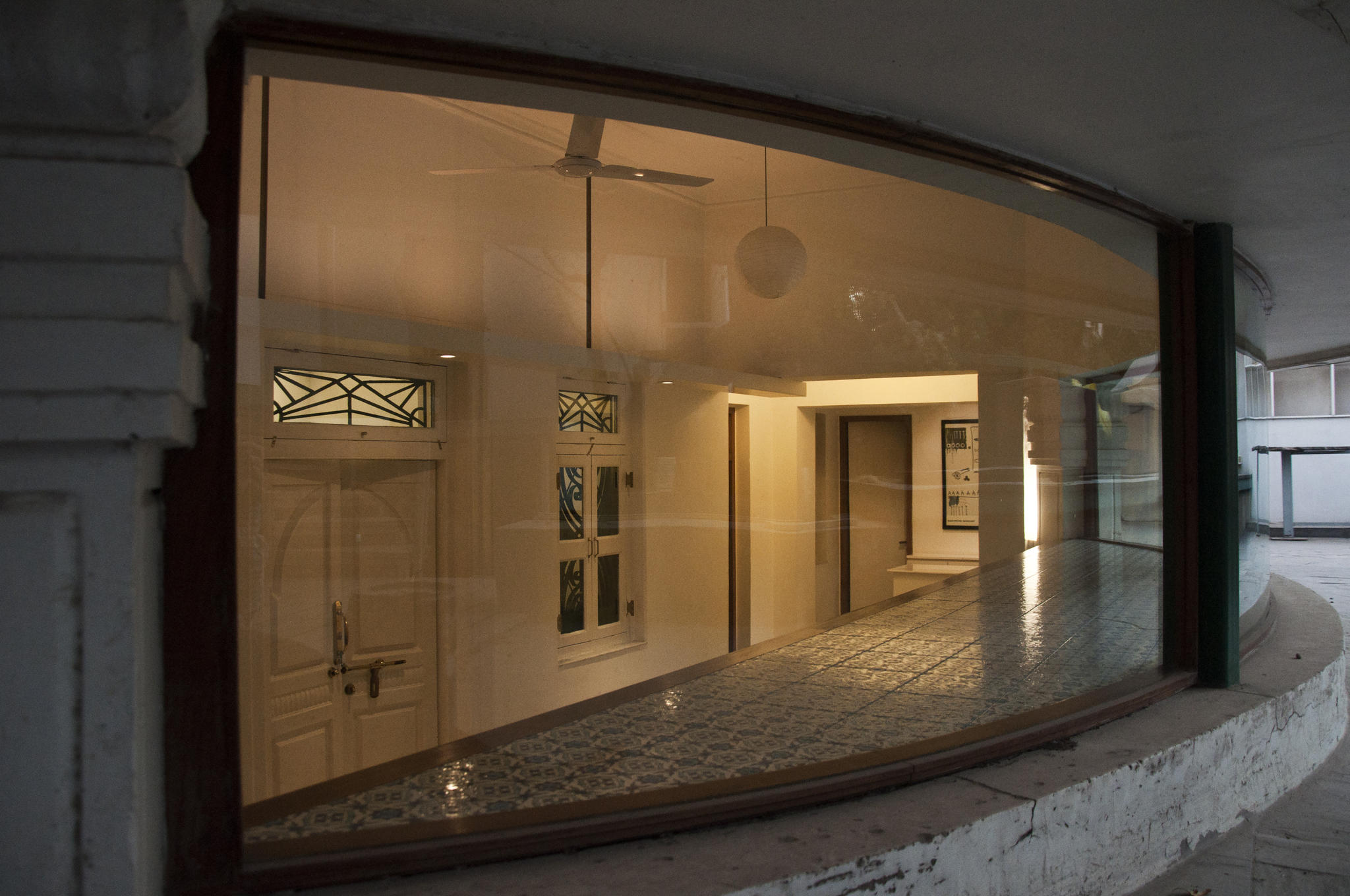
The glass-faced verandah warmly operates as a visual connection between the house and the open terrace. Delicate teakwood frames touch ornate columns lightly, subtly articulating a threshold while amplifying the beauty of the view. Inside, a sleek white light tray suspended from brass pipes ties together the stylized art deco elements to create a contemporary space (while deftly concealing added pipes).
PHASE 3: BUILDING ROOMS IN THE TREES (2018-2020)
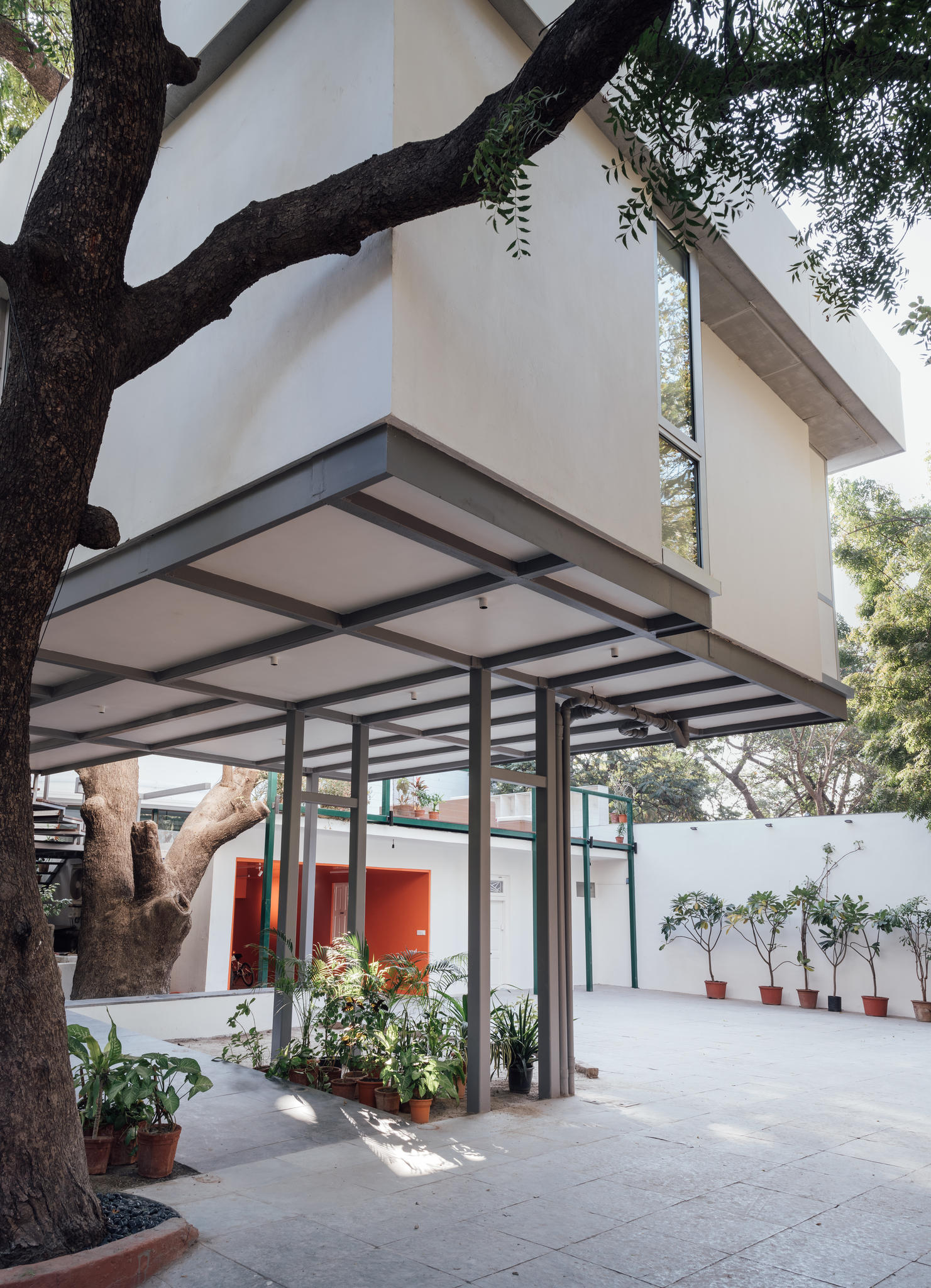
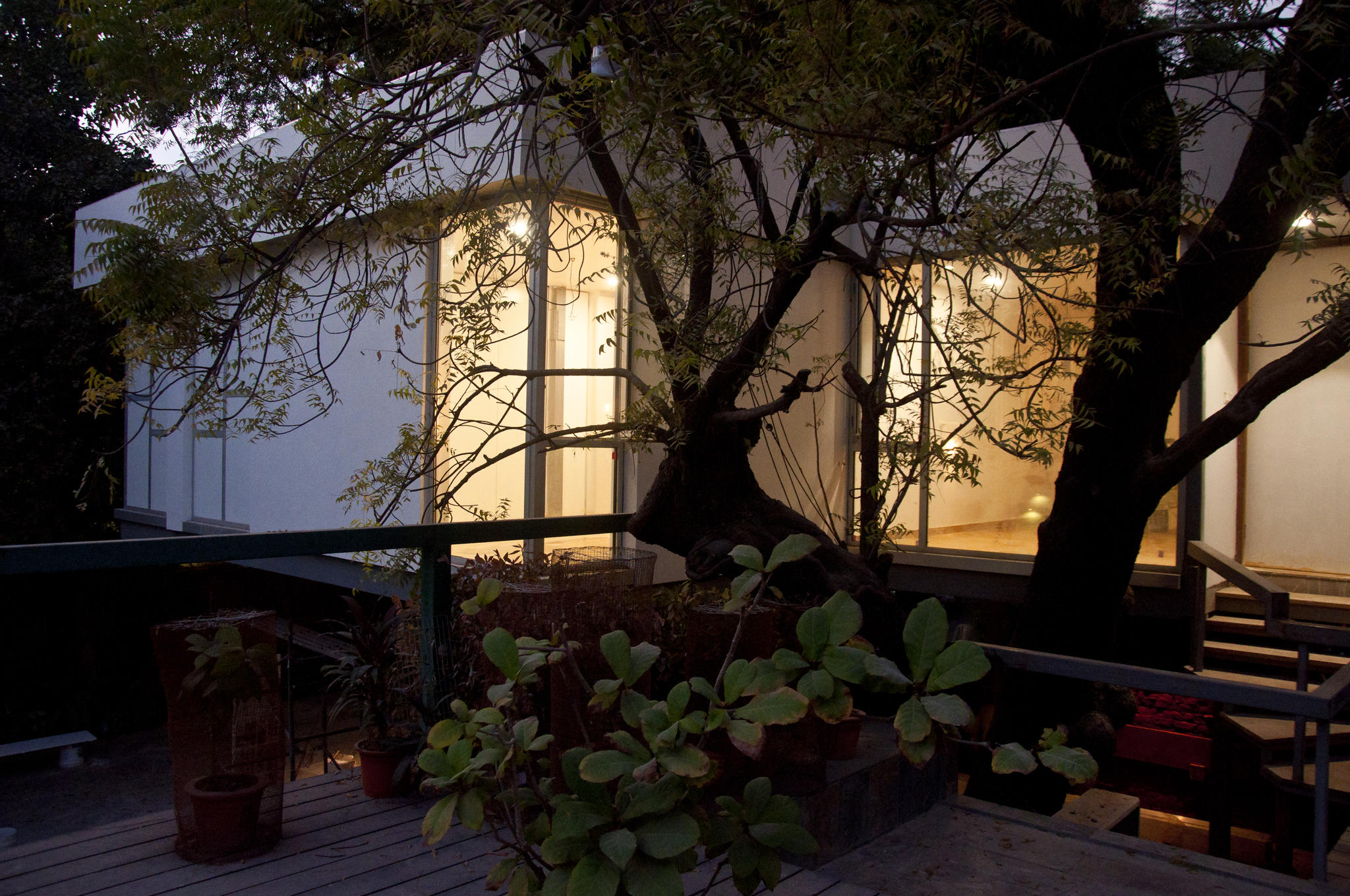
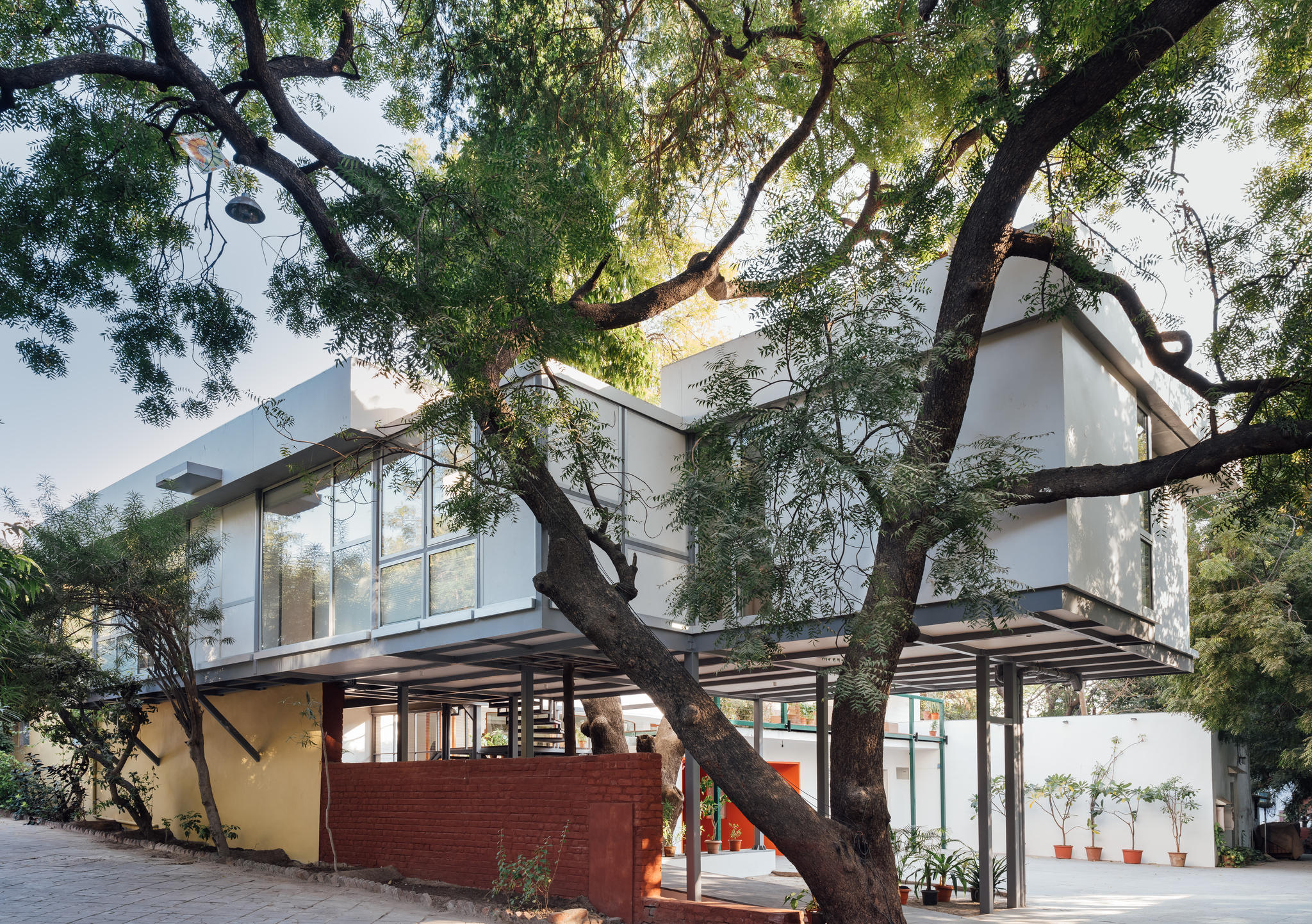
Floating out beyond the building, above wall and walkway, a new set of light-filled rooms hangs from a steel truss, winding around aged trees. A thin floor plate turns the corner to a lit ceiling below, highlighting the delicate columns from which it is suspended, no larger than the straight trunk of the young Aso Palav growing through the children’s courtyard. Volumes open at the corner, peering into the leaves through alternating sheets of glass and marble. Washed with dappled light, warm Jaisalmer stone flooring anchors cozy rooms inside.




Ahmedabad, India 2016 - 2017
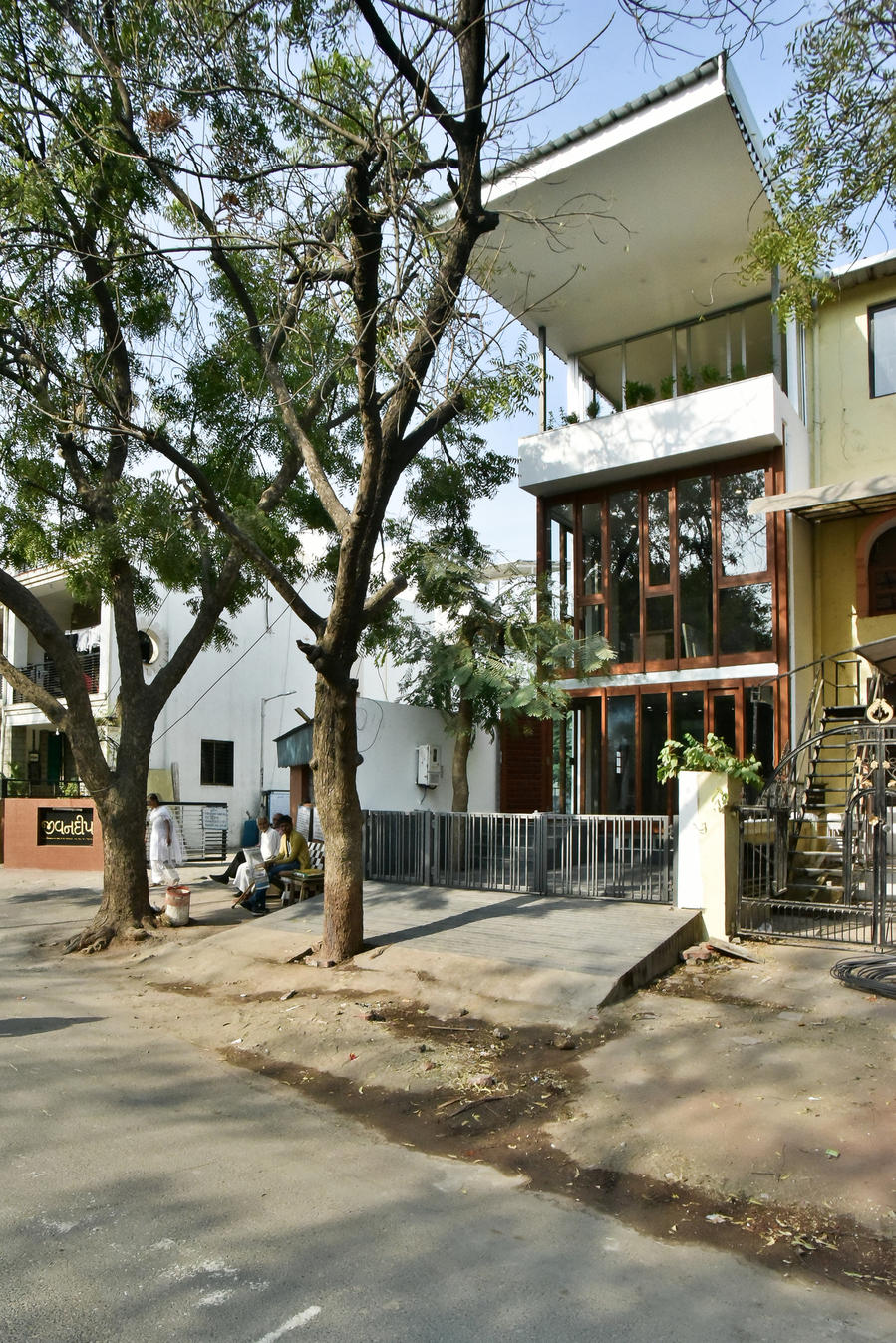
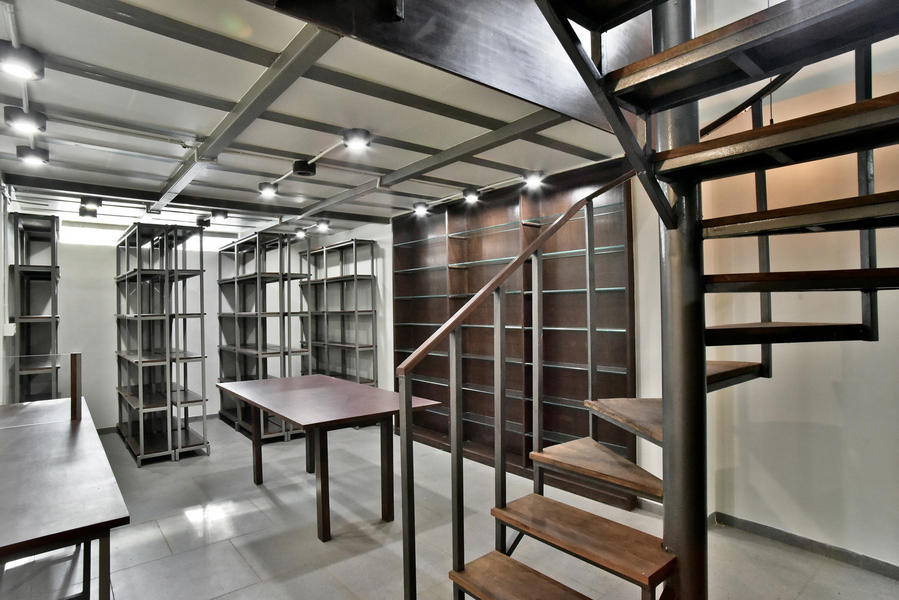
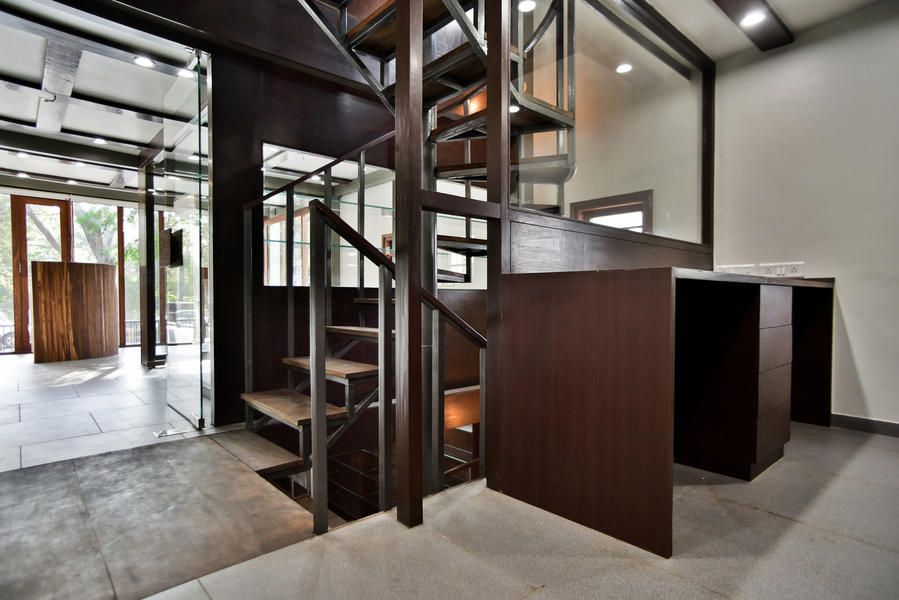
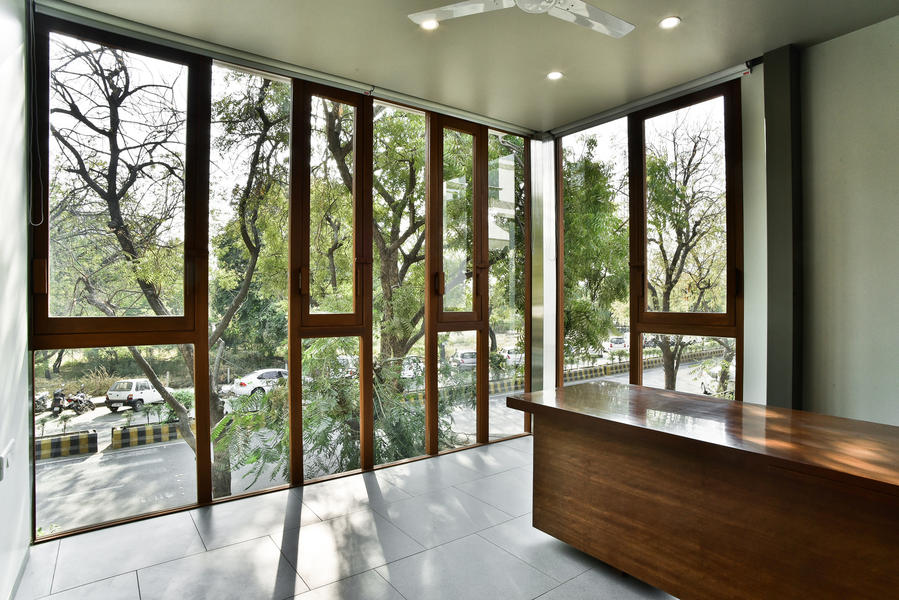
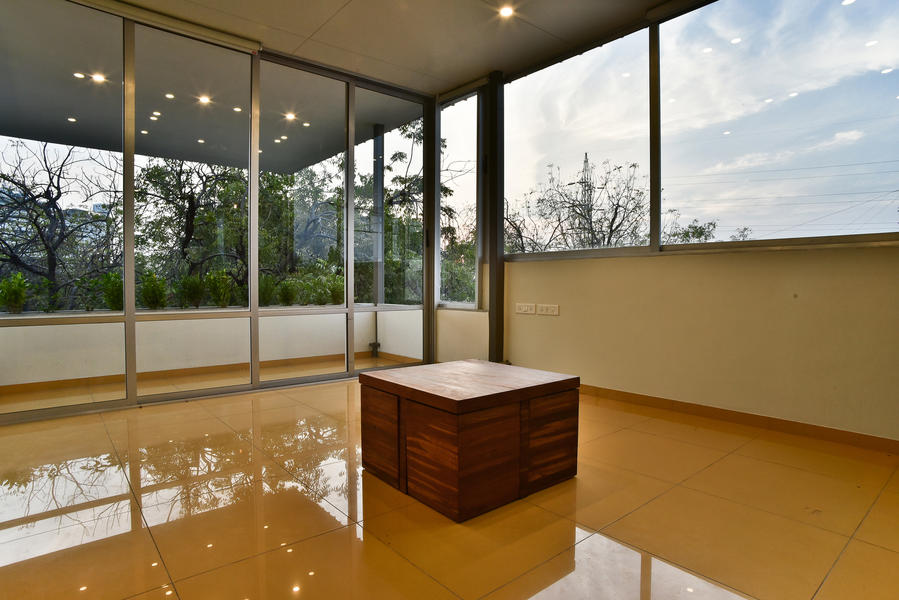
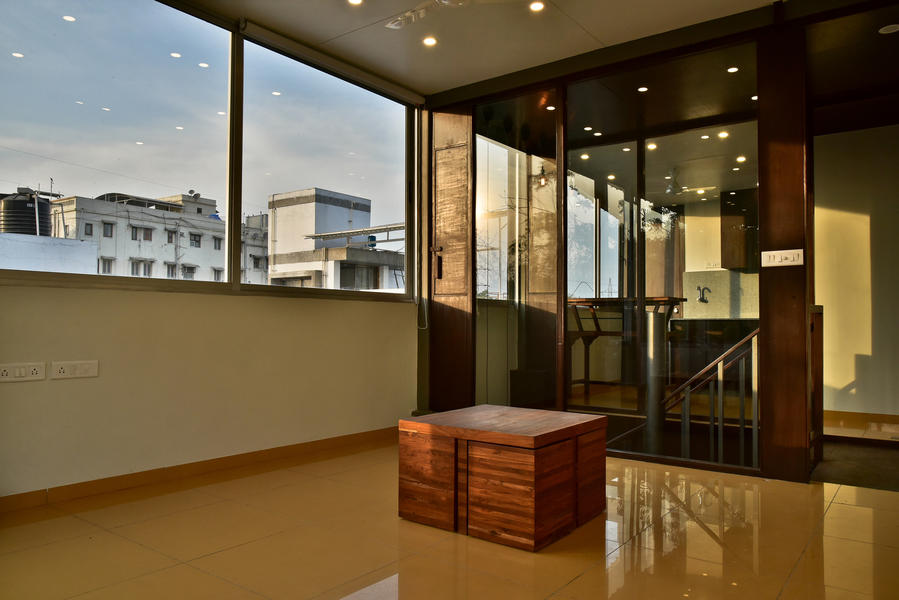
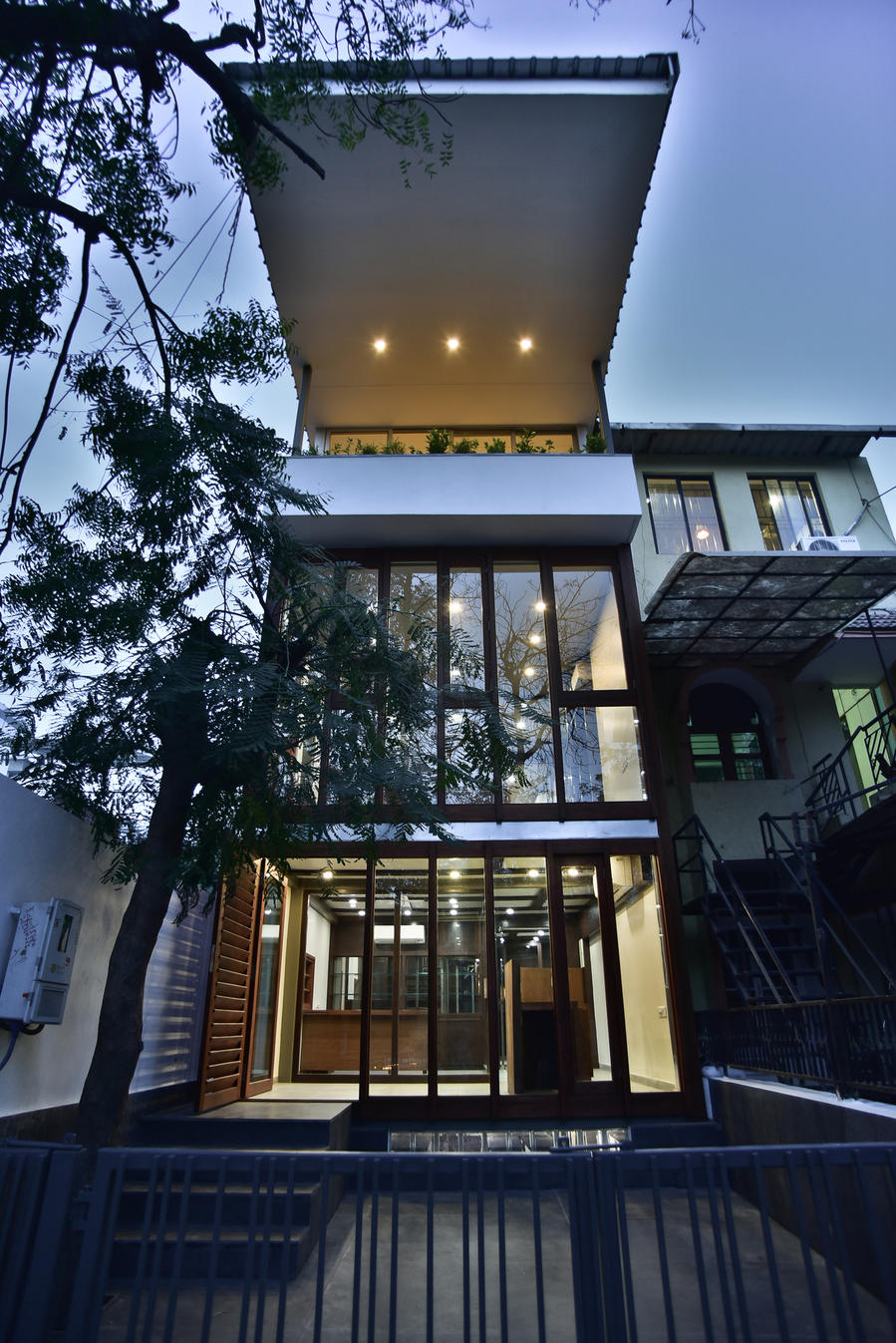
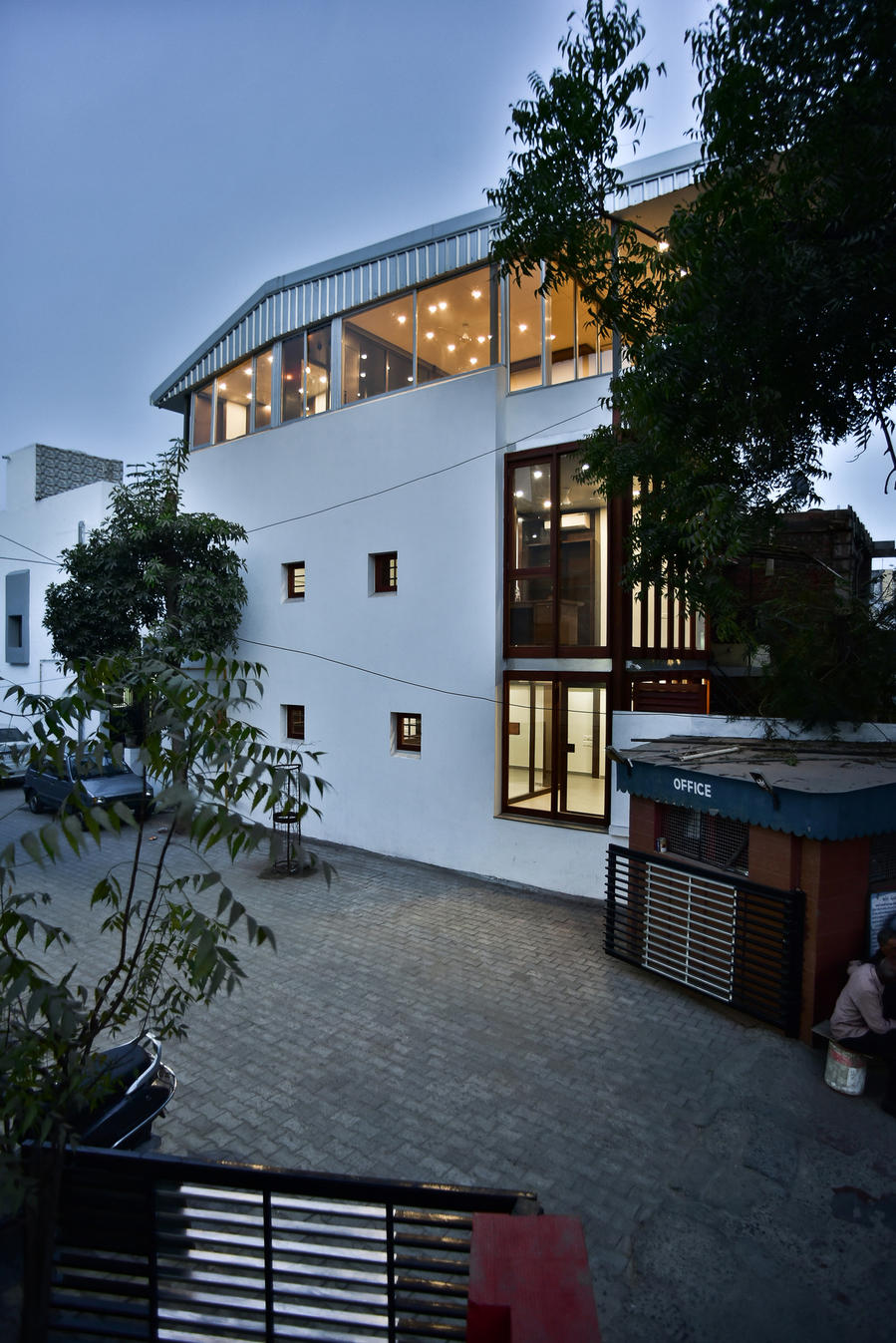
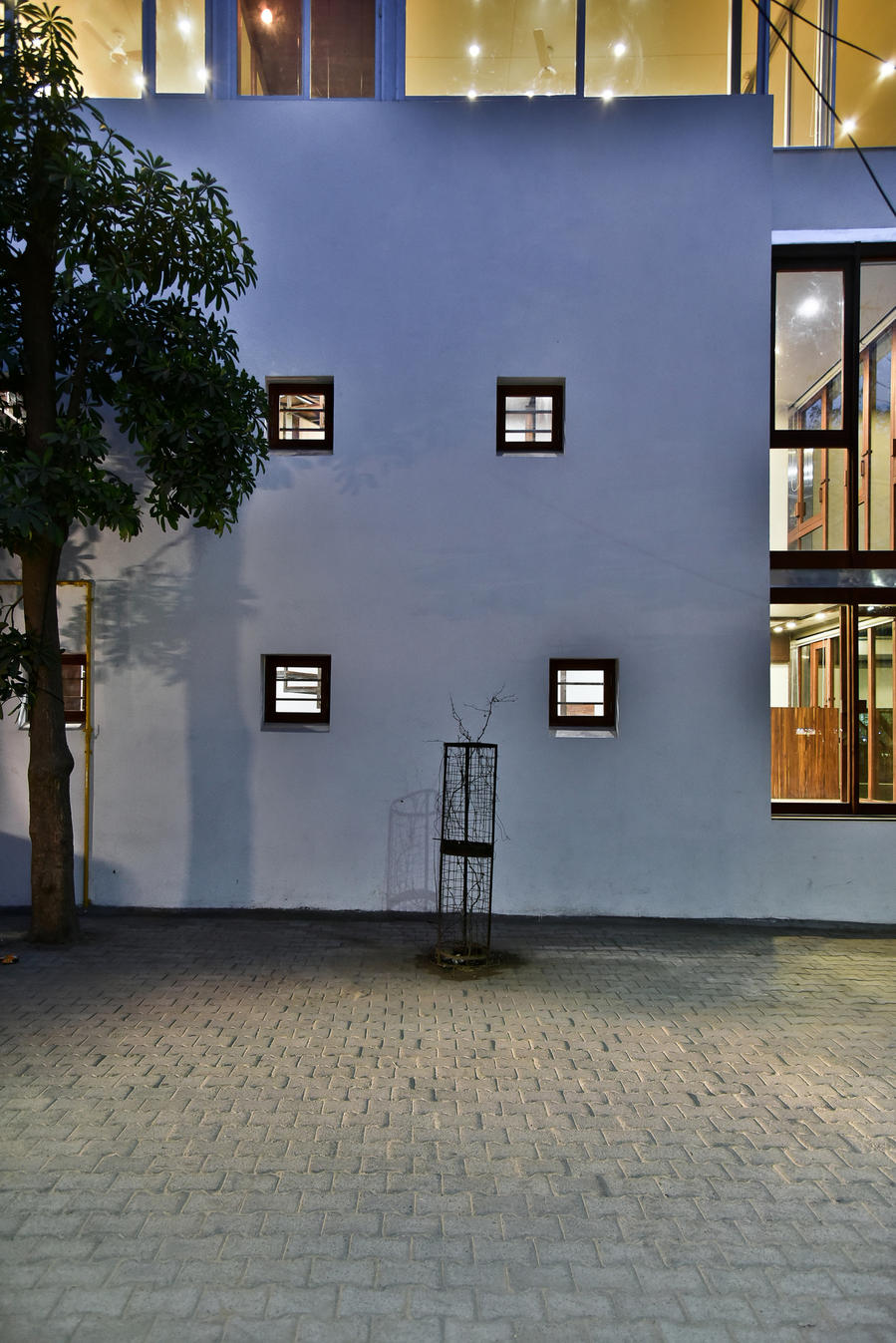
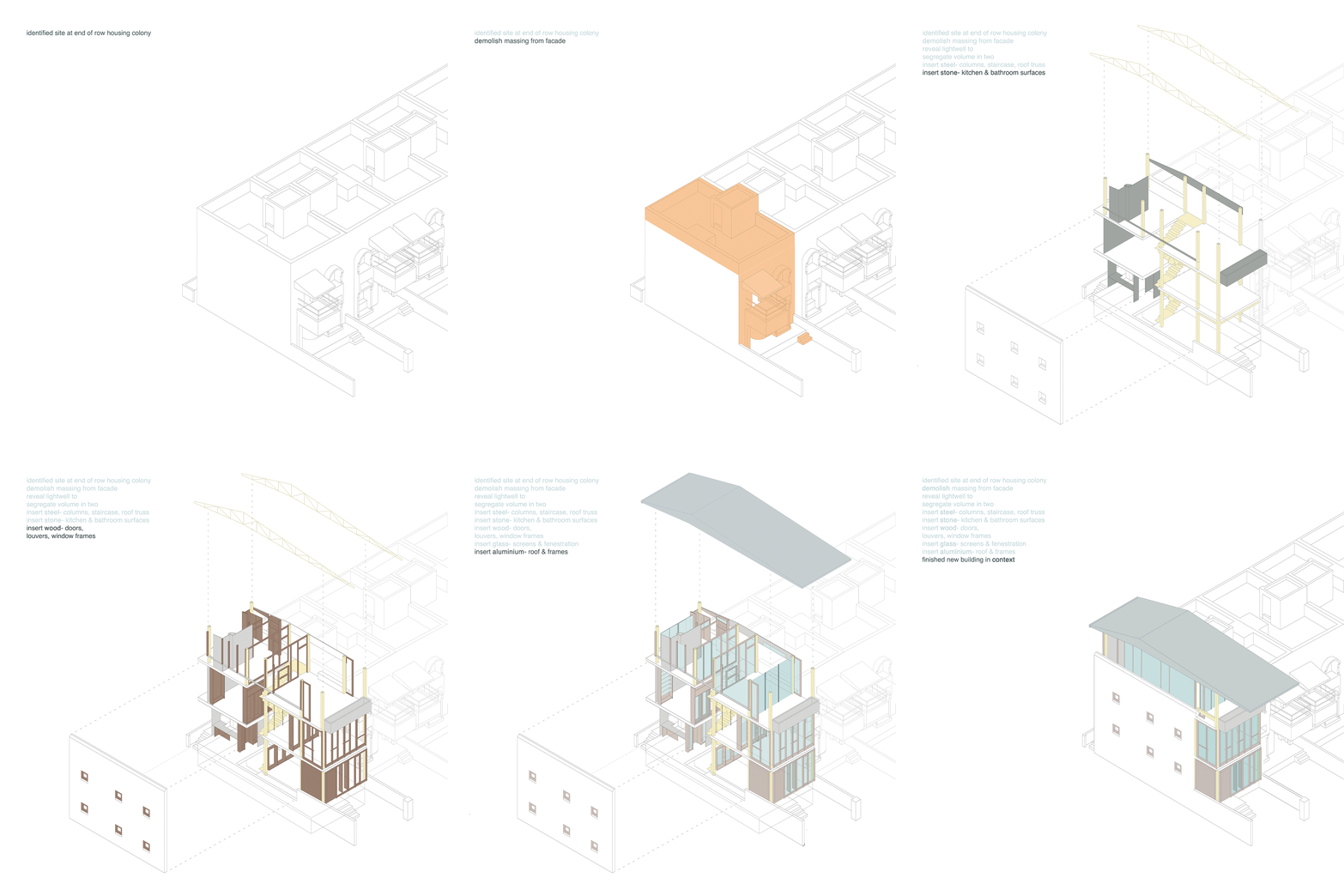
The law office adapts an aging, dingy row house to create a narrow new work space full of light. Lines between furniture, interior and architecture are blurred to generate a seamless habitable space, structured by the demolition of walls and insertion of a steel frame, which stabilizes the opened structure. A bi-centric spiral staircase of steel fills the cut-out that allows light to fall through all the floors. The work space extends above the building under the shade of an enveloping roof, which also ties the new framework and completes the operation.

Ranchhodpura, Gujarat 2010 - 2015
In many ways, this project is more about its making than anything else. For us, an opportunity to reflect on the contingencies of the design process—where they happen and how, at what scales they interact, and which points we must fix to let others remain loose.
The house in the landscape was recreated from the pieces of a 300 year oldhaveli. In this structure we merge new and old systems of assembly, combining 18 inch brick walls in concrete frame with gutai lime plaster and restored telpaanifinished teakwood elements. The basic form follows the original courtyard layout, flanked by bedroom, kitchen and mezzanine, while the wrapping terrace and sunken entry extend into the spaces outside, to transform the original row house layout into a part of the landscape.
The process began with a video, taken by an owner ready to demolish a termite damaged but beautiful row house in northern Gujarat. Normally when this type of house is destroyed its parts of value are sold to various antique dealers. Instead, our client acquired the entire house, packed up all its parts, and stored them on his property near Ahmedabad. We began the conceptual design process with the video and a short list of elements with their basic dimensions. Only after agreeing on the direction of the design did we take one day (because we couldn’t risk the damage or theft associated with leaving elements out all night) to unpack as much as we could and measure critical dimensions. Already there we found many pieces not present in the list, and barely covered in the imagery. From those basic measurements we drew up the elements and developed the design. The first time we could completely open the elements and start to puzzle them out came after the columns, roof and plinth were finished. It was then that we began the conversations with our carpenters about what, where and how, given the basic framework of the courtyard we had seen and planned. As elements were unearthed, projected locations shifted to accommodate new pieces, or to hold related parts. We gradually moved away from drawings, making more decisions on site, because the argument couldn’t be divorced from the place and the artisan’s perspective.
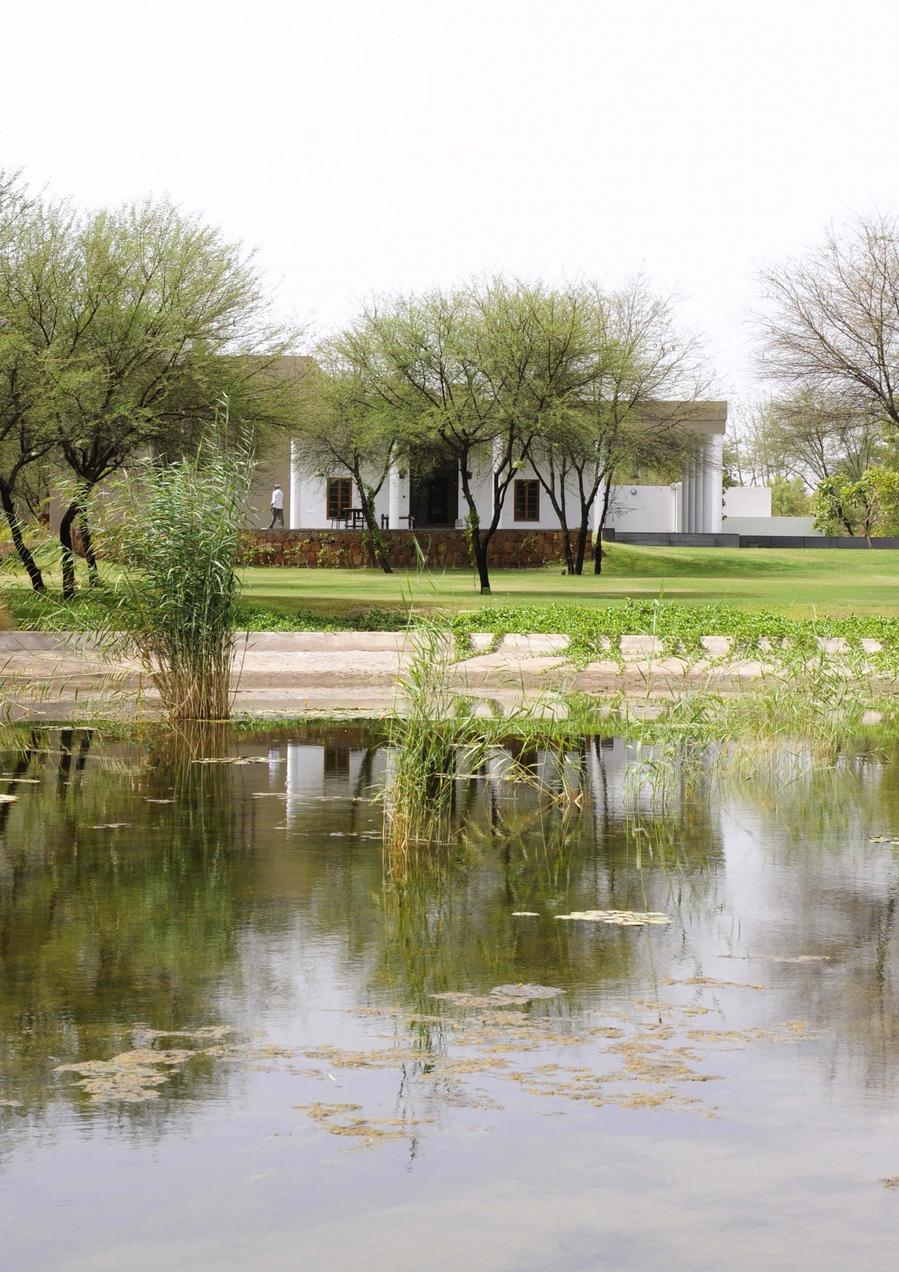
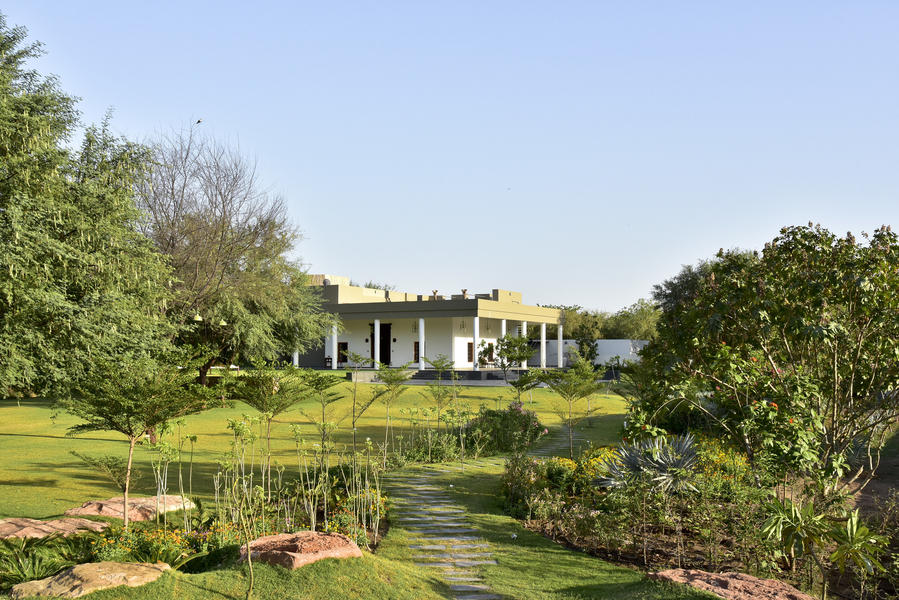
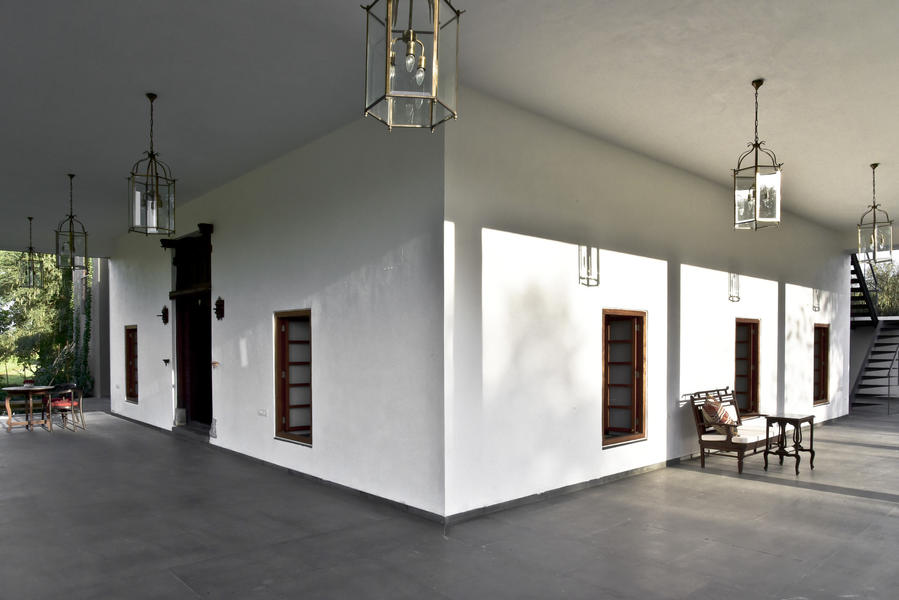
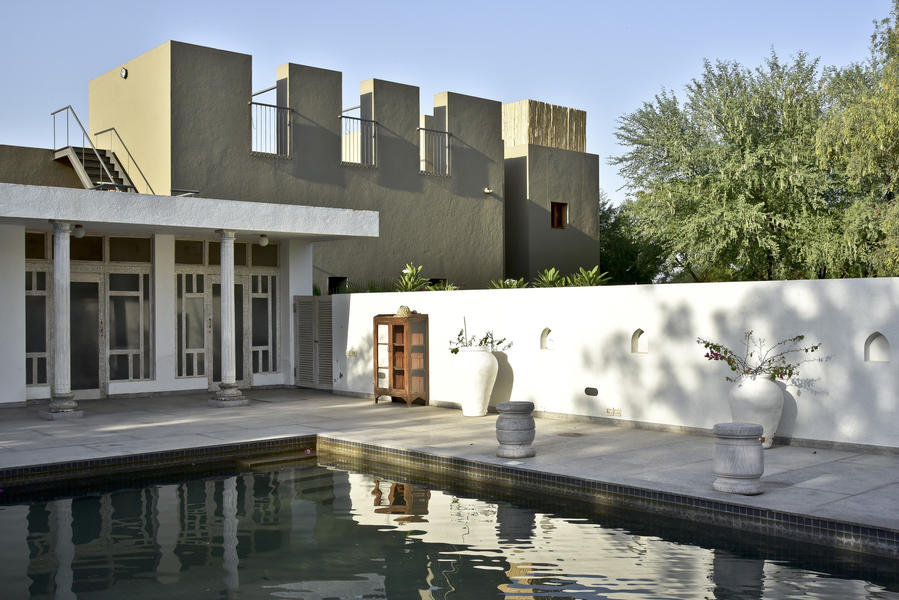
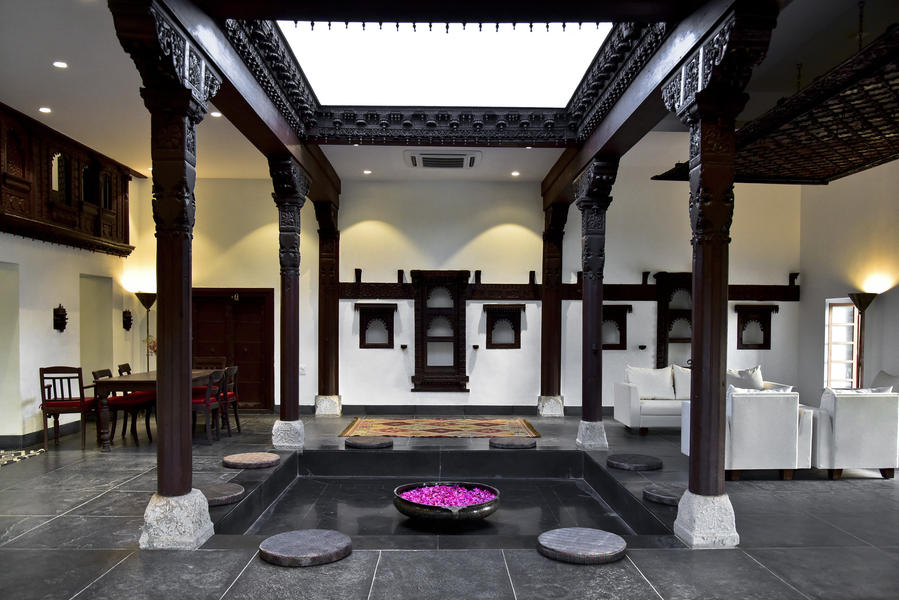
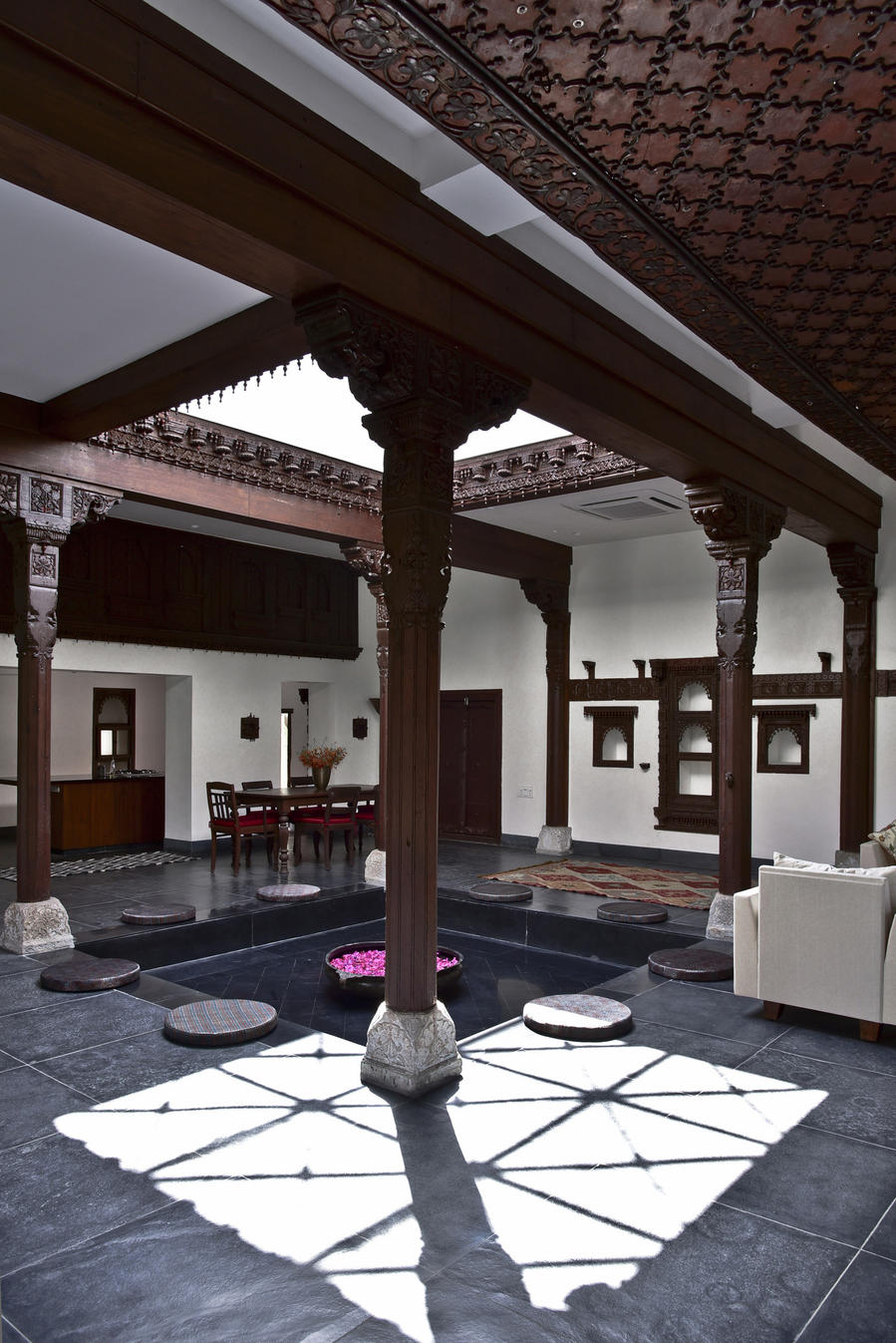
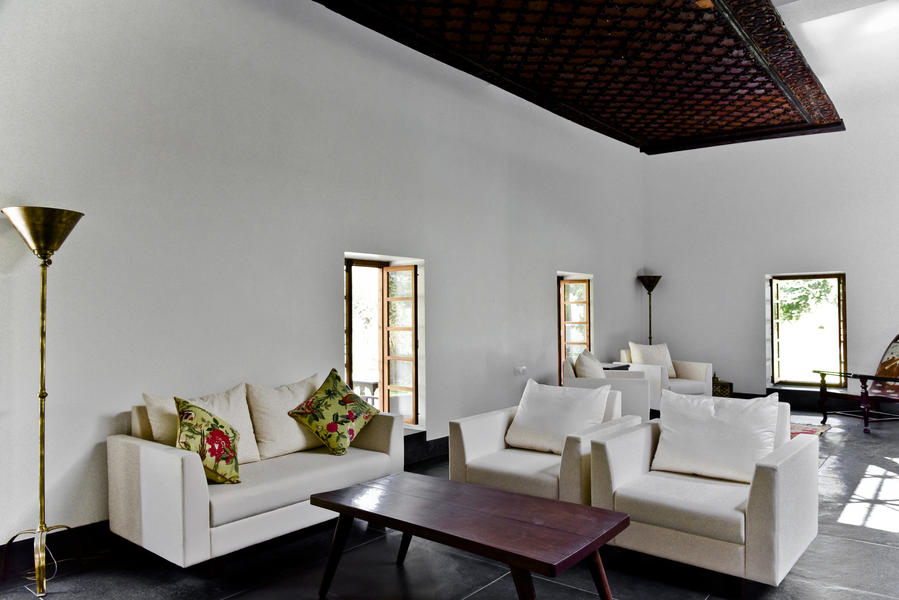
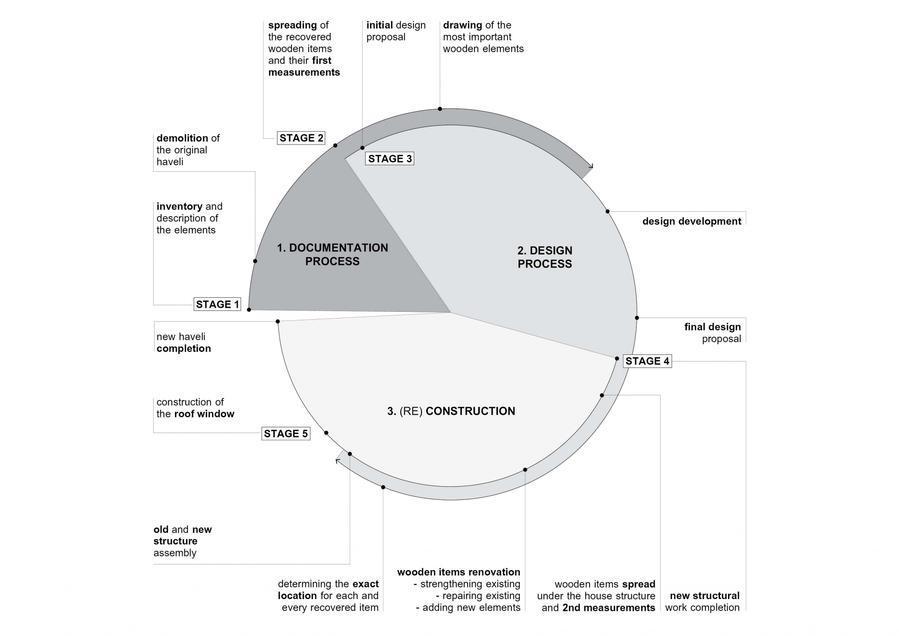
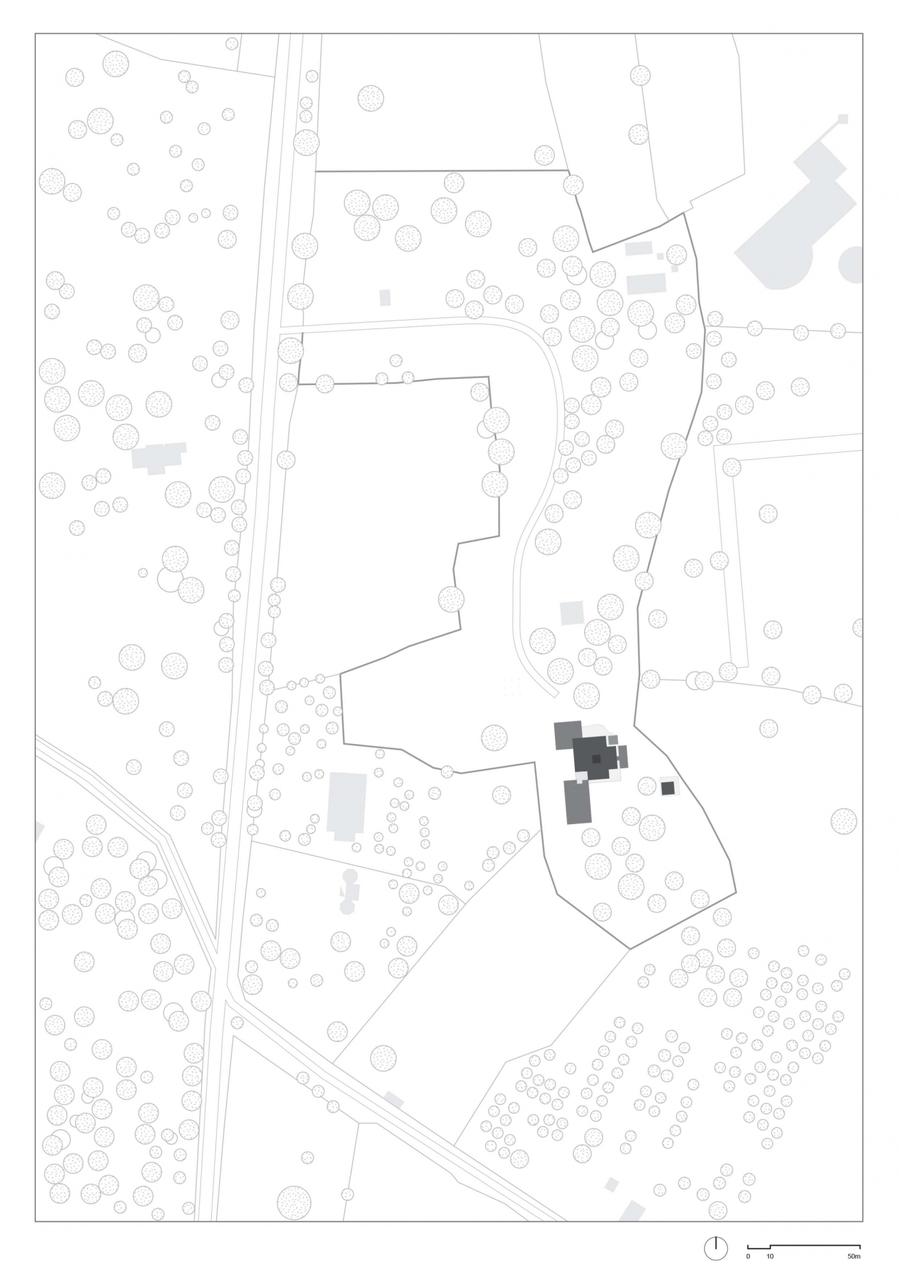
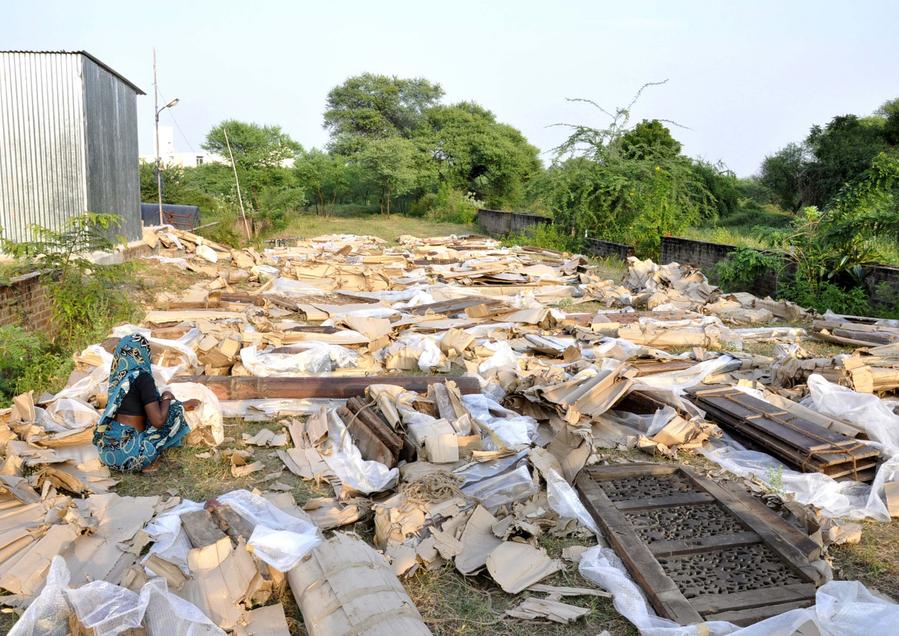
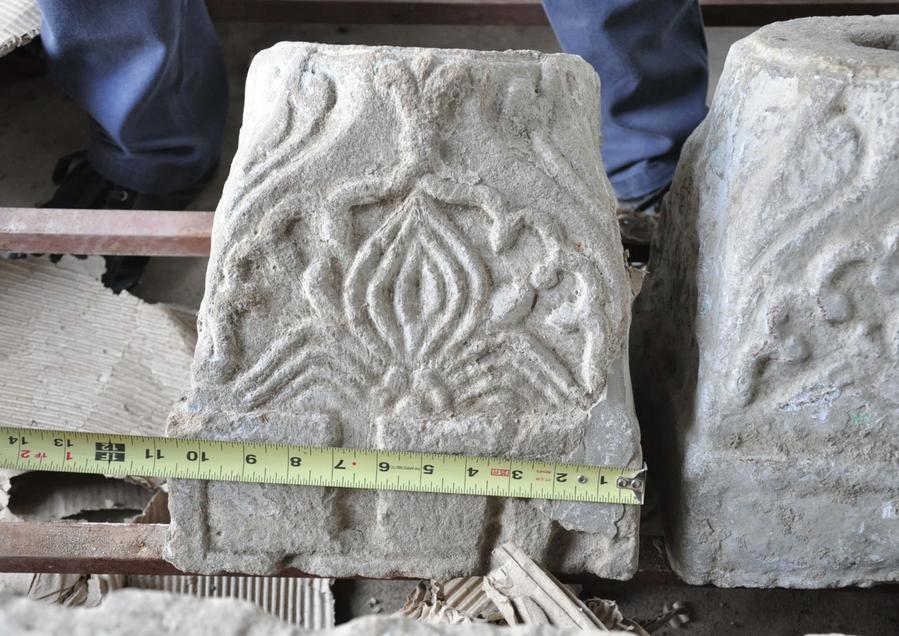
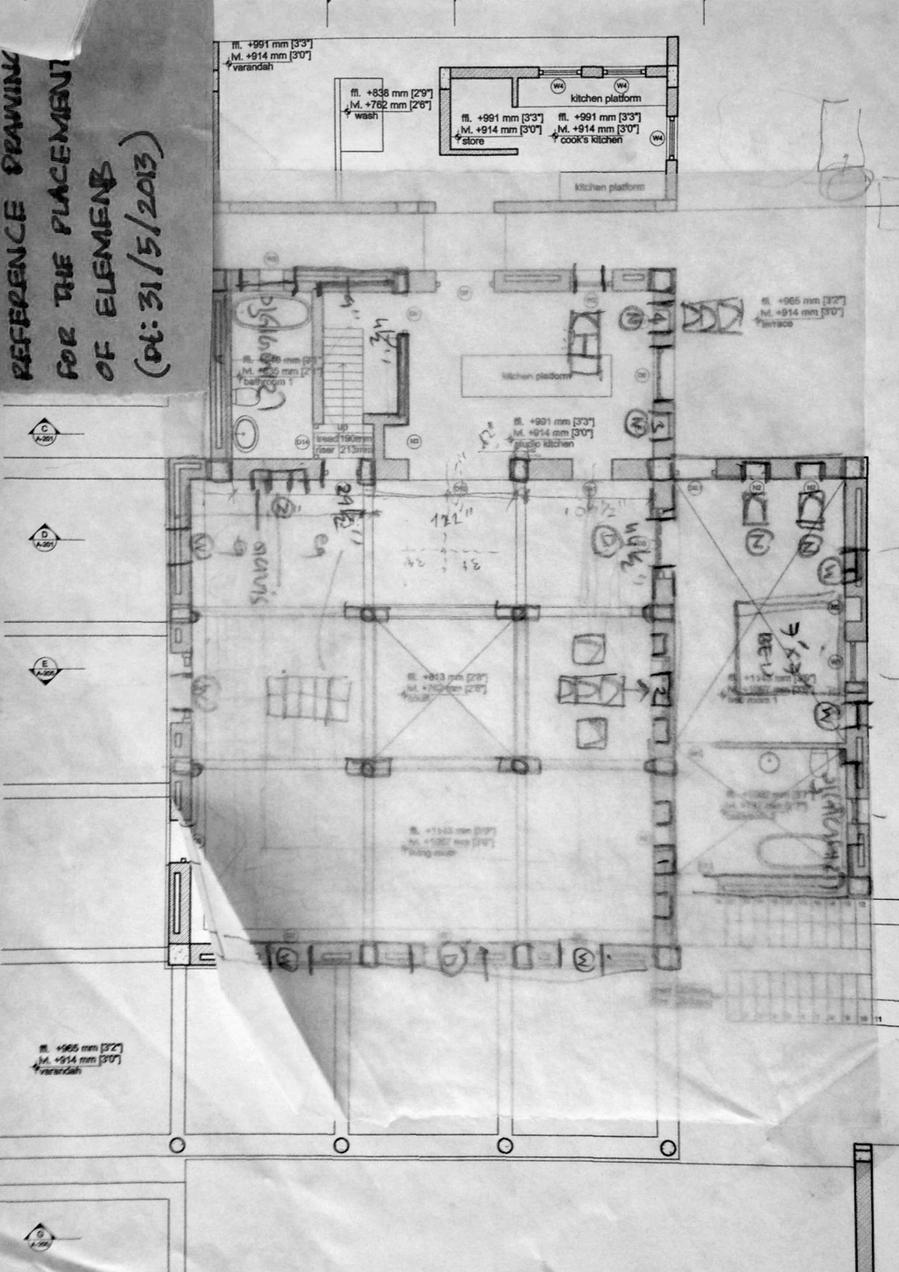
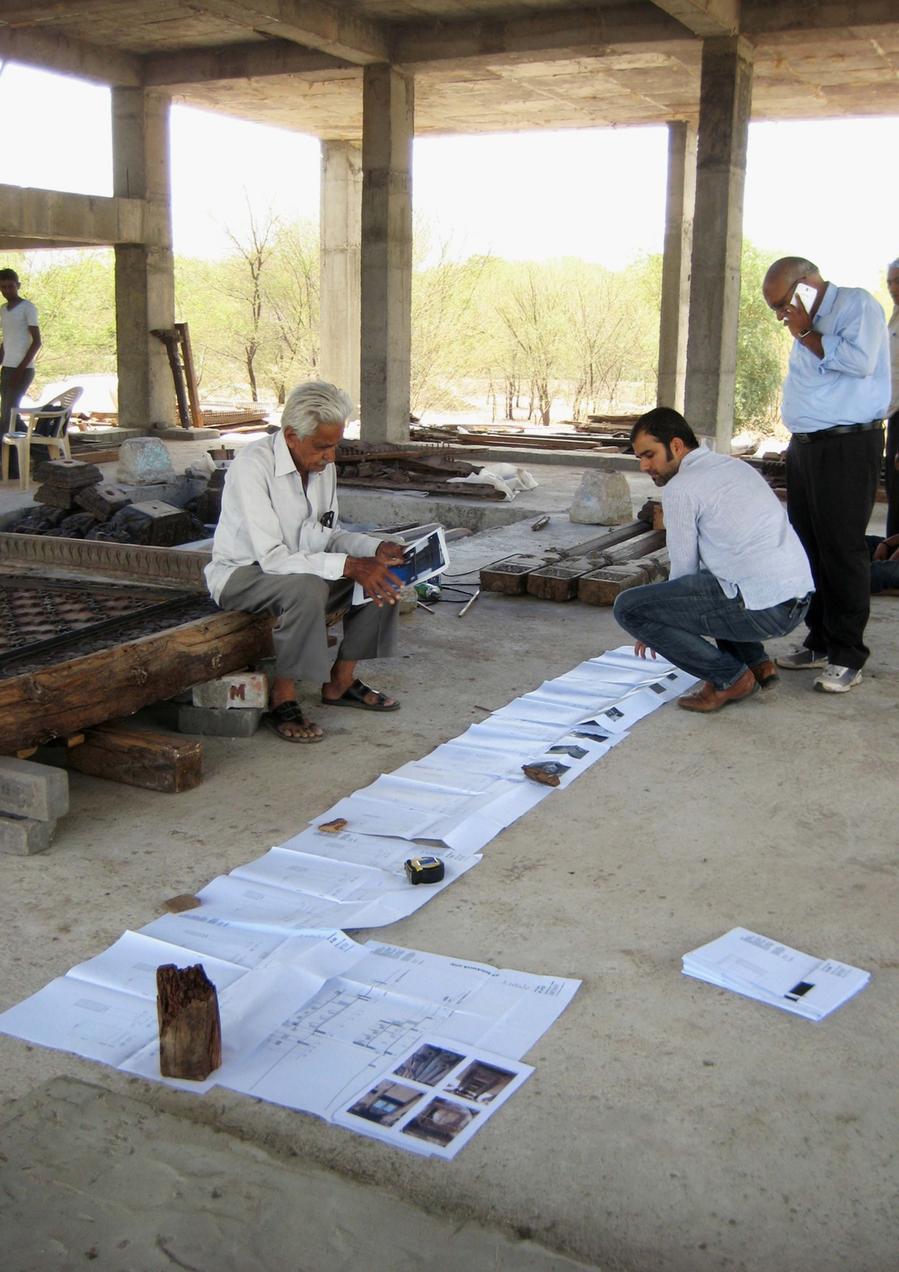
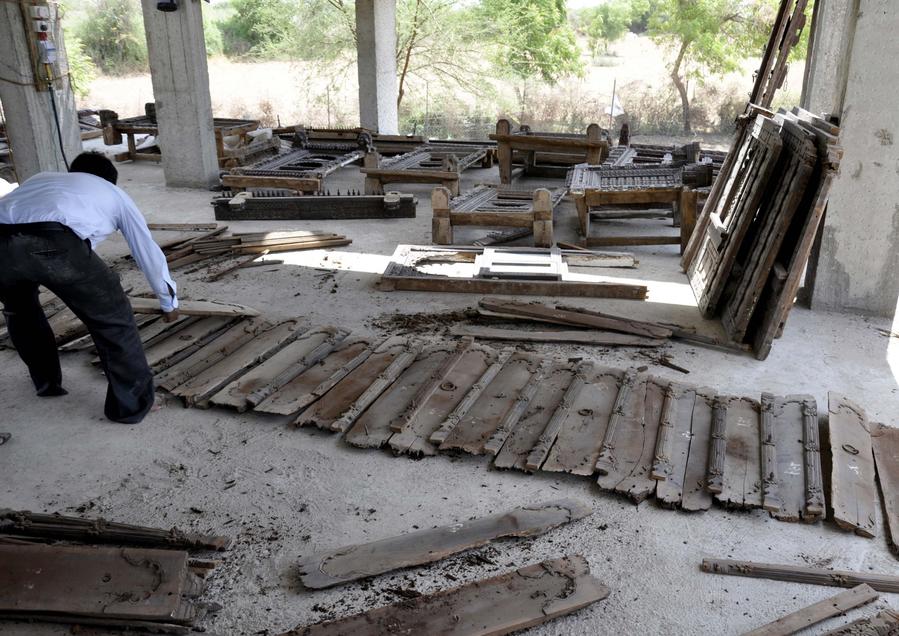
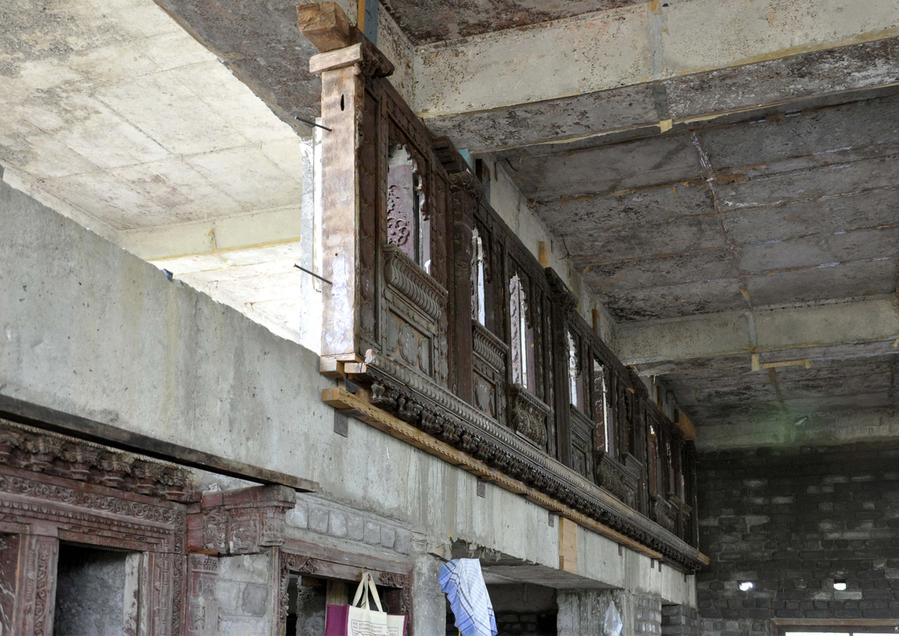
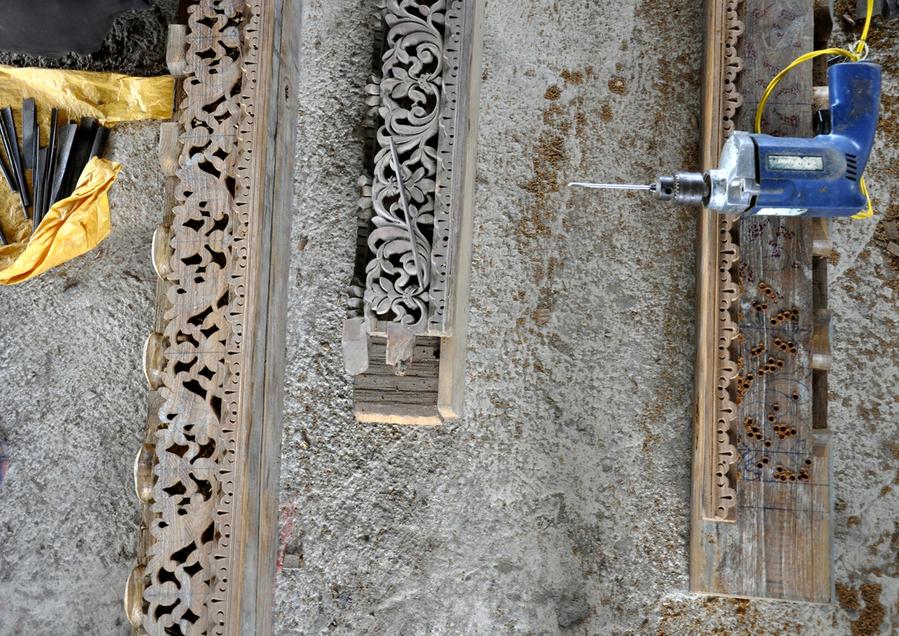
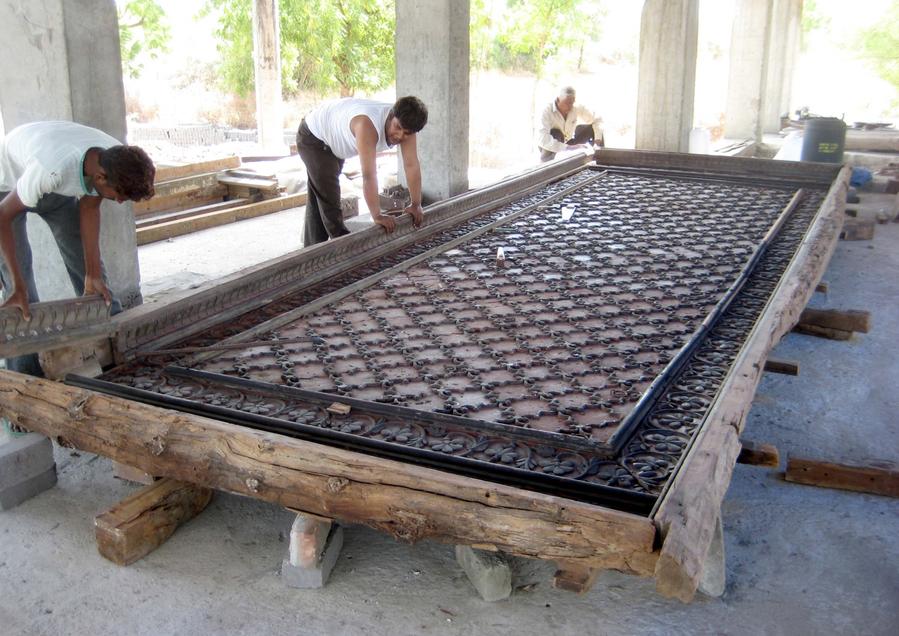
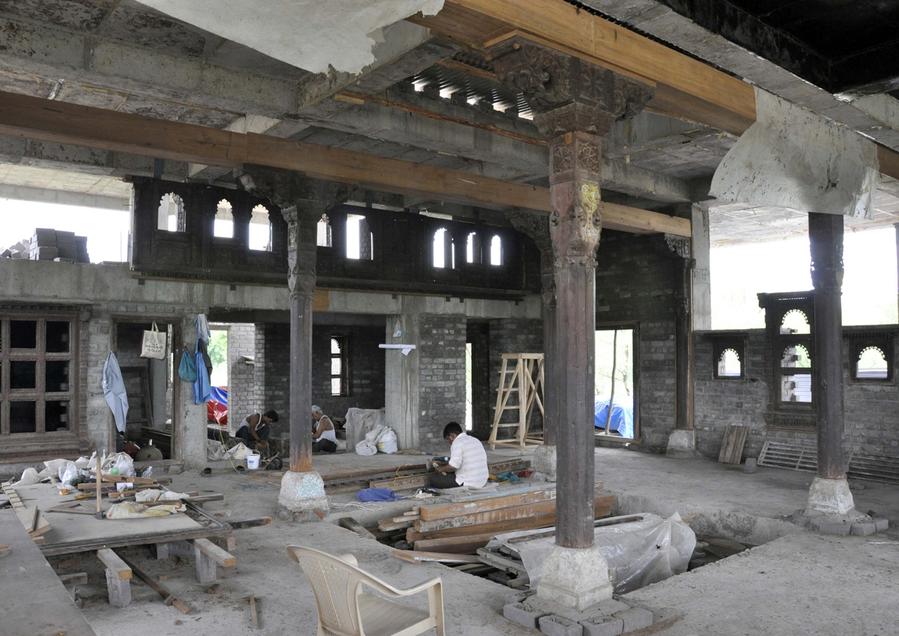
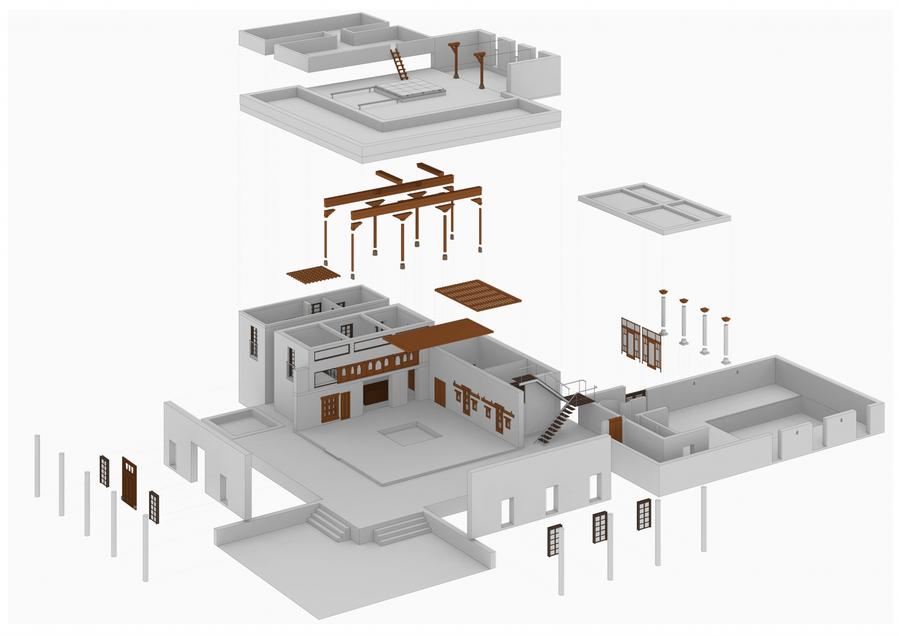
Here the logic of new and old coming together was reflected in the process by which they were made. Old elements needed conversations, placements, and at most, hand drawings. Their unique form and dissimilarities rendered digital drawings complicated and unnecessary, while the new elements, inserted alongside old in the structure, were designed, drawn and executed according to a more typical practice of construction drawings and site checks. These parallel processes resulted in an intensely site driven design, which evolved as much during its process of construction as during its so-called design phase.
Palanpur, Gujarat 2011 - 2015
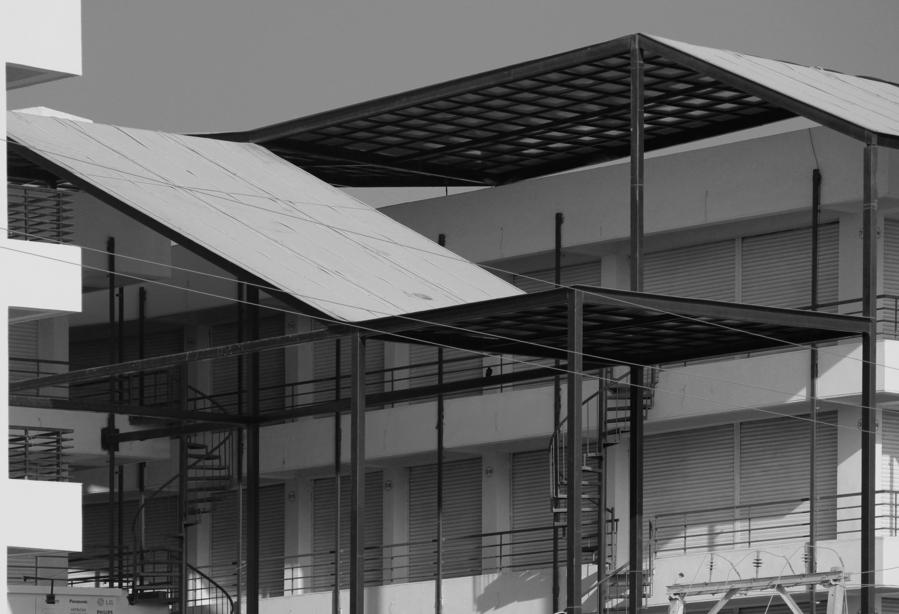
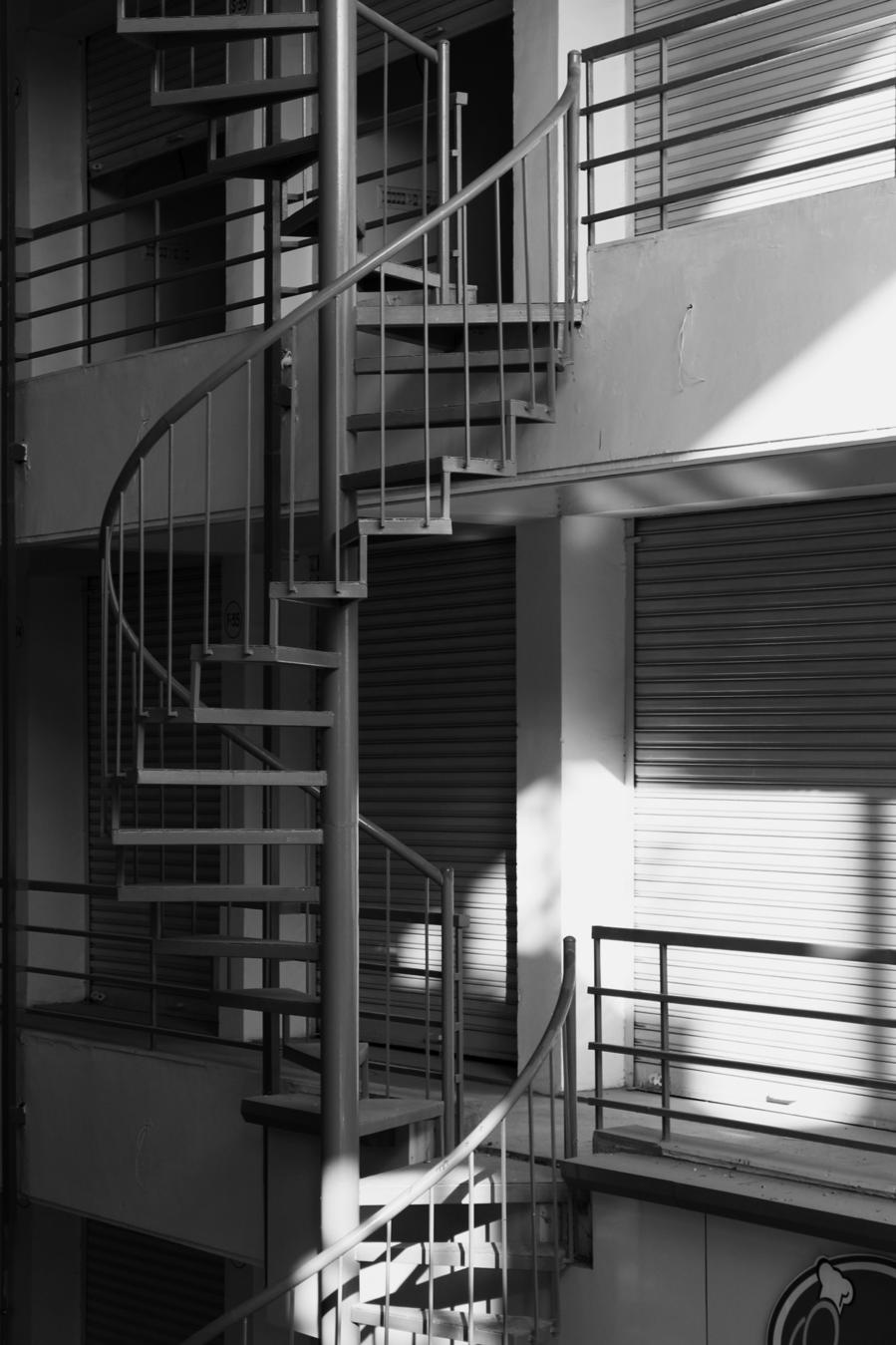
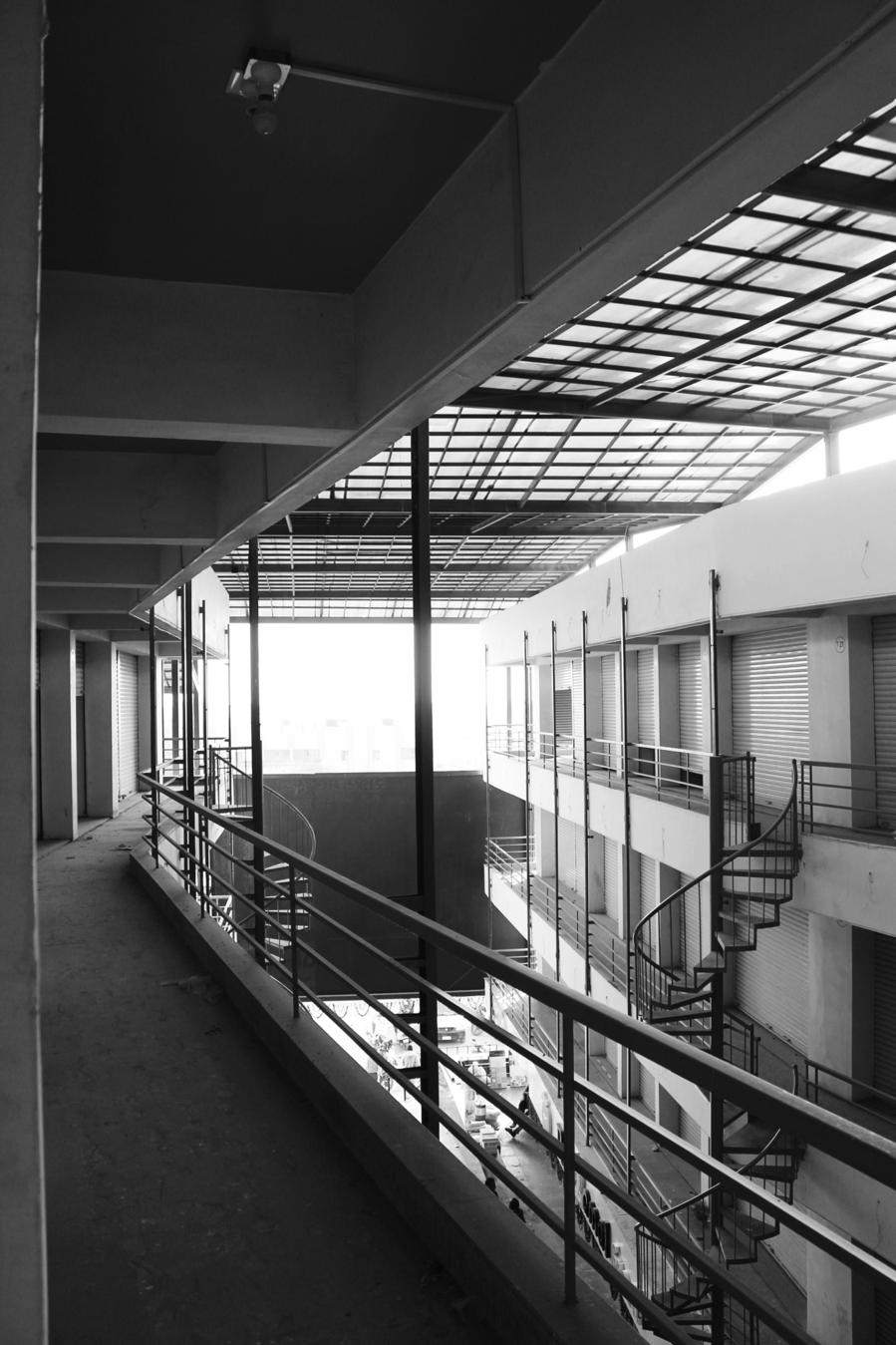
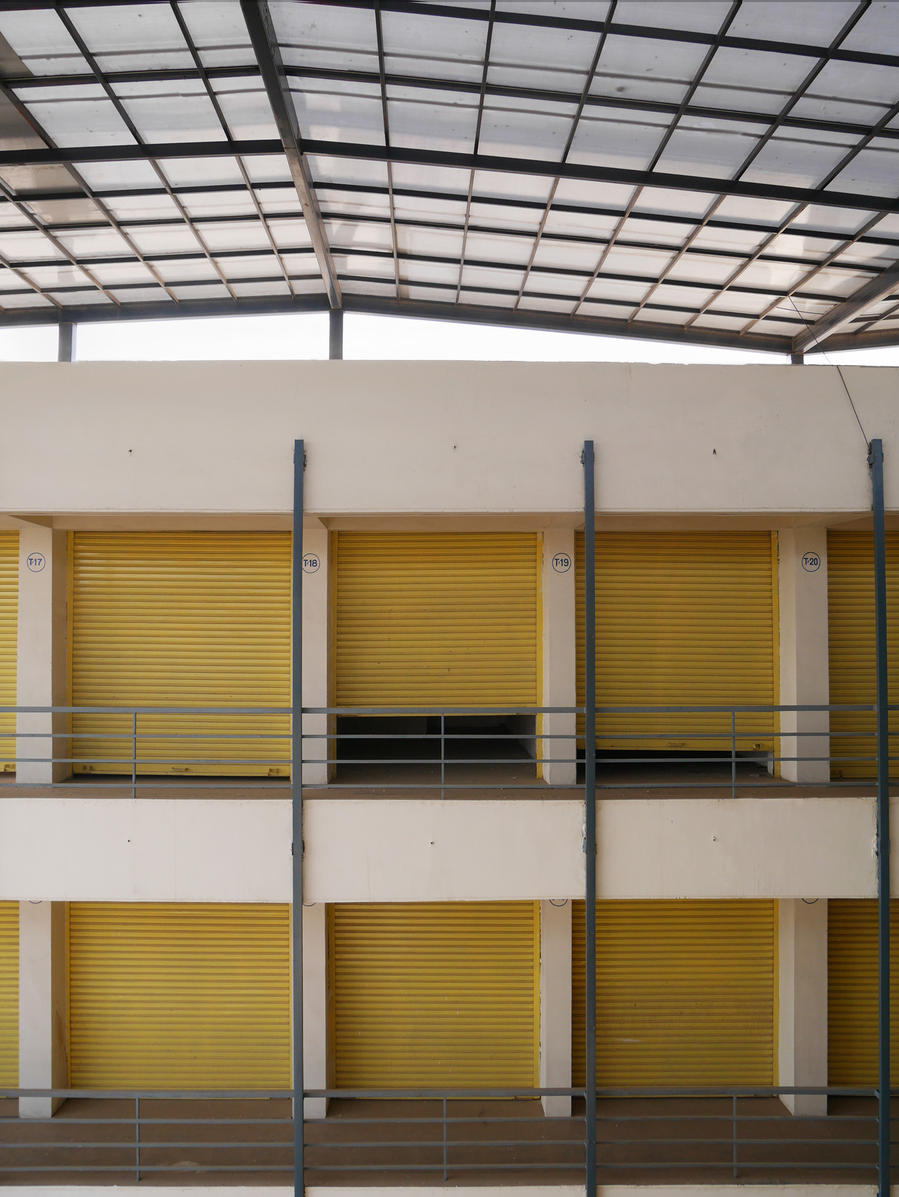
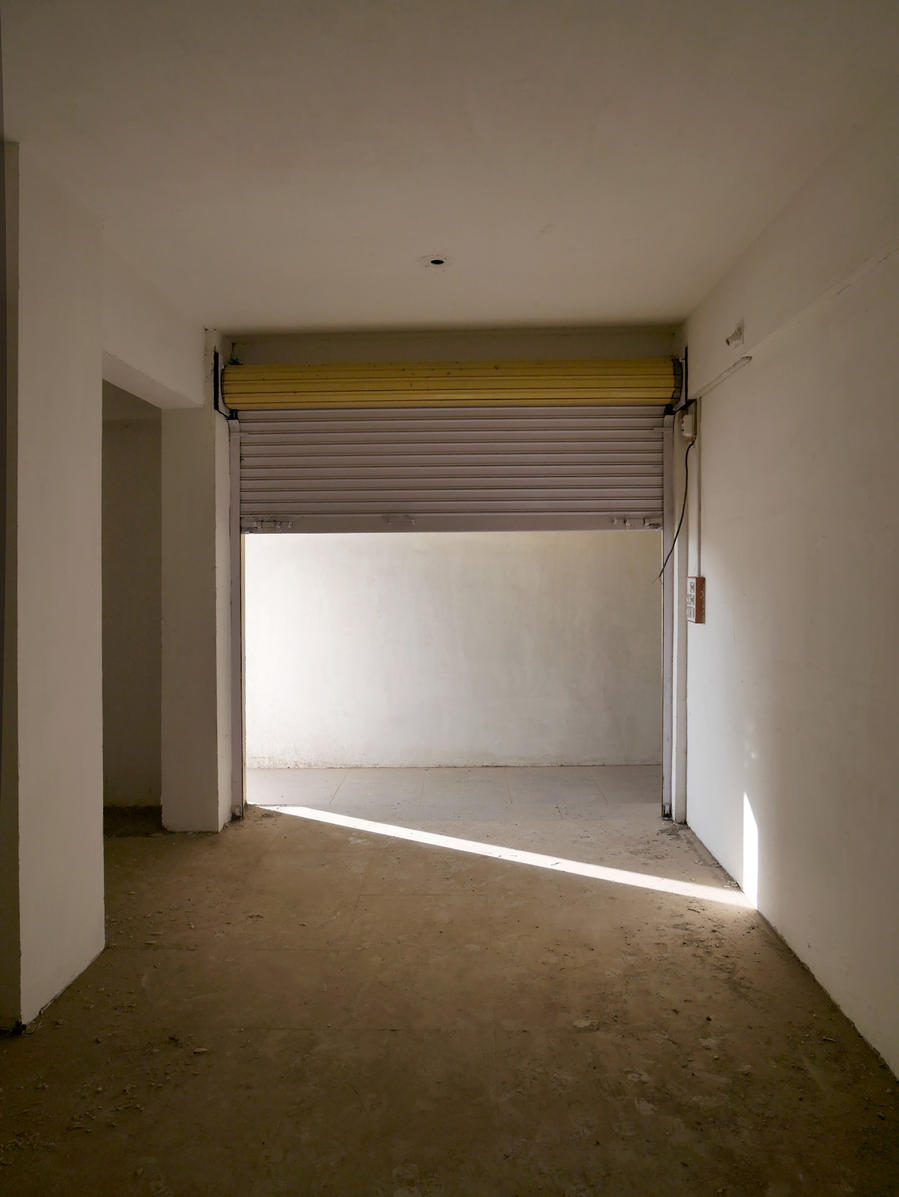
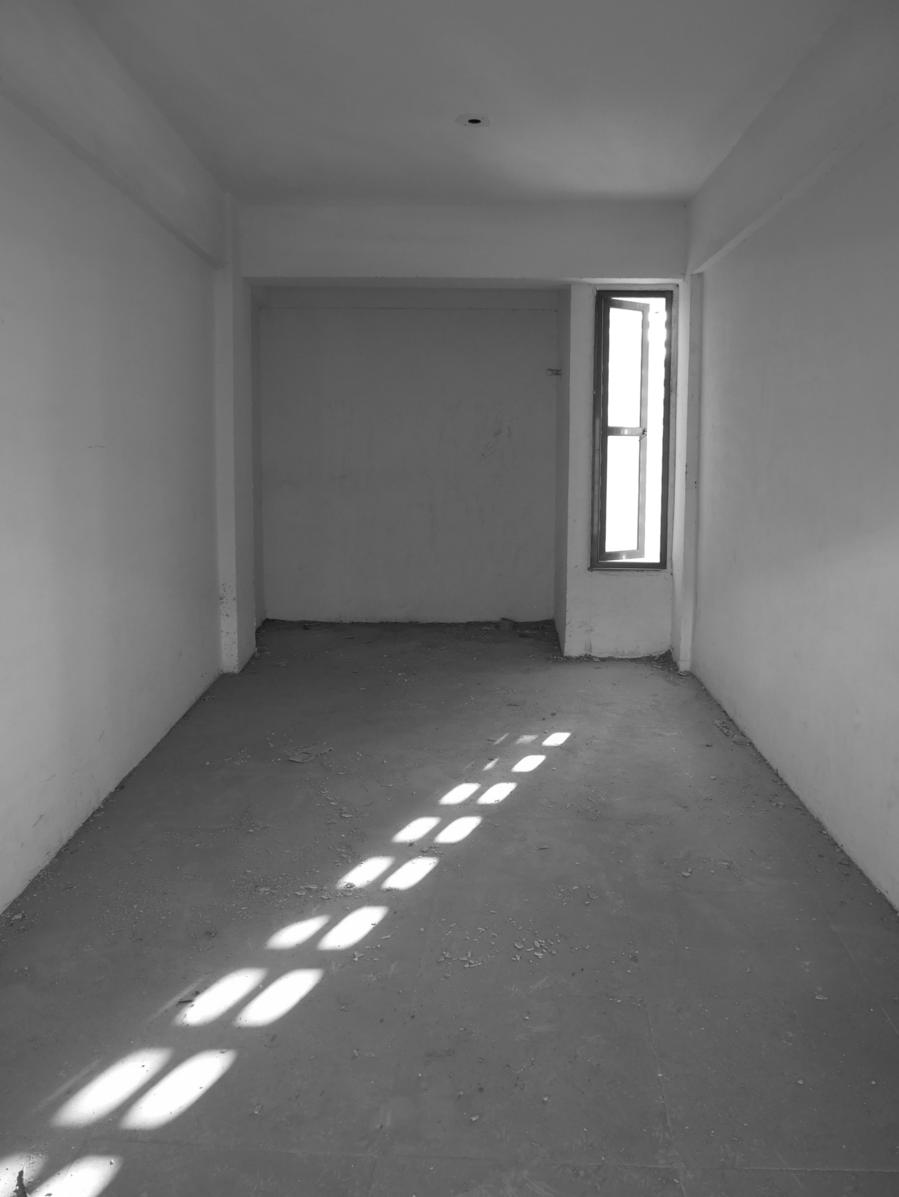
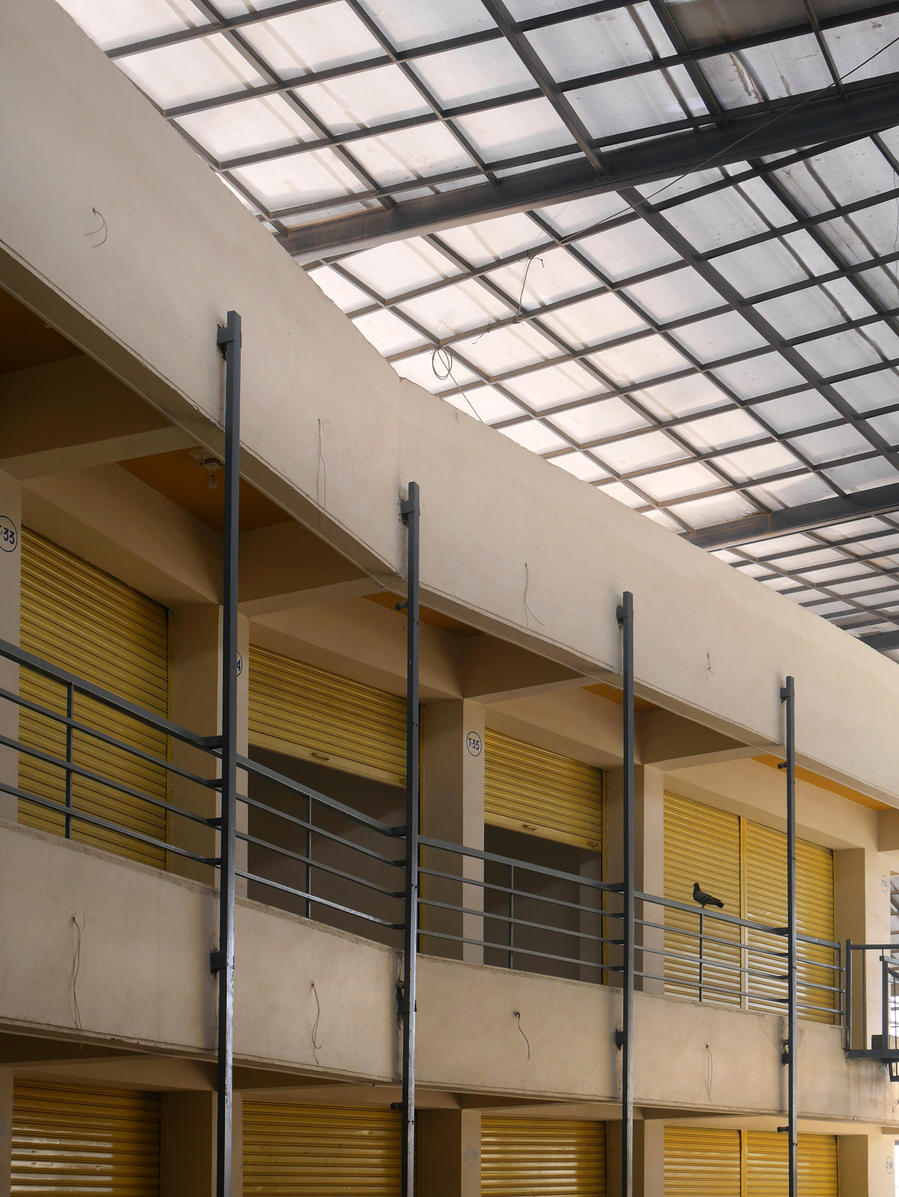
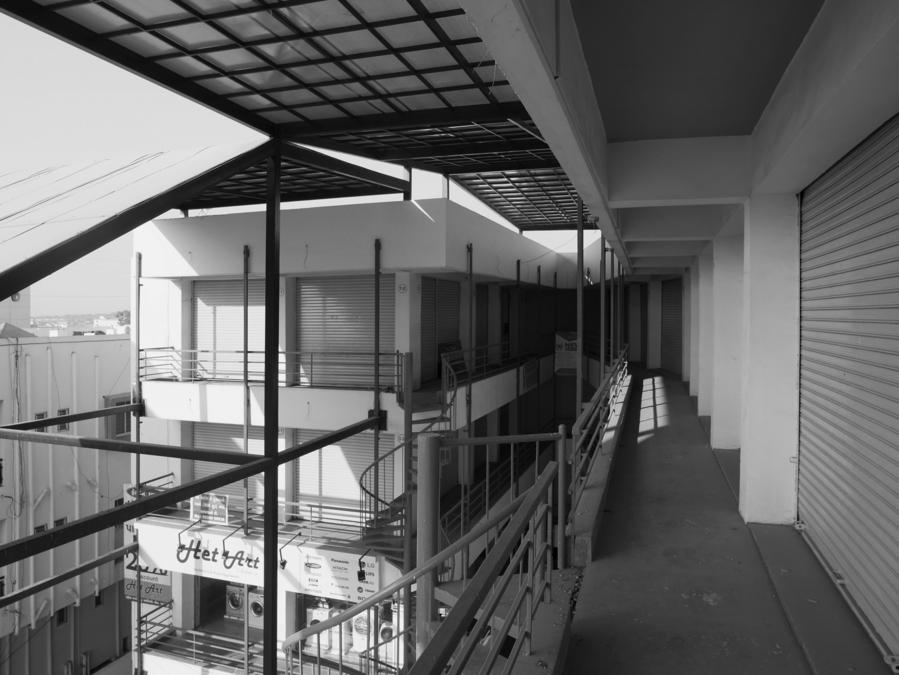
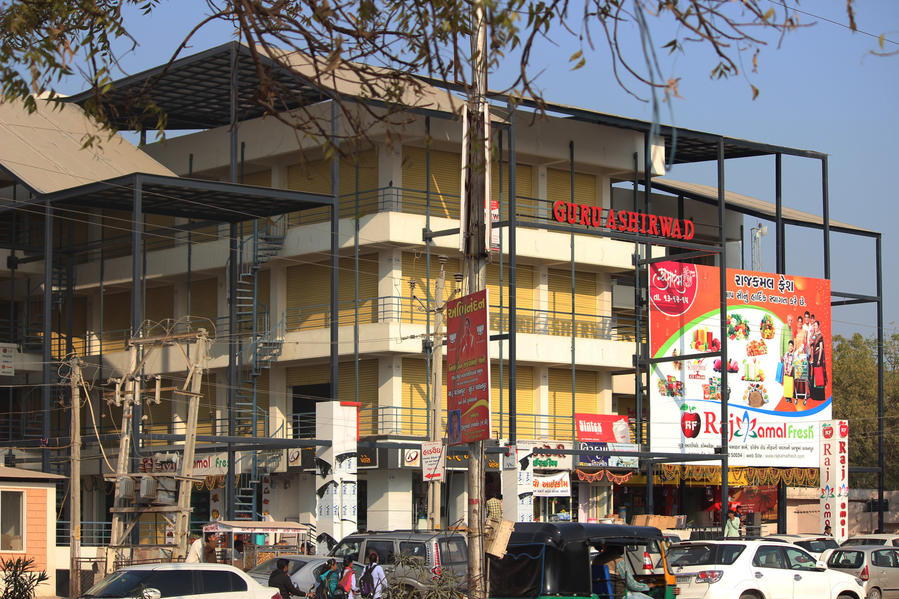
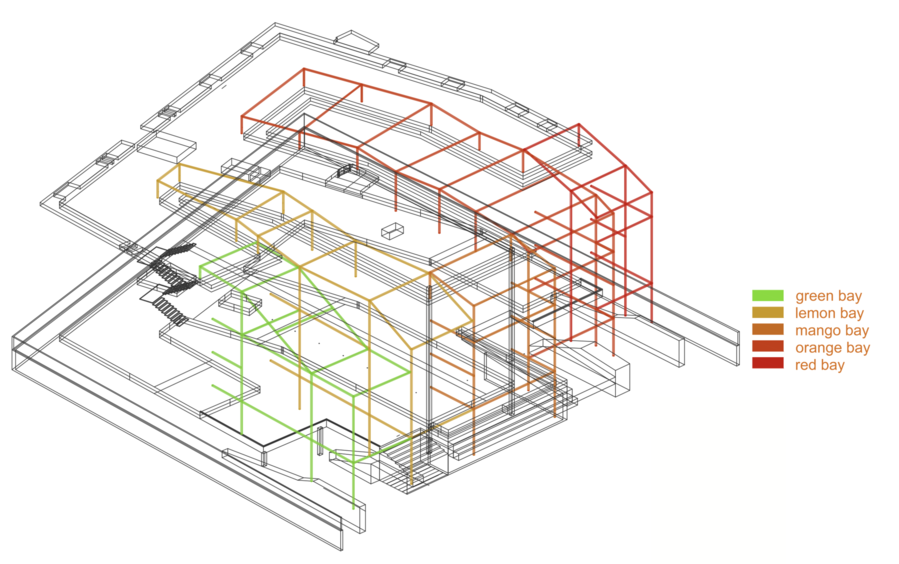
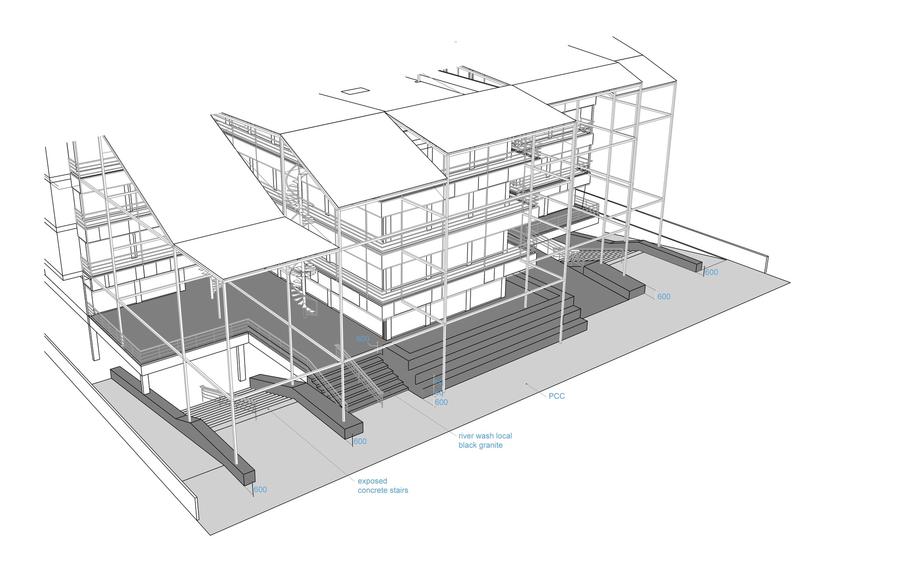
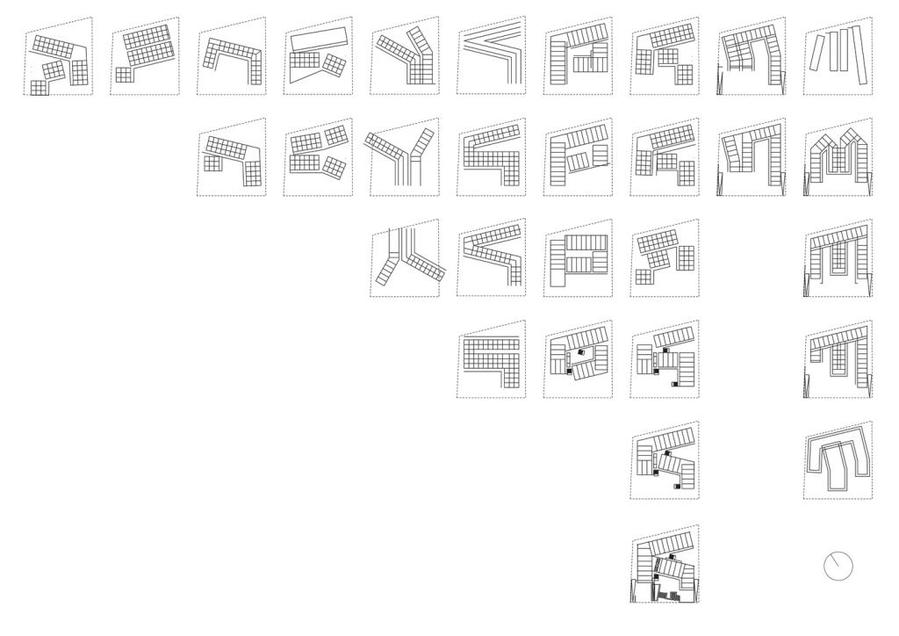
This 4 story commercial building in northern Gujarat maximizes the visibility of street facing shops by creating three strips that face 2 semi open courtyards between them. The ground floor is elevated to open and ventilate off street parking whose connection to the space above is reinforced by a series of ramps and stairs that run from basement to ground to plinth, with seating embedded to encourage public use. The shade above is modulated to protect the shop fronts from sun, dipping down in the southwest to add a few hours and lifting in the northeast to let the breeze fly out.

Deesa, Gujarat 2012 - 2014
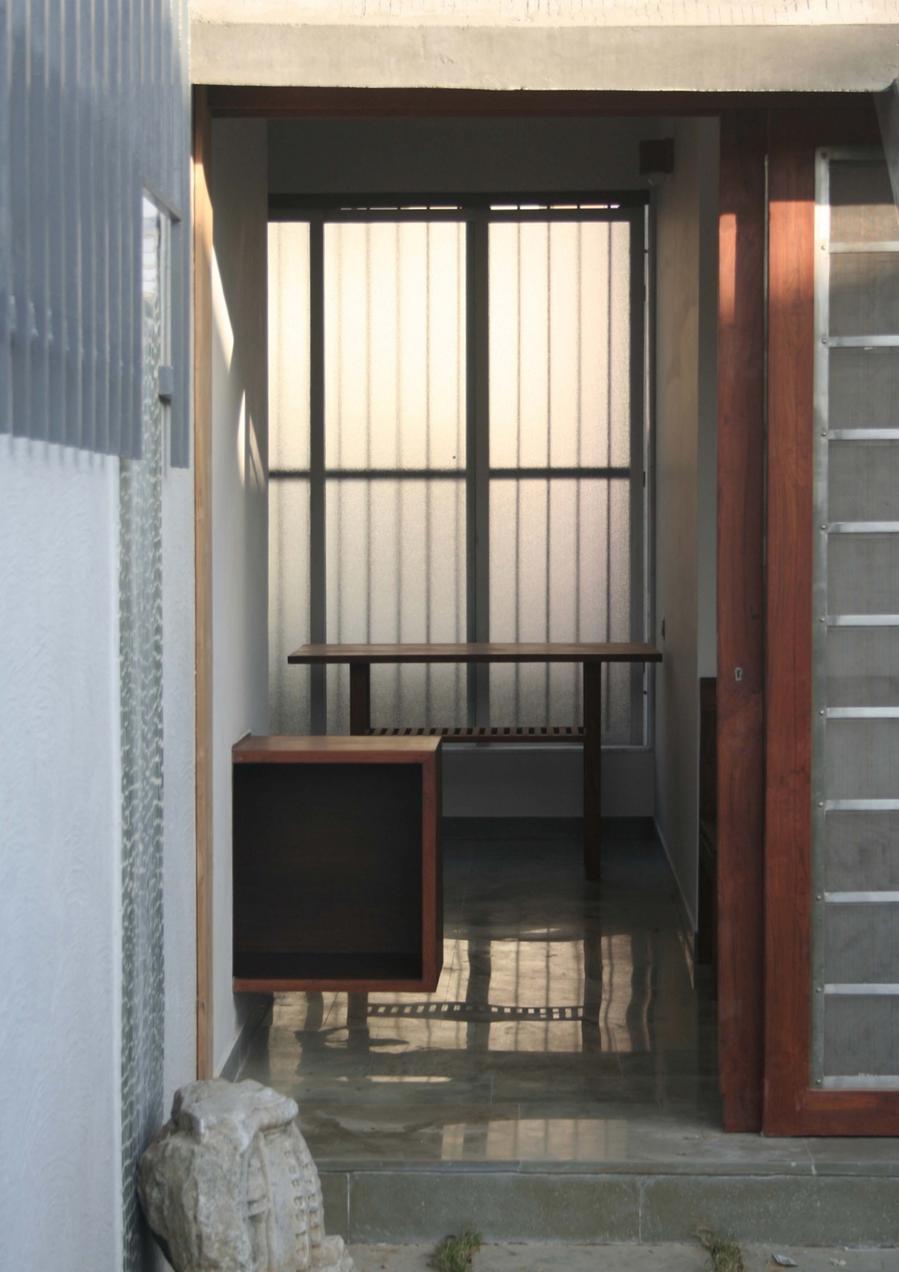
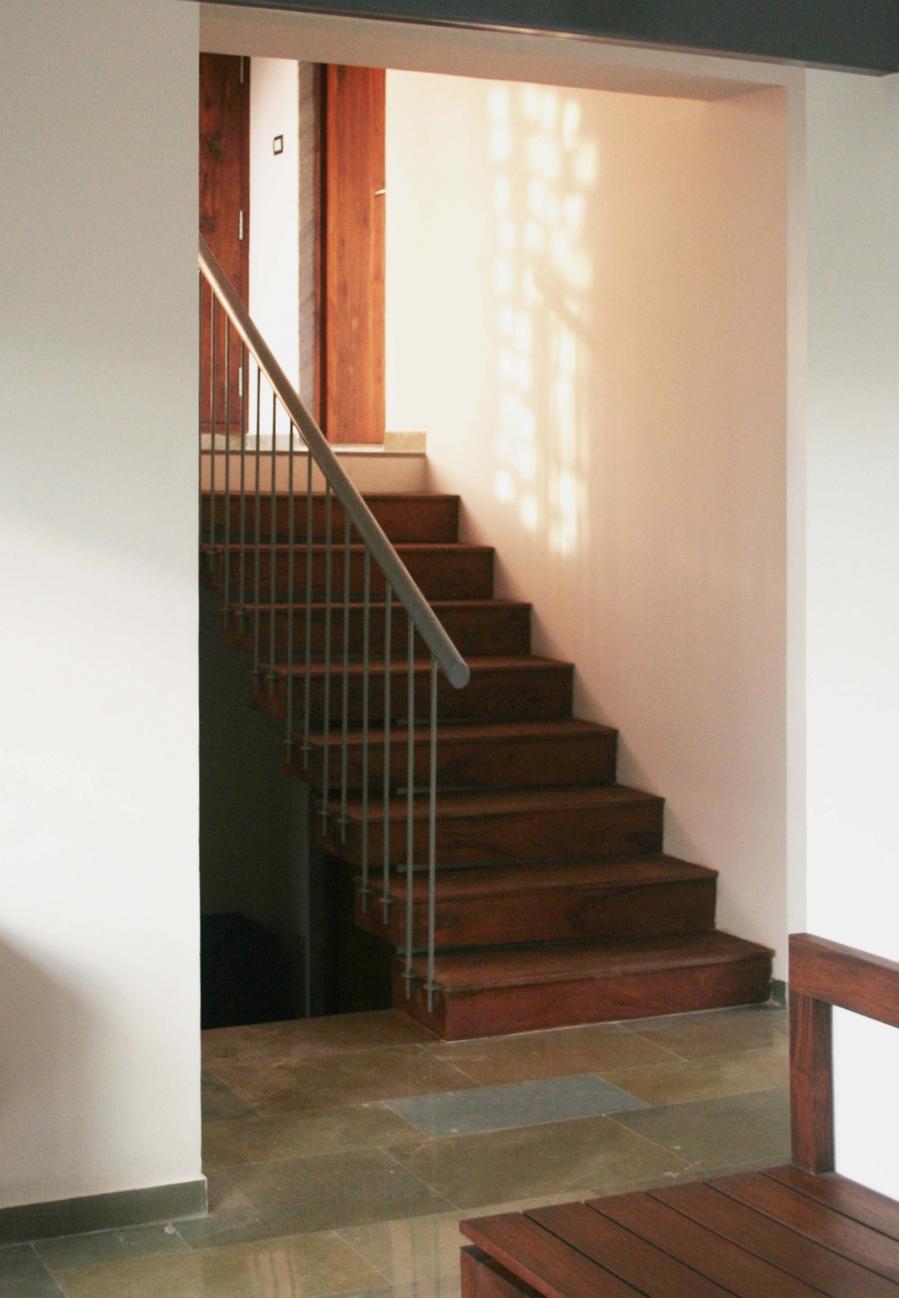
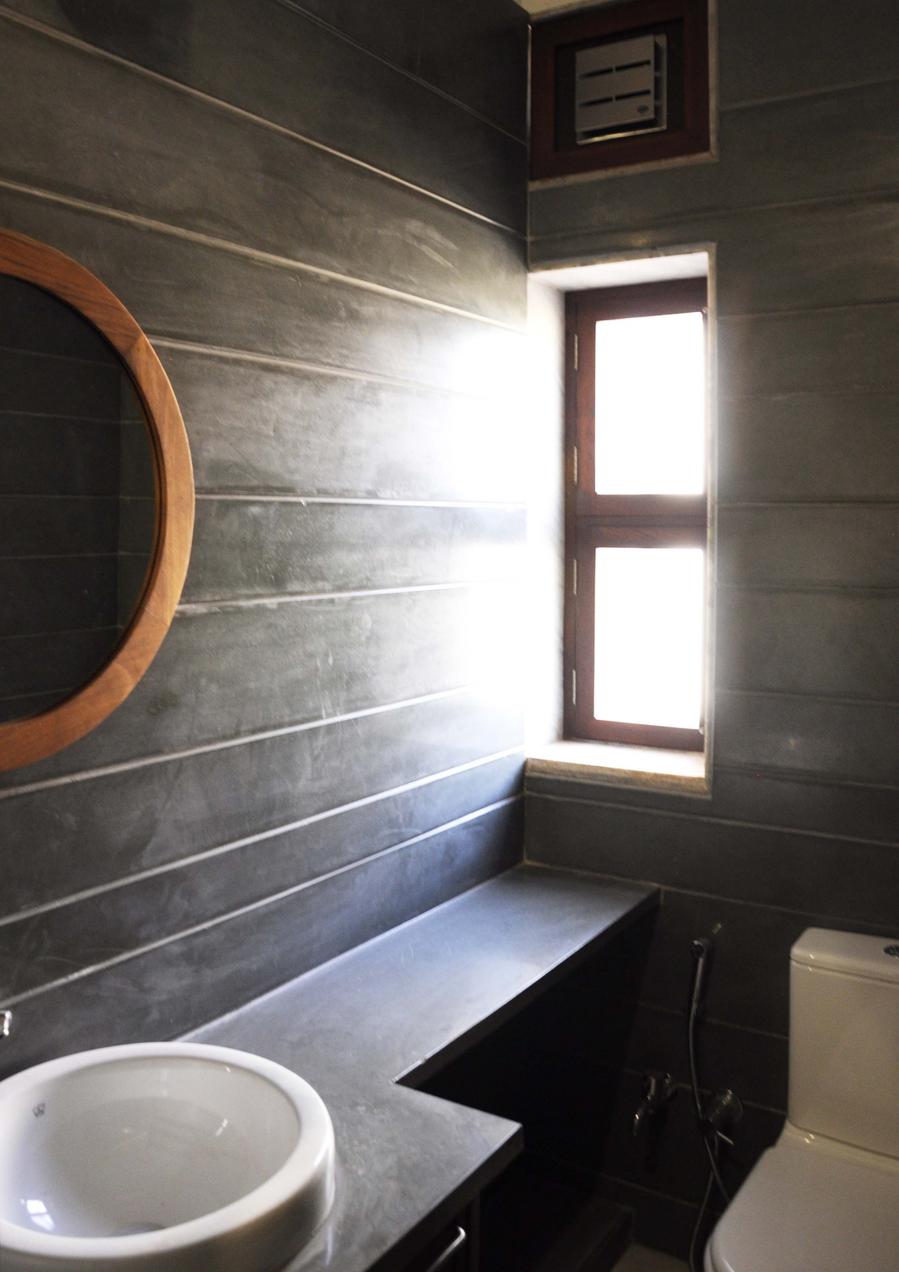
A multi-generational family of eight asked for a straightforward house that would naturally withstand the harsh climate conditions of northern Gujarat and weather well over time. In line with their clarity of mind, they submitted a list of their specific requirements, outlining the way that they needed to use their home, and their expectation of a durable, simply designed structure.
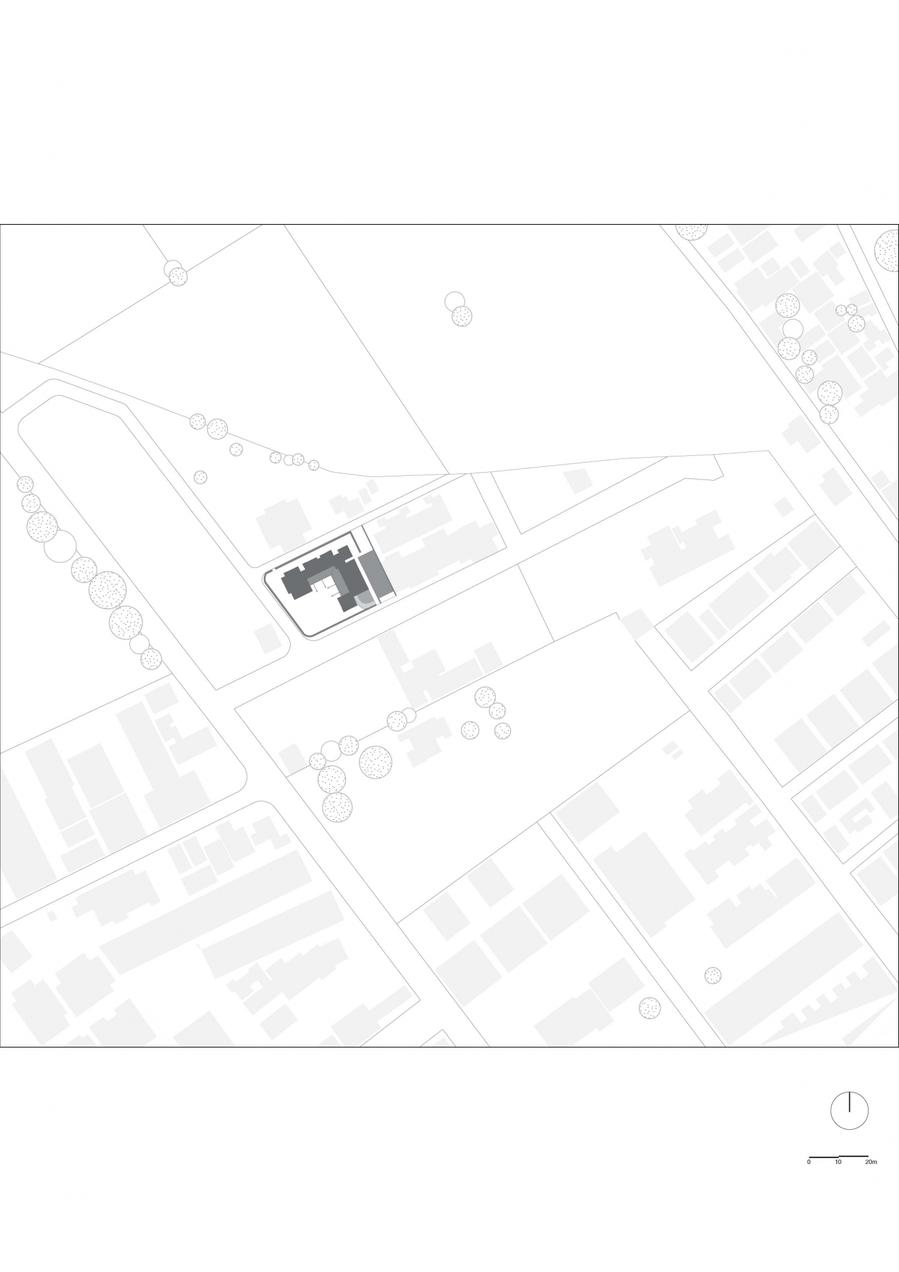
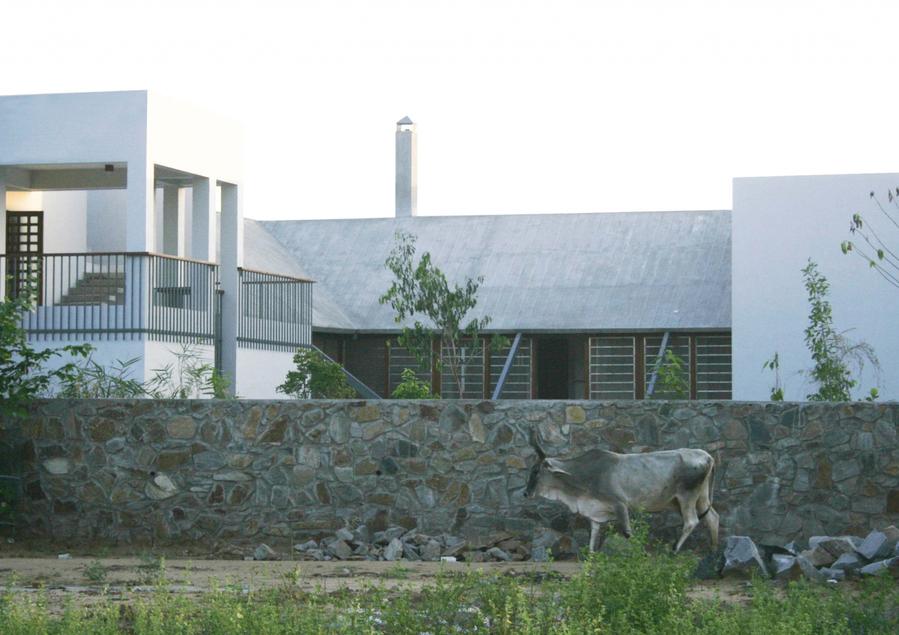
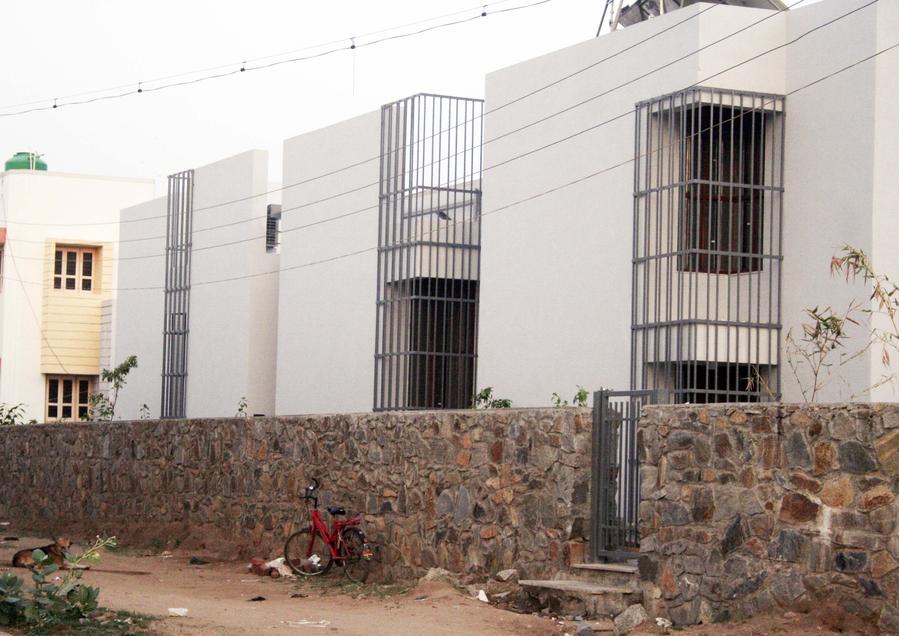
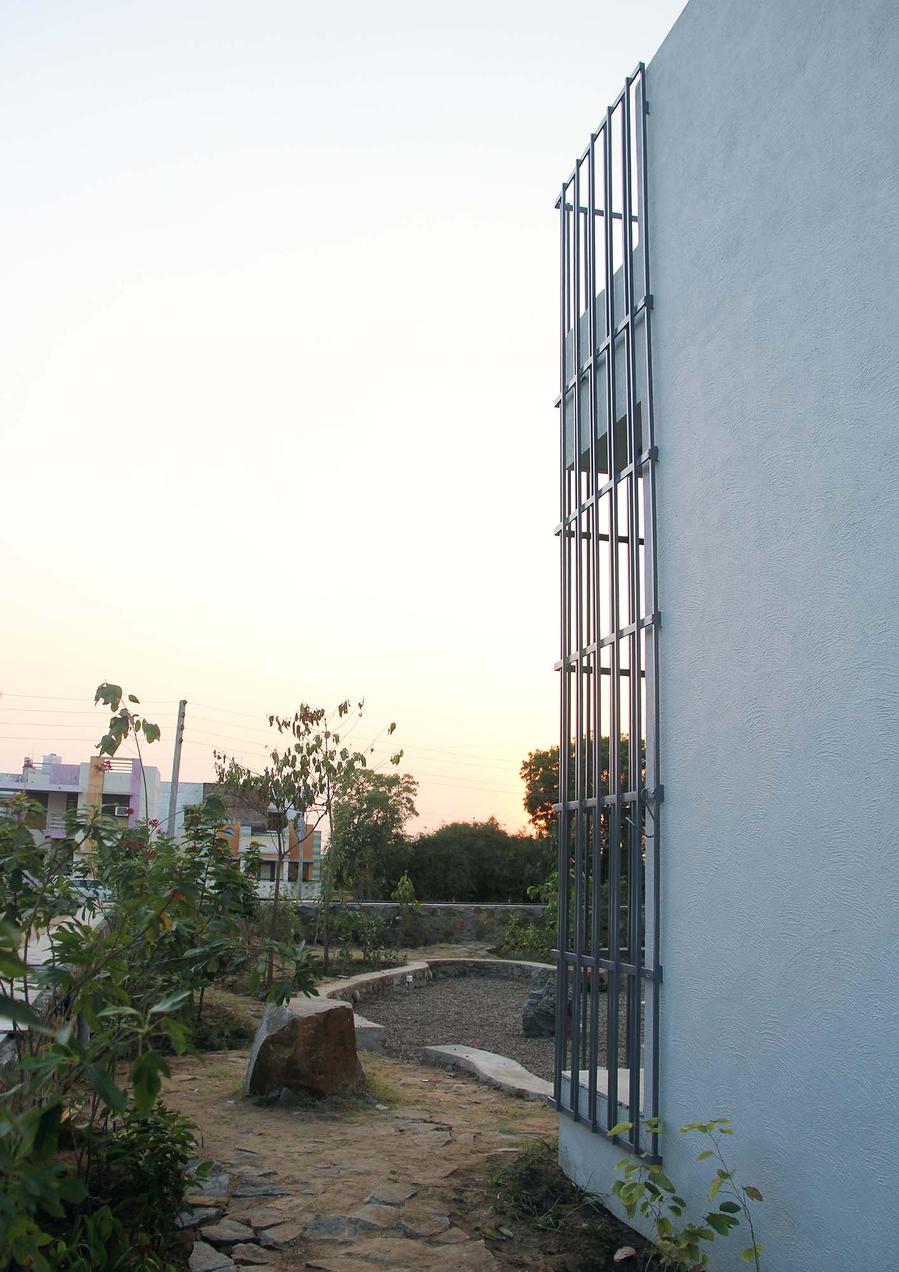
In response to the aspiring family, the project balances innovate design ideas and methods with the traditions important to their lives and locally available construction skill, material and knowledge. Integrated into the landscape, the house inhabits a corner site near a series of twin bungalows. A low profile with articulated volumes allows the house to merge with the scale of the surrounding homes, feeling at once both expansive for the family and in conversation with the neighbourhood.
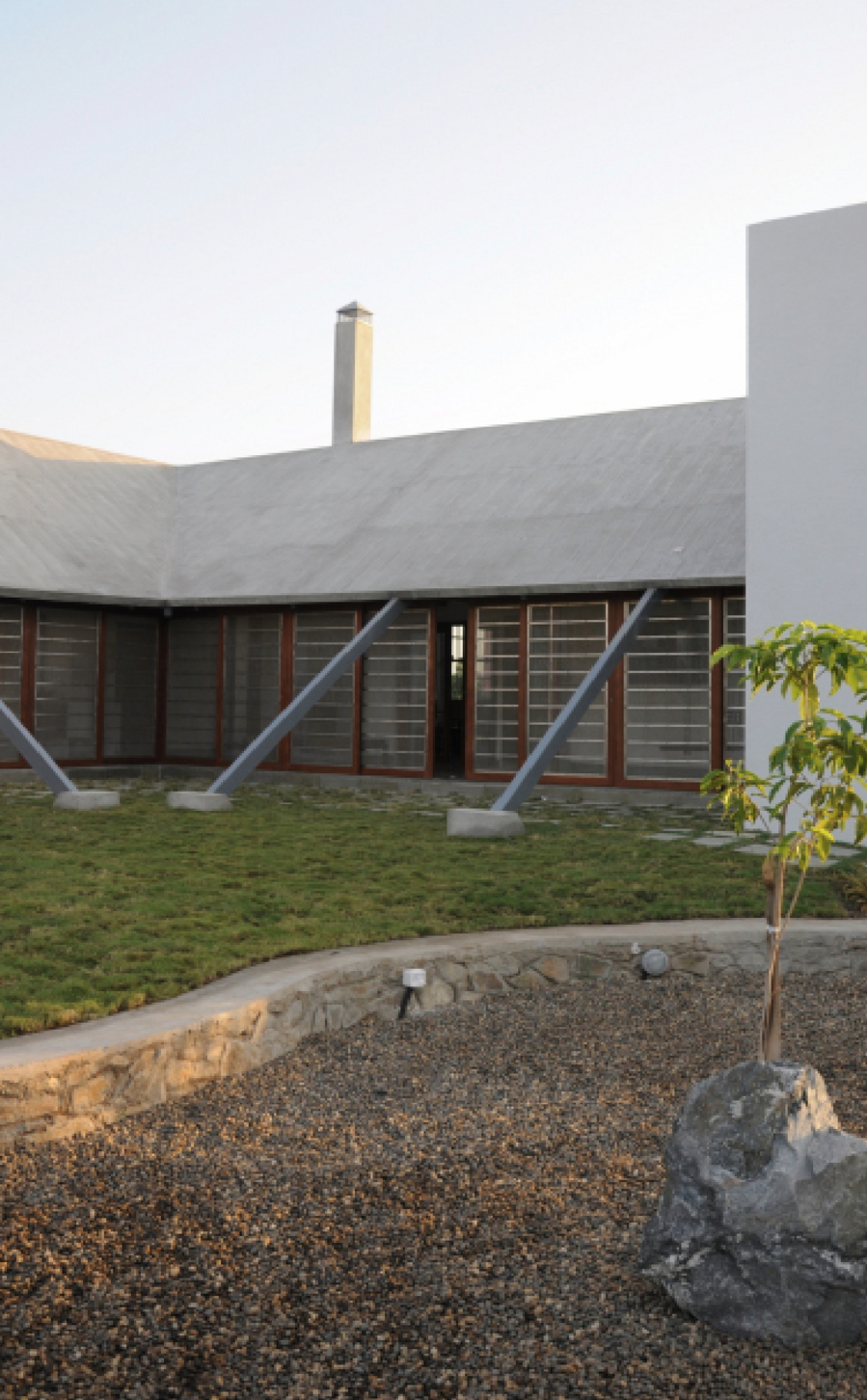
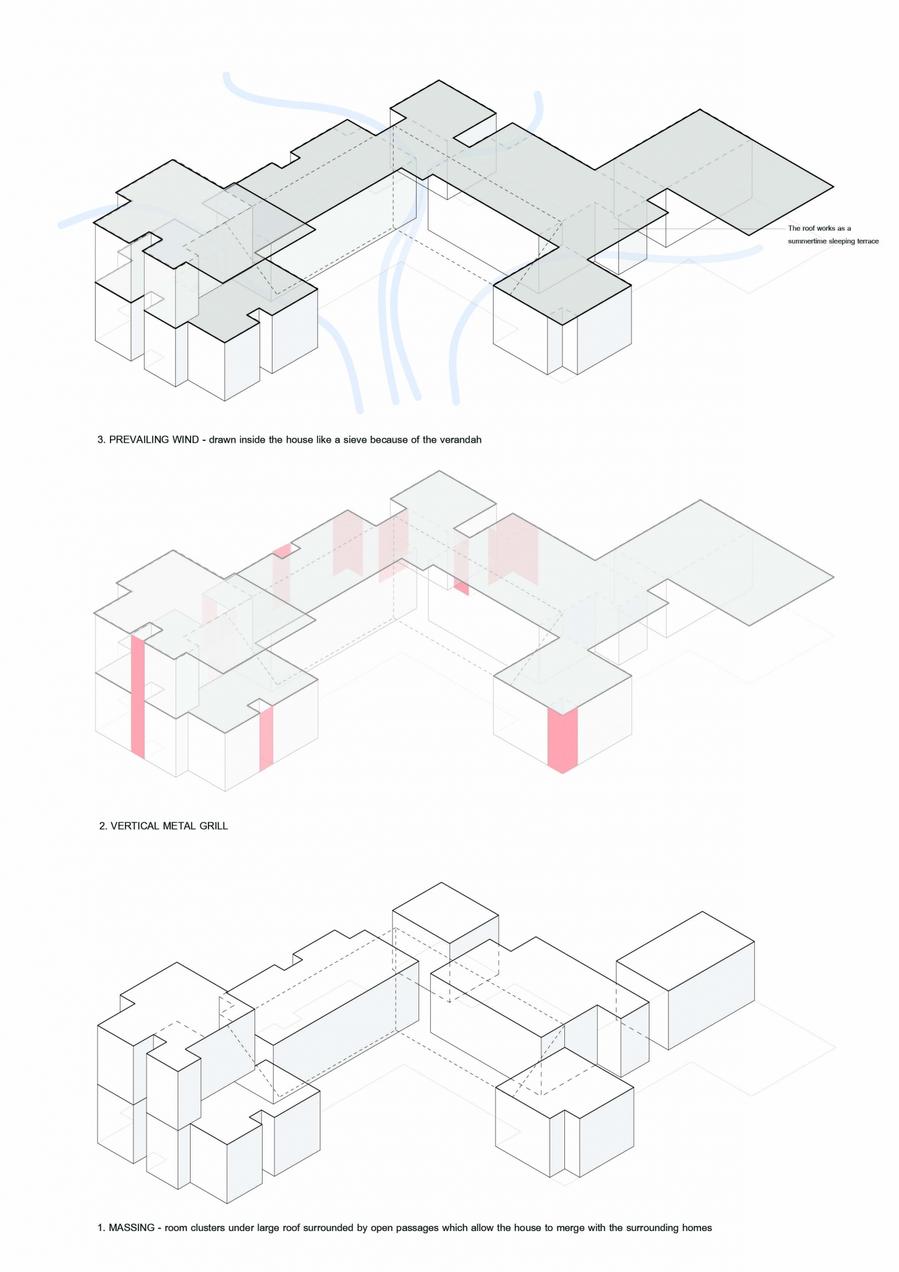
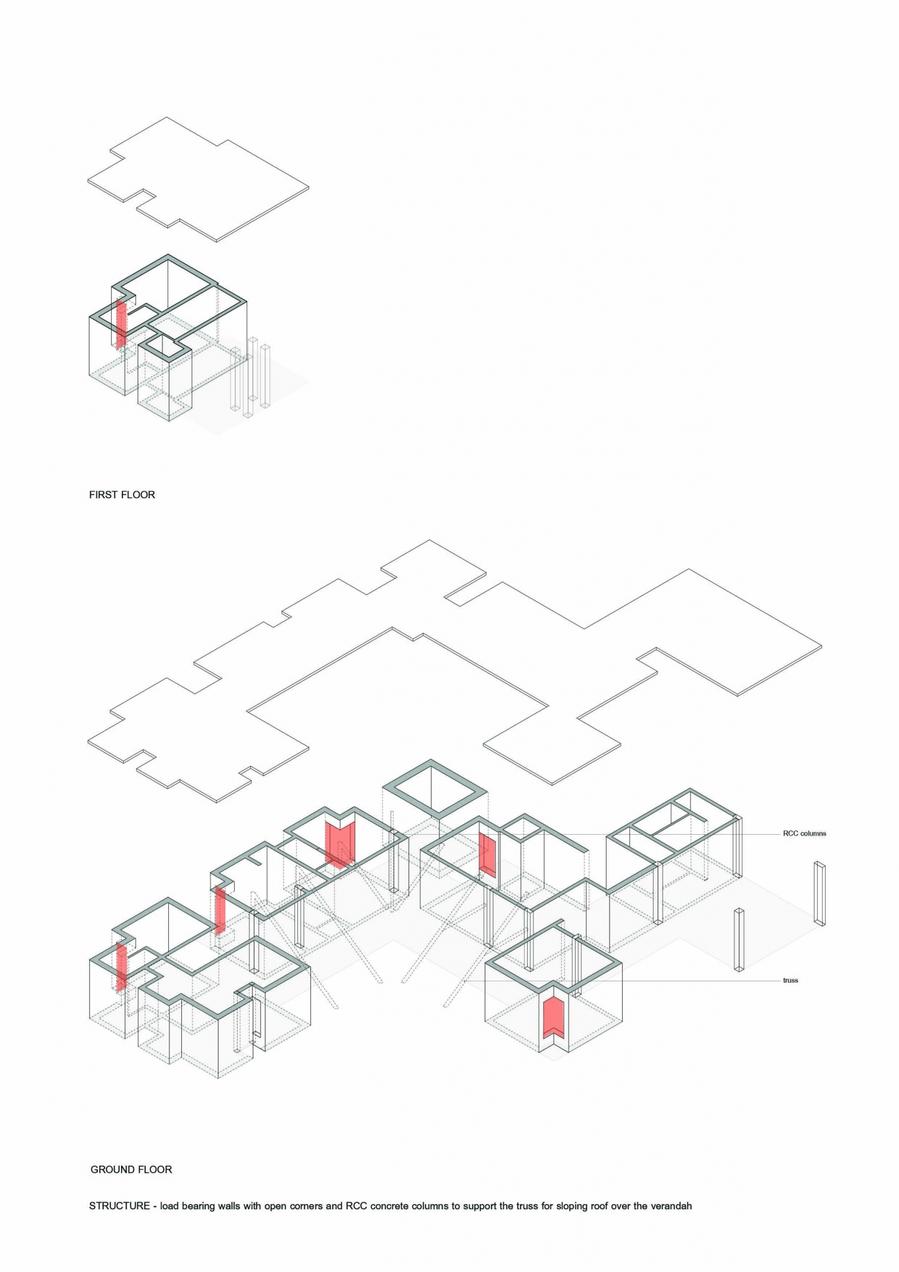
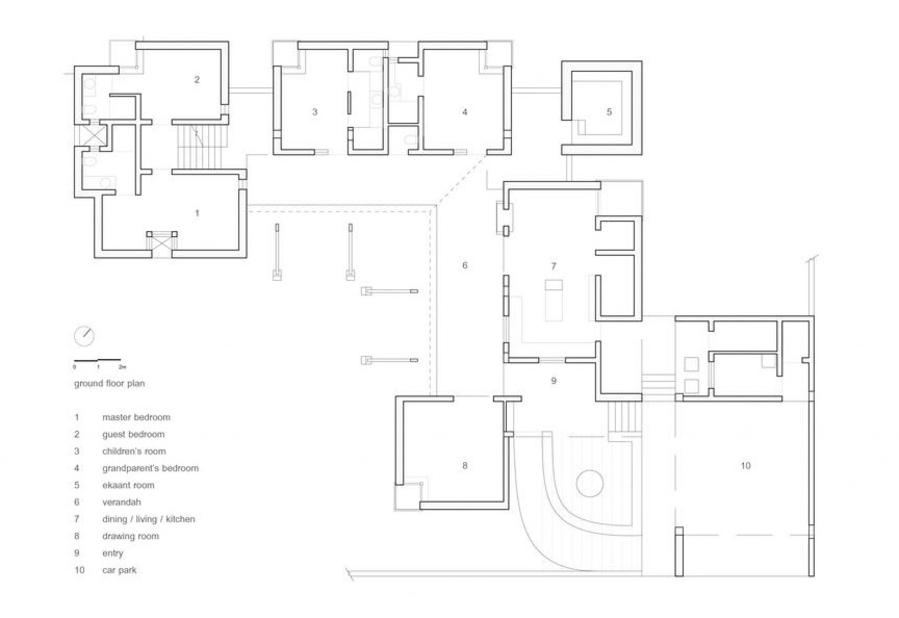
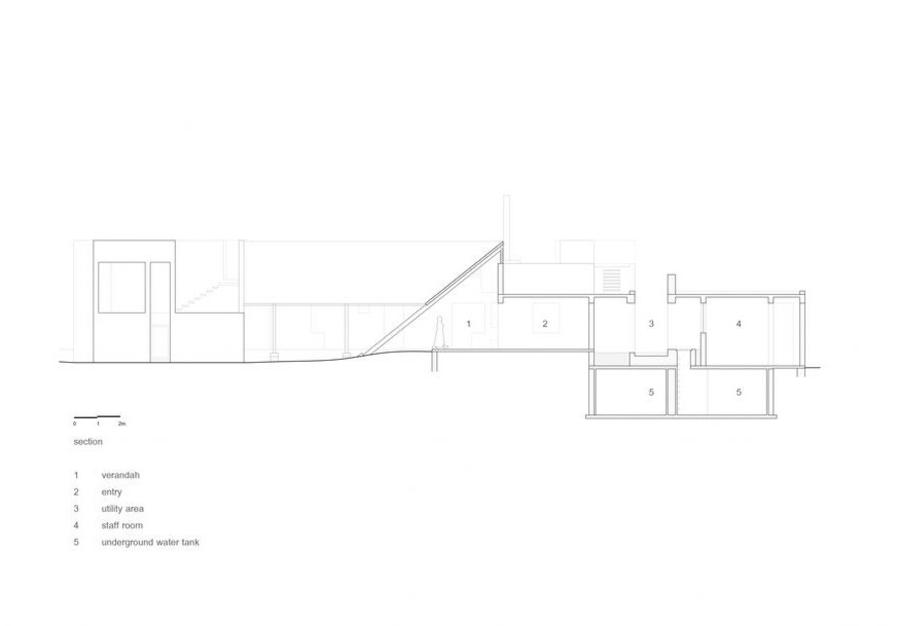
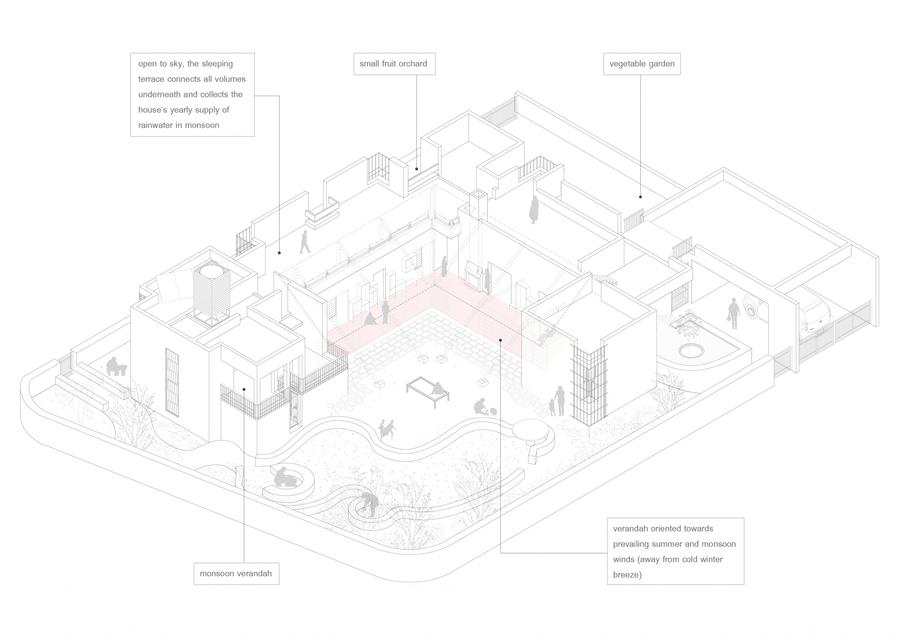
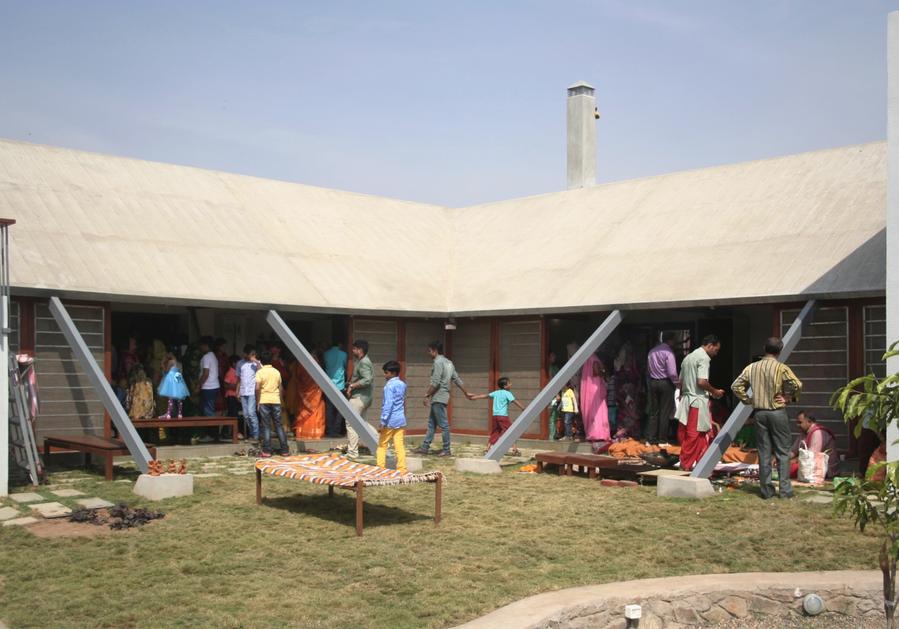
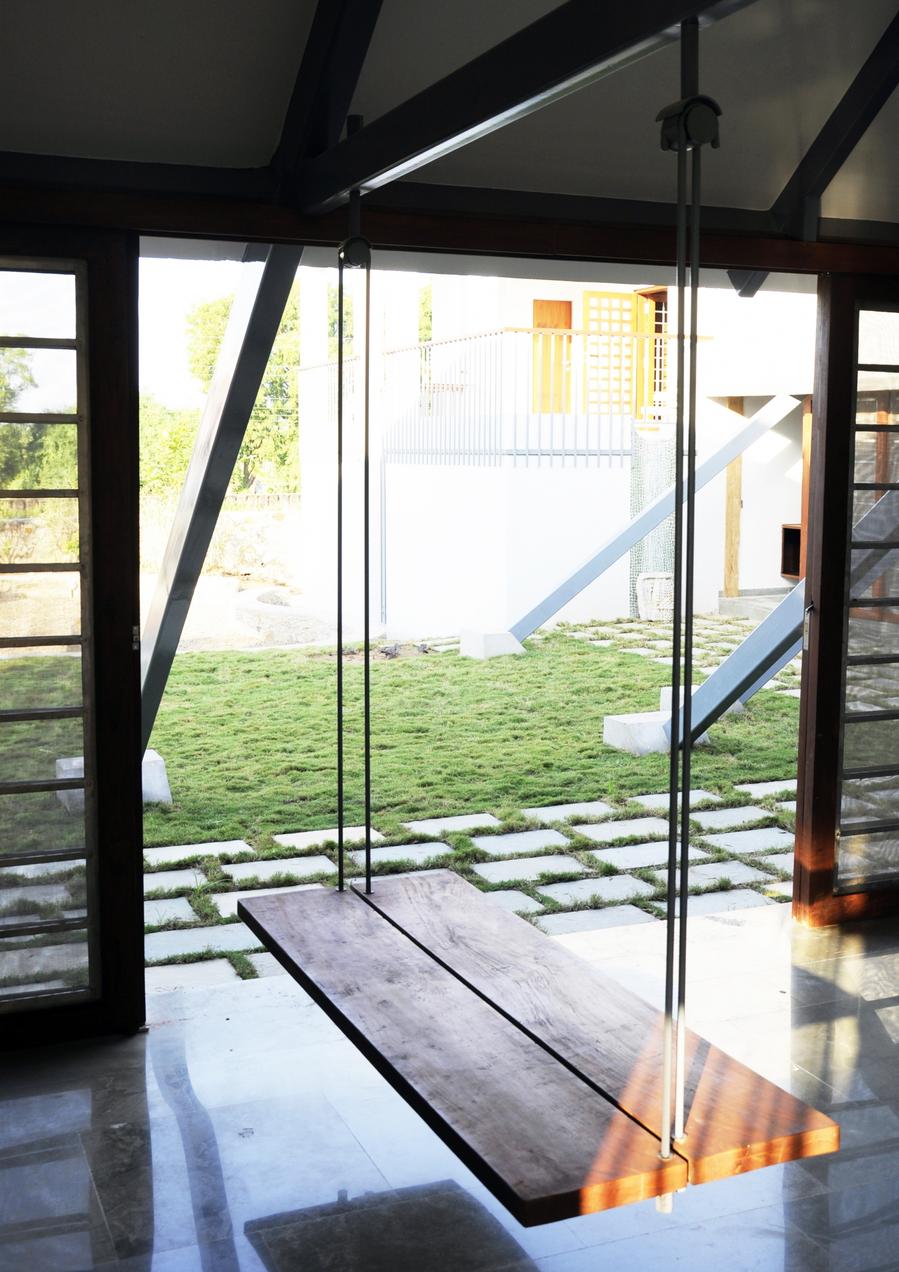
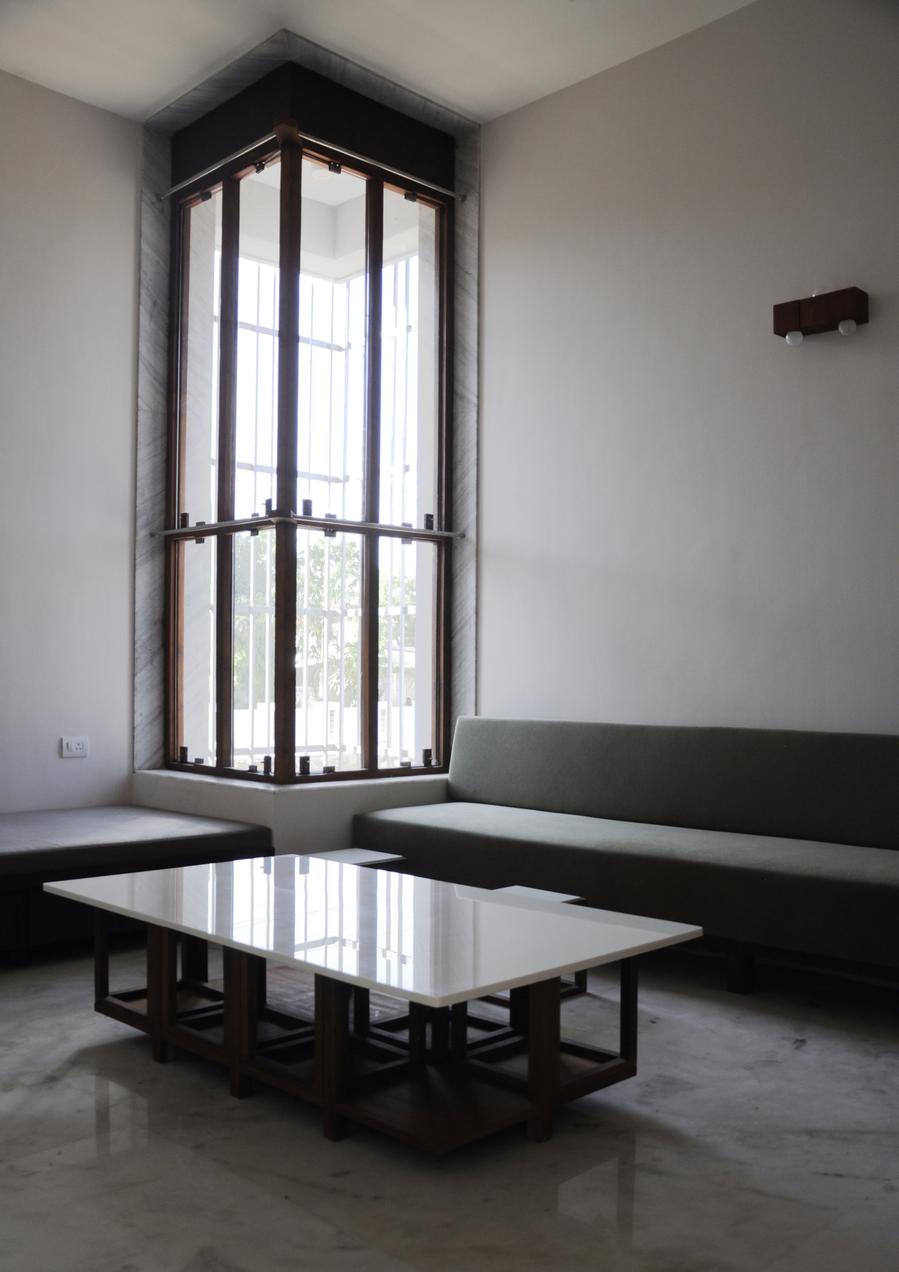
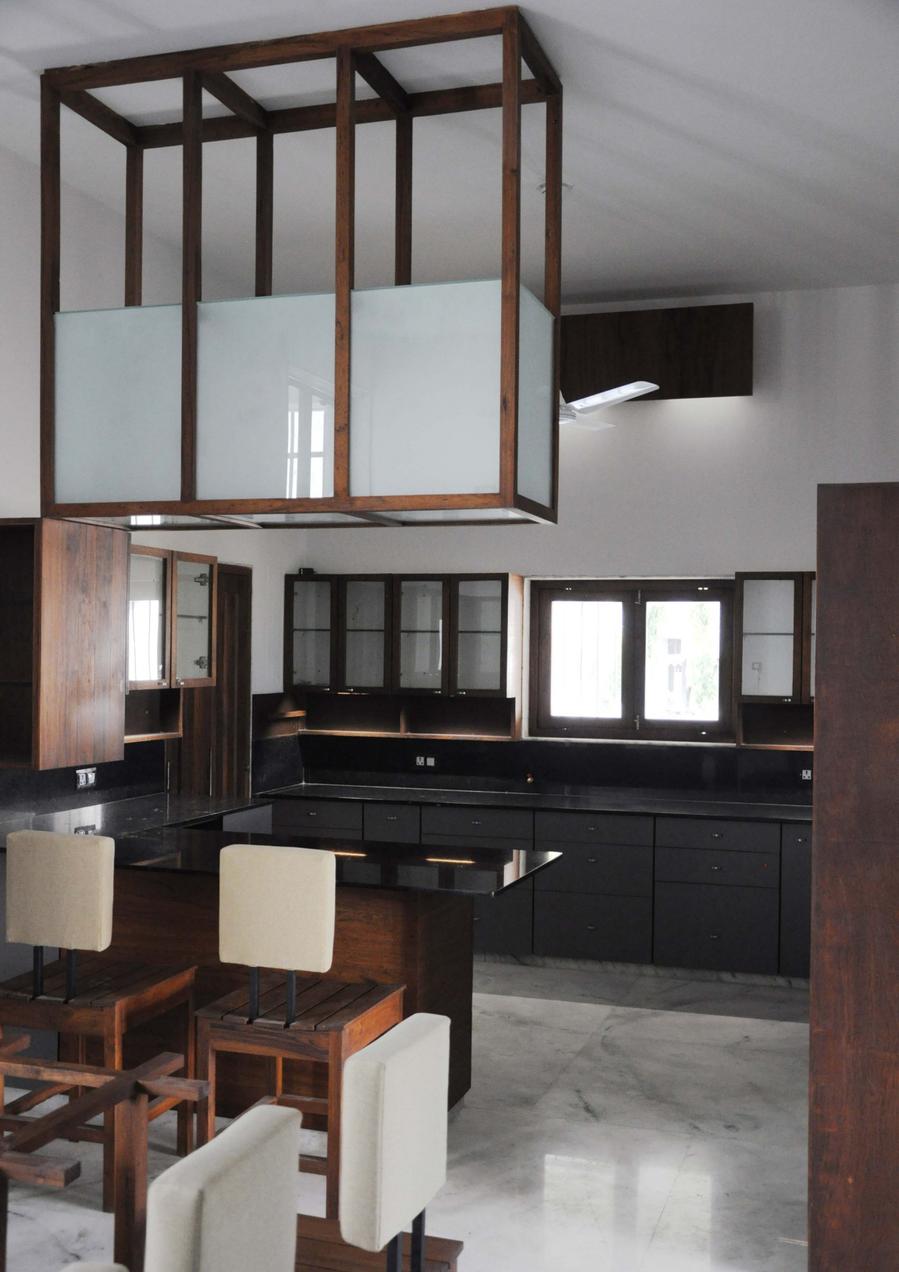
To support their condition of living between inside and out, the home consists of a group of shaded volumes clustered around an L-shaped verandah. Sheltered under the large roof, rooms are surrounded by open passages that draw wind through the house like a sieve. Thick brick walls temper the inside spaces against high diurnal temperature variation. The roof doubles as a summertime sleeping terrace, protected with high walls pocked by openings for targeted ventilation, and during monsoon it gathers rain for storage in a 40,000L underground water tank.
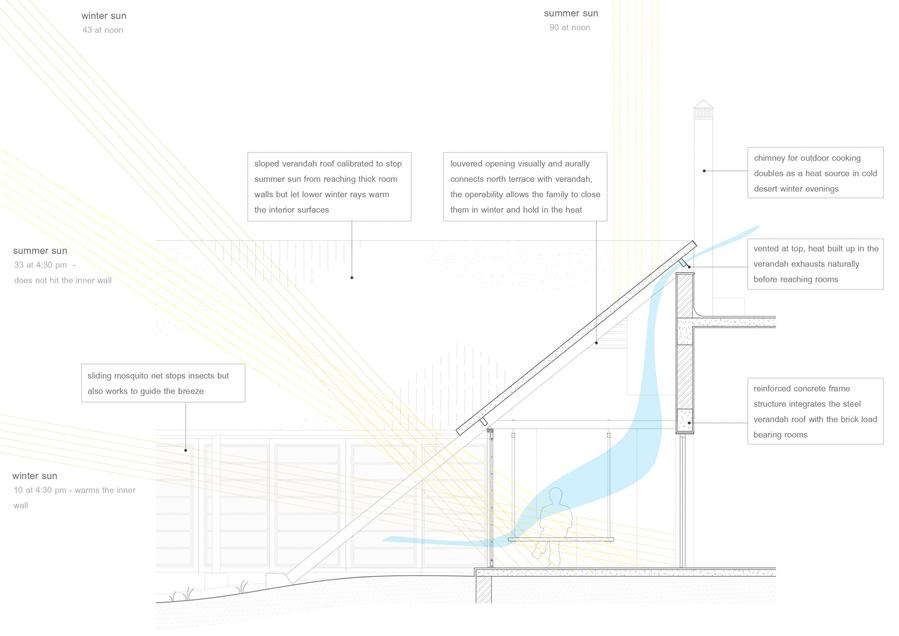
The plan is oriented toward the prevailing south-westerly winds, and while the deep verandah and covered passages protect the volumes from summer sun, the roof allows the low winter sun in to warm their outside walls. The thin sloping concrete slab of the verandah roof structure is supported by a concrete-anchored steel frame embedded into a composite frame and load-bearing structure for the house.
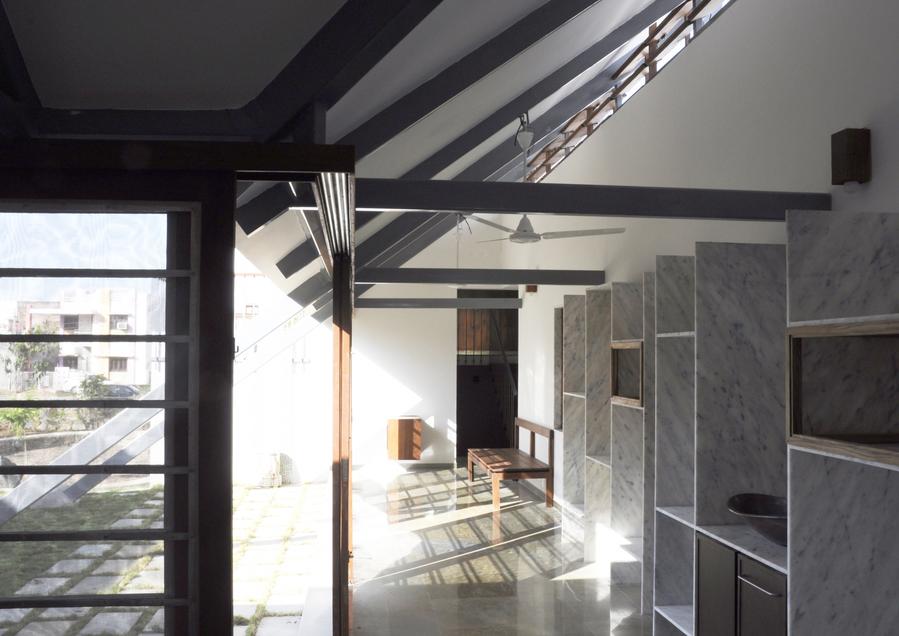
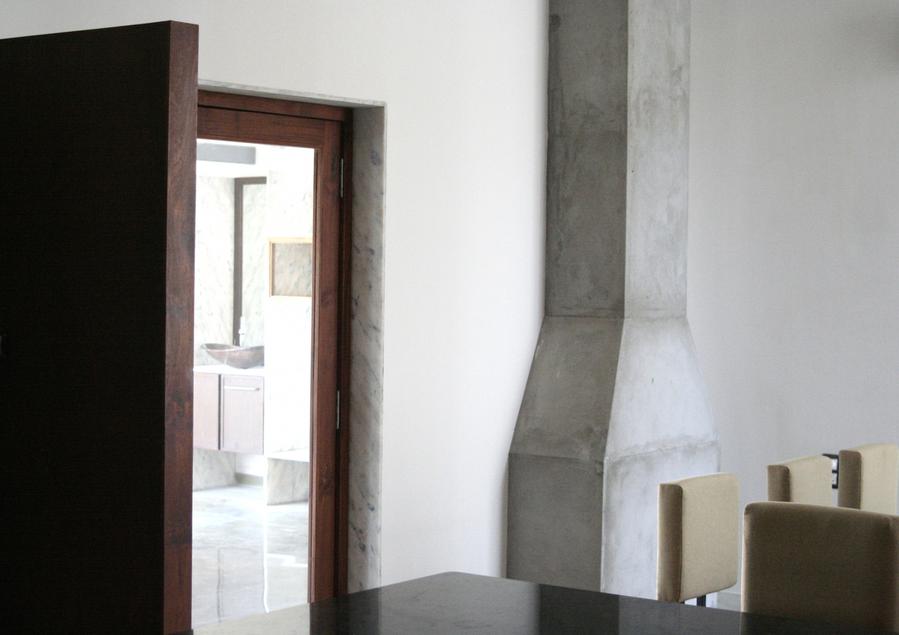
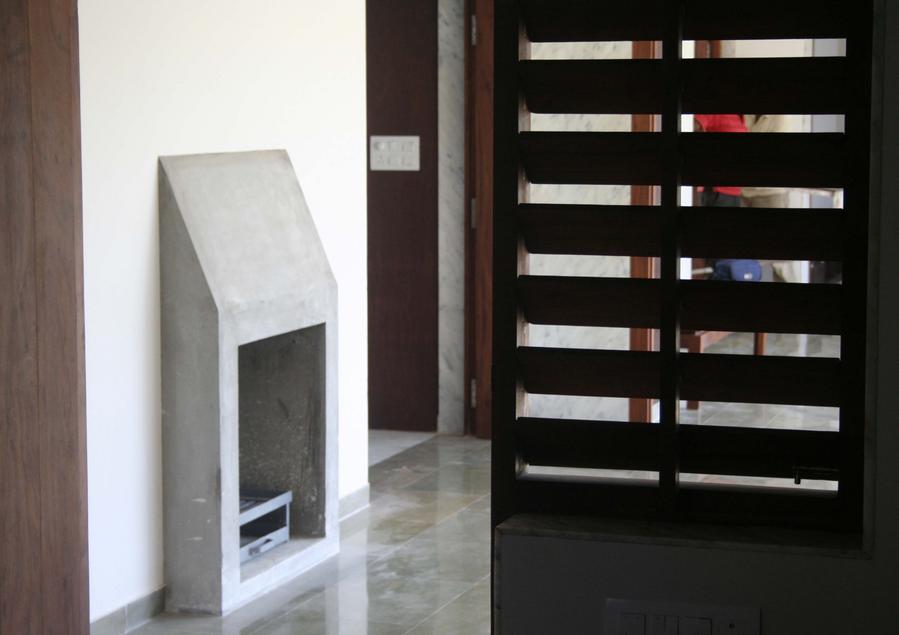
The verandah is the heart of the house. All rooms and all levels empty into it, and it mediates the experience between inside and out. Because much of the family activities occur in this intermediate space, what might have become a passage instead is a place. As a climate responsive element, it absorbs and exhausts the heat of the summer, welcomes warmth in winter, and encourages the movement of air in muggy monsoon. The high summer sun cannot reach direct room walls, and the sloping roof with ventilated openings at the top allows the hot air to rise and naturally exhaust, moving it faster because negative pressure behind the thrust of the wind moving up the verandah roof draws air out faster. In winter, these openings, which are fitted with operable louvers, can be closed to hold in the hot air. The fireplace in the verandah also adds to radiating heat in the space. In monsoon, and on summer evenings, gaps between the room clusters open to draw air through the space, cooling both the verandah and the outer surfaces of inside rooms.
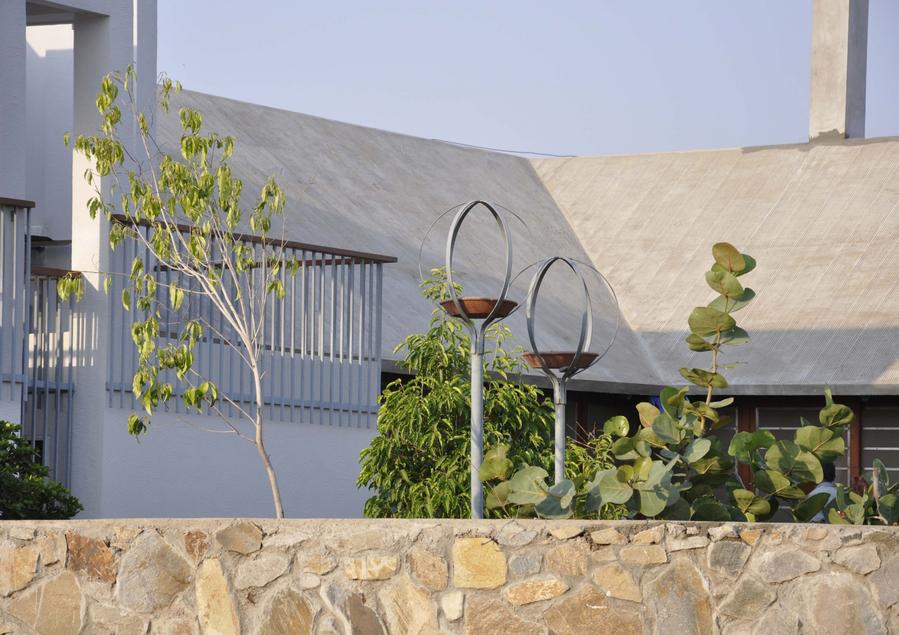
Photography credits: Sachin Bandukwala
Design Team: Melissa Smith, Sachin Bandukwala, Sagar Shah
Structural Consultancy: Vatsal Shah
MEP Consultancy: -
Contractor: Haresh Prajapati
Carpentry: Mukesh Mevada
Fabrication : Dayaram
Lapkaman, Gujarat 2011 - 2014
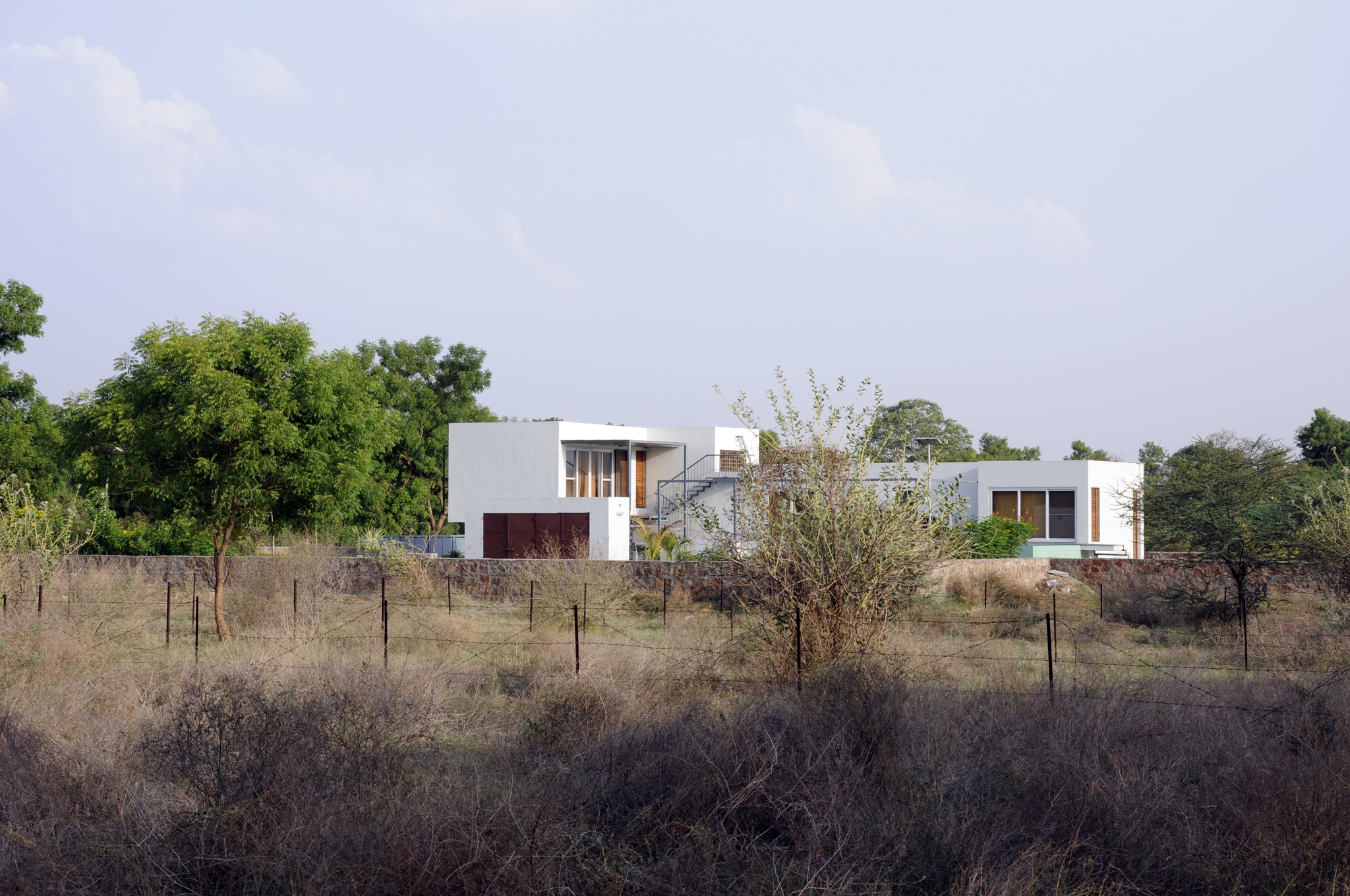
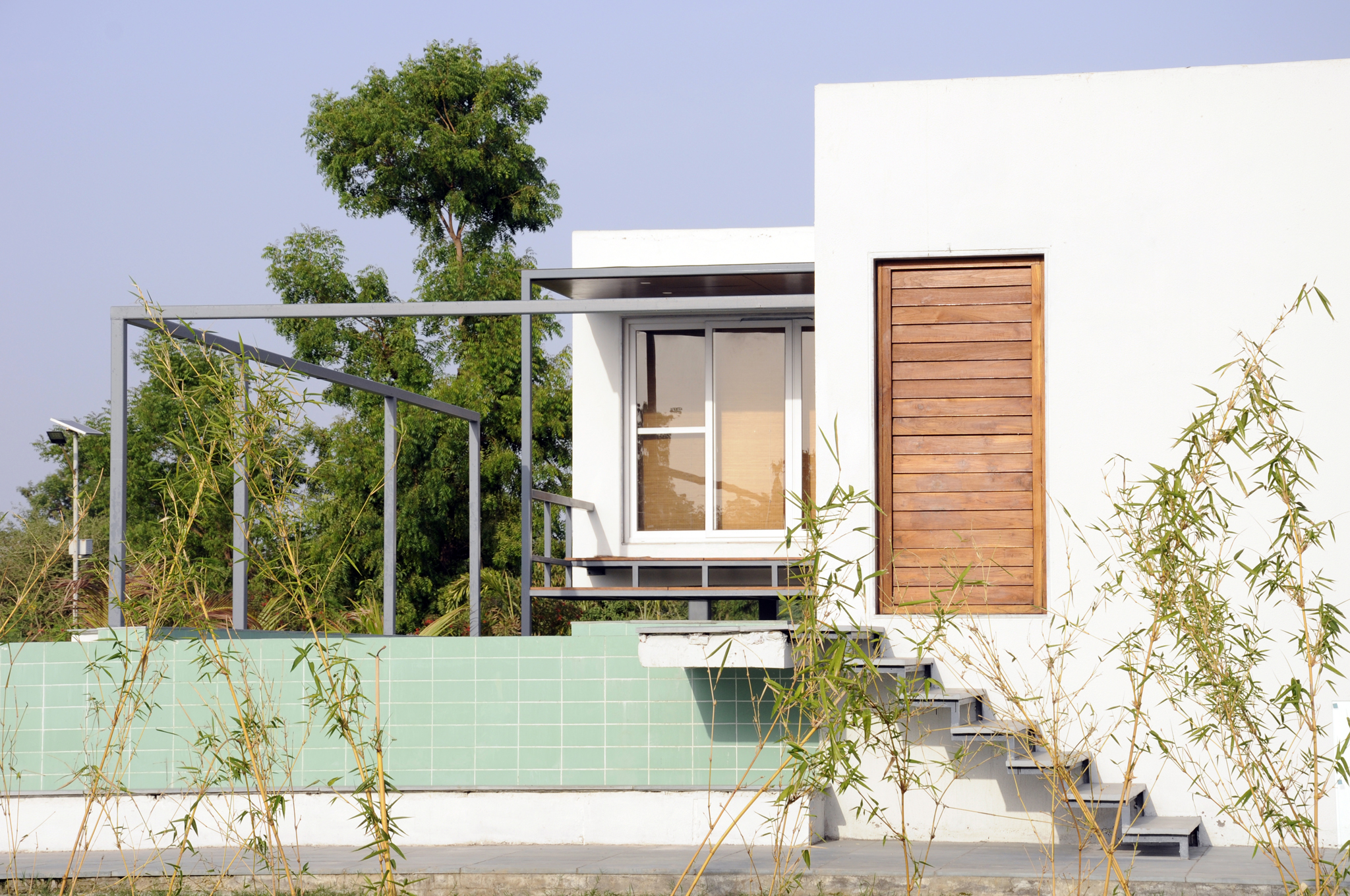
Located at the corner of 3 adjoining plots, this house rises from the ground, each plinth turning as it moves up, creating a volume that spirals from lotus pond to pool deck to living space to planted roof. The family and their guests enter from below, crossing the pond and climbing past the pool to a verandah adjacent to the main living space.
Ahmedabad, Gujarat | 2014
Tower House is an experiment in vertical living. A typical bungalow of 400 square meters is squeezed into a footprint of 6.5 x 12.5m, forcing the program up five stories rather than spread along the ground. Despite the stacked floors, the design generates the experience of a house, with a diversity of spatial types throughout its section. At the same time, it takes advantage of the benefits of moving vertically with efficiently organized services, views across the city, and greater potentials for both stack and cross ventilation.
A concrete frame provides the skeleton, while central vertical circulation allows openings on all sides, and an outward looking entry to every room. Walls wrap the interior spaces, while balconies move around on each floor to open new vistas. Rooms are treated as pockets within the larger framework, minimizing the need for air conditioning and maintaining the connection to the outdoors. While balconies bring a corner of outdoor space into the room, punched windows around the wall create an intimate experience, whose deeply protected view is found only from a seated position.
The design balances two driving forces: conveying a house not a tower, and using verticality for an efficient, climate responsive building. The central stair, critical for both, is the core of the design. It organises services and treats vertical movement as part of the house. Each room opens from it and moves back toward it. On first and fourth floors, glass panels reveal the stair and further envelop it inside the rooms. As a passive cooling element, the semi-open stair draws air through the house, while ventilation in each room can be controlled by opening windows. A ceramic rain screen filters light and shields the stair from water, protecting the privacy of the space.


Photography credits: Sachin Bandukwala, Ayush Lohia, Tejas Varade, Utsav Patel
Design Team: Melissa Smith, Sachin Bandukwala, Mithun Thiyagarajan, Raul Saez Ujaque
Structural Consultancy: NK Shah Consulting Engineers
MEP Consultancy: Jhaveri Associates, Transenergy
Contractor: Gopalbhai
Carpentry: Kantibhai and brothers, Ganpathbhai