Ahmedabad, Gujarat 2011 - 2014
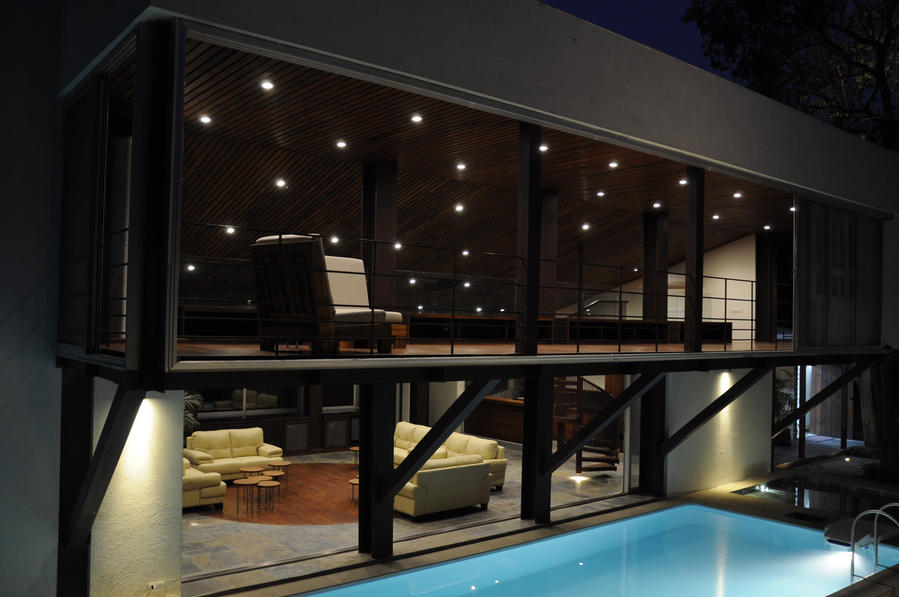
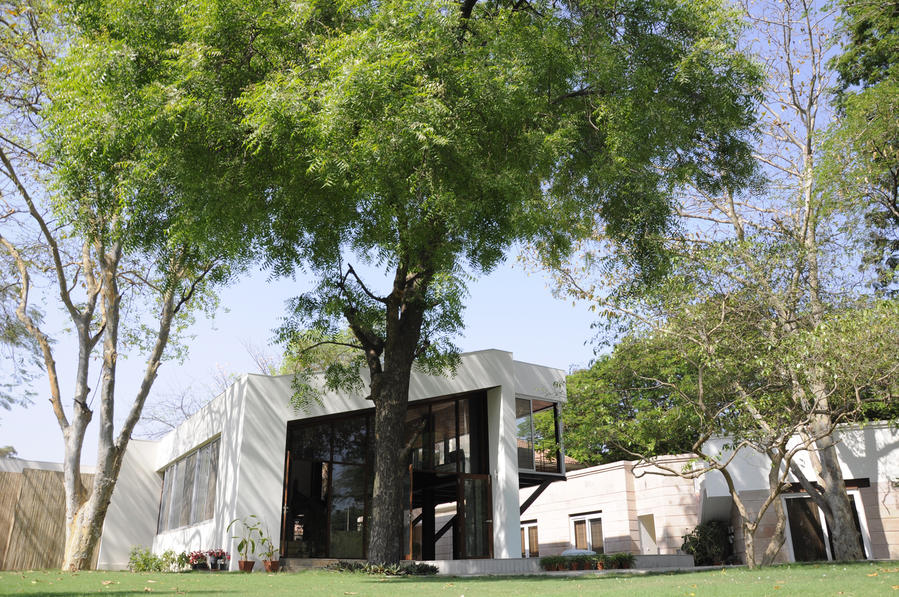
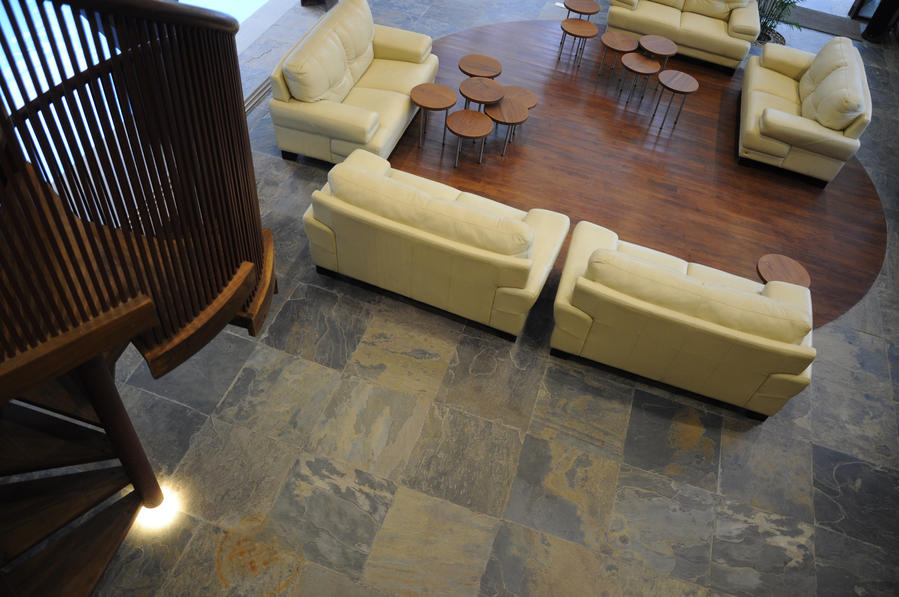
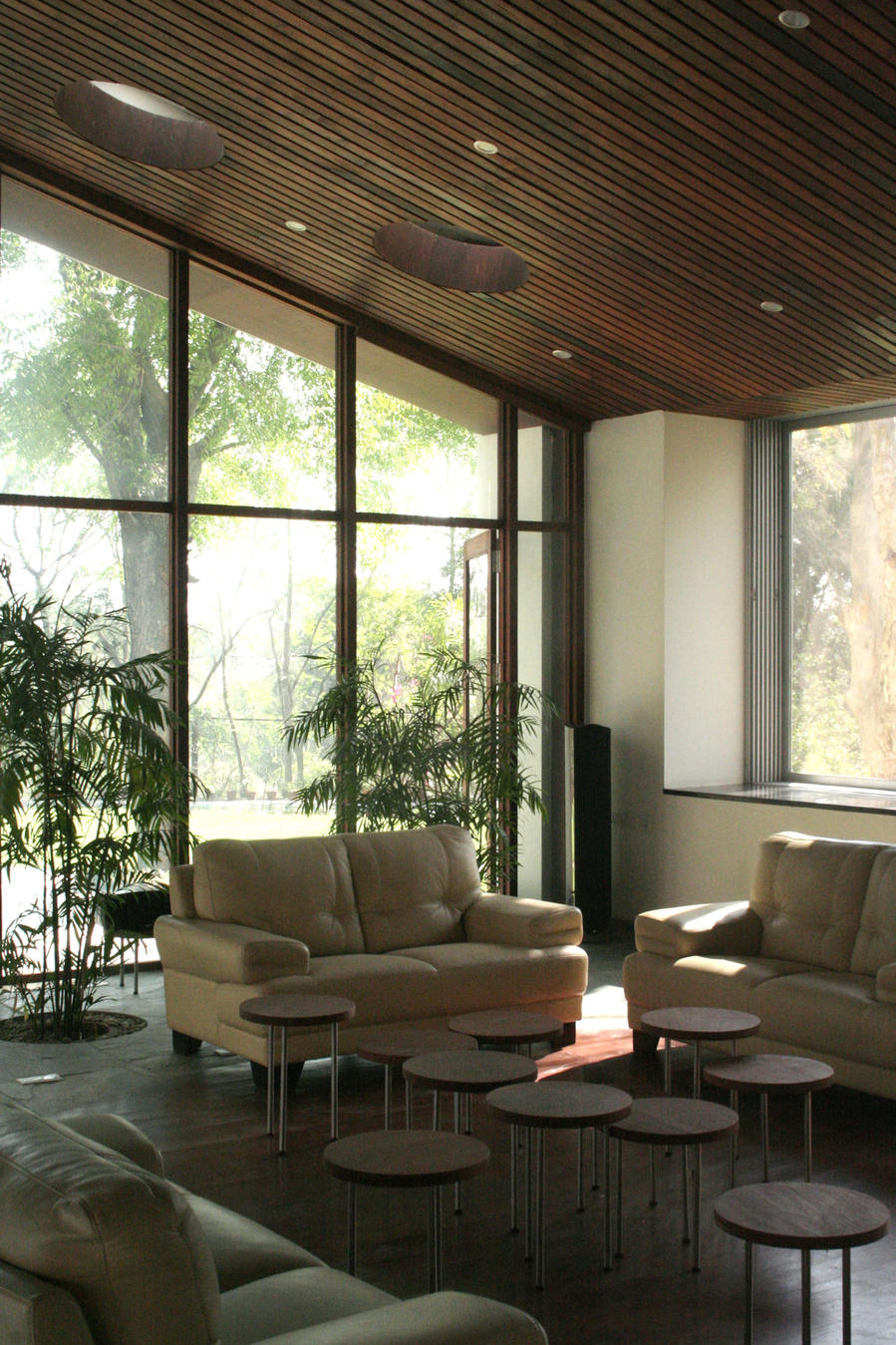
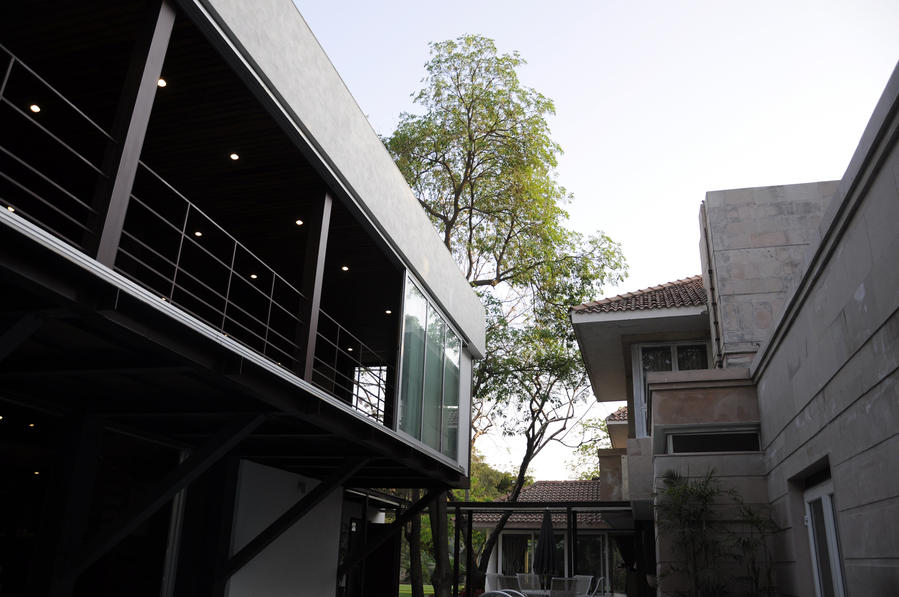
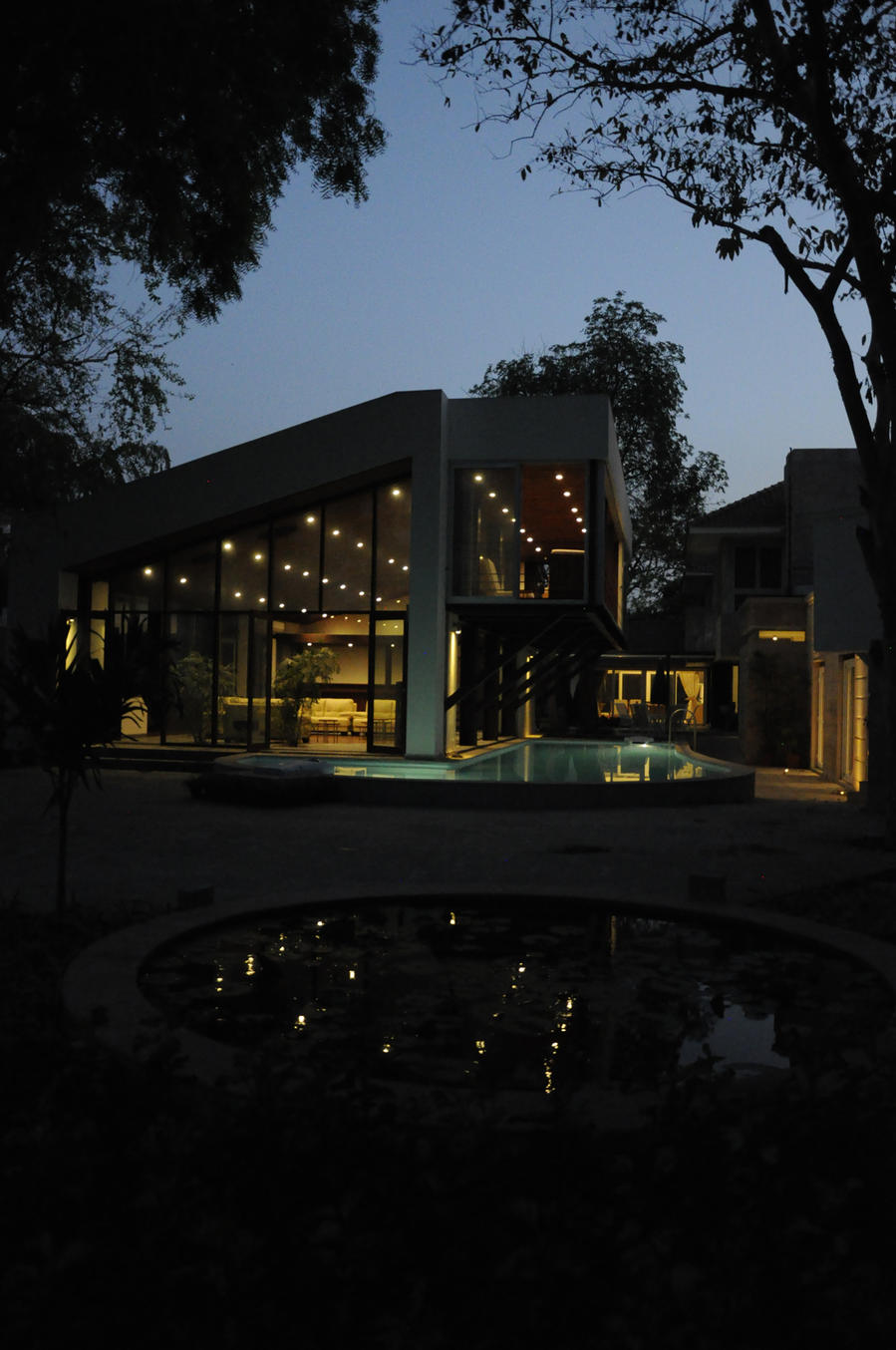
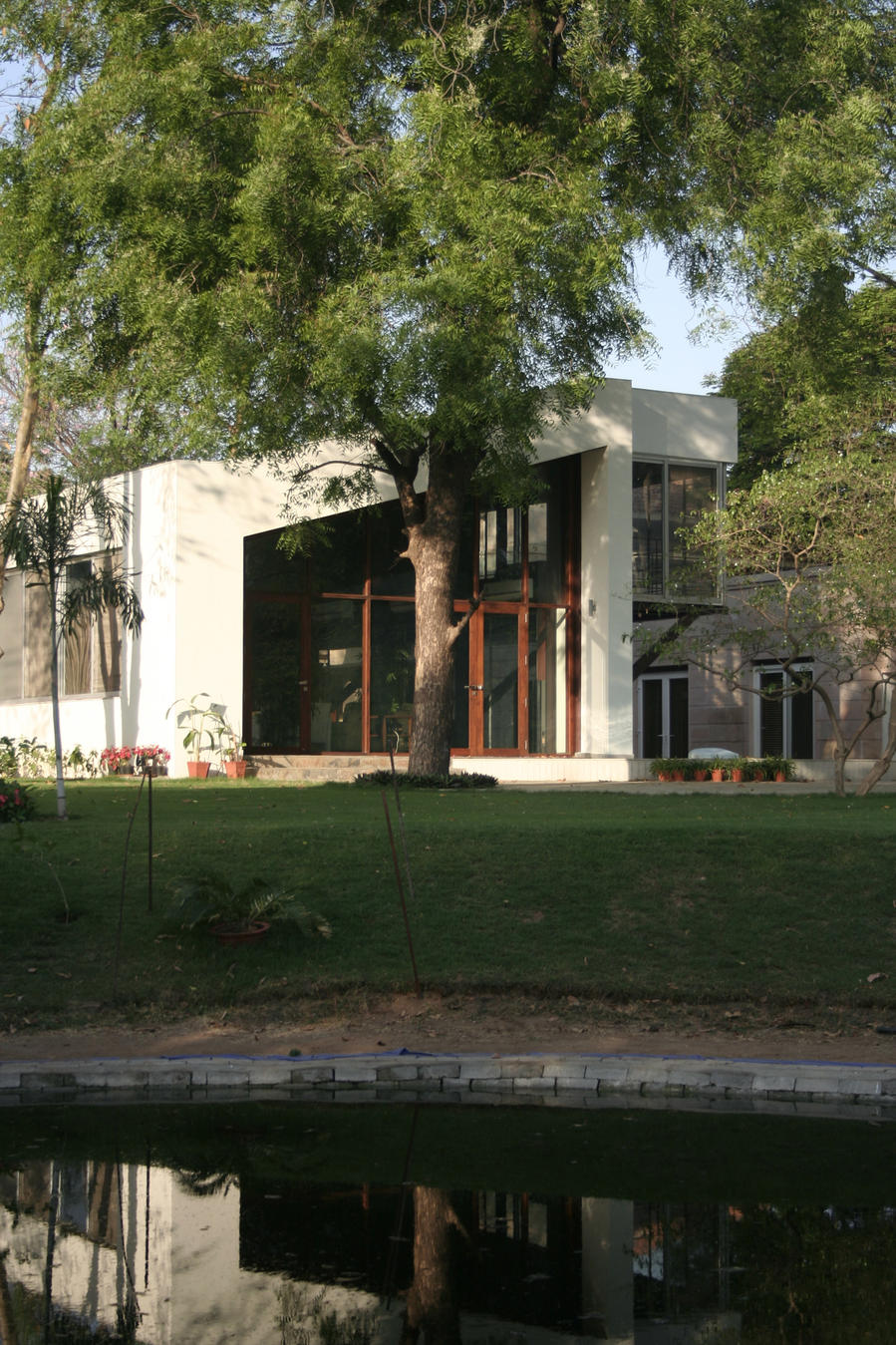
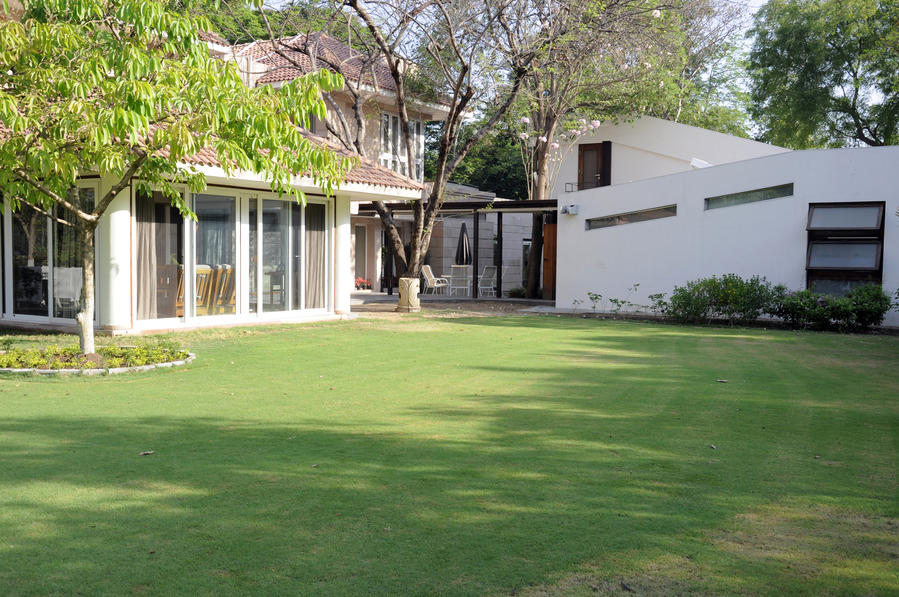
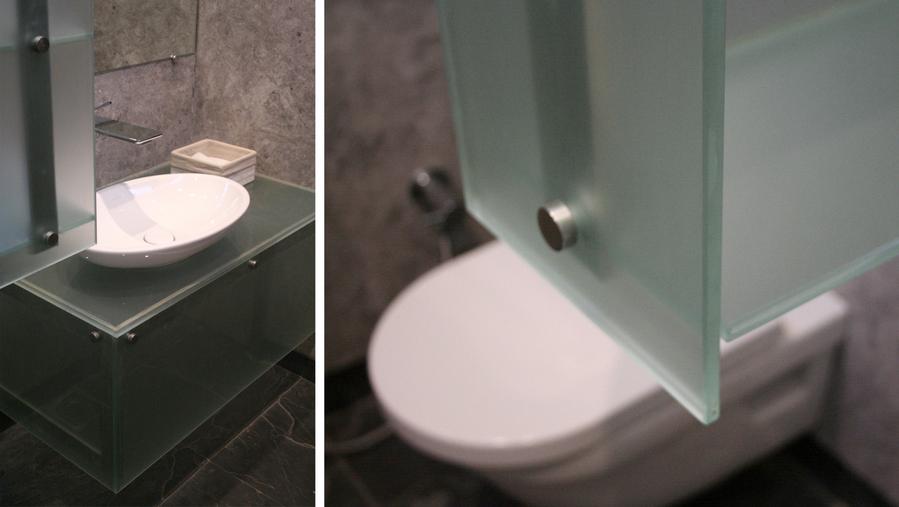
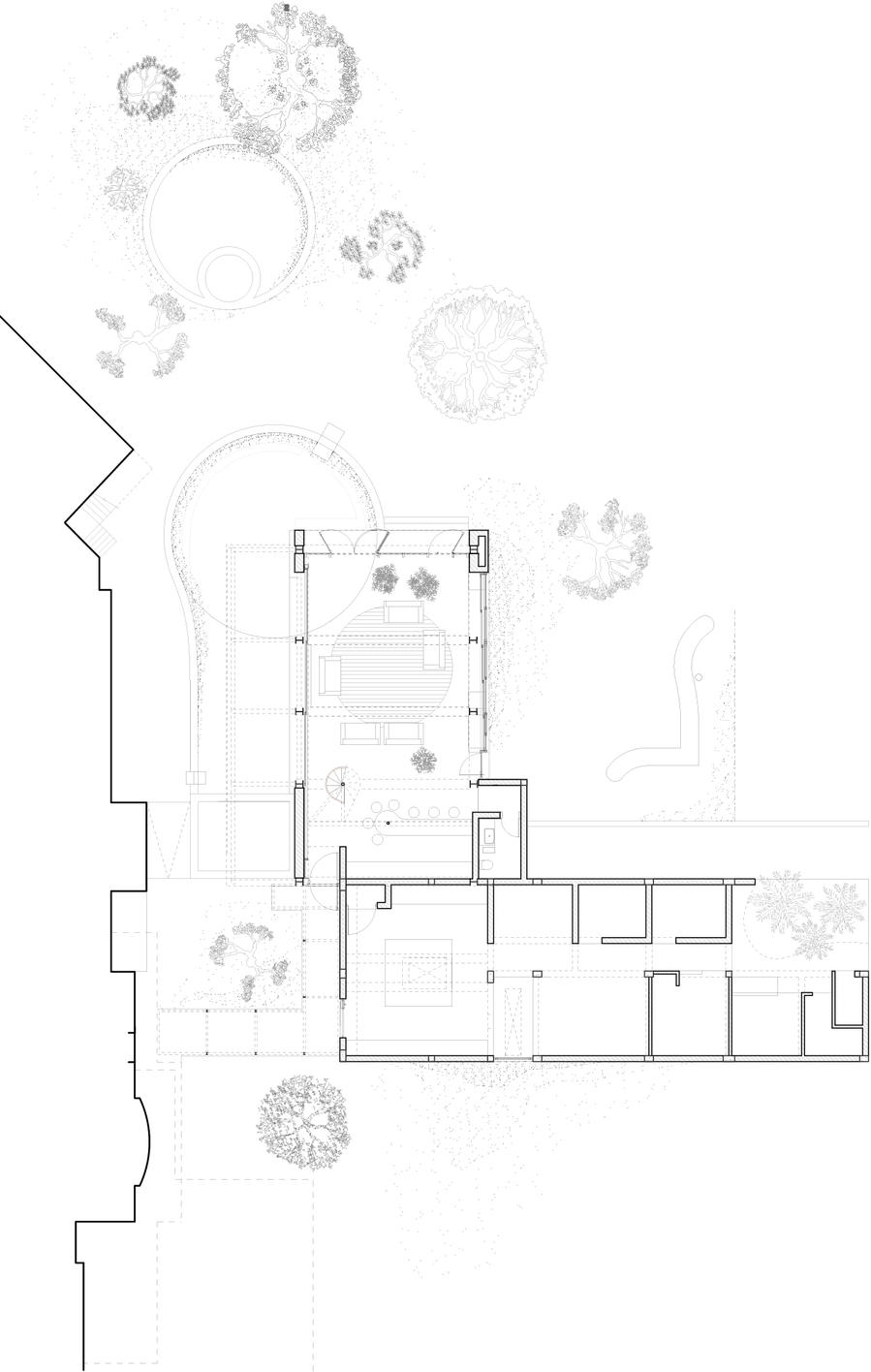
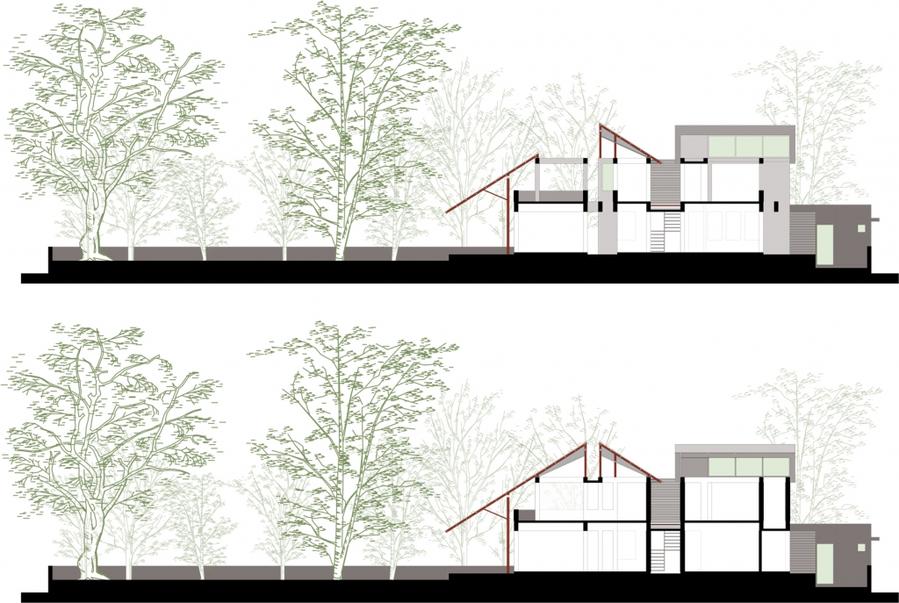
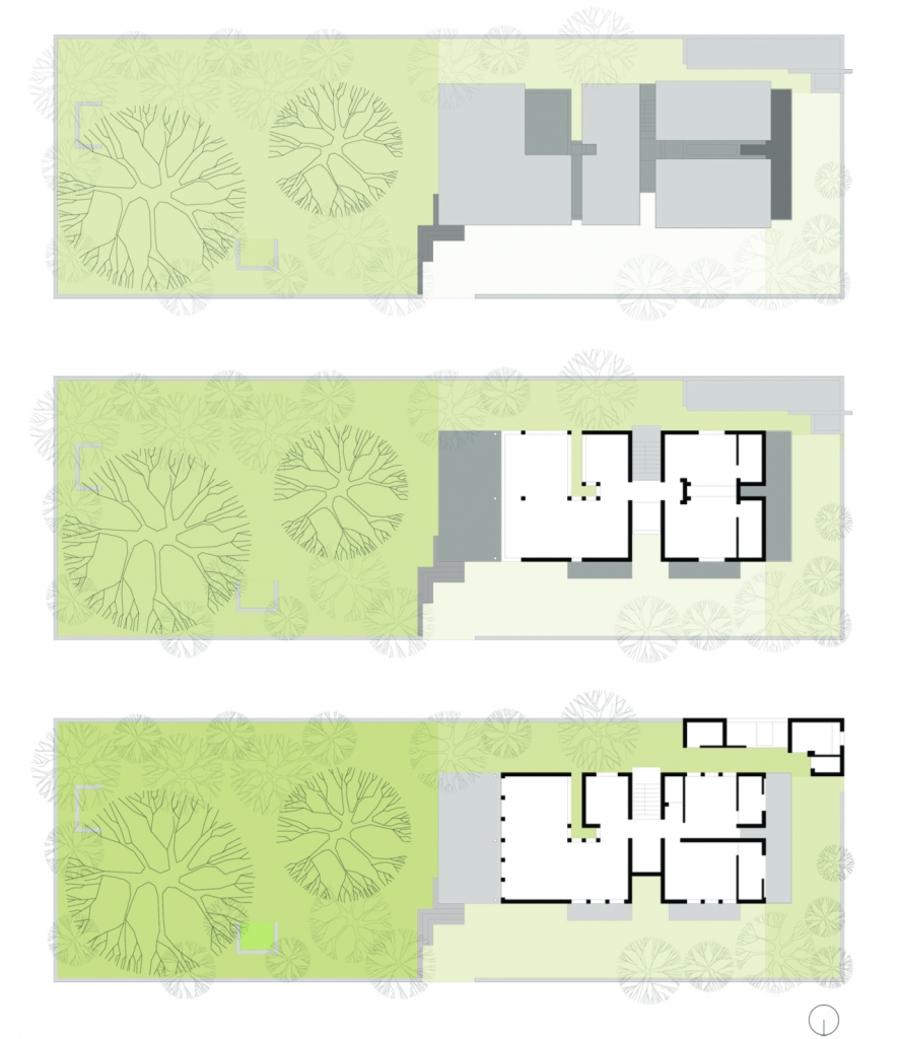
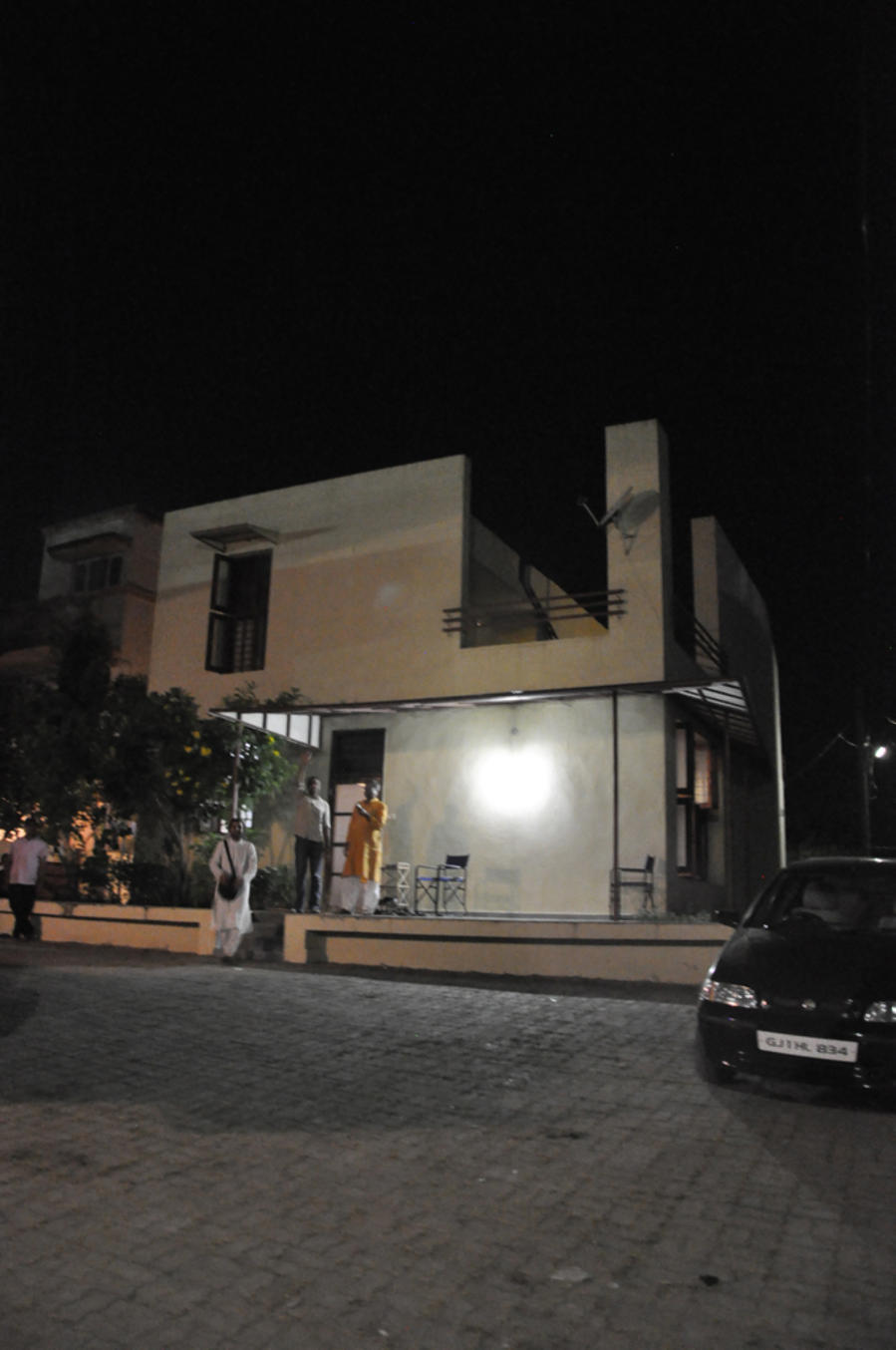
This structure adds a new lounge and service structure to an existing estate by transforming the space behind the main house into an active street that engages both structures, formed by a series of waterbodies moving along a glass facade and to end in a bridge lightly connecting existing to new. All activities from both structures now open out into the street between them, carrying the residents outside into the trees.
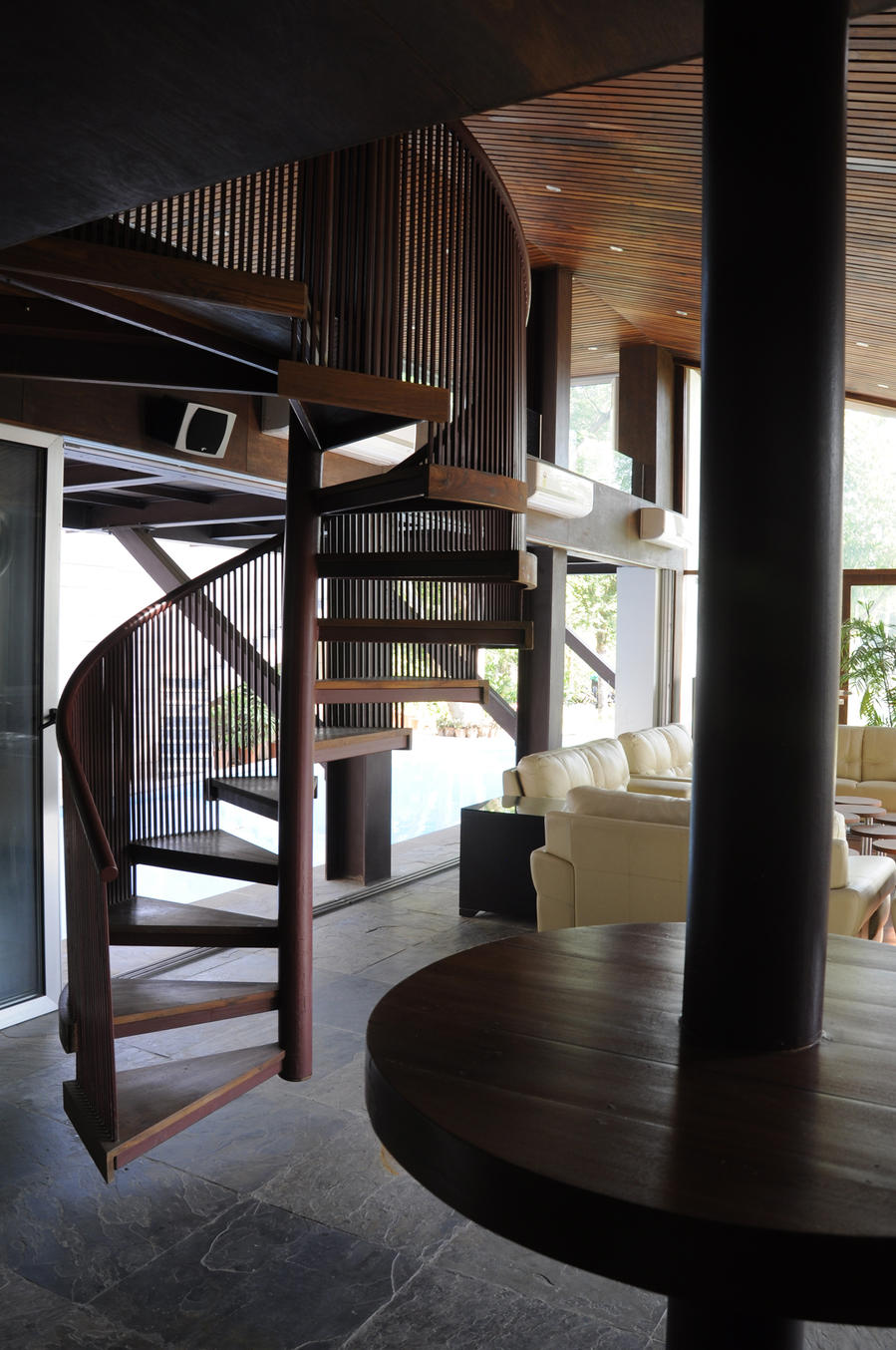
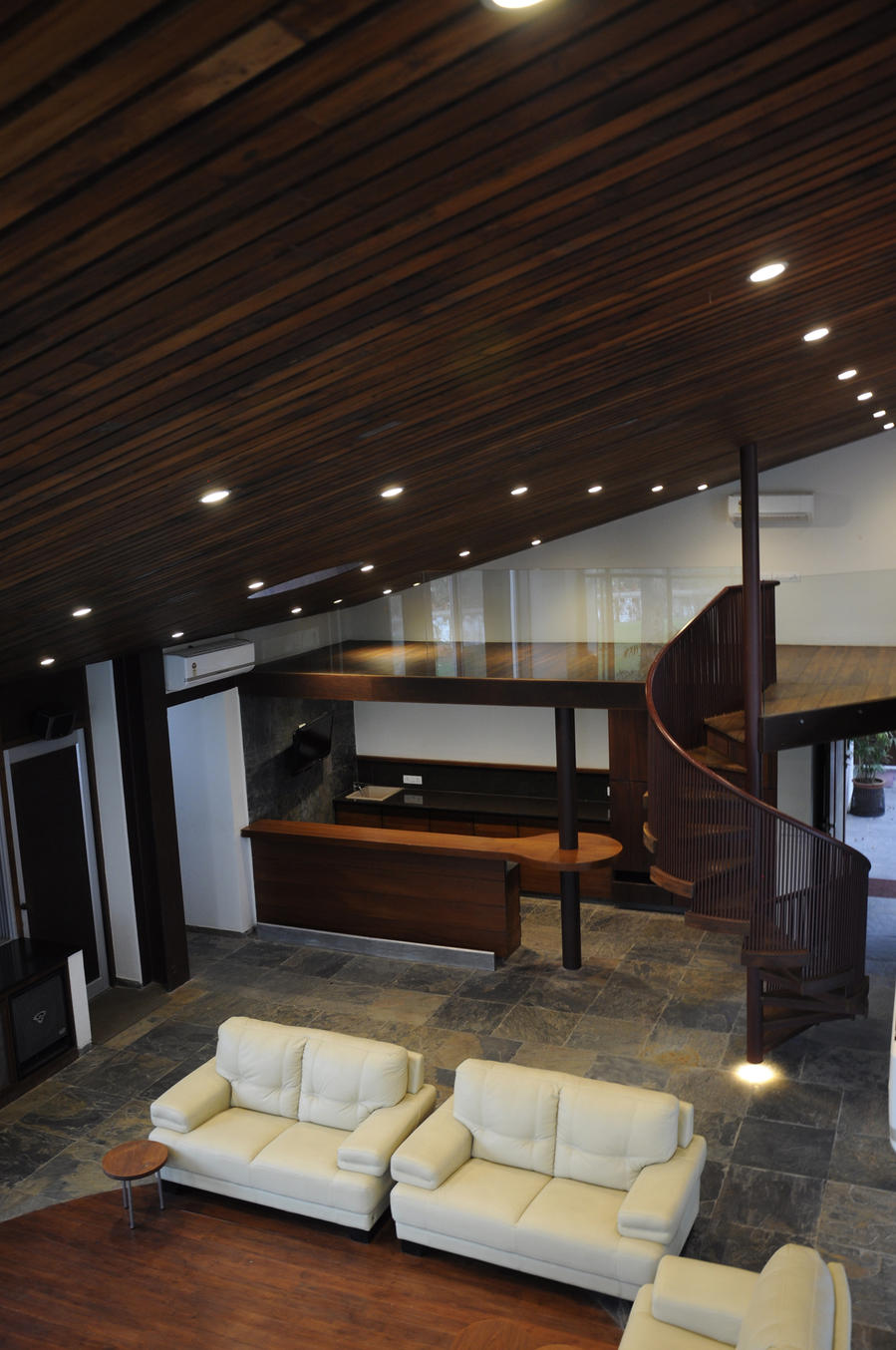
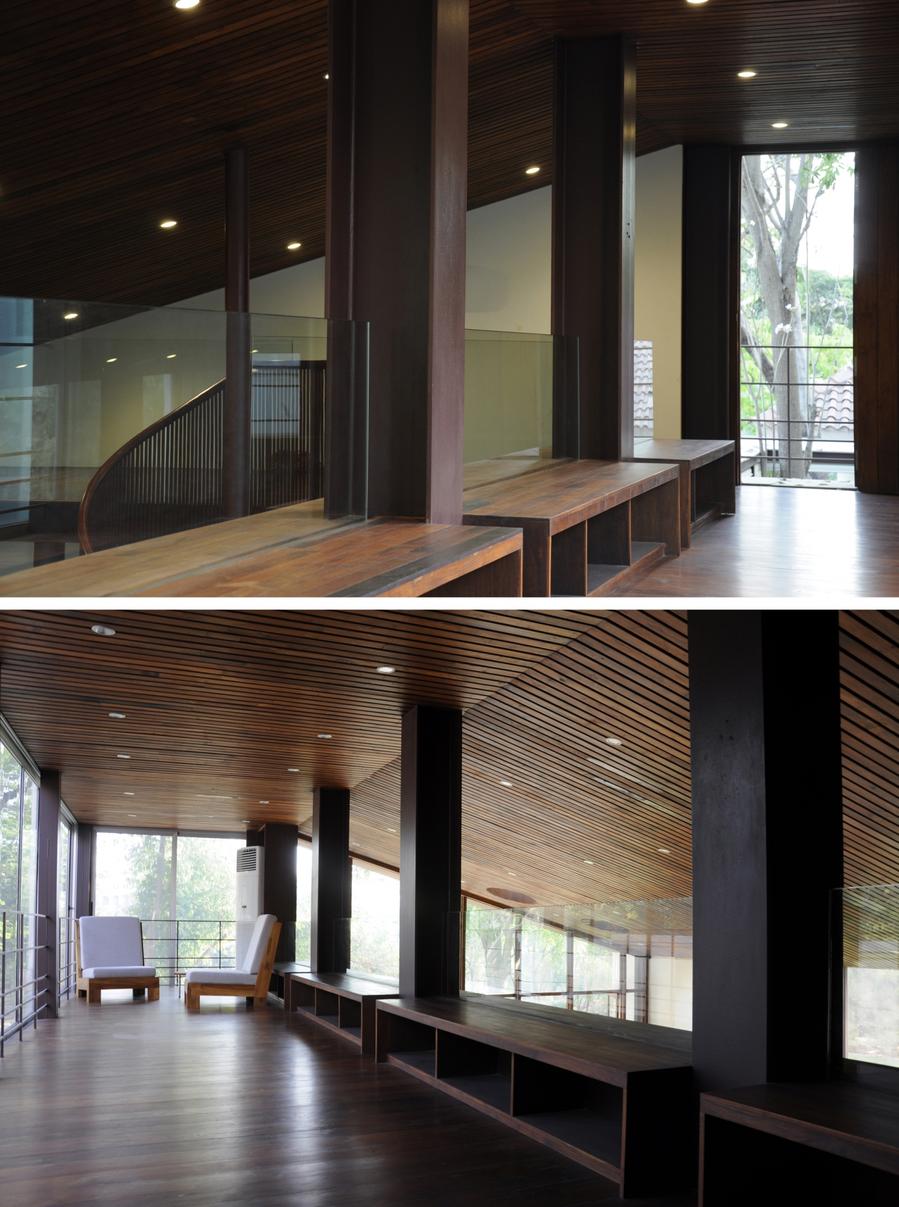
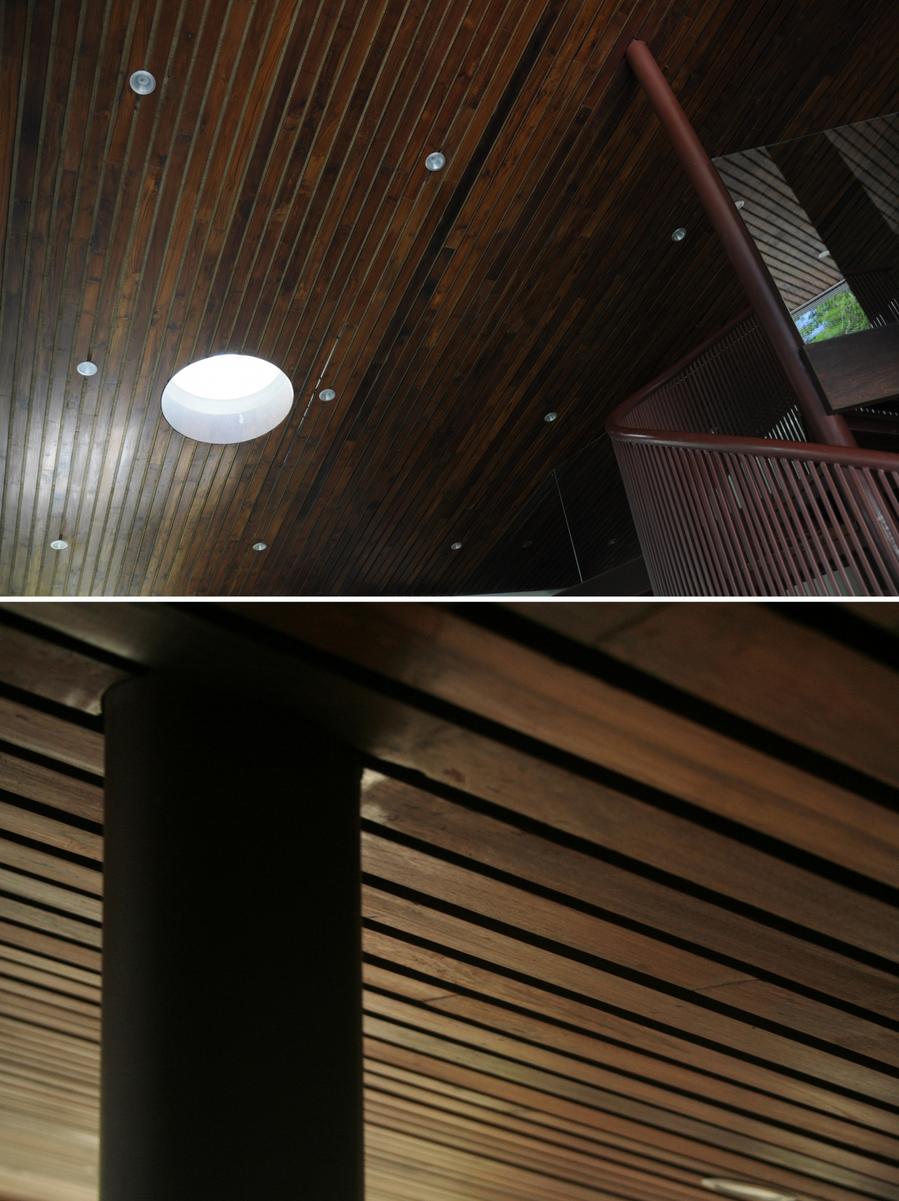
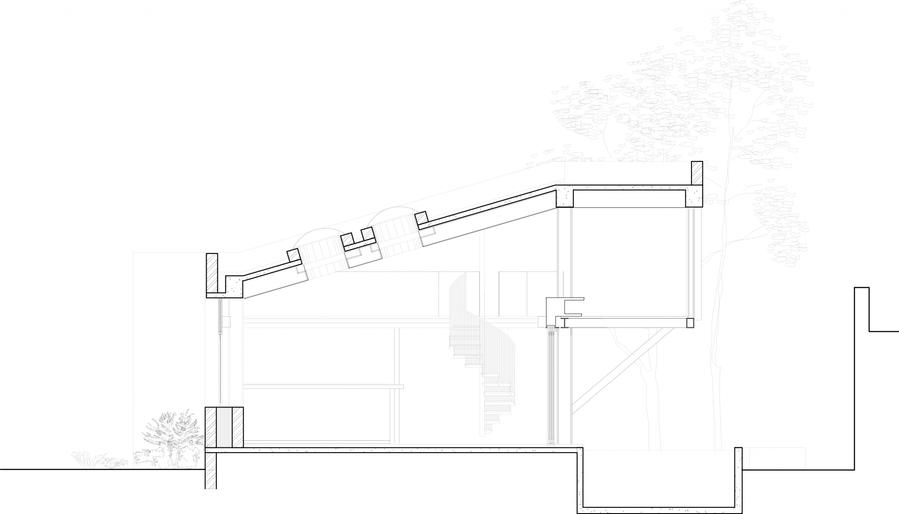
Placed in an already densely grown grove, the new lounge sits as a pavilion among trees.. The lifted plane of the roof recreates ground at the level of the leaves, and from it is suspended a balcony that overlooks the pool.
The composite structure uses steel to create the frame of the lounge and merges it with the concrete and brick of the service area by embedding the members in walls while allowing the steel to emerge when the space opens into the water and trees.

palanpur, gujarat; 2010
Ahmedabad area, Gujarat 2013
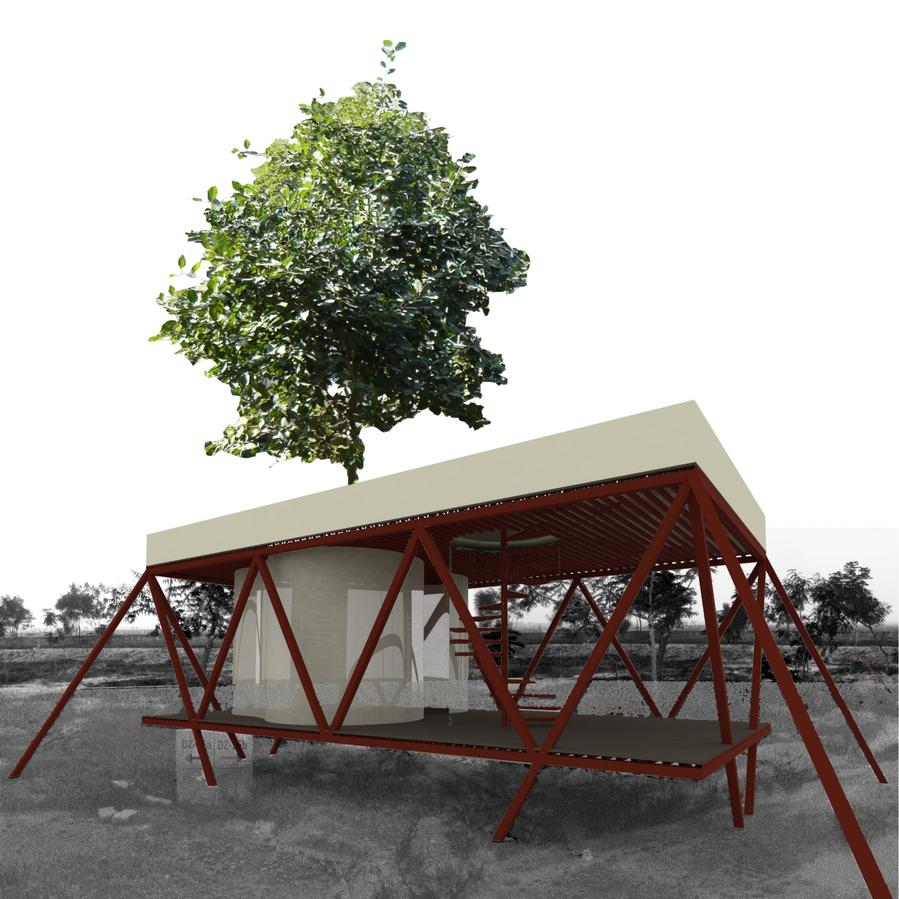
Proposed for a local artist, this pavilion needs to work as a shelter just for twenty years, while it stakes out a piece of land.
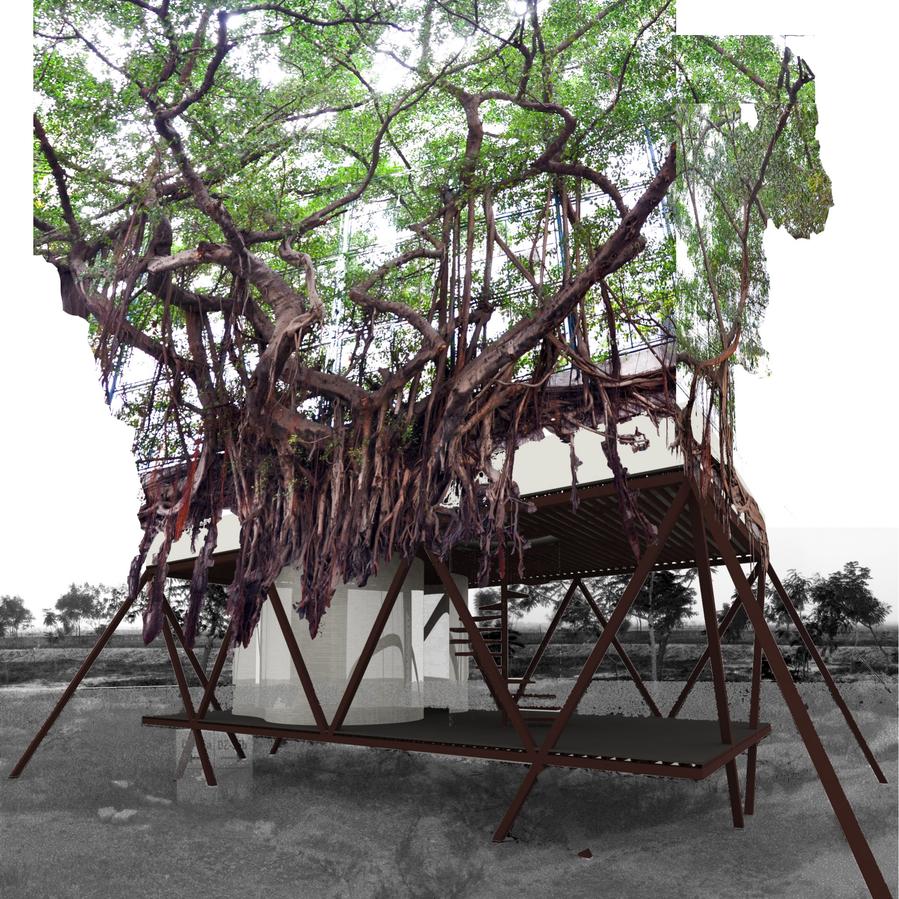
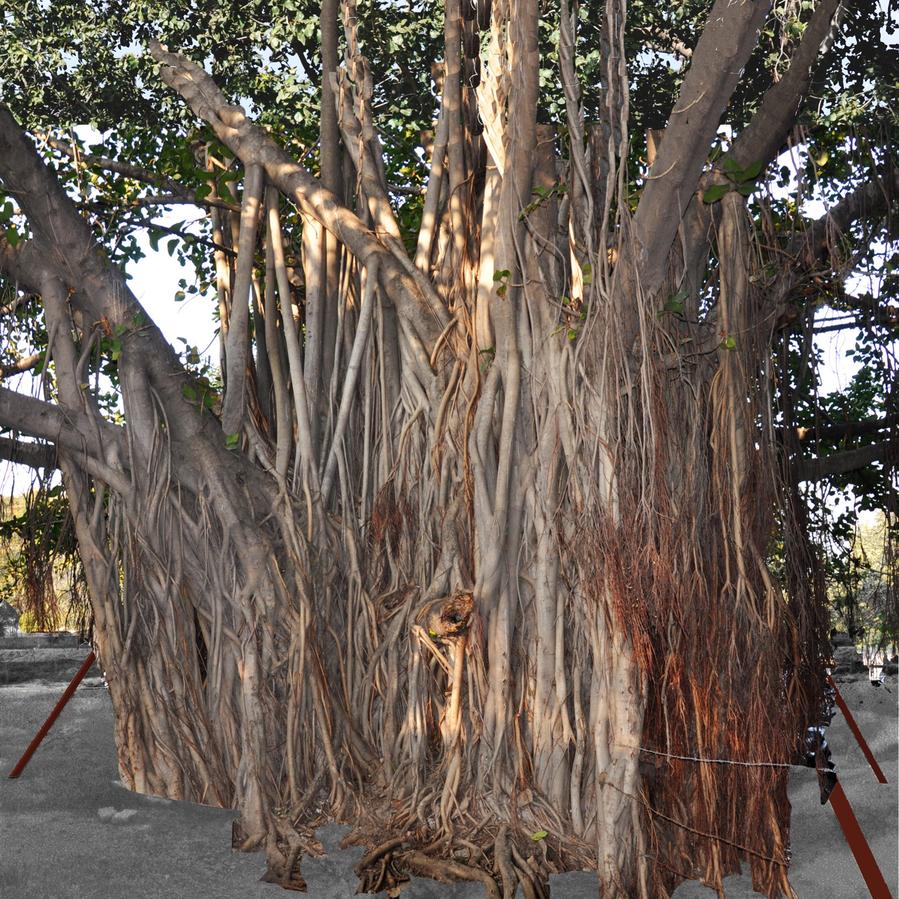
We took the opportunity to consider the life and longevity of a building, its nature as a shelter, and the possibility for life after loss of function, growing as a ruin back into the land it was built to demarcate. One of our long running concerns has been with the nature of the building after we as architects leave it, after the client leaves it, and even after people leave it. Toward this end we have observed the particularly aggressive occupation of the banyan tree into some ancient and other more recent structures. Often born out of bird droppings full of banyan seeds, the tree will grow out of a crack in a stone to eventually envelop the entire structure, ultimately devouring it with an excess of aerial roots that pry open joints and push through mortar, brick and earth.
With such a short lifespan, we thought, why not design a structure that invites the banyan roots to grow? By placing the tree on the rooftop of a lightweight steel structure, we create the first impulse for the direction of growth: the roots want to reach the ground. Second, we create a hierarchy of materials based on their relative strength, and organize them so that the roots will grow out across the platform roof, with soft bela stone that channels them toward the edge, and then frees them to follow gravity straight down, while a tripod structure holds the simple truss that creates the space under the roof. All the elements beneath are tucked slightly back, so they sit out of the reach of the groping branches...at least until the rust begins to eat through the steel decking and the roots find new paths to the earth...
Pamol, Gujarat 2012
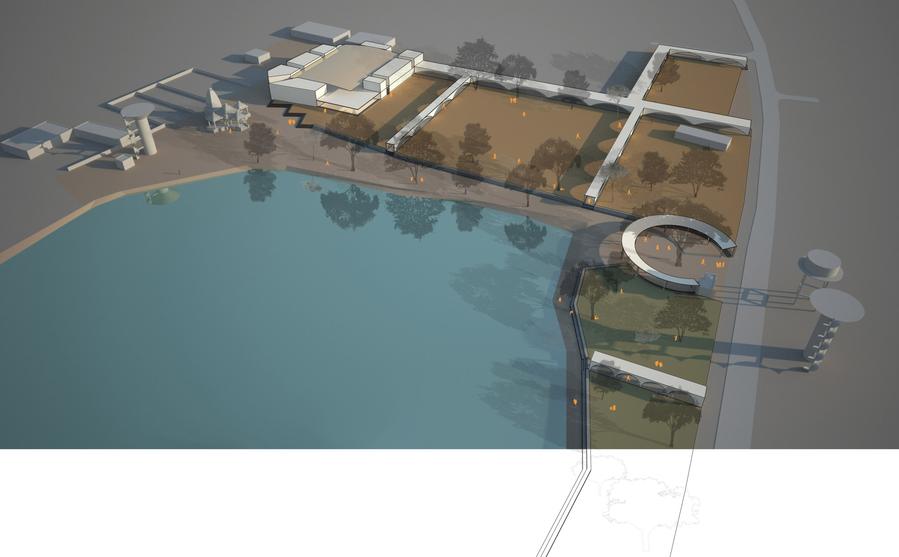
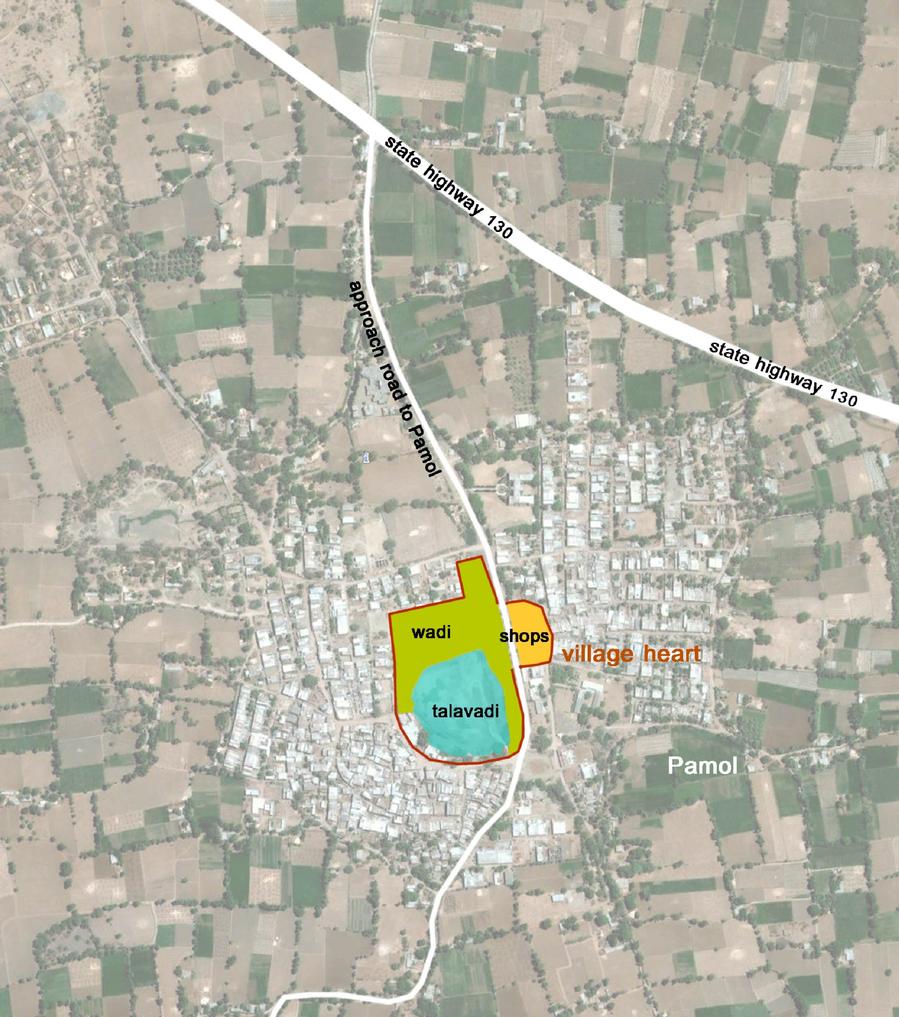
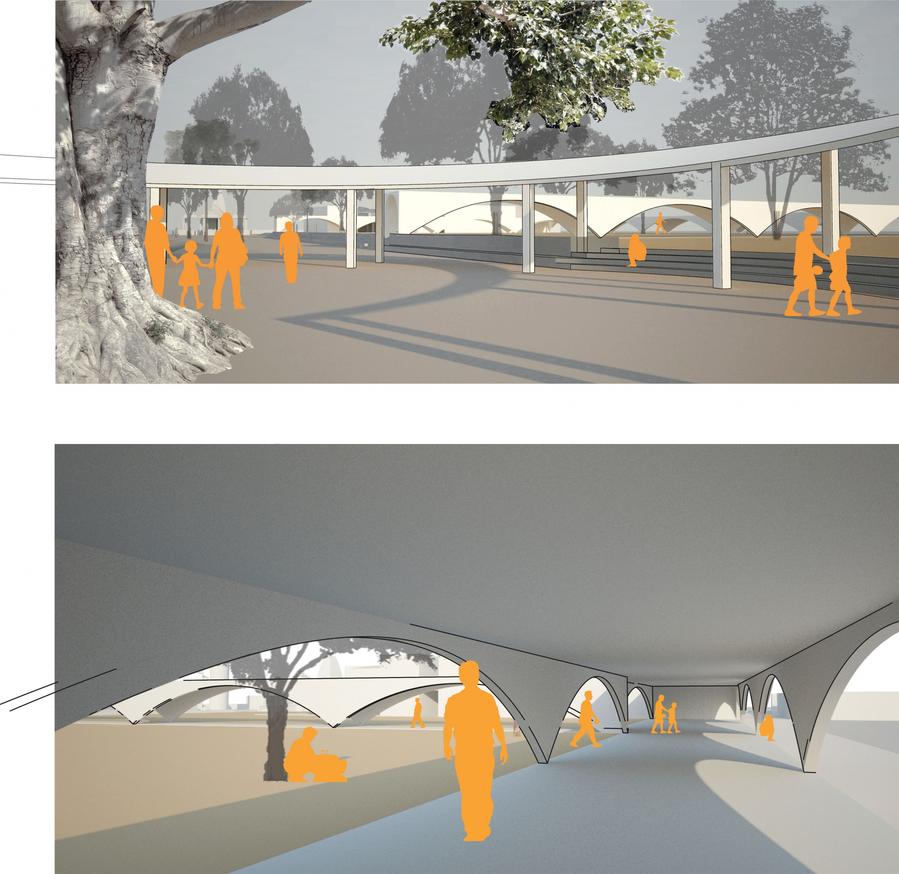
This project bridges architecture and urban design to propose a community center for the heart of a northern Gujarat village. While the village has around 5000 residents, twice or thrice in a year it plays host to between 10 and 20,000 people for mass marriage ceremonies and other celebrations. And as these gatherings serve meals, the scale of food production is enormous, requiring camel carts for rice, six foot diameter pots for dal, and trucks for water and buttermilk.
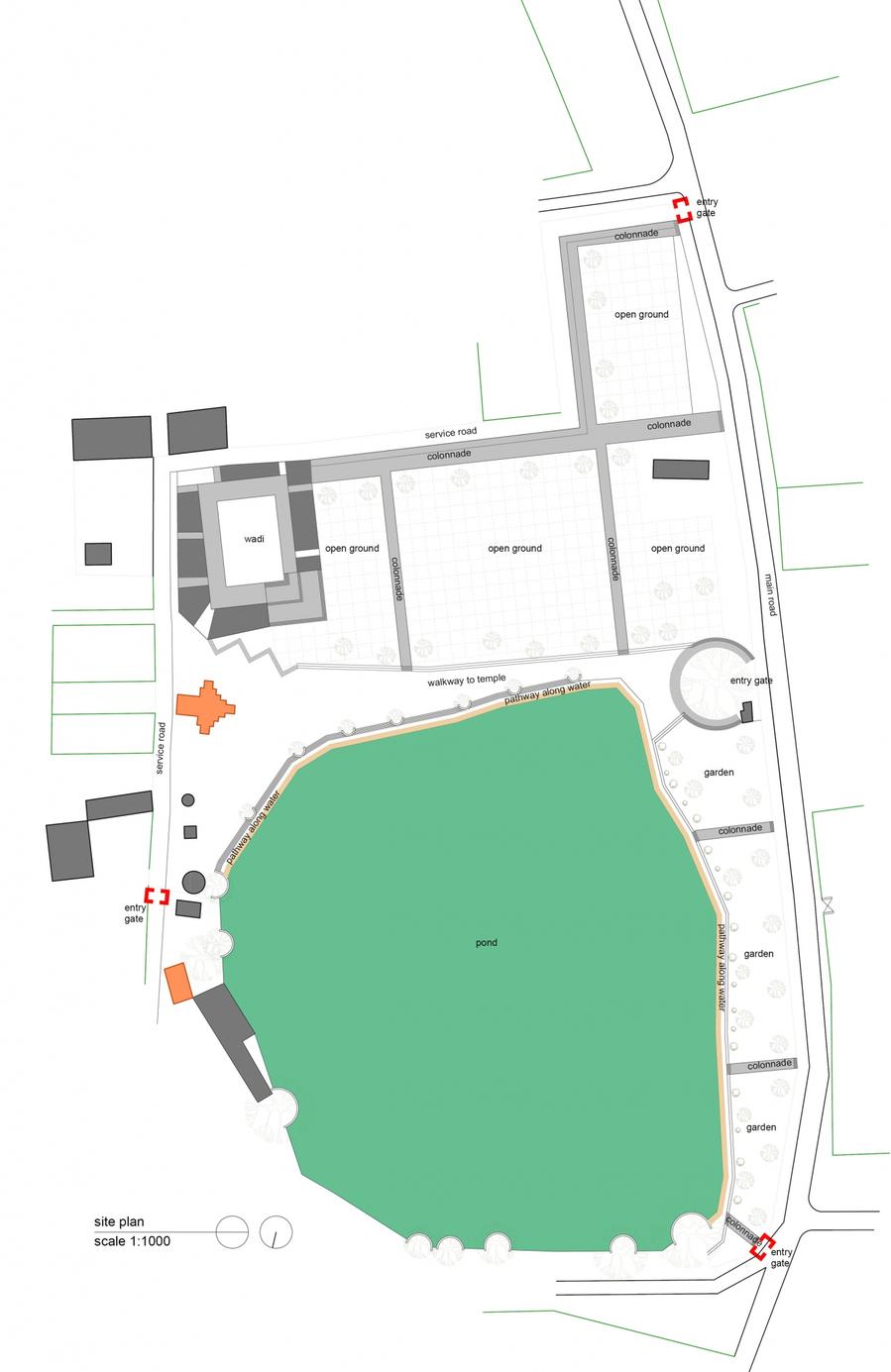
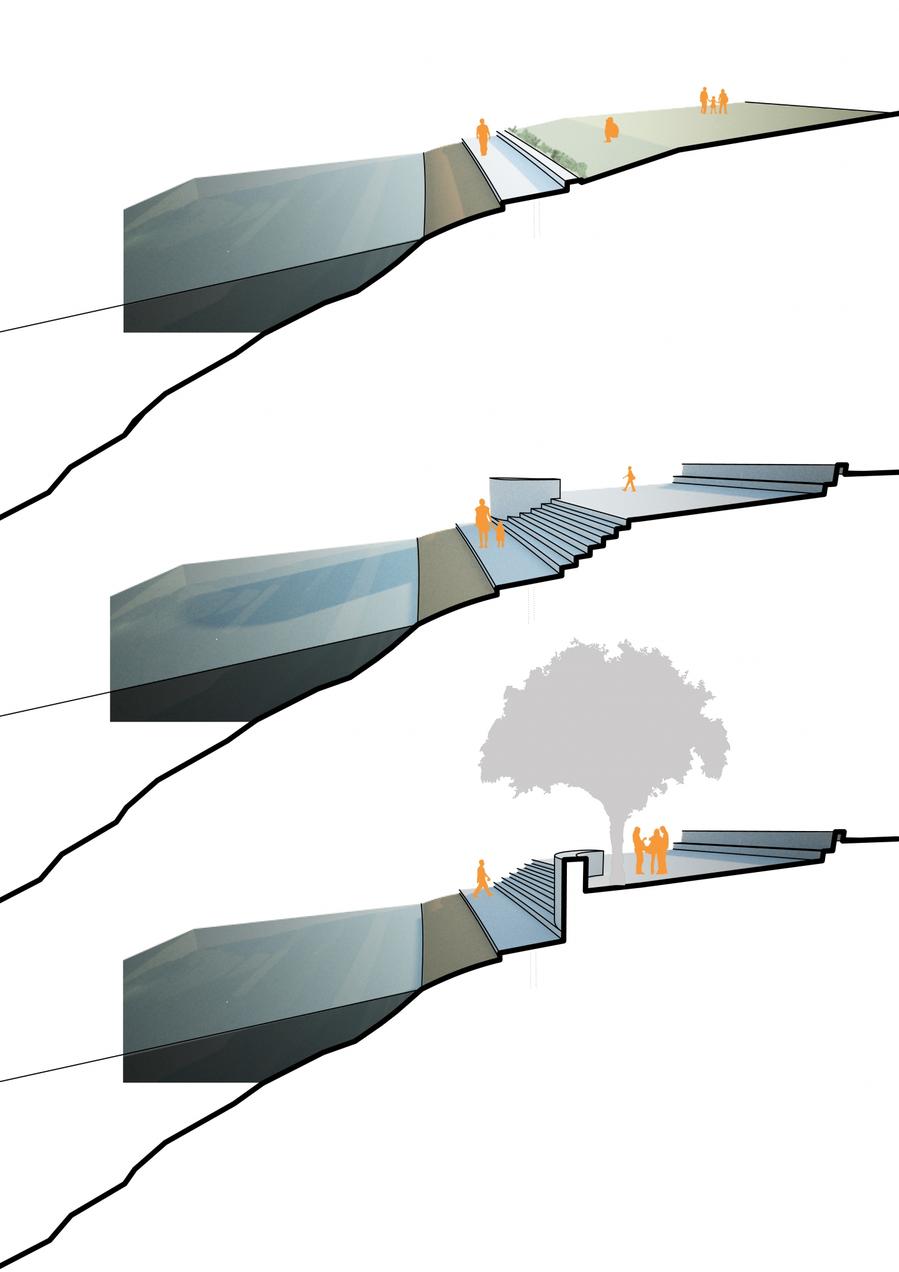
Pamol Gam grows on both sides of the main road that runs through it. To weave together the village pieces, this project proposes a center of three parts: community grounds, pond and market area. Anchoring the community grounds is a Wadi that opens toward the temple and pond. The market area is grouped around a central chabutro. The three spaces meet at the village bus stop. The community ground is organized by covered pathways that provide shade in the ground, and also serve as the base for constructing a blanket of temporary shade structures for large functions. They are located according to varied scales for possible gatherings, and culminate in the Wadi, which holds up to two thousand people, with more overflowing into the open ground. An infrastructural road along the back of the site brings trucks into the main cooking area, and gives space for dish washing and serving. Around the pond, a footpath meets the water with edges varying as per use.
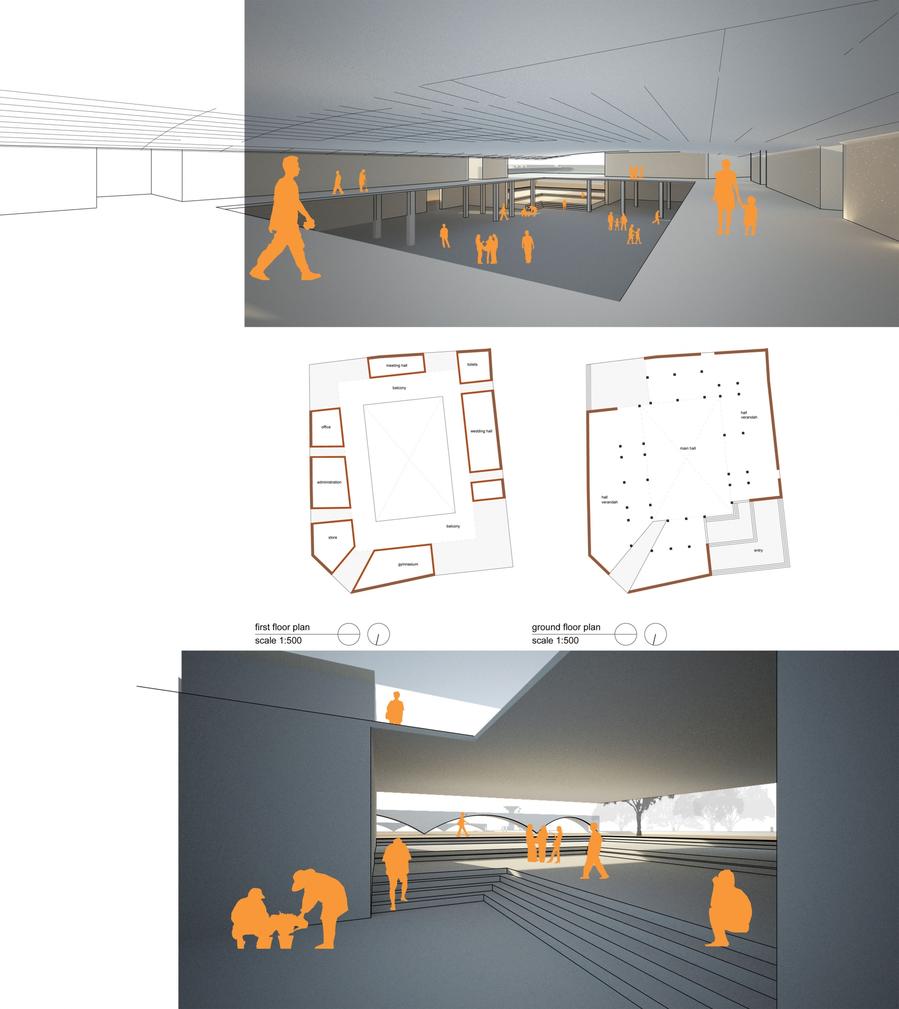
The building is conceived as a thickened wall around a courtyard, punctured to bring the wind through. Rooms around the edge of the vaulted central space provide the insulation for the main hall, and the height of the hall lets hot air rise to the lightweight shade, vented at the top. The ground floor is embedded in the earth for additional insulation, and the single-height areas along the edges can be closed for smaller events. On the first floor, a balcony wraps the main hall, behind which rooms for the village organizations perch, shading the hall below.
Ahmedabad area, Gujarat 2010 - 2013
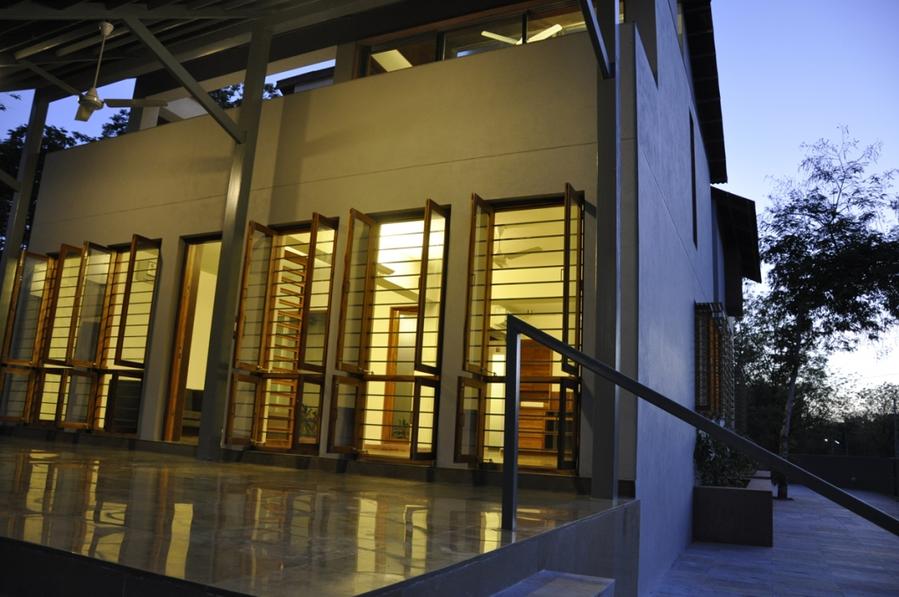
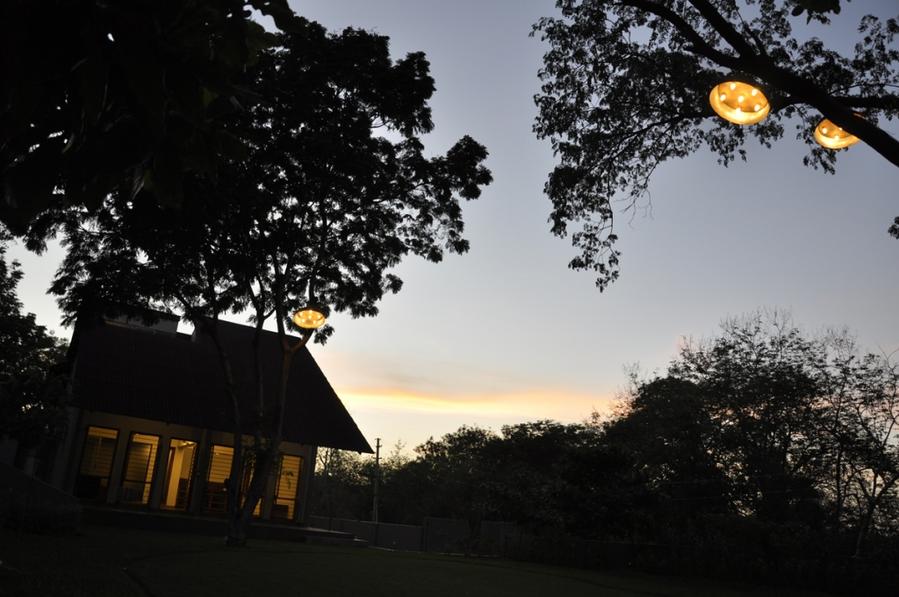
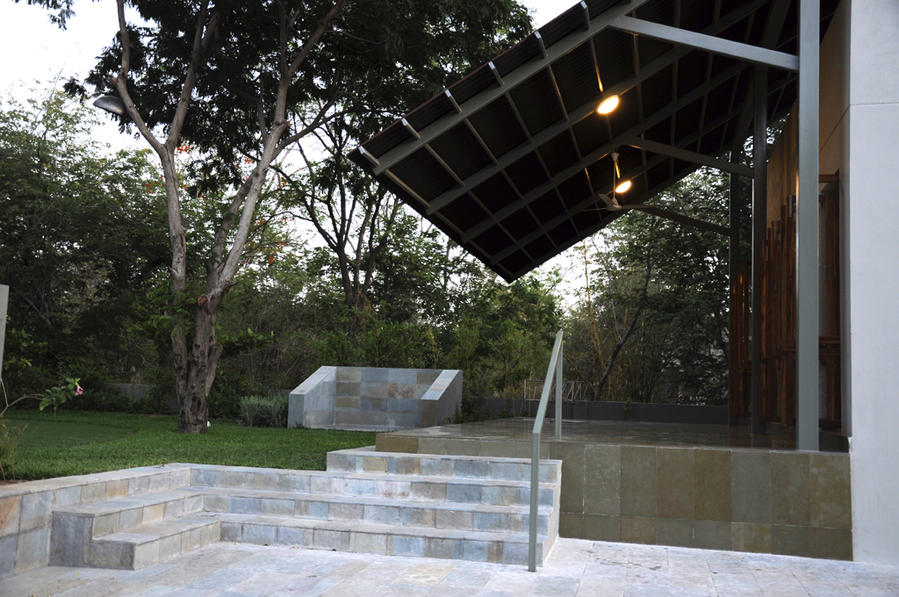
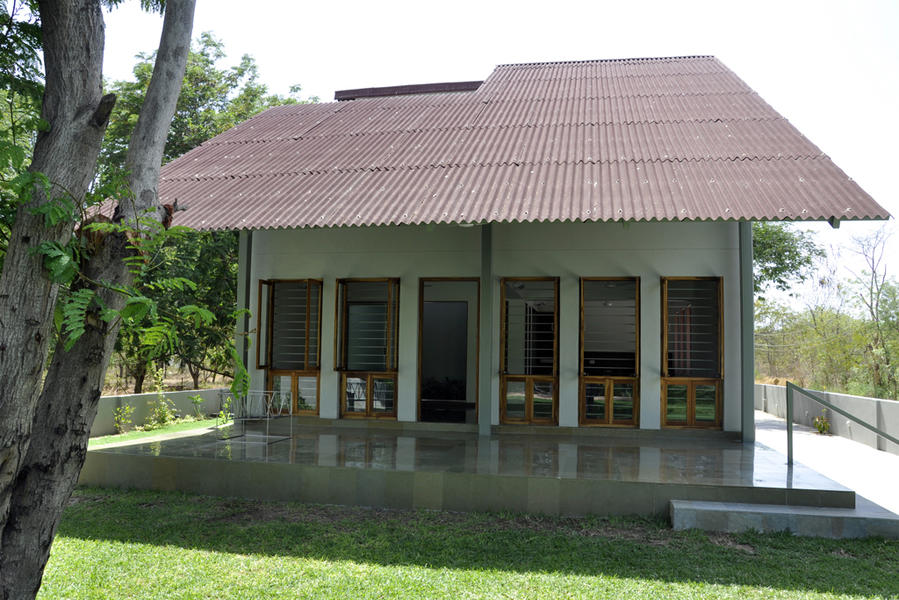
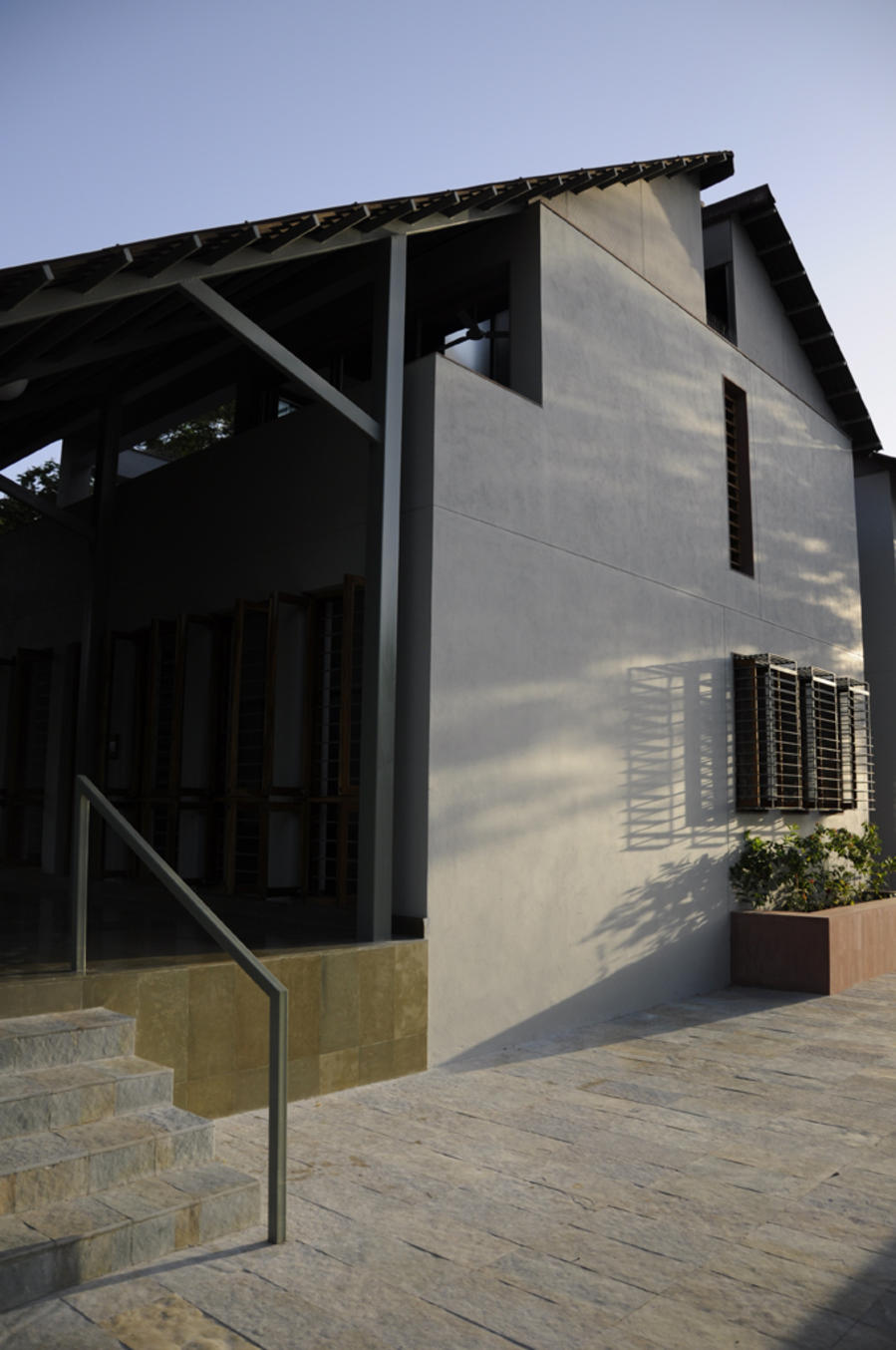
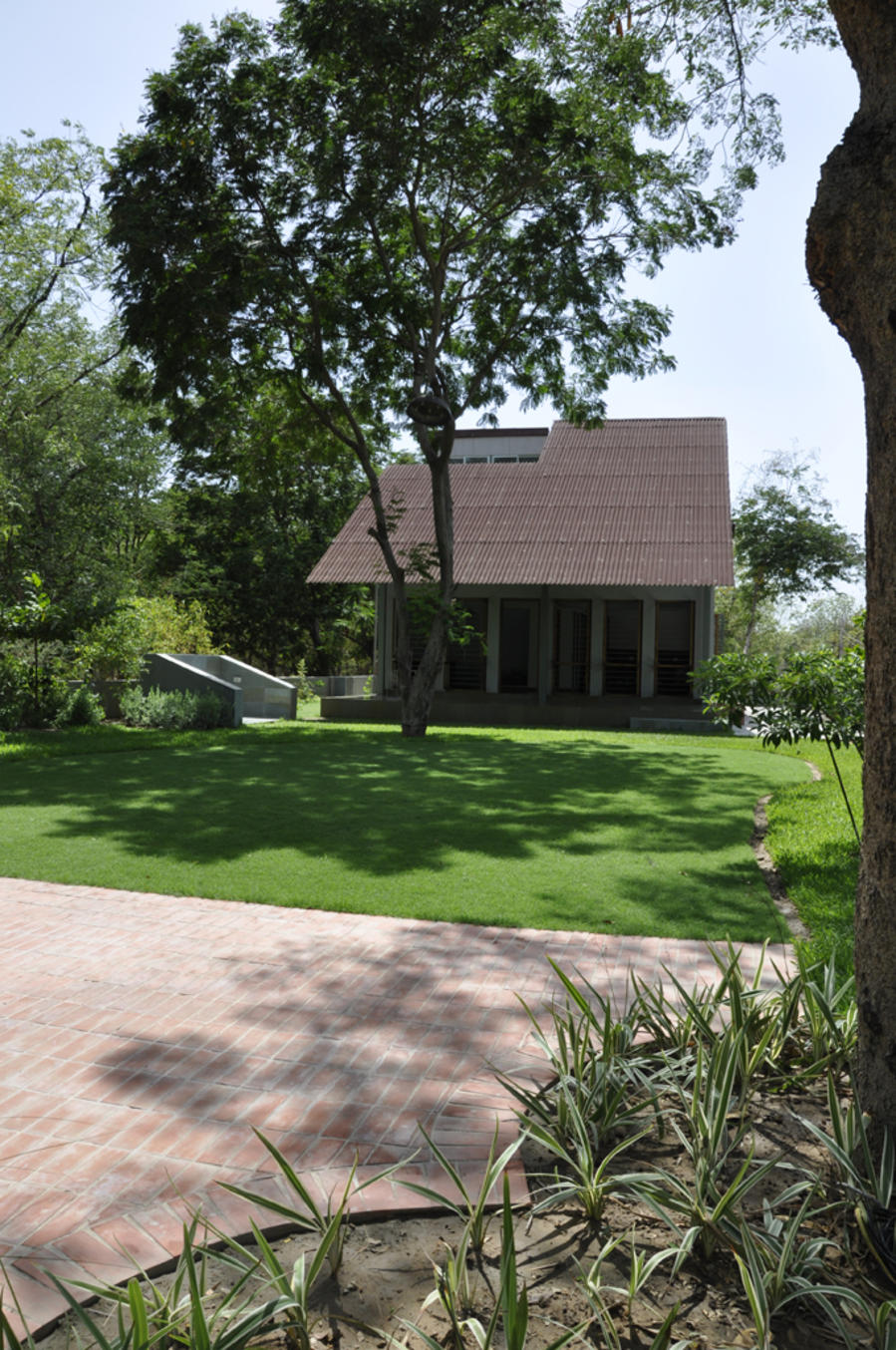
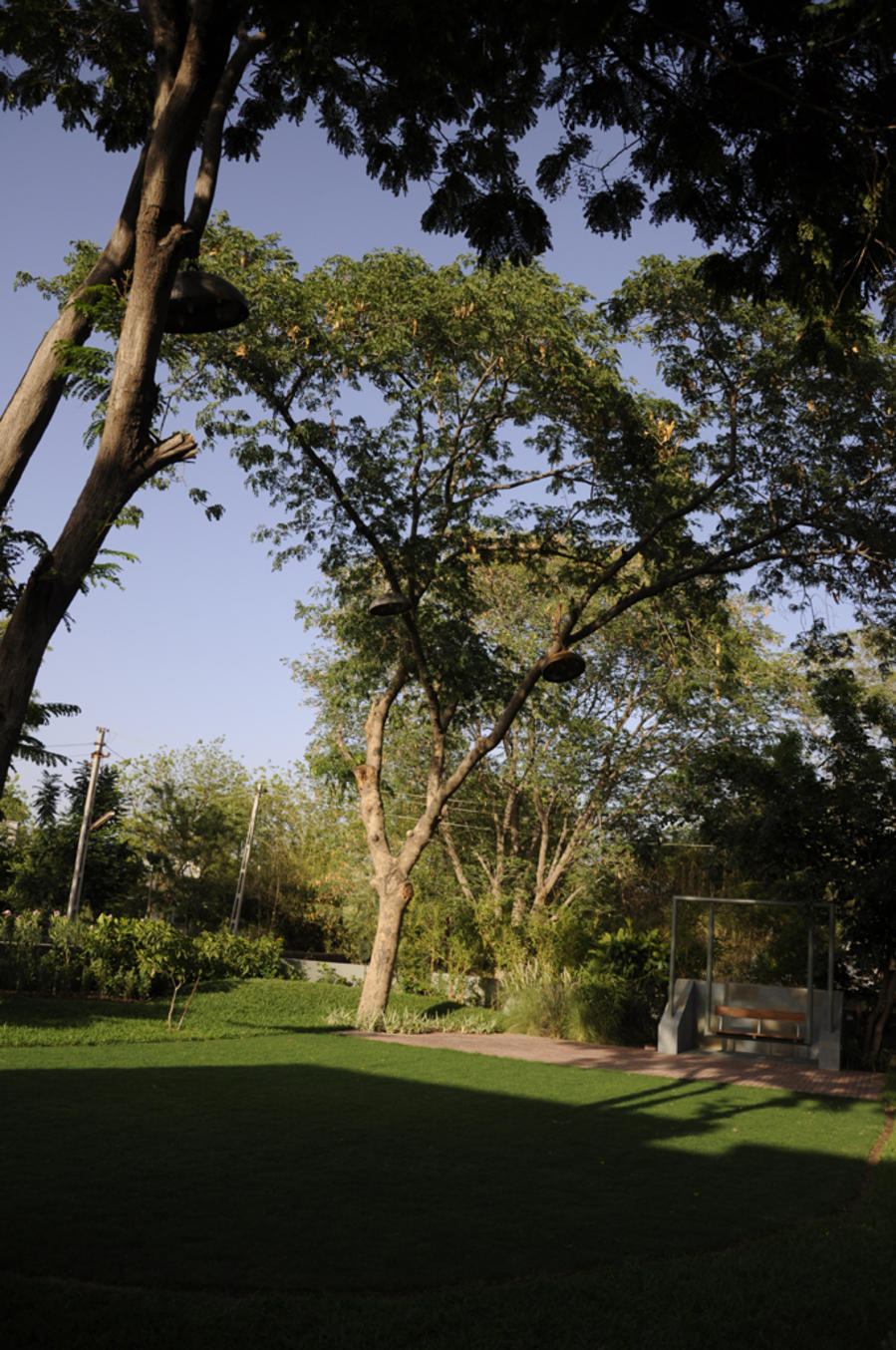
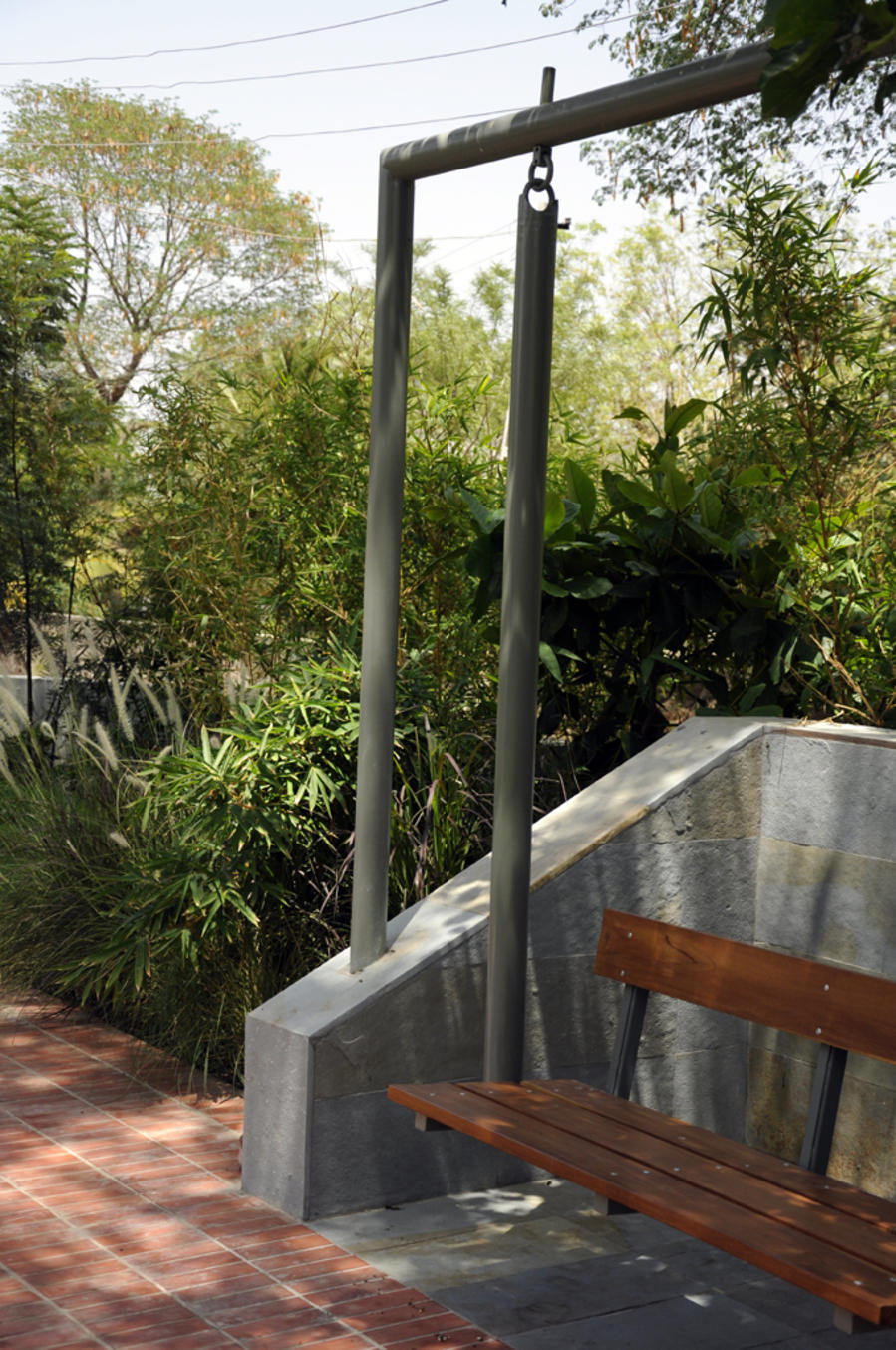
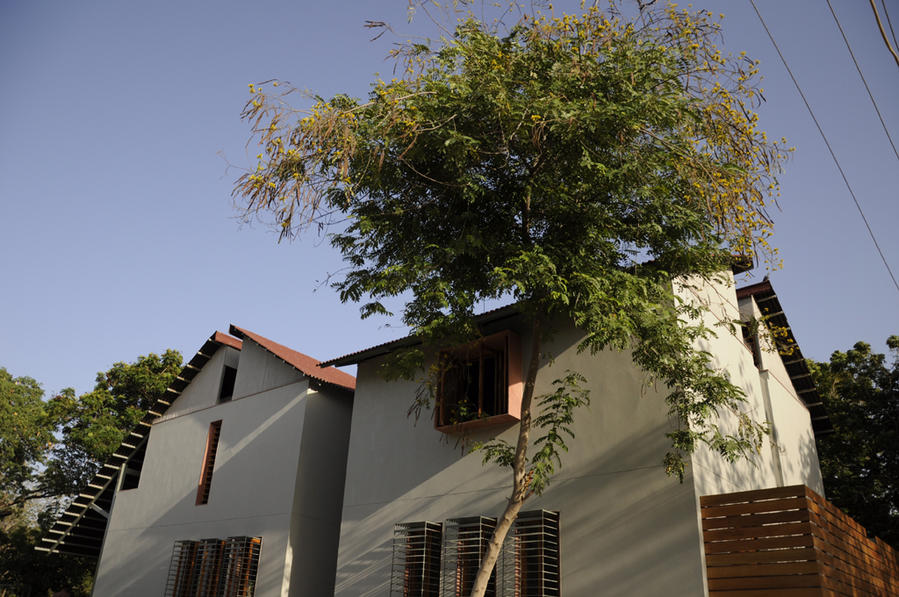
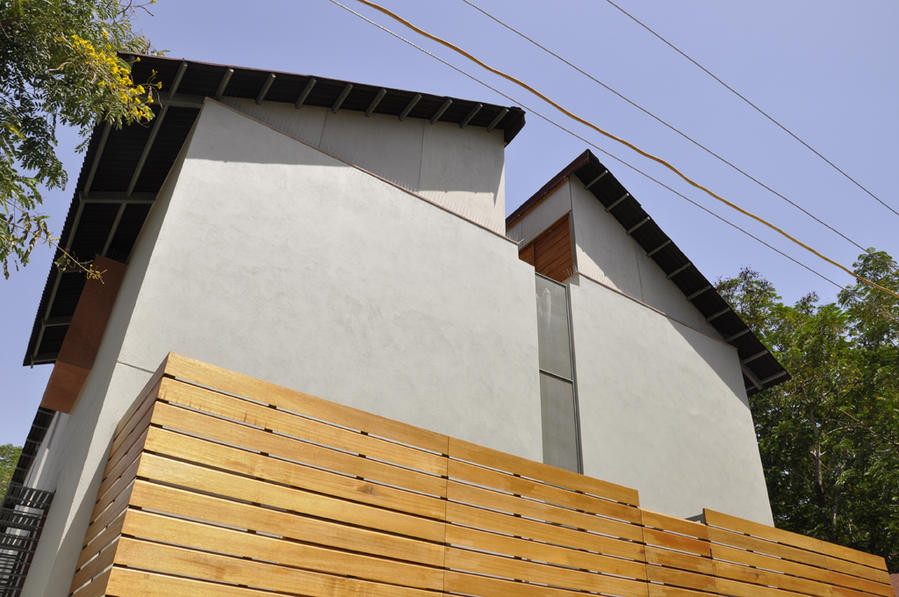
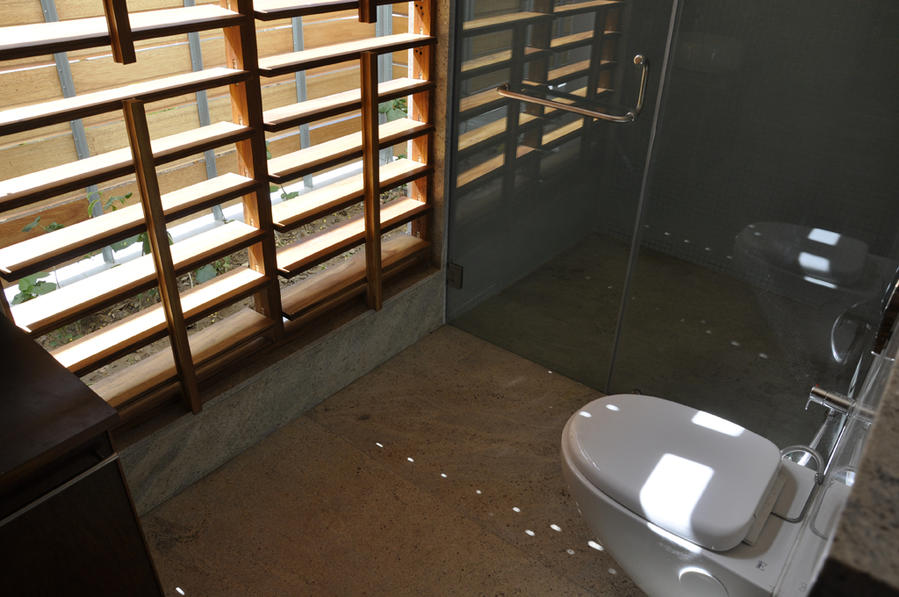
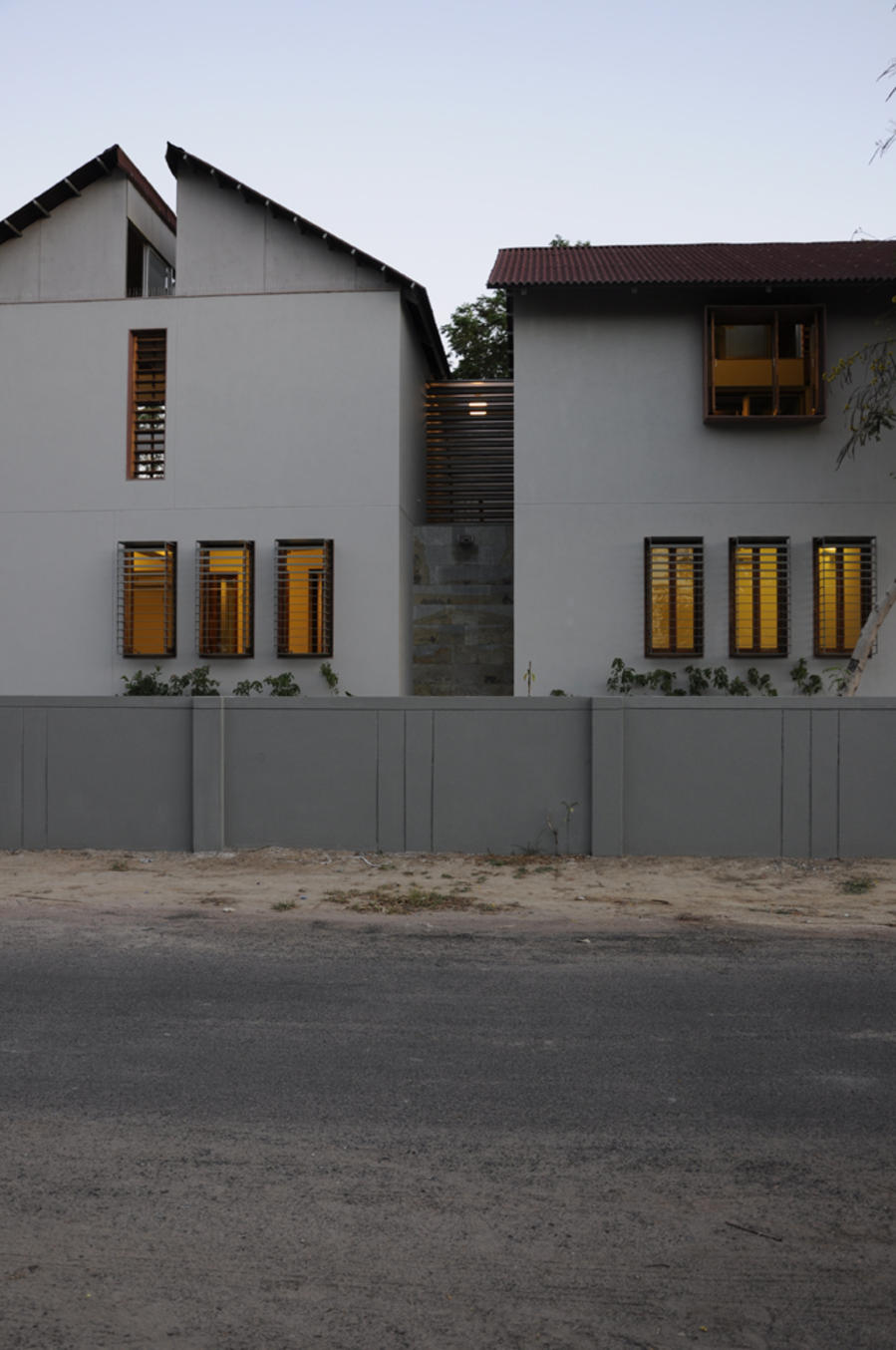
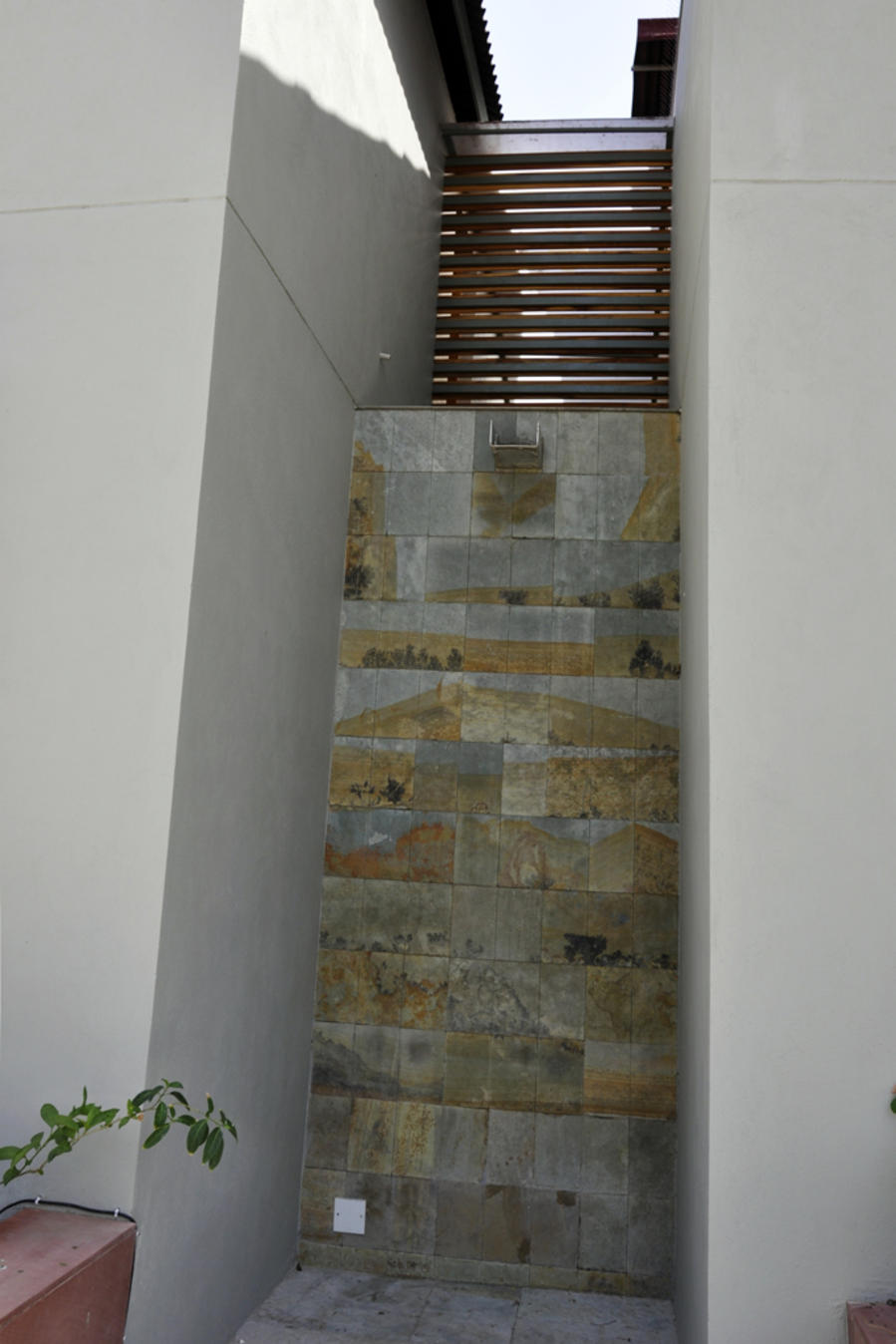
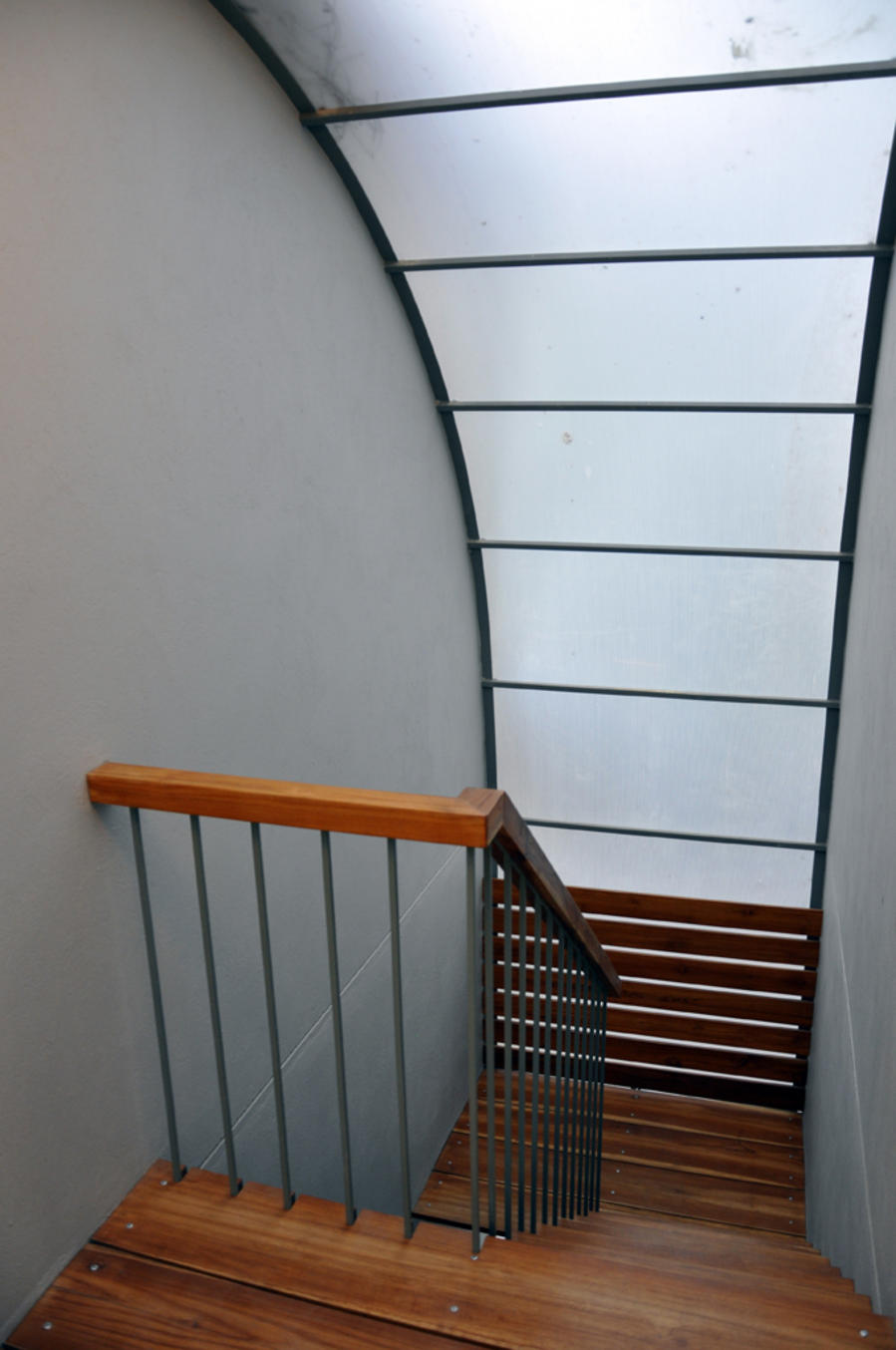
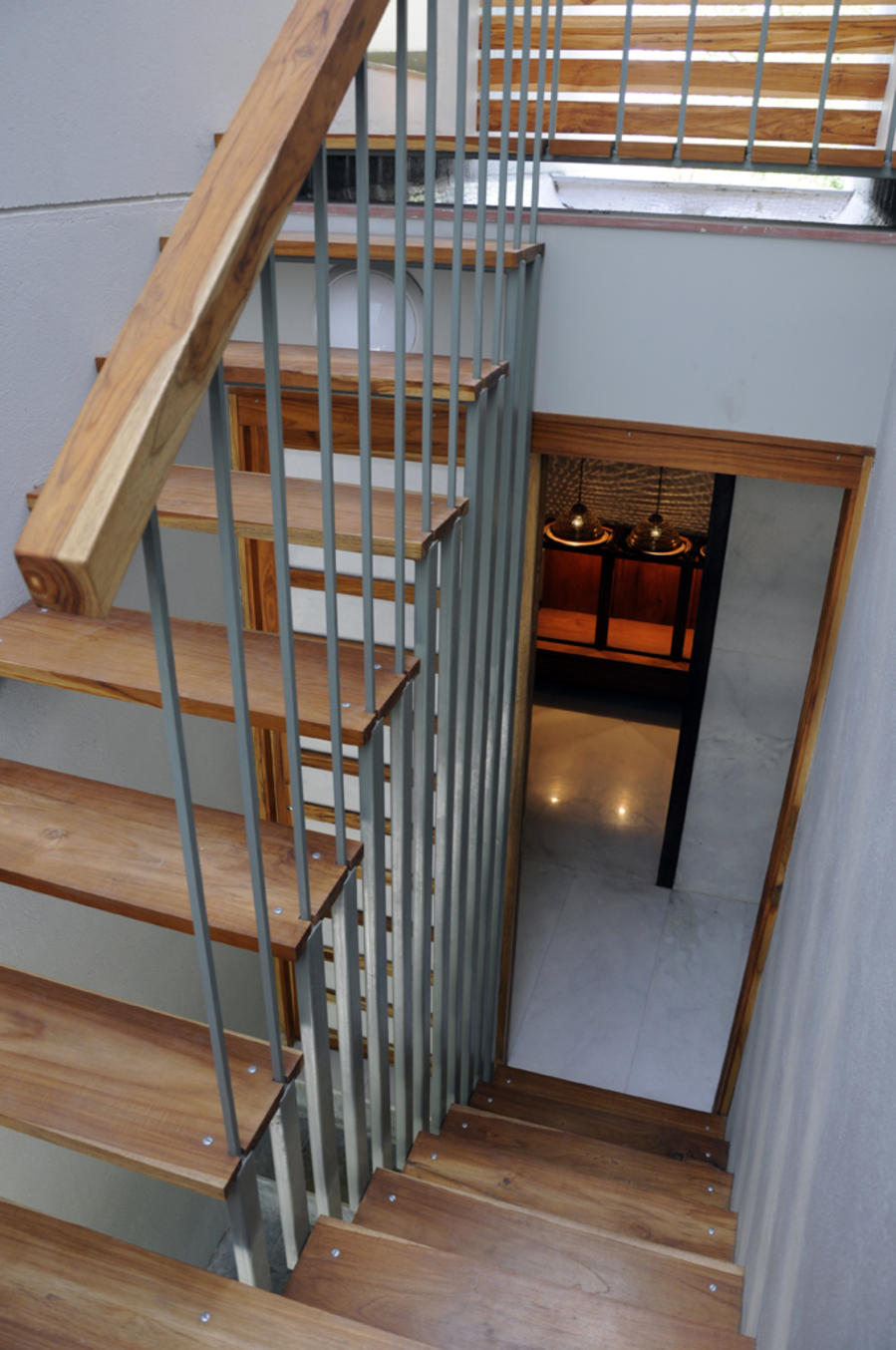
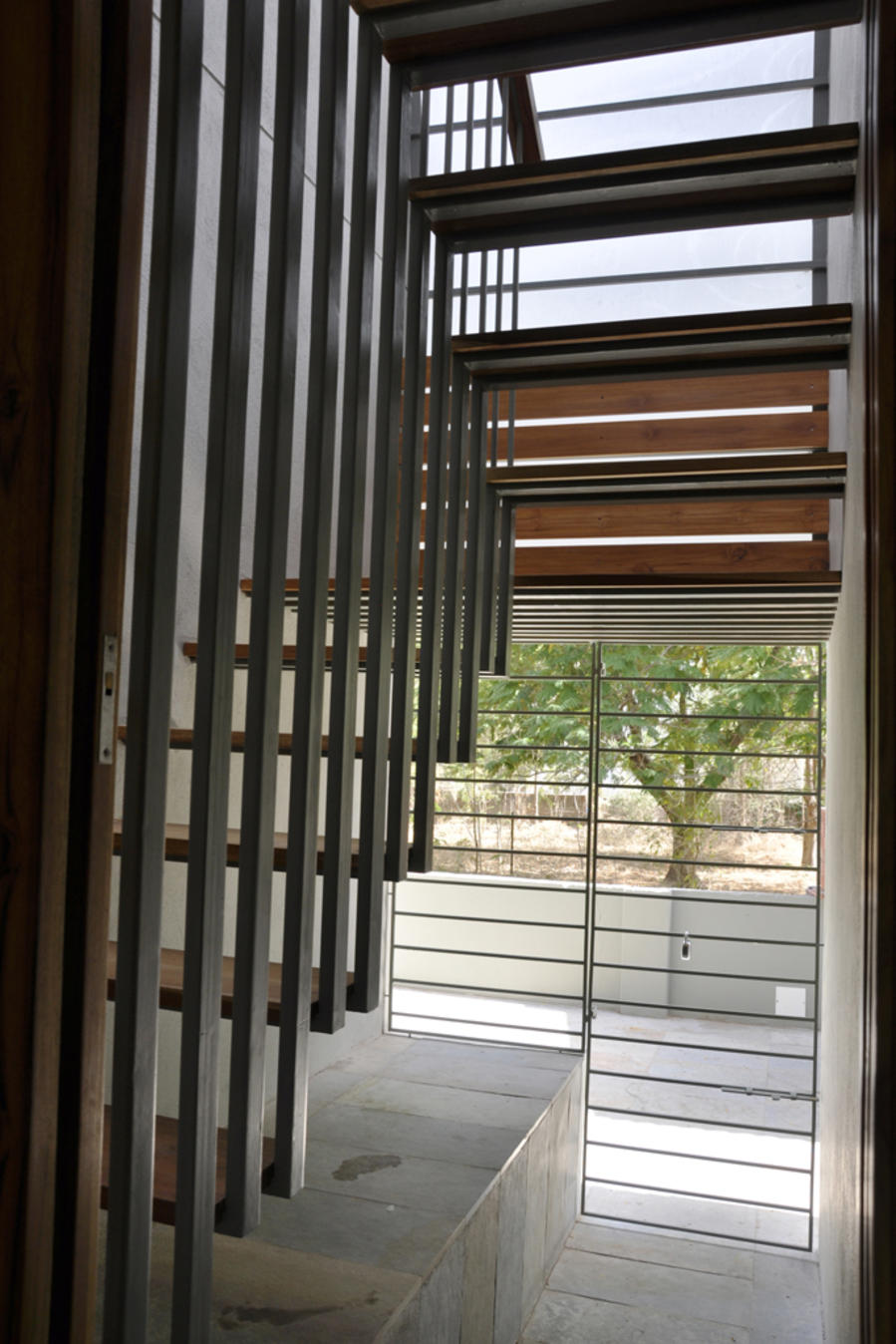
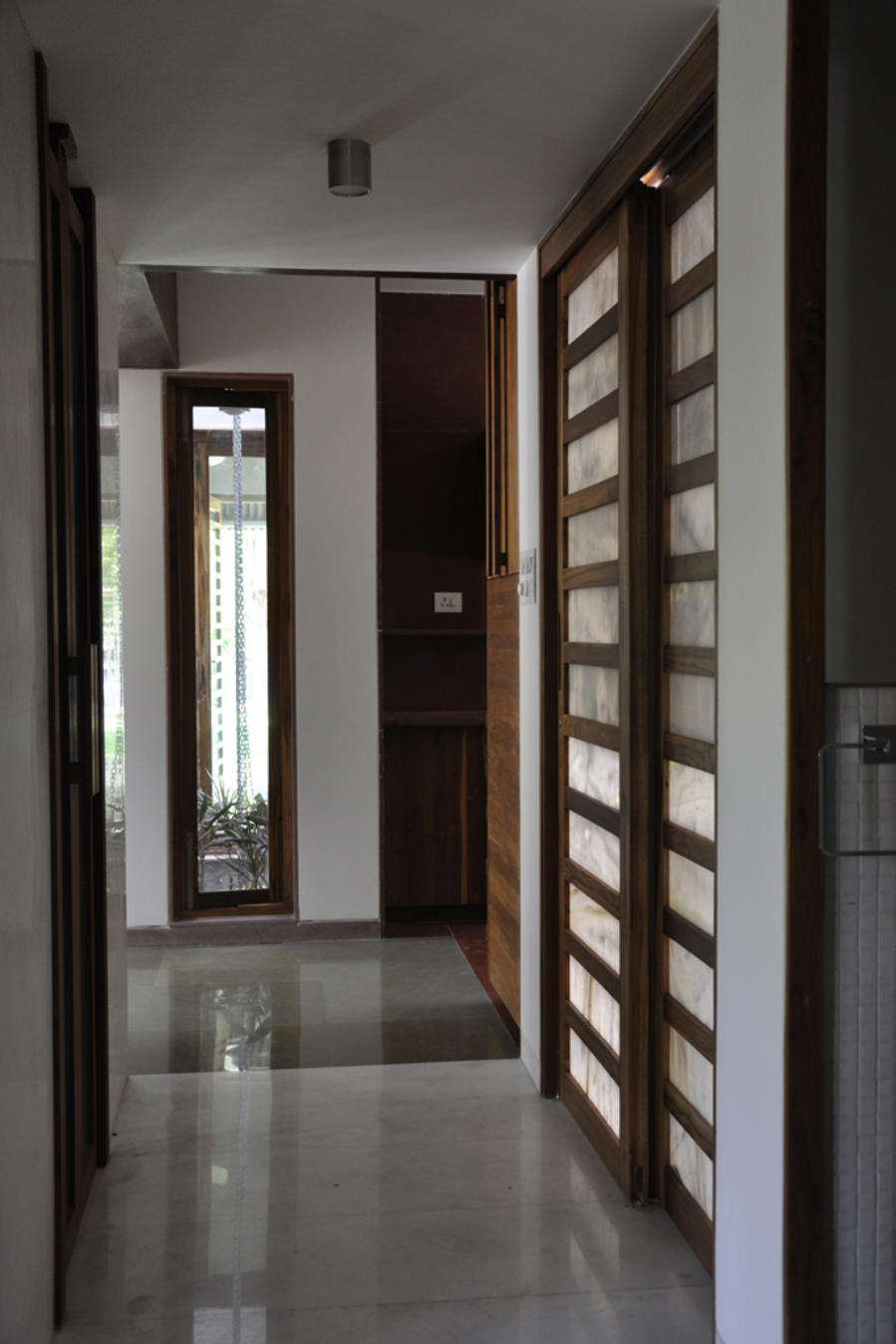
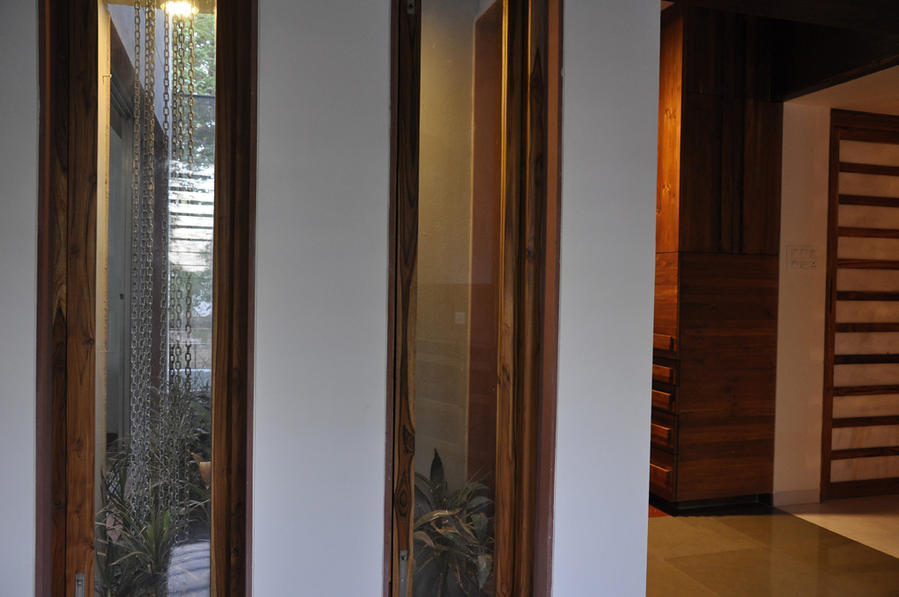
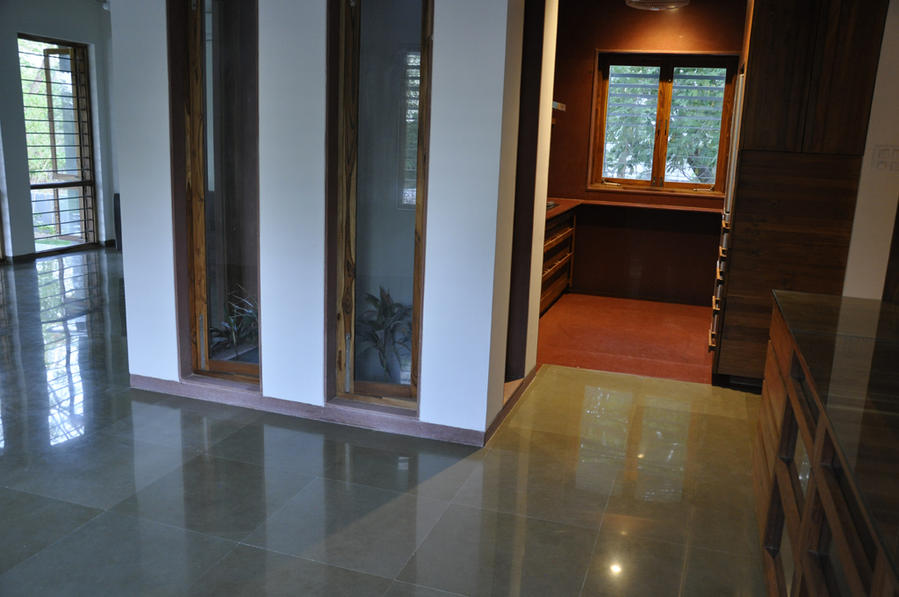
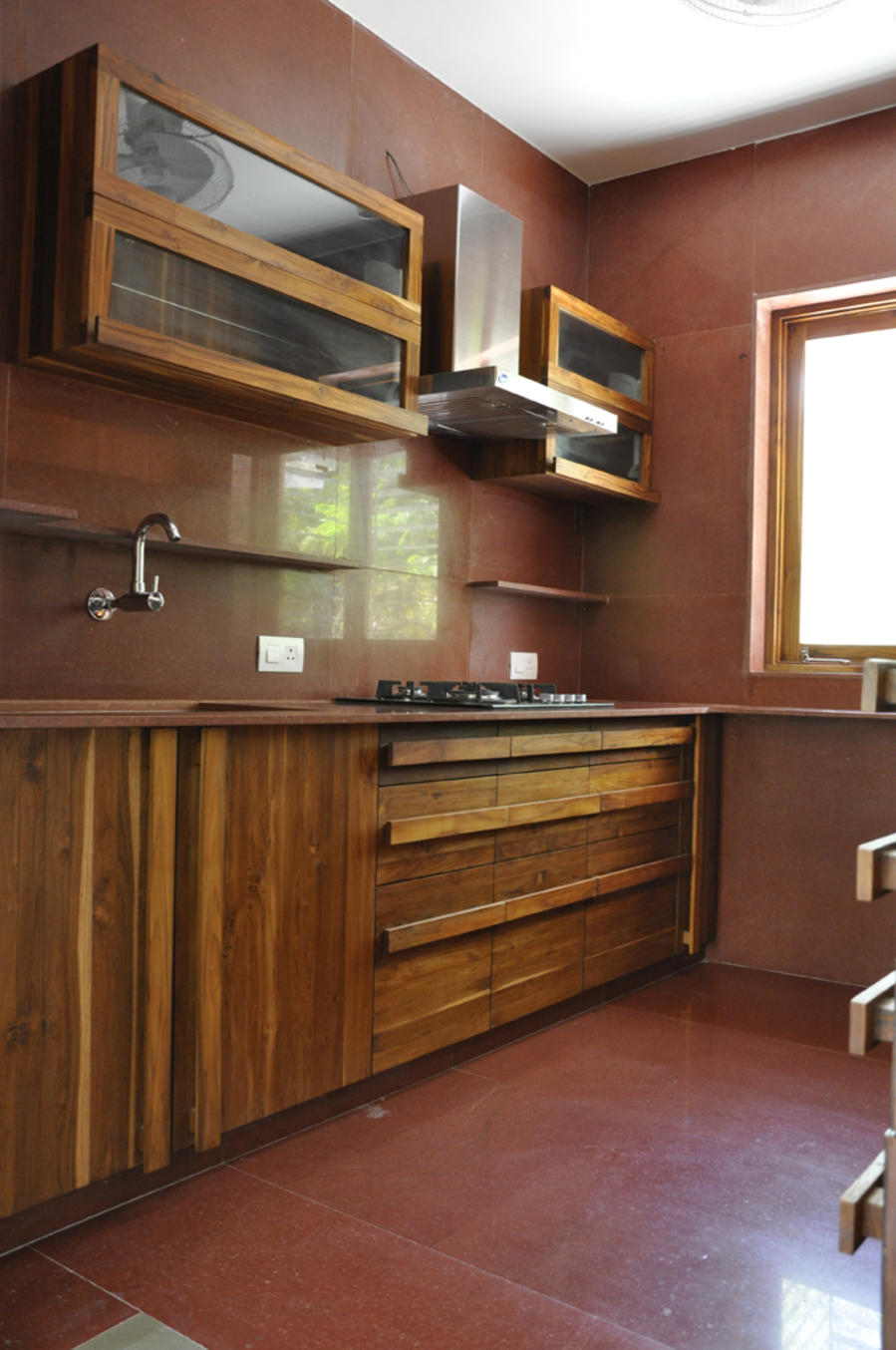
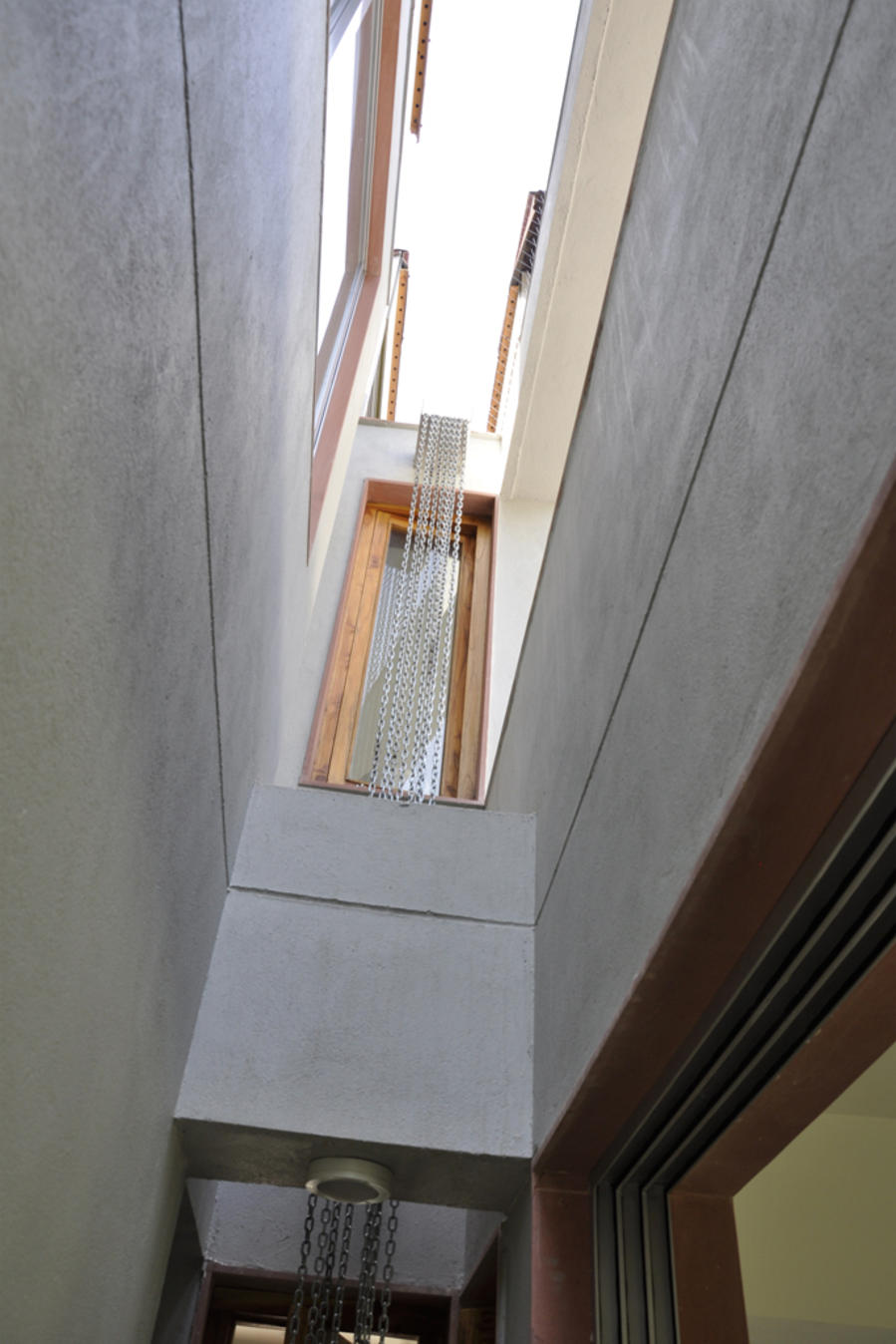
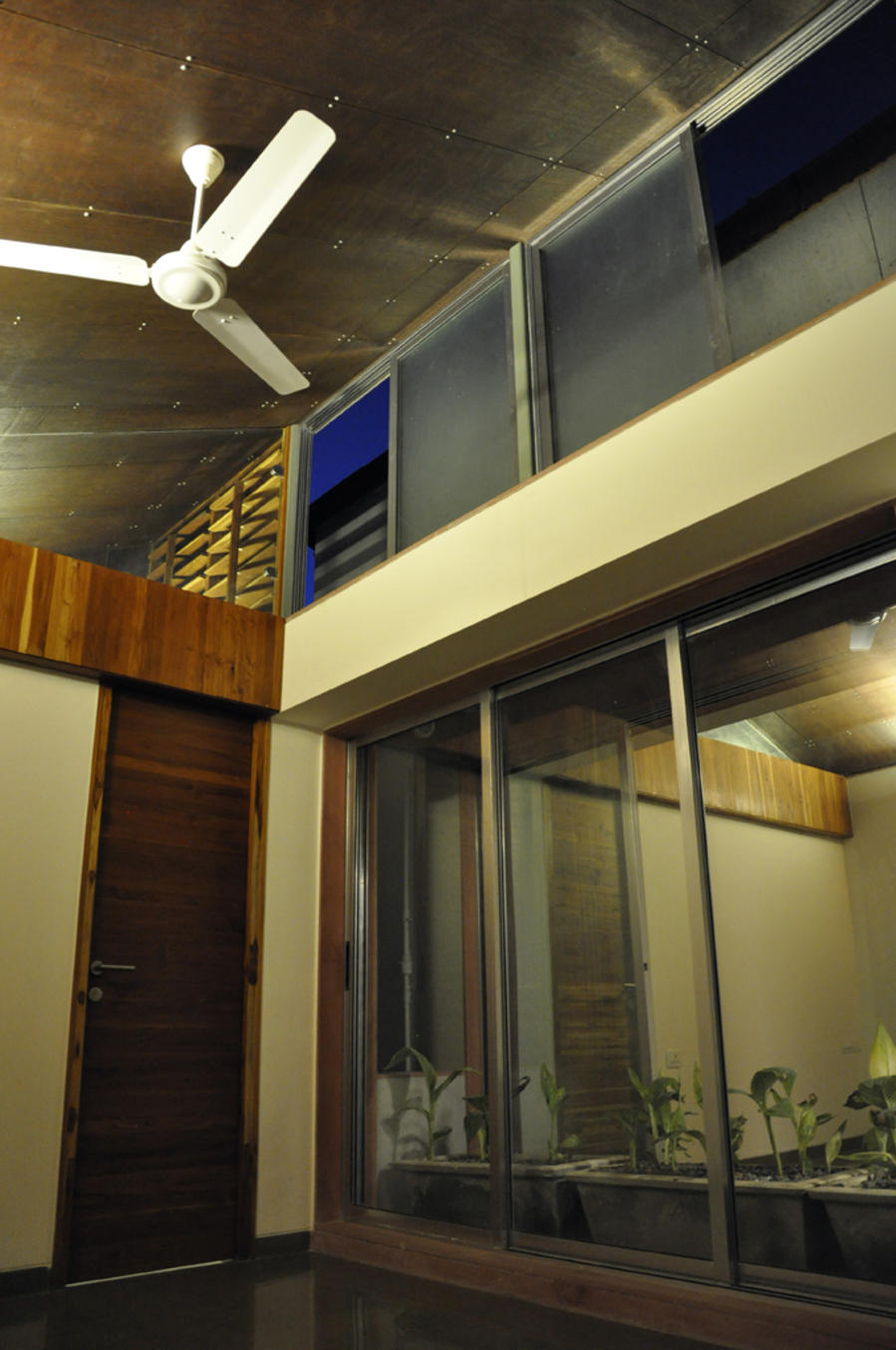
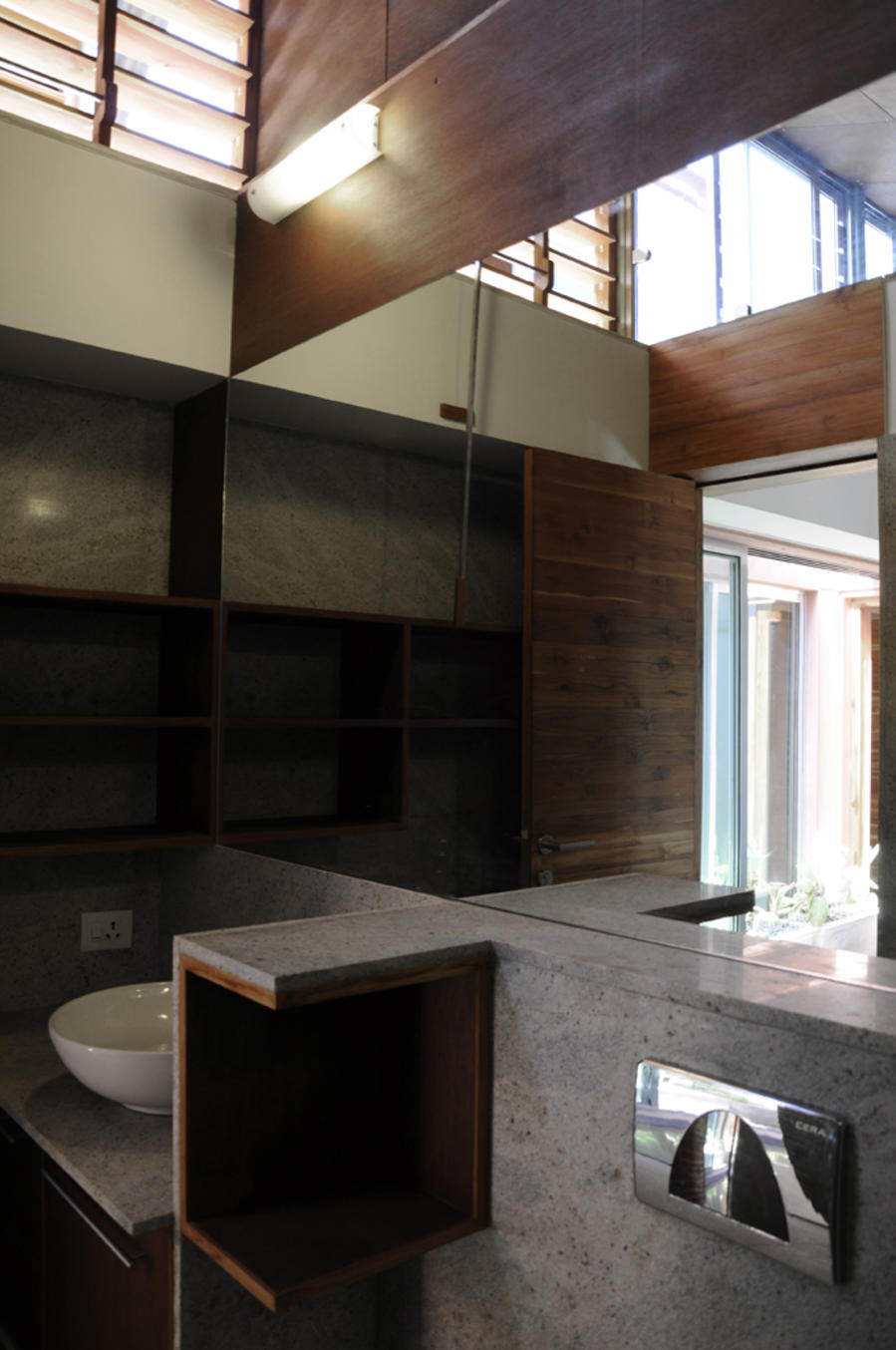
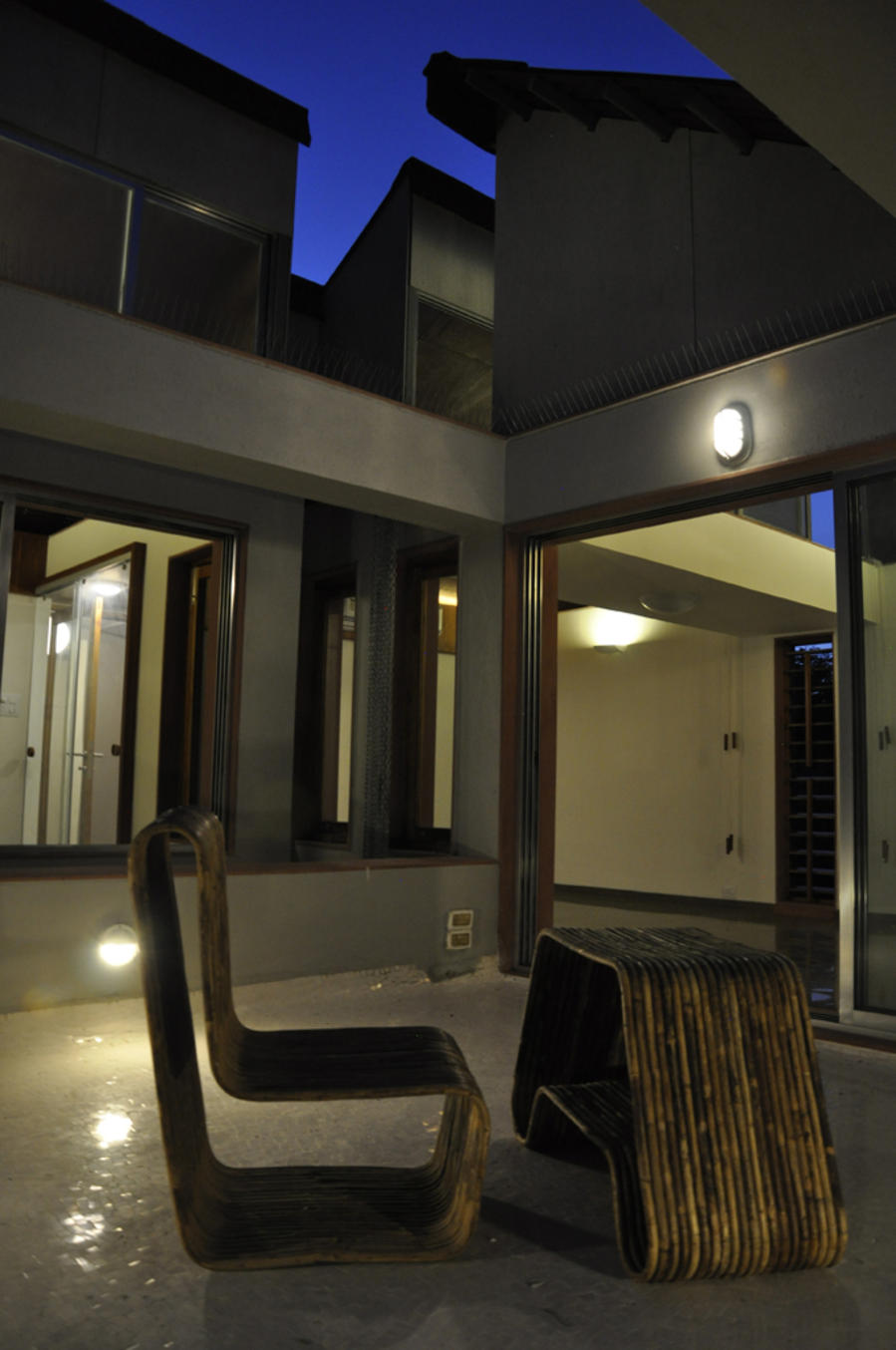
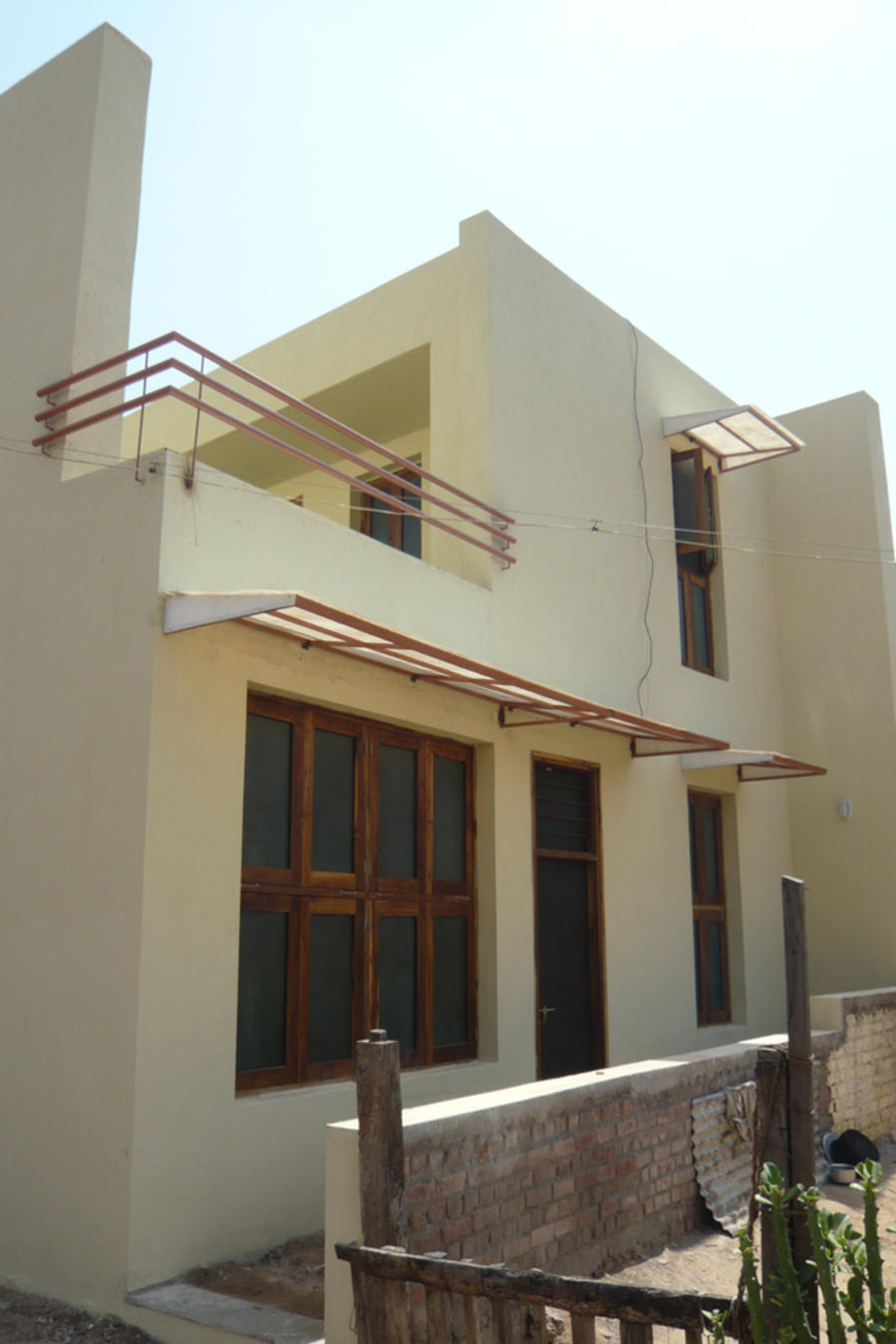
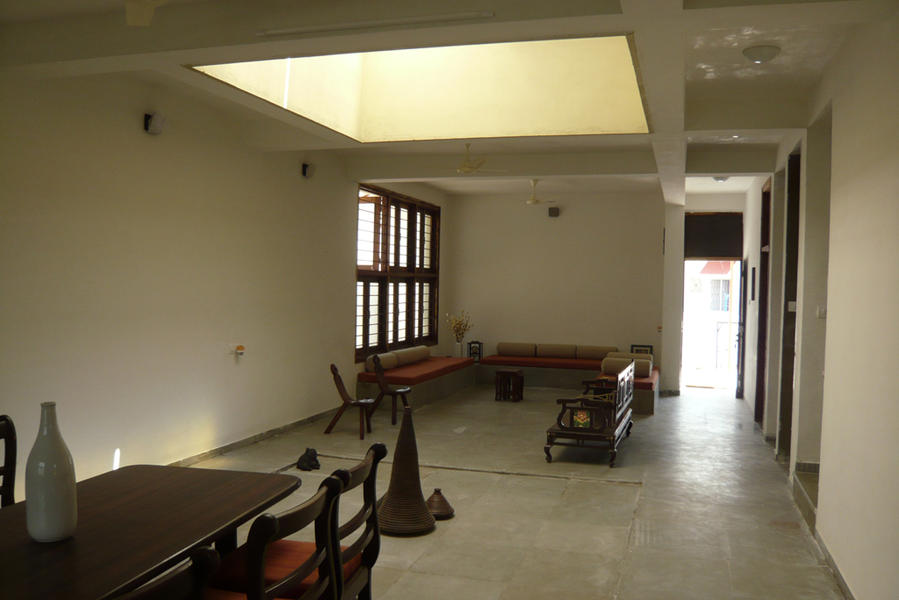
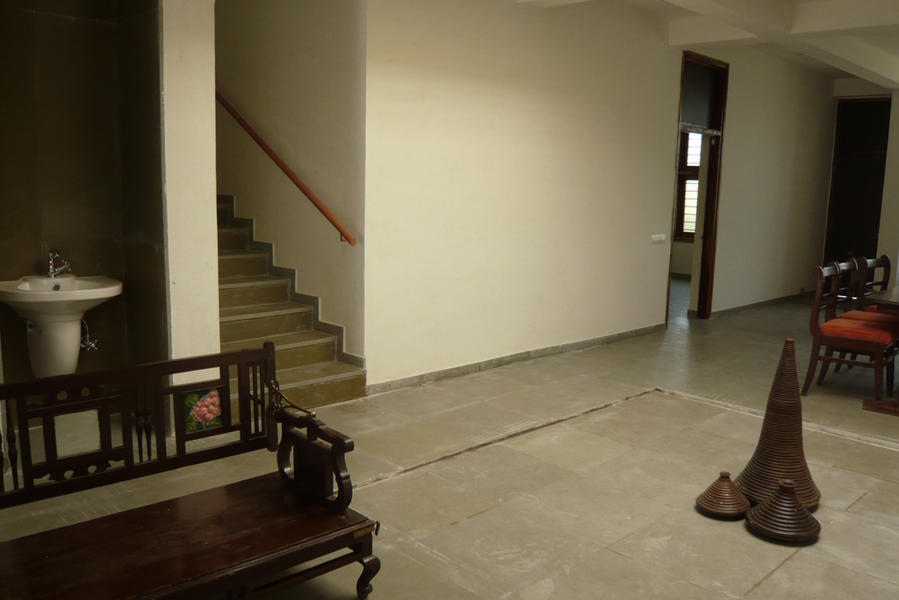
Two heavy cubes, connected by a bridge and sheltered by steel supported roof shades, house four bedrooms, kitchen, dining and gathering spaces that open onto a deep verandah and extend into a long garden outside.
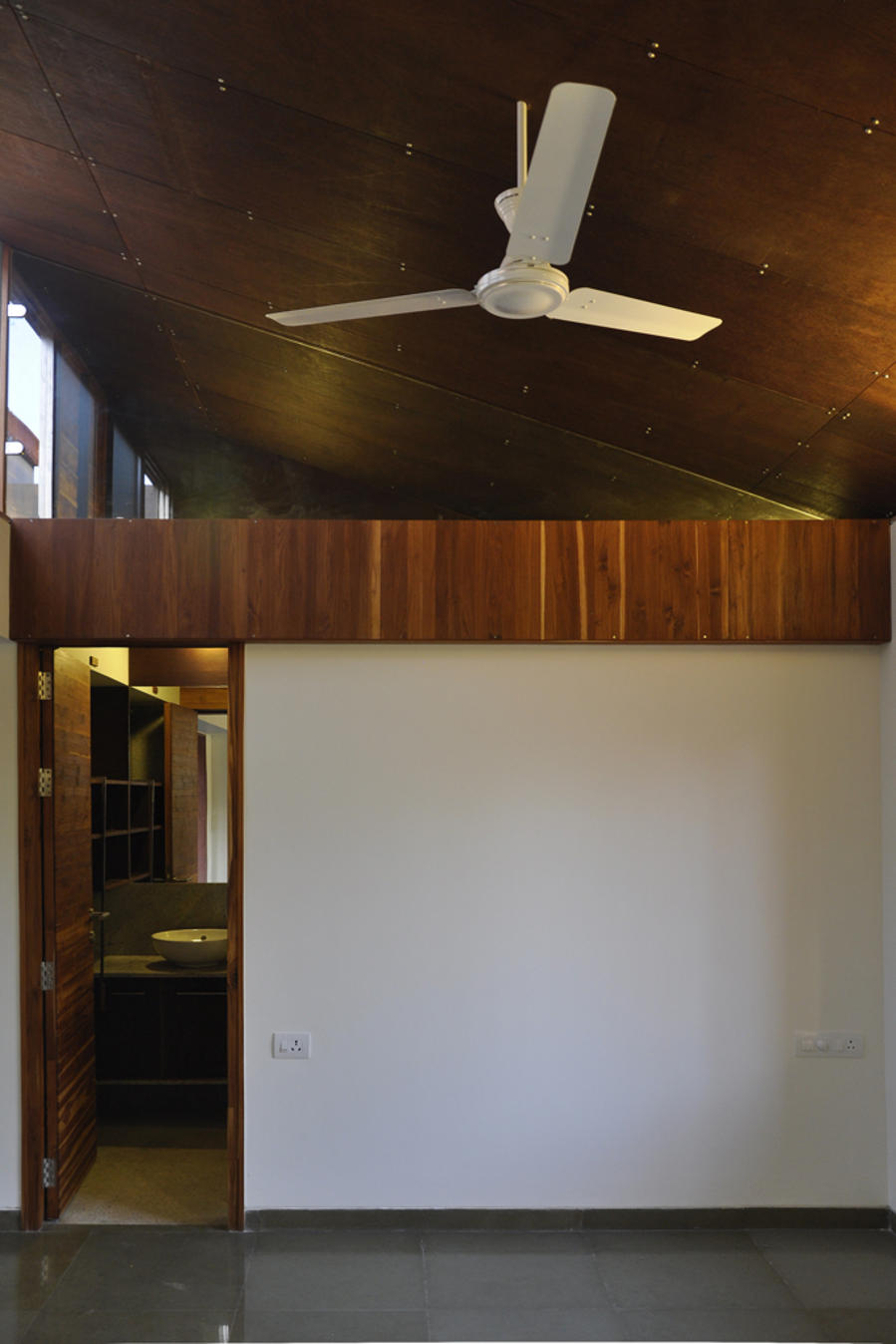
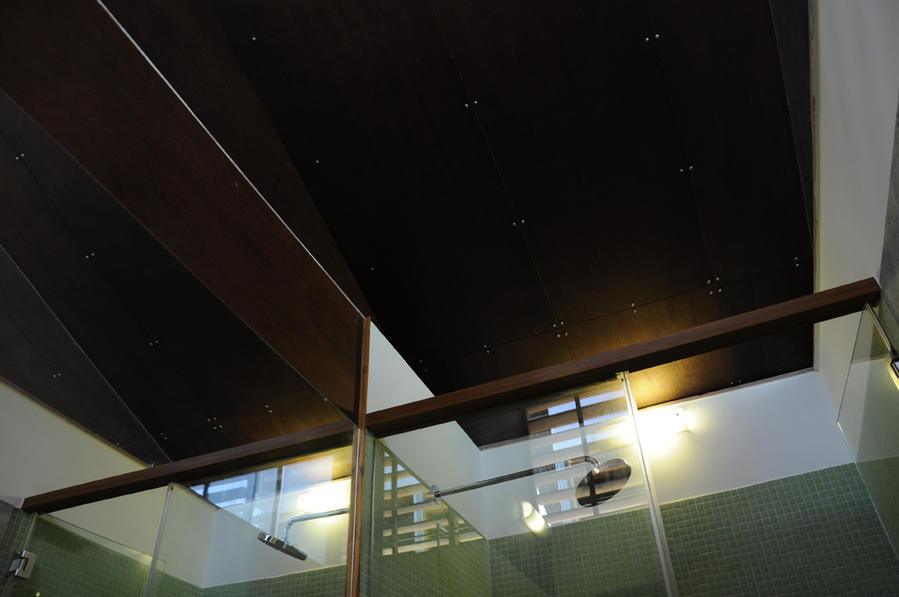
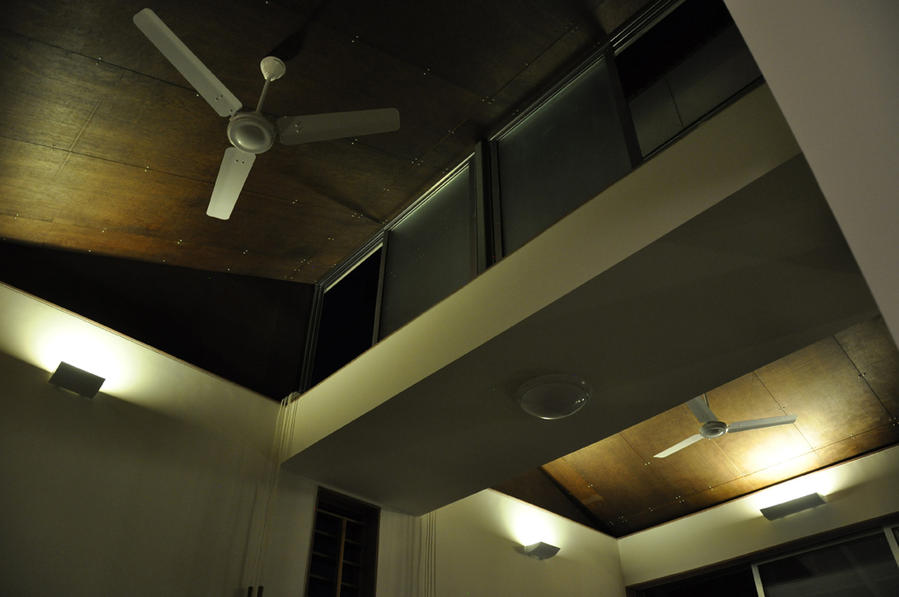
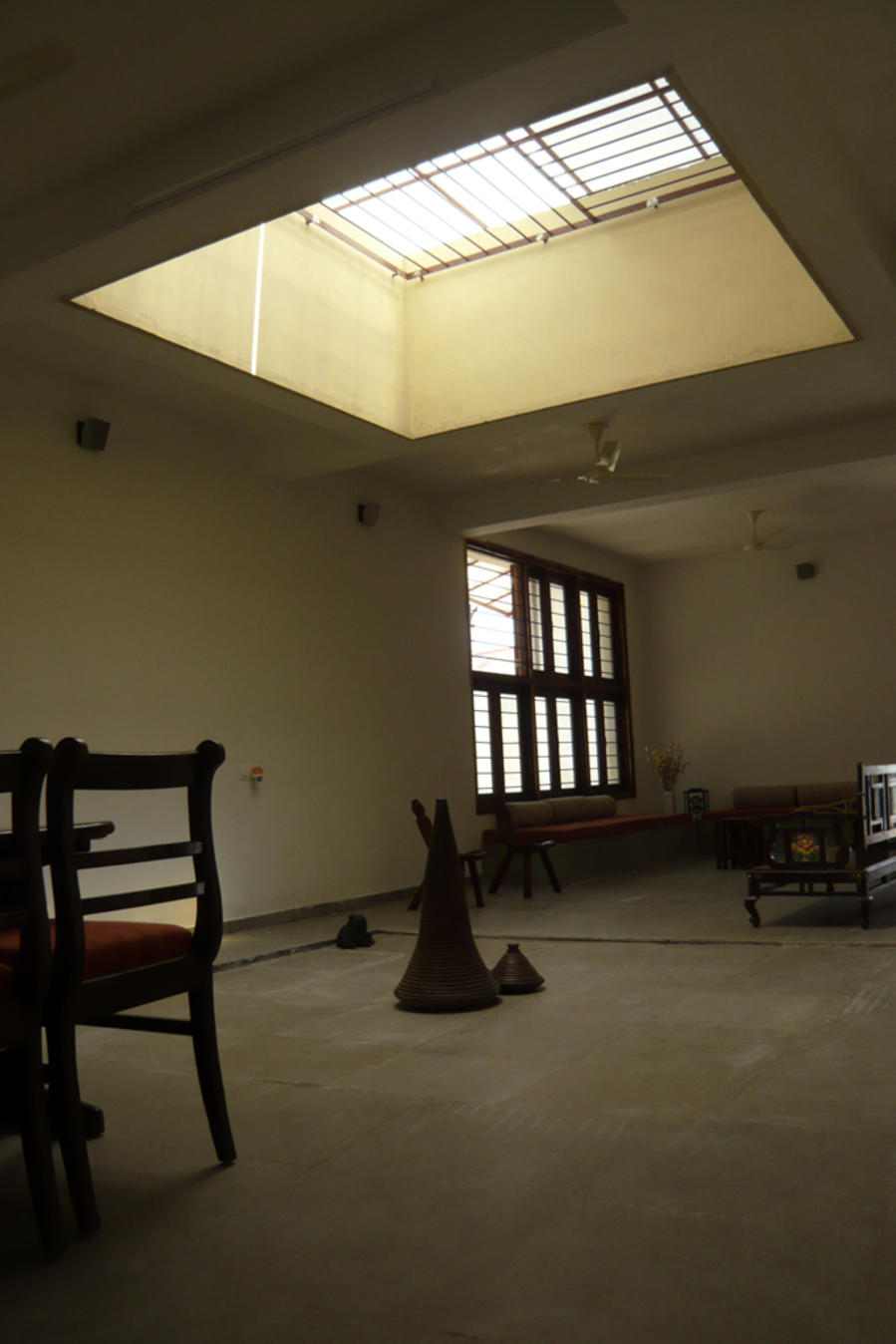
The pitched roof is pulled apart at the ridge to allow light in, and hot air out, while its double layered structure uses the ventilated air space between two surfaces to mediate the sun's heat. Openings that cut through the length of the building allow air to pass through the ground floor and rise to release from first floor spaces.
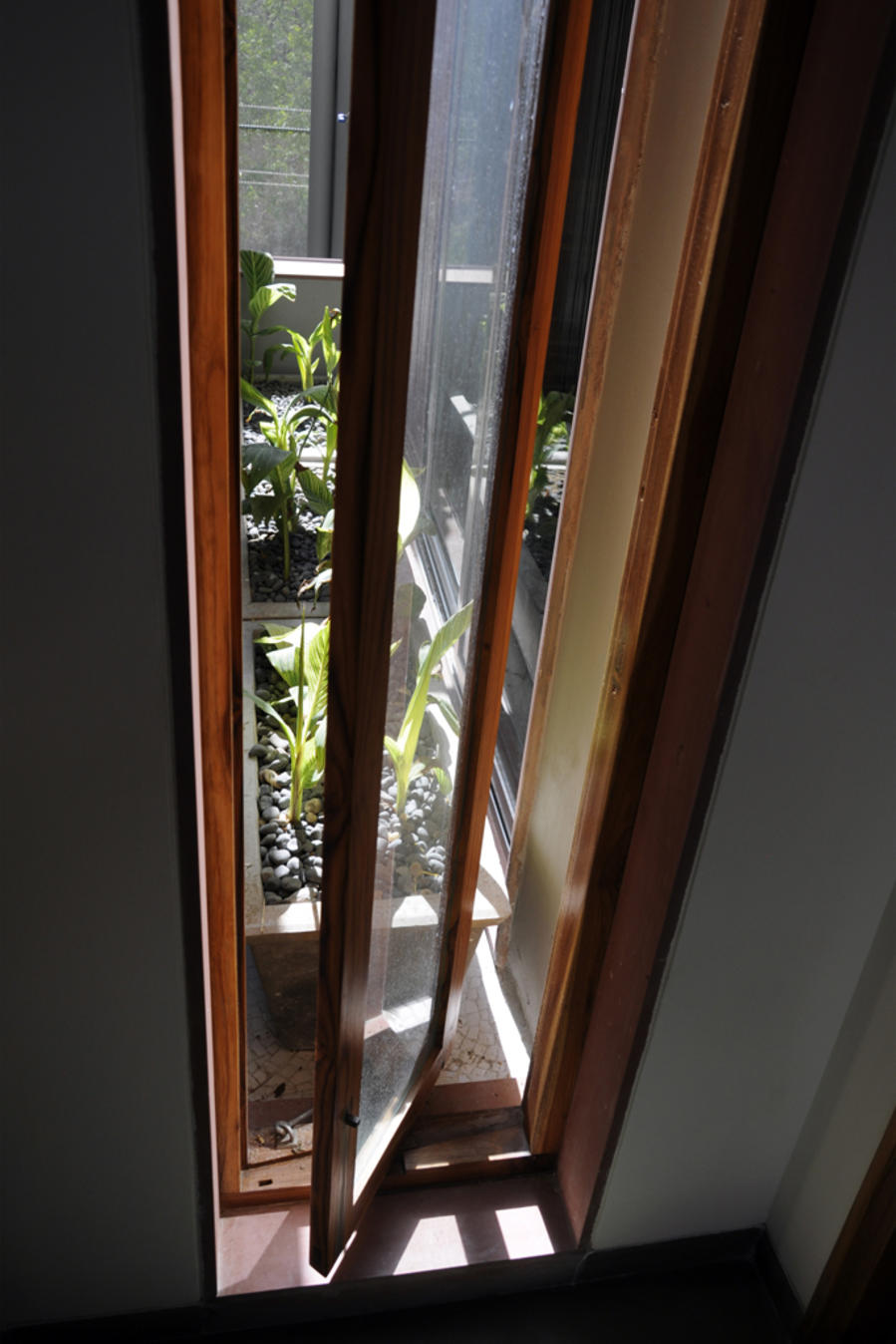
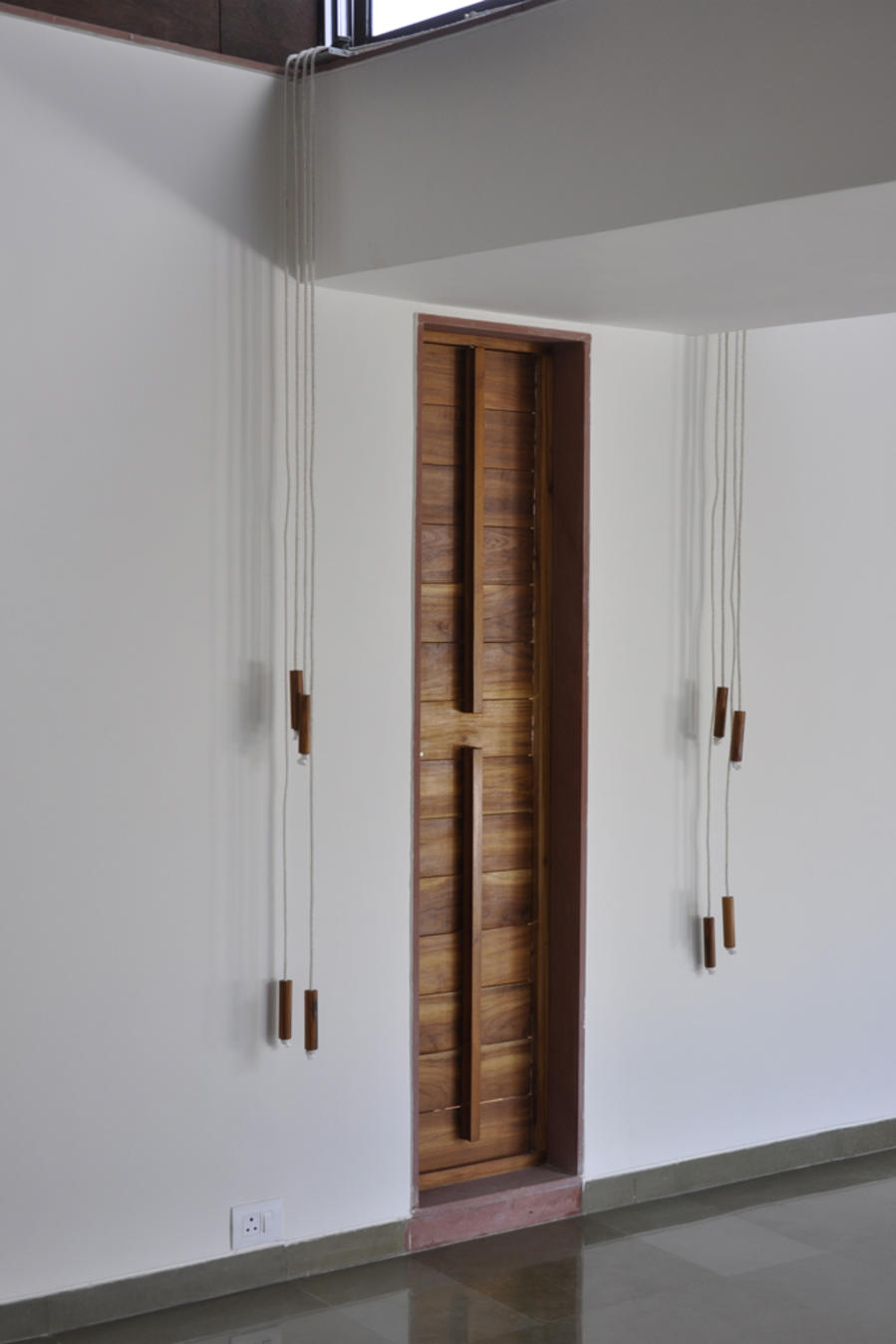
Inside, pivoted glass frames sit canted so that they could be cut from one piece of wood, a fabricated pulley system with silken threads opens clerestory windows, and marble door panels let diffuse light into a puja space adorned by the light sprinkled from hammered brass chhatri.
Ahmedabad, Gujarat 2010
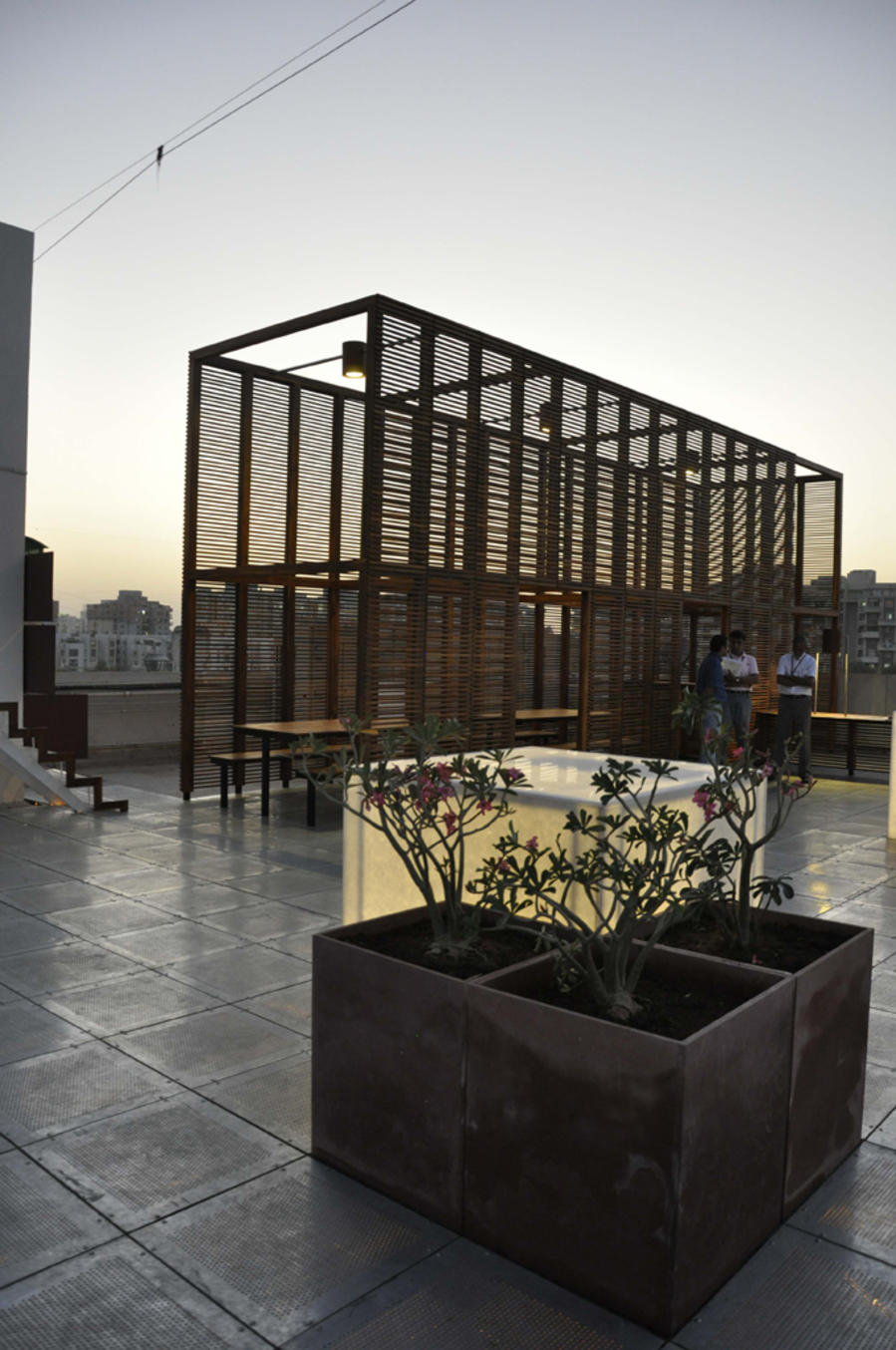
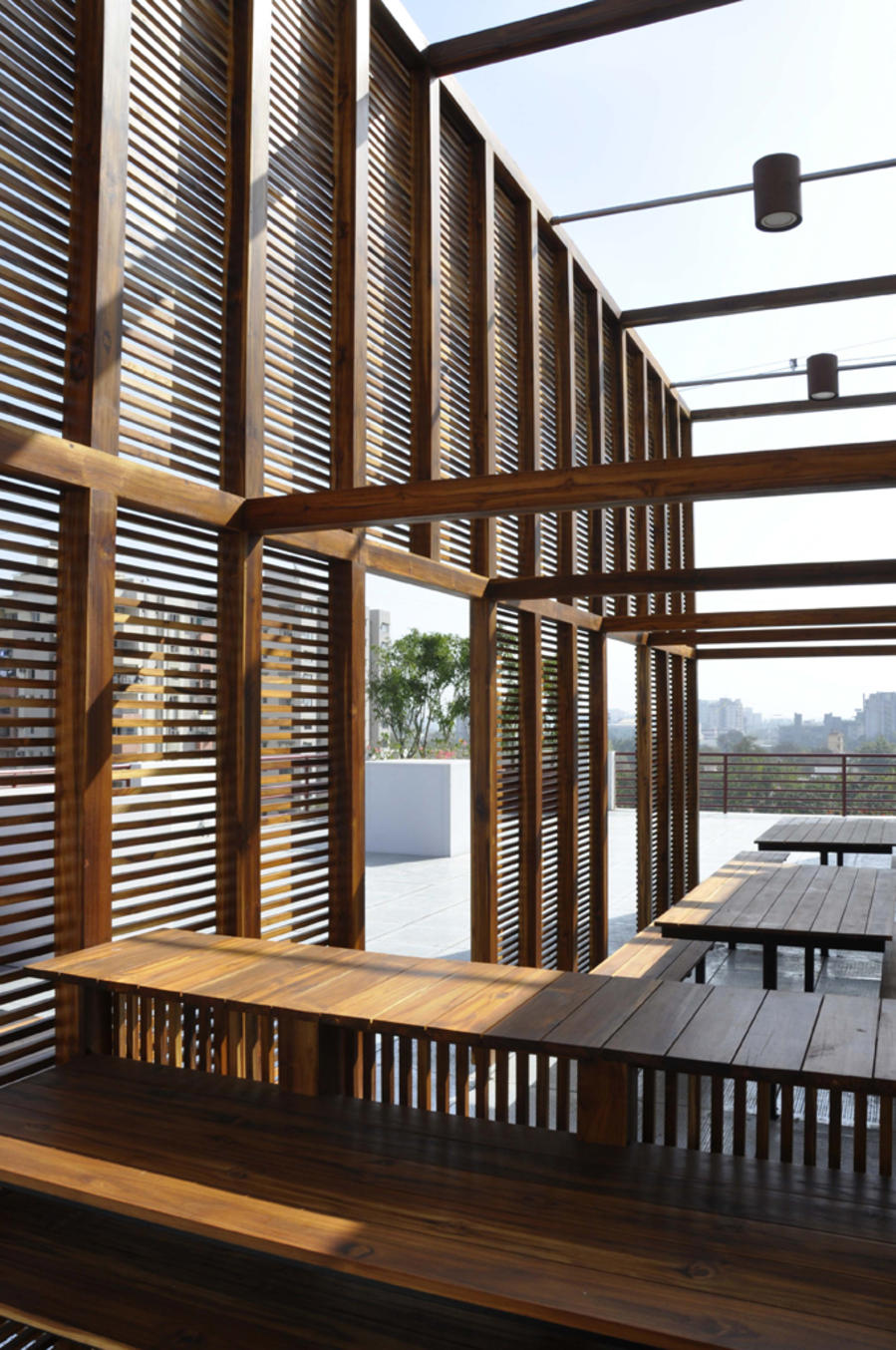
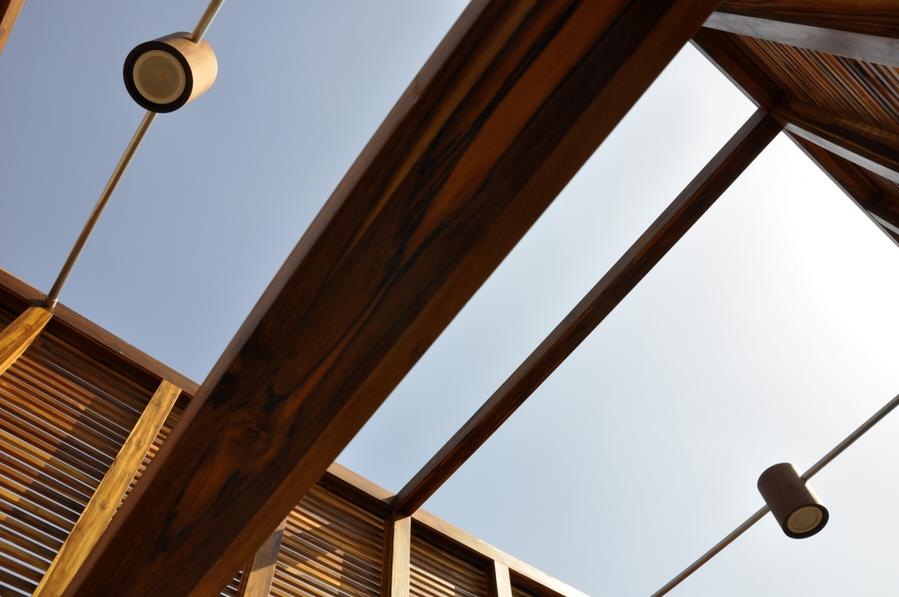
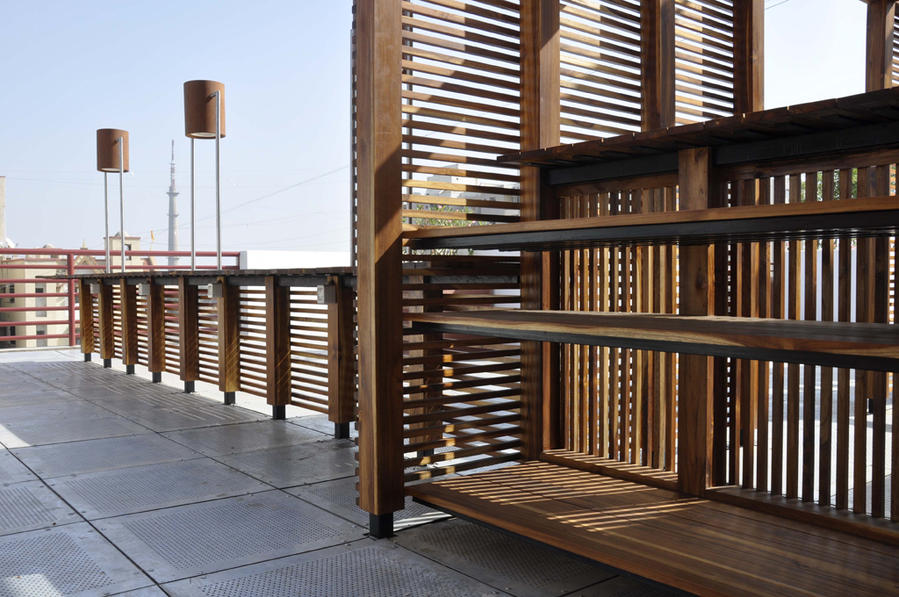
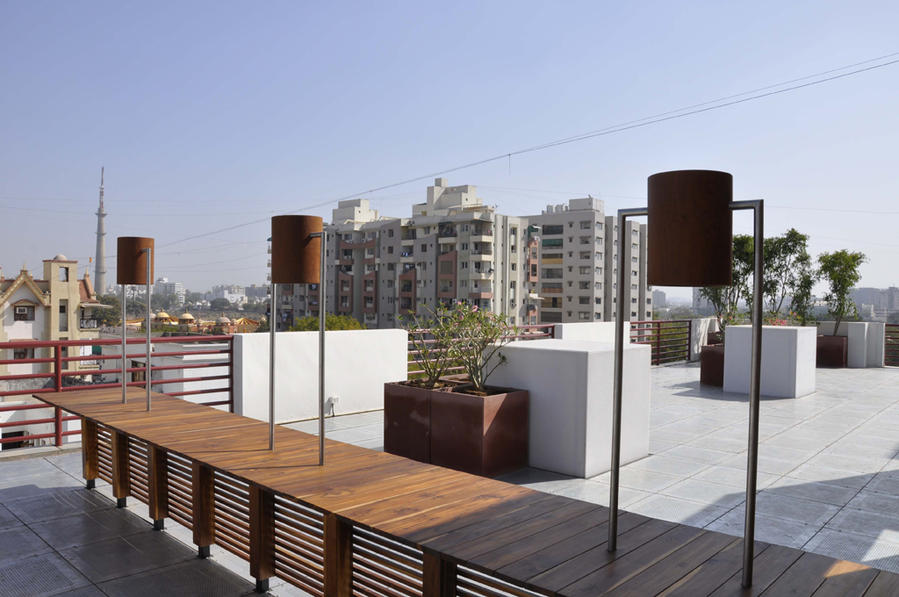
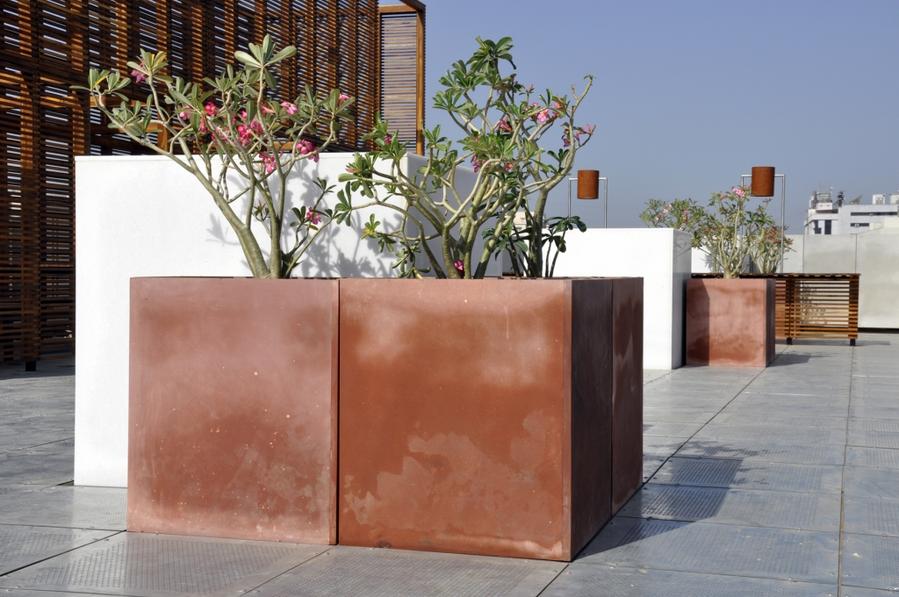
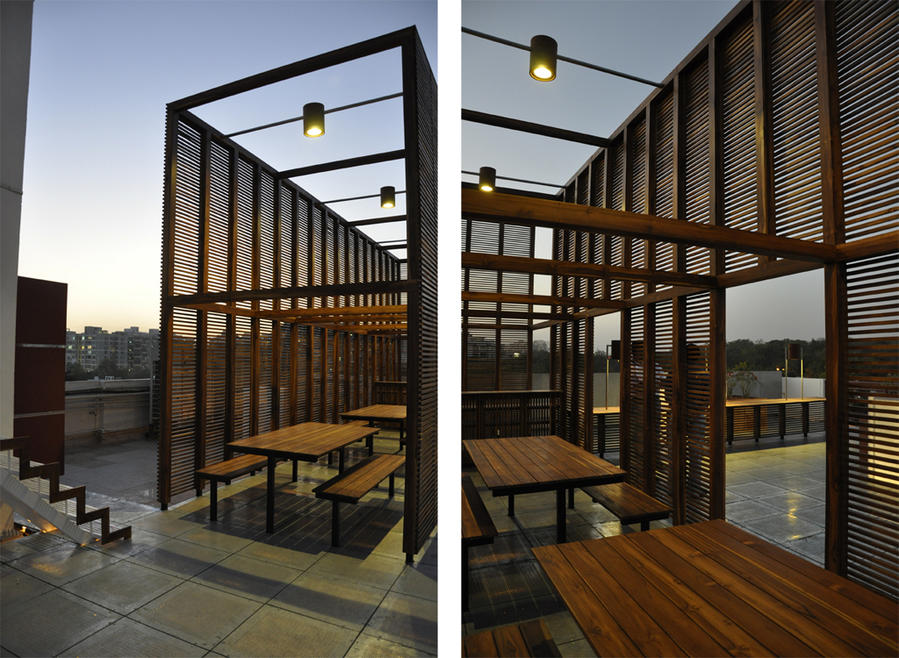
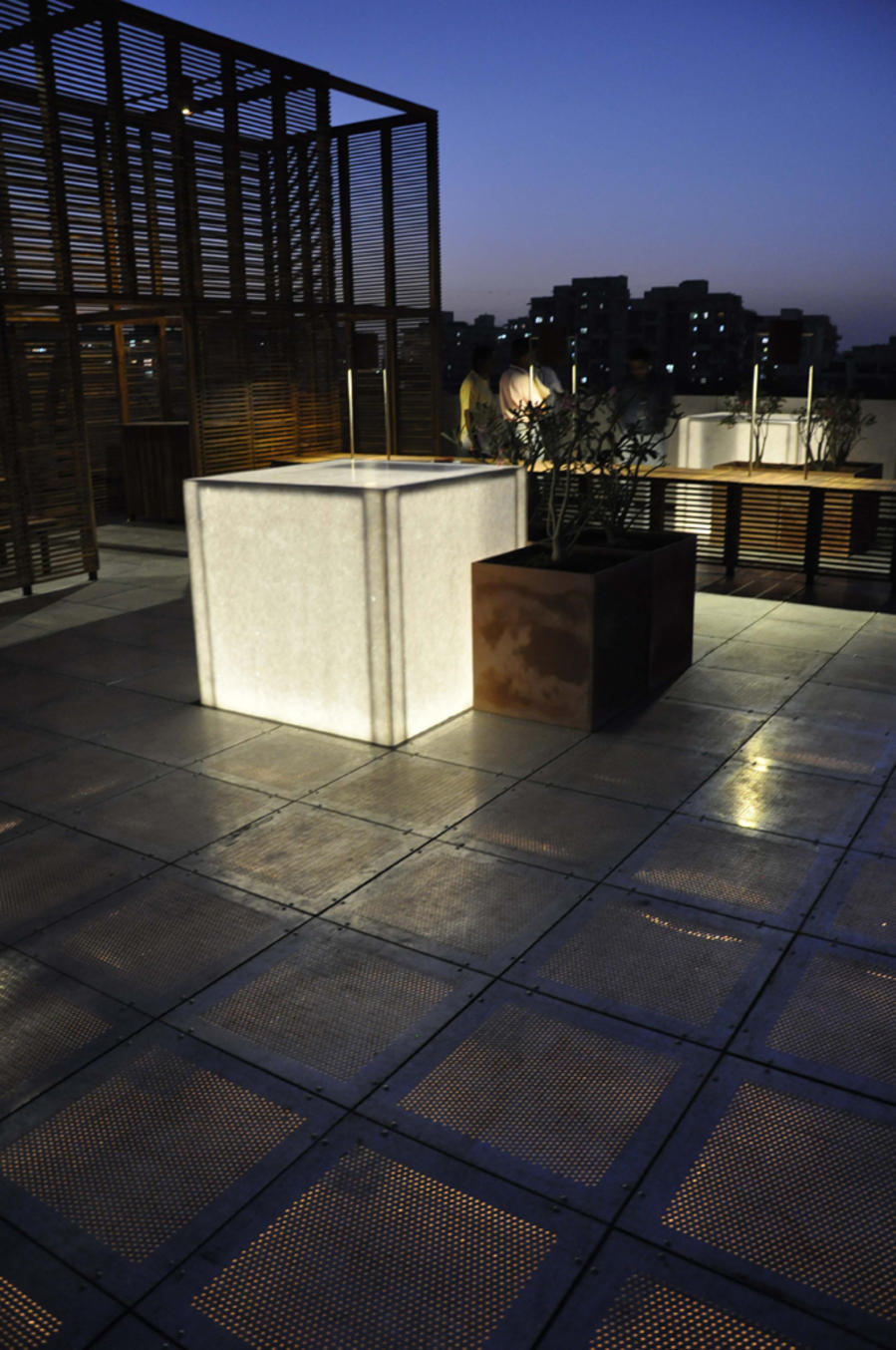
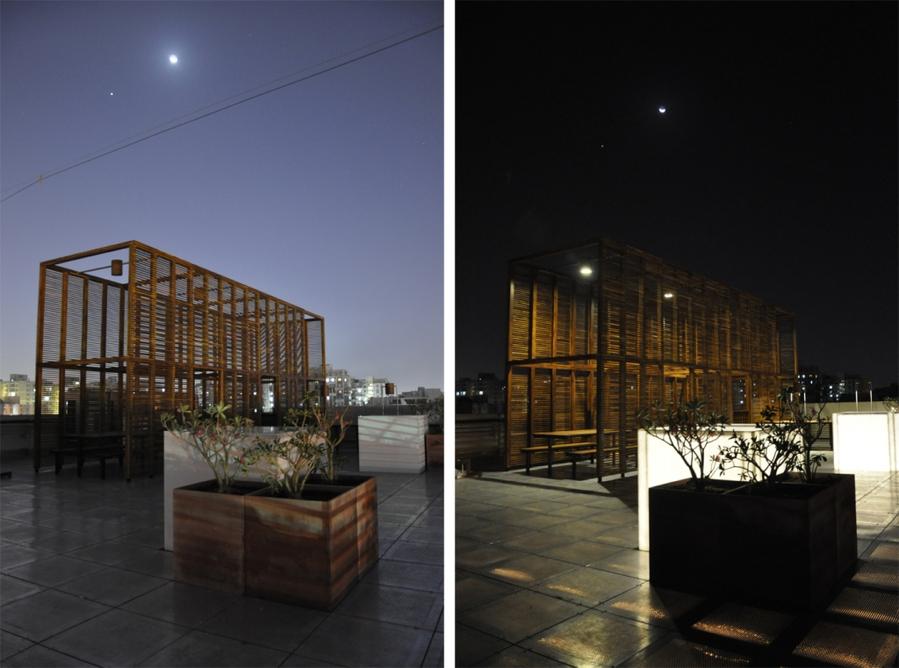
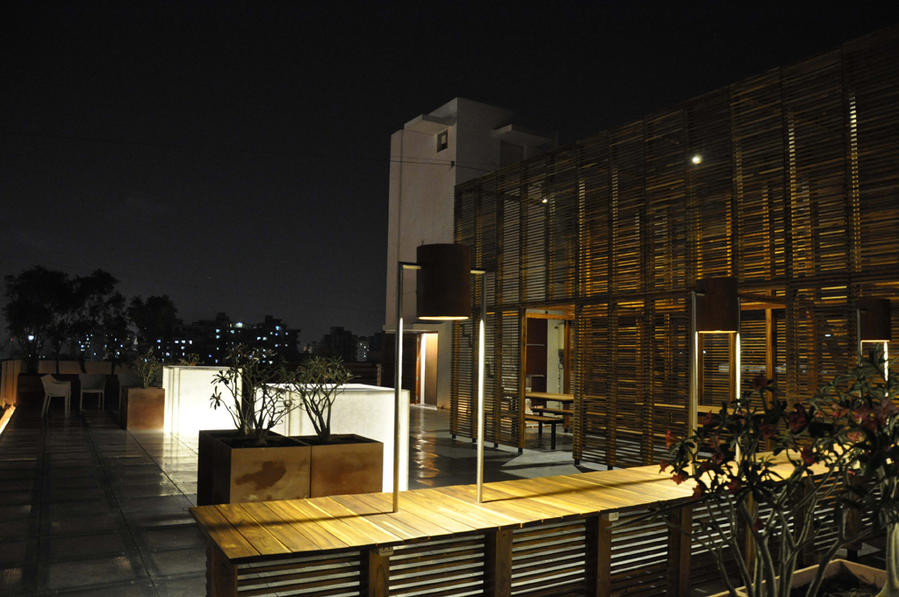
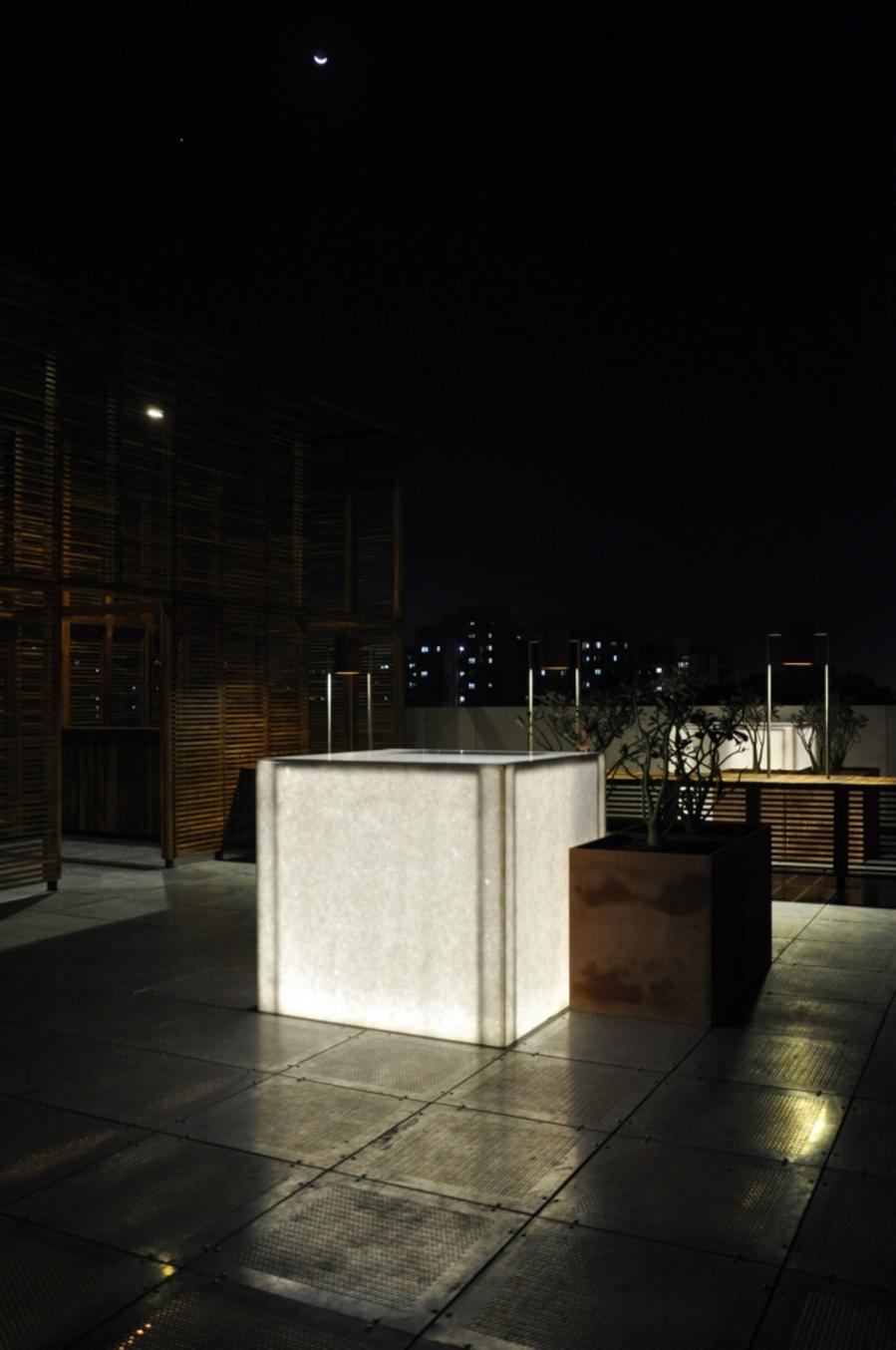
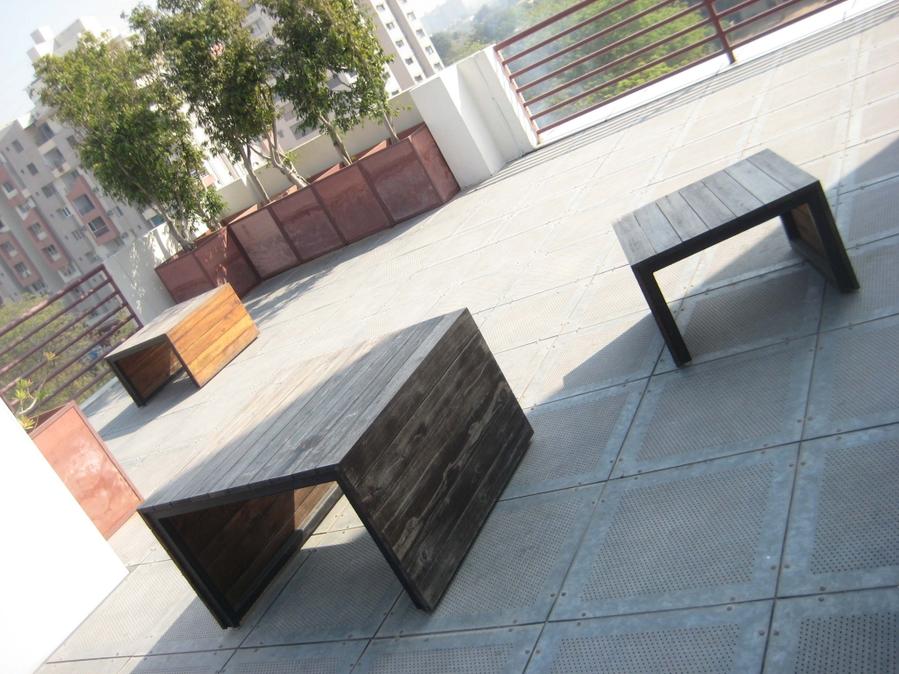
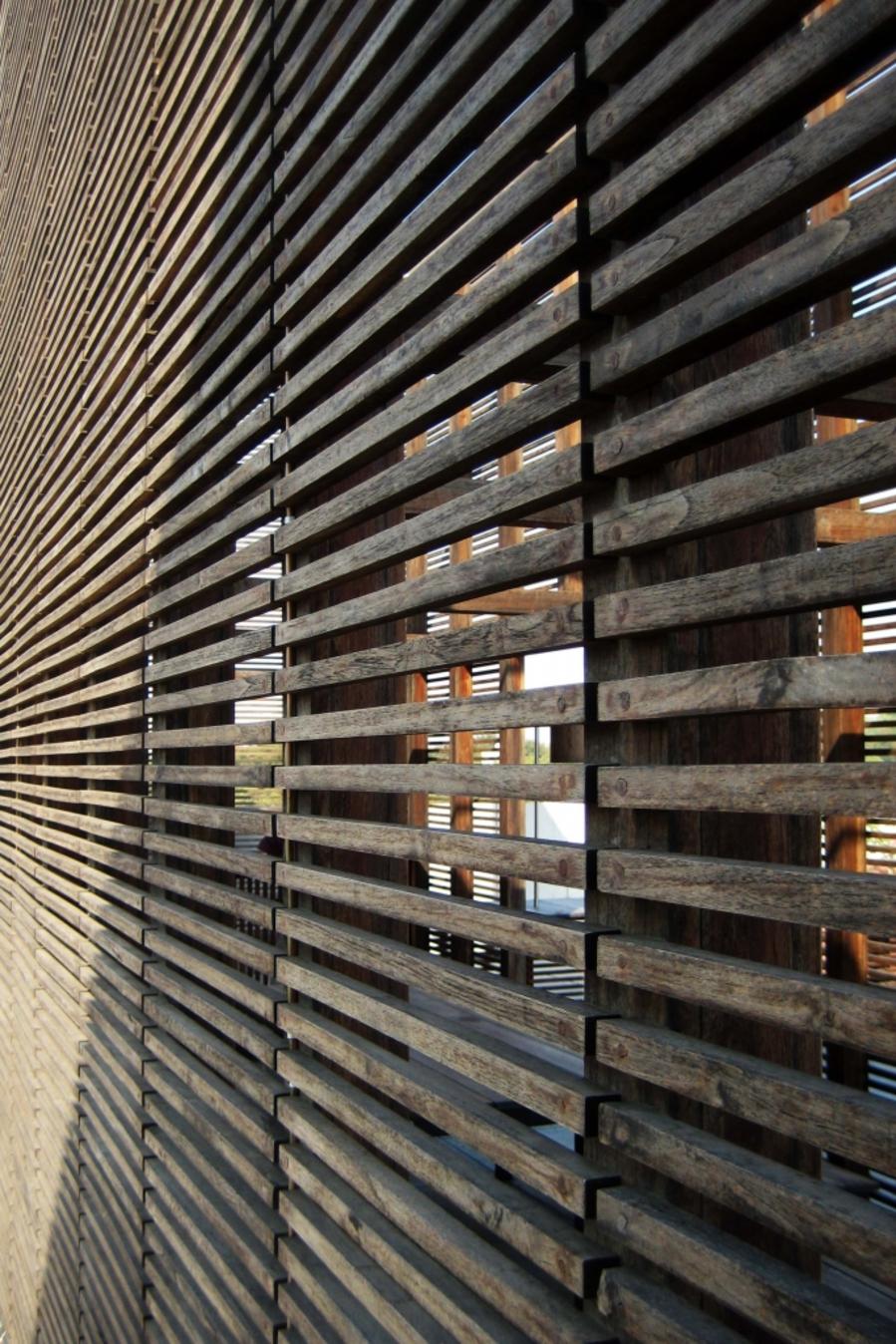
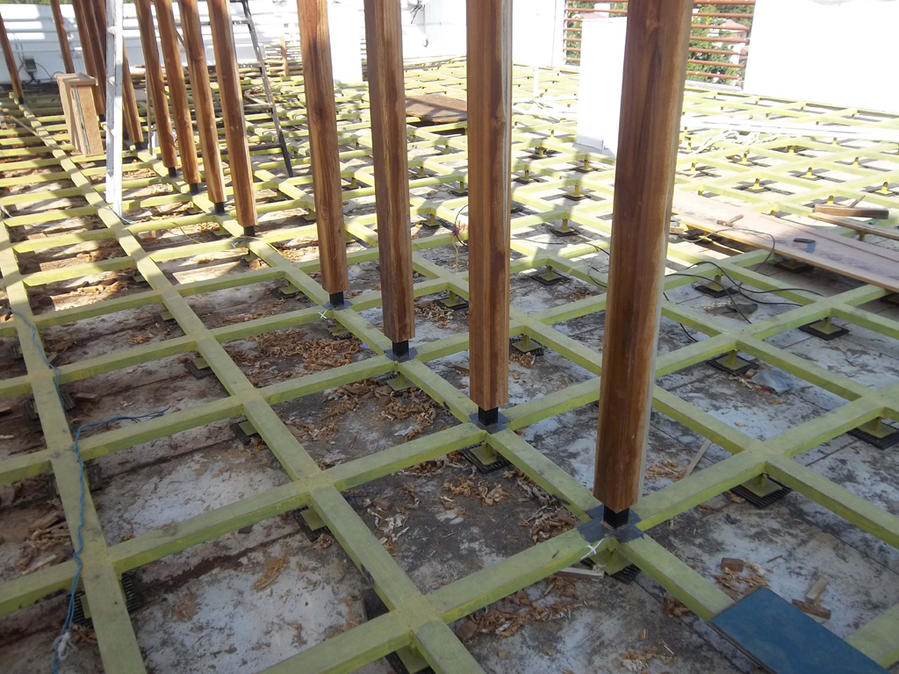
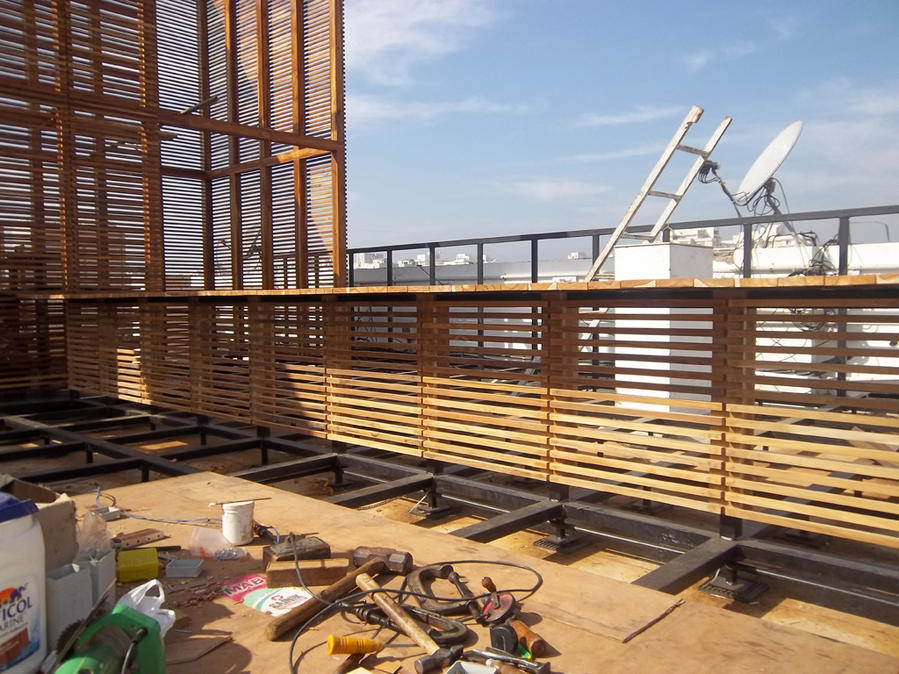
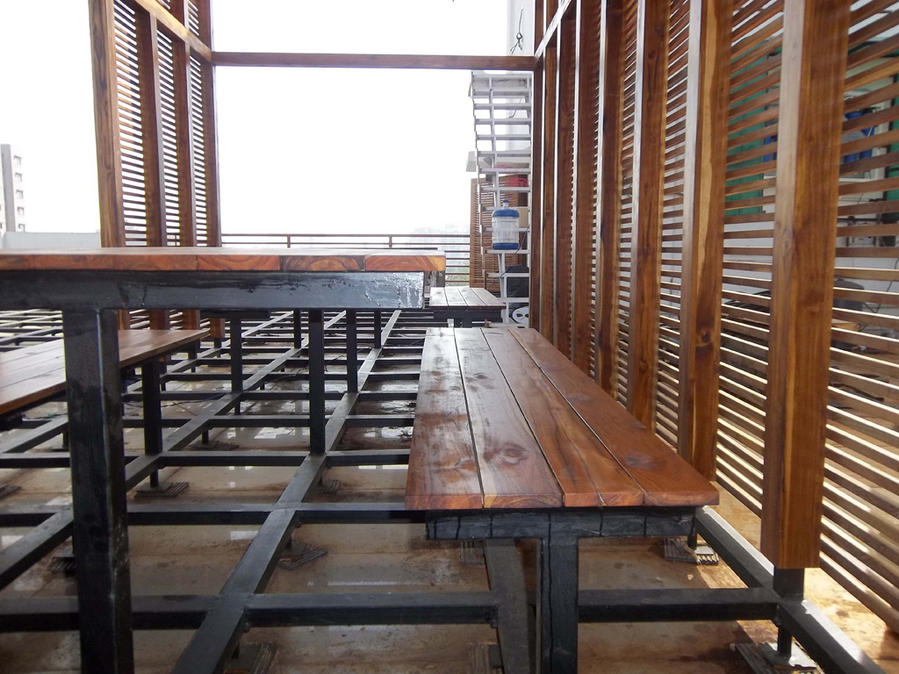
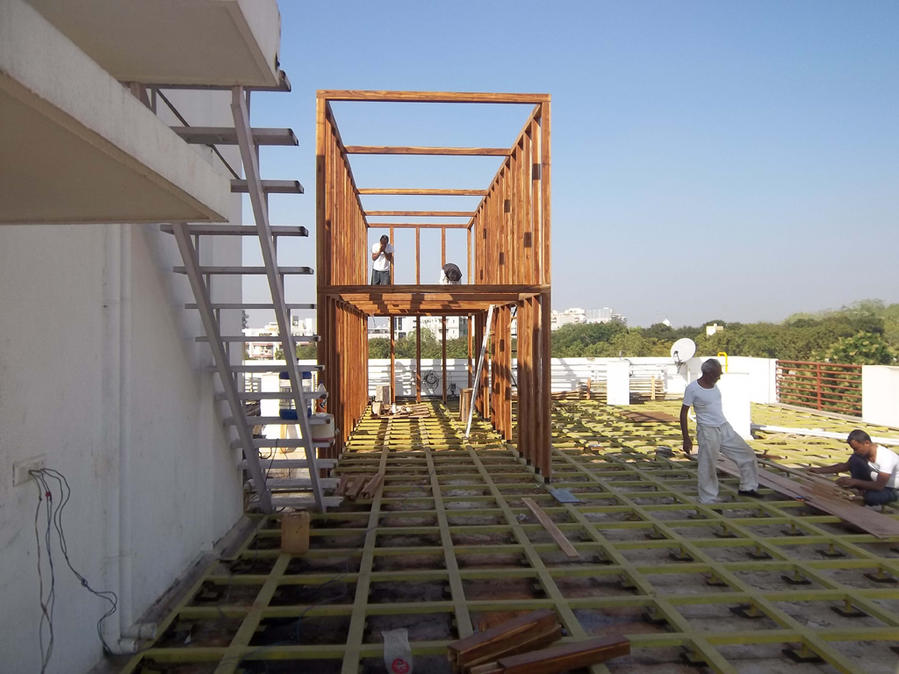
This installation uses a 2' x 2' ms grid to structure every element of this gathering space. Out of it grow benches, tables, bar, lights, serving counter and shelter. Teakwood strips create the shade, surfaces and seats, while white marble cubes, directed lighting and a glowing floor subtly light the place. The floor is elevated 6 inches and clad with perforated galvanized iron sheets, providing shade to the roof below and a well ventilated, quick-cooling surface for night time events.
The project was also an experiment in remote supervision, designed to detail and conveyed through skype, photos and phone calls, constructed while we traveled.
Sadara, Gujarat 2010
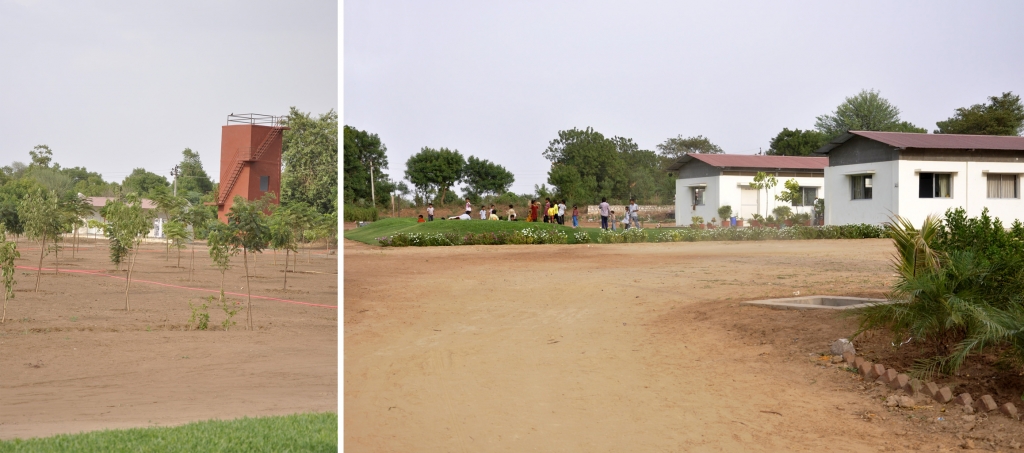
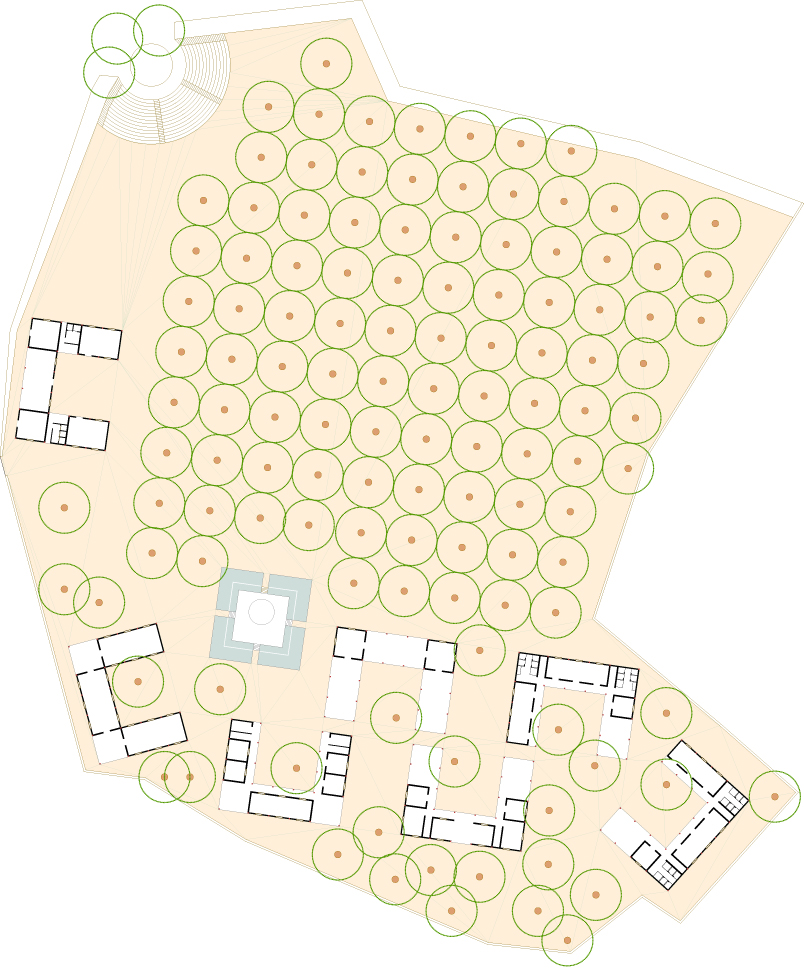
This building is the first installment in a community center for a village near Ahmedabad. The campus sits near the edge of the village, and is now home to a growing number of community programs such as khakhra making, tuition classes, music performances, and health camps. The module can be repeated in the future, alternating along an axis that runs at the edge of the planted orchard. Plans for its expansion include an old age home, ayurvedic, homeopathic and allopathic clinics, yoga and organic farming facilities.
Unjha, Gujarat 2007 - 2009
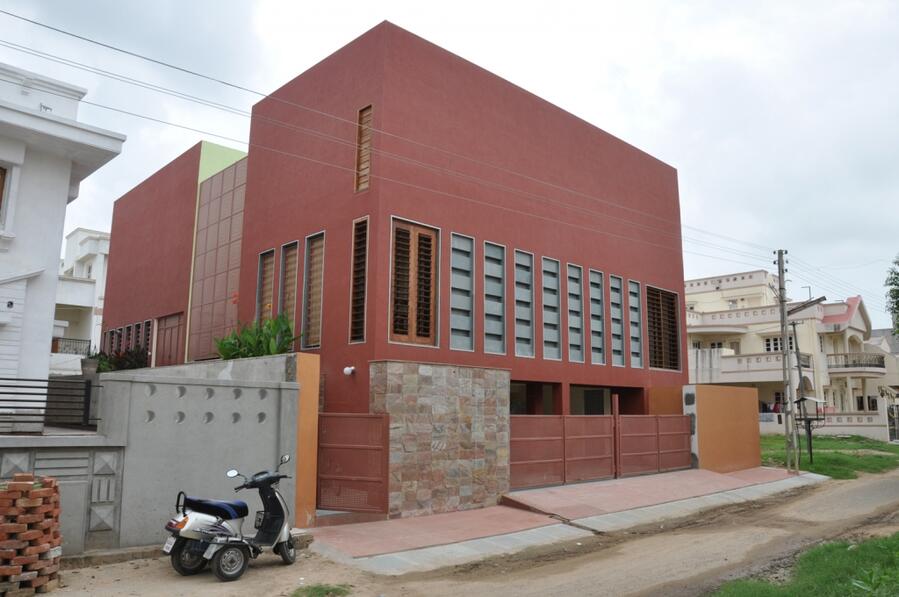
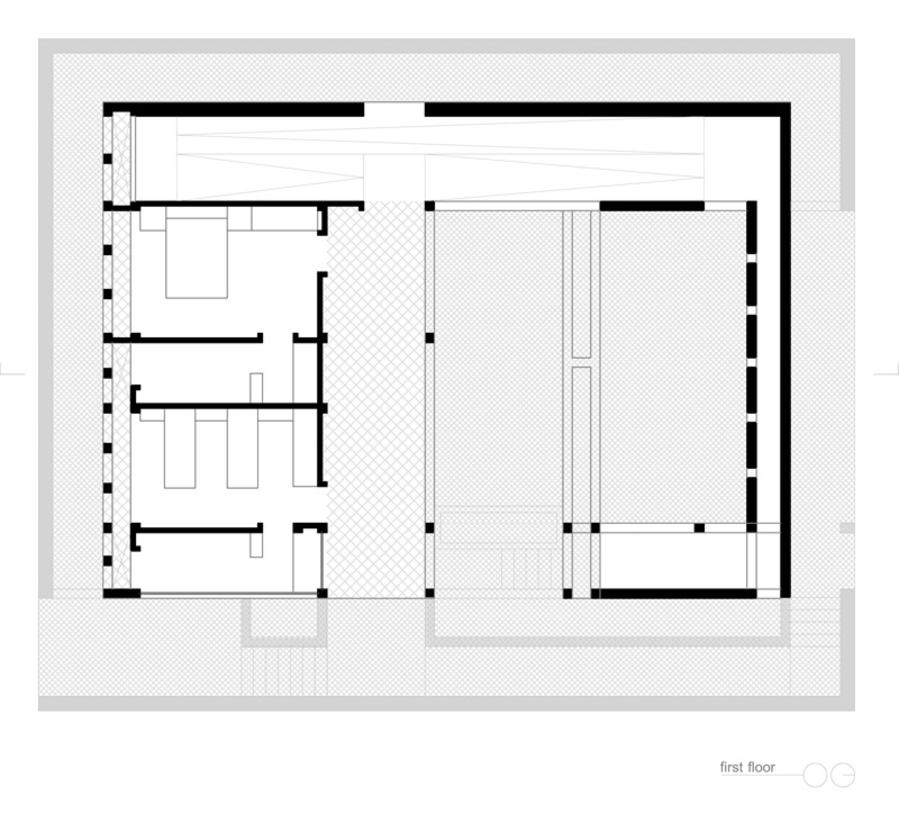
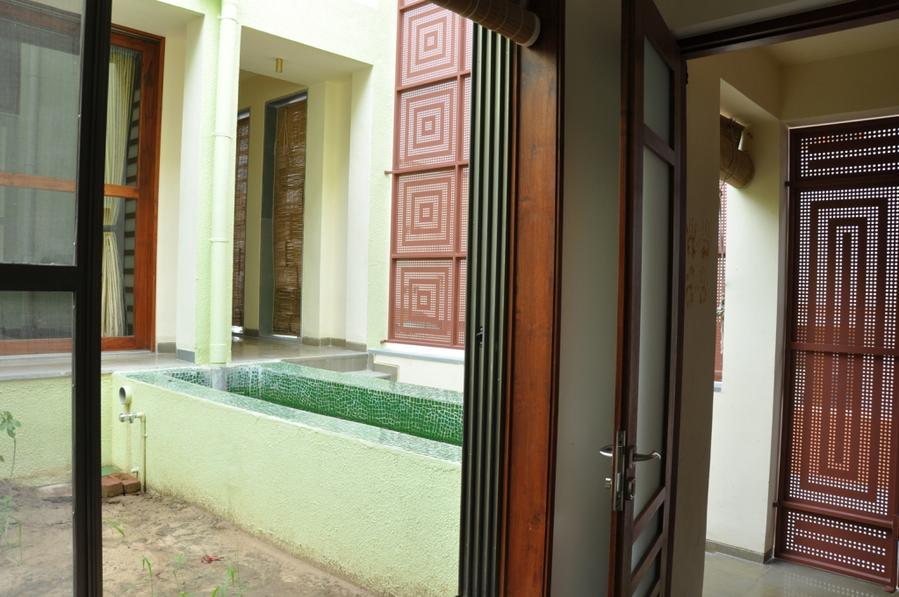
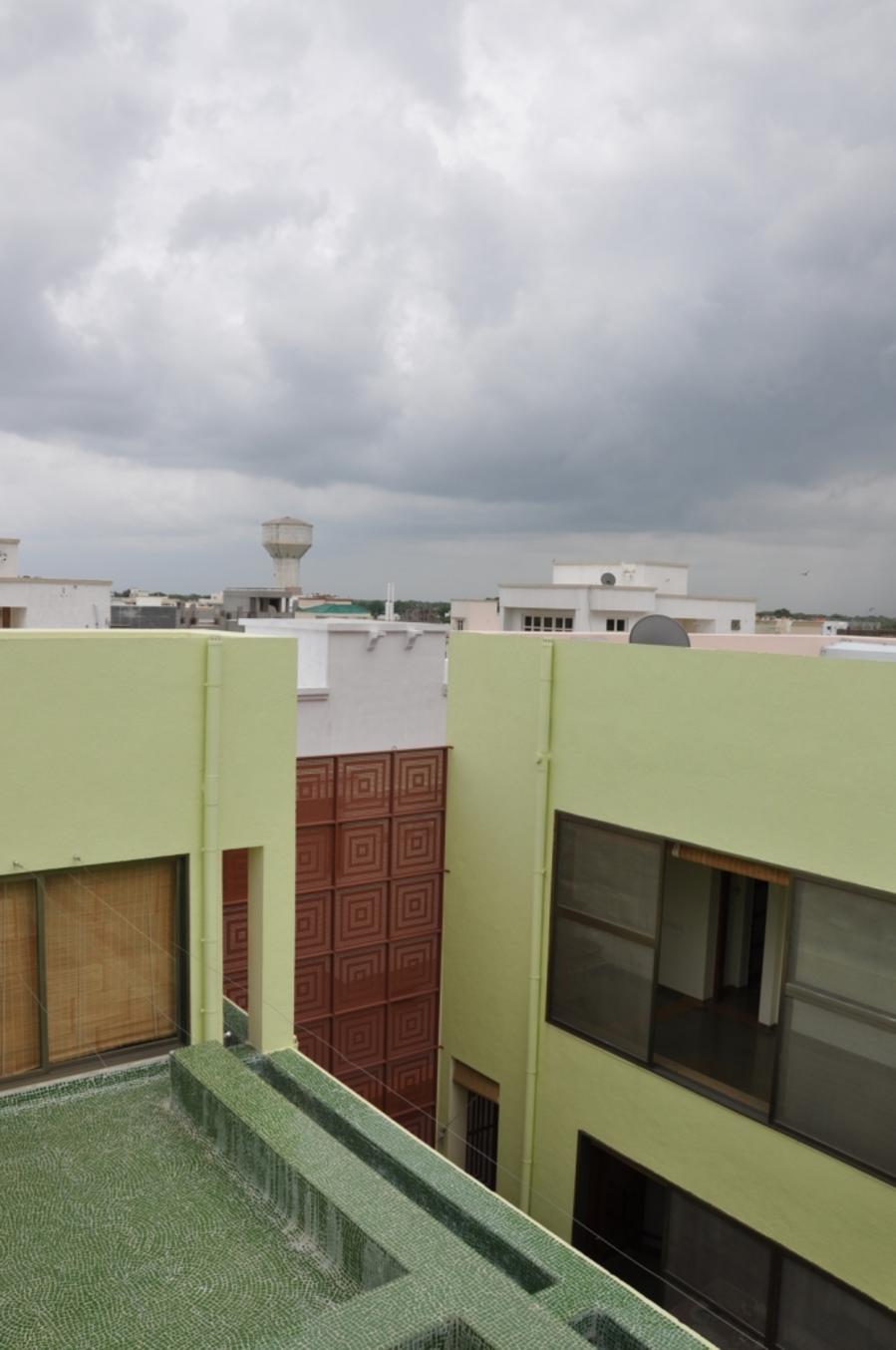
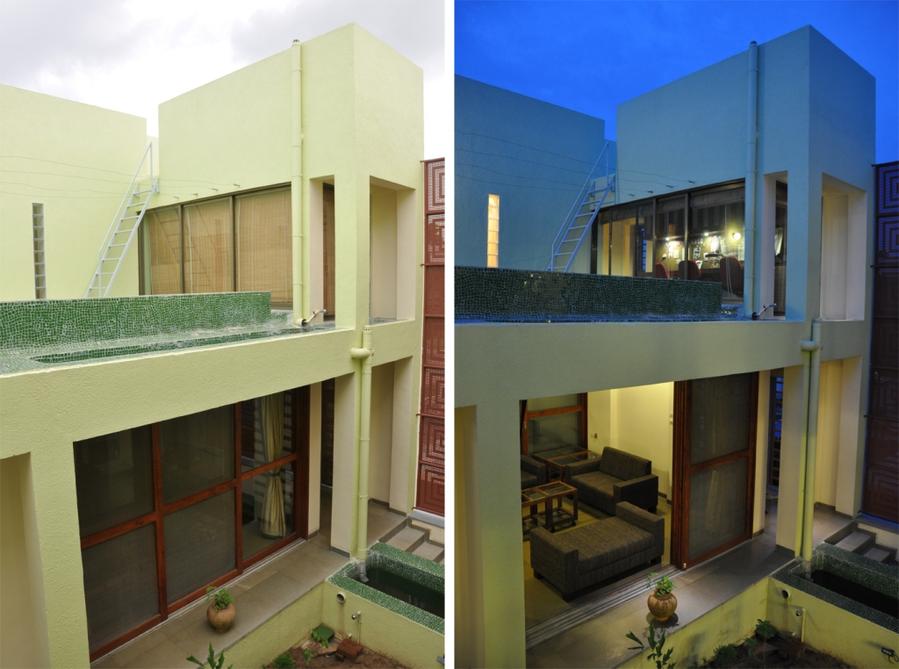
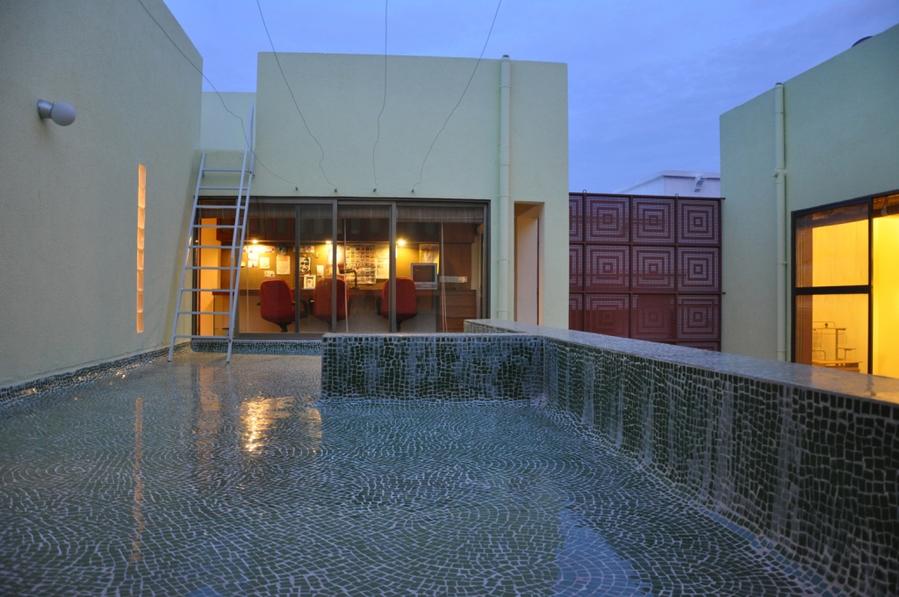
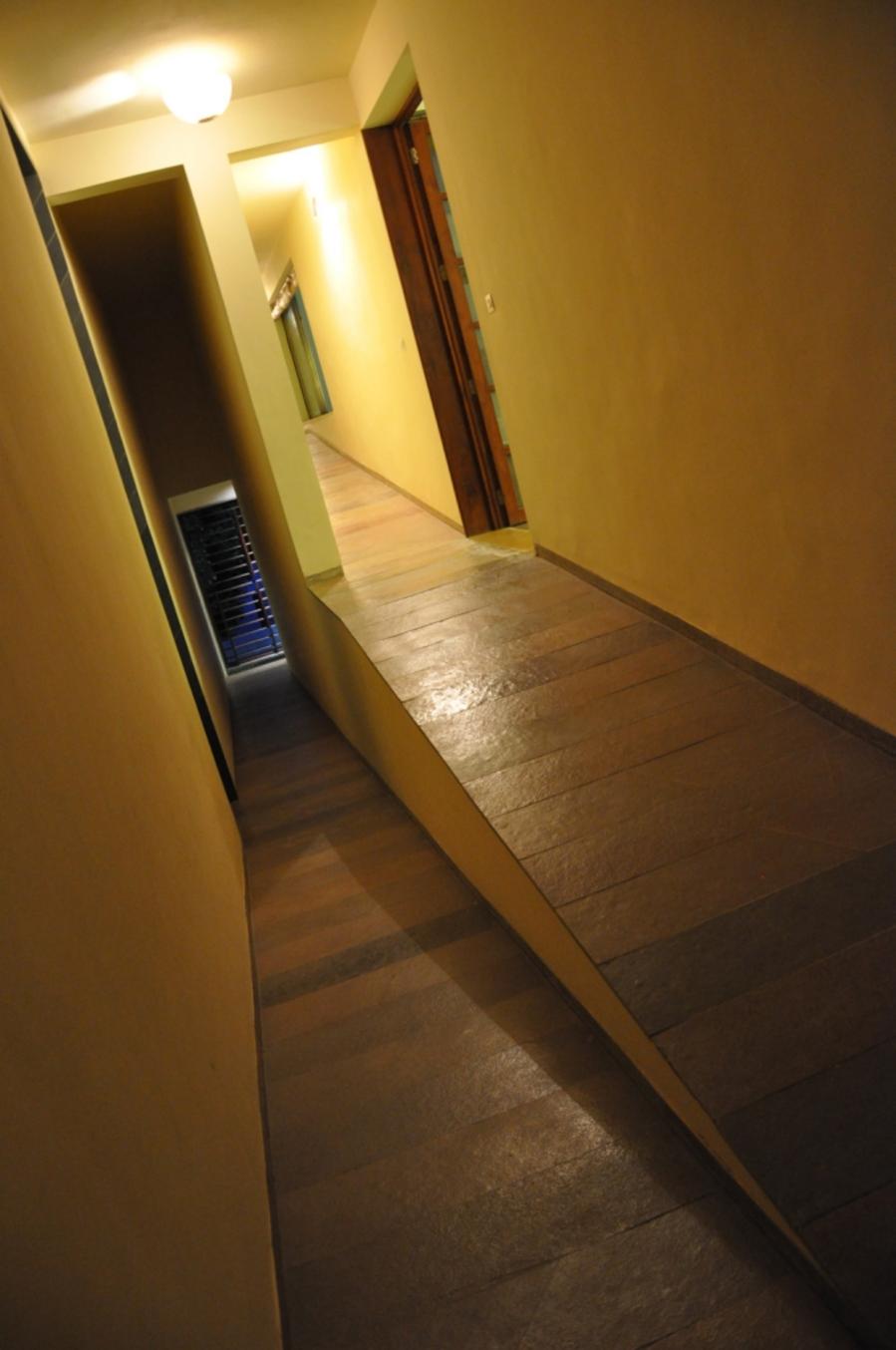
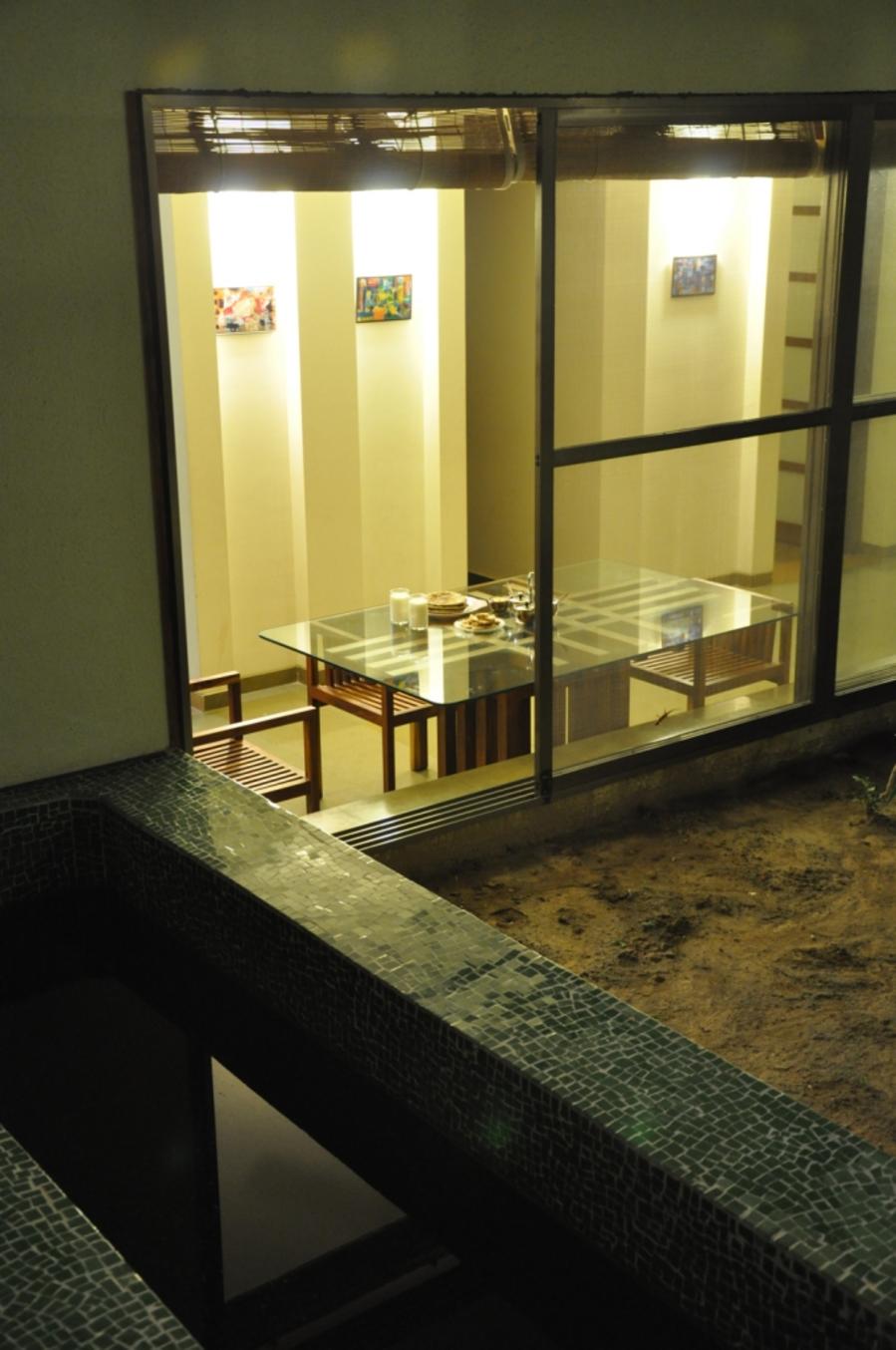
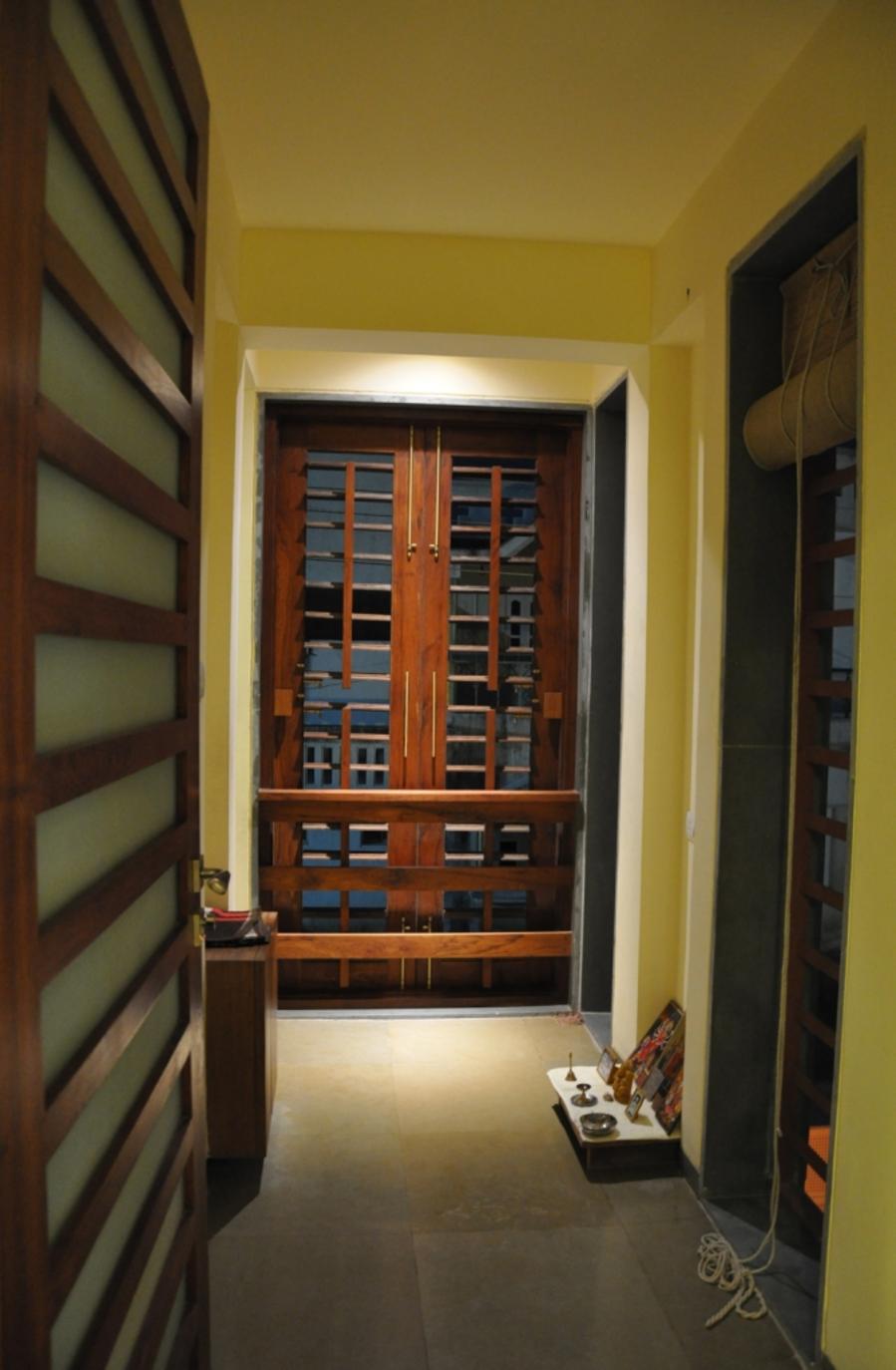
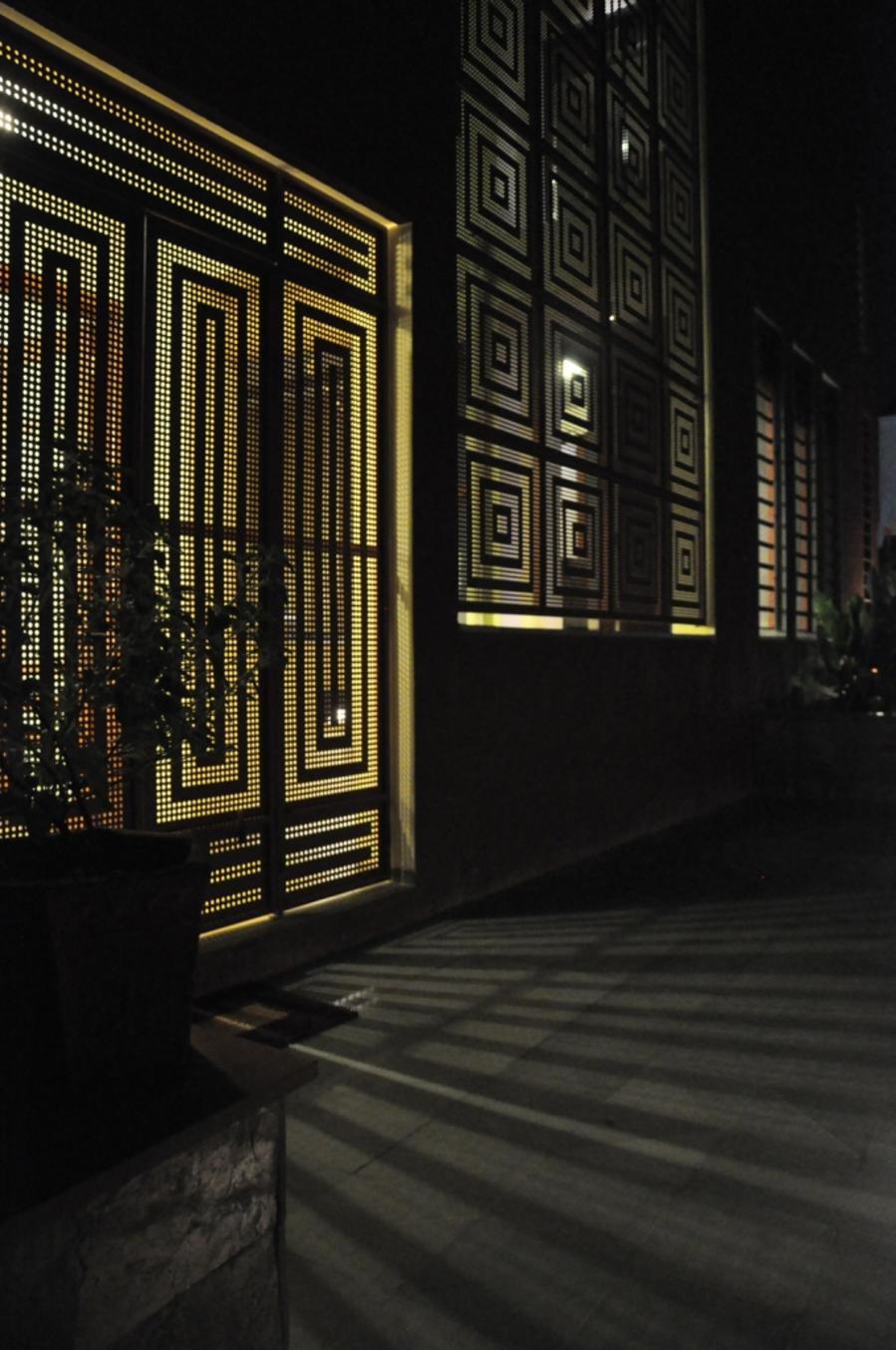
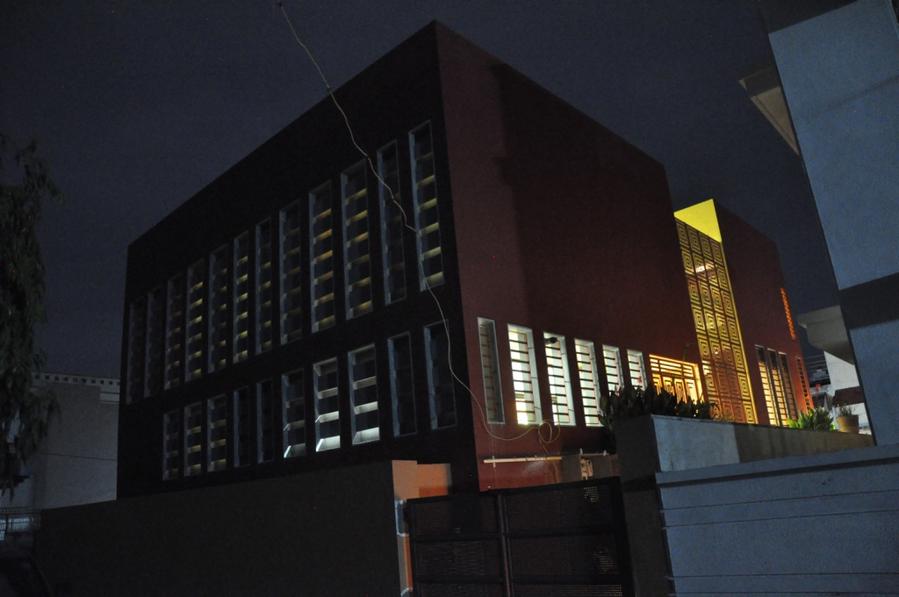
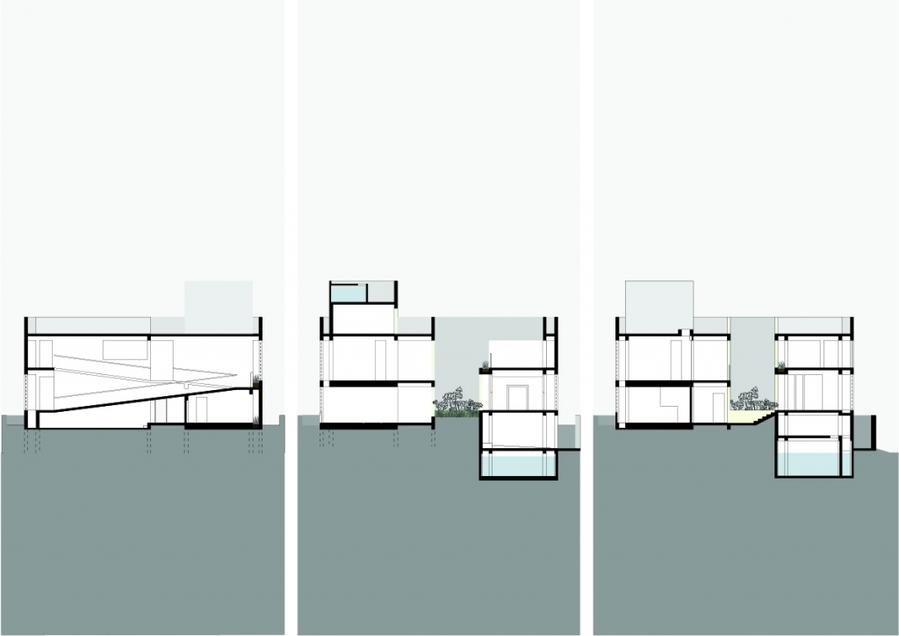
GHAR in Unjha is designed for a client who wanted a private, introspective home.
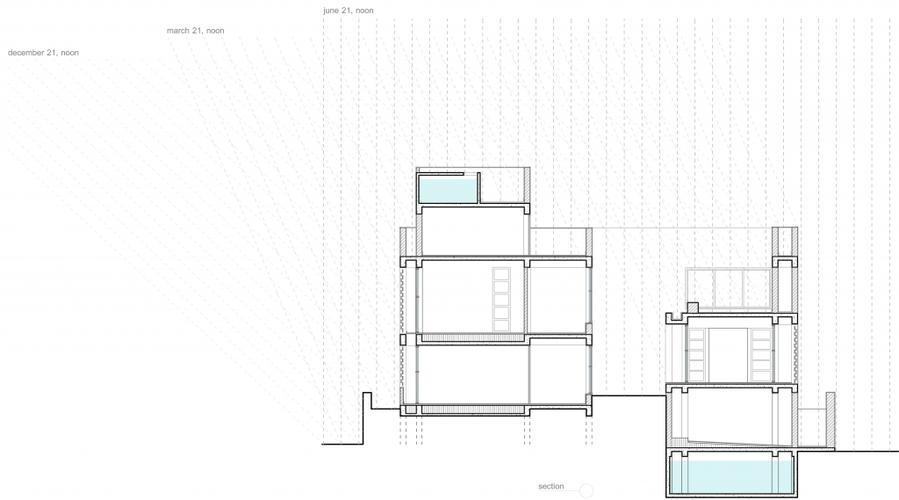
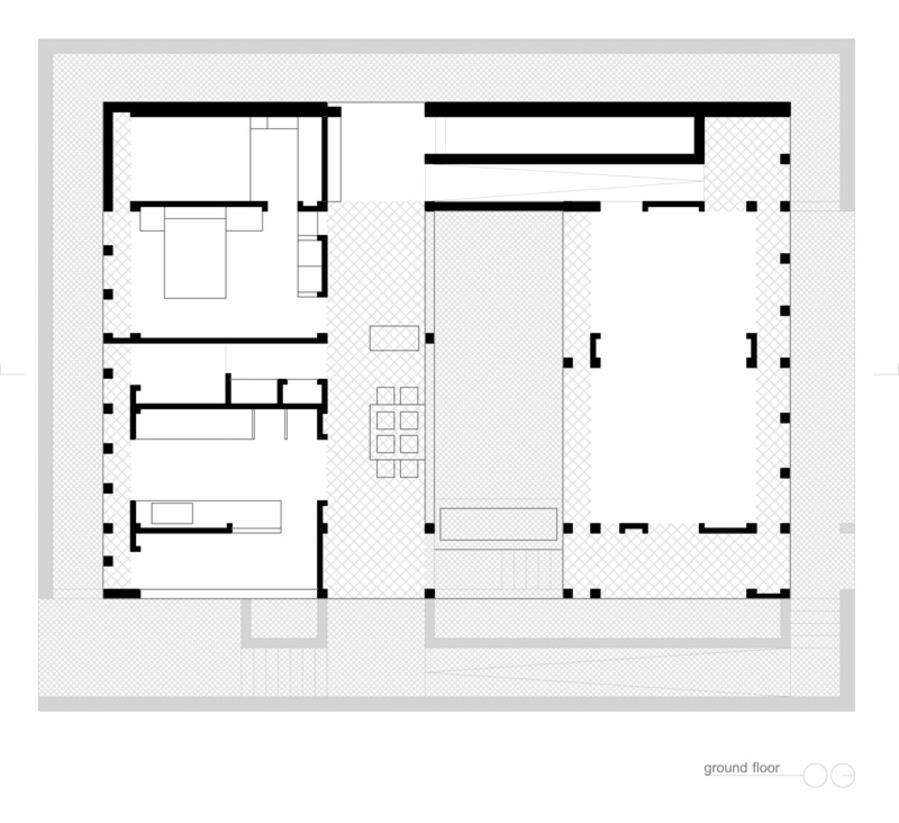
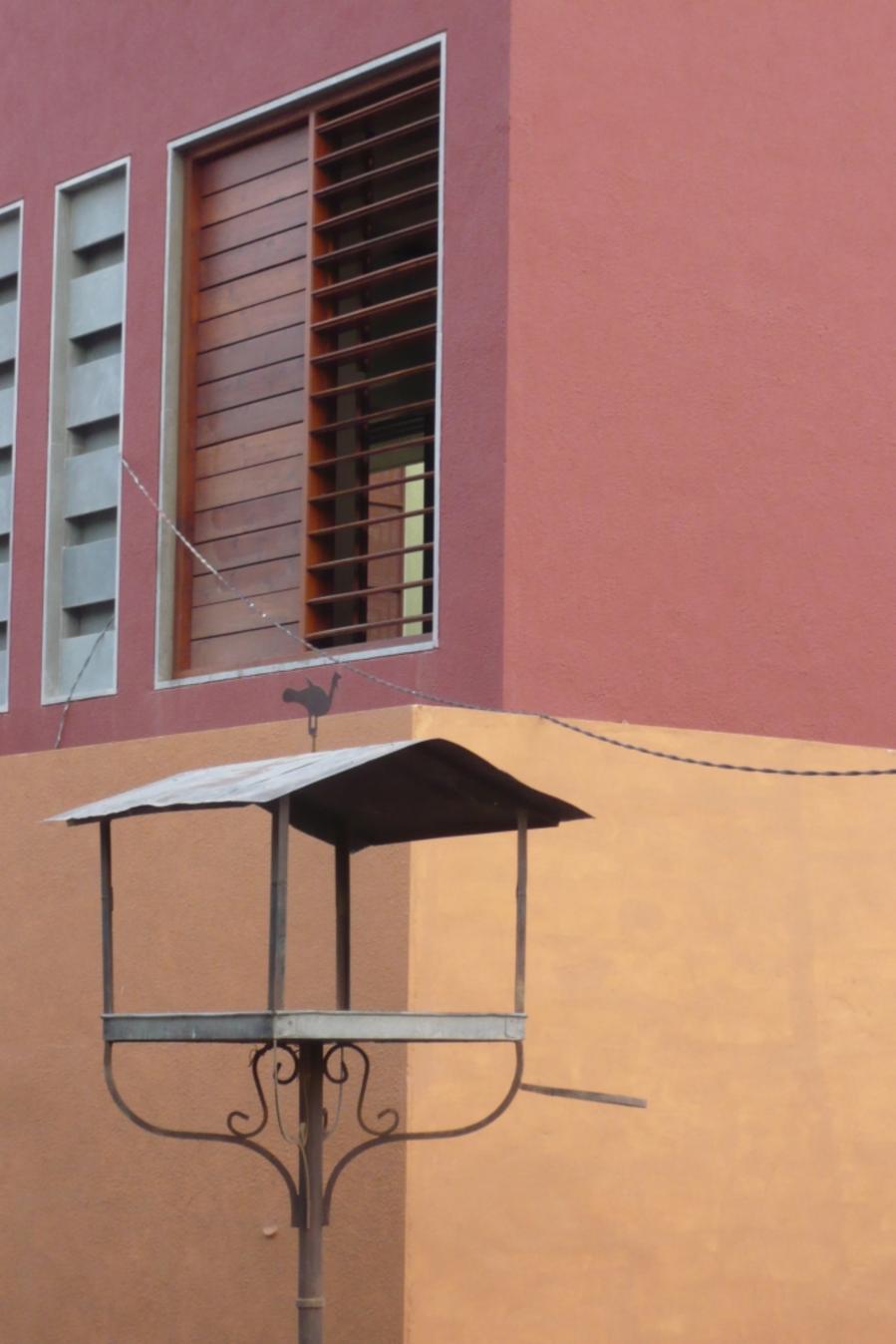
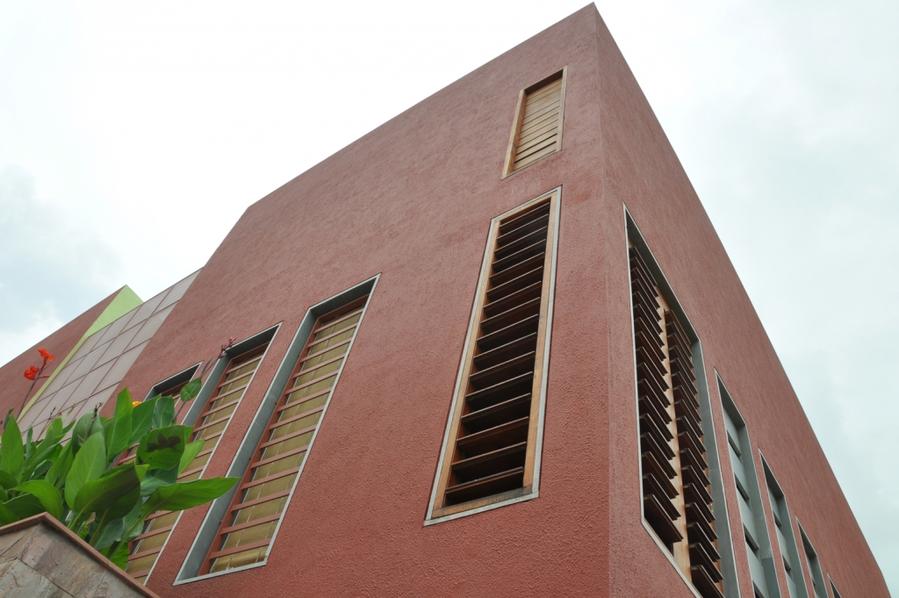
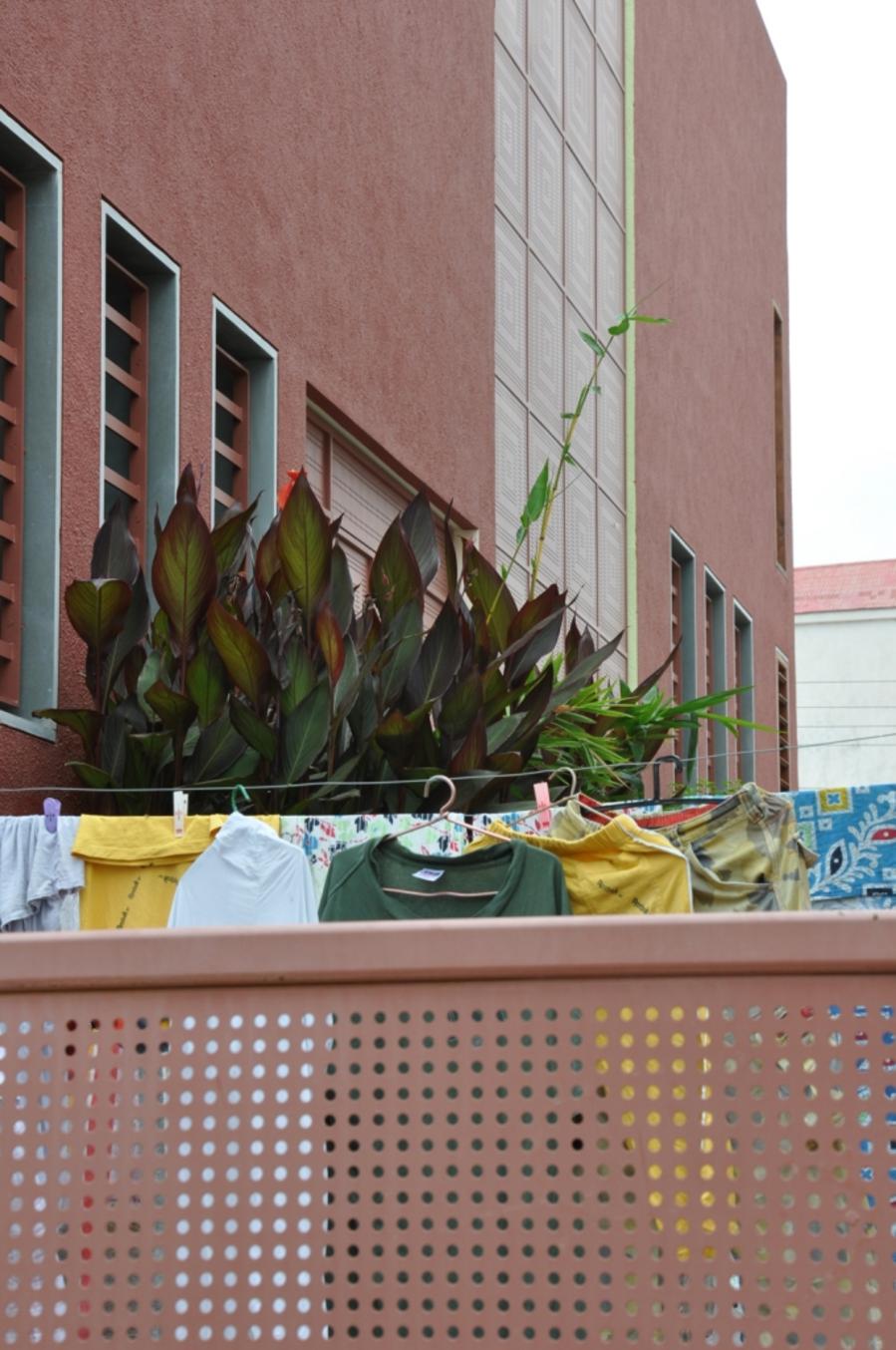
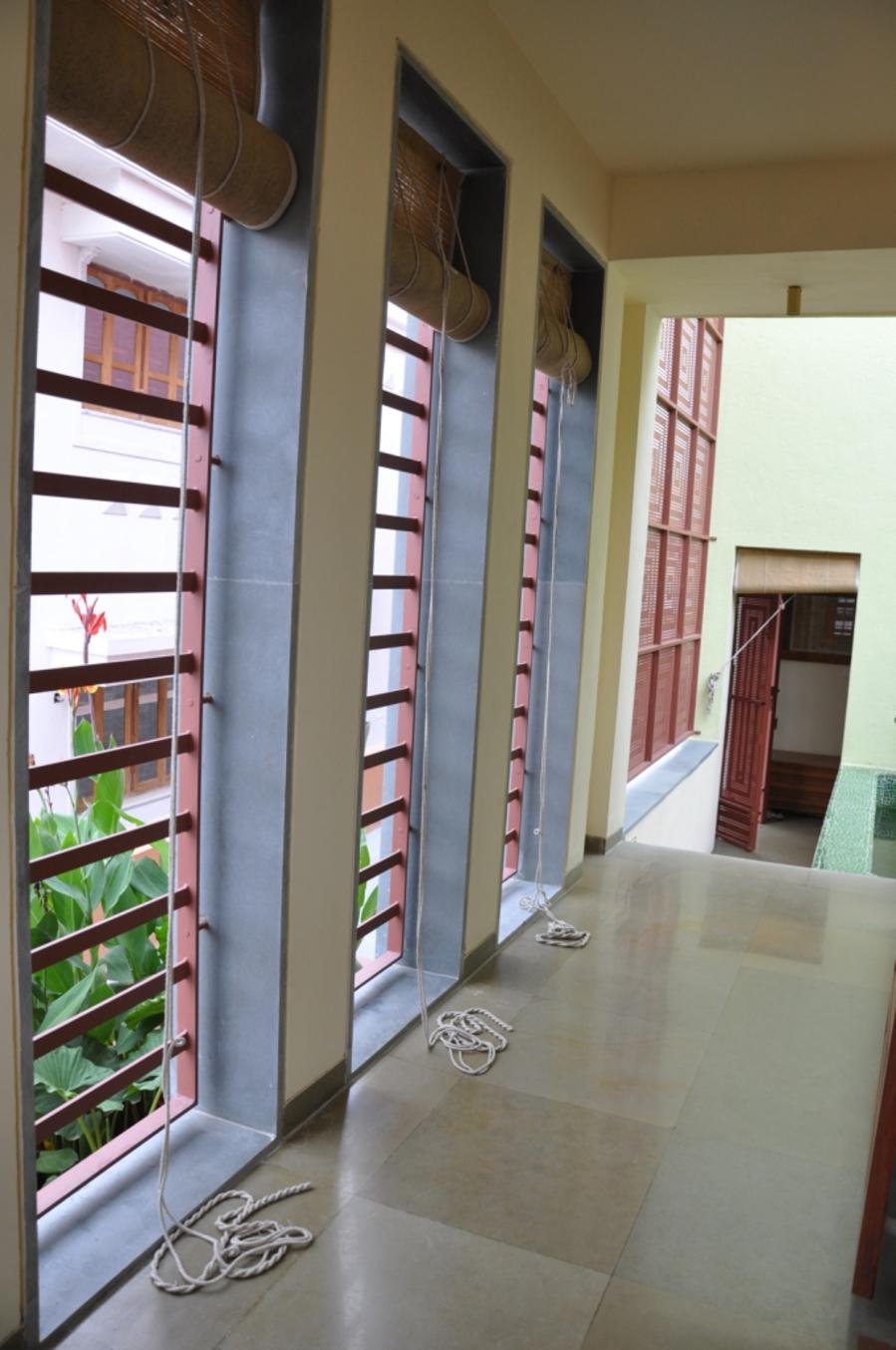
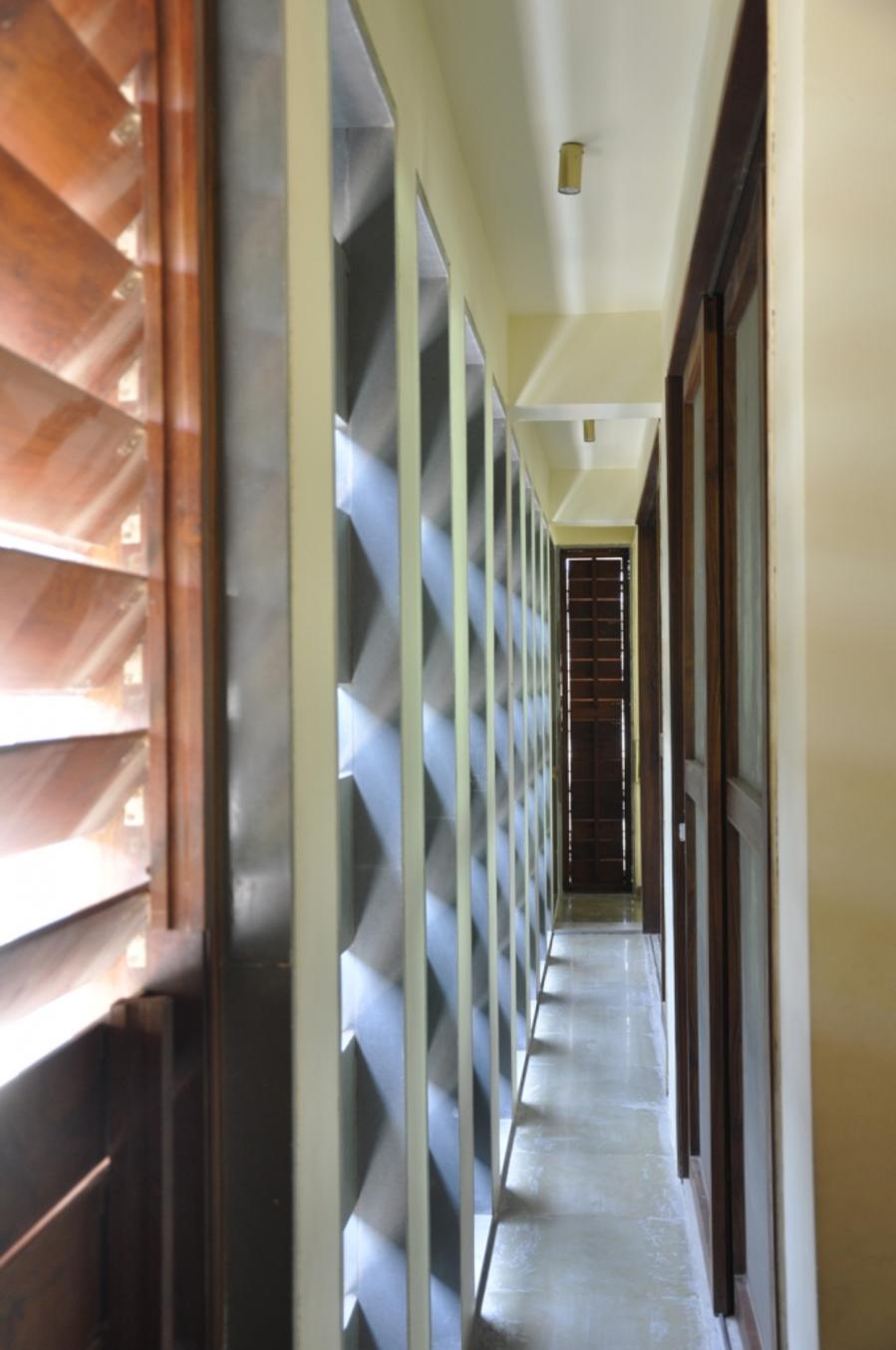
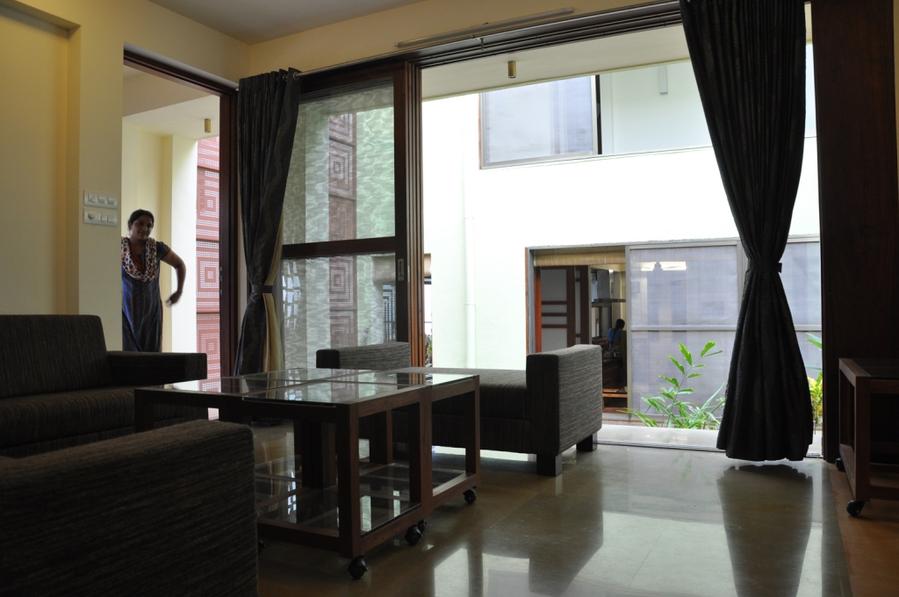
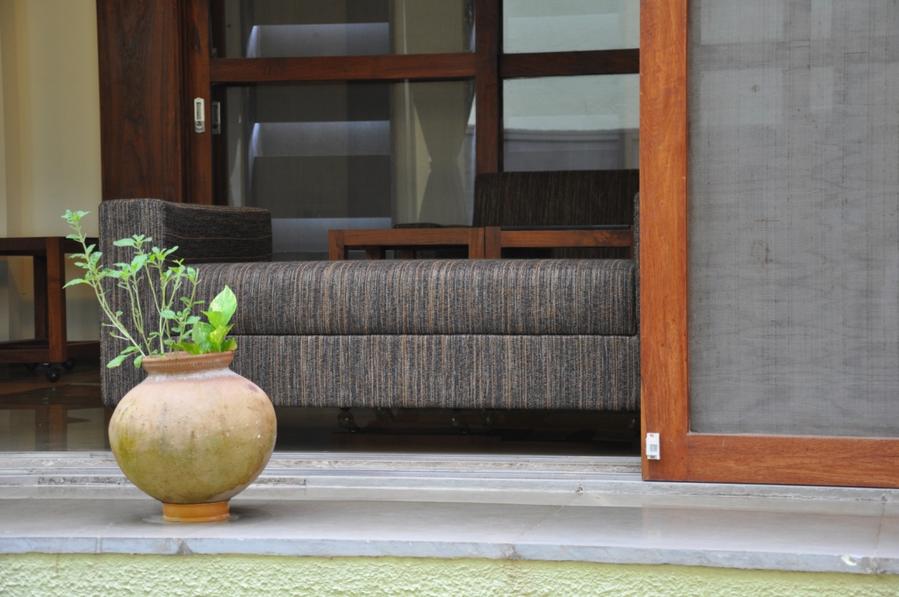
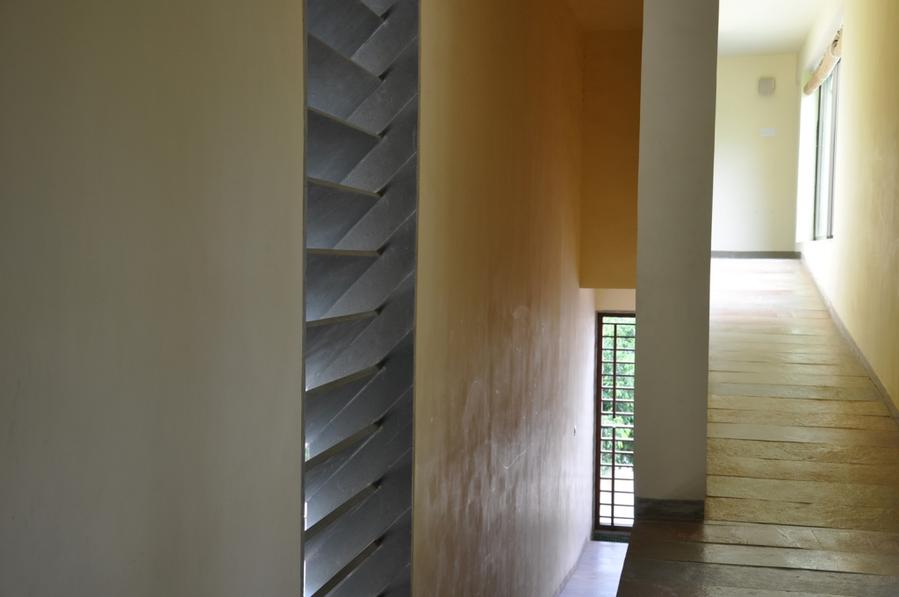
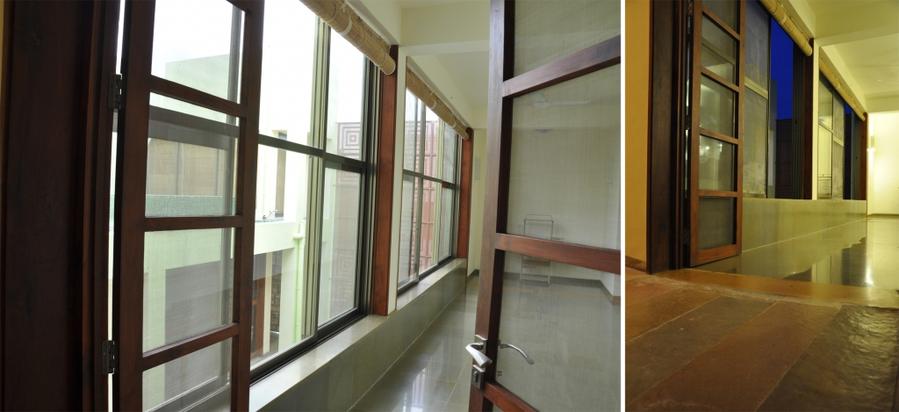
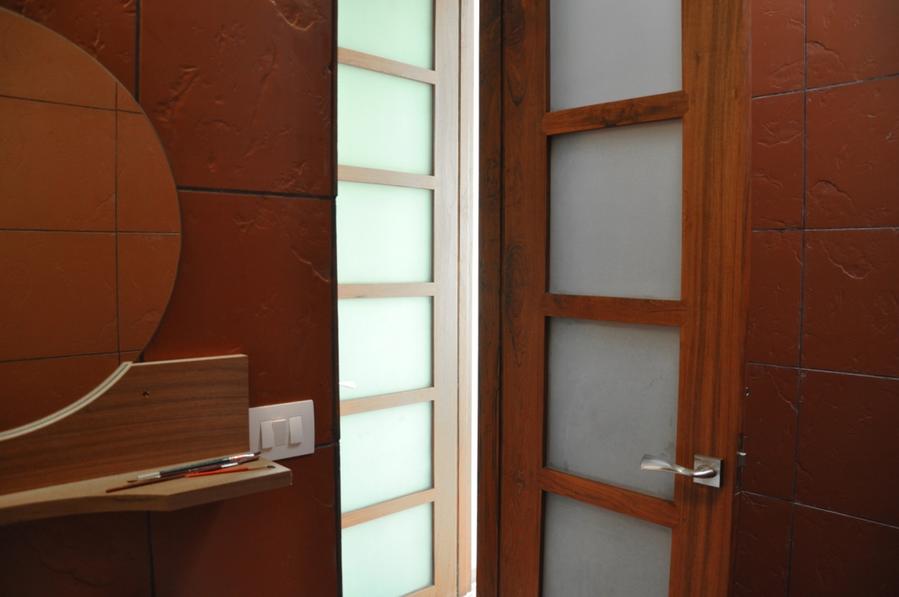
The building works to mitigate northern Gujarat’s harsh climate through an extra layer of skin that wraps the entire space. The protective, tall wrapper allows the building to open at the center, with a green, open to sky courtyard around which rooms are situated, structured by a ramp that runs along the western wall.

Photography credits: Sachin Bandukwala
Design Team: Sachin Bandukwala
Structural Consultancy: Vatsal Shah
MEP Consultancy: -
Contractor: Barot
Carpentry: Kantibhai and brothers
Fabrication : Marshal team
Sadara, Gujarat 2007 - 2009
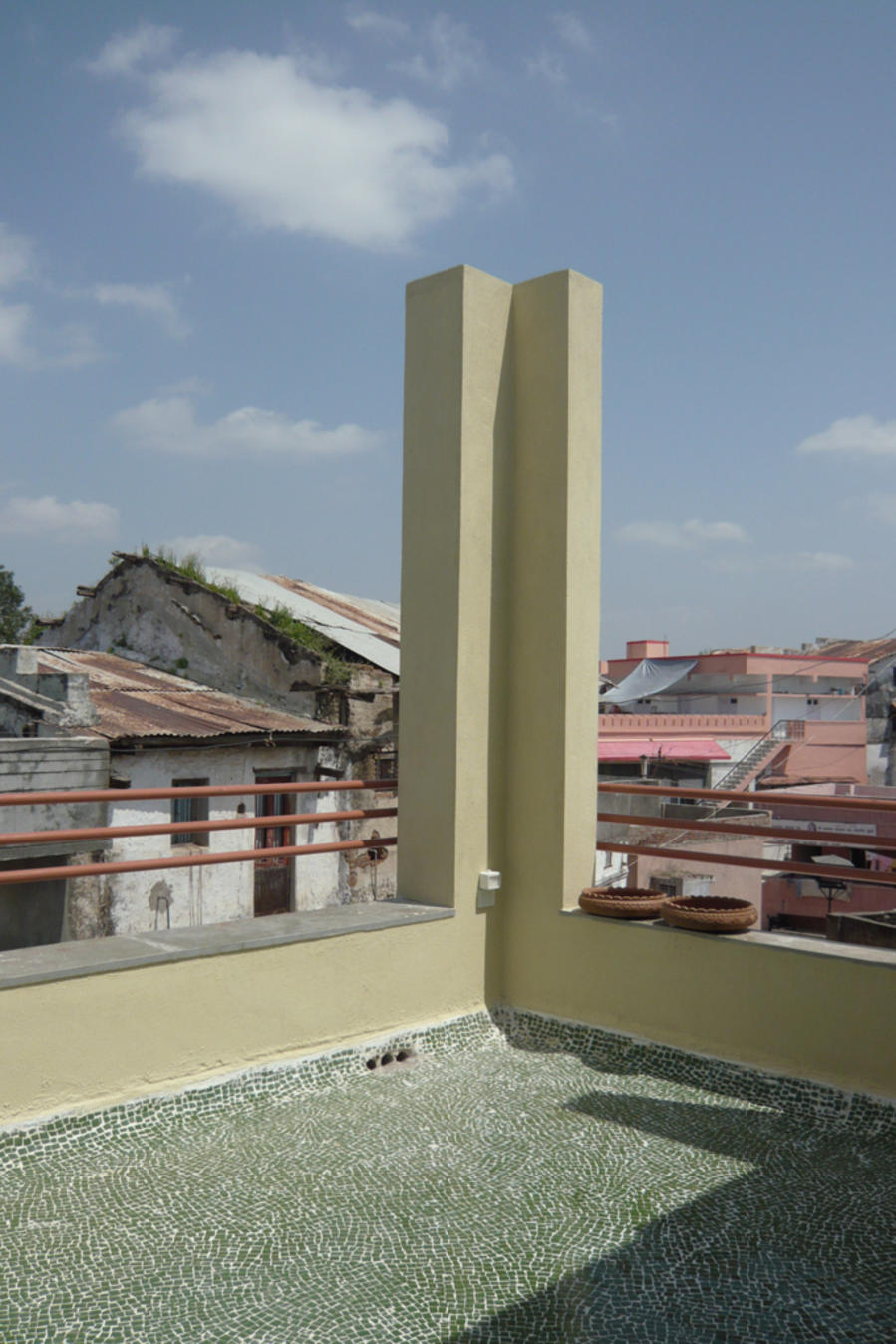
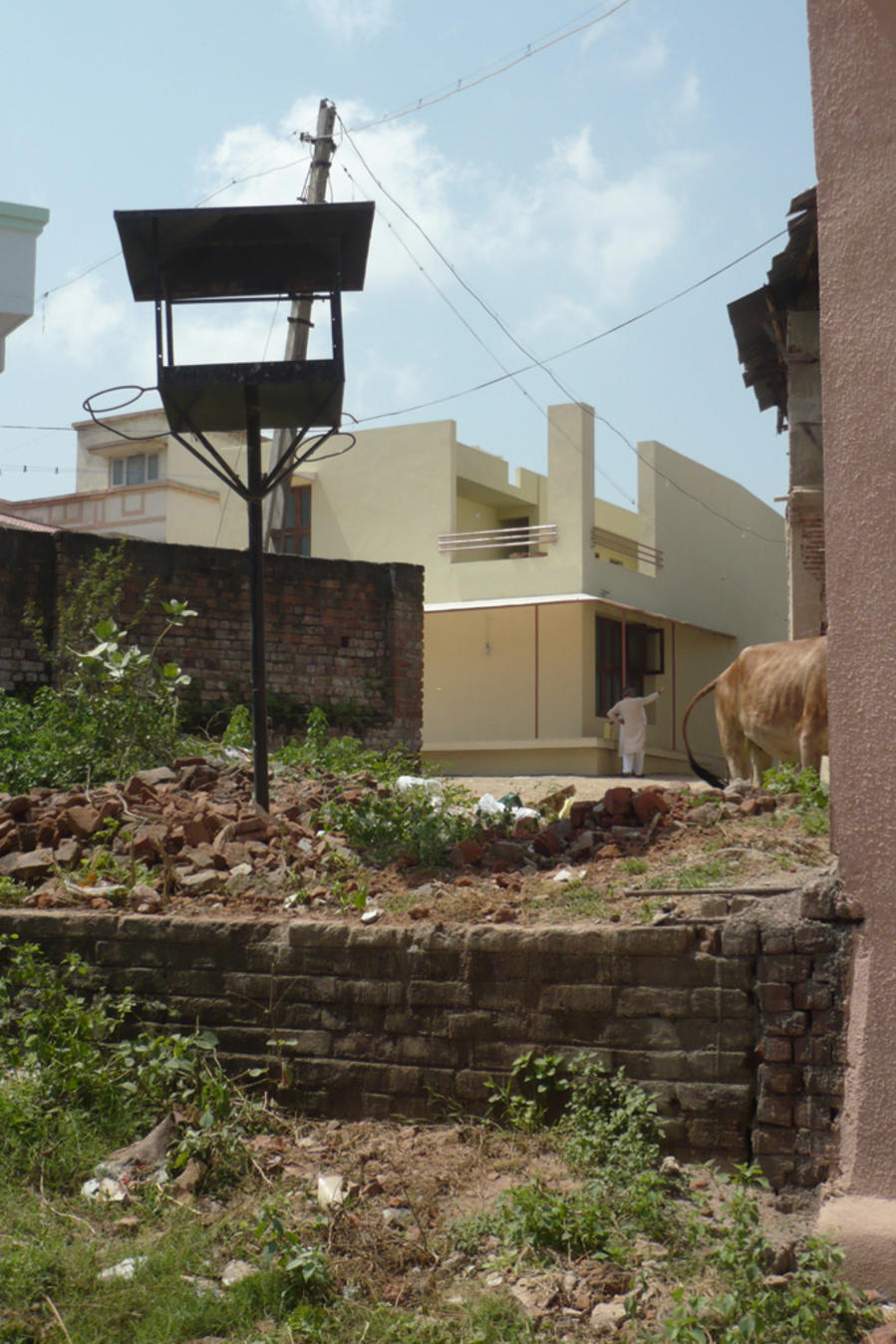
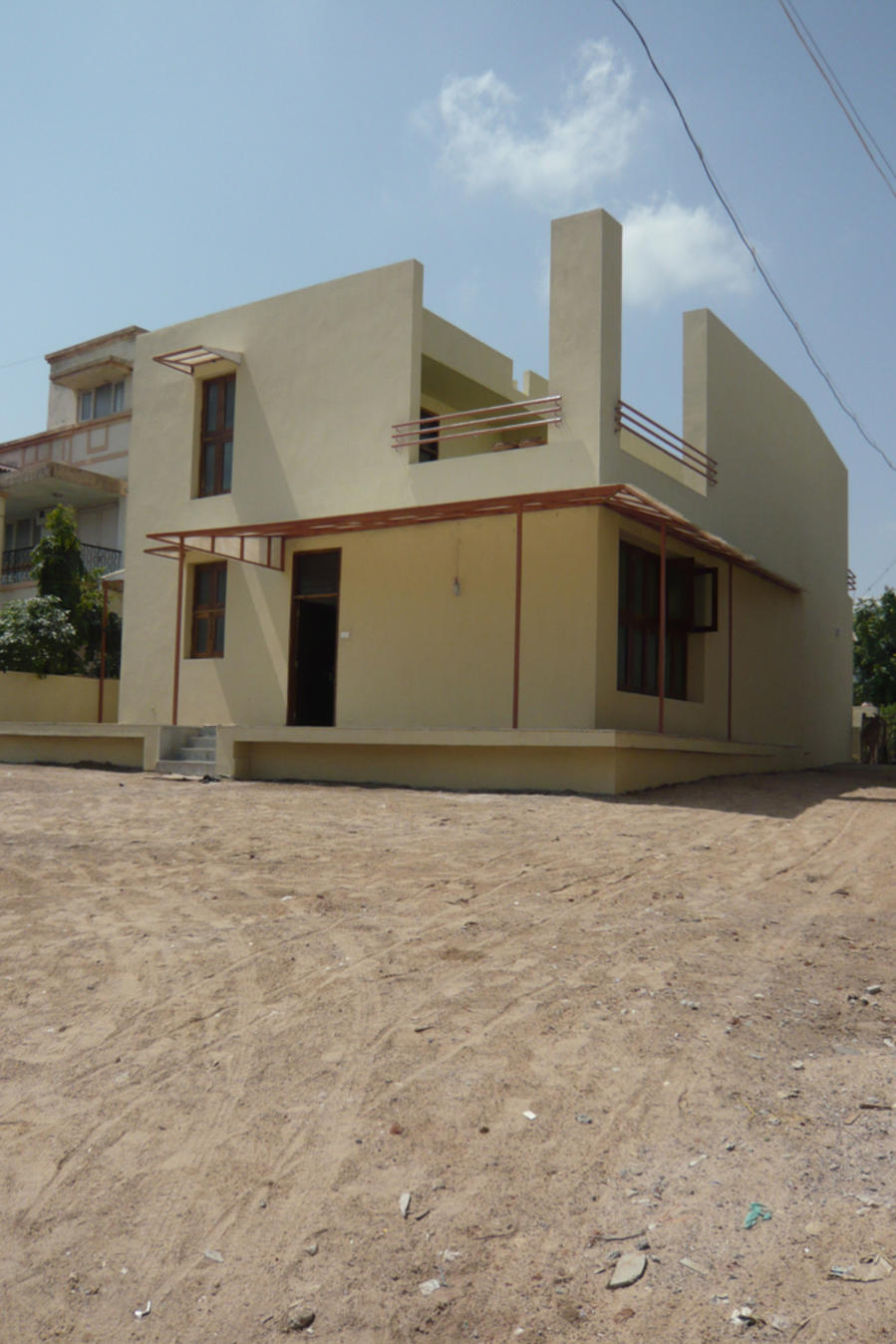
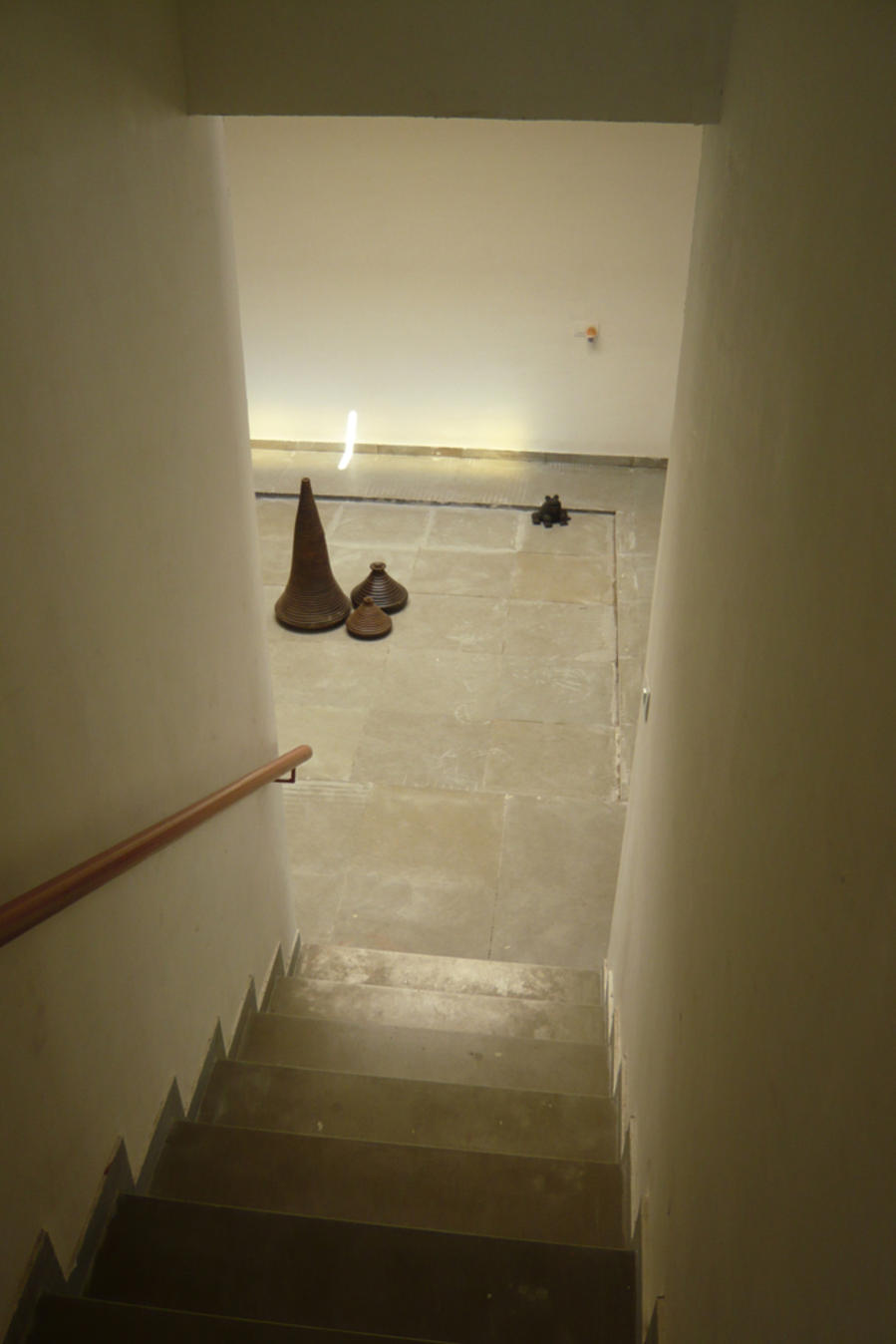
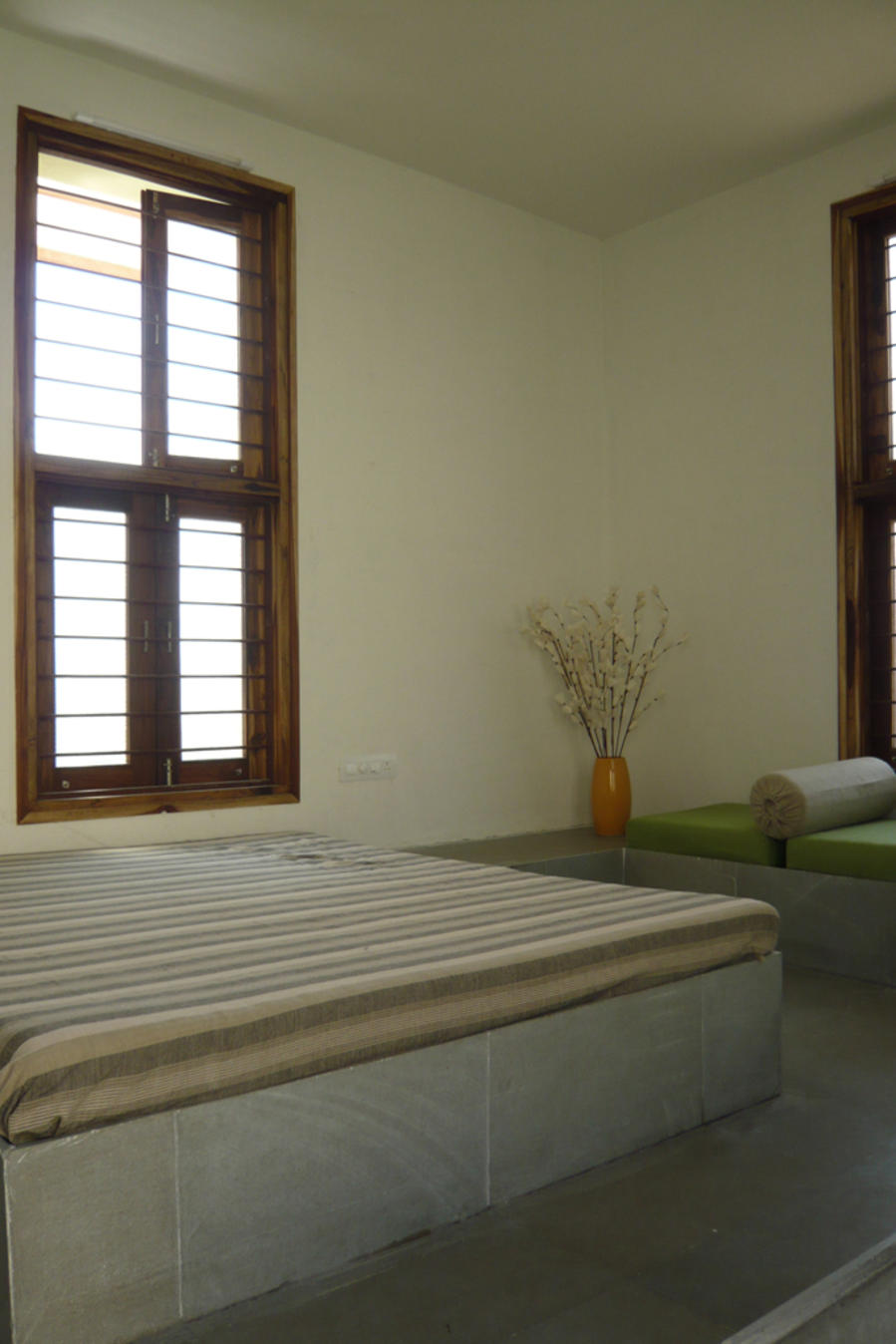
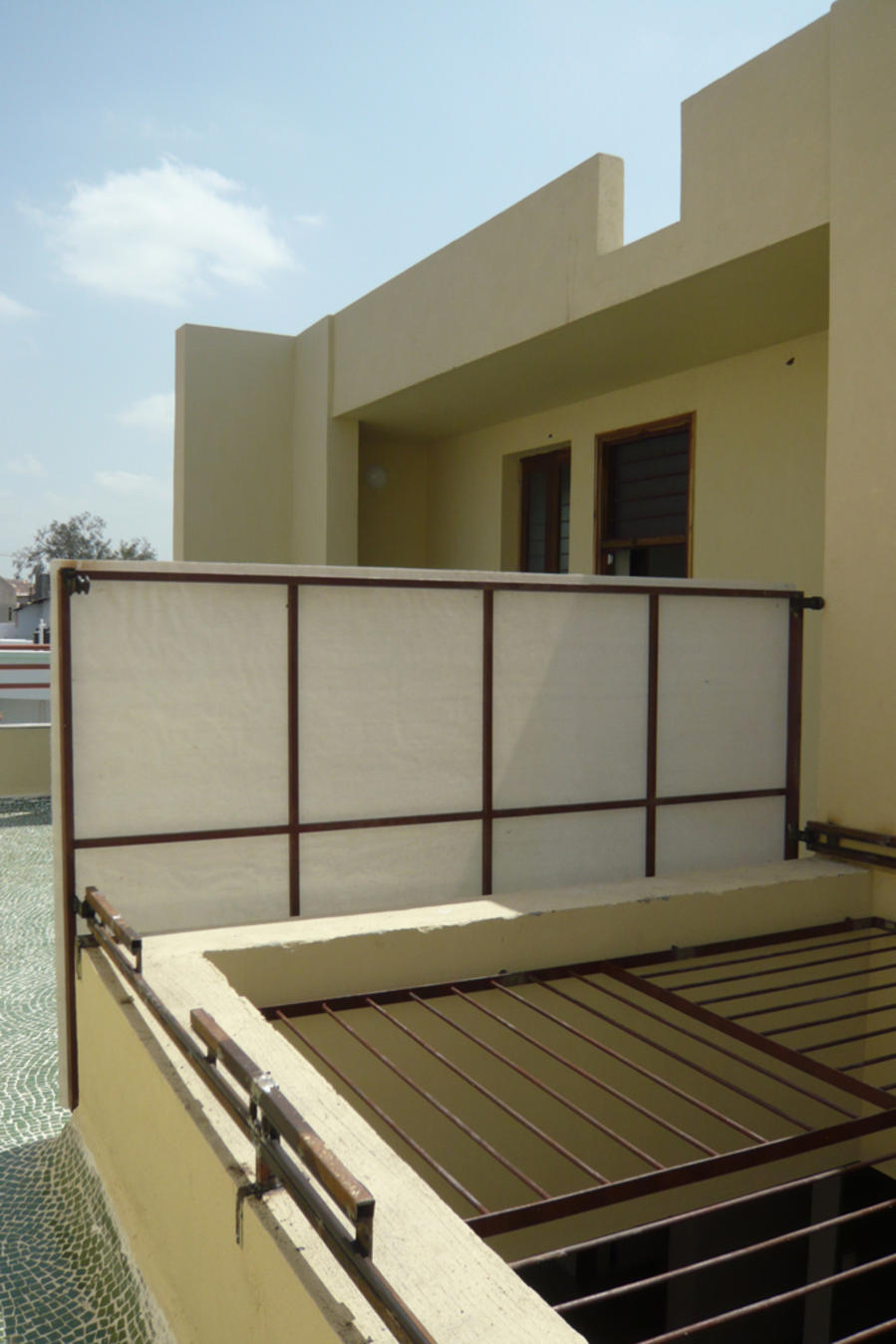
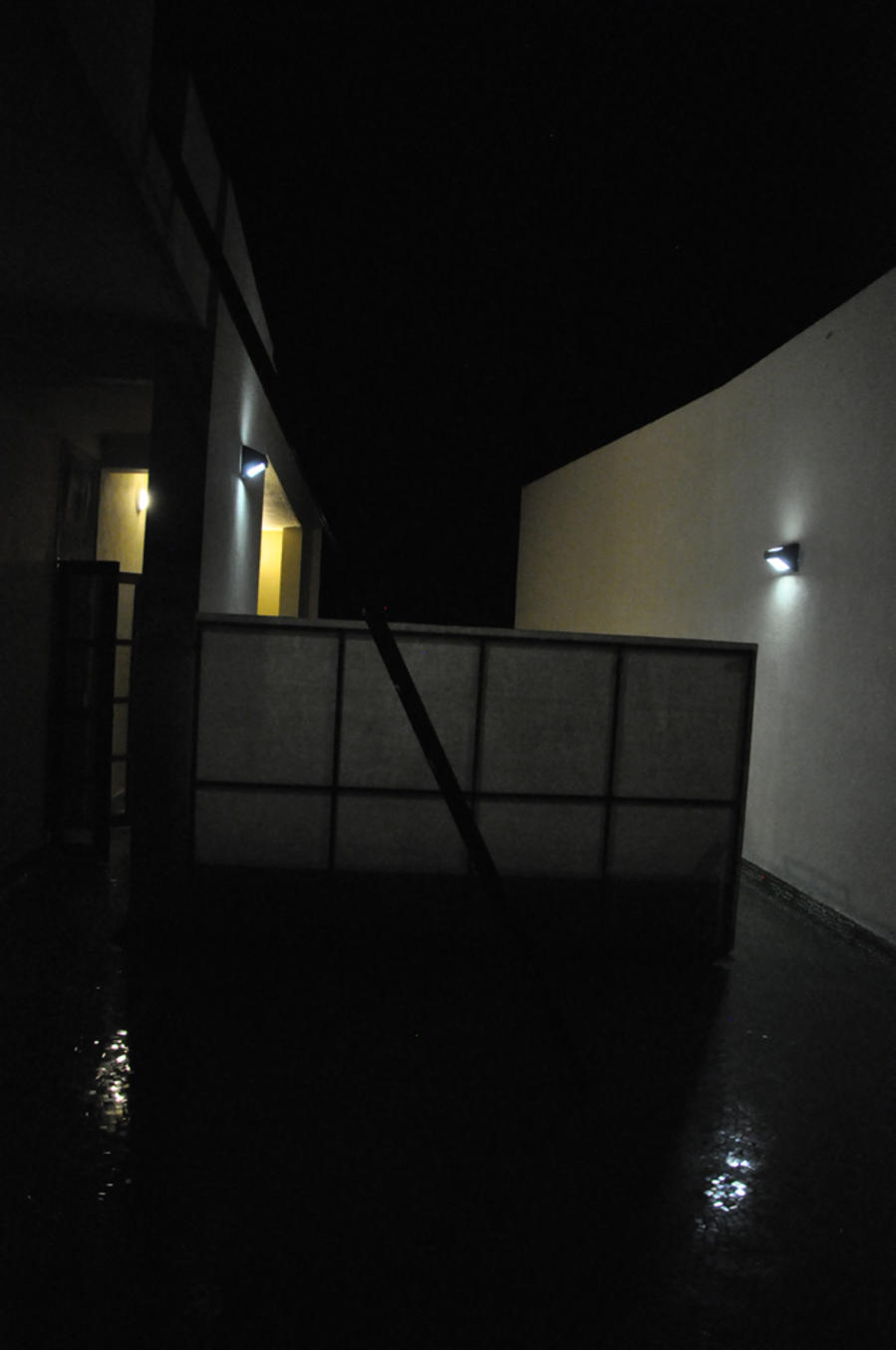
In this village on the river Sabarmati, in a quiet corner of the street, this rustic, rugged house is built as the occasional abode for a family whose roots rest here. Traditional thick walls and verandah shelter a large family space around a chowk. Access is organized by a path that runs from front to back of the narrow plot, adjoining open living spaces on one side, and moving past packed services and private rooms on the other. In this house with 3 bedrooms, stone covered plinths form beds. The open terrace on the first floor finds its privacy in tall protective walls that channel the wind from the river and open at their ends for the vistas of village and river.
Pages
- « first
- ‹ previous
- 1
- 2
- 3